UJAM Retrocraft Review: Is This the Most Efficient Creative FX Plugin for Modern Production?
Modern productions rarely rely on a single saturation or vintage emulation plugin. It’s common to combine tape coloration, vinyl noise, speaker simulation, modulation, wow and flutter, delay, ambience, and transient shaping before a sound reaches its final form. The creative possibilities are virtually unlimited, but so is the complexity. Building and managing long effect chains can slow production just as quickly as they expand sonic options.
UJAM Retrocraft approaches the problem from a workflow perspective rather than chasing the most accurate recreation of a specific analog device. Instead of asking producers to assemble multiple processors, it combines analog-inspired coloration, playback degradation, speaker emulation, modulation, ambience, and rhythmic effects into a single creative environment. The goal is simple: move from subtle analog character to heavily processed lo-fi textures without interrupting the session.
That makes Retrocraft less of a traditional saturation plugin and more of a creative production tool. The real question isn’t whether one algorithm outperforms a dedicated tape emulator or vinyl simulator. It’s whether integrating several character processors into a single plugin leads to faster decisions, more consistent workflows, and better results during real-world mixing and audio production.
This review evaluates Retrocraft from an engineering perspective, focusing on practical workflow, sound design flexibility, mixing applications, and the trade-offs of replacing specialized processors with an integrated multi-effect plugin.
Contents
Why Character Processing Matters in Modern Audio Production
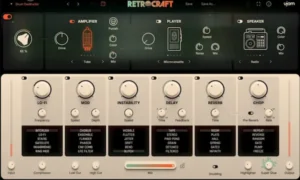 Character processing has evolved from a finishing technique into a core production decision. Saturation, playback artifacts, speaker coloration, and controlled degradation are now introduced long before a mix reaches its final stages. Instead of correcting sterile digital recordings, producers increasingly build these textures directly into the sound design process.
The trend extends well beyond lo-fi music. Hip-hop producers use saturation to increase perceived weight without relying entirely on compression. Electronic artists introduce instability and playback artifacts to make programmed instruments feel less static. Pop and indie productions frequently combine subtle tape coloration, filtered bandwidth, and modulation to create contrast between sections without dramatically changing the arrangement itself.
That evolution has made modern creative processing considerably more complex. A stylized vocal chain may include saturation, filtering, speaker simulation, modulation, ambience, stereo effects, and automation working together. Drum buses often receive multiple stages of harmonic coloration before dynamics processing is even addressed, while synth layers routinely pass through several processors to create movement rather than simple tonal change.
The downside is equally familiar. Every additional plugin increases CPU load, expands session complexity, complicates gain staging, and creates more variables during revisions. As productions grow larger, maintaining creative momentum becomes just as important as achieving the desired sound.
This shift explains the growing popularity of integrated creative FX plugins. Rather than assembling long signal chains for every idea, producers can audition complete processing concepts, refine individual stages, and move on without interrupting the session. The workflow advantage often outweighs the incremental sonic improvements offered by building every chain from separate processors.
That is where Retrocraft positions itself. Its appeal isn’t based on emulating a single piece of vintage hardware with extreme precision, but on reducing the time between hearing an idea and committing it to the production.
UJAM Retrocraft Design Philosophy
Judging Retrocraft as a conventional saturation plugin misses what it was designed to do. This isn’t another attempt to recreate the behavior of a specific tape machine, console, or vintage circuit. Instead, UJAM has built a creative multi-effect centered on character processing, where saturation is only one stage within a larger signal chain.
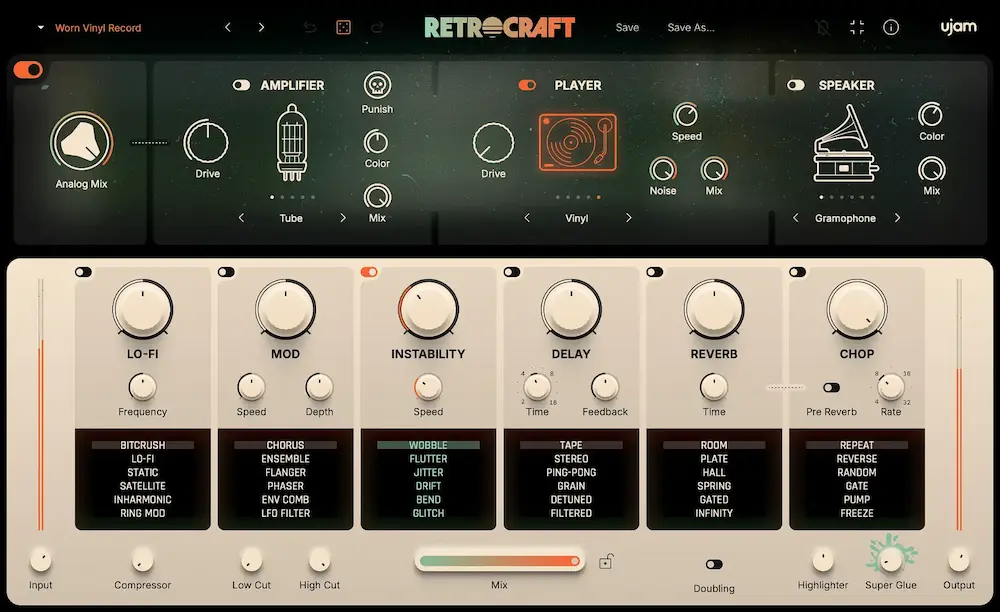
Its architecture combines several processing categories that producers commonly layer during modern production, including analog-style coloration, playback degradation, speaker emulation, modulation, pitch instability, delay, reverb, and rhythmic effects. None of these processors are unique on their own. The value comes from how they’re organized into a single workflow instead of being scattered across multiple plugin windows.
That distinction matters in practice. Building the same processing chain manually means managing plugin order, gain staging, automation, preset compatibility, and CPU resources across several independent processors. Retrocraft reduces that overhead by keeping every creative stage inside one interface, making it easier to audition ideas without constantly rebuilding the signal path.
Just as importantly, the plugin encourages engineers to evaluate the overall character of a sound rather than tweaking isolated processors one by one. A preset can establish a complete sonic direction within seconds, after which individual modules can be refined, bypassed, or rebalanced to fit the arrangement.
That workflow is closer to working with a modern hardware multi-effects unit than assembling a traditional software rack. The emphasis shifts from constructing effect chains to making production decisions.
This distinction also defines who will benefit most from Retrocraft. Songwriters, electronic producers, and beatmakers are likely to appreciate the faster creative workflow, especially during writing and sound design. Mixing engineers tend to be more selective. For an integrated processor to remain useful beyond the sketch stage, every processing block must remain independently controllable rather than locked inside oversized presets.
Retrocraft largely avoids that trap. Individual modules can be adjusted or removed as the mix develops, allowing the plugin to evolve from an idea-generation tool into a more focused character processor instead of forcing engineers to accept an all-or-nothing effect chain.
Workflow Advantages in Real Production
One of the easiest mistakes when evaluating a creative plugin is focusing exclusively on its algorithms. In day-to-day production, workflow often has a greater impact than marginal differences in sound quality. A processor that encourages rapid experimentation is more likely to become part of a daily workflow than one that delivers slightly better results at the cost of additional setup.
That’s Retrocraft’s strongest argument. Its value isn’t tied to having the industry’s most accurate tape emulation or the deepest speaker modeling. Instead, it reduces the time between hearing an idea and testing it inside a mix.
Building a comparable effect chain manually usually means combining saturation, playback degradation, filtering, modulation, ambience, delay, and transient processing from multiple plugins. Beyond the sonic decisions themselves, producers also have to manage plugin order, gain staging, automation, preset organization, and bypass comparisons before meaningful evaluation can even begin.
Retrocraft compresses that entire process into a single workspace. Instead of constructing an effects chain first and shaping the sound afterward, both decisions happen simultaneously. Producers looking for a more mix-oriented creative workflow may also want to compare this approach with DSL ThrowDelide, which focuses on stereo delay design and spatial movement rather than vintage character processing. That difference becomes increasingly valuable during writing sessions, where creative momentum disappears quickly if every experiment requires assembling another processing chain.
The plugin also reduces decision fatigue. Auditioning complete processing concepts is often more productive than tweaking isolated parameters across half a dozen plugin windows. Once a direction feels right, unnecessary modules can simply be disabled or refined instead of rebuilding the chain from scratch.
The built-in Surprise function reinforces that workflow. Randomized processing rarely produces a finished mix-ready sound, but it can reveal combinations that fall outside a producer’s usual habits. For experienced engineers, that isn’t a shortcut—it’s a fast way to discover starting points that might never emerge through a conventional step-by-step workflow.
Viewed through that lens, Retrocraft is less about replacing specialist processors than reducing creative latency. The same philosophy increasingly applies to modern production hardware, where workflow improvements often matter more than additional features—a trend discussed in our Novation FLkey 2 review. Dedicated plugins still make sense when precision becomes the priority. During production, however, the ability to move quickly from concept to audition often delivers greater value than endlessly refining an effects chain before knowing whether the idea works.
Using UJAM Retrocraft in Professional Mixing Workflows
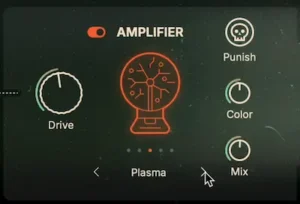 Retrocraft delivers the most value before a mix reaches its precision stage. During production, arrangement, and early balancing, speed usually matters more than surgical control. Auditioning different sonic identities without rebuilding an effects chain allows producers to shape sounds while creative decisions are still influencing the direction of the record.
That’s particularly useful for source material that benefits from character rather than corrective processing. A clean electric piano can quickly move toward cassette-inspired textures, vocals can shift between polished and intentionally degraded tones, and programmed drums can gain movement through subtle instability, speaker coloration, or playback artifacts without requiring multiple plugins across the insert chain.
The workflow changes once detailed mixing begins. Understanding where creative production ends and mixing differs from mastering helps determine which Retrocraft processing should remain part of the final mix. Engineers typically stop thinking in terms of complete effect chains and start evaluating individual processing decisions. At that stage, Retrocraft works best as a modular processor rather than a one-click creative solution.
Because each section can be adjusted independently, it’s possible to keep only the elements that continue serving the mix. Tape-style saturation may remain while modulation is removed. Speaker coloration can stay active while ambience is bypassed. That flexibility makes Retrocraft practical beyond the sketch phase, allowing it to evolve alongside the production instead of being replaced once detailed mixing starts.
It also encourages a more conservative approach to character processing. Rather than committing an entire lo-fi preset to a track, engineers can extract one or two complementary elements and leave the rest behind. The result is often easier to balance inside dense arrangements and significantly more predictable during mastering.
Another advantage becomes apparent during revisions. Consolidating several creative processes inside one plugin simplifies session management, reduces insert-chain complexity, and makes older projects easier to revisit. Engineers working across multiple studios—or exchanging sessions with collaborators—are less likely to spend time reconstructing elaborate processing chains simply to recreate a previously approved sound.
That doesn’t make Retrocraft a replacement for dedicated analog emulations or specialist mixing tools. Instead, it fills the space between creative sound design and technical mixing, where flexibility, repeatability, and efficient revisions often matter as much as the individual algorithms themselves.
Best Use Cases for UJAM Retrocraft
Retrocraft performs best on sources where character is expected to become part of the production rather than a subtle finishing touch. Instead of correcting tonal balance, it reshapes the perceived age, texture, and playback quality of a sound, making it particularly effective on tracks that are meant to stand apart from an otherwise clean mix.
Vocals are an obvious example. Modern productions often contrast an intelligible lead with deliberately degraded doubles, ad-libs, or background layers. Speaker emulation, limited bandwidth, subtle saturation, and controlled instability can create that separation without relying on complicated routing or multiple insert chains.
The plugin is equally effective on programmed drums and sampled percussion. Moderate harmonic coloration and playback artifacts introduce variation that helps highly quantized material feel less mechanical. More aggressive settings are often better reserved for fills, breakdowns, risers, or transition elements, where exaggerated texture supports the arrangement instead of competing with the main groove.
Electric pianos, synthesizers, pads, guitars, and sampled keyboards also benefit because these instruments often occupy supporting roles within a mix. Introducing tape-style coloration or subtle playback degradation can push them slightly farther back in the soundstage while adding movement and harmonic complexity that clean digital recordings sometimes lack.
Parallel processing is another practical application. Running Retrocraft on an auxiliary bus allows engineers to blend character gradually instead of committing to destructive processing on the original track. This approach preserves clarity while making it easier to automate texture throughout the arrangement.
Low-frequency sources deserve more restraint. Bass guitars, synth basses, and sub-heavy instruments rely on stability and phase coherence. Excessive modulation, playback artifacts, or aggressive degradation can reduce low-end definition and complicate both bus compression and mastering, particularly once broadband limiting is applied.
The same principle applies to full stereo mixes. While some presets produce an appealing vintage aesthetic in isolation, cumulative saturation, stereo movement, and playback instability become far more noticeable after mastering. What sounds pleasantly textured inside the DAW can translate into softened transients, unstable imaging, or excessive harmonic buildup across streaming platforms.
For most productions, Retrocraft delivers stronger results on individual tracks, parallel buses, or selected instrument groups than across an entire mix. Applying character selectively usually creates more contrast, leaves greater flexibility during mastering, and produces mixes that translate more consistently across different playback systems.
Retrocraft’s Limitations in Professional Production
Retrocraft is positioned as an all-in-one character processor, and that description is largely accurate. The mistake would be expecting it to replace every specialist plugin already established in a professional mixing workflow.
It doesn’t.
Dedicated tape emulations still offer deeper control over transport behavior, operating level, bias, headroom, and nonlinear saturation. Console emulations remain better suited for subtle cumulative coloration across an entire mix, while specialist speaker simulators provide significantly more flexibility when cabinet selection, microphone placement, or room interaction become important.
Retrocraft isn’t trying to compete on that level. Its priority is reducing workflow complexity rather than recreating individual pieces of analog hardware with scientific precision. Judging it by the standards of dedicated analog modeling misses the purpose of the plugin entirely.
That also means Retrocraft should be viewed as a complement to existing processing tools rather than a replacement for them. Engineers who already own high-end saturation plugins are unlikely to abandon them. Instead, Retrocraft occupies a different role by accelerating creative decisions during production and early mixing.
The preset library follows the same philosophy. Many presets are intentionally exaggerated because they’re designed to demonstrate creative possibilities, not to function as finished mix settings. In commercial productions, those sounds usually become starting points that are simplified, blended in parallel, or scaled back considerably before the final mix.
The integrated design introduces one trade-off of its own. Combining multiple processing stages inside a single interface makes experimentation faster, but it can also make cause-and-effect relationships less obvious. When several modules are changing a signal simultaneously, identifying exactly which processor is responsible for a particular sonic characteristic requires a more deliberate workflow than working with dedicated single-purpose plugins.
For experienced engineers, that trade-off is rarely a problem. For newer producers, however, standalone processors often remain the better learning environment because every processing decision is isolated and immediately identifiable.
UJAM Retrocraft vs Other Creative FX Plugins
Retrocraft occupies an interesting position in the creative FX market because it doesn’t compete directly with every plugin in this category. Some alternatives focus almost entirely on lo-fi coloration, while others specialize in transition effects or deep modulation. The comparison is less about finding a universal winner and more about choosing the workflow that best fits a particular production style.
| Plugin | Workflow Philosophy | Best For | Trade-Off |
|---|---|---|---|
| UJAM Retrocraft | Integrated character-processing environment | Fast sound design, production, creative mixing | Less detailed analog modeling than dedicated emulations |
| XLN Audio RC-20 Retro Color | Deep lo-fi and vintage coloration | Electronic music, sampled instruments, texture design | Narrower focus outside retro processing |
| Aberrant DSP SketchCassette II | Cassette-first sound design | Authentic tape degradation and nostalgic textures | Limited beyond cassette-style processing |
| Baby Audio Transit | Transition and automation effects | Drops, risers, arrangement movement | Not intended as a dedicated character processor |
| Cableguys ShaperBox | Precision modulation and rhythmic control | Advanced automation and dynamic movement | Steeper learning curve and more manual programming |
Retrocraft’s competitive advantage isn’t that it outperforms each of these plugins within their respective specialties. In most cases, it doesn’t—and it isn’t designed to. Dedicated tools still offer greater depth when a production requires highly specific tape behavior, cassette degradation, or advanced modulation.
Its advantage is integration. Instead of building a character-processing chain from several independent plugins, producers can explore saturation, playback artifacts, speaker coloration, ambience, and modulation inside a single interface. For many production sessions, reducing setup time has a greater impact on creativity than extracting the last few percent of realism from an individual processor.
That makes Retrocraft particularly appealing to producers who prioritize speed, experimentation, and repeatable workflows. Engineers building highly customized mix chains, on the other hand, are still likely to prefer dedicated processors for critical tonal decisions.
Who Should Consider Buying UJAM Retrocraft?
Retrocraft isn’t designed for every type of audio professional, and that’s one of its strengths. Its value depends almost entirely on where creative character processing fits within your workflow.
Bedroom producers will probably benefit the most. Instead of building complex effect chains from multiple plugins, Retrocraft makes it possible to explore complete production ideas from a single interface. That reduces setup time and keeps attention on writing rather than technical routing.
Electronic producers and beatmakers are another natural audience. Drum loops, synths, sampled instruments, vocal chops, and transition effects all respond well to layered saturation, playback artifacts, modulation, and speaker coloration. Having those processors available inside one plugin makes experimentation considerably faster.
Mixing engineers are likely to approach Retrocraft more selectively. Rather than using complete presets, they’ll often extract individual modules that support the arrangement while bypassing everything else. Used this way, the plugin becomes a focused character processor instead of a one-click effects package.
Mastering engineers represent a different case. Retrocraft is rarely a mastering processor, but it can influence mastering decisions indirectly. Understanding how its saturation, stereo movement, and playback degradation affect translation makes it easier to preserve creative intent while avoiding cumulative processing problems later in the production chain.
Sound designers may find Retrocraft particularly useful because it encourages rapid exploration. The ability to combine multiple character processors without rebuilding signal chains makes it well suited for creating distinctive textures, cinematic effects, and experimental timbres.
Composers working for media can also benefit from its speed. Whether creating aged instruments, degraded broadcasts, vintage playback effects, or stylized transitions, Retrocraft allows those ideas to be tested quickly before committing to more detailed editing.
Who Should Skip UJAM Retrocraft?
Retrocraft isn’t the right choice for every workflow. Engineers looking for authentic Studer tape behavior, console-specific nonlinearities, transformer saturation, or highly detailed analog circuit modeling will still find dedicated emulation plugins considerably more capable.
It’s also less compelling for users who already prefer building custom processing chains from separate specialist plugins. If carefully selecting every saturation stage, modulation processor, and ambience effect is already part of your creative process, Retrocraft may offer more convenience than genuinely new sonic possibilities.
Viewed realistically, Retrocraft isn’t replacing a collection of flagship analog emulations. It’s replacing the time spent assembling them during creative production.
Real-World Production & Mastering Considerations
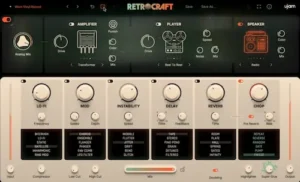 Creative effects never exist in isolation. Every layer of saturation, modulation, playback degradation, or speaker coloration changes how a mix behaves once additional processing is applied. The cumulative effect often matters more than any individual plugin setting.
Harmonic density is one of the easiest variables to underestimate. A single Retrocraft instance may add only subtle coloration, but multiple instances across vocals, drums, keyboards, and effects returns can gradually reduce separation between instruments. Tracks that sound rich in isolation may begin competing for the same harmonic space once the arrangement is fully assembled.
That accumulation becomes more apparent once the signal reaches the mastering chain. Broadband compression, clipping, and limiting increase the perceived density of existing harmonics, making excessive saturation or playback artifacts more noticeable than they appeared during production. The issue usually isn’t one plugin—it’s the combined effect of many small processing decisions throughout the session.
Streaming distribution introduces another variable. Lossy codecs such as AAC and Ogg Vorbis don’t simply reduce file size—they also respond differently to unstable stereo information, dense high-frequency content, and aggressive modulation. Effects that feel intentionally textured inside the DAW may translate as harsher or less focused on consumer playback systems after encoding.
Monitoring plays an equally important role. Character processing that sounds balanced on accurate nearfield monitors can become exaggerated on earbuds, Bluetooth speakers, or in a car, where frequency response and stereo reproduction are far less predictable. Auditioning heavily processed material across multiple listening environments remains one of the simplest ways to avoid unpleasant surprises after release.
For that reason, Retrocraft generally works best as a production and sound-design processor rather than a finishing tool. Applying character early allows those creative decisions to be evaluated within the full arrangement, refined during mixing, and carried into professional mastering with fewer compromises. The result is usually a mix that retains its personality while translating more consistently across streaming platforms and everyday playback systems.
Mixing & Mastering Takeaways
Creative multi-effects don’t automatically make a production sound “more analog.” Every layer of saturation, modulation, filtering, and playback degradation changes transient behavior, harmonic balance, stereo perception, and the way downstream processors respond. Those changes accumulate long before the mix reaches mastering.
That’s why commitment should be deliberate. Decisions made during production directly influence how easily a mix can be prepared for mastering later in the workflow. Printing heavily stylized effects across every instrument may create an exciting rough mix, but it also reduces the flexibility available during later mix revisions. Excessive harmonic buildup limits EQ decisions, aggressive modulation can destabilize stereo imaging, and dense ambience often becomes more apparent once bus compression and limiting increase overall program density.
A more reliable workflow is to separate creative intent from technical refinement. Use Retrocraft to define the personality of individual tracks, then evaluate those decisions within the complete mix rather than in solo. Context determines whether character enhances the production or simply adds unnecessary complexity.
From a mastering perspective, the objective is rarely to remove intentional coloration. Instead, the challenge is preserving that character while maintaining translation across streaming platforms, headphones, consumer speakers, cars, and larger monitoring systems. Mixes that leave sufficient headroom for tonal refinement generally require less corrective processing and retain more of their original creative intent.
If a session contains multiple instances of Retrocraft—or any comparable character processor—it’s worth reassessing cumulative saturation, stereo movement, ambience, and low-frequency stability before printing the final mix. Small adjustments made during production or mixing almost always translate better than corrective processing applied during mastering.
Final Verdict: Is UJAM Retrocraft Worth It?
Retrocraft succeeds because it solves a practical production problem instead of chasing perfect analog emulation. It shortens the distance between an idea and a usable sound, allowing producers to experiment with complex character processing before technical decisions begin slowing the session.
That doesn’t make it a replacement for dedicated tape emulators, console simulations, or specialist speaker modeling. Engineers who rely on those tools for precise tonal shaping will still find them more capable within their respective areas. Retrocraft serves a different purpose.
Its real strength lies in accelerating creative work. Producers can move from clean digital recordings to fully developed sonic identities without assembling elaborate processing chains, while mix engineers can extract only the modules that continue serving the arrangement as the project evolves.
That modular approach also gives Retrocraft more longevity than many creative multi-effects. Instead of becoming irrelevant once detailed mixing begins, it can remain useful as a focused character processor after more exaggerated production effects have been removed.
Ultimately, Retrocraft is best understood as a production tool rather than an analog emulation platform. If your workflow regularly involves designing textures, reshaping vocals, processing virtual instruments, or adding controlled imperfections to otherwise clean recordings, it offers a faster and more streamlined approach than building the same processing chain manually.
If, however, your primary goal is faithfully recreating the behavior of a specific tape machine, console, or vintage playback device, dedicated emulation plugins remain the more appropriate choice.
Viewed within its intended role, Retrocraft earns a place in modern production workflows not because it replaces specialist processors, but because it reduces friction during the most creative stages of making a record. For many producers, that improvement alone is enough to justify keeping it within easy reach.
Pros & Cons
Pros
| Cons
|
Overall Rating
| Category | Rating |
|---|---|
| Sound Quality | 8.8/10 |
| Workflow Efficiency | 9.7/10 |
| Creative Flexibility | 9.3/10 |
| Professional Workflow | 8.9/10 |
| CPU & Session Management | 9.2/10 |
| Value for Money | 9.1/10 |
| Overall | 9.2/10 |
Retrocraft isn’t trying to become the most authentic tape machine, console, or vintage hardware emulation available today. Its strength lies in consolidating multiple stages of creative character processing into a workflow that encourages experimentation without sacrificing session efficiency. From a mixing and mastering perspective, the plugin performs best when used selectively on individual sources or buses rather than across an entire mix. Rather than replacing specialist analog tools, Retrocraft complements them by accelerating creative decisions during production. Judged on that objective, it stands out as one of the strongest integrated creative FX environments currently available.

Last updated: June 2026
Yurii Ariefiev is a mastering engineer and audio production editor specializing in mix translation, mastering workflow optimization, and critical evaluation of audio production tools. His reviews focus on how plugins perform inside real recording, mixing, and mastering sessions rather than repeating product specifications or marketing claims.
This review evaluates UJAM Retrocraft from the perspective of practical studio workflow—examining where creative character processing supports a production, where it can complicate mixing or mastering, and how those decisions affect translation across real-world playback systems.
Frequently Asked Questions
Is UJAM Retrocraft suitable for professional mixing?
Yes, but primarily as a creative processor rather than a corrective mixing tool. It excels at adding character, texture, and movement before a mix reaches its final refinement stage.
Can Retrocraft replace RC-20 Retro Color?
Not entirely. RC-20 remains one of the most flexible dedicated lo-fi processors, while Retrocraft takes a broader approach by combining saturation, playback degradation, modulation, ambience, and rhythmic processing within a single workflow.
Can Retrocraft replace dedicated analog saturation plugins?
No. Tape emulations, console models, and transformer-based saturation plugins still offer greater control and more authentic analog behavior. Retrocraft is designed to accelerate creative production rather than emulate specific hardware in detail.
Should Retrocraft be used on the mix bus?
In most cases, no. Subtle settings may work for creative projects, but the plugin is generally more effective on individual tracks, parallel buses, or instrument groups, where its processing can be controlled without affecting the entire mix.
Does Retrocraft work well on vocals?
Vocals are among its strongest applications. It can quickly create radio-style effects, vintage playback textures, parallel saturation, and supporting vocal layers that contrast with a clean lead without requiring complex routing.
Is Retrocraft useful outside lo-fi music?
Absolutely. While lo-fi processing is a major part of its identity, the plugin is equally capable of adding restrained analog character to pop, indie, hip-hop, electronic, cinematic, and alternative productions.
Will Retrocraft significantly increase CPU usage?
As with most integrated multi-effects, CPU usage depends on the project and selected modules. In many sessions, replacing several individual processors with one plugin can actually simplify resource management and reduce session complexity.
Can Retrocraft improve poorly recorded audio?
No. It can enhance interesting recordings, but it won’t correct clipping, poor microphone technique, excessive room reflections, or weak performances. Strong source material remains the foundation of effective character processing.
Who will benefit most from Retrocraft?
Producers, beatmakers, sound designers, and mix engineers looking for faster creative workflows will get the most value. Engineers focused exclusively on transparent corrective processing may find dedicated specialist plugins better suited to their needs.
Is Retrocraft worth buying if you already own several creative FX plugins?
That depends on your workflow. If you prefer building highly customized processing chains, your existing plugins may already cover similar territory. If speed, experimentation, and integrated sound design are priorities, Retrocraft offers a noticeably more streamlined creative workflow.