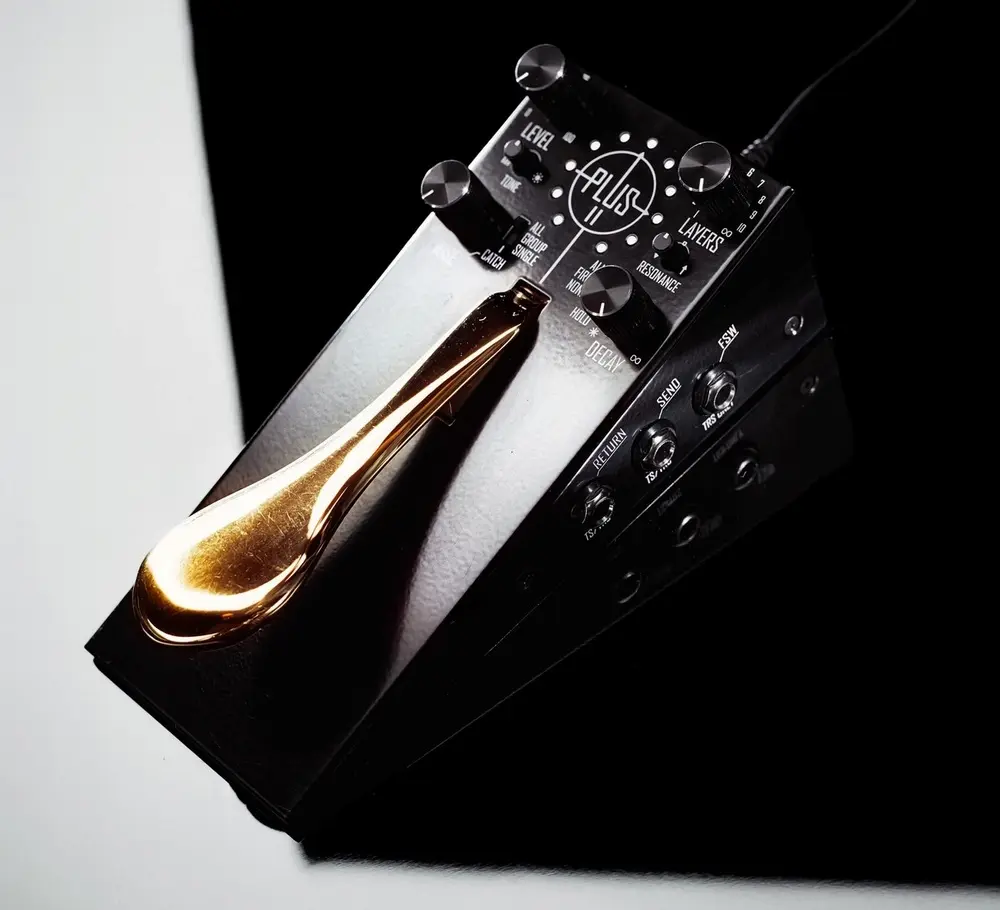
Most sustain pedals still rely on variations of the same idea: capture audio, hold it, and let the player work around the limitations. Whether the effect is built on looping, freeze processing, or long reverb tails, the result is often a static layer that interrupts performance instead of extending it. Gamechanger Audio Plus Pedal II takes a different approach. Its new Spectral Sampling engine is designed to preserve the harmonic character of incoming audio while continuously building evolving sustain layers, aiming to behave more like a musical extension of the instrument than a conventional effects pedal.
That makes the Plus Pedal II relevant beyond the guitar market. While guitarists remain its primary audience, the redesigned hardware also targets composers, sound designers, recording engineers, and producers working with vocals, orchestral instruments, synthesizers, and hybrid scoring setups. It has little direct application in mastering, but it can influence recording decisions, arrangement, and even mixing by generating sustained textures at the source instead of constructing them later inside the DAW.
The second-generation redesign goes well beyond additional controls. Gamechanger Audio rebuilt the pedal around a new DSP architecture, introduced automatic note detection through Auto Layer Catch, expanded signal routing, added a microphone preamp with balanced XLR input, and refined the sustain engine to reduce one of the biggest workflow limitations of the original model: manually capturing every new layer during performance.
Those specifications alone don’t determine whether the hardware deserves a place in a professional studio. The more important question is whether the redesigned engine genuinely improves the recording workflow or simply adds complexity to a specialized creative tool. That’s where the Plus Pedal II separates into engineering decisions that matter and marketing claims that require closer examination.
Contents
Why Intelligent Sustain Is Becoming Essential in Modern Recording
Long-form sustain has become a fundamental production technique rather than a niche effect. Ambient records, cinematic scores, post-rock arrangements, experimental electronic music, and modern worship productions all depend on evolving harmonic layers that remain responsive instead of sounding frozen in place. Creating those textures inside a DAW usually means combining several processors—long reverbs, freeze effects, loopers, granular plugins, volume automation, and manual editing—each introducing its own compromises.
Reverb often sacrifices articulation as sustained notes accumulate. Freeze processors preserve a single moment but rarely generate convincing movement. Loopers require performers to capture phrases at exactly the right time, interrupting musical flow. Granular processors can produce impressive textures, but they frequently reshape the source into something that no longer behaves like the original instrument.
The original Plus Pedal stood out because it approached sustain as a performance function rather than another effects algorithm. Instead of asking musicians to build pads after recording, it allowed them to generate evolving harmonic beds while continuing to play naturally. That concept attracted composers, ambient guitarists, and sound designers looking for sustained textures that remained connected to the original performance.
Its biggest limitation wasn’t the sound engine—it was the interaction model. Every additional layer required deliberate timing, forcing performers to divide their attention between musical phrasing and pedal operation. During simple passages that wasn’t a major obstacle. During extended improvisation or complex recording sessions, those repeated interactions became part of the performance itself.
Version II addresses that problem with Auto Layer Catch. Instead of manually triggering every sustain event, the pedal continuously analyzes incoming audio, detects new note attacks, and incorporates them into the active sustain engine while the performer simply keeps the pedal engaged. The workflow feels closer to using a piano’s sustain pedal than operating a conventional freeze processor.
That change is more significant than it appears in a feature list. Removing repetitive pedal actions reduces performance overhead, allowing musicians to focus on dynamics, timing, and phrasing rather than capture accuracy. In recording sessions, fewer interruptions generally translate into longer uninterrupted takes and more natural musical development—particularly when tracking ambient guitars, orchestral instruments, or evolving vocal textures.
The redesign also reflects a broader shift in professional audio hardware. Today’s most effective production tools rarely succeed because they offer more controls; they succeed because they eliminate unnecessary decisions without reducing creative flexibility. Auto Layer Catch follows that philosophy by simplifying interaction instead of expanding it.
Whether the new workflow ultimately delivers on its promise depends on the quality of the underlying Spectral Sampling engine. If the DSP can preserve harmonic detail without introducing audible artifacts or unnatural decay, the Plus Pedal II becomes more than a convenience upgrade—it becomes a fundamentally different approach to sustain generation.
Inside the New Spectral Sampling Engine
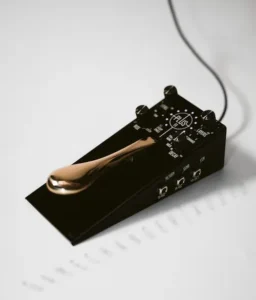 The most important upgrade in the Plus Pedal II isn’t visible on the enclosure. It sits at the center of the signal path. Gamechanger Audio has replaced the original sustain engine with what it calls Spectral Sampling, a redesigned DSP architecture intended to produce more natural, continuously evolving sustain than the first-generation pedal.
Unlike traditional freeze processors that simply replay captured audio, the new engine analyzes incoming material before generating sustained layers through spectral resynthesis. The objective is straightforward: preserve more of the instrument’s harmonic identity while minimizing the static, loop-like character that often develops during long sustain passages.
Whether the algorithm fully delivers on that promise still requires independent evaluation. At the time of writing, there are no published measurements examining latency, phase behavior, or long-duration harmonic stability. Even so, the architectural change itself represents a meaningful departure from conventional sustain pedal design, where looping remains the dominant approach.
The redesign also broadens the pedal’s role inside a studio. Thanks to its balanced XLR input and integrated microphone preamp, the Plus Pedal II is no longer limited to electric guitar. Vocals, acoustic instruments, orchestral sources, brass, woodwinds, and other microphone-level signals can feed the sustain engine directly without relying on external hardware.
That flexibility makes the pedal relevant in recording environments where sustained textures are created during tracking rather than assembled later inside a DAW. Instead of printing loops and layering multiple software processors, performers can develop harmonic beds in real time while maintaining a continuous performance.
Layer management is another practical improvement. Users can limit the sustain engine to a single layer, build up to ten simultaneous layers, or switch to an Infinite mode that continuously integrates older material into newly captured audio. While this appears to be a simple control, it directly affects arrangement density. Excessive harmonic accumulation is one of the fastest ways to reduce clarity in ambient productions, making controlled layer management far more useful than unlimited sustain alone.
The revised Rise and Decay controls expand that level of control further. Instead of treating sustain as a binary process, individual layers can enter and exit the texture more gradually, allowing evolving pads to remain dynamic rather than collapsing into static drones.
The redesigned effects loop deserves equal attention. External processors can now be inserted before spectral analysis, inside the sustain engine, or after the generated sustain signal. Those routing options aren’t simply convenience features. Processing audio before harmonic reconstruction produces fundamentally different results than processing an already sustained signal, giving producers considerably more freedom when combining modulation, saturation, delay, or spatial effects.
Viewed as a complete system, the Plus Pedal II functions less like a traditional effects pedal and more like a dedicated sustain processor for modern audio production. It isn’t intended to replace reverbs, loopers, or granular processors. Instead, it occupies the space between them, generating evolving harmonic material at the recording stage rather than reconstructing it later during mixing.
Technical Specifications
While the Plus Pedal II introduces a fundamentally redesigned sustain engine, its practical value also depends on the hardware platform surrounding that DSP. The table below summarizes the core specifications that matter in real recording and performance environments rather than marketing terminology.
| Specification | Details |
|---|---|
| Processing Engine | Spectral Sampling (real-time spectral resynthesis) |
| Sustain Layers | 1–10 selectable layers or Infinite mode |
| Automatic Capture | Auto Layer Catch intelligent note detection |
| Inputs | Instrument input and balanced XLR microphone input |
| Microphone Preamp | Integrated studio-grade mic preamp |
| Effects Loop | Three-position routing: Pre, Mix, or Post engine |
| Layer Controls | Rise, Decay, Tone, Resonance, Hold and Catch modes |
| External Footswitch | Optional (Wet, Latch and Hide operating modes) |
| Visual Feedback | Circular LED layer status display |
| Latency | Not officially published at the time of writing |
| DSP Load | External hardware processing (no DAW CPU usage) |
| Recommended Applications | Ambient production, cinematic scoring, sound design, experimental performance |
Unlike conventional specification tables that simply repeat the manufacturer’s brochure, these details have direct production implications. The external DSP architecture removes CPU load from the DAW, configurable layer management helps prevent excessive harmonic buildup during recording, and the flexible signal routing allows the Plus Pedal II to function as a creative recording processor rather than only a live performance pedal. The only significant technical unknown remains processing latency, which still awaits independent laboratory measurements.
How the Plus Pedal II Improves Real Recording Workflows
Creative hardware often promises faster production simply by adding more features. In practice, additional controls rarely improve efficiency unless they eliminate repetitive actions during recording. The Plus Pedal II is a good example. Its most meaningful improvements aren’t new sound-shaping options—they’re changes to how performers interact with the sustain engine.
The original Plus Pedal required musicians to actively manage every sustained layer. Capturing new material became part of the performance, forcing players to divide their attention between musical phrasing and pedal timing. During simple passages this wasn’t particularly disruptive. During extended improvisation, soundtrack sessions, or ambient recording, however, repeated pedal interaction could become a noticeable source of creative interruption.
Auto Layer Catch is designed to remove much of that overhead. Instead of manually triggering every sustain event, performers can keep the pedal engaged while the DSP detects incoming note attacks and incorporates them into the active harmonic texture automatically. The result isn’t greater automation for its own sake—it simply allows longer uninterrupted performances with fewer mechanical decisions.
That workflow becomes especially valuable when recording material that develops over time rather than around short musical phrases. Film composers, ambient guitarists, orchestral performers, and experimental musicians often record extended passes before selecting the strongest sections during editing. The same production philosophy applies to modern cinematic sample libraries such as Handcrafted Mallets, where expressive performance remains more important than excessive post-processing. Reducing interruptions increases the likelihood of capturing complete musical ideas instead of fragmented performances assembled from multiple takes.
The redesigned input stage expands those workflows beyond electric guitar. With its integrated microphone preamp and balanced XLR input, the Plus Pedal II can process vocals, acoustic instruments, brass, woodwinds, and other microphone-level sources directly. Instead of constructing harmonic beds later with multiple plugins, performers can record evolving sustained textures as part of the original performance.
That distinction changes how the pedal fits into a studio environment. Rather than functioning as another effects processor inserted during mixing, it becomes a creative front-end tool that shapes musical material before it reaches the DAW. For productions built around atmospheric layers, recording those textures at the source often produces more coherent performances than recreating them later through editing.
None of this eliminates the need for careful arrangement. Sustained harmonic material occupies significant spectral space regardless of how it is generated. Poorly chosen voicings, excessive layering, or weak performances remain exactly that. The Plus Pedal II doesn’t solve musical problems—it simply provides a more efficient way to capture performances that already work.
Viewed from that perspective, the pedal’s workflow improvements are genuine but highly context-dependent. Studios producing cinematic, ambient, experimental, or textural music are likely to benefit far more than facilities focused primarily on conventional tracking, editing, or commercial pop production.
Engineering Reality vs Marketing Claims
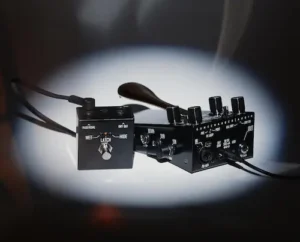 Gamechanger Audio has built its reputation by developing products that challenge conventional audio hardware rather than refining familiar designs. The Plasma Pedal, Motor Synth, and the original Plus Pedal all explored concepts that few manufacturers were willing to commercialize. That history gives the company credibility, but it doesn’t eliminate the need to evaluate technical claims independently.
The centerpiece of the Plus Pedal II is its new Spectral Sampling engine. According to Gamechanger Audio, the redesigned DSP captures incoming audio, analyzes its spectral content, and reconstructs sustained layers while preserving more of the original instrument’s harmonic structure and dynamic behavior than traditional sustain processors.
From a signal-processing perspective, that objective is entirely plausible. Spectral resynthesis has been used successfully in restoration software, advanced time-stretching algorithms, and modern synthesis systems for years. What remains unknown is how effectively those techniques perform under continuous, real-time performance conditions inside dedicated hardware.
At the time of writing, no independent technical analysis has examined the Plus Pedal II’s latency, phase response, long-duration harmonic stability, artifact generation, or behavior under dense polyphonic material. Those measurements are more valuable than marketing terminology because they determine whether the processor remains transparent during extended recording sessions rather than only during carefully prepared demonstrations.
A similar distinction applies to comparisons with an acoustic piano’s sustain pedal. Auto Layer Catch clearly reduces the amount of manual interaction required during performance, making the workflow feel more natural than conventional freeze processors. That does not mean the pedal recreates acoustic sustain. A piano generates resonance through vibrating strings and sympathetic coupling inside a physical instrument, whereas the Plus Pedal II creates sustained layers through digital signal processing. The playing experience may become more intuitive, but the underlying mechanisms remain fundamentally different.
The new Resonator control should be viewed in the same context. It introduces harmonic interaction between sustained layers rather than physically modeling the behavior of resonating strings or acoustic bodies. That distinction matters because the processor is designed to create musically useful textures—not to simulate acoustic physics.
The redesigned interface also deserves a balanced assessment. Compared with the original Plus Pedal, Version II offers substantially deeper control over layer management, sustain behavior, routing, and performance modes. Experienced users will likely appreciate that flexibility, particularly in studio environments where repeatability is important. New users, however, should expect a steeper learning curve. The additional controls expand creative possibilities, but they also introduce more configuration decisions before the pedal becomes second nature during performance.
Ultimately, the engineering changes appear meaningful, while some of the marketing language remains ahead of the available evidence. The workflow improvements are easy to understand and likely to benefit many performers immediately. Claims regarding superior transparency, harmonic preservation, and realism will require independent measurements and long-term professional use before they can be treated as established fact.
How the Plus Pedal II Compares with Today’s Best Sustain Processors
Finding direct competitors for the Plus Pedal II is more difficult than comparing it to conventional guitar effects because it occupies a relatively uncommon category. Most sustain-oriented products solve different problems using fundamentally different technologies, making workflow a more useful point of comparison than feature lists.
| Product | Processing Approach | Best Application | Main Trade-Off |
|---|---|---|---|
| Gamechanger Audio Plus Pedal II | Spectral sustain with automatic layer generation | Ambient production, cinematic scoring, experimental recording | Premium price and a more specialized workflow |
| Electro-Harmonix Deep Freeze | Traditional freeze processing | Simple live sustain and static textures | Limited harmonic evolution |
| Electro-Harmonix Freeze | Basic sustain capture | Minimalist pedalboards and straightforward live use | Minimal control over sustained material |
| Hologram Infinite Jets | Granular processing and resynthesis | Experimental sound design and electronic music | Transforms the source rather than preserving it |
| Sustainiac System | Electromagnetic string excitation | Infinite sustain on electric guitar | Requires dedicated hardware installation |
The closest competitor is Electro-Harmonix’s Deep Freeze, but even that comparison has limitations. Deep Freeze focuses on capturing and holding audio as predictably as possible, making it an excellent choice for players who want immediate, repeatable sustain without changing their existing performance technique.
The Plus Pedal II takes a broader view of sustain. Rather than extending a single captured moment, it attempts to build continuously evolving harmonic layers that remain part of an ongoing performance. For musicians writing cinematic, ambient, or textural music, that distinction has a greater impact on workflow than differences in sound quality alone.
Other products approach the problem from entirely different directions. Hologram Infinite Jets uses granular processing to reshape incoming audio into new textures, prioritizing transformation over realism. Sustainiac bypasses DSP altogether by physically exciting guitar strings through electromagnetic feedback, creating genuine string vibration instead of synthesized sustain. Neither product addresses the same recording workflow as the Plus Pedal II, even though all three are sometimes discussed under the broader category of sustain devices.
Viewed in that context, the Plus Pedal II occupies a unique position between freeze processing, live looping, and spectral resynthesis. Rather than competing directly with advanced ambience processors such as the Strymon TimeLine MX, it addresses an earlier stage of the creative workflow by generating sustained harmonic material before delay, reverb, and other spatial processing become part of the signal chain. It doesn’t replace those approaches—it complements them.
Pros & Cons
Pros
- Genuinely rethinks sustain generation instead of refining traditional freeze processing.
- Auto Layer Catch significantly reduces performance interruptions during recording.
- Spectral Sampling engine aims to preserve more natural harmonic movement than conventional looping methods.
- Balanced XLR input and integrated microphone preamp expand the pedal well beyond guitar applications.
- Flexible effects loop routing supports sophisticated studio signal chains.
- Layer management provides precise control over texture density instead of unlimited accumulation.
- External DSP processing places no additional CPU load on the DAW.
Cons
- Premium pricing limits its appeal to specialized production workflows.
- Independent latency and technical performance measurements are still limited.
- Steeper learning curve than traditional sustain or freeze pedals.
- Its strengths are less relevant for conventional rock, blues, or straightforward guitar production.
- Creative value depends heavily on the quality of the incoming performance.
The Plus Pedal II is neither a universal effects pedal nor a replacement for traditional sustain processors. Its strengths become apparent in productions built around evolving textures, cinematic arrangements, and long-form performances, while more conventional recording workflows may never fully utilize its expanded feature set.
Who Should Buy the Plus Pedal II?
The Plus Pedal II isn’t designed to replace a conventional sustain pedal or become a universal studio processor. Its value depends almost entirely on how often evolving harmonic textures are part of your production workflow. For some musicians it can become a primary creative tool, while others may only use a fraction of its capabilities.
| User | Recommendation | Why |
|---|---|---|
| Film & TV Composers | Highly Recommended | Excellent for evolving harmonic beds, orchestral layering, and cinematic textures. |
| Ambient & Experimental Producers | Highly Recommended | One of the most flexible hardware solutions for continuous sustain and evolving soundscapes. |
| Sound Designers | Highly Recommended | Creative routing, spectral sustain, and live performance integration encourage experimentation. |
| Recording Studios | Recommended | Useful when working with clients producing cinematic, post-rock, ambient, or hybrid productions. |
| Singer-Songwriters | Situational | Most useful if sustained textures play an important role in the arrangement. |
| Traditional Rock & Blues Guitarists | Limited Value | Many players may achieve similar results with simpler sustain or freeze solutions. |
| Mixing & Mastering Engineers | Limited Value | Its benefits occur before mixing, making it a recording tool rather than a post-production processor. |
Viewed objectively, the Plus Pedal II is a specialized creative processor rather than an all-purpose effects pedal. Studios producing cinematic, ambient, or experimental music are likely to realize significantly greater value than facilities focused on conventional commercial recording.
Real-World Production Applications
The Plus Pedal II isn’t equally effective across every production style. Its redesigned sustain engine delivers the greatest value when evolving harmonic material is part of the arrangement rather than a decorative effect. The table below reflects its practical usefulness in professional production environments.
| Application | Rating | Editorial Notes |
|---|---|---|
| Film Scoring | ★★★★★ | Excellent for evolving orchestral textures, sustained harmonic beds, and cinematic transitions. |
| Ambient Production | ★★★★★ | One of the strongest hardware workflows currently available for continuous harmonic development. |
| Sound Design | ★★★★★ | Flexible routing and spectral sustain encourage creative experimentation during recording. |
| Post-Rock | ★★★★★ | Well suited to layered guitars, atmospheric arrangements, and long-form performances. |
| Experimental Electronic Music | ★★★★☆ | Works particularly well when combined with modulation, delay, and granular processing. |
| Acoustic Instruments | ★★★★☆ | The microphone preamp and XLR input expand sustain processing beyond traditional guitar rigs. |
| Live Performance | ★★★★☆ | Auto Layer Catch reduces pedal interaction, although latency measurements remain unpublished. |
| Traditional Guitar Production | ★★★☆☆ | Many players may not require the additional complexity offered by the second-generation workflow. |
Rather than replacing conventional reverbs, delays, or freeze pedals, the Plus Pedal II performs a different role. It generates sustained musical material at the recording stage, allowing subsequent processing to shape an already evolving performance instead of constructing that movement later inside the DAW.
How the Plus Pedal II Fits into Professional Music Production
The Plus Pedal II is marketed as a performance tool, but its greatest value may emerge during recording rather than on stage. Unlike processors designed to correct audio after the fact, it influences the material before it reaches the DAW, shaping performances, arrangements, and harmonic development at the source.
That distinction is important because no amount of processing during mixing can fully recreate musical interaction captured during performance. When sustained textures develop naturally as musicians play, phrasing, dynamics, and timing tend to remain more coherent than when similar layers are assembled later through looping, editing, or multiple software processors.
This workflow is particularly relevant in cinematic scoring, ambient music, post-rock, experimental production, and modern classical recording, where sustained harmonic movement often functions as part of the composition rather than as an effect.
From a mixing perspective, however, the Plus Pedal II should be treated as another instrument rather than another processor. Every sustained layer occupies spectral and dynamic space inside the arrangement. Dense harmonic textures can quickly mask vocals, pianos, guitars, orchestral instruments, or other sustained sources if they are left unmanaged.
That makes the pedal’s layer management more significant than it first appears. Limiting the number of simultaneous sustain layers during recording often produces cleaner arrangements than relying on corrective equalization or automation after the performance has already been captured. The most effective ambient productions usually achieve clarity through arrangement decisions rather than aggressive post-processing.
The pedal has little direct application during mastering. It neither improves sonic fidelity nor replaces traditional mastering processors. Its influence is indirect: productions built around dense sustained textures naturally present different balance, dynamics, and spectral distribution than conventional arrangements. Those issues are far easier to solve during recording and mixing than during mastering—a principle explored in our Prepare Mix for Mastering guide.
Hardware implementation provides another practical advantage. Because all processing occurs internally, the Plus Pedal II places no additional CPU load on the DAW, allowing complex sustain processing without increasing session complexity. That may not matter for small projects, but larger orchestral or hybrid scoring sessions often benefit from moving specialized processing outside the computer.
One area that still requires independent evaluation is performance latency. Gamechanger Audio designed the pedal for real-time use, but objective latency measurements have not yet been published. For atmospheric music this is unlikely to become a critical limitation, while highly rhythmic performances may prove more sensitive once independent testing becomes available.
Viewed in the context of professional production, the Plus Pedal II is best understood as a front-end creative processor. Its purpose isn’t to improve finished mixes or replace existing studio tools, but to capture stronger source material before the mix reaches the mastering stage. Understanding where creative processing ends and mastering begins is discussed in our Mixing vs Mastering guide.
Verdict
The Plus Pedal II is more than a second-generation update. It rethinks how sustained textures are created during performance, shifting the focus from manually capturing audio to maintaining a continuous musical workflow. That change alone makes it one of the more interesting hardware releases in its category.
The redesigned DSP engine, Auto Layer Catch, expanded routing options, and microphone input collectively move the pedal beyond its original role as a guitar effect. Instead, it functions as a dedicated sustain processor that can integrate into recording sessions involving guitars, vocals, acoustic instruments, and cinematic sound design.
Not every claim can be verified yet. Independent measurements covering latency, phase behavior, harmonic stability, and long-duration transparency are still limited, making it too early to confirm whether the Spectral Sampling engine consistently outperforms existing sustain technologies under every recording condition. Those questions deserve objective testing rather than assumptions.
Even with those reservations, the workflow improvements appear substantial. Musicians who regularly create ambient, cinematic, post-rock, or experimental productions are likely to benefit immediately from the reduced performance overhead and more natural interaction model. For those users, the Plus Pedal II offers advantages that extend well beyond additional features.
Studios focused primarily on conventional tracking, commercial pop production, mixing, or mastering are less likely to see the same return on investment. The pedal doesn’t replace core production tools, nor is it intended to. Its value depends almost entirely on whether sustained harmonic textures play a meaningful role in the creative process.
Viewed objectively, the Plus Pedal II doesn’t redefine modern audio production—but it does establish one of the most refined workflows currently available for generating evolving sustain in real time. For the right musician or studio, that alone is enough to justify serious consideration.
Overall Rating
| Category | Rating |
|---|---|
| Sound Quality | 9.3/10 |
| Workflow Innovation | 9.8/10 |
| Recording Flexibility | 9.6/10 |
| Ease of Use | 8.8/10 |
| Creative Potential | 9.7/10 |
| Value for Money | 8.7/10 |
| Overall | 9.3/10 |
Sound Quality — 9.3/10
The Spectral Sampling engine produces sustained textures that remain noticeably more organic than conventional freeze processors. Independent laboratory measurements are still limited, but early demonstrations indicate a substantial improvement in harmonic continuity over traditional looping-based sustain designs.
Workflow Innovation — 9.8/10
Auto Layer Catch is the defining feature of the Plus Pedal II. By removing the need to manually capture every sustain layer, it reduces performance overhead and allows musicians to concentrate on phrasing rather than pedal timing. Among current sustain processors, this represents one of the most meaningful workflow improvements in recent years.
Recording Flexibility — 9.6/10
The addition of a balanced XLR input, integrated microphone preamp, configurable effects routing, and support for multiple instrument types transforms the pedal into a versatile recording tool rather than a guitar-only effects unit. It fits naturally into modern hybrid production environments.
Ease of Use — 8.8/10
Performance operation has become significantly more intuitive than the original model, but the expanded routing options, layer management, and additional operating modes introduce a steeper learning curve. New users should expect some setup time before the workflow becomes second nature.
Creative Potential — 9.7/10
Few hardware processors currently offer the same combination of evolving sustain, spectral processing, and live performance integration. For cinematic composers, ambient musicians, sound designers, and experimental producers, the Plus Pedal II opens creative workflows that would otherwise require several separate processors.
Value for Money — 8.7/10
The premium price makes sense for studios and musicians who regularly build productions around evolving harmonic textures. For conventional recording, commercial pop, or general-purpose guitar work, the investment is more difficult to justify because many of its strengths may remain underused.
Overall — 9.3/10
The Plus Pedal II is one of the most original sustain processors currently available. It does not attempt to replace reverbs, freeze pedals, or loopers—instead, it introduces a more natural way of generating evolving harmonic material during performance. While its appeal is focused rather than universal, the engineering improvements represent a genuine advance for composers, sound designers, and musicians working with cinematic or ambient production workflows.
Frequently Asked Questions
Can the Plus Pedal II process instruments other than electric guitar?
Yes. Thanks to its balanced XLR input, integrated microphone preamp, and standard instrument input, the Plus Pedal II can process vocals, acoustic guitars, orchestral instruments, brass, woodwinds, synthesizers, and other line- or mic-level sources without requiring additional hardware.
Is the Plus Pedal II better than a traditional freeze pedal?
Not necessarily. Freeze pedals are designed to capture and hold a single sustained sound with minimal setup. The Plus Pedal II focuses on continuously evolving harmonic layers, making it a better choice for ambient performance, cinematic scoring, and experimental production rather than straightforward sustain.
Can the Plus Pedal II be used in a professional recording studio?
Yes. Its expanded connectivity and microphone input allow it to function as a creative front-end processor during recording. It is particularly useful when sustained textures are intended to become part of the original performance instead of being constructed later with software.
Does the Plus Pedal II replace ambient plugins?
No. It complements software rather than replacing it. Reverbs, delays, modulation effects, and spatial processors still play an essential role during mixing, while the Plus Pedal II focuses on generating sustained harmonic material at the recording stage.
Is Auto Layer Catch the biggest improvement over the original Plus Pedal?
For many users, yes. The feature reduces the need to manually capture every sustained layer, allowing performers to concentrate on phrasing instead of pedal timing. Combined with the redesigned DSP engine, it represents the most significant workflow improvement in the second-generation model.
Does the pedal introduce measurable latency?
The Plus Pedal II is designed for real-time performance, but independent latency measurements have not yet been widely published. Most early demonstrations suggest responsive operation, although objective testing is still limited.
Who benefits most from the Plus Pedal II?
The pedal is best suited to composers, ambient musicians, soundtrack producers, sound designers, post-rock artists, and experimental performers who regularly build arrangements around evolving harmonic textures. Its advantages are less significant for conventional recording or commercial pop production.
Is the Plus Pedal II useful for mixing or mastering engineers?
Only indirectly. It does not replace mixing or mastering processors, but it can improve the quality of recorded source material by allowing sustained textures to develop naturally during performance rather than being reconstructed during post-production. If you’re interested in what actually happens after the mix is finished, see our guide to How Professional Mastering Works.
Is upgrading from the original Plus Pedal worthwhile?
Users who rely on the original pedal for ambient or cinematic work are likely to appreciate the redesigned sustain engine, Auto Layer Catch, expanded routing, and microphone support. Musicians who only use sustain occasionally may find fewer reasons to upgrade immediately.

Yurii Ariefiev is a mastering engineer and audio production editor who evaluates professional music production tools through complete recording and production workflows rather than manufacturer specifications. His reviews focus on how new tools affect performance, recording efficiency, mixing decisions, and the quality of source material before mastering.
This editorial review examines the Gamechanger Audio Plus Pedal II from an engineering perspective, analyzing its Spectral Sampling engine, sustain workflow, recording applications, and practical value inside professional music production instead of repeating product marketing.