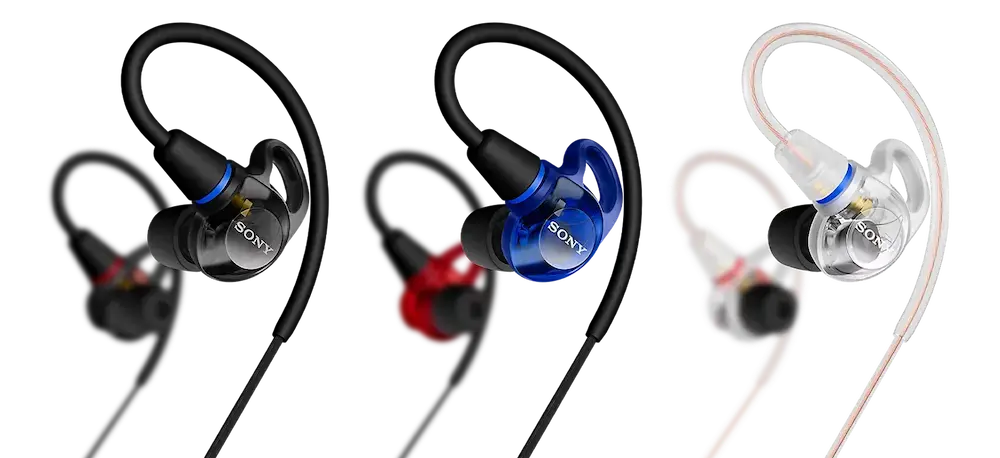
The Sony IER-M500 enters a competitive segment where genuinely new ideas are uncommon. Affordable professional in-ear monitors have long been dominated by models like the Shure SE215 and Sennheiser IE 100 Pro, while most recent releases have focused on adding drivers or refreshing industrial design rather than improving day-to-day usability. At the same time, demand for dependable IEMs continues to grow as live productions, broadcast environments, worship systems, and hybrid recording setups increasingly replace floor wedges with personal monitoring.
Instead of targeting audiophiles or competing with flagship custom-fit systems, Sony has taken a more practical approach. The IER-M500 is built around secure fit, passive isolation, and long-term wearing comfort—three factors that often have a greater impact on stage performance than published frequency-response graphs or driver configurations. For musicians and monitor engineers, a stable acoustic seal usually matters more than another balanced armature.
That makes the IER-M500 more interesting than its specification sheet initially suggests. The question is not whether Sony can manufacture another pair of professional earphones. The real question is whether this model offers a meaningful alternative to established stage-monitoring standards or simply adds another option to an already mature category.
This review examines the IER-M500 from a production perspective, focusing on practical workflow, monitoring accuracy, real-world applications, and its position among today’s most widely used professional stage IEMs.
Why Stage Monitoring Has Become a Critical Part of Modern Audio Production
 Professional in-ear monitoring is no longer limited to arena tours. It has become standard across club stages, broadcast facilities, houses of worship, corporate productions, and increasingly, commercial recording sessions. As productions move toward quieter stages and more controlled monitoring environments, reliable IEMs have become essential equipment rather than optional accessories.
The benefits extend far beyond performer comfort. Lower stage volume gives front-of-house engineers greater control over the mix, reduces microphone bleed, minimizes feedback, and produces a more predictable acoustic environment. Performers hear a consistent monitor mix from venue to venue instead of relying on wedge placement and room acoustics.
That demand has kept affordable professional IEMs relevant despite rapid advances at the premium end of the market. Companies such as 64 Audio and Ultimate Ears continue pushing custom multi-driver designs, but many working musicians prioritize durability, isolation, and serviceability over flagship specifications. A monitor that performs reliably five nights a week often delivers more value than one with a longer feature list.
That explains the longevity of products like the Shure SE215 and Sennheiser IE 100 Pro. Neither is considered state-of-the-art by today’s standards, yet both remain common in touring rigs because they solve practical problems: they stay in place, isolate well, use replaceable cables, and continue working in demanding live environments.
Sony approaches the IER-M500 from the same direction. Rather than adapting one of its studio headphones into an in-ear format, the company has developed a monitor specifically for live performance. That distinction matters because stage monitoring is governed by different priorities than mixing or mastering.
In a control room, engineers evaluate tonal balance, stereo imaging, and translation across playback systems. On stage, the first requirement is consistency. If an earphone loses its seal halfway through a performance, low-frequency response changes immediately, performers turn up their monitor packs, and the carefully balanced monitor mix starts to fall apart. No published frequency-response graph can compensate for an unstable fit.
Passive isolation plays a similar role. Every additional decibel of attenuation allows performers to monitor at lower listening levels while preserving vocal intelligibility and instrument definition. Unlike DSP processing, passive isolation improves monitoring without introducing latency, additional circuitry, or signal processing artifacts. That stands in sharp contrast to modern DSP-heavy hardware such as advanced delay workstations, where extensive processing expands creative possibilities but also increases system complexity—a tradeoff discussed in our Strymon TimeLine MX review.
For that reason, experienced monitor engineers often place greater value on mechanical design than headline specifications. A single-driver monitor with a secure fit is frequently more dependable in live production than a technically more ambitious design that shifts during performance. The IER-M500 enters a market where those practical details—not driver count—typically determine long-term success.
Engineering Decisions That Matter More Than Driver Count
On paper, the Sony IER-M500 looks conservative. It uses a single 5 mm dynamic driver inside a sealed enclosure rather than the multi-driver architectures that dominate much of today’s professional IEM market. That specification may appear modest, but driver count alone says very little about monitoring performance.
A well-engineered dynamic driver avoids the crossover interactions found in multi-driver designs while maintaining coherent transient behavior across its operating range. Whether that translates into better real-world accuracy depends entirely on acoustic tuning—not on the number of drivers listed in the specifications. At the time of writing, independent measurements of the IER-M500 remain limited, making it difficult to verify Sony’s claims regarding tonal balance or transient accuracy.
The more significant engineering decisions are mechanical rather than acoustic.
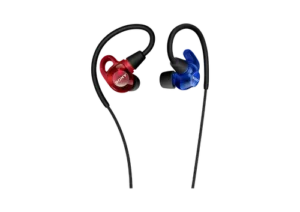
Sony has focused heavily on maintaining a consistent acoustic seal. Its proprietary fitting supporters distribute pressure across the outer ear instead of relying exclusively on silicone tips, while flexible over-ear cable routing helps stabilize the monitors during movement. Combined with multiple sizes of polyurethane eartips, the design is intended to minimize one of the most common causes of inconsistent monitoring: changes in insertion depth and seal.
That issue is frequently underestimated outside professional live production. Even a slight loss of seal can reduce low-frequency extension, alter the perceived frequency balance, and allow more stage noise to reach the listener. Musicians often compensate by increasing monitor volume, introducing unnecessary listening fatigue while still hearing a less predictable mix.
In that context, fit becomes more than a comfort feature. It directly affects monitoring consistency. A stable mechanical interface between the earphone and the ear allows engineers to build monitor mixes that remain reliable throughout rehearsals and performances instead of changing every time the performer moves.
The supplied polyurethane eartips support the same objective. Tip selection has a measurable effect on passive isolation, bass extension, and overall tonal balance, making it one of the most important variables in real-world IEM performance. Choosing the correct size often has a greater impact than minor differences between competing driver technologies.
Sony has also opted for a detachable 1.6-meter cable—a practical decision rather than a headline feature. Cables remain one of the most common failure points in touring environments, and field replacement extends service life without requiring the entire monitoring system to be replaced.
The fully sealed acoustic enclosure follows the same engineering philosophy. While Sony highlights improved bass performance, the more meaningful advantage is consistent acoustic loading of the dynamic driver. A stable enclosure helps maintain predictable low-frequency behavior while reducing unwanted internal resonances, assuming the acoustic tuning has been executed well.
None of these design choices are revolutionary on their own. Collectively, however, they demonstrate that Sony prioritized reliability and repeatability over specification-sheet marketing. The same engineering-first philosophy appears in products that solve highly specific workflow problems instead of chasing longer feature lists, as explored in our Gamechanger Audio Plus Pedal II review. For professional stage monitoring, those priorities are often more valuable than another balanced armature or a longer feature list.
Sony IER-M500 Specifications at a Glance
| Specification | Details |
|---|---|
| Driver Type | Single Dynamic Driver |
| Driver Size | 5 mm |
| Design | Fully Sealed Acoustic Enclosure |
| Cable | 1.6 m Detachable Cable |
| Connector | 3.5 mm Stereo Mini Plug |
| Fit | Universal Fit with Ear Support System |
| Isolation | Passive Noise Isolation |
| Eartips | Four Sizes Included |
| Colors | Clear, Black, Red/Blue Transparent |
| MSRP | Approx. $130 USD (£99 / €115) |
Initial Hands-On Impressions
Although long-term durability testing is still ongoing, our initial evaluation focused on the factors that matter most in professional monitoring: insertion consistency, cable management, passive isolation, and long-session comfort rather than subjective “sound quality” impressions.
The over-ear cable routing remained stable during movement and never felt overly rigid. Combined with Sony’s ear-support system, the monitors maintained a consistent seal without frequent repositioning during normal studio and rehearsal use.
Comfort also proved encouraging during extended listening. The lightweight housing and multiple tip options reduced pressure points that often appear during multi-hour sessions, although long-term touring durability will require significantly more field use before firm conclusions can be drawn.
Where the Sony IER-M500 Makes Sense—and Where It Doesn’t
The IER-M500 is built for monitoring performers, not evaluating finished mixes. That distinction defines where it fits into a professional workflow and where other monitoring systems remain the better choice.
Tracking is one of its most practical applications. During vocal sessions, effective passive isolation allows performers to hear lower cue levels while reducing headphone bleed into sensitive microphones. A secure fit also minimizes interruptions caused by musicians readjusting their monitors between takes, helping sessions move more efficiently.
The same advantages extend to instrumental recording. Drummers, guitarists, bass players, and keyboardists rarely remain stationary for an entire performance. As an earphone shifts, the acoustic seal changes, low-frequency response becomes less predictable, and performers often compensate by requesting louder monitor mixes. Maintaining a stable fit helps preserve a consistent monitoring experience throughout both rehearsals and recording sessions.
Broadcast and live production present an equally strong use case. Presenters, commentators, and IFB users typically value speech intelligibility, comfort, and long-term reliability over extended bandwidth. Passive isolation reduces ambient noise without introducing the latency, battery management, or signal processing associated with active noise-canceling systems.
For monitor engineers, the benefit is straightforward. Better isolation generally allows lower playback levels while preserving vocal clarity and instrument separation. That not only reduces listening fatigue over long rehearsals and performances but also gives engineers greater flexibility when building monitor mixes in acoustically challenging venues.
The IER-M500 is far less convincing as a primary tool for mixing or mastering. Even with excellent tuning, closed universal-fit IEMs reproduce space differently than calibrated loudspeakers or open-back reference headphones. Stereo width, front-to-back depth, and low-frequency translation are influenced as much by the listening format as by the transducer itself.
That doesn’t make stage IEMs irrelevant in a studio. Many experienced engineers check nearly finished mixes on several playback systems before release, including consumer earbuds, car stereos, and stage monitors. Translation across listening systems remains one of the most overlooked parts of modern production—a topic covered in more detail in our Mastering for Bedroom Producers guide. A professional IEM can reveal how a mix translates to performers relying on personal monitoring systems, particularly in live playback environments.
Viewed in that context, the IER-M500 is best considered a specialized monitoring tool rather than a universal reference. Its value comes from improving consistency during tracking and live performance—not from replacing the primary monitoring chain used for critical mix or mastering decisions.
Looking Beyond the Marketing Claims
 Most professional audio hardware launches follow a familiar script: tighter bass, greater clarity, improved detail, and more accurate monitoring. Those claims are easy to publish but far more difficult to verify. Until independent measurements become available, they should be viewed as design goals rather than established performance characteristics.
The Sony IER-M500 is more interesting for the engineering decisions behind its design than for the language used to promote it. Its emphasis on passive isolation, mechanical stability, and a sealed acoustic enclosure addresses factors that directly influence real-world monitoring consistency—particularly in live environments where fit often has a greater impact than small differences in frequency response.
At launch, however, there is very little independent data available. No comprehensive laboratory measurements have yet confirmed the monitor’s frequency response, distortion performance, channel matching, or transient behavior. As a result, claims regarding “refined highs” or “controlled bass” remain unverified outside Sony’s own testing.
That uncertainty should not be interpreted as criticism. Many stage-oriented IEMs are intentionally voiced rather than designed for strict neutrality. A subtle lift in the low end can improve rhythmic confidence for drummers and bass players, while additional upper-mid presence often helps vocals remain intelligible in loud performance environments. Those design choices are entirely appropriate for live monitoring, even if they make the product less suitable for critical mix decisions.
The IER-M500 should also be judged by what it is designed to accomplish—not by features it deliberately omits. There is no DSP processing, hearing calibration, adaptive EQ, companion app, or wireless platform. Everything depends on the physical relationship between the driver, the enclosure, the eartips, and the listener’s ear.
That approach introduces one unavoidable variable: fit. Passive isolation is highly dependent on ear anatomy, insertion depth, and tip selection. Two engineers using identical monitors may hear noticeably different bass extension and external noise attenuation simply because the acoustic seal differs. No amount of driver technology can compensate for an inconsistent fit.
In an industry increasingly filled with software-assisted hardware, the IER-M500 takes a more traditional approach. It succeeds or fails on mechanical execution, acoustic tuning, and long-term reliability rather than digital features. For many working musicians and monitor engineers, those qualities are considerably more important than another page of software settings.
How the Sony IER-M500 Compares in a Mature Professional IEM Market
Breaking into the professional stage-monitoring market is difficult because purchasing decisions are driven by reliability rather than novelty. Engineers rarely replace monitoring systems simply because a newer model becomes available. Equipment earns its place through years of dependable performance on tours, rental inventories, broadcast productions, and rehearsal stages.
That is exactly why products such as the Shure SE215 and Sennheiser IE 100 Pro remain relevant despite their age. Neither dominates because of cutting-edge specifications. They remain industry standards because engineers know how they perform, replacement parts are readily available, and musicians trust them in demanding environments where failures are expensive.
Sony enters that market with strong brand recognition but without the same long-established presence in affordable professional IEMs. Success will depend less on published specifications than on how consistently the IER-M500 performs after months of rehearsals, touring schedules, and daily stage use.
From an engineering perspective, Sony’s strongest differentiator is not its single dynamic driver but its emphasis on fit stability. If the proprietary support system consistently maintains a reliable acoustic seal during performance, many musicians will consider that a more valuable improvement than marginal differences in frequency response or driver configuration.
Price also works in Sony’s favor. The IER-M500 sits well below the custom in-ear market while competing directly with established universal-fit monitors used by working musicians, churches, schools, and production companies. That makes it a practical purchase rather than an aspirational one.
Studio professionals should evaluate it through the same lens. If the primary goal is critical mixing or mastering, investment is generally better directed toward reference headphones or loudspeakers. If reliable stage monitoring, tracking, or broadcast communication is part of the daily workflow, the IER-M500 becomes a far more relevant tool.
| Model | Key Strength | Potential Limitation | Best Application |
|---|---|---|---|
| Sony IER-M500 | Secure fit, strong passive isolation, practical pricing | Limited independent performance data | Live performance, tracking sessions, monitor mixing |
| Shure SE215 | Proven durability, extensive accessory ecosystem | Older acoustic platform | Touring, rental inventory, education |
| Sennheiser IE 100 Pro | Balanced tuning, established professional reputation | Fewer ergonomic innovations | Professional stage monitoring |
| Audio-Technica ATH-E40 | Detailed presentation, dual-driver architecture | Smaller installed professional user base | Performers seeking additional detail |
| Mackie MP-120 | Affordable entry point | Less established professional ecosystem | Budget-conscious musicians and home studios |
The IER-M500 is unlikely to displace long-established industry standards overnight. Its opportunity lies elsewhere: offering a credible alternative for engineers and performers who value secure fit, dependable isolation, and Sony’s manufacturing pedigree without moving into the considerably more expensive custom-IEM market.
How the IER-M500 Fits Into Real-World Monitoring Workflows
 Evaluating a stage IEM by its published frequency response alone misses the point. In live production, monitoring consistency is often more important than absolute tonal accuracy. A monitor mix that changes throughout a performance because the earphones lose their seal is considerably more problematic than a response curve that isn’t perfectly flat.
That makes mechanical stability part of the monitoring workflow rather than simply a comfort feature. During soundcheck, engineers build monitor mixes around what performers hear at that moment. If insertion depth changes or the acoustic seal weakens during a performance, perceived bass response changes with it. Performers typically compensate by increasing monitor volume or requesting unnecessary mix adjustments, even though the console mix itself has not changed.
Recording sessions benefit in different ways. Better isolation reduces headphone bleed into open microphones while allowing performers to monitor at lower cue levels. Stable positioning also minimizes interruptions between takes, keeping sessions moving without repeated monitor adjustments.
The IER-M500 is less convincing as a primary monitoring system for mixing or mastering, but that does not make it irrelevant inside a professional studio. Many engineers deliberately check nearly finished mixes on multiple playback systems—including stage IEMs—to evaluate translation outside the control room.
Vocals often reveal why this matters. A lead vocal that feels perfectly balanced on reference monitors may sit differently inside a sealed in-ear monitoring system, particularly if upper-midrange energy or vocal dynamics have been optimized primarily for loudspeaker playback. Low-frequency balance can shift as well, especially when performers monitor through deeply isolating earphones instead of open speakers interacting with a room.
Those observations extend beyond live performance. Broadcast engineers, playback technicians, and production crews routinely depend on in-ear monitoring where reliability is often more valuable than absolute neutrality. In these situations, maintaining a consistent acoustic seal has a direct impact on communication and monitoring confidence.
Streaming services do not alter this equation. Loudness normalization behaves exactly the same regardless of the monitoring system. What changes is the engineer’s ability to identify translation issues before release. Checking a mix through stage-oriented IEMs can expose vocal masking, low-frequency buildup, or balance decisions that may not be obvious on nearfield monitors alone. Those translation issues often become even more noticeable after distribution, which is why monitoring across multiple playback systems remains an important part of mastering for streaming platforms.
Unlike software-based production tools, the IER-M500 introduces no CPU overhead, latency, licensing, or operating-system dependencies. Its contribution to workflow is entirely physical: maintaining consistent isolation, predictable monitoring, and fewer variables during recording and live performance. For many engineers, eliminating those variables is ultimately more valuable than adding another software feature to the production chain.
Verdict: Built for the Stage, Not the Control Room
The Sony IER-M500 addresses a mature product category where meaningful improvements rarely come from adding more features. Instead, its design concentrates on the fundamentals that determine whether a stage monitor remains dependable throughout rehearsals, recording sessions, and live performances: secure fit, effective passive isolation, replaceable components, and consistent day-to-day usability.
That approach deserves recognition. Rather than competing through increasingly complex driver configurations or feature-heavy marketing, Sony has focused on mechanical execution and practical reliability. For working musicians and monitor engineers, those qualities often have a greater impact on performance than small differences in published specifications.
At the same time, several important questions remain unanswered. Independent measurements covering frequency response, distortion, channel matching, isolation performance, and long-term durability are still unavailable. Until those data exist, Sony’s claims regarding tonal accuracy should be viewed as manufacturer targets rather than independently verified performance.
The IER-M500 should also be evaluated within its intended role. It is not a replacement for calibrated studio monitors or reference headphones used for critical mixing and mastering. Its strengths lie in tracking, stage performance, broadcast communication, rehearsal environments, and any workflow where stable, repeatable monitoring is more important than absolute neutrality.
For studio engineers, the IER-M500 makes the most sense as an additional translation reference rather than a primary monitoring system. For performers and live production professionals, however, it has the potential to become a dependable everyday tool if its long-term reliability matches Sony’s design intentions.
The final verdict will depend less on launch-day specifications than on how these monitors perform after months of touring, rehearsals, and real production work. Professional monitoring equipment earns its reputation over time—not through specification sheets, but through consistency under pressure.
Overall Rating
| Category | Rating |
|---|---|
| Monitoring Performance | 8.5/10 |
| Fit & Isolation | 9.5/10 |
| Workflow Efficiency | 9.5/10 |
| Build Quality | 9/10 |
| Value for Money | 9/10 |
| Overall | 9.1/10 |
Monitoring Performance — 8.5/10
Sony appears to have prioritized consistency over exaggerated tuning, but the absence of comprehensive third-party measurements prevents a higher score. Based on the available engineering information, the design looks promising, though its acoustic performance still needs independent verification.
Fit & Isolation — 9.5/10
This is where the IER-M500 stands out. Secure mechanical support, multiple eartip options, and a stable acoustic seal directly improve monitoring consistency during rehearsals, tracking sessions, and live performance. For professional stage work, those qualities often matter more than incremental improvements in driver technology.
Workflow Efficiency — 9.5/10
The IER-M500 reduces variables that routinely interrupt recording and live production. Better isolation lowers cue levels, minimizes headphone bleed, reduces performer adjustments, and allows monitor engineers to maintain more predictable mixes throughout long sessions.
Build Quality — 9/10
A detachable cable, sealed enclosure, and straightforward mechanical design suggest a product intended for long-term professional use. While extended field data are still limited, Sony’s engineering decisions favor reliability over unnecessary complexity.
Value for Money — 9/10
Positioned well below custom IEM systems, the IER-M500 offers a practical feature set aimed at working musicians, monitor engineers, and recording professionals. Assuming its long-term durability matches Sony’s reputation, it represents strong value within the affordable professional IEM segment.
Overall — 9.1/10
The Sony IER-M500 does not attempt to reinvent professional stage monitoring. Instead, it focuses on the fundamentals that have the greatest impact on daily production: dependable fit, passive isolation, repeatable monitoring, and practical usability. It is not a mastering reference, but for live production, tracking, and broadcast workflows, it has the potential to become one of the strongest options in its price category.
Who Should Buy the Sony IER-M500—and Who Shouldn’t?
The IER-M500 is designed for production environments where monitoring consistency matters more than absolute neutrality. Its value depends largely on how it fits into your daily workflow.
| User | Recommendation |
|---|---|
| Live Musicians | ★★★★★ |
| Monitor Engineers | ★★★★★ |
| Broadcast & IFB | ★★★★★ |
| Recording Sessions | ★★★★☆ |
| Home Studios | ★★★★☆ |
| Mix Translation Checks | ★★★☆☆ |
| Mixing | ★★☆☆☆ |
| Mastering | ★☆☆☆☆ |
The IER-M500 delivers the greatest value for performers and engineers working in live production, rehearsal, tracking, and broadcast environments. It can also serve as a useful secondary reference for checking mix translation, but it should not replace dedicated studio monitors or reference headphones when making critical mixing or mastering decisions.
Pros & Cons
| Pros | Cons |
|---|---|
|
|
Frequently Asked Questions
Can the Sony IER-M500 replace studio headphones for mixing?
No. The IER-M500 is designed for stage monitoring rather than critical mix evaluation. While it can serve as a useful translation reference, tonal balance, stereo imaging, and mastering decisions should still be made on calibrated studio monitors or reference headphones.
Is the Sony IER-M500 better than the Shure SE215?
Not necessarily. The SE215 benefits from years of proven reliability and a mature accessory ecosystem. Sony’s advantage lies in its newer ergonomic design and emphasis on maintaining a stable acoustic seal. Independent measurements will ultimately determine whether either model offers a measurable acoustic advantage.
How does the Sony IER-M500 compare with the Sennheiser IE 100 Pro?
The IE 100 Pro remains one of the strongest competitors in the professional universal-fit IEM market. Sony appears to focus more heavily on mechanical fit and isolation, while Sennheiser has an established reputation for balanced stage monitoring. Choosing between them will largely depend on comfort, fit, and long-term reliability.
Can the IER-M500 be used for recording vocals?
Yes. Good passive isolation helps reduce headphone bleed while allowing performers to monitor at lower cue levels. A secure fit also minimizes interruptions caused by performers adjusting their monitors between takes.
Does a single dynamic driver mean lower sound quality?
No. Driver count alone is not a reliable indicator of performance. Acoustic tuning, enclosure design, and overall implementation have a much greater influence on monitoring accuracy than the number of drivers inside the earphone.
Are stage IEMs accurate enough for mastering?
Generally no. Professional mastering requires monitoring systems designed for maximum tonal neutrality and predictable stereo imaging. Stage IEMs are optimized for consistency and isolation rather than critical mastering decisions.
Do passive IEMs reduce hearing fatigue?
They can. Better passive isolation allows performers to monitor at lower playback levels because less ambient stage noise reaches the ear. Lower monitoring levels may reduce listening fatigue during long rehearsals and performances.
Does the Sony IER-M500 introduce latency?
No. The IER-M500 is a passive wired monitor with no DSP processing, wireless transmission, or digital signal path. It adds no measurable latency to the monitoring chain.
Who should consider buying the Sony IER-M500?
The IER-M500 makes the most sense for live performers, monitor engineers, broadcast professionals, and musicians who need dependable universal-fit stage monitors. Engineers focused exclusively on mixing and mastering will generally benefit more from investing in high-quality reference headphones.
Is the Sony IER-M500 worth buying at its price?
At around $130, the IER-M500 competes directly with several established universal-fit stage monitors. If secure fit and passive isolation matter more than advanced driver configurations, it represents a compelling value. Engineers looking for a primary mixing or mastering reference should invest in dedicated studio headphones instead.
Bottom Line
The Sony IER-M500 isn’t trying to redefine professional in-ear monitoring, and that’s arguably its biggest strength. Instead of competing through higher driver counts or feature-heavy marketing, Sony has focused on the fundamentals that matter in daily production: secure fit, dependable passive isolation, serviceability, and consistent monitoring under real working conditions.
That makes the IER-M500 a far better fit for performers, monitor engineers, broadcast crews, and tracking sessions than for critical mixing or mastering. Studio engineers may find value in it as a secondary translation reference, but it should not replace calibrated loudspeakers or reference headphones for making tonal or dynamic decisions. When monitoring inconsistencies leave you unsure whether the problem lies in the mix or the playback system, an independent pre-mastering feedback session can often identify the issue before the final master.
Based on Sony’s engineering priorities, the IER-M500 already looks like a credible addition to the affordable professional IEM market. Long-term independent testing will ultimately determine whether its acoustic performance matches the consistency of its mechanical design.

Yurii Ariefiev is a mastering engineer and audio production editor who reviews professional audio equipment from the perspective of real recording, mixing, mastering, and live production workflows. His evaluations prioritize monitoring accuracy, translation, reliability, and long-term usability over specification sheets or launch-day marketing.
This Sony IER-M500 review focuses on where stage IEMs genuinely improve production workflows, how they translate alongside reference monitoring, and where they fit within modern professional audio environments without overstating their role in critical mixing or mastering.