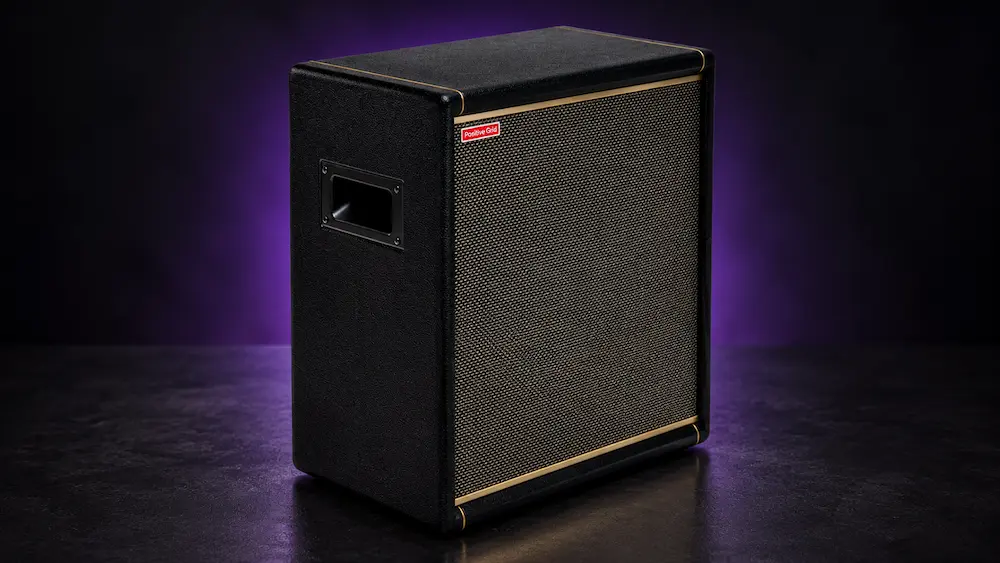
The Positive Grid Spark CAB 2 is a powered FRFR cabinet designed for guitarists using amp modelers, digital effects, and compatible Spark hardware. Announced in October 2026, it retains the original Spark CAB’s core speaker configuration and 140-watt RMS rating while introducing revised acoustic tuning, an updated conversion stage and gain staging, and additional connectivity.
The central question is whether these changes improve the cabinet’s tonal response in practice. The original Spark CAB was praised for its punch and detail, but some reviewers and users also described its sound as bass-heavy. Positive Grid says the CAB 2 delivers a tighter low end and greater clarity. Those are relevant design goals, but independent testing has not yet established whether the new model measurably improves frequency balance or how substantial the audible difference is.
Listed at $399 in the US, the Spark CAB 2 combines guitar-modeler monitoring with connectivity designed to simplify compatible Spark-based rigs. Its value will depend less on the additional features alone than on whether the revised acoustic design delivers a meaningful improvement over the original and whether the integrated connections suit the player’s setup.
What Is New in the Positive Grid Spark CAB 2?
The Positive Grid Spark CAB 2 is a powered full-range, flat-response (FRFR) cabinet designed to reproduce the output of a compatible amp modeler or effects processor. Unlike a traditional guitar cabinet, whose speakers impose their own strong tonal coloration, an FRFR system is intended to reproduce a broader frequency range so the modeled amp and cabinet character remain more audible. In practice, the result still depends on the speaker’s actual response, the room, and listening position; the FRFR label alone does not guarantee neutrality.
The CAB 2 retains the original Spark CAB’s core configuration: one 10-inch woofer, two 1-inch tweeters, and a rated output of 140 watts RMS. Rather than increasing the power rating or changing the basic driver layout, Positive Grid has focused on retuning the cabinet acoustics, revising the signal path, adding USB-C firmware-update support, and updating the cabinet’s appearance. The main connection types remain largely unchanged from the original Spark CAB.
| Feature | Positive Grid Spark CAB 2 |
|---|---|
| Product category | Powered FRFR speaker cabinet |
| Rated power | 140 watts RMS; 400 watts peak (manufacturer specifications) |
| Frequency range | 45 Hz–20 kHz (manufacturer specification) |
| Maximum SPL | 118 dB RMS; 121 dB peak (manufacturer specifications) |
| Speaker configuration | One 10-inch woofer and two 1-inch tweeters |
| Inputs | Two mono XLR/TRS combo inputs and one dedicated 3.5 mm stereo Spark input |
| Output | Balanced XLR output |
| Additional connectivity | USB-C port and DC output for supported Spark devices |
| Controls and functions | Separate speaker and line-output volume controls, contour switch, and ground lift |
| Available finishes | Black and Pearl |
| Announced US price | $399 |
According to Positive Grid, the revisions include retuned cabinet acoustics intended to tighten the low end and improve clarity, an updated conversion stage, and revised gain staging. The cabinet also uses a wooden enclosure, while the added connections support a more integrated setup with compatible Spark devices.
The distinction between documented changes and demonstrated performance matters here. The power rating and driver arrangement remain unchanged, and the manufacturer’s claims about tighter bass and greater clarity have not yet been independently established. The key questions are whether the revised design improves tonal balance, maintains definition at different listening levels, and reduces any unwanted coloration. Those outcomes require direct comparison or measurements; the specification sheet alone cannot confirm them.
Has Positive Grid Fixed the Original Spark CAB’s Bass-Heavy Response?
 The original Spark CAB received positive comments for its punch and detail, but its low-frequency balance was less universally well received. A 2023 review in Guitar World described a bass-heavy presentation that could require adjustment even at home listening levels. Some Spark users have also reported excessive bass and audible hiss, although experiences vary and these reports do not establish that every unit exhibits the same behavior.
That history makes the CAB 2’s revised acoustic tuning more consequential than its added connectivity. Excessive low-frequency energy can obscure the attack of palm-muted notes, make low-register voicings sound congested, and shift the perceived balance of a modeled guitar tone. The result may be a preset that sounds full through one monitoring system but overly thick through another. Additional EQ can compensate, but doing so without understanding the cabinet’s response risks building the preset around a coloration that may not translate elsewhere. The same distinction matters when evaluating frequency balance in a mix: monitoring coloration can influence what the listener perceives as a tonal problem.
FRFR monitoring does not guarantee that a guitar modeler will sound identical through a physical cabinet, studio monitors, and headphones. Each system has its own frequency response and dispersion characteristics, while room modes, speaker placement, and listening distance further affect the perceived balance. A calibrated headphone system with crossfeed, such as the monitoring approach discussed in the ADAM Audio H715 Reference review, offers a different perspective for checking stereo placement and tonal balance, but it does not reproduce the acoustic interaction between a loudspeaker and a room. The practical goal is consistent, predictable monitoring—not identical sound across fundamentally different playback systems.
Positive Grid says the Spark CAB 2’s revised acoustic design delivers tighter bass and greater clarity. If the retuning reduces excessive low-frequency emphasis while preserving the original’s punch, it could address a meaningful concern for some owners. However, the available launch information does not establish whether the new cabinet has a flatter frequency response, how large the audible difference is, or whether the improvement holds across different listening levels and room conditions.
The key question remains unresolved: has the Spark CAB 2 measurably improved on the original’s low-frequency response? A meaningful comparison would use the same modeler, preset, signal level, cabinet placement, and listening position. Level-matched listening would help prevent a louder presentation from being mistaken for a better one, while frequency-response measurements could reveal differences in tonal balance. Until such evidence is available, the claimed improvement should be treated as a manufacturer’s assertion rather than an independently confirmed result.
Check How Your Mix Translates Beyond Your Monitoring Setup
A guitar tone that sounds full and balanced through one speaker can reveal excess low end, softened attack, or masking on another playback system. Before making tonal decisions based on a single monitoring reference, hear how your mix holds together in a different listening context. AREFYEV STUDIO offers a free mastering demo so you can evaluate the balance, clarity, and definition of your track before committing to a full master. Upload up to 40 seconds of your mix to get started.
Request Your Free Mastering Demo →
What Do 140 Watts RMS and a 10-Inch Woofer Actually Tell You?
The Spark CAB 2 is rated at 140 watts RMS, but that figure alone says little about its maximum usable volume or performance near its output limits. Maximum SPL, distortion under load, frequency response, thermal behavior, and off-axis response all affect how a powered cabinet performs in practice. The available launch information does not provide independent measurements sufficient to evaluate these characteristics.
The cabinet uses one 10-inch woofer and two 1-inch tweeters. This multi-driver arrangement is designed to reproduce a broader frequency range than a conventional guitar speaker, which typically imposes substantial tonal coloration and rolls off much of the high-frequency content present in a modeled signal. An FRFR cabinet is intended to preserve more of the amp modeler’s output, including the tonal contribution of its cabinet simulation and effects.
That design goal should not be confused with guaranteed neutrality. An FRFR cabinet still has its own frequency response, crossover behavior, and dispersion characteristics. Two cabinets with similar driver sizes and power ratings can sound substantially different, and neither the FRFR designation nor the wattage figure establishes how accurately a particular model reproduces a signal.
For home practice and personal monitoring, the practical question is whether the CAB 2 can deliver the required level without objectionable distortion or an unbalanced tonal response. In rehearsal and live settings, off-axis coverage and clean output at higher levels become more important, particularly when the cabinet must compete with a drummer or a loud stage mix. These are performance characteristics to verify through measurements and listening tests, not conclusions that can be drawn from the power rating alone.
Connectivity and Integration With a Guitar Rig
The Spark CAB 2 retains the original cabinet’s basic speaker configuration, but its connections are a significant part of the updated design. They support both conventional modeler-based rigs and setups built around compatible Positive Grid hardware.
- Two mono XLR/TRS combo inputs: These accept compatible line-level signals from amp modelers, multi-effects processors, and other suitable equipment. The separate 3.5 mm stereo Spark input is designed for compatible Spark devices.
- Balanced XLR output: This allows a signal to be sent to a PA while the CAB 2 provides local monitoring. For live use, that can give the guitarist a physical cabinet on stage without relying exclusively on the front-of-house system for monitoring.
- Separate speaker and line-output volume controls: Independent controls allow the local monitoring level and the output level to be adjusted separately, which is useful when the cabinet and PA need different operating levels.
- Contour switch: Positive Grid describes this function as emphasizing the low and high frequencies for a more balanced sound at lower listening levels. It provides a tonal adjustment; it does not establish that the cabinet has a neutral frequency response with the contour disabled.
- Ground lift: This can help reduce hum caused by certain ground loops in connected audio equipment. It will not eliminate noise caused by every possible source, such as interference or noise generated within a device.
- USB-C port: According to the product information, the port supports firmware updates and powering or charging compatible Spark MINI, Spark GO, and Spark PEDAL devices.
- DC output: A separate power connection supports compatible Spark 40 and Spark 2 devices, potentially reducing the need for additional power supplies in an integrated rig.
The balanced output is particularly useful for a live setup: the guitarist can monitor through the CAB 2 while sending a signal to the PA. However, the exact routing matters. Before using this configuration on stage, confirm which signal reaches the XLR output and how its level is affected by the cabinet’s controls. The available specifications establish the connection’s presence, but do not fully document every possible routing behavior.
The CAB 2 is intended for compatible modelers, pedals, and amplifiers that provide a suitable line-level output. A conventional amplifier’s speaker output is different: it carries a power-amplified signal intended to drive a speaker load. Connecting that output to an input not designed to accept speaker-level power can damage equipment. Use a compatible line-level output unless the manufacturer explicitly documents another supported connection method.
Where the Spark CAB 2 Fits Into a Guitar Workflow
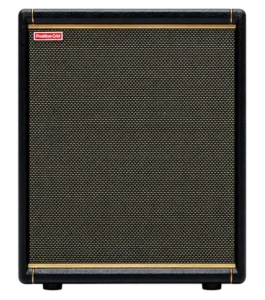 The Spark CAB 2 is designed for monitoring modeled guitar tones, not for critical evaluation of a finished mix. Its role is to let a guitarist hear an amp modeler through a physical speaker cabinet while retaining the flexibility of a digital rig. It should therefore be evaluated as a guitar-monitoring tool, rather than as a substitute for full-range studio monitors.
In a home-recording setup, a guitarist can monitor through the CAB 2 while recording the modeler’s direct output through a separate signal path. This separates the sound used for performance monitoring from the signal captured for recording, provided the rig is configured accordingly. The player can work with a physical speaker in the room while retaining a direct recorded signal for later editing and processing.
For rehearsals, the CAB 2 offers a compact monitoring option when the guitar tone comes from a modeler rather than a conventional amplifier. Whether it can keep up with a band depends on the required stage volume, the room, speaker placement, and the level of competing instruments. The 140-watt RMS rating alone does not establish its maximum clean output or guarantee sufficient headroom for every rehearsal environment.
For live performance, the balanced XLR output allows the cabinet to serve as a personal monitor while feeding a signal to the PA. This arrangement can suit players who prefer to hear a physical speaker nearby rather than rely entirely on in-ear monitors. Its usefulness depends on the available signal routing, stage-monitoring requirements, and how the guitar signal is integrated into the front-of-house mix.
For users with compatible Spark hardware, the cabinet’s dedicated power connections may also simplify setup by reducing the need for separate power supplies. That convenience is a genuine workflow consideration, but it does not establish an improvement in sound quality. For existing Spark CAB owners, an upgrade is easier to justify when the new connections solve a specific setup problem; a claimed improvement in tonal balance still needs independent verification.
Spark CAB 2 vs. the Original Spark CAB
The Spark CAB 2 is an incremental update rather than a redesign of the original speaker platform. Both models use a 10-inch woofer, two 1-inch tweeters, and a rated output of 140 watts RMS. The main changes concern acoustic tuning, signal conversion and gain staging, cabinet construction, and connectivity. The practical question is whether those revisions justify replacing an existing cabinet.
| Decision factor | Original Spark CAB | Spark CAB 2 |
|---|---|---|
| Speaker configuration | One 10-inch woofer and two 1-inch tweeters | One 10-inch woofer and two 1-inch tweeters |
| Rated power | 140 watts RMS | 140 watts RMS |
| Low-frequency response | Some reviews and user reports describe a bass-heavy presentation | Positive Grid claims tighter bass; independent comparative results are not yet available |
| Acoustic design | Original cabinet design | Retuned acoustics and revised cabinet construction |
| Signal path | Original conversion and gain-staging design | Updated conversion stage and revised gain staging, according to Positive Grid |
| Connectivity | Original connections and Spark integration | Updated connections, including USB-C and a DC output for supported devices |
| Upgrade considerations | May remain sufficient for owners satisfied with its performance | Potentially worthwhile for users who need the new connections or prefer its revised tuning |
The unchanged power rating and driver configuration do not prove that the two cabinets have identical output capability, but they provide no evidence of a substantial increase in rated power either. The main potential reasons to upgrade are the revised acoustic design and added connectivity—not a higher wattage specification.
Owners who are satisfied with the original Spark CAB have little reason to upgrade on specifications alone. Those who find its low-frequency balance difficult to manage, or who would benefit from the new connections, have a more specific reason to consider the CAB 2. However, the acoustic case remains provisional: a level-matched comparison using the same modeler, preset, and placement would provide stronger evidence than the manufacturer’s description alone.
How Does the Spark CAB 2 Compare With Other FRFR Options?
The Spark CAB 2 sits between dedicated guitar-modeler cabinets and general-purpose powered PA speakers. The most useful alternative depends on the intended setup: a compact personal monitor, a louder rehearsal or stage rig, or a speaker that can also handle vocals and backing tracks. Connectivity and integration matter, but tonal response and clean output should carry more weight in a sound-quality decision.
| Alternative | Why consider it? | What to compare |
|---|---|---|
| Original Positive Grid Spark CAB | A practical choice for existing owners who are satisfied with its sound and current connections. | Whether the CAB 2’s revised tuning and added connectivity address a specific limitation in the existing setup. |
| HeadRush FRFR series | A dedicated monitoring option for guitarists using amp modelers and digital effects systems. | Physical size, available inputs and outputs, maximum usable level, and suitability for the intended stage or rehearsal environment. |
| Fender Tone Master FR series | An alternative designed for reproducing modeled guitar tones through a powered speaker system. | Cabinet format, control layout, dispersion, and tonal response with the player’s preferred presets. |
| IK Multimedia TONEX Cab | An alternative for players looking for a dedicated cabinet in a modeler-focused rig. | Compatibility with the intended equipment, monitoring requirements, and the practical differences between the available connection and control options. |
| Powered PA speaker | A more versatile option when the same speaker must handle guitar modeling, backing tracks, vocals, or other audio sources. | Frequency response, dispersion, clean output, physical size, and whether its controls suit a guitar-monitoring workflow. |
These alternatives are not automatically interchangeable. Driver configuration, cabinet design, dispersion, input sensitivity, and maximum clean output can all affect how a modeled guitar tone is reproduced. Without controlled, level-matched testing, there is no sound basis for declaring the Spark CAB 2 more accurate, louder, or better sounding than the competing options listed here.
A powered PA speaker may offer better overall utility for musicians who need one system for several audio sources. A dedicated FRFR cabinet may be more convenient for a guitarist who prioritizes a compact, modeler-centered setup. For owners of the original Spark CAB, the sensible starting point is to identify what the current cabinet fails to deliver. If the problem is tonal balance, a direct comparison is essential; if the issue is connectivity, the CAB 2’s updated features may provide a more immediate reason to upgrade.
Is the Spark CAB 2 Worth $399?
Positive Grid lists the Spark CAB 2 at $399 in the US, in Black and Pearl finishes. Retailer listings have shown the same price, although launch-period stock and delivery estimates may change. Buyers should confirm current availability, shipping terms, and the return policy before ordering.
The value proposition rests on more than the 140-watt RMS rating. The CAB 2 combines a powered FRFR cabinet with stereo combo XLR/TRS inputs, a balanced XLR output, independent speaker and line-output volume controls, and power connections for supported Spark devices. For guitarists already using compatible Positive Grid hardware, that integration may reduce setup complexity and the need for separate power arrangements.
For players using other modelers, the integration benefits may matter less. Their decision should depend primarily on the cabinet’s tonal response, clean output at the required listening level, physical format, and connection requirements. Comparing the CAB 2 with similarly priced powered speakers is particularly important because the available specifications do not establish that it offers superior sound quality.
Positive Grid has also indicated that existing Spark CAB owners may qualify for special upgrade pricing. The offer and eligibility requirements should be confirmed directly with the manufacturer; a specific discount should not be assumed without checking the current terms.
At $399, the Spark CAB 2 is easiest to justify for players who need a dedicated modeler-monitoring cabinet and can make practical use of its connectivity. For owners of the original Spark CAB, upgrading is harder to justify on the basis of the published specifications alone. Unless the new connections solve a specific workflow problem, the case for replacing the original depends on whether the claimed improvement in bass response and clarity holds up in independent testing.
What Still Needs Independent Testing?
Positive Grid’s published specifications describe the Spark CAB 2’s design changes, but they do not establish how the cabinet performs under real operating conditions. Several measurements and direct comparisons are needed to determine whether the revised design delivers a meaningful improvement over the original.
- Frequency response: Measurements are needed to establish the cabinet’s low-, mid-, and high-frequency response and determine whether the revised tuning produces a measurable improvement over the original Spark CAB.
- Maximum clean output: The 140-watt RMS rating does not specify maximum SPL or indicate how much distortion the cabinet produces as output increases. These measurements would help establish its usable headroom for home monitoring, rehearsals, and live performance.
- Noise and hiss: Reports concerning the original cabinet cannot establish the noise performance of the CAB 2. Its noise floor should be evaluated directly under documented gain settings and connection conditions.
- Contour switch behavior: The switch is intended to adjust tonal balance for lower-volume listening. Measurements and level-matched listening tests would help establish how it changes the frequency response and whether the adjustment introduces trade-offs at different playback levels.
- Compatibility with different modelers: Practical performance depends on the source device’s output level, signal routing, and gain structure. Understanding gain staging can help users manage signal levels when integrating compatible equipment, but testing is still needed to establish how easily the cabinet works with different rigs.
- Comparison with the original Spark CAB: A level-matched comparison using the same source signal, preset, placement, and listening position would help isolate differences attributable to the cabinet rather than changes in input level or setup.
- Long-term reliability: Launch specifications and early product coverage cannot establish durability, failure rates, or performance over extended use. Those questions require longer-term evidence.
These unanswered questions are not proof of defects; they define the limits of what can currently be concluded from the available information. Until independent measurements and direct comparisons are available, claims of tighter bass and improved clarity should be attributed to Positive Grid rather than presented as established performance gains. For prospective buyers, that distinction is central to deciding whether the CAB 2 offers a meaningful sonic upgrade or primarily a revised feature set.
Final Verdict: A More Connected Spark Cabinet, but the Sound Is Still the Test
The Positive Grid Spark CAB 2 is a focused update to an established compact FRFR concept. Its core speaker configuration and rated power remain familiar, while the revised acoustic design, updated conversion and gain staging, balanced output, USB-C connectivity, and supported power connections are intended to improve the overall experience.
The strongest argument for the new model is its combination of dedicated guitar monitoring and practical integration. Using the cabinet as a personal monitor while sending a signal to a PA can be useful in live setups, and the power connections may simplify rigs built around compatible Spark devices.
The main unresolved question is sound quality. The original Spark CAB received positive comments about punch and detail, but some coverage and user discussions raised concerns about bass emphasis. Positive Grid claims that the CAB 2 delivers a tighter low end and greater clarity, but independent measurements and controlled comparisons have yet to verify those improvements.
For existing Spark CAB owners, upgrading solely for better sound is difficult to justify without a direct comparison. For new buyers, the CAB 2 is worth considering if a compact powered FRFR cabinet with Spark integration suits the intended setup. However, its tonal performance should not be assumed to outperform competing products based on launch claims alone.
A definitive review would require a controlled, level-matched comparison with the original Spark CAB, supported by frequency-response and maximum-output measurements. Until that evidence is available, the Spark CAB 2 is best understood as a technically updated, more connected cabinet whose central sonic promise remains to be independently demonstrated.
Hear What a More Balanced, Better-Defined Mix Can Actually Sound Like
The Spark CAB 2 review highlights an important distinction: a promise of tighter bass and greater clarity is not the same as verified improvement. The same principle applies to your own mix. More EQ, compression, or processing may not be the answer if you still cannot judge how the low end, transients, and overall tonal balance translate beyond your usual monitoring setup. A professional mastering pass gives you a practical point of comparison—not a guarantee that every mix issue will disappear, but a chance to hear what changes when a mastering engineer works with your track. AREFYEV STUDIO offers a free mastering demo prepared by a real mastering engineer. Upload up to 40 seconds of your mix and compare the original with the mastered version before deciding whether to proceed.
Upload 40 Seconds and Hear Your Free Mastering Demo →
Frequently Asked Questions
Is the Positive Grid Spark CAB 2 a guitar amplifier?
No. It is a powered FRFR speaker cabinet designed to reproduce the output of a compatible amp modeler, pedal, or other device with a suitable line-level output. It does not replace the amp modeling or preamp functions of the connected equipment.
Can I use the Spark CAB 2 with a modeler from another manufacturer?
Yes, provided the device offers a compatible line-level output and the signal is connected and configured correctly. The cabinet is not limited to Spark products, but you should confirm compatibility with your specific setup.
Can the Spark CAB 2 connect to a PA system?
Yes. Its balanced XLR output is intended to feed a PA while the cabinet serves as a personal monitor. Check the signal-routing options of the connected equipment to ensure the output carries the signal you intend to send to the PA.
Does the Spark CAB 2 sound better than the original Spark CAB?
Positive Grid claims that revised acoustic tuning delivers greater clarity and a tighter low end. However, independent comparative testing has not established the extent or consistency of these improvements, so a definitive sonic ranking is not yet justified.
Can the Spark CAB 2 power other Spark products?
Its documented connections include USB-C support for powering or charging compatible Spark MINI, Spark GO, and Spark PEDAL devices, plus a DC output for supported Spark 40 and Spark 2 products. Confirm the exact compatibility and power requirements for your device before connecting it.
Is 140 watts RMS enough for live performance?
The power rating alone cannot answer that question. Suitability depends on maximum clean output, stage volume, speaker placement, the band’s acoustic level, and whether the cabinet is being used for personal monitoring or as the main sound source.
Can I connect a conventional guitar amplifier’s speaker output to the Spark CAB 2?
Do not connect a speaker-level output unless Positive Grid explicitly confirms that the connection is supported. Use a suitable line-level output from compatible equipment to avoid potentially damaging the cabinet.
Is the Spark CAB 2 worth $399?
It may be a sensible choice for players who want a compact FRFR cabinet, balanced PA connectivity, and integration with compatible Spark hardware. If sound quality is your main priority, compare it with alternatives and look for independent testing before making a decision.

Evaluating a powered FRFR cabinet requires more than checking its wattage or driver configuration. Frequency response, off-axis dispersion, maximum clean output, and gain structure all influence how accurately a modeled guitar tone translates to the room. Manufacturer claims about tonal improvements are most useful when considered alongside level-matched comparisons and independent measurements, especially when deciding whether a revised cabinet offers a meaningful acoustic improvement.
Enjoyed this review?
If you found it useful, you can support independent audio research with a coffee.
☕ Buy me a coffee