Best Vocal Plugins in 2026: Tools That Actually Work in a Real Mix
There’s no shortage of vocal plugins — EQs, compressors, reverbs, delays. But most of them don’t solve the real problem: getting a vocal to sit correctly in a full mix and translate on modern streaming platforms.
Waves has been part of that workflow since the early days of digital audio, releasing one of the first commercially available plugins back in 1992. Decades later, many of their tools are still used not because they’re new — but because they consistently work in real mixing situations.
This guide focuses on plugins engineers actually rely on when a vocal needs to be clear, controlled, and competitive — not just sounding good in isolation, but holding its position inside a finished track.
Best Vocal Plugins (Quick List)
- Waves Renaissance EQ — surgical EQ
- Waves Scheps 73 — analog tone
- SSL E-Channel — full vocal chain
- CLA-76 & CLA-2A — compression control
- PuigTec EQP-1A — air and depth
- H-Reverb — space
- H-Delay — movement
Waves Renaissance EQ
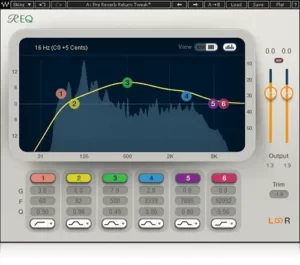 Waves Renaissance EQ remains one of the most reliable tools for precise vocal correction. Unlike modern visual EQs overloaded with features, it focuses on fast, accurate frequency shaping that translates well in a mix.
Its parametric bands allow tight, surgical cuts to remove resonances, harshness, and low-end buildup without thinning out the vocal. This makes it especially effective at the early stage of processing, where clarity and control are established.
In practice, Renaissance EQ is often used to clean up the vocal before compression — removing problematic frequencies so the compressor reacts more evenly and predictably.
Waves Scheps 73
 Waves Scheps 73 is based on the classic Neve 1073 and is widely used for adding tone rather than fixing problems. Where surgical EQs remove frequencies, this one shapes character — bringing warmth, presence, and forward energy to a vocal.
One of its key advantages is how aggressively you can boost frequencies without introducing harshness. This makes it particularly effective for adding top-end air or midrange presence without breaking the balance of the mix.
Because it offers no visual feedback, all decisions are made by ear. In practice, this leads to faster, more musical choices — especially when placing a vocal so it cuts through dense arrangements without sounding over-processed.
Waves SSL E-Channel
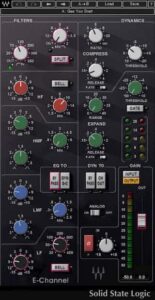 Waves SSL E-Channel is not just a plugin — it’s a full vocal processing chain in a single strip. With EQ, compression, filters, and gate working together, it allows fast, decisive mixing without jumping between multiple plugins.
Modeled after the SSL 4000E console, it delivers a forward, aggressive vocal tone that cuts through dense arrangements. The EQ is punchy and flexible, while the compressor adds control without flattening the performance.
In real-world mixing, this plugin is often used as the backbone of the vocal chain — shaping tone, controlling dynamics, and solving multiple problems at once. Instead of stacking plugins, engineers can build a solid, mix-ready vocal directly inside one channel strip.
Hear How Your Track Translates After Mastering
 At some point, the issue is no longer the plugin — it’s how the entire mix behaves under real playback conditions. If your vocal sounds solid in your DAW but loses clarity, punch, or balance after export, the problem usually appears at the final stage.
You can send your track and get a free demo mastering to hear how it translates on streaming platforms and real systems.
Waves PuigTec EQP-1A
Waves PuigTec EQP-1A is not designed for correction — it’s used to enhance tone and depth after the vocal is already under control. Based on the classic Pultec design, it allows simultaneous boosting and attenuation, creating a smooth, musical response that standard EQs cannot replicate.
This is where vocals gain “air” and openness without sounding brittle. The high-frequency boost adds clarity and presence, while the low-end shaping tightens the signal without removing weight.
In practice, PuigTec EQ is often applied after compression, when the vocal starts to feel dense or slightly muddy. A subtle low-end cut combined with a gentle high boost can restore balance and bring the vocal forward without overprocessing.
CLA-76 & CLA-2A
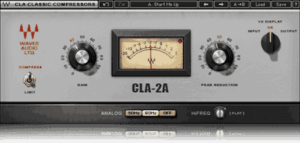 CLA-76 and CLA-2A form one of the most common vocal compression chains used in professional mixing. Each compressor handles a different part of the dynamic range, working together to create a controlled but natural vocal.
- CLA-76 — fast attack for catching sharp peaks and transient spikes
- CLA-2A — slower, smooth leveling for overall consistency
In practice, the CLA-76 is placed first to control aggressive peaks before they hit the rest of the chain. The CLA-2A follows, gently smoothing out the performance and keeping the vocal stable in the mix.
This combination allows the vocal to stay present and controlled without sounding over-compressed — maintaining energy while avoiding unwanted volume jumps.
Waves H-Reverb
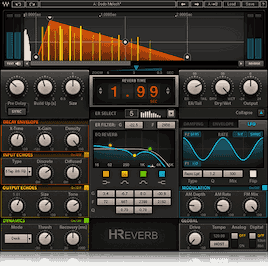 Waves H-Reverb is designed for precise control over vocal space, not just adding reverb. It combines algorithmic processing with modeled behavior of classic digital hardware, allowing you to shape depth without washing out the signal.
One of its key strengths is control over early reflections and tail behavior. This makes it possible to position a vocal exactly where it belongs — forward, present, or slightly behind — without losing definition.
In practice, H-Reverb is often used to create depth while keeping the vocal clear and intelligible. Instead of pushing the vocal back in the mix, it builds space around it, which is critical for modern, dense productions.
Waves H-Delay
 Waves H-Delay is a go-to delay for vocal processing because it delivers fast results without complex routing. It can operate as a clean digital delay or introduce analog-style character using built-in modulation and saturation.
In vocal mixing, delay is rarely used just as an audible effect. Instead, it’s used to create depth, fill space between phrases, and add movement without pushing the vocal further back in the mix.
Short delays can add subtle width and presence, while tempo-synced repeats help build rhythm and energy. With the built-in filtering and feedback controls, H-Delay allows precise shaping so the effect supports the vocal instead of competing with it.
How These Plugins Work Together
A typical vocal chain starts with corrective EQ, followed by compression, tone shaping, and spatial effects. The order and interaction between these stages define the final sound more than the plugins themselves.
Modern streaming platforms expose balance issues instantly, which is why proper chain setup matters more than individual plugins.
Are Waves Plugins Enough?
Waves plugins cover most vocal processing tasks, but many engineers also use tools like FabFilter Pro-Q, UAD compressors, or iZotope Nectar depending on workflow and genre.
Plugins Don’t Make a Professional Vocal — The Chain Does
Even the best plugins won’t guarantee a professional result. The same EQ can either clean up a vocal or make it thin and harsh. Compression can control dynamics — or completely kill energy and expression. Reverb can add depth — or push the vocal out of focus.
The difference is not in the tools themselves, but in how they interact as a chain. Every decision affects the next stage: EQ changes how compression reacts, compression changes how effects behave, and all of it defines how the vocal sits inside the full mix.
This is where most tracks fall apart. Not because of missing plugins — but because of imbalance, overprocessing, or lack of control at the final stage.
Test Your Track With Free Demo Mastering
If your vocal sounds good in your DAW but doesn’t translate on streaming platforms — the issue is not the plugin.
Send your track and hear the difference with a free demo mastering.
FAQ
What are the best plugins for vocals?
The best vocal plugins include EQ, compression, and spatial effects. Tools like Renaissance EQ, CLA-76, and H-Reverb are widely used in professional mixing.
Do plugins make vocals sound professional?
No. Plugins are tools — the result depends on how they are used within the full mix and mastering process.
What is the best vocal chain?
A typical vocal chain includes EQ → compression → tone shaping → reverb/delay → final processing.
Are free vocal plugins good enough?
Free plugins can work, but professional results depend more on processing decisions than the tools themselves.