Klevgrand Altitude Enters the Vocal Processing Market With a Broader Take on Pitch Correction
Klevgrand has announced Klevgrand Altitude, a new vocal-processing plugin that combines pitch correction, harmony generation, MIDI-controlled vocal performance and modulation tools within a single environment. While pitch-correction software is hardly a new category, Altitude arrives at a moment when developers are increasingly attempting to merge corrective processing with creative vocal production workflows.
Rather than positioning the product as another tuning plugin competing solely on correction accuracy, Klevgrand is presenting Altitude as a complete vocal performance platform. The release places it somewhere between traditional pitch-correction tools, harmony generators and vocal effects processors, potentially appealing to producers who frequently move between corrective and creative vocal work inside the same session.
For engineers, producers and studio owners, the announcement is notable not because it introduces a completely new technology, but because it reflects a broader trend in audio production software: the consolidation of multiple vocal-production stages into a single plugin environment.
A Move Beyond Traditional Vocal Tuning Workflows
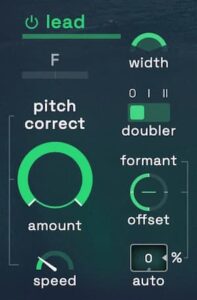 The headline feature in Altitude is its formant-aware pitch-correction engine. According to Klevgrand, the processing has been designed to compete with established correction tools while maintaining natural vocal characteristics during tuning operations.
However, the more significant aspect of the release is not the pitch correction itself. The market already contains mature solutions from Auto-Tune, Melodyne, Waves Tune Real-Time and several newer AI-assisted products. What differentiates Altitude is its attempt to combine multiple stages of vocal production into one workflow.
The category has also seen renewed activity in recent weeks. Universal Audio recently entered the space with its UAD Topline Vocal Tune plugin, highlighting how developers are increasingly focusing on faster vocal-production workflows rather than treating pitch correction as an isolated task.
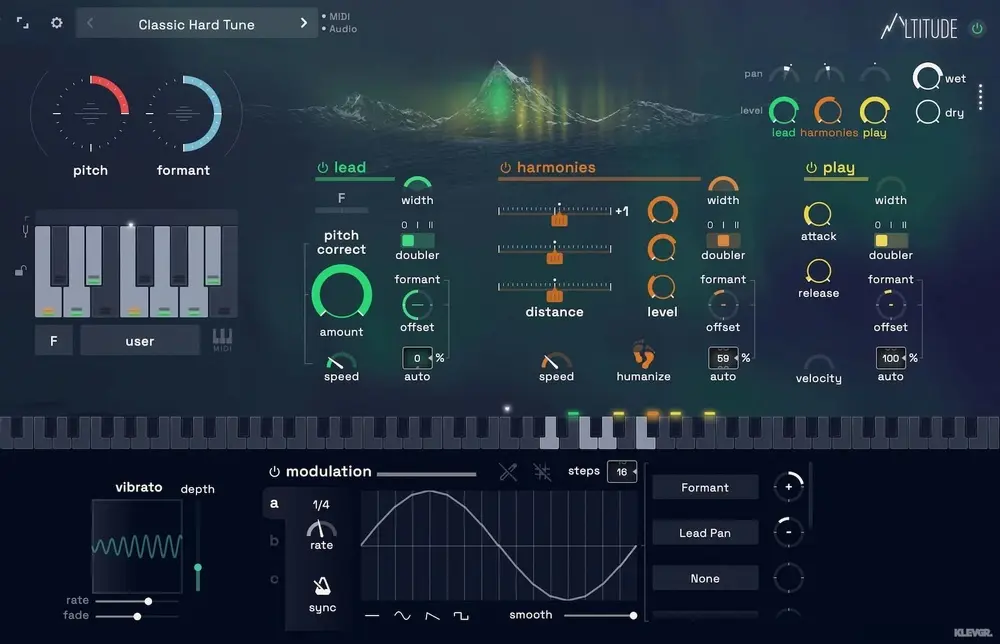
Alongside tuning functions, the plugin includes dual double-tracking modes, stereo-enhancement controls and formant-shifting capabilities. These are tools that many producers typically access through separate plugins during vocal production.
The addition of integrated harmony generation further expands the plugin’s role. Users can create up to three harmony voices while maintaining scale-aware operation, reducing the need for manual harmony programming in situations where speed is more important than complete editing flexibility.
Why This Release Matters in Today’s Production Environment
Vocal production has become increasingly complex over the past decade. Modern commercial releases often involve tuning, doubling, harmonization, stereo enhancement, modulation and creative vocal manipulation before mixing is even considered complete.
As a result, many vocal chains have grown into elaborate collections of specialized plugins.
Altitude appears to address a practical workflow issue: reducing plugin fragmentation. Instead of moving between separate tuning software, harmonizers, doublers and modulation processors, producers may be able to handle a significant portion of vocal production inside a single interface.
This approach reflects broader developments across the plugin industry. Developers are increasingly building multifunction environments rather than releasing narrowly focused processors. Users have demonstrated strong demand for workflow efficiency, particularly in project studios and fast-paced production environments.
For engineers working with high-volume vocal production, reducing plugin management can be nearly as valuable as introducing new processing algorithms.
Where the Technology Looks Promising — and Where Questions Remain
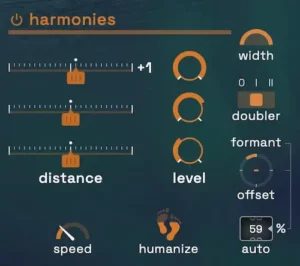 Several aspects of Altitude stand out as potentially useful in real-world production scenarios.
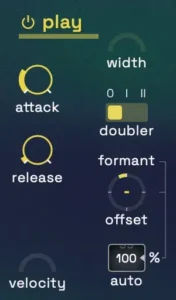
The MIDI-playable voice module may be one of the more interesting additions. While MIDI-controlled vocal processing is not a new concept, integrating it directly alongside pitch correction and harmony generation creates opportunities for hybrid vocal-instrument workflows that would otherwise require multiple routing stages.
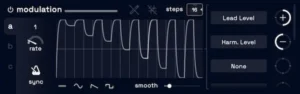
The modulation system is another area that deserves attention. Altitude includes three independent modulators capable of controlling multiple parameters simultaneously. This moves the plugin beyond conventional vocal correction and into creative sound-design territory.
That said, some of the manufacturer’s claims will require independent verification.
Pitch correction remains one of the most mature and competitive segments of the audio software market. Any suggestion that a new engine rivals the industry’s leading solutions naturally invites scrutiny. Accuracy, transparency, tracking behavior, artifact management and latency performance can only be properly evaluated through extensive testing across different vocal styles and recording conditions.
The harmonization system also raises practical questions. Automatically generated harmonies can be highly effective for demos, songwriting sessions and production sketches, but professional releases often expose limitations in voice-leading decisions, phrasing behavior and natural vocal interaction.
Whether Altitude can consistently deliver convincing harmonies across a broad range of genres remains to be seen.
A Reflection of Larger Trends in the Vocal Plugin Market
 The release fits into several ongoing trends shaping audio production software in 2026.
First, developers are increasingly targeting vocal production as a complete ecosystem rather than a collection of individual tasks. Modern producers expect tuning, harmonization, modulation and performance effects to interact seamlessly.
Second, the market continues moving toward real-time operation. Low-latency performance modes are becoming essential rather than optional as live processing, content creation, streaming and hybrid studio-performance workflows continue to expand.
Third, creative vocal manipulation has become mainstream. Tools that were once considered special effects are now integrated into everyday production workflows across pop, hip-hop, electronic music and content creation. The same trend is visible across other plugin categories as well. Recent releases such as Audio Damage Traverse demonstrate how developers are increasingly combining multiple creative processing concepts inside a single plugin rather than building narrowly focused effects.
Interestingly, Klevgrand is entering the market at a time when many competitors are emphasizing AI-assisted workflows. Altitude instead appears focused on real-time performance and creative control rather than automation-first production, positioning it somewhat differently from the current wave of AI-driven vocal tools.
In this context, Altitude appears less like a standalone pitch-correction plugin and more like an attempt to build a comprehensive vocal-production environment. As a result, Altitude may be viewed less as a traditional vocal plugin and more as a multifunction vocal-production platform.
That places it in indirect competition with a broad range of products rather than a single category. Depending on user workflow, comparisons may emerge with Auto-Tune Pro, Melodyne, Waves Harmony, VocalSynth, VocAlign, Nectar and other vocal-production platforms.
Unlike Melodyne, which remains heavily focused on detailed note-level editing, Altitude appears to prioritize speed and real-time interaction. Compared to traditional Auto-Tune workflows, the plugin’s differentiator is not correction itself but the combination of harmonization, MIDI performance and modulation tools inside the same environment.
How Altitude Could Affect Real-World Mixing and Production Workflows
 From a practical production perspective, Altitude’s value will likely depend more on workflow efficiency than on any single feature.
For producers building vocal arrangements quickly, the combination of tuning, harmonization and MIDI performance tools could reduce setup time considerably.
Mix engineers may find the plugin useful during preparation stages, particularly when evaluating vocal concepts before committing to more detailed editing approaches.
Live performers could benefit from the low-latency mode if the implementation proves reliable under stage conditions.
Mastering engineers are less likely to interact directly with most of Altitude’s features, but the plugin could influence the quality and complexity of vocal productions arriving at the mastering stage. More advanced vocal manipulation tools often result in denser arrangements, wider stereo fields and increased vocal layering, all of which can affect final mastering decisions.
CPU performance will also be an important factor. Combining pitch detection, harmonization, MIDI processing and multiple modulation systems inside a single plugin can create significant computational demands. Real-world efficiency testing will ultimately determine whether the workflow advantages outweigh any potential performance costs.
Launch Pricing, Platform Support and Availability
Klevgrand Altitude is available immediately.
The plugin currently carries an introductory price of $89.99, representing a temporary reduction from its standard retail price of $149.99.
The company is also offering a rent-to-own option priced at $9.99 per month for 15 months, providing an alternative path for users who prefer subscription-style purchasing without a recurring long-term commitment.
Altitude supports Windows 10 and later, macOS 10.13 and later, and is available in VST, VST3, AU and AAX formats.
Editorial Verdict
Klevgrand Altitude is not entering an underserved market. Vocal processing is already one of the most crowded categories in professional audio software.
What makes the release noteworthy is not the presence of another tuning engine, but the attempt to unify multiple vocal-production processes inside a single workflow-oriented platform.
The strongest aspect of the announcement is the combination of correction, harmony generation, MIDI performance control and modulation within one environment. The biggest unanswered question is whether the pitch-correction quality and harmony generation can compete with the specialized tools many professionals already rely on.
For producers who prioritize speed, experimentation and integrated workflows, Altitude may become one of the more interesting vocal-production releases of 2026. For engineers whose work depends on maximum correction precision, independent testing will be essential before drawing conclusions.
Either way, the launch reflects where the vocal-processing market is heading: fewer isolated tools, more comprehensive production ecosystems.
FAQ: Klevgrand Altitude
When was Klevgrand Altitude released?
Altitude became available in early June 2026 following its official announcement by Klevgrand.
Is Klevgrand Altitude a replacement for Auto-Tune or Melodyne?
Not necessarily. Altitude combines multiple vocal-production functions, while Auto-Tune and Melodyne remain highly specialized correction platforms with established professional workflows.
Does Altitude support real-time vocal processing?
Yes. The plugin includes a low-latency mode designed for real-time use and live vocal performance applications.
Can Klevgrand Altitude generate vocal harmonies automatically?
Yes. The plugin can generate up to three harmony voices while keeping harmonies aligned with selected scales and keys.
What plugin formats are supported?
Altitude is available in VST, VST3, AU and AAX formats for compatibility with most major DAWs.
Does Altitude work with MIDI controllers?
Yes. The Play module allows vocals to be controlled and performed through MIDI input devices or DAW MIDI tracks.
Is there a rent-to-own option available?
Yes. Klevgrand offers a rent-to-own plan priced at $9.99 per month over 15 months.
Who is most likely to benefit from Altitude?
Producers, vocal editors, electronic musicians and content creators looking for an integrated vocal-production workflow are likely to find the plugin most relevant.
How does Klevgrand Altitude compare to Auto-Tune?
Altitude appears to focus on combining pitch correction, harmonization, MIDI performance and modulation tools within a single workflow. Traditional Auto-Tune products remain more focused on pitch correction itself, although feature sets vary across different editions.
Is Klevgrand Altitude suitable for professional studio work?
Potentially yes. The plugin includes features aimed at commercial production environments, but its long-term adoption will likely depend on independent testing of pitch-correction quality, latency performance and workflow efficiency.