Celemony Tonalic Review: What the New Cubase and Nuendo ARA Integration Means for Modern Music Production
Celemony Tonalic review searches are growing for a reason. Producers have no shortage of virtual instruments, MIDI packs, or AI-assisted composition tools. What remains difficult is generating instrumental performances that behave like parts played by real musicians while staying fully editable inside a modern DAW workflow. Tonalic was designed to address that gap, and its new ARA integration for Cubase and Nuendo moves the platform closer to becoming a native production tool rather than another plug-in running alongside the session.
That distinction matters more than the update itself. The addition of ARA support is not simply about opening Tonalic inside Steinberg’s ecosystem. It changes how performances are discovered, arranged, edited, and managed throughout a project. Instead of moving material between separate environments, producers can work with Tonalic performances directly inside the timeline, making arrangement decisions in the same context where mixing, editing, and production choices are already taking place.
The broader implication extends beyond Cubase users. As virtual session musicians become more tightly integrated into the DAW, the line between recorded performance and software-generated content continues to blur. Tonalic’s latest integration is one of the clearest examples of that shift, and it raises important questions about where arrangement workflows are heading across professional music production.
- Why Tonalic Matters Beyond Another Virtual Instrument
- The Market Shift Toward Performance-Based Production Tools
- How the Cubase and Nuendo ARA Integration Changes Workflow
- What Tonalic Looks Like Inside Cubase 15
- Where Tonalic Fits in Professional Production Workflows
- Mixing Implications: The Hidden Side of Realistic Performances
- Mastering Perspective: Why Arrangement Quality Still Matters
- Marketing Claims vs Production Reality
- Competitive Positioning
- Tonalic vs Logic Pro Session Players
- Tonalic Essential: Is the Free Cubase Version Enough?
- Verdict
Why Tonalic Matters Beyond Another Virtual Instrument
 Most virtual instruments are ultimately variations of the same workflow. Notes are programmed, articulations are selected, and realism is built through MIDI editing. The quality of the final result often depends less on the instrument itself and more on how much time the producer is willing to spend shaping performances.
Tonalic takes a fundamentally different approach. Instead of generating performances from MIDI data, it starts with recordings captured from real musicians and adapts those performances to the musical context of the project. Chord changes, arrangement revisions, and structural edits can be accommodated without rebuilding parts from scratch.
This addresses a growing weakness in modern production. Access to sounds is no longer a competitive advantage. Nearly every DAW user can access world-class sample libraries, virtual instruments, and production tools. What remains difficult is creating arrangements that feel played rather than programmed.
That distinction becomes increasingly important as productions become more polished. Audiences may not identify why a track feels artificial, but they consistently respond to phrasing, timing variation, and dynamic interaction that resemble real musicianship. These are often the details that separate a convincing production from one that feels assembled inside a grid.
Tonalic’s underlying technology is designed around preserving those performance characteristics while maintaining the flexibility expected from modern audio production software. The new Cubase and Nuendo ARA integration strengthens that concept by eliminating much of the workflow friction that traditionally exists between performance generation and arrangement editing.
For working producers, composers, and engineers, that may be more valuable than another collection of sounds or presets. Faster access to realistic performances can have a greater impact on the final production than adding another instrument to an already crowded toolkit.
The Market Shift Toward Performance-Based Production Tools
The arrival of Tonalic comes at a time when the production software market is becoming increasingly polarized. One side is focused on speed: AI-assisted composition, automatic arrangement generation, and tools designed to create complete musical ideas with minimal input. The other is focused on realism, attempting to preserve the imperfections and musical decisions that make recorded performances feel human.
This shift is not limited to instrumental production. Recent releases such as UAD Topline Vocal Tune demonstrate how developers are increasingly focusing on performance-driven workflows rather than traditional corrective processing alone. Whether the source is a vocal or an instrument, the goal is becoming the same: preserve musical intent while maintaining modern editing flexibility.
Its appeal is not based on generating more content. It is based on generating more believable content. That distinction matters because many producers have already discovered the limits of highly efficient workflows. Faster production does not automatically result in more convincing records.
This challenge is particularly visible in guitar-driven music, singer-songwriter productions, pop arrangements, film scoring, country, indie rock, and contemporary hybrid genres where organic instrumentation remains central to the listening experience. In these contexts, realistic phrasing often has a greater impact on perceived quality than another layer of processing or sound design.
As production tools become more accessible, performance quality increasingly becomes a differentiator. Technical barriers continue to fall, but musical credibility remains difficult to automate. The growing interest in platforms like Tonalic reflects a broader shift toward tools that help producers bridge the gap between software-based production and the behavior of real musicians inside a recording session.
How the Cubase and Nuendo ARA Integration Changes Workflow
Many production tools promise workflow improvements but simply relocate complexity from one part of the session to another. ARA integration is more consequential because it removes an entire layer of separation between the arrangement process and the source material being arranged.
Before this update, Tonalic functioned like most modern production tools: powerful, but still operating as a destination that required producers to step outside the main project environment. The new Cubase and Nuendo implementation places Tonalic directly inside the Project window, allowing performances to be searched, previewed, placed, and developed without breaking the creative flow.
That change affects more than convenience. It alters how arrangement decisions are made.
When auditioning a guitar phrase, replacing a section, extending a performance, or testing alternative musical ideas can happen directly within the timeline, experimentation becomes less disruptive. Producers spend less time managing software and more time evaluating musical choices.
This is particularly valuable in complex sessions where dozens of tracks compete for attention. Every additional window, export step, or context switch slows decision-making. While the time lost in a single action may be insignificant, those interruptions accumulate across an entire production.
The integration also aligns Tonalic more closely with how professional projects are typically managed. Arrangements evolve continuously throughout production. Chord structures change, sections are rewritten, and performances are refined long after the initial idea is recorded. Keeping virtual session musicians embedded within the same editing environment reduces the friction that often appears when creative revisions begin to multiply.
For songwriters, the benefit is speed. For composers, it is flexibility. For producers managing large commercial projects, it is organizational efficiency. The larger the session becomes, the more valuable it is to have performance generation, arrangement editing, and project management operating inside the same workspace rather than across multiple disconnected environments.
What Tonalic Looks Like Inside Cubase 15
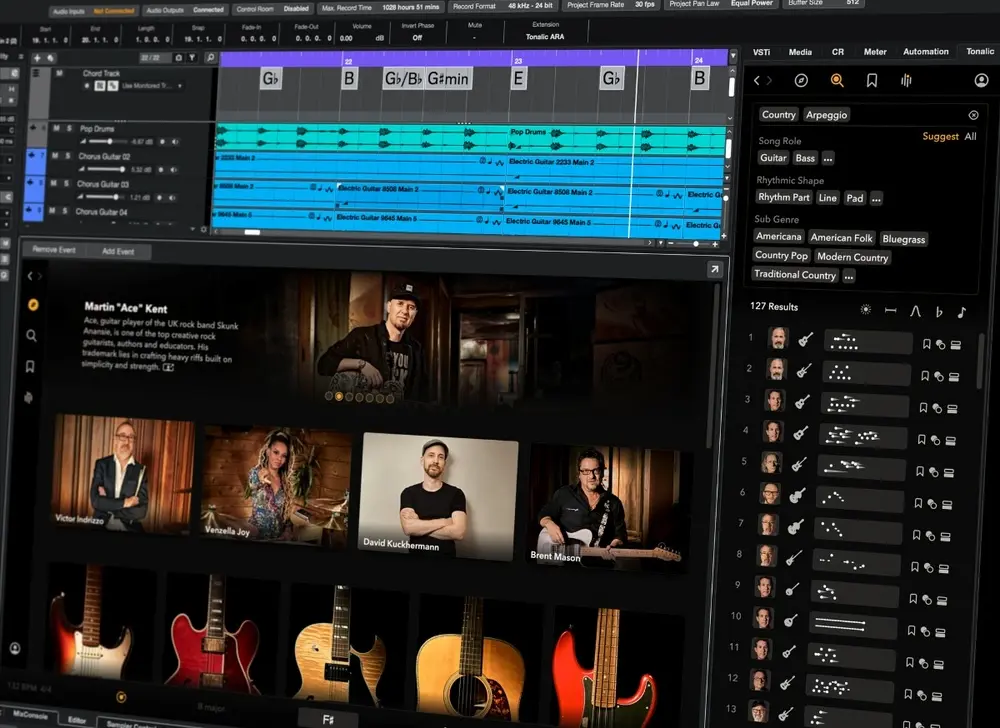
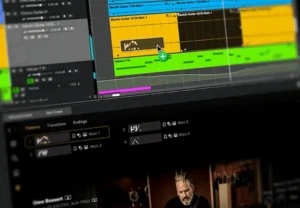
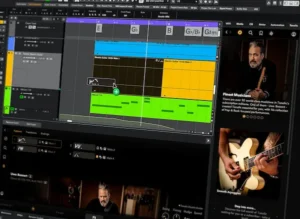
For Cubase users, the significance of the new integration becomes easier to understand once it is viewed from a practical workflow perspective rather than a feature list. Tonalic is no longer treated as a separate destination that requires producers to leave the arrangement environment. Through ARA integration, musicians and performances become accessible directly inside Cubase’s Project Window.
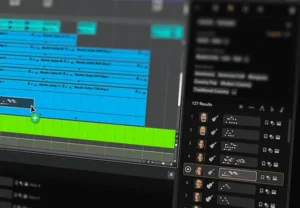
The workflow begins in the Right Zone, where available musicians and performances can be searched and previewed without interrupting the session. Instead of exporting material or managing additional plug-in windows, producers can drag performances directly onto the timeline and begin arranging them alongside existing audio and MIDI tracks.
This becomes particularly useful during arrangement revisions. Chord changes, section extensions, structural edits, and song rewrites are common during modern production, especially in commercial projects where multiple revisions are expected. Because Tonalic remains connected to the project through ARA, performances can adapt as the arrangement evolves rather than forcing users to rebuild parts from the ground up.
For Cubase users evaluating Tonalic, this may be the most important aspect of the update. The integration is not simply about compatibility. It is about making performance-based production behave like a native part of the DAW rather than an external workflow running alongside it.
Where Tonalic Fits in Professional Production Workflows
 One of the biggest misconceptions surrounding Tonalic is that it should be evaluated as a replacement for session musicians. In most professional environments, that is the wrong comparison.
Major-label productions, high-budget commercial records, and projects driven by artist-specific performances will continue to rely on human musicians. Those sessions involve interpretation, communication, experimentation, and creative decision-making that extends far beyond generating instrument parts.
Tonalic is more interesting when viewed as a production tool rather than a musician replacement tool.
Its strongest role emerges during the stages where arrangements are still evolving. Songwriters can test ideas before committing to recording sessions. Producers can develop fuller arrangements without immediately hiring additional players. Composers can build realistic instrumental frameworks while refining structure, harmony, and pacing.
This is particularly relevant in today’s independent production landscape, where a single producer is often responsible for songwriting, arrangement, editing, mixing, and delivery. Under those conditions, access to realistic performances becomes less about replacing musicians and more about accelerating creative decision-making.
The economic implications are equally significant. Many independent releases never reach the stage where hiring multiple session players is financially practical. As a result, arrangement decisions are frequently limited by budget rather than musical intent. Tonalic lowers that barrier by allowing producers to explore a wider range of performance-driven ideas before recording costs enter the equation.
The platform is also well suited to hybrid workflows. A producer might use Tonalic to establish the foundation of an arrangement, then replace selected parts with live recordings where additional nuance or artistic individuality is required. In that scenario, Tonalic functions less like a substitute and more like a production accelerator.
From a workflow perspective, that may be its most realistic application. The greatest value is not eliminating musicians from the process. It is allowing projects to reach a more developed, better-informed stage before significant recording resources are committed.
Mixing Implications: The Hidden Side of Realistic Performances
Most discussions around Tonalic focus on songwriting and arrangement. Far less attention is given to what happens once those performances reach the mix stage.
That omission matters because realistic performances behave differently from MIDI-driven productions. The more human a performance becomes, the less predictable it becomes from a mixing perspective.
The same trend is becoming visible in vocal production. Tools such as Klevgrand Altitude are moving beyond simple pitch correction by introducing harmony generation and performance-aware processing. As software increasingly attempts to emulate the behavior of real performers, engineers face many of the same mixing considerations regardless of whether the source is a voice or an instrument.
Traditional virtual instruments often produce highly controlled source material. Dynamics are consistent, timing is quantized, articulations are deliberately programmed, and tonal balance remains relatively stable throughout a song. Those characteristics can make a mix easier to manage, even when the performance itself feels artificial.
Tonalic moves in the opposite direction. Natural phrasing introduces variations in attack, sustain, dynamics, and tonal emphasis that change continuously throughout a performance. As a result, instruments interact with the mix differently from section to section rather than behaving like static programmed elements.
One observation that stands out from an engineering perspective is how quickly these performance variations become apparent once arrangement density increases. In sparse productions, realism is easy to appreciate. In larger sessions containing layered instruments, backing vocals, and multiple competing elements, realistic performances often reveal masking relationships and balance decisions that highly programmed material can hide. That is not necessarily a problem, but it does force producers to evaluate arrangements more critically.
Engineers may notice changing low-mid density, transient behavior that shifts with performance intensity, and masking relationships that evolve as arrangements develop. Guitar parts that sit comfortably during a verse may occupy very different spectral space once the energy increases in a chorus. Similar challenges occur when working with recordings captured from experienced session musicians.
This is not a weakness of the platform. It is one of the consequences of realism.
In many cases, the characteristics that make a performance feel more convincing are the same characteristics that require greater attention during mixing. Human performances rarely remain perfectly balanced from the first bar to the last, and expecting software-generated performances to behave that way would defeat much of the purpose.
For producers accustomed to highly controlled MIDI workflows, this can be an adjustment. Tonalic does not necessarily reduce the amount of engineering required to achieve a professional result. Instead, it shifts the focus toward managing musical interaction rather than correcting mechanical repetition.
Ultimately, that trade-off is familiar to anyone who regularly mixes live musicians. More realism often creates more decisions, but those decisions are usually tied to musical expression rather than technical limitations. For many engineers, that is a worthwhile exchange.
Mastering Perspective: Why Arrangement Quality Still Matters
 Mastering engineers typically work at the end of the production chain, but many of the problems that surface during mastering originate much earlier. Arrangement decisions, performance quality, and instrument interaction often have a greater impact on the final result than the processing applied during the last stage of production.
This is where Tonalic becomes relevant beyond songwriting and arrangement. Realistic performances tend to expose both the strengths and weaknesses of a production more clearly than highly programmed material. When instruments behave like musicians rather than static MIDI events, the entire mix must support that realism.
Mastering cannot repair an arrangement that lacks movement, interaction, or musical intent. It cannot create dynamics that were never present in the production, nor can it transform repetitive performances into something that feels organically played. Many of the issues producers attribute to mastering are actually arrangement and production problems that originate much earlier in the workflow, a pattern discussed in our guide to common mastering problems. Those qualities must exist before the project reaches the mastering stage.
What Tonalic contributes is a stronger foundation. Performances built from real musicianship often create more believable relationships between instruments, more natural energy shifts between sections, and greater musical continuity throughout a song. Those factors may not appear on a loudness meter, but they directly influence how a record is perceived.
From a mastering perspective, that can be more valuable than incremental gains in level or density. Records that feel musically convincing tend to maintain listener engagement across a wider range of playback environments because the performance itself remains the focal point.
This is particularly relevant in today’s streaming ecosystem. Loudness normalization has reduced the competitive advantage once associated with aggressive level optimization. Listener retention is increasingly tied to musical impact, emotional connection, and arrangement quality rather than raw playback level. Producers who continue to evaluate releases primarily through loudness metrics often misunderstand how modern platform playback actually works, particularly when it comes to LUFS and streaming normalization.
Tonalic does not change the technical requirements of mastering, nor does it eliminate the need for strong mixing decisions. Realistic performances still need proper balance, arrangement control, and technical preparation before a project reaches the final stage of production. What it can do is help producers arrive at mastering with source material that feels less manufactured and more connected to the musical intent of the record. Understanding how to prepare a mix for mastering remains just as important regardless of how the performances were created.
Marketing Claims vs Production Reality
One of the challenges with evaluating emerging production platforms is separating what the technology actually does from what users hope it will do. Tonalic introduces a genuinely different approach to virtual performance generation, but it does not eliminate the constraints that exist throughout the rest of the production process.
Tonalic is not a replacement for session musicians.
It can reduce the need for hiring musicians during songwriting, arrangement development, pre-production, and certain commercial projects. That is very different from replacing the creative contribution of experienced players working in a recording session. Human musicians do far more than execute parts. They interpret, react, experiment, and often improve material in ways that cannot be predicted in advance.
Realistic performances do not automatically create professional productions.
One of the risks of performance-focused tools is that users may overestimate the value of the source material while underestimating the importance of engineering decisions. Strong performances still require effective arrangement choices, balance, editing, mixing, and mastering. A realistic guitar part inside a poorly organized production remains a poorly organized production. Producers sometimes assume that more realistic source material will solve problems later in the workflow, but the distinction between mixing and mastering remains unchanged regardless of how the performance was generated.
The benefits of ARA integration depend heavily on workflow.
Producers managing large sessions, complex arrangements, film-scoring projects, or revision-heavy commercial work are likely to see the greatest advantage. In smaller projects with only a handful of tracks, the difference may be less dramatic. The integration is valuable because it removes friction, but the amount of friction varies from one workflow to another.
Human-sounding performances often require more attention, not less.
There is a common assumption that realistic performances should reduce editing requirements. In practice, the opposite is often true. The same musical variations that make a part feel convincing can create additional decisions during arrangement, editing, and mixing. Real musicians rarely perform like perfectly quantized MIDI sequences, and Tonalic’s value comes largely from preserving that behavior rather than eliminating it.
Viewed through that lens, Tonalic becomes easier to evaluate. It is not a shortcut to professional results, nor is it a substitute for production experience. Its primary contribution is providing access to more believable performances earlier in the creative process, where arrangement decisions still have the greatest influence on the final record.
Competitive Positioning
One reason Tonalic is difficult to categorize is that it does not compete directly with a single product. Depending on the workflow, it overlaps with MIDI libraries, virtual instruments, accompaniment software, DAW-integrated musicians, and songwriting tools. The more useful comparison is not feature-for-feature parity, but understanding which production problem each platform is trying to solve.
| Platform | Best For | Primary Advantage | Primary Trade-Off |
|---|---|---|---|
| Tonalic | Performance-driven arrangement | Real musician phrasing with adaptive editing | Smaller ecosystem than established virtual instrument platforms |
| EZkeys | Songwriting and harmonic development | Fast idea generation and composition workflow | Focused primarily on keyboard-based production |
| EZbass | Bass arrangement and programming | Specialized bass workflow | Limited to a single instrument category |
| Band-in-a-Box | Automated accompaniment creation | Extensive style and arrangement library | Less modern workflow integration |
| Logic Pro Session Players | Native DAW-assisted performance creation | Tight integration within Logic Pro | Restricted to Apple’s ecosystem |
| Traditional MIDI Libraries | Detailed instrument programming | Maximum editing control | Realism depends heavily on programming skill |
The closest conceptual competitor is arguably Logic Pro’s Session Players, since both systems attempt to bridge the gap between virtual instruments and real musicianship. The difference is that Tonalic is built around recorded performances that adapt to the production, whereas many traditional virtual instrument workflows still depend on constructing realism manually through MIDI editing.
Compared with large sample-library ecosystems, Tonalic offers less emphasis on deep programming and more emphasis on musical behavior. That trade-off will appeal to producers who prioritize believable performances over granular note-by-note control.
For producers already comfortable spending hours shaping MIDI articulations, the advantages may be less dramatic. For those trying to reach convincing results more quickly, Tonalic occupies a space that remains surprisingly underserved despite the maturity of today’s production software market.
Tonalic vs Logic Pro Session Players
For many producers, the most relevant comparison is not between Tonalic and traditional virtual instruments. It is between Tonalic and Logic Pro’s Session Players. Both platforms attempt to solve a similar problem: helping users create realistic instrumental performances without relying entirely on manual MIDI programming.
The difference lies in how realism is achieved. Logic’s Session Players generate performances inside a tightly controlled ecosystem that is deeply integrated into the Logic workflow. Tonalic takes a different approach by adapting recordings captured from real musicians and allowing those performances to follow harmonic and structural changes throughout the arrangement.
For Logic users who rarely leave Apple’s ecosystem, Session Players may offer the more seamless experience. For producers working across Cubase, Nuendo, Pro Tools, Studio One, or multiple DAWs, Tonalic’s platform-independent approach is arguably more attractive.
The creative experience also differs. Session Players often feel like intelligent accompaniment tools. Tonalic feels closer to working with recorded performance material that remains flexible after placement in the project. Neither approach is inherently better, but they encourage different production workflows.
Ultimately, the choice depends less on feature comparisons and more on how producers prefer to build arrangements. Users who prioritize native DAW integration may gravitate toward Session Players. Those seeking adaptable performances derived from real musicians may find Tonalic’s approach more compelling.
Tonalic Essential: Is the Free Cubase Version Enough?
One factor likely to influence adoption is the inclusion of Tonalic Essential with active Cubase Pro 15, Cubase Artist 15, and Nuendo 15 licenses. For many producers, Tonalic Essential will serve as their first exposure to the platform rather than a standalone purchase decision.
The Essential edition focuses on acoustic and electric guitar performances and provides access to the core workflow that defines the Tonalic ecosystem. Users can evaluate how performance adaptation, arrangement flexibility, and ARA integration fit into their production process before committing to larger editions.
Whether Tonalic Essential is sufficient depends largely on the type of work being produced. Songwriters, producers, and engineers working on guitar-driven projects may find enough functionality to integrate it into regular sessions. More demanding users working across multiple genres or requiring a broader selection of musicians will likely view Essential as an entry point rather than a complete solution.
From a market perspective, bundling Essential with Cubase may prove just as important as the ARA integration itself. Reducing the barrier to entry gives producers an opportunity to evaluate the workflow in real projects rather than relying solely on demonstrations and marketing claims.
Who Should Consider Tonalic?
Tonalic is not a universal solution, and understanding where it fits is more useful than asking whether it is “good” or “bad.” Its value depends heavily on how music is created within a particular workflow.
The platform is likely to appeal most to producers and songwriters who regularly work with guitar-driven, acoustic, cinematic, pop, rock, country, folk, and hybrid productions where performance realism contributes directly to the perceived quality of the arrangement. In these environments, the ability to access adaptable performances from real musicians can accelerate development without sacrificing musical credibility.
Media composers and commercial production teams may also find Tonalic particularly useful. Tight deadlines often leave little room for coordinating recording sessions during early stages of production. Being able to build arrangements with realistic performances before committing to live tracking can simplify both scheduling and budget allocation.
For independent producers, the appeal is often practical rather than technical. Tonalic makes it possible to explore arrangement ideas that might otherwise require additional musicians, studio time, or external collaboration. That flexibility can be valuable when a single person is responsible for writing, producing, editing, mixing, and delivering a finished record.
The platform becomes less compelling in workflows that rarely rely on organic instrumentation. Producers working primarily in electronic genres built around synthesis, sound design, programmed sequencing, and heavily manipulated audio may find fewer opportunities to benefit from what Tonalic offers.
Likewise, studios that routinely record dedicated session musicians for every project are less likely to view Tonalic as a transformative tool. In those environments, real performances are already part of the production process, and the software serves more as a supplemental resource than a central workflow component.
Ultimately, Tonalic delivers the greatest value where musical realism, production efficiency, and budget awareness intersect. The closer a workflow operates to that intersection, the stronger the case for integrating it into the production process.
Real-World Production Considerations
One of the easiest mistakes when evaluating production software is assuming that every improvement translates directly into a better release. In reality, Tonalic influences the final product in a much less direct way.
The platform does not improve streaming codec performance. It does not solve loudness management. It does not change how Spotify, Apple Music, YouTube, or TikTok process uploaded audio. It does not compensate for poor monitoring decisions, weak arrangements, or ineffective mixes.
What it can influence is the quality of the source material entering the production chain.
That distinction is important because listener perception rarely follows engineering priorities. Most listeners do not evaluate dynamic range, codec artifacts, stereo imaging, or loudness normalization. They respond to whether a performance feels convincing, whether the arrangement maintains interest, and whether the record sustains emotional engagement from beginning to end.
In practical terms, believable performances often survive playback limitations more effectively than technical refinements. A compelling guitar part played through laptop speakers can remain engaging despite obvious sonic compromises. A lifeless arrangement reproduced perfectly through a high-end monitoring system rarely benefits from the same advantage.
This is where Tonalic’s contribution becomes most relevant. By introducing performance behavior that more closely resembles real musicians, it can strengthen the musical foundation that ultimately reaches the listener. The impact may be subtle from an engineering perspective, but it can be significant from a perception perspective.
From a workflow standpoint, CPU performance is unlikely to be the deciding factor for most users. Modern production environments routinely run complex virtual instruments, samplers, and processing chains. The more meaningful question is whether the platform reduces friction during production.
The Cubase and Nuendo ARA integration addresses exactly that issue. The primary benefit is not computational efficiency but workflow efficiency. As projects become larger and revisions become more frequent, keeping performance generation, arrangement editing, and project management inside a unified environment can have a measurable impact on both speed and decision-making.
Verdict
Tonalic is not competing for the same role as a traditional virtual instrument, sample library, or MIDI composition tool. Its value comes from addressing a different problem: how to incorporate believable musical performances into a production workflow without sacrificing the flexibility expected from modern DAWs.
The addition of ARA support for Cubase and Nuendo makes that concept significantly more practical. By moving performance selection, arrangement development, and project management closer together, the integration removes friction that would otherwise discourage experimentation during production.
That does not mean Tonalic replaces musicians, eliminates editing, or guarantees better records. The quality of the final release still depends on songwriting, arrangement choices, mixing decisions, and mastering execution. What Tonalic changes is the quality of the material entering those stages.
For producers working with guitar-based music, organic instrumentation, media composition, commercial production, or hybrid recording workflows, that distinction can be meaningful. Realistic performances often influence how a track feels long before any processing decisions are made.
The platform is still early in its lifecycle compared to more established production ecosystems, and some workflows will benefit more than others. Yet the underlying concept addresses a genuine production challenge rather than a temporary market trend.
If the goal is faster content generation, there are already countless tools competing for that space. If the goal is creating arrangements that behave more like performances and less like programmed sequences, Tonalic remains one of the more interesting developments currently emerging in professional music production.
Tonalic Pricing and Subscription Options
Tonalic is currently available through both subscription and prepaid licensing models, giving users more flexibility than many modern production platforms. Subscription plans allow producers to access the ecosystem with a relatively low initial investment, while prepaid options provide an alternative for those who prefer fixed-term access without recurring commitments.
The inclusion of Tonalic Essential with qualifying Cubase and Nuendo licenses further changes the value equation. For existing Steinberg users, the entry point is significantly lower than it would be for a standalone software purchase.
Ultimately, the pricing question is less about monthly cost and more about workflow value. Producers who regularly rely on realistic instrumental performances may recover that investment quickly through time savings and improved arrangement flexibility. Users whose productions rarely involve organic instrumentation may find fewer opportunities to justify ongoing access.
At launch, Tonalic is available through monthly subscriptions, annual plans, and prepaid licenses. The current €1 introductory first month lowers the barrier for producers who want to evaluate the workflow inside real projects rather than relying on demonstrations. For users who only need Tonalic for specific production periods, prepaid access may prove more attractive than a long-term subscription commitment.

Yurii Ariefiev is a mastering engineer and audio production editor specializing in release translation, production evaluation, and mastering for modern streaming platforms. His editorial work focuses on how arrangement decisions, performance quality, and mix architecture influence the final listening experience long before a track reaches mastering.
This review examines Celemony Tonalic from a production and mastering perspective, with particular attention to performance realism, arrangement workflow, mix preparation, and the practical impact these factors have on commercially released music.
FAQ
Can Tonalic run without Cubase or Nuendo?
Yes. The new ARA integration is exclusive to Cubase and Nuendo, but Tonalic also operates as a VST3, AU, and AAX plug-in in other major DAWs. The core functionality remains available regardless of platform, although workflow integration differs between hosts.
Does Tonalic compete with MIDI guitar libraries?
Not directly. MIDI guitar libraries prioritize detailed note-by-note programming and articulation control. Tonalic is designed around adapting performances recorded by real musicians, making realism and phrasing the primary focus rather than deep MIDI editing.
How does Tonalic compare to Logic Pro Session Players?
Both platforms aim to make realistic instrumental performances more accessible inside the DAW. Logic’s Session Players are tightly integrated into Apple’s ecosystem, while Tonalic takes a cross-platform approach and builds its workflow around recorded musician performances that adapt to arrangement changes.
Is Tonalic suitable for professional productions?
Yes, but its role depends on the project. It can be used for songwriting, arrangement development, commercial releases, media composition, and hybrid productions. Whether final parts remain in the finished record or are later replaced by live musicians depends on artistic and production requirements.
Can Tonalic help speed up arrangement work?
For many producers, that is one of its biggest advantages. The ability to audition, place, and adapt performances quickly can reduce the amount of time spent building convincing instrumental parts from scratch.
Does Tonalic reduce mixing work?
Not necessarily. Realistic performances often introduce dynamic and tonal variations that require additional attention during mixing. The trade-off is that those same variations can make a production feel more natural and less mechanically programmed.
How demanding is Tonalic on CPU resources?
Actual performance depends on session complexity, track count, buffer settings, and system specifications. For most users, workflow efficiency is likely to have a greater impact on day-to-day use than raw CPU consumption.
Can performances be modified after they are placed in a project?
Yes. One of Tonalic’s core strengths is its ability to adapt performances as chords, song structure, and arrangement decisions evolve throughout production.
Will Tonalic improve mastering results?
Indirectly. Mastering quality is ultimately determined by the entire production chain, but stronger performances and more convincing arrangements can contribute to a record that translates more naturally across listening environments.
Is Tonalic Essential enough for serious production work?
That depends on the scope of the project. Tonalic Essential provides access to the core workflow and serves as an effective introduction to the platform, while larger editions expand the available musicians, instruments, and creative options.
What is the difference between Tonalic Essential and the full Tonalic platform?
Tonalic Essential provides access to the core workflow and selected musicians, while larger editions expand the available instruments, performers, and creative options.
Is Tonalic worth using if you already own Logic Pro Session Players?
That depends on workflow preferences. Logic’s Session Players are deeply integrated into Apple’s ecosystem, while Tonalic focuses on adaptive performances recorded by real musicians and supports a broader range of DAW environments.
Do Cubase users need a separate Tonalic subscription?
Active Cubase Pro 15, Cubase Artist 15, and Nuendo 15 users receive Tonalic Essential, although access to additional musicians and expanded functionality may require upgrading beyond the included edition.
Is Tonalic better suited to songwriting or final production?
It can support both, but its greatest strength is often during arrangement development, where realistic performances help producers make stronger creative decisions before mixing and mastering begin.
Is Tonalic worth it for Cubase users?
For Cubase users, the value extends beyond the performances themselves. The ARA integration allows Tonalic to function directly inside the Project Window, reducing workflow interruptions and making arrangement development significantly more efficient than traditional plug-in workflows.