Universal Audio Voice Of God Goes Native — Legendary Low-End Processor Now Available Without DSP
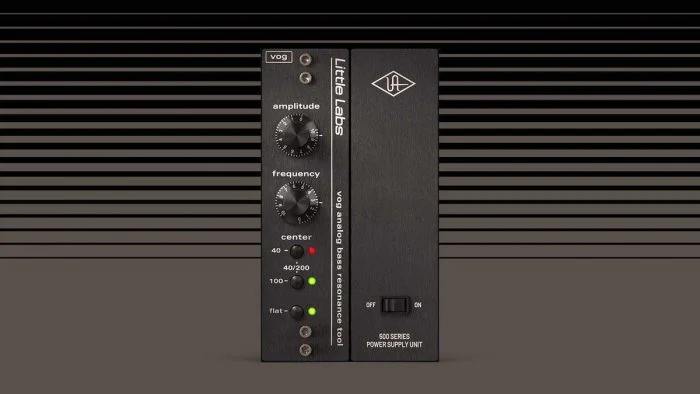
Universal Audio continues its strategic shift toward native processing, releasing one of its most recognizable low-frequency tools outside the UAD DSP ecosystem. The Little Labs Voice Of God Bass Resonance plugin is now officially available as a native version, eliminating the need for Apollo interfaces or UAD Satellite hardware.
This move is not just another product release — it reflects a broader transition in the audio industry. Tools that were once locked behind expensive DSP systems are now becoming accessible to a much wider audience of producers, engineers, and mixers working entirely in-the-box.
What Voice Of God Actually Does (And Why Most Producers Misuse It)
Voice Of God is often misunderstood as a simple bass enhancer. That’s incorrect. It is not a traditional EQ, and it is not designed for broad low-end boosting. Instead, it is a resonance-based processor that targets specific low frequencies and enhances them in a controlled, musical way.
The core idea is precision. Rather than increasing overall bass energy, Voice Of God allows engineers to define a focal point in the low-end spectrum and reinforce it with harmonic weight and density. This results in a tighter, more defined, and more impactful low end.
Originally designed for voiceover applications, the hardware unit added authority and body to spoken vocals. However, its real adoption came from music production, where engineers quickly realized its potential in shaping low-end elements such as:
- Kick drums (adding punch and depth)
- Basslines and sub-bass (tightening and focusing energy)
- 808s (controlling boom without mud)
- Vocals (adding subtle low-end weight)
- Synth bass and electronic low-frequency content
This versatility turned Voice Of God into a staple tool in professional mixing environments.
Key Features and Practical Use Cases
The native version retains the sonic character of the original hardware and UAD emulation, while removing hardware dependency. This makes it significantly more flexible in modern production workflows.
- Selectable low-frequency resonance targeting
- Controlled bass enhancement without phase chaos
- Improved translation across playback systems
- Ability to add weight without masking other elements
- Enhanced punch and perceived loudness in the low end
In practice, this means you can reinforce the fundamental frequency of a kick drum, stabilize sub-bass energy, or add depth to a mix without overloading the low-frequency spectrum.
Why This Native Release Actually Matters
For years, Universal Audio built its reputation around DSP-based processing. While this ensured stability and performance, it also created a barrier to entry. Native plugins remove that barrier — but they introduce a different problem: accessibility without expertise.
Low-end processing is one of the most difficult aspects of mixing. Small mistakes lead to massive problems — muddy mixes, weak translation on streaming platforms, and inconsistent playback across systems.
Voice Of God amplifies both strengths and weaknesses. In the hands of an experienced engineer, it delivers controlled, powerful low end. In inexperienced workflows, it can easily destroy balance and clarity.
This is why professional mixing and mastering still matter, regardless of how advanced plugins become.
In our studio, tools like Voice Of God are used as part of a structured process — including spectral analysis, phase control, and platform-specific optimization. The goal is not “more bass,” but a controlled and competitive low end that translates across Spotify, Apple Music, and club systems.
Learn more about professional mixing and mastering:
https://arefyevstudio.com/en/mixing-tracks-online-tuning-and-mastering-as-a-gift/
Compatibility and System Requirements
The plugin is fully compatible with modern production environments:
- Windows 10 and newer
- macOS 10.15 and above
- Formats: VST3, AU, AAX
This ensures seamless integration with industry-standard DAWs including Pro Tools, Logic Pro, Ableton Live, and FL Studio.
Pricing Strategy and Market Position
At launch, the plugin is offered at an introductory price of $49, down from its standard $99. This aggressive pricing strategy is typical for Universal Audio and is designed to quickly expand adoption among native users.
Given the legacy of the original hardware and the popularity of the UAD version, Voice Of God is likely to become a standard tool in modern production — especially in genres where low-end definition is critical, such as hip-hop, EDM, and pop.
Real-World Impact on Mixing Workflows
The availability of Voice Of God in native format changes how producers approach low-end design. Previously, many relied on EQ stacking, saturation, and multiband compression to shape bass. Now, a single targeted processor can achieve similar results — but with more precision.
However, this also increases the risk of overprocessing. Overuse of resonance tools can lead to phase buildup, low-end distortion, and loss of headroom. This is especially critical in streaming environments where loudness normalization penalizes poorly controlled mixes.
Professional workflows integrate such tools carefully, often in combination with monitoring calibration and reference tracking.
Conclusion
The native release of Voice Of God is not just a convenience update — it’s a shift in accessibility. High-end tools are no longer exclusive. But accessibility raises the standard: results now depend entirely on how well these tools are used.
A powerful low end is not created by boosting frequencies — it is engineered through control, balance, and intention. Voice Of God can deliver that result, but only within a disciplined mixing process.