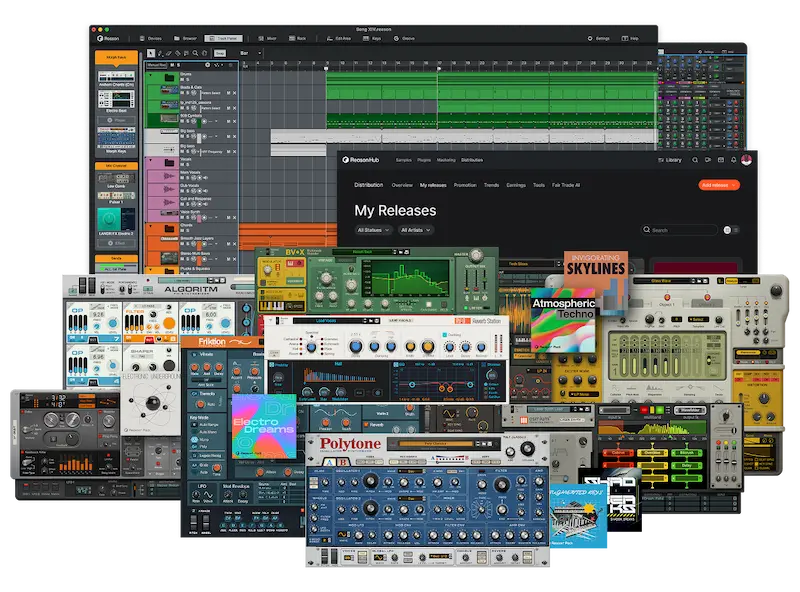
Reason 14 Workflow Overhaul: How the New Track-Centric Design Changes Real Production Workflow
Updated May 2026 • Editorial Analysis • DAW Workflow • Mixing & Mastering
Reason 14 is the first major Reason release that openly admits the old workflow had become a bottleneck. While competing DAWs spent the last decade optimizing speed, visibility, and large-session navigation, Reason continued to center its identity around the Rack. That approach remained creatively powerful, but it also made complex sessions slower to manage as modern production workflows became more editing-heavy and arrangement-focused.
The problem was never sound quality or routing flexibility. Producers stayed with Reason because the Rack still offered one of the most modular environments in music production. The issue was operational efficiency. Once sessions expanded into layered vocals, dense automation, hybrid plugin chains, and large multi-bus arrangements, the workflow demanded too much navigation compared to platforms like Ableton Live, Studio One, Logic Pro, or Cubase.
That problem becomes even more obvious once sessions move toward final mix preparation and streaming delivery, where poorly managed workflow often creates technical issues later in the mastering stage. Understanding the difference between mixing and mastering becomes increasingly important in modern production environments built around fast revision cycles and platform-specific exports.
Reason 14 shifts that balance significantly. Instead of forcing producers to constantly move between sequencer, mixer, and Rack views, the software now pushes critical track information directly into the main workflow layer. The new track-centric architecture is not a cosmetic redesign. It is a structural attempt to modernize Reason into a faster primary DAW without abandoning the modular system that made the platform relevant in the first place.
Page Navigation
- Why Reason 14 Arrives at a Critical Point for DAW Workflow Design
- The Track-Centric Workflow Is the Real Upgrade — Not RV-9
- The Floating Rack Window Fixes One of Reason’s Most Restrictive Workflow Limitations
- Sequencer Updates Bring Reason Closer to Modern Editing Standards
- RV-9 Reverb Station Modernizes Reason’s Stock Spatial Processing
- How Reason 14 Changes Mixing and Premaster Workflow
- Where Reason 14 Still Struggles Against Competing DAWs
- Who Reason 14 Is Actually Built For
- Verdict
- FAQ
Reason 14 at a Glance
What Works
- Much faster large-session navigation
- Track-centric workflow feels significantly more modern
- Floating Rack improves multi-monitor usability
- Better premaster and mix preparation workflow
- RV-9 modernizes Reason’s stock spatial processing
- Track folders finally improve session organization
What Still Holds It Back
- Audio editing still trails Cubase and Pro Tools
- Rack workflow can remain visually dense
- Large modular sessions become CPU-heavy quickly
- Smaller ecosystem than Ableton Live or Logic Pro
- Advanced mastering workflow still benefits from external tools
- $299 pricing enters highly competitive territory
Why Reason 14 Arrives at a Critical Point for DAW Workflow Design
The DAW market no longer rewards software that slows down session management. Modern production environments are built around speed, visibility, and rapid decision-making across increasingly dense projects. Producers expect immediate access to routing, automation, plugin chains, clip behavior, and mix structure without constantly switching between isolated views.
That shift matters because production sessions in 2026 are operationally heavier than they were even a few years ago. A single project may combine:
- Large vocal editing sessions
- Stem-based collaboration across multiple DAWs
- Hybrid analog and plugin processing chains
- Streaming-specific mix revisions
- Content exports for TikTok, YouTube, Spotify, and Apple Music
- CPU-intensive synth stacks and oversampled processing
- AI-assisted cleanup and editing workflows
Under those conditions, workflow inefficiency stops being an annoyance and starts becoming a production limitation.
This is where Reason began falling behind. The Rack remained one of the most flexible modular environments in audio production, but the surrounding workflow increasingly felt disconnected from how modern sessions are actually built. As projects grew larger, producers spent more time navigating between the sequencer, mixer, routing view, automation lanes, and Rack devices than they did in competing DAWs.
That fragmentation became harder to justify once platforms like Studio One, Logic Pro, Cubase, and Ableton Live streamlined large-session editing and track management. Reason still excelled at experimentation and sound design, but speed during arrangement, editing, and mix preparation was no longer competitive.
Reason 14 is the company’s first serious attempt to solve that problem at the architectural level rather than masking it with additional devices or incremental UI updates.
The Track-Centric Workflow Is the Real Upgrade — Not RV-9
 Most of the launch attention around Reason 14 centers on RV-9 Reverb Station because new effects generate easier headlines. In practice, the important change is the workflow redesign underneath it.
For years, Reason forced producers to orbit around the Rack, even during tasks that should have stayed inside the sequencer. That design made sense when Reason was primarily a virtual studio environment built around modular experimentation. It became inefficient once modern production shifted toward faster editing, larger arrangements, and constant mix revisions.
The new Track Panel changes that dynamic substantially. Instead of burying routing and processing information behind separate Rack views, Reason now surfaces critical track-level data directly inside the sequencer workflow. Producers can inspect:
- Device chains
- Signal flow
- Send configuration
- Panning
- Track processing context
without repeatedly breaking focus to navigate across different interface layers.
That sounds like a minor UI improvement until projects become large. In dense sessions, navigation speed directly affects production momentum. Every unnecessary switch between sequencer, mixer, Rack, and routing views slows down arrangement decisions, automation work, and mix preparation.
Older versions of Reason encouraged a deeply “vertical” workflow centered around devices, cables, and Rack exploration. Reason 14 moves toward a more “horizontal” production model where arrangement flow, editing speed, and track visibility become the priority.
That shift aligns Reason more closely with how modern producers actually operate during editing and mix stages. Most engineers are no longer building tracks from start to finish in isolated environments. Sessions evolve continuously through revisions, alternate exports, stem updates, streaming deliverables, and collaborative changes. Visibility becomes more important than visual complexity.
The new Rack per Track system addresses another long-standing issue in large Reason projects. Previous versions could become visually exhausting once Rack devices accumulated across large sessions. Scrolling through oversized Rack structures interrupted workflow constantly, especially in productions exceeding 80 or 100 tracks.
Giving each track its own dedicated Rack column sounds incremental until you work inside a modern multi-bus production session. At that scale, organization stops being cosmetic. It becomes operational infrastructure.
Importantly, Reason Studios did not remove the modular identity that made the software distinct in the first place. The Rack still exists as the creative backbone of the platform. What changed is the layer sitting above it. Reason 14 finally separates creative sound design workflow from basic session navigation.
Reason 14 is the first version that feels designed around modern session management instead of legacy Rack behavior.
That distinction is why this release matters more than a typical feature update. Reason is no longer asking producers to sacrifice workflow speed in exchange for modular flexibility.
The Floating Rack Window Fixes One of Reason’s Most Restrictive Workflow Limitations
The floating Rack window looks like a small interface update. In real production sessions, it changes how Reason behaves on a fundamental level.
Previous versions treated the Rack as a permanently embedded environment that demanded constant visual attention. That design worked during sound design and modular experimentation, but it became restrictive during editing, arrangement, and mixing tasks where producers needed faster access to multiple workflow layers simultaneously.
Reason 14 finally breaks that dependency.
The new floating Rack implementation allows devices to function more like modern plugin environments instead of forcing producers back into a dedicated Rack view every time detailed processing adjustments are needed. That distinction matters far more in professional sessions than it does in small demo projects.
On dual-monitor and ultrawide setups, the improvement is immediately noticeable during:
- Detailed automation editing
- Parallel bus processing
- Layered synth management
- Complex routing adjustments
- Reference comparison workflows
- Hybrid mixing and mastering sessions
Instead of constantly collapsing and reopening interface sections, engineers can keep sequencing, editing, and Rack processing visible at the same time. That reduces interruption during repetitive technical work — especially in sessions where hundreds of small decisions accumulate over long production hours.
This is where Reason historically felt older than competing DAWs. The software encouraged deep immersion inside the Rack itself, but modern production environments are built around simultaneous visibility. Producers expect mixers, editors, plugins, routing, and arrangement tools to coexist without forcing major context switches.
Reason 14 finally adopts that philosophy.
The improvement is not flashy, but it directly affects session endurance. Interface fatigue becomes a legitimate issue during long editing or mixing sessions, particularly in projects involving heavy automation, dense routing, and continuous revision work. DAWs that minimize visual interruption generally feel faster even when the underlying audio engine performs similarly.
Reason still retains its modular identity, but the software no longer behaves like a closed visual ecosystem built around a single Rack-centric perspective. For many long-time users, that alone may be one of the most meaningful changes in the entire release.
Sequencer Updates Bring Reason Closer to Modern Editing Standards
Reason’s sequencer was never fundamentally broken. The problem was efficiency under pressure. Once projects became dense, editing speed dropped compared to DAWs designed around fast arrangement management and large-session navigation.
Reason 14 finally addresses several of those operational weak points directly.
| Workflow Area | Reason 13 | Reason 14 |
|---|---|---|
| Track Navigation | Fragmented across Rack views | Centralized track-centric workflow |
| Large Session Management | Visually cluttered | Improved visibility and organization |
| Rack Workflow | Fixed integrated layout | Floating Rack support |
| MIDI Editing | Slower expression workflow | Direct velocity editing improvements |
| Mix Workflow | More navigation-heavy | Faster routing and track inspection |
The addition of Track Folders is long overdue, but in practical terms, it is one of the most important workflow improvements in the release. Modern production sessions are structurally larger than they were even a few years ago. A typical commercial project may include:
- Multi-layered vocal production
- Large drum routing groups
- Instrument doubles and texture layers
- Parallel processing buses
- Print stems and alternate exports
- Collaboration-ready organization structures
Without folder management, large arrangements become visually inefficient very quickly. Producers spend more time navigating sessions than making decisions inside them.
That was one of Reason’s long-standing problems during serious editing and mix preparation work.
The updated looped clip behavior also removes unnecessary friction from arrangement workflows. Previous versions handled repetitive sections less efficiently than platforms like Ableton Live, FL Studio, or Studio One, where loop-based production is deeply integrated into the editing model itself.
Reason 14 feels noticeably faster during iterative arrangement work because clips now behave more like flexible structural elements instead of static timeline objects that constantly require manual duplication and maintenance.
The piano roll updates are equally important, even if they generate less marketing attention.
The addition of direct velocity handles streamlines MIDI editing substantially because expression adjustments now happen inside the main editing gesture rather than through detached secondary editing steps. That improves workflow speed during:
- Drum programming
- Dynamic groove shaping
- Orchestral sequencing
- Cinematic layering
- Humanized MIDI performance editing
These changes may sound incremental individually, but collectively they address a larger issue that followed Reason for years: too much separation between creative ideas and executable workflow.
Reason always excelled at experimentation. The bottleneck appeared once producers needed to move quickly through editing, arrangement refinement, and revision-heavy production stages.
Reason 14 narrows that gap considerably.
The biggest improvement in Reason 14 is not a device. It is reduced operational friction during real production work.
RV-9 Reverb Station Modernizes Reason’s Stock Spatial Processing
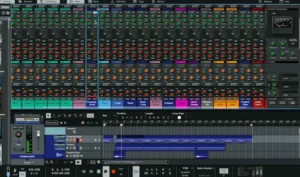 RV7000 MkII survived for years largely because it was functional, not because it remained competitive with modern reverb design. As production standards evolved, Reason’s internal spatial processing began to feel increasingly disconnected from the wider plugin market, especially compared to reverbs from Valhalla, FabFilter, LiquidSonics, Eventide, and newer texture-oriented processors built around modulation and spectral movement.
RV-9 is Reason Studios’ attempt to close that gap.
The most important decision is the hybrid architecture combining algorithmic and convolution processing. That reflects how modern producers actually use reverb today. Most workflows no longer revolve around purely realistic room simulation. Producers want spatial processors that can move between natural depth, exaggerated ambience, tonal coloration, and atmospheric texture without forcing separate plugin chains for each task.
RV-9 clearly targets that broader production role.
The addition of:
- Shimmer processing
- Ducking controls
- Spectral-based algorithms
- Granular-style diffusion behavior
- Integrated EQ shaping
pushes the device much closer to contemporary mixing expectations than anything previously included in Reason’s stock ecosystem.
More importantly, the workflow appears designed for fast decision-making rather than deep technical programming. That matters because modern reverb usage often happens under heavy session density where producers need spatial placement quickly without building complex auxiliary routing structures for every adjustment.
Still, RV-9 is not likely to replace established flagship reverbs inside high-end mixing environments.
Engineers working professionally in dense mix or mastering contexts tend to rely on highly familiar spatial tools with predictable translation behavior, established recall consistency, and deeply refined modulation characteristics. In professional environments, reverb decisions are tightly connected to the broader mastering chain because excessive spatial buildup, low-mid masking, and transient softening can create translation issues later in the process. Understanding how a mastering chain actually behaves becomes critical once mixes move toward final release preparation. That level of trust develops over years of commercial work, especially when mixes must translate reliably across streaming codecs, earbuds, cars, club systems, and broadcast normalization.
Reason’s internal ecosystem still exists somewhat outside that broader professional reverb culture.
Viewed realistically, RV-9 works best as:
- a substantial upgrade over previous Reason reverbs
- a capable all-purpose stock spatial processor
- a faster in-the-box workflow solution for Reason-centric production
- a more modern starting point for creative ambience design
rather than a category-defining reverb plugin designed to displace premium third-party processors.
And honestly, it does not need to.
The bigger achievement is consistency across the production environment itself. Reason now feels less dependent on external plugins to achieve modern spatial workflows, which strengthens the platform considerably for producers trying to stay inside a single creative ecosystem.
How Reason 14 Changes Mixing and Premaster Workflow
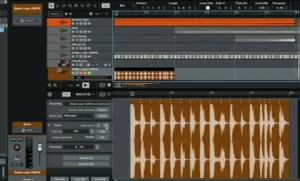 Reason has always been stronger at composition and sound design than at high-speed mixing workflow. Earlier versions could absolutely produce professional mixes, but once sessions became dense, the environment often felt slower than DAWs built specifically around large-scale editing and mix navigation.
Reason 14 reduces that gap in meaningful ways.
The new track-centric structure improves one of the most important aspects of modern mixing: visibility. Engineers can inspect routing, processing, and track relationships faster without repeatedly shifting between isolated interface layers. That directly affects workflow efficiency during:
- Gain staging
- Parallel compression setup
- Stem balancing
- Bus management
- Automation correction
- Routing diagnostics
In practical terms, the software now behaves more like a modern mix environment and less like a modular sound-design platform with sequencing attached to it.
The Dark Mode Mixer also matters more than marketing screenshots suggest. Long sessions under bright interfaces create noticeable visual fatigue, particularly during editing-heavy work where producers spend hours focused on automation, transient inspection, and detailed level balancing. Engineers working professionally inside DAWs for 8–12 hours at a time notice these ergonomic improvements immediately.
MIDI note chase is another small but important correction. Previous playback behavior could interrupt arrangement review and revision work whenever playback started mid-phrase. Removing those interruptions makes editing feel more reliable during fast iteration cycles.
Automatic tempo detection for imported audio also modernizes collaboration workflow. Producers now exchange stems, loops, and reference material constantly across multiple DAWs and remote sessions. Faster tempo interpretation reduces friction during sample integration, remix preparation, and cross-platform production work.
From a mastering perspective, Reason still is not positioned as a dedicated finishing environment in the same category as Sequoia, WaveLab, Pyramix, or specialized hybrid mastering systems. The software is not trying to replace those ecosystems.
The more relevant question is whether producers can now complete serious premaster work inside Reason without the workflow itself becoming the limitation. That becomes especially important once projects move into final export preparation, limiter staging, and real-world translation control — areas that are often misunderstood even among experienced producers. Professional mastering workflow is no longer just about loudness. It is largely about consistency, translation, and preventing technical problems before release.
Reason 14 gets considerably closer to that threshold.
That said, CPU behavior remains part of the equation. Reason’s Rack architecture naturally encourages deep device stacking, layered combinators, oversampled processing, and complex routing structures. In modern sessions using convolution reverbs, advanced synthesis, high-resolution sampling, and multiple Rack Extensions simultaneously, resource consumption can escalate quickly.
The redesigned workflow improves operational speed, but it does not eliminate the computational demands created by Reason’s modular production philosophy. Large projects still require disciplined session management, especially when RV-9, layered synth chains, and heavy parallel processing are all active inside the same arrangement.
That tradeoff is still part of the Reason ecosystem: exceptional routing flexibility in exchange for potentially heavier project management under demanding production loads.
Where Reason 14 Still Struggles Against Competing DAWs
Reason 14 modernizes the workflow significantly, but it does not erase the structural advantages established DAWs have built over the last decade.
Some limitations are still difficult to ignore in professional production environments.
Audio editing remains one of the clearest examples. Reason has improved steadily, but advanced comping, detailed waveform editing, dialogue-style cleanup, and high-speed post-production workflows still feel more mature in Cubase, Studio One, Pro Tools, and even Logic Pro in certain scenarios.
That matters because modern production is increasingly edit-heavy. Producers spend enormous amounts of time cleaning vocals, managing alternates, tightening performances, preparing stems, and revising arrangements under deadline pressure. Workflow depth during editing is no longer a secondary feature category. For many engineers, it is the DAW.
Reason’s ecosystem also remains comparatively smaller than the environments surrounding Ableton Live, Logic Pro, or FL Studio. That affects more than plugin count alone. It impacts:
- Educational resources
- Community-developed workflows
- Commercial template ecosystems
- Preset libraries
- Third-party workflow integration
- Collaboration standardization
Large DAW ecosystems create momentum. Once enough producers, educators, sound designers, and engineers build infrastructure around a platform, switching becomes harder even when competing software improves technically.
The Rack itself also remains divisive.
For some producers, it is still one of the most creatively flexible environments in music production. For others, it introduces unnecessary complexity into workflows that increasingly prioritize speed, visual clarity, and fast revision turnaround.
That divide becomes more obvious in collaborative environments where producers need projects to move quickly between editors, mixers, content teams, and mastering engineers without additional routing overhead.
Modern workflows increasingly reward:
- Minimal navigation friction
- Fast rendering and export management
- Rapid session revisions
- Simple collaboration structures
- High editing density per screen space
Reason 14 improves dramatically in these areas, but it still expects users to think more deeply about routing architecture than many competing DAWs. Depending on the producer, that can either feel creatively empowering or unnecessarily demanding.
Pricing also complicates the conversation.
At $299 for a perpetual license, Reason enters direct competition with DAWs that already dominate commercial studios, educational pipelines, online tutorials, and professional collaboration networks. Buyers are no longer evaluating Reason purely as a unique creative tool. They are evaluating whether the workflow can compete operationally against platforms with far larger ecosystems and more mature production infrastructure.
That is a much more difficult position than competing on originality alone.
Reason 14 closes part of that gap. It does not fully eliminate it.
Who Reason 14 Is Actually Built For
Reason 14 makes the most sense for producers who value modular production workflow but were increasingly frustrated by the operational slowdown of earlier versions.
The update is particularly strong for producers working in:
- Electronic music production
- Synth-heavy arrangements
- Experimental sound design
- Layered routing environments
- Hybrid in-the-box production workflows
For these users, the new track-centric architecture removes a significant amount of friction without stripping away the modular flexibility that made Reason distinct in the first place.
That balance is important because earlier versions often pushed users into hybrid setups where Reason Rack handled creative processing while another DAW handled editing, arrangement, and mix management. Reason 14 reduces the need for that split workflow considerably.
For many electronic producers, this is the first version of Reason in years that realistically feels capable of functioning as the primary production environment rather than a secondary creative tool.
The software also makes more sense now for serious bedroom producers operating entirely in-the-box. The improved session organization, modernized sequencer behavior, and faster navigation create a workflow that scales more effectively once projects become commercially dense.
That said, there are still categories of users who will probably work faster elsewhere.
Producers heavily focused on:
- High-speed vocal comping
- Dialogue-intensive editing
- Large collaborative post-production
- Film scoring infrastructure
- Broadcast-oriented workflows
- Enterprise-level studio collaboration
may still find platforms like Cubase, Pro Tools, Nuendo, or Studio One operationally stronger depending on the project type.
The same applies to dedicated mastering engineers.
Reason 14 improves premaster workflow substantially, but it is still not designed around the specialized requirements of high-end mastering environments where engineers depend on advanced metering ecosystems, hardware integration, precision routing recall, and highly optimized finishing chains.
That does not make Reason weak. It simply clarifies its strongest identity.
Reason 14 works best as a modern creative production DAW that now behaves far more professionally under large-session pressure than previous versions ever did.
And honestly, that is probably the smartest direction Reason Studios could have taken.
Should You Upgrade to Reason 14?
Upgrade if your main frustration with older versions was workflow speed, session organization, and large-project navigation. The difference becomes much more noticeable once projects move beyond composition into editing, mixing, and revision-heavy production.
Skip the upgrade if your workflow already depends heavily on external DAWs for advanced editing, post-production, or mastering-specific infrastructure and Reason primarily functions as a secondary Rack environment.
Verdict
Reason 14 is the first Reason release in years that feels focused on production reality instead of platform nostalgia.
Previous updates expanded the Rack, added devices, and refined the ecosystem, but they rarely addressed the larger issue slowing the software down: workflow fragmentation inside modern sessions. Reason remained creatively powerful, yet increasingly inefficient once projects moved beyond composition into editing, revision, and mix-intensive production stages.
Reason 14 finally targets that problem directly.
The most important achievement is not RV-9, Track Folders, or any individual feature on their own. Competing DAWs already implemented most of these concepts years ago. What matters is that Reason Studios finally rebuilt the operational layer surrounding the Rack itself.
The software now behaves more like a contemporary production environment and less like an isolated modular ecosystem that producers needed to work around.
That distinction changes the experience of using Reason far more than any single device release could.
The new track-centric workflow improves navigation speed, session visibility, arrangement management, and large-project organization in ways that directly affect day-to-day production efficiency. The Rack still remains the creative core of the platform, but it no longer dominates every interaction inside the DAW.
That balance was necessary.
Reason’s identity has always depended on modular flexibility, but modern production environments also demand speed under pressure. Sessions today involve constant revisions, streaming deliverables, stem exports, collaboration chains, and editing density that older versions of Reason handled less efficiently than competing DAWs. That pressure also changes how producers approach final mix preparation because modern mastering environments are less forgiving of poorly organized sessions, clipped exports, and unresolved balance issues. Proper mix preparation before mastering has become part of the production workflow itself rather than a separate final-stage concern.
Reason 14 narrows that gap substantially.
It still does not surpass specialized platforms in every category. Producers focused heavily on advanced editing, post-production infrastructure, or mastering-specific workflows may continue working faster elsewhere. The Rack architecture also still encourages deeper routing complexity than some producers want in high-speed collaborative environments.
But for the first time in a long time, Reason no longer feels technically behind the broader DAW market.
It finally feels current.
And for Reason Studios, that may be the most important upgrade of all.
About the Author
 Yurii Ariefiev is a mastering engineer and founder of AREFYEV Studio, specializing in professional audio mastering, mix evaluation, and streaming-focused music production workflow. His work focuses on translation accuracy, loudness behavior, tonal balance, codec interaction, and real-world playback consistency across modern streaming platforms.
Over the years, he has worked with producers, independent artists, and mixing engineers across electronic music, hip-hop, rock, cinematic production, and commercial streaming releases. His editorial work combines technical mastering analysis with practical production workflow observations drawn from real sessions rather than marketing specifications.
This article approaches Reason 14 from the perspective of long-session production efficiency, mixing workflow behavior, and modern premaster preparation — not from a press-release or feature-list perspective.
FAQ
Is Reason 14 actually a significant upgrade over Reason 13?
Yes. The biggest change is not a new instrument or effect — it is workflow behavior. The track-centric redesign improves navigation, session organization, and editing flow enough that large projects feel materially faster to manage.
Can Reason 14 realistically function as a primary DAW now?
For many producers, yes. Earlier versions often worked better as creative side environments paired with another DAW for editing and mixing. Reason 14 reduces enough workflow friction that electronic and in-the-box producers can comfortably run full production sessions inside it.
How does Reason 14 compare to Ableton Live for electronic music production?
Reason still feels deeper from a modular routing perspective, while Ableton Live remains faster for clip-based arrangement, live performance workflow, and rapid iteration. The gap is smaller now than it was in previous generations.
Is RV-9 Reverb Station competitive with premium third-party reverbs?
It is far more modern than previous stock Reason reverbs, especially for ambient production and creative spatial work. But engineers heavily invested in high-end reverb ecosystems may still prefer dedicated tools with more refined modulation and long-term mix familiarity.
Does Reason 14 improve CPU efficiency?
The workflow is faster, but complex Rack-based sessions can still become CPU-heavy quickly. Large combinator chains, oversampled processing, convolution reverbs, and layered synthesis remain demanding under high track counts.
Is Reason 14 good for professional mixing work?
Much more than previous versions. The improved track visibility and session organization make large mix sessions easier to manage. However, engineers doing extremely editing-heavy work may still prefer Cubase, Studio One, or Pro Tools.
Does Reason 14 support modern streaming-oriented production workflow?
Yes. Faster arrangement management, better routing visibility, and improved organization make it more practical for handling streaming deliverables, alternate exports, stem revisions, and platform-specific production workflows.
Is Reason 14 a good DAW for mastering?
It works well for premaster preparation and producer-led mastering chains, but it is still not a dedicated mastering platform. Engineers handling commercial finishing work may continue relying on WaveLab, Sequoia, Pyramix, or hybrid analog systems.
Should existing Reason users upgrade immediately?
If workflow speed, project organization, and session navigation frustrated you in older versions, this is probably the most meaningful upgrade Reason Studios has released in years.
Who probably should not switch to Reason 14?
Producers focused primarily on dialogue editing, film post-production, advanced vocal comping, or large collaborative studio pipelines may still work more efficiently in DAWs optimized specifically for those environments.