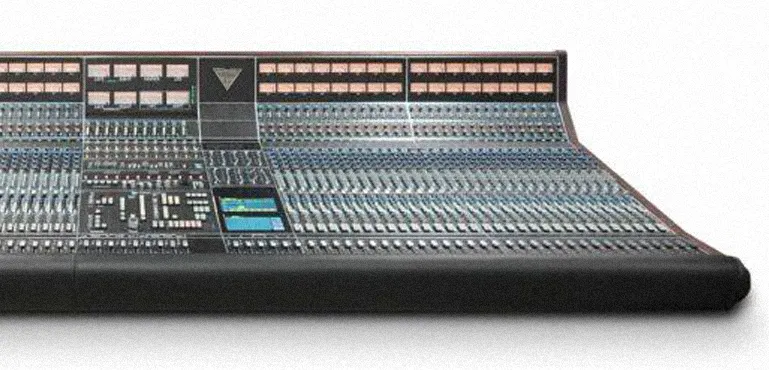
API Vision+ Console Targets the Biggest Weakness in Modern Hybrid Studio Workflows
The new API Vision+ console is more than a routine refresh of the company’s large-format analogue platform. API are addressing a problem that has become impossible for professional studios to ignore: traditional console workflows no longer move fast enough for modern production environments.
That pressure has reshaped the entire high-end audio market.
Modern mix engineers today are expected to manage dense DAW sessions, instant recall demands, plugin-heavy automation, immersive audio deliverables and hardware integration simultaneously. That workflow complexity is also changing how engineers approach mixing vs mastering, especially in hybrid production environments where processing decisions increasingly overlap between stages. Older analogue desks often become operational bottlenecks long before their sonic limitations become relevant.
The Vision+ appears designed around that exact reality.
Rather than selling analogue nostalgia, API rebuilt the platform around hybrid workflow efficiency. The redesign reaches deep into the console architecture itself — automation, routing, monitoring, line integration, power distribution and center section control have all been reworked to fit modern mixing and mastering environments where software and hardware constantly overlap.
That shift matters because large-format consoles are no longer competing against other consoles. They are competing against the speed, flexibility and recall advantages of fully in-the-box production.
The real question surrounding the Vision+ is not whether it sounds like an API console. Engineers already know what API circuitry delivers: aggressive transient response, forward midrange energy and mix density that translates well across modern playback systems.
The more important question is whether analogue infrastructure can still justify its footprint inside contemporary hybrid studios.
API’s answer with the Vision+ is clear: analogue workflow survives only if it integrates seamlessly with the realities of modern audio production.
In This Article
- Why the Vision+ Matters in Modern Hybrid Studios
- Why the Vision+ Was Built Around DAW Workflow Reality
- How the Vision+ Fits Into Hybrid Mixing and Mastering
- API Vision+ vs SSL Origin vs Neve Genesys
- Why the Input Module Redesign Matters
- Why the Integrated 2500+C Matters
- Can the Vision+ Compete With In-the-Box Mixing?
- Is Analogue Summing Still Relevant?
- Who the Vision+ Is Actually Designed For
- What the Vision+ Says About Hybrid Production
- Final Verdict
- FAQ
Why the API Vision+ Matters in Modern Hybrid Mixing and Mastering Studios
The debate around large-format analogue consoles has become increasingly disconnected from how professional studios actually operate.
One side claims modern plugins, DAW summing and automation systems have made analogue desks obsolete. The other treats analogue workflow like a creative religion where operational inconvenience somehow adds artistic value.
Neither position reflects the reality of contemporary audio production.
Most commercial mix environments now run hybrid by default. Engineers move constantly between software precision and hardware processing depending on the stage of the session, delivery format and client expectations.
A modern production workflow may involve:
- Vocal editing and cleanup inside Pro Tools
- Hardware compression during tracking
- Plugin automation for surgical mix control
- Analogue stem summing for drums and instruments
- Outboard mix bus processing
- Dolby Atmos and immersive audio deliverables
- Streaming loudness optimization for Spotify and Apple Music
- Fast-turnaround client revisions with partial recall requirements
That workflow exposes the limitations of older console designs very quickly.
Traditional large-format desks were built for an era when the console controlled the session. Modern production works in reverse. The DAW now dictates automation, routing structure, editing, recall logic and delivery management, while hardware functions as an extension of the software environment rather than its replacement.
That shift is exactly where the Vision+ becomes relevant.
API are not trying to pull engineers away from in-the-box production. The Vision+ is built around the assumption that hybrid mixing, hardware integration and DAW-centric workflows are now permanent parts of professional audio production.
The Vision+ Was Built Around DAW Workflow Reality
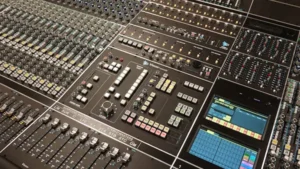 API kept the fully analogue inline architecture of the original Vision console, including dual 100mm motorized faders per channel, extensive routing flexibility and dedicated multibus infrastructure. But the most important redesign happened in the control layer, not the signal path.
The new Final Touch automation system is clearly aimed at one problem: reducing the operational disconnect between large-format analogue consoles and modern DAW-based production.
That disconnect has quietly pushed many engineers away from consoles over the last decade.
Older automation systems often feel isolated from the actual center of modern sessions — the DAW timeline. They may sound excellent, but once projects become revision-heavy, automation-intensive or delivery-focused, the console starts slowing the session down instead of accelerating it.
The Vision+ attempts to remove that friction.
API added dual touchscreen Automation Control Modules alongside integrated HUI and MCU support, allowing the console to function as a true DAW control surface rather than a separate automation environment operating beside the workstation.
That distinction matters in modern mixing workflows where engineers constantly move between:
- Plugin automation rides
- Detailed vocal level automation
- Parallel bus processing
- Stem-based mix balancing
- Atmos object management
- Alternate print creation
- Streaming-specific deliverable revisions
In those environments, poor integration between hardware automation and DAW control becomes a serious productivity problem.
Modern sessions no longer move linearly from tracking to mix to print. Engineers jump continuously between editing, automation, stem processing, recall updates and client revisions. Any console workflow that interrupts that speed eventually becomes difficult to justify financially.
That is the larger significance of the Vision+ redesign.
API are no longer treating the console as the center of production. The DAW already owns that role. The Vision+ is designed to operate as a tactile analogue extension of software-based production rather than competing against it.
For large-format analogue consoles, that may be the only sustainable direction forward.
How the API Vision+ Fits Into Real Hybrid Mixing and Mastering Workflows
The Vision+ makes the most sense when viewed as infrastructure for hybrid production rather than a traditional recording console.
Modern mix engineers rarely stay entirely in hardware or entirely in-the-box anymore. Most commercial sessions move constantly between plugin processing, analogue routing, hardware inserts, stem summing and DAW-based automation depending on the stage of the production.
The Vision+ is clearly designed around that type of workflow.
A realistic modern session on the console might involve:
- Editing, cleanup and vocal alignment inside Pro Tools
- Analogue drum and instrument stem summing through console buses
- Outboard compression across parallel mix paths
- Plugin automation for surgical rides and corrective moves
- Hardware mix bus processing during print capture
- Mastering preparation focused on translation consistency and loudness behavior
- Stereo and Atmos deliverables generated from the same hybrid session
- Final print returns back into the DAW for mastering preparation
That workflow becomes especially important in modern streaming production where engineers are already thinking about codec translation, limiter behavior and loudness management before the mastering stage even begins. Hybrid environments like this increasingly blur the line between mix preparation and professional mastering workflow.
That environment places enormous pressure on routing flexibility.
The redesigned Alt-Line input structure may end up being one of the most practically useful upgrades in the entire console. By effectively expanding available line input capacity during mixdown, the Vision+ reduces the constant repatching that slows large hybrid sessions down once hardware chains become more complex.
That becomes critical in professional mix environments where engineers may be managing:
- Multiple hardware EQ chains
- Parallel compression buses
- External saturation processing
- Dedicated vocal insert paths
- Stem printing chains
- Hybrid mastering capture paths
Routing limitations are not minor inconveniences in those sessions. They directly affect speed, decision-making and client turnaround time.
That is one of the less glamorous realities of modern audio production: workflow efficiency often matters as much as raw sonic capability.
The Vision+ also appears heavily optimized for immersive audio environments. Every channel supports stereo, LCR and surround panning, while the redesigned center section adds expanded surround monitoring control for multi-format production workflows.
This is API acknowledging that Dolby Atmos and immersive mixing are no longer isolated high-end specialties. Commercial studios increasingly need console infrastructure capable of moving between stereo, surround and immersive deliverables without rebuilding the monitoring architecture around every project.
That shift is becoming especially important for facilities handling streaming releases, film work, gaming audio and major-label projects where multiple delivery formats are now standard rather than optional.
API Vision+ vs SSL Origin vs Neve Genesys: Three Different Approaches to Hybrid Console Design
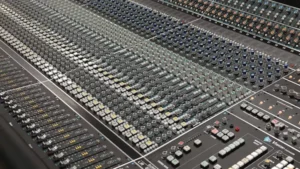 The modern large-format console market is no longer competing on analogue sound alone. Every serious manufacturer is now trying to solve the same problem: how to keep hardware relevant inside DAW-dominated production environments.
API, SSL and Neve are approaching that problem from very different angles.
SSL Origin is heavily workflow-focused. Its design philosophy centers around fast navigation, streamlined routing and tight integration with modern production sessions where recall speed and operational efficiency matter as much as sonics. Origin fits naturally into commercial mix rooms running dense DAW sessions with aggressive revision schedules.
Neve Genesys leans further toward analogue depth and traditional console behavior. The platform emphasizes harmonic richness, transformer weight and a more classic large-format recording experience. Genesys appeals strongly to engineers who prioritize dimensionality, musical saturation and analogue texture during tracking and mix construction.
The API Vision+ sits in a different space entirely.
API consoles have always behaved differently under load compared to SSL and Neve designs. The company’s circuitry tends to stay fast, forward and impact-heavy even during dense arrangements with aggressive bus processing. Transients remain sharp, midrange detail stays exposed and low-end information retains definition instead of softening under compression.
That behavior becomes especially valuable in modern production styles built around punch and rhythmic articulation.
The Vision+ feels particularly well-suited for:
- Rock mixing with dense guitar layering
- Modern metal production
- Hip-hop and trap sessions with aggressive low-end energy
- Pop productions dependent on vocal presence and transient detail
- Electronic music requiring fast attack response
- Hybrid orchestral scoring with complex rhythmic information
Where Neve consoles often widen and thicken a mix, API tends to push material forward. Where SSL systems prioritize control and workflow precision, API consoles usually feel more physical and rhythmically aggressive.
That distinction matters in streaming-era production.
Modern mixes are routinely pushed through loudness normalization systems, lossy codecs and small-format playback devices. Consoles that preserve transient definition and midrange clarity under heavy limiting conditions often translate more effectively across earbuds, phones, laptops and streaming platforms.
The Vision+ appears engineered around that reality rather than around vintage console nostalgia.
Importantly, API did not modernize the workflow by stripping away the company’s core sonic identity. The Vision+ still sounds like an API console — fast, dense and forward — but the surrounding infrastructure is now far better aligned with hybrid production demands, immersive mixing environments and modern DAW-centric workflows.
The Vision+ Input Redesign Focuses on Session Speed, Not Marketing Specs
One of the most important upgrades in the Vision+ is also one of the least likely to appear in headline marketing copy: the redesigned input module architecture.
That matters because large-format consoles are rarely limited by sound quality alone. In real commercial environments, they succeed or fail based on operational efficiency during long sessions.
Small workflow problems become major liabilities when multiplied across 48, 64 or 96 channels.
API reworked several critical areas of the input section, including:
- Channel layout organization
- Signal assignment structure
- Dynamics module routing
- Fader touch calibration and response
- Visual feedback through illuminated switch caps
None of these changes sound dramatic on paper. Inside actual mix sessions, they matter constantly.
Professional engineers rarely abandon consoles because of tone. They abandon them because the workflow becomes exhausting.
Poor channel visibility, awkward routing logic, inconsistent automation response and confusing assignment structures slow sessions down in ways that compound over time. Once projects become revision-heavy, those inefficiencies start costing money.
The Vision+ redesign appears heavily informed by that reality.
The updated fader calibration system should be particularly relevant for engineers running automation-intensive hybrid sessions. Poor touch sensitivity on motorized analogue desks creates subtle but persistent workflow friction during detailed rides, stem balancing and fast recall passes.
The revised dynamics routing is equally important. API now allows independent control of the lower 200 Series dynamics module assignment to either fader path, which significantly improves flexibility during dense mix sessions involving parallel processing and hybrid stem workflows.
The addition of translucent illuminated switch caps may sound cosmetic, but anyone who has worked twelve-hour sessions on large analogue desks understands the practical value immediately. Faster visual navigation reduces operator fatigue, speeds up troubleshooting and improves routing confidence under pressure.
These are not flashy upgrades designed for showroom demos. They are workflow corrections aimed at engineers who spend entire days inside complex production sessions.
That distinction separates the Vision+ from many modern analogue releases that prioritize feature lists over operational behavior.
Why the Integrated API 2500+C Bus Compressor Actually Matters
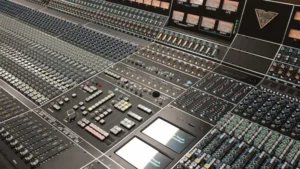 API’s decision to offer an integrated 2500+C bus compressor inside the Vision+ center section is more significant than it first appears.
Modern mix workflows increasingly revolve around centralized bus control rather than isolated channel processing. In many hybrid studios, the mix bus compressor is no longer treated as optional coloration at the end of the chain. It becomes part of the core balance architecture of the session itself.
That shift changes the role of hardware compression entirely.
Today’s engineers are mixing into bus processing much earlier in the workflow, often building compression, saturation and limiter interaction directly into the mix architecture rather than treating mastering as a completely separate corrective stage.
API’s compression topology remains particularly effective in those environments because it tends to preserve attack energy and rhythmic movement even under relatively aggressive gain reduction.
That characteristic becomes extremely valuable in modern production where mixes are routinely pushed through:
- Streaming loudness normalization
- Codec conversion
- Heavy peak limiting
- Dense low-end layering
- Multi-stage bus processing chains
Many smoother VCA designs can begin softening transient edges or collapsing rhythmic definition once dense material hits modern loudness targets. API bus compression generally behaves differently. The forward midrange, transient articulation and punch tend to remain intact even as the mix becomes more compact.
That is one reason API hardware continues to show up consistently in rock, metal, hip-hop, pop and electronic production workflows where impact matters more than softness.
The integrated 2500+C also makes practical sense from a routing perspective. Embedding mix bus control directly into the console architecture simplifies hybrid session management by reducing external patch dependencies during recalls, print passes and revision-heavy projects.
For engineers working in hybrid mixing and mastering environments, that operational efficiency matters almost as much as the compression behavior itself.
That production style also explains why many engineers now spend far more time refining the mastering chain itself before final print delivery.
Can the API Vision+ Compete With Fully In-the-Box Mixing?
Not directly — and API probably understands that better than most console manufacturers.
The Vision+ is not trying to replace modern DAW-based production. The real question is whether the console delivers enough workflow, routing and sonic advantages to justify its role inside high-end hybrid studios.
For smaller rooms operating entirely inside plugin ecosystems, the answer will often be no.
Modern software mixing has become extremely efficient. High-end console emulations now offer convincing analogue coloration, total recall, flexible automation and instant session portability without the operational overhead attached to large-format hardware.
The Vision+ does not remove the traditional realities of analogue infrastructure:
- Maintenance and calibration requirements
- Heat and power demands
- Large physical footprint
- Higher operational costs
- More complex signal management
- Slower recall compared to fully digital workflows
Those limitations remain very real, especially in production environments prioritizing speed, remote collaboration and rapid revision turnover.
But reducing the conversation to “plugins versus analogue” misses why large-format consoles still survive in serious commercial rooms.
Professional engineers are not holding onto analogue infrastructure because software failed to evolve. They continue using consoles because hardware still changes the way complex mixes are built, balanced and managed under pressure.
Tactile workflow affects decision-making. Dedicated routing changes how engineers approach parallel processing and stem management. Analogue headroom behaves differently under dense bus structures. Physical faders encourage more aggressive real-time mix interaction than mouse-driven automation alone.
Those factors do not always show up clearly in spec sheets or null tests, but they influence workflow behavior constantly during long sessions.
The Vision+ appears designed around that practical reality.
API are not arguing that analogue consoles are universally superior to modern plugins. The company is trying to reduce the operational penalties traditionally associated with large-format hardware while preserving the aspects of analogue workflow that many high-end engineers still consider valuable.
That is a much more realistic position than the usual “analogue versus digital” marketing narrative.
Is Analogue Summing Still Relevant in Modern Mixing and Mastering?
Few topics in audio production generate more recycled arguments than analogue summing.
At one extreme, analogue advocates describe summing mixers and large-format consoles as if transformers alone automatically produce larger, deeper or more “musical” mixes. At the other, fully in-the-box engineers dismiss analogue summing as outdated studio mythology with no measurable value.
Neither position reflects how experienced mixers actually work.
A poorly organized hybrid chain will not outperform disciplined in-the-box mixing simply because audio passes through analogue circuitry. Hardware does not compensate for weak balance decisions, poor arrangement control or unstable low-end management.
But experienced engineers also do not continue investing in analogue infrastructure purely because of nostalgia.
In real-world production environments, analogue consoles often change workflow behavior in ways that directly affect mix construction.
Engineers working on large hybrid sessions frequently use consoles because:
- Complex routing becomes faster and more intuitive
- Parallel processing chains are easier to manage physically
- Real-time decision-making accelerates during mix passes
- Gain staging behaves differently under analogue headroom
- Transient response feels more immediate during bus processing
- Monitoring through analogue paths changes balance perception
- Hardware interaction encourages more aggressive performance-style mixing
Those factors are difficult to quantify in simplistic “before versus after” comparisons, but they influence professional workflow constantly.
This becomes especially relevant in dense modern productions where engineers are balancing:
- Heavy low-end layering
- LUFS-driven loudness targeting
- Multi-stage compression
- Large vocal stacks
- Parallel saturation paths
- Hybrid stem processing
- Streaming loudness targets
That becomes particularly important in streaming-focused production where excessive limiting, clipped transients and unstable low-end behavior can collapse translation very quickly across Spotify, Apple Music and smaller playback systems. Modern hybrid workflows increasingly require engineers to understand both analogue routing behavior and LUFS management during mastering.
Under those conditions, workflow efficiency and tactile interaction often matter as much as measurable sonic differences.
The Vision+ appears built around that practical reality rather than around exaggerated claims about analogue magic. API are not presenting the console as a cure for weak mixes. They are positioning it as a tool designed to make complex hybrid production workflows faster, more tactile and more controllable under professional session pressure.
Who the API Vision+ Is Actually Designed For
The Vision+ is not aimed at producers chasing analogue aesthetics for social media branding or studio photography.
API built this console for facilities running complex hybrid production environments where routing depth, hardware integration and operational speed directly affect commercial output.
The Vision+ makes the most sense in studios handling:
- Large-scale hybrid mixing sessions
- Hardware-intensive production workflows
- Commercial tracking and overdub environments
- Dolby Atmos and immersive audio mixing
- Stem-based mix and print workflows
- High channel-count productions with extensive outboard integration
- Projects requiring simultaneous analogue and DAW-based processing
That includes:
- Commercial mix facilities
- Major-label production rooms
- High-end hybrid studios
- Film and game audio environments
- Engineers working with deep analogue routing infrastructure
The console is considerably less practical for:
- Fully in-the-box producers
- Small project studios
- Content-production environments prioritizing speed over hardware workflow
- Budget-conscious hybrid setups
- Dedicated mastering rooms requiring highly specialized mastering architectures
That distinction matters because many modern analogue products are marketed as universally desirable upgrades regardless of workflow reality.
The Vision+ is not trying to appeal to everyone.
API appear to understand that the remaining market for large-format analogue consoles is now highly specialized. Engineers investing in systems like this are not buying them for novelty. They are building production environments where tactile routing, hardware interaction and large-scale analogue workflow still provide measurable operational advantages.
The important difference is that those engineers also expect modern automation behavior, fast session navigation, DAW integration and hybrid recall capability. The Vision+ is clearly designed for studios that still value analogue workflow but no longer tolerate the inefficiencies traditionally associated with it.
What the Vision+ Says About the Future of Hybrid Audio Production
The Vision+ matters beyond its specifications because it reflects a larger shift happening across professional audio production.
For years, analogue manufacturers relied heavily on nostalgia-driven marketing — vintage tone, classic workflow, transformer coloration and “console sound” positioned as enough to justify large-format hardware in a software-dominated industry.
That strategy is becoming less effective.
Modern engineers are no longer evaluating analogue gear purely on sonic identity. They are evaluating whether the hardware integrates cleanly into contemporary production workflows without slowing the session down.
That changes the requirements for large-format console design completely.
Today’s professional studios expect:
- Reliable DAW integration
- Fast automation response
- Hybrid recall capability
- Flexible routing for hardware and plugin workflows
- Immersive audio monitoring support
- Efficient session navigation under revision-heavy workloads
- Infrastructure capable of moving between stereo, surround and Atmos production
Analogue hardware is no longer competing against digital production itself. That battle ended years ago.
The real challenge now is whether hardware can integrate into software-centric production environments without becoming operationally inefficient.
The Vision+ is one of the clearest examples yet of a console manufacturer designing around that reality instead of resisting it.
API are not positioning the desk as an alternative to DAWs, plugins or modern editing workflows. The Vision+ is built around the assumption that contemporary mixing and mastering are permanently hybrid processes where software handles editing, automation and recall while analogue infrastructure contributes routing flexibility, tactile control, monitoring behavior and hardware signal interaction.
That distinction is important because it reflects where the high-end studio market is actually moving.
The future of professional audio production is unlikely to be fully analogue or fully digital. High-end rooms increasingly operate somewhere in between — combining DAW precision with selective analogue infrastructure designed to improve workflow, monitoring and mix interaction rather than replace software entirely.
The Vision+ may ultimately be remembered less as a console refresh and more as evidence that major analogue manufacturers are finally designing for the realities of modern hybrid production instead of for the mythology of past studio eras.
Final Thoughts
The most interesting aspect of the Vision+ is not the analogue circuitry itself. API consoles have already proven their sonic identity across decades of professional production.
What makes this release important is the company’s willingness to redesign large-format analogue workflow around modern production behavior instead of around studio nostalgia.
That shift reflects where the professional audio industry is heading. High-end production is becoming increasingly hybrid, increasingly automation-driven and increasingly dependent on infrastructure that can move fluidly between hardware processing, DAW control, immersive monitoring and mastering-oriented delivery workflows.
The Vision+ feels less like a traditional console refresh and more like API acknowledging that analogue hardware now survives by integrating intelligently into digital production ecosystems rather than competing against them.
Verdict
The API Vision+ console is not important because it revives analogue workflow. Analogue consoles never fully disappeared from high-end production. What changed was the industry’s tolerance for inefficient hardware workflows.
That is the real problem API appear to be solving.
The Vision+ keeps the aggressive, transient-forward character engineers expect from API circuitry, but the surrounding architecture has been rebuilt around modern production behavior instead of legacy console culture. The redesigned automation system, deeper DAW integration, expanded routing flexibility and immersive monitoring support all point toward the same goal: making large-format analogue workflow viable inside contemporary hybrid studios.
That distinction separates the Vision+ from many recent analogue releases that rely heavily on nostalgia while offering limited operational modernization.
The console will not replace fully in-the-box mixing. It will not suddenly make large analogue infrastructure practical for smaller studios. And it does not eliminate the realities that still come with high-end hardware ownership:
- Maintenance
- Power consumption
- Physical footprint
- Complex routing management
- Slower recall compared to software-only production
But that was never the real target market.
The Vision+ is clearly designed for commercial facilities already operating inside complex hybrid environments where hardware integration, tactile control, analogue routing depth and immersive production workflows still provide meaningful advantages.
More importantly, API seem to understand that modern engineers no longer accept analogue workflow purely for the sake of analogue ideology. Hardware now has to justify itself operationally, not just sonically.
The Vision+ may ultimately stand out less because of its circuitry and more because it reflects one of the clearest industry acknowledgements yet that the future of professional mixing and mastering is neither fully analogue nor fully digital.
It is hybrid by default.
About the Author
Written by Yurii Ariefiev — mixing and mastering engineer specializing in hybrid audio production, analogue processing workflows and modern streaming-oriented mastering. Working with professional artists and producers for over 10 years across rock, metal, hip-hop, electronic and cinematic music production.
FAQ
Is the API Vision+ a fully analogue console?
Yes. The Vision+ maintains a fully analogue inline signal path while integrating modern automation control and DAW communication through HUI and MCU protocols. Audio remains analogue throughout the console architecture.
Does the API Vision+ integrate with Pro Tools and modern DAWs?
Yes. The console’s redesigned Final Touch automation system allows the Vision+ to function as a DAW control surface for Pro Tools and other compatible workstation environments using HUI and MCU integration.
What makes the Vision+ different from the original API Vision console?
The largest changes are operational rather than purely sonic. API redesigned the automation environment, updated the input module architecture, expanded routing flexibility, improved monitoring control and added workflow features aimed at modern hybrid production.
Is the API Vision+ designed for hybrid mixing workflows?
Very clearly. The console appears optimized for studios combining DAW automation, hardware inserts, analogue summing, immersive monitoring and large-scale routing inside modern hybrid production environments.
Can the Vision+ handle Dolby Atmos and immersive audio production?
Yes. The console supports stereo, LCR and surround panning on every channel alongside expanded surround monitoring capabilities in the center section, making it suitable for immersive mixing workflows.
How does the Vision+ compare to SSL Origin?
SSL Origin prioritizes streamlined workflow efficiency and clean operational flexibility, while the Vision+ leans more heavily into punch, transient definition and aggressive analogue mix behavior. The API workflow also places stronger emphasis on tactile hybrid integration.
How does the Vision+ compare to Neve Genesys?
Neve Genesys focuses more heavily on harmonic depth, analogue texture and classic large-format console behavior. The Vision+ is generally faster, more forward and more transient-focused, particularly in dense modern mixes.
Can the API Vision+ be used for mastering?
The console can integrate effectively into hybrid mastering workflows, especially for stem mastering, analogue summing and hardware print processing. However, dedicated mastering consoles still offer more specialized monitoring and precision control architectures.
What genres benefit most from API console circuitry?
API consoles are particularly effective in rock, metal, hip-hop, pop and electronic production where transient attack, rhythmic articulation and forward midrange energy are critical to translation.
Does analogue summing still improve mixes in 2026?
Not automatically. Analogue summing will not compensate for poor balance decisions or weak mix construction. Its value today is more closely tied to workflow behavior, routing flexibility, tactile interaction and analogue headroom characteristics during complex sessions.
What is the most important upgrade in the Vision+?
The redesigned automation system and improved DAW integration are arguably more important than the analogue revisions themselves because they directly address the workflow limitations that pushed many engineers away from large-format consoles.
Who is the Vision+ actually intended for?
The console is primarily aimed at commercial hybrid studios, high-end mix facilities, immersive production rooms and engineers operating hardware-intensive workflows with large routing and monitoring requirements.