SoundMorph PHUZE Review: Can It Solve the Modern Cinematic Sound Design Bottleneck?
High-quality cinematic sound libraries are no longer difficult to find. The real challenge is creating sounds that do not immediately reveal their source. Trailer composers, game audio designers, and post-production teams often work from the same commercial libraries, which has made sonic repetition a growing problem across modern media production.
SoundMorph PHUZE is built around that reality. Rather than competing on sample count or preset volume, the plugin focuses on sound generation, layered variation, and rapid exploration. Its goal is not to provide another catalog of cinematic assets, but to shorten the path between an idea and a usable sound.
That approach reflects a broader shift within professional audio production. As libraries continue to expand, the competitive advantage increasingly comes from workflow efficiency and sound customization rather than access to content. The ability to generate distinctive impacts, transitions, textures, and hybrid effects often matters more than owning another terabyte of source material.
PHUZE enters a market already occupied by established tools such as Weaponiser, Current, and Efx Fragments. The question is not whether it can create interesting sounds. Most modern sound design platforms can. The more important question is whether PHUZE improves the process of creating production-ready sounds quickly enough to justify a place in professional cinematic workflows.
This review examines SoundMorph PHUZE from a practical production perspective, focusing on workflow efficiency, sound design flexibility, mix integration, and real-world applications rather than marketing claims or feature lists.
Contents
- Why Workflow Has Become the Real Challenge in Cinematic Sound Design
- What SoundMorph PHUZE Actually Is
- The Three-Band Architecture Is Where PHUZE Separates Itself
- Why Most Randomization Engines Fail in Real Production Workflows
- Where PHUZE Fits Into Real Production Workflows
- Mixing Considerations: Do PHUZE Sounds Hold Up Inside Real Mixes?
- A Mastering Engineer’s Perspective on Sound Design Tools
- Competitive Positioning: Where PHUZE Fits in the Current Market
- What PHUZE Still Doesn’t Tell You
- Verdict
- FAQ
Why Workflow Has Become the Real Challenge in Cinematic Sound Design
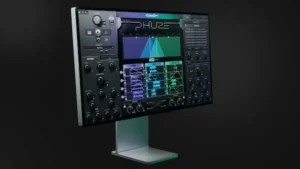 A decade ago, access to premium sound libraries separated professionals from everyone else. Today, high-quality cinematic content is widely available. Producers, game audio teams, and trailer composers can choose from thousands of impacts, transitions, drones, textures, and hybrid effects without leaving their browser.
Access is no longer the bottleneck.
The bottleneck is finding, adapting, and differentiating sounds quickly enough to meet modern production demands.
As libraries have grown, so has the amount of time spent navigating them. Many sound designers now spend more time auditioning assets than creating them. Large collections often solve one problem while introducing another: an overwhelming number of options competing for attention.
This shift has fueled demand for a different category of audio tools. Instead of delivering larger libraries, developers are increasingly focused on systems that generate variation, accelerate exploration, and reduce dependence on preset browsing. The goal is not more content. The goal is reaching usable results faster.
SoundMorph PHUZE is built around that premise. Rather than functioning primarily as a sample repository, it approaches cinematic sound design as a process of discovery. The emphasis is placed on generating new combinations and uncovering unexpected directions rather than searching through ever-expanding collections of source material.
Whether that approach provides a meaningful advantage depends on one factor: how efficiently those generated results translate into production-ready assets.
What SoundMorph PHUZE Actually Is
The easiest way to misjudge PHUZE is to evaluate it like a traditional virtual instrument.
PHUZE is not designed around preset playback, sample library depth, or instrument emulation. Its workflow sits closer to a sound design environment than a conventional plugin instrument. It combines layered sound generation, procedural variation, and asset creation within a single interface.
That distinction matters because the plugin solves a different problem than most cinematic libraries.
A traditional library is evaluated by the quality and quantity of its content. Users typically ask whether the presets sound good, how large the library is, and whether the included material justifies the purchase.
PHUZE shifts the conversation toward workflow efficiency.
More relevant questions include:
- How quickly can a usable sound be created?
- How often does variation produce meaningful results instead of noise?
- How much editing is required before a sound can enter a project?
- Can the workflow generate assets that do not immediately sound familiar?
- Does experimentation lead to production-ready outcomes or endless tweaking?
Those answers ultimately matter more than preset count or library size.
Viewed through that lens, PHUZE is best understood as a sound discovery platform. The software is less concerned with delivering finished cinematic assets and more concerned with accelerating the process of creating them. Its value comes from reducing the time between exploration and execution, which is a far more relevant metric for professional sound designers than the number of files included in the package.
The Three-Band Architecture Is Where PHUZE Separates Itself
The most interesting part of PHUZE is not the randomization engine. Randomization alone is no longer unusual. Nearly every modern sound design platform offers some form of procedural variation.
The more significant design choice is how PHUZE structures sound generation before variation is applied.
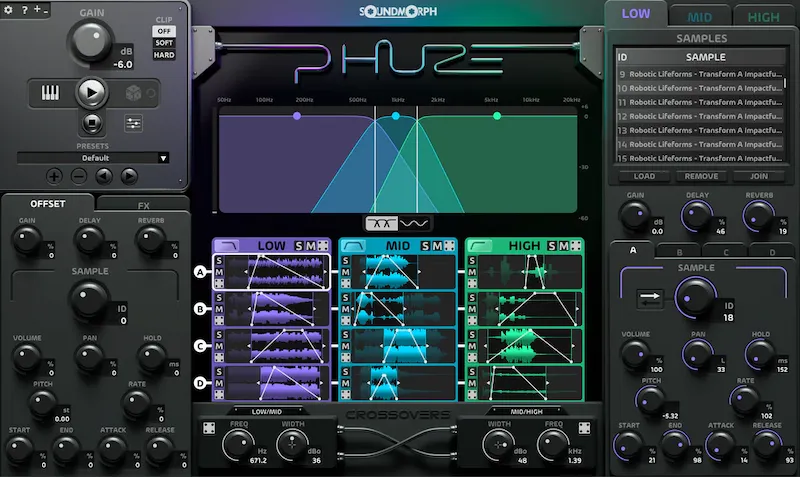
Rather than treating a sound as a single object, the engine divides it into independent low, mid, and high-frequency layers. This may sound like a minor technical detail, but it closely mirrors how experienced sound designers construct cinematic assets manually.
Most professional sound effects are built from multiple functional layers. The low-frequency region provides mass and physical impact. The midrange carries the character of the sound, defining its texture, aggression, and perceived identity. The upper spectrum contributes attack, movement, detail, and spatial information.
A cinematic hit, for example, rarely succeeds because of a single sample. What creates the impression of scale is the interaction between low-end weight, a defined body layer, and transient information that helps the sound cut through a mix. The same principle applies to creature vocals, transitions, sci-fi effects, and modern trailer design.
PHUZE incorporates this layered methodology directly into the generation process. Each spectral region can evolve independently rather than being forced through a single randomization path. The result is a workflow that prioritizes controlled variation over pure unpredictability.
That distinction is more important than it may initially appear.
One of the biggest weaknesses of many procedural sound design systems is their tendency to generate technically unique but practically unusable results. Extreme variation often destroys the balance that makes a sound functional inside a production. The output may sound impressive in isolation yet collapse once placed alongside dialogue, music, or other effects.
By separating frequency responsibilities, PHUZE attempts to preserve structural integrity while still generating meaningful variation. Instead of producing entirely different sounds with every iteration, it focuses on modifying individual components of a sound’s identity.
From a production standpoint, that approach is considerably more valuable. Professional sound design rarely requires unlimited randomness. It requires variation that remains mixable, repeatable, and adaptable to real-world projects.
This architecture may ultimately be one of the strongest arguments for PHUZE. It reflects an understanding that effective cinematic sound design is not simply about generating new sounds. It is about generating sounds that remain useful after the initial excitement of experimentation has passed.
Why Most Randomization Engines Fail in Real Production Workflows
 Randomization has become one of the most common features in modern audio software. The concept is appealing: press a button, generate something unexpected, and discover ideas that would not have emerged through conventional workflows.
The problem is that unpredictability and usefulness are not the same thing.
Professional sound designers rarely struggle to generate options. They struggle to generate options that survive contact with a real project. A sound may be unique, complex, or surprising and still be completely unusable once dialogue, music, ambience, and other effects enter the mix.
This is where many procedural systems break down.
They optimize for variation rather than application. Each iteration produces something different, but not necessarily something better. The result is a workflow that creates hundreds of possibilities while increasing the time required to find a workable solution.
In practice, excessive variation often introduces familiar problems: unstable frequency balance, uncontrolled low-end energy, harsh transient behavior, and sounds that draw attention to themselves without supporting the scene. What initially feels creative can quickly become inefficient.
Experienced sound designers generally value consistency more than unpredictability. The goal is not endless experimentation. The goal is reaching a usable result as quickly as possible without sacrificing originality.
This is where PHUZE takes a more disciplined approach. Its architecture appears designed to keep variation within functional boundaries rather than allowing every parameter to move freely. Instead of maximizing randomness, the system attempts to preserve the structural characteristics that make a sound usable in the first place.
From an engineering perspective, that is a far more practical objective. Most professional workflows do not benefit from unlimited possibilities. They benefit from a higher percentage of results that can move directly into production with minimal corrective work.
If PHUZE succeeds in that area, its value will not come from generating more sounds than competing platforms. It will come from generating fewer unusable ones.
Where PHUZE Fits Into Real Production Workflows
The value of PHUZE becomes easier to understand when viewed through the lens of production speed rather than sound quality.
Professional sound designers already have access to excellent source material. The bottleneck is rarely the lack of sounds. More often, it is the amount of time required to locate, layer, modify, and iterate on those sounds before arriving at something that feels original.
This is where PHUZE appears to be most effective.
In trailer production, for example, editors frequently need multiple versions of the same idea. A single campaign may require dozens of impacts, transitions, downers, tonal risers, and hybrid effects that share a common identity without sounding repetitive. Building those assets manually can consume hours that are difficult to justify under modern deadlines.
PHUZE streamlines that exploratory stage by keeping generation, variation, and refinement inside a single environment. Instead of moving between sample browsers, editing windows, and processing chains, users can focus on shaping concepts and evaluating outcomes.
The same advantage extends to game audio production.
Large projects often require hundreds of related assets across menus, weapons, abilities, environmental interactions, and user interface systems. Consistency becomes just as important as originality. Generating controlled variations from a common foundation is often more efficient than designing every asset independently.
PHUZE appears particularly well suited to that type of workload. Its architecture encourages iterative development rather than one-off sound creation, making it potentially useful for projects that demand both volume and variation.
That does not mean the software replaces traditional sound design techniques. Experienced professionals will still rely on editing, layering, processing, and critical listening to finish assets. What PHUZE offers is a faster starting point and a more efficient path toward usable material.
Viewed this way, the plugin functions less as a replacement for sound design and more as a front-end accelerator for the creative process. Its strongest contribution is not automation. It is reducing the amount of manual work required to reach a promising direction.
Sound Generation Is Not the Same Thing as Sound Design
One of the biggest misconceptions surrounding modern procedural audio tools is the belief that generating sounds is equivalent to designing them.
It is not.
Generation creates possibilities. Sound design turns those possibilities into purposeful assets.
This distinction is often lost in software marketing, where automation is frequently presented as a substitute for expertise. In practice, professional sound design remains a decision-making process. No algorithm can determine whether a sound supports a scene, reinforces a narrative, or occupies the correct space within a mix.
A generated impact may provide an interesting foundation, but its usefulness is ultimately determined by factors such as frequency balance, transient behavior, dynamics, stereo placement, and context. Those decisions still require critical listening and technical judgment.
This is particularly true in cinematic production, where sounds rarely exist in isolation. An effect that feels powerful on its own may conflict with dialogue, compete with music, or introduce unnecessary energy into an already dense arrangement. Creating the sound is only part of the job. Integrating it successfully is where sound design begins.
Viewed from that perspective, PHUZE becomes more compelling. Its value is not that it removes the need for sound design expertise. Its value is that it accelerates the exploration phase without removing creative control from the user.
The most effective professionals will likely treat PHUZE as a source of starting points rather than finished solutions. The software can shorten the path toward an idea, but the decisions that transform that idea into a production-ready asset remain firmly in human hands.
Mixing Considerations: Do PHUZE Sounds Hold Up Inside Real Mixes?
 Creating an impressive sound is relatively easy. Creating a sound that survives a dense production is considerably harder.
This is where many cinematic tools reveal their limitations. Sounds that appear huge during solo playback often become problematic once dialogue, music, ambience, and effects begin competing for the same spectral space. What initially feels cinematic can quickly become cluttered, unfocused, or difficult to place within the mix.
The challenge is particularly obvious in modern trailer and game audio production, where sound effects are expected to feel large without overwhelming the rest of the soundtrack. Excessive low-end energy may create the illusion of power, but it also consumes headroom, masks important information, and often translates poorly across smaller playback systems.
High-frequency content creates a different set of problems. Aggressive top-end detail can help sounds cut through a mix, but it can also introduce listener fatigue, harshness, and unwanted artifacts after streaming compression or lossy encoding.
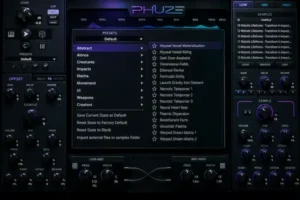
This is where PHUZE’s layered architecture becomes more than a creative feature. By separating low, mid, and high-frequency responsibilities during the generation process, the software encourages a more structured approach to sound construction. Instead of stacking unrelated layers and managing the consequences later, users have greater control over where energy is introduced from the beginning.
That does not guarantee mix-ready results. Sound design remains highly dependent on context, and no generation engine can predict how a sound will behave alongside dialogue, orchestration, or other effects. Decisions involving EQ, dynamics, stereo placement, and arrangement still need to be made at the mix stage. This is also where many producers misunderstand the boundary between sound creation and final polish, a distinction explored in our guide to mixing vs mastering.
What PHUZE potentially reduces is the amount of corrective work required after the fact. A sound built with greater spectral discipline is generally easier to integrate than one assembled through trial and error.
For professional mixers, that may be one of the plugin’s most practical benefits. The quality of a sound design workflow is not measured by how impressive a sound appears in isolation. It is measured by how little resistance that sound creates once it enters a real production.
A Mastering Engineer’s Perspective on Sound Design Tools
Mastering engineers often deal with problems that originate much earlier in the production chain. Many of the issues that appear during mastering are actually sound design or mix decisions made long before final delivery, which is one reason understanding how professional mastering works helps place these problems in context.
In cinematic projects, those problems are frequently introduced during sound design rather than mixing. Oversized low-end layers, uncontrolled transient peaks, excessive stereo width, and dense spectral stacking can create issues that become increasingly difficult to correct as a project moves toward delivery.
This is why sound design workflow matters beyond the creative stage.
The way a sound is constructed influences every downstream decision. An impact with disciplined low-frequency content is easier to balance. A transition with controlled transient behavior requires less corrective processing. A layered effect with clear spectral separation is less likely to compete with dialogue, music, or other key elements.
By the time a project reaches mastering, there is limited opportunity to solve structural problems without affecting the mix as a whole. Broad EQ moves, dynamic control, or stereo adjustments can mitigate symptoms, but they rarely address the underlying cause.
From that perspective, the value of a tool like PHUZE extends beyond sound generation. Its architecture encourages users to think in terms of individual frequency responsibilities rather than simply accumulating layers until a sound feels large. That approach tends to produce assets that integrate more naturally into complex productions.
PHUZE is not a mastering plugin, nor does it claim to be. Its relevance to mastering lies elsewhere. Better sound design decisions upstream generally reduce the amount of corrective work required downstream.
For professional productions, that relationship is difficult to ignore. The quality of a workflow is not determined solely by the sounds it creates. It is also reflected in how few problems those sounds create later.
Streaming Translation and Modern Playback Reality
Few cinematic sounds remain in controlled studio environments for long. A trailer impact may eventually be heard through smartphone speakers, compressed social media platforms, gaming headsets, television soundbars, or heavily encoded streaming services.
That reality changes how sound design should be evaluated.
A sound that feels massive on full-range monitors can lose much of its impact once subjected to lossy encoding, bandwidth limitations, and consumer playback systems. Low-frequency information may disappear entirely on smaller devices, while overly dense high-frequency content can become brittle, smeared, or exaggerated after compression.
The same translation problems frequently appear during mastering. Excessive width, uncontrolled low-end energy, and unstable transients often survive production only to become obvious during final quality control. Similar translation issues are discussed in our guide to common mastering problems. Translation issues that remain hidden in the studio frequently become obvious after distribution.
This is why experienced sound designers rarely judge assets in isolation. The goal is not to create sounds that impress inside the plugin. The goal is to create sounds that maintain their identity across multiple playback systems and delivery formats.
From that perspective, PHUZE should be evaluated the same way any professional production tool is evaluated: by the reliability of its output rather than the complexity of its features.
The strongest cinematic assets are not necessarily the most aggressive or the most detailed. They are the ones that continue to communicate the intended emotion after passing through real-world distribution pipelines.
Translation remains the final quality control stage for any sound design workflow. A creative result that falls apart after encoding, streaming compression, or consumer playback is ultimately less valuable than a simpler sound that remains effective everywhere.
CPU Performance and Workflow Efficiency
Creative workflow is not determined solely by interface design. In large-scale production environments, system performance becomes part of the workflow itself.
This is particularly relevant in cinematic audio, where projects routinely combine orchestral templates, sample-heavy instruments, video playback, surround processing, convolution reverbs, and complex routing structures. Under those conditions, even a well-designed plugin can become a bottleneck if its resource demands scale poorly.
That is why evaluating PHUZE purely on sound generation would be incomplete.
Professional users need to understand how comfortably the software coexists with demanding sessions rather than how it behaves inside an empty project. A plugin that feels responsive during isolated testing can become significantly less practical when dozens of virtual instruments and processing chains are already competing for system resources.
The more important question is not whether PHUZE consumes CPU resources. Every modern sound design platform does. The question is whether the time saved during exploration and asset creation outweighs the computational cost of running it.
For many professionals, efficiency is ultimately measured in completed work rather than technical specifications. A tool that reduces hours of searching, layering, and experimentation may provide a greater workflow advantage than one that is lighter on system resources but slower to produce results.
Viewed from that perspective, CPU performance becomes part of a larger calculation. The real value of a sound design platform lies in the balance between creative speed, production flexibility, and the resources required to achieve those outcomes.
Critical Evaluation: Where PHUZE Excels and Where It Falls Short
One of the recurring problems in the audio software industry is the tendency to confuse creative potential with practical value. A plugin may be capable of generating impressive results while still offering little advantage inside a professional workflow.
PHUZE largely avoids that trap, but it is not immune to it.
Its strongest contribution is not the quality of its source material or the sophistication of its generation engine. The more meaningful advantage is workflow acceleration. PHUZE reduces the amount of time spent searching, assembling, and iterating on ideas, which addresses a genuine bottleneck in modern cinematic sound design.
For producers working under deadlines, that benefit can be significant. The ability to generate multiple viable directions without constantly moving between sample browsers, editing tools, and processing chains has real production value.
At the same time, PHUZE should not be mistaken for a shortcut to professional sound design.
Like every procedural system, it faces a limitation that technology alone cannot solve: relevance. Generating a unique sound is relatively easy. Generating a sound that supports the scene, fits the mix, and contributes to the intended emotional impact is considerably more difficult.
A procedural engine can create options. It cannot determine which option serves the project.
This is why expectations matter.
Users approaching PHUZE as an instant asset generator may find the workflow less efficient than expected. The software performs best when treated as a creative environment rather than a preset machine. Exploration remains part of the process, and the quality of the outcome still depends heavily on the user’s judgment.
There is also the question of specialization.
PHUZE is designed to cover a broad range of cinematic sound design tasks, which makes it flexible. However, flexibility and specialization are rarely the same thing. Dedicated tools focused exclusively on weapon design, creature vocal creation, advanced synthesis, or procedural game audio workflows may still offer deeper functionality within their respective niches.
That is not necessarily a weakness. It simply defines where PHUZE fits within the broader ecosystem.
The plugin is best viewed as a versatile sound generation platform rather than a category-specific solution. Its value comes from helping users reach compelling starting points faster, not from replacing every specialized tool already used in professional production environments.
Marketing Narrative vs Production Reality
Most cinematic sound design software is marketed around the same promise: more creativity.
The problem is that creativity is not a software feature.
Professional sound designers are rarely limited by imagination. More often, they are limited by time, workflow friction, repetitive tasks, and the effort required to transform an idea into a finished asset.
The same pattern appears throughout professional audio production. Whether evaluating a sound design platform or a dynamics processor, the real question is rarely how many features a tool offers. The more important question is whether it improves decision-making under real production conditions, a theme we explored extensively in our Softube Bus Processor 670 review.
This distinction is important when evaluating PHUZE.
The plugin should not be judged by whether it makes users more creative. That is an impossible benchmark. A tool cannot replace taste, experience, critical listening, or an understanding of how sounds function within a larger production.
What it can do is remove obstacles between concept and execution.
That appears to be the more realistic objective behind PHUZE. Rather than attempting to automate creativity, it focuses on accelerating exploration and reducing the amount of manual work required to reach promising results.
From a production standpoint, this is often more valuable than any claim of creative enhancement. Experienced professionals generally do not need software to generate ideas for them. They need software that allows them to evaluate, refine, and execute ideas more efficiently.
This is where many audio tools succeed or fail. The strongest products eventually become invisible within the workflow. Users stop thinking about the software itself and focus entirely on the creative decisions being made.
If PHUZE establishes a long-term position within the cinematic sound design market, it will likely be because of workflow efficiency rather than sound generation alone. The ability to reduce friction is ultimately more valuable than the ability to advertise possibility.
Competitive Positioning: Where PHUZE Fits in the Current Market
The most useful way to evaluate PHUZE is not to ask whether it is better than competing tools. The more relevant question is whether it solves the same problems.
In many cases, it does not.
The cinematic sound design market is filled with products that approach asset creation from fundamentally different directions. Some prioritize precision. Others focus on synthesis, granular manipulation, or signal transformation. PHUZE sits somewhere between those categories, combining generation, variation, and sound development inside a single workflow.
This hybrid positioning also highlights a broader trend across modern audio software. Developers are increasingly focusing on workflow-oriented tools rather than simply recreating vintage hardware or expanding preset libraries. We observed a similar shift from a different angle in our Arturia Memory V review, where modern workflow flexibility ultimately proved more important than analog nostalgia alone.
| Plugin | Core Approach | Best Suited For | Potential Drawback |
|---|---|---|---|
| SoundMorph PHUZE | Layered sound generation and guided exploration | Cinematic assets, game audio, trailer design | Requires experimentation to achieve maximum value |
| Krotos Weaponiser | Precision-based asset construction | Impacts, weapons, cinematic effects | Less flexible outside its core workflow |
| Minimal Audio Current | Advanced synthesis and modulation | Electronic production and hybrid scoring | Not specifically optimized for cinematic asset creation |
| Arturia Efx Fragments | Granular transformation and texture design | Atmospheres, motion, creative processing | Relies heavily on source material quality |
| Output Portal | Audio transformation and experimentation | Sound manipulation and creative effects | Designed more for processing than asset generation |
| Kilohearts Phase Plant | Modular synthesis environment | Advanced sound designers and synthesis specialists | Steeper learning curve and deeper programming requirements |
The comparison highlights an important distinction.
PHUZE is not trying to replace dedicated synthesis platforms, granular processors, or highly specialized cinematic design tools. Instead, it targets a stage of the workflow that many competing products address only indirectly: the transition from an initial concept to a usable sound asset.
Weaponiser remains the stronger choice for highly structured impact and weapon design workflows. Phase Plant offers significantly deeper synthesis capabilities. Fragments provides more specialized granular processing. Current excels as a modern synthesis platform for hybrid music production.
PHUZE’s advantage lies elsewhere.
It attempts to combine generation, variation, and refinement within a single environment, reducing the amount of movement between multiple tools during the exploratory phase of production.
Whether that approach is preferable depends largely on workflow priorities. Producers seeking maximum control over every parameter may prefer specialized solutions. Producers looking to reach compelling results more quickly may find greater value in PHUZE’s integrated approach.
That positioning gives PHUZE a distinct place in the market. It functions less like a category leader competing directly against every alternative and more like a bridge between traditional sound libraries, procedural generation systems, and dedicated sound design platforms.
Who Will Benefit Most from PHUZE?
PHUZE makes the most sense for professionals who regularly create original sound assets rather than assemble projects from existing libraries.
Its workflow is particularly relevant in environments where variation, speed, and asset volume are ongoing requirements rather than occasional needs. Trailer composers, game audio designers, film sound editors, and hybrid scoring producers often face situations where a single project demands dozens of related sounds that must feel cohesive without becoming repetitive.
In those scenarios, the ability to generate and refine multiple directions from a common starting point can provide a meaningful workflow advantage. The value is not simply the creation of new sounds. It is the reduction of time spent searching, layering, and rebuilding similar assets from scratch.
PHUZE may also appeal to producers developing a recognizable sonic identity. In highly competitive content markets, relying on the same commercial libraries as everyone else can make differentiation difficult. A workflow centered around sound generation and variation offers a more direct path toward custom material.
The plugin becomes increasingly valuable as project scale increases. Creating a handful of cinematic effects manually is rarely a problem. Creating dozens or hundreds of related assets while maintaining consistency is where tools like PHUZE begin to justify their place in a professional workflow.
Who Probably Doesn’t Need PHUZE?
PHUZE is a specialized production tool, not a universal addition to every audio workflow.
Its value depends heavily on how often a user needs to create original sound assets. For professionals working primarily with recorded music, dialogue, restoration, or mastering, the plugin’s core strengths may never become relevant enough to justify the investment.
Mix engineers focused on balancing finished productions, mastering engineers working at the delivery stage, podcast editors, and producers operating within traditional acoustic genres are unlikely to encounter the types of challenges PHUZE is designed to solve on a regular basis.
In those environments, resources are often better allocated toward monitoring improvements, restoration tools, mixing processors, or workflow enhancements that directly affect daily work.
This is not a criticism of the software. It is simply a reflection of its intended purpose.
PHUZE is most valuable when originality, variation, and asset creation are central parts of the production process. If sound design represents only a small portion of a workflow, many of the plugin’s capabilities may remain underutilized.
As with most specialized tools, the return on investment increases in direct proportion to how frequently its primary strengths are required. For users operating outside cinematic, game audio, trailer, or hybrid production environments, that return may be difficult to realize.
What PHUZE Still Doesn’t Tell You
PHUZE’s workflow philosophy is compelling, but there are still practical questions that only become relevant once the initial excitement wears off.
The first involves content quality. A generation engine is only as useful as the material feeding it. Procedural variation can accelerate discovery, but it cannot compensate for weak source assets. Ultimately, the quality of generated results depends on the quality of the underlying building blocks.
The second question is speed.
Marketing demonstrations often create the impression that unique sounds appear almost instantly. Real production environments are rarely that simple. The value of any exploratory workflow depends on how quickly users can move from an interesting result to a genuinely usable asset.
This distinction matters because sound design sessions are often constrained by deadlines rather than creativity. Generating twenty variations is easy. Finding the one variation that actually supports the project is where time is usually spent.
There is also the issue of repetition.
Every procedural system operates within boundaries. No matter how sophisticated the engine becomes, experienced users eventually begin to recognize recurring behaviors, familiar textures, or predictable tendencies. The question is not whether repetition exists. The question is how long it takes before those patterns become noticeable during daily use.
The final consideration involves depth.
PHUZE appears strongest during exploration and early-stage asset creation, but highly specialized sound design tasks may still benefit from dedicated tools built around synthesis, weapon design, creature creation, or advanced audio manipulation. At a certain point, broad workflow efficiency and deep specialization become competing priorities.
None of these observations undermine the value of the software. They simply highlight an important reality: PHUZE should be evaluated as a production tool rather than a magic solution. Its success ultimately depends not on how many sounds it can generate, but on how consistently those sounds remain useful once the demands of real-world projects begin to accumulate.
What PHUZE Says About the Future of Audio Software
The most interesting aspect of PHUZE may have less to do with the plugin itself and more to do with the direction of the industry.
For years, audio software developers competed primarily through scale. Larger sample libraries, larger preset collections, and larger content ecosystems became the default method of creating value. The assumption was simple: more content would produce better results.
That assumption is becoming increasingly difficult to defend.
Modern producers already have access to more sounds than they can realistically use. The challenge is no longer acquiring content. The challenge is navigating it efficiently and transforming it into something distinctive.
As a result, the competitive focus is gradually shifting away from content accumulation and toward workflow optimization. The next generation of creative tools is likely to be judged less by the number of assets they include and more by how effectively they help users discover, customize, and deploy those assets in real projects.
PHUZE reflects that transition. Its design philosophy prioritizes exploration over collection and variation over volume. Rather than expanding a producer’s library, it attempts to expand the number of useful outcomes that can be extracted from a workflow.
Whether PHUZE ultimately becomes a major platform is difficult to predict. Markets tend to reward solutions that remove friction, and the long-term value of any creative tool is determined by how much time it saves without compromising results.
What is clear is that PHUZE belongs to a growing category of software that treats workflow as the product rather than content as the product. That shift may prove more significant than any individual feature, because it reflects a broader change in how professional audio tools are being designed and evaluated.
Verdict
SoundMorph PHUZE succeeds because it focuses on a real production problem rather than an invented marketing problem.
Most professional sound designers are not running out of sounds. They are running out of time. The modern challenge is no longer access to content but the ability to create distinctive assets quickly enough to satisfy increasingly demanding production schedules.
PHUZE addresses that challenge through workflow design rather than library expansion. Its core strength is not the quantity of sounds it can generate. It is the ability to accelerate exploration without completely sacrificing control.
The plugin’s layered architecture and structured approach to variation help distinguish it from many procedural tools that prioritize novelty over usability. Instead of generating endless possibilities, PHUZE appears focused on producing a higher percentage of results that can realistically move into production.
That does not make it a universal solution.
Users looking for instant cinematic presets may achieve similar results with conventional libraries. Producers working primarily in mixing, mastering, dialogue editing, restoration, or acoustic music production are unlikely to extract enough value to justify making PHUZE a central part of their workflow.
Its strongest audience remains professionals whose work depends on creating original assets at scale. Trailer composers, game audio teams, cinematic producers, and sound designers working under tight deadlines are far more likely to benefit from what the software offers.
PHUZE is also best understood as a complement to existing workflows rather than a replacement for them. It does not eliminate the need for editing, processing, mixing, or critical listening. A generated sound still has to survive arrangement, mixing, and ultimately mastering before it reaches a listener. Producers interested in that final stage can explore our detailed breakdown of how to prepare a mix for mastering. What PHUZE does well is shorten the distance between an initial idea and a usable starting point.
Ultimately, the plugin’s value comes down to efficiency. In a market saturated with libraries, presets, and content packs, PHUZE stands out by focusing on the process of creating sounds rather than simply delivering more of them.
That may not be the most exciting marketing message. It is, however, one of the more relevant ones for modern professional audio production.

Yurii Ariefiev is a mastering engineer and audio production editor specializing in translation, spectral balance, and real-world playback evaluation. His work focuses on how sound design, mixing, and mastering decisions affect the final listener experience across modern streaming, gaming, and cinematic playback environments.
This review examines SoundMorph PHUZE from a production workflow perspective, focusing on sound generation efficiency, mix integration, streaming translation, and the practical challenges of creating cinematic assets that remain effective beyond the design stage.
FAQ
Is SoundMorph PHUZE a sound library or a sound design platform?
PHUZE is closer to a sound design platform than a conventional sample library. Its primary purpose is generating and developing new assets through layered variation rather than providing a fixed collection of finished sounds.
Who is the ideal user for PHUZE?
The software is best suited to trailer composers, game audio designers, film sound editors, and hybrid producers who regularly create custom effects, transitions, impacts, and cinematic textures. The more often a workflow depends on original asset creation, the more relevant PHUZE becomes.
Can PHUZE replace commercial cinematic sound libraries?
Not entirely. Libraries and generation tools solve different problems. Libraries provide immediate access to finished assets, while PHUZE focuses on creating variations and developing material that may not already exist inside a commercial collection.
How does PHUZE compare to Krotos Weaponiser?
Weaponiser is generally more specialized for structured impact and weapon design workflows. PHUZE is broader in scope and places greater emphasis on exploration, variation, and asset discovery. Many professionals may find both tools useful for different stages of production.
Is PHUZE useful for trailer sound design?
Yes. Trailer production is arguably one of the most natural applications for the software. Impacts, transitions, risers, downers, tension elements, and hybrid cinematic effects all benefit from the type of variation-driven workflow PHUZE is designed to provide.
Does PHUZE require advanced sound design experience?
No, but experienced users are likely to extract more value from it. The software can accelerate exploration, yet creating effective production assets still requires an understanding of frequency balance, dynamics, layering, and mix integration.
Can PHUZE-generated sounds be used in commercial projects?
For most professional users, that is the intended purpose. However, licensing terms should always be reviewed directly from the developer before using generated assets in commercial releases, games, films, or broadcast productions.
How important is CPU performance when using PHUZE?
CPU efficiency matters most in large sessions containing orchestral templates, video playback, and multiple virtual instruments. The practical question is not resource usage alone but whether the workflow gains justify the processing overhead within a production environment.
Can PHUZE help create more original cinematic sounds?
Potentially. Its strongest advantage is reducing dependence on preset browsing and encouraging the creation of new variations. The originality of the final result still depends on the decisions made by the user.
What is the biggest strength of PHUZE compared to traditional sound design workflows?
Its ability to shorten the exploration phase. Instead of spending hours searching through libraries and manually assembling layers, users can generate, evaluate, and refine multiple directions within a single environment, often reaching usable results much faster.