Hybrid Microphone Technology: Can the JZ Microphones MU-1 Replace Traditional Ribbon and Condenser Pairing?
Engineers have been combining ribbon and condenser microphones for decades. The formula is familiar: capture the transient detail and extension of a condenser, blend it with the smoother top end and natural midrange character of a ribbon, then manage the inevitable placement, phase, and balance challenges that come with running two microphones on a single source.
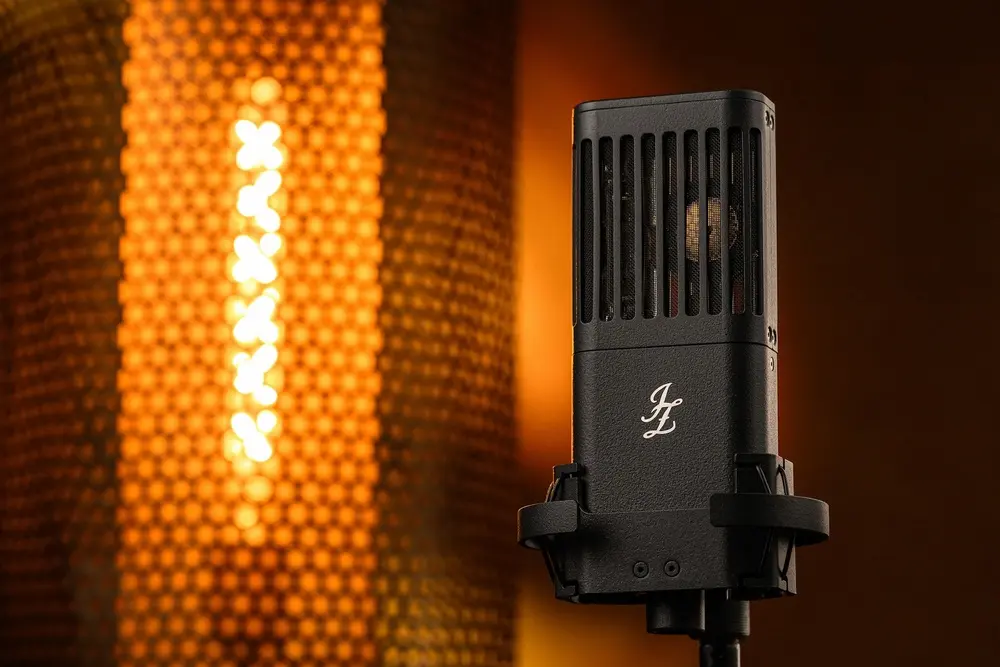
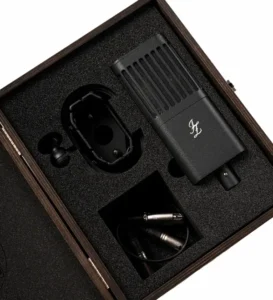
The JZ Microphones MU-1 enters the market with a different proposition. Rather than introducing a new recording technique, it attempts to simplify an existing one. By housing a large-diaphragm condenser capsule and an active ribbon element in the same chassis while maintaining separate outputs, the microphone is designed around workflow efficiency as much as sound quality.
This JZ MU-1 review focuses on workflow design, recording applications, and long-term production value rather than isolated specifications or first-impression listening tests.
That makes the MU-1 more interesting than a typical boutique microphone release. The real question is not whether it can produce a usable recording. The question is whether a phase-aligned hybrid microphone can deliver the flexibility engineers expect from dual-mic setups without the setup time, positioning compromises, and session-to-session inconsistency that often accompany them.
For recording, mixing, and mastering engineers, that discussion extends far beyond microphone design. Source capture decisions affect phase integrity, tonal balance, processing choices, and ultimately how a track translates through editing, mixing, mastering, and streaming distribution. The MU-1 is best evaluated as a workflow tool, not simply as another premium microphone competing on specifications alone.
Why Hybrid Microphones Matter More Than They Did Five Years Ago
 The appeal of hybrid microphone designs has less to do with microphone technology itself and more to do with how modern recording sessions are being run. Engineers are expected to move faster, commit to fewer tracking days, and deliver recordings that require less corrective work during mixing. Every decision made at the source now carries greater weight than it did in the era of large studio budgets and extended production schedules.
That shift has increased interest in capture methods that preserve options without adding complexity. Engineers increasingly recognize that decisions made during recording often determine how easily a mix can move through the later stages of production and mastering. A ribbon-and-condenser pairing has long been one of the most effective ways to achieve that balance. The condenser provides transient detail, articulation, and upper-frequency extension, while the ribbon contributes smoother high-frequency behavior, controlled transients, and a more natural sense of depth. Together, they often produce a source that sits in a mix with less processing.
Capturing usable tonal information at the source remains one of the most effective ways to reduce unnecessary corrective processing later, particularly when preparing a project for professional mastering.
Prepare Mix for Mastering explores how early production decisions continue affecting a track long after recording is finished.
The drawback has never been the sound. It has been the workflow. Dual-microphone setups introduce additional variables: positioning, phase interaction, stand placement, gain matching, and repeatability between sessions. Those challenges become even more noticeable in project studios, remote recording environments, and productions where tracking, mixing, and mastering are handled by different people.
Hybrid microphone designs attempt to solve that problem. Their value is not that they offer two microphone types in a single body. The real advantage is the possibility of capturing complementary tonal perspectives while reducing the setup decisions that traditionally accompany dual-mic recording techniques.
JZ MU-1 Design Philosophy and Recording Workflow
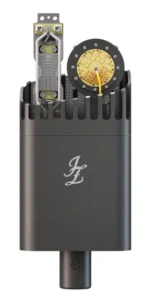
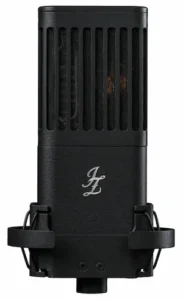
From a technical standpoint, the MU-1 is relatively straightforward. It combines two independent transducer systems inside a single microphone body: JZ’s Golden Drop large-diaphragm condenser capsule and an active ribbon motor built around a 1.2-micron ribbon element. Rather than summing those signals internally, the microphone provides separate outputs for each capture path.
That design choice is what separates the MU-1 from novelty microphone concepts that attempt to create a fixed hybrid sound. Engineers retain control over the relationship between the ribbon and condenser signals throughout the production process. The balance can be adjusted during tracking, revisited during mixing, or changed entirely as the arrangement evolves.
In practical use, the workflow resembles a traditional dual-microphone setup. The difference is that both capture systems occupy the same physical position and are designed to operate as a matched recording pair from the outset. Instead of spending time aligning two microphone bodies, engineers can focus on selecting the optimal placement relative to the source.
The significance of the MU-1 is not that it combines a ribbon and condenser microphone. Engineers have been doing that for decades. The more interesting aspect is its attempt to standardize a recording technique that is normally dependent on careful positioning, gain matching, and phase management. Whether that approach proves advantageous in real-world sessions will ultimately depend on how consistently the microphone preserves the tonal benefits of dual-mic recording without sacrificing the flexibility that made the technique popular in the first place.
The Real Workflow Problem MU-1 Is Trying to Solve
Most microphone discussions revolve around frequency response, transient behavior, and tonal character. In practice, many of the challenges associated with dual-microphone recording have less to do with sound and more to do with maintaining a predictable relationship between two capture systems.
A ribbon-and-condenser combination can produce excellent results, but it also introduces variables that do not exist when using a single microphone. Small changes in placement can alter phase relationships, shift low-frequency response, affect midrange focus, and change how the combined signal behaves once additional processing is applied. What sounds full and three-dimensional during tracking may respond very differently after compression, saturation, parallel processing, or bus limiting are introduced later in the mix.
This becomes particularly relevant on sources where engineers frequently blend ribbon and condenser microphones to capture different aspects of the performance. Guitar cabinets, brass instruments, percussion, room microphones, and acoustic instruments often benefit from that approach, but they also expose the practical challenges of maintaining consistency between two microphones occupying slightly different positions.
The MU-1 is designed around reducing that variable. Because both transducers share the same physical housing, engineers are no longer managing the relationship between two separate microphone bodies. Instead, they are working with two independently recorded signals derived from a single placement decision.
Large commercial studios often prioritize repeatability as much as sound quality. When sessions need to be recreated days or weeks later, maintaining the relationship between two microphones can be just as important as the microphones themselves. A fixed hybrid architecture introduces a level of consistency that is difficult to achieve when separate microphones must be repositioned for every session.
That distinction should not be confused with eliminating phase interaction altogether. Any microphone captures a complex acoustic event, and no design can remove every phase-related variable. What a fixed hybrid architecture can do is reduce one of the most common sources of inconsistency in dual-mic workflows: the physical alignment process itself. For engineers who regularly blend ribbon and condenser signals, that may prove more valuable than any specific tonal characteristic advertised on a specification sheet.
Where a Hybrid Microphone Makes the Most Sense
 The success of a hybrid microphone depends largely on the source being recorded. Applications that already benefit from ribbon-and-condenser combinations are the most logical fit because the microphone is designed to streamline an established workflow rather than create a new one.
Electric guitar cabinets are an obvious example. Many engineers pair a ribbon microphone with a condenser to capture two different perspectives of the same amplifier. The condenser provides attack, edge, and speaker detail, while the ribbon often delivers greater depth, smoother upper frequencies, and a less aggressive presentation of distortion harmonics. Having both signals available from a single placement position can simplify setup while preserving flexibility during mixing.
Brass recording presents a similar opportunity. Trumpets, trombones, and saxophones generate sharp transients and significant upper-midrange energy that can sometimes push condenser microphones toward an overly aggressive sound. Ribbon microphones often handle those characteristics more naturally, but relying solely on a ribbon can sacrifice some of the articulation and definition needed in dense arrangements. A dual-output approach allows engineers to balance those priorities later rather than committing during tracking.
Acoustic ensembles, orchestral overdubs, and cinematic productions may also benefit from the concept. In these situations, engineers are often balancing detail against smoothness and realism against presence. Capturing both tonal perspectives simultaneously can provide additional control during mixing without resorting to heavy equalization or transient manipulation.
One of the more overlooked applications may be room capture. Room microphones rarely remain static throughout a production. A room signal that sounds ideal during tracking may require a completely different balance once compression, parallel processing, and final loudness decisions enter the picture. Separate ribbon and condenser outputs provide more options for shaping ambience, depth, and perceived space while maintaining a single microphone position throughout the session.
Where the concept becomes less compelling is on sources that typically require radically different microphone placements to achieve the desired result. In those situations, the benefits of a fixed hybrid architecture may be outweighed by the creative flexibility of two independently positioned microphones.
Who Should Consider the MU-1 — And Who Probably Shouldn’t
The MU-1 is not a microphone designed for every studio or recording workflow. Its value depends largely on how often an engineer already relies on ribbon-and-condenser combinations and whether workflow efficiency outweighs the need for complete placement freedom.
Commercial studio owners may be among the strongest candidates. Facilities handling multiple sessions per week often prioritize consistency, recallability, and reduced setup time. In those environments, the ability to recreate a proven microphone configuration quickly can be worth as much as any tonal advantage.
Freelance recording and mixing engineers may also find the concept appealing. Engineers working across different studios frequently encounter changing room acoustics, microphone inventories, and session requirements. A microphone that provides predictable ribbon-and-condenser capture from a single position can simplify session preparation and reduce variables when moving between locations.
Project studios represent a slightly different case. For smaller studios with limited microphone collections, the MU-1 offers access to two complementary capture approaches without requiring a dedicated ribbon microphone workflow alongside a separate condenser setup. The investment is significant, but so is the versatility.
Engineers considering the MU-1 should evaluate how frequently they already rely on ribbon-and-condenser combinations. The microphone delivers the greatest value when replacing an existing workflow rather than introducing an entirely new one.
Guitar-focused engineers are another obvious audience. Dual-microphone amplifier recording remains one of the most common applications for ribbon-and-condenser combinations. Engineers who regularly blend speaker detail with smoother ribbon characteristics may appreciate the ability to capture both perspectives while spending less time on alignment and phase management.
Orchestral, acoustic, and cinematic recording engineers may see more mixed benefits. While the ability to balance ribbon and condenser characteristics later in the production process is attractive, many of these workflows rely heavily on microphone positioning as a creative tool. In those situations, independent microphone placement often remains more important than setup efficiency.
The MU-1 may be less compelling for engineers who rarely combine ribbon and condenser microphones in the first place. If a workflow already revolves around single-microphone recording or highly customized multi-microphone arrays, the practical advantages become less significant.
Ultimately, the MU-1 is best viewed as a workflow solution rather than a universal studio upgrade. Engineers who already use ribbon-and-condenser techniques regularly are likely to understand its value immediately. Those who do not may find that traditional microphone choices remain the more flexible investment.
Marketing Claims Versus Engineering Reality
Most microphone launches are accompanied by an implicit promise: fewer compromises, greater flexibility, and better results. The reality is usually more nuanced. The MU-1 addresses a legitimate workflow challenge, but its usefulness depends on whether that challenge actually exists within a particular recording environment.
Workflow-focused products are becoming increasingly common across professional audio. Rather than promising entirely new sounds, many modern tools aim to reduce friction within established production processes. A similar theme emerged in our SSL 1 Review, where operational consistency proved just as important as specifications.
The microphone does not replace traditional multi-microphone techniques. It does not eliminate the need for room microphones, distant capture positions, stereo arrays, or source-specific placement strategies. Engineers still need to decide where the microphone should be positioned relative to the instrument, performer, or acoustic space. The only variable being simplified is the relationship between the ribbon and condenser elements themselves.
This distinction becomes important when evaluating claims about versatility. In many recording situations, the ideal ribbon position is not necessarily the ideal condenser position. Engineers often exploit those differences intentionally. A ribbon may be placed further from a guitar cabinet to capture body and low-midrange development, while a condenser is positioned closer to emphasize attack and speaker detail. Similar placement decisions occur with brass, percussion, drum rooms, and acoustic instruments.
A fixed hybrid architecture removes that level of independence. For some engineers, that trade-off will be insignificant compared to the benefits of faster setup and greater consistency. For others, especially those who treat microphone placement as a primary tone-shaping tool, the inability to position each microphone separately may represent a meaningful limitation.
The MU-1 should therefore be viewed as a workflow optimization rather than a replacement for established recording techniques. It simplifies one specific part of the recording process. It does not eliminate the need for critical listening, placement decisions, or alternative microphone strategies when the source demands them.
Potential Limitations Engineers Should Consider
The strongest argument for the MU-1 is efficiency. The strongest argument against it is that efficiency is not always the primary objective in professional recording.
At roughly €1999, the microphone enters a market segment populated by highly regarded ribbon microphones, large-diaphragm condensers, and established studio workhorses with decades-long track records. At that level, purchasing decisions are rarely based on novelty. Engineers are evaluating long-term utility, session versatility, resale value, and whether a microphone fills a gap that does not already exist within their collection.
There is also the question of specialization. A hybrid design is intended to provide access to two complementary capture approaches, but that does not automatically mean it will outperform dedicated microphones designed for a single purpose. Engineers investing at this price point may reasonably ask whether they would achieve better results by allocating the same budget toward separate ribbon and condenser microphones chosen specifically for their preferred recording applications.
The answer depends heavily on workflow priorities. Studios that regularly blend ribbon and condenser microphones on the same sources may see value in the consistency and speed offered by a fixed hybrid design. Engineers who prefer building sounds through microphone selection and placement may reach a different conclusion.
That distinction becomes increasingly important as experience grows. Many engineers do not view microphone placement as a technical requirement to be minimized. They view it as part of the creative process itself. Small adjustments in distance, angle, and microphone relationship can produce tonal changes that are difficult to replicate with processing later. A hybrid microphone simplifies those decisions, but it also removes some of the freedom that makes traditional multi-microphone techniques attractive in the first place.
How the MU-1 Compares to Alternative Recording Approaches
The MU-1 occupies an unusual position in the microphone market because it is competing against recording methods rather than direct product equivalents. Most engineers considering a hybrid microphone are not choosing between the MU-1 and another hybrid microphone. They are deciding whether the workflow advantages justify replacing a recording technique they already know and trust.
A single condenser microphone remains the fastest and most cost-effective solution for many recording tasks. It offers predictable results, minimal setup complexity, and strong compatibility with modern production workflows. The trade-off is reduced tonal flexibility once the recording has been captured.
A single ribbon microphone provides a different set of advantages, particularly on aggressive sources where transient control and smoother upper-frequency behavior are priorities. However, it requires a greater commitment to a specific tonal direction during tracking.
The traditional ribbon-and-condenser combination remains the benchmark for maximum flexibility. Engineers can optimize each microphone independently, experiment with placement relationships, and shape the balance between detail and density before the signal ever reaches a preamp. The downside is increased setup time, additional phase-management requirements, and greater variability from session to session.
The MU-1 sits between those approaches. It preserves much of the flexibility associated with dual-microphone recording while reducing some of the practical complications that accompany independent microphone placement. Whether that trade-off is worthwhile depends largely on whether an engineer values repeatability and efficiency more than absolute placement freedom.
| Approach | Setup Complexity | Phase Management | Placement Freedom | Mix Options | Workflow Consistency | Investment Value |
|---|---|---|---|---|---|---|
| Single Condenser | Low | Excellent | Moderate | Limited | Excellent | High |
| Single Ribbon | Low | Excellent | Moderate | Limited | Excellent | High |
| Separate Ribbon + Condenser Pair | High | Engineer Dependent | Excellent | Excellent | Variable | High |
| JZ MU-1 Hybrid Microphone | Moderate | High | Moderate | Excellent | High | Moderate |
How the MU-1 Fits Into the Current Microphone Market
The MU-1 occupies a different position from most ribbon microphones currently found in professional studios. Rather than competing directly on sonic character, it competes on workflow.
Whether the MU-1 becomes one of the best hybrid microphone options on the market will depend less on its individual components and more on whether engineers view workflow efficiency as a meaningful advantage over traditional dual-microphone techniques.
Microphones such as the Royer R-121 remain popular because they provide a proven ribbon sound that engineers can combine with virtually any condenser microphone. The flexibility is exceptional, but it requires additional setup time, placement decisions, and phase management.
AEA models such as the R84 appeal to engineers seeking a more traditional ribbon workflow. They excel in applications where microphone positioning is treated as a critical part of the recording process. The trade-off is that engineers must still build and maintain the condenser relationship separately.
Ribbon microphones from Beyerdynamic occupy a similar position. They offer engineers complete freedom to build custom multi-microphone setups, but the responsibility for placement, phase management, and repeatability remains entirely within the recording workflow.
Classic designs such as the Coles 4038 continue to occupy a similar role. They remain highly respected for room capture, brass recording, orchestral work, and drum applications, but they do not address the workflow challenges associated with dual-microphone setups.
The MU-1 approaches the problem from a different angle. Instead of asking engineers to select a ribbon microphone and then pair it with a condenser microphone, it provides a pre-aligned recording platform intended to reduce setup complexity while preserving mix-stage flexibility.
As a result, the MU-1 is less a competitor to individual ribbon microphones and more a competitor to the traditional ribbon-plus-condenser workflow itself. Engineers evaluating the microphone should therefore compare it against the way they currently work rather than against any single ribbon microphone model.
The Mixing and Mastering Perspective
 The long-term value of a hybrid microphone is rarely determined during tracking. It becomes apparent later, when recorded material enters a mix and the original capture decisions begin interacting with compression, saturation, automation, parallel processing, and arrangement density.
One of the practical advantages of maintaining separate ribbon and condenser outputs is that tonal decisions can be deferred. Instead of committing to a specific balance during recording, engineers retain access to two complementary interpretations of the same performance. If a guitar part needs more articulation to cut through a dense arrangement, the condenser signal can take a larger role. If a vocal, brass section, or acoustic instrument becomes overly aggressive after processing, the ribbon capture may provide a smoother alternative without relying entirely on corrective EQ.
This approach is not fundamentally different from traditional dual-microphone recording. The difference is that both perspectives originate from the same placement decision, potentially reducing the inconsistencies that can emerge when independently positioned microphones are blended later in the production process.
From a mixing perspective, that consistency can be more valuable than additional tonal options. Many of the issues later identified as mastering problems actually originate much earlier in the production process, long before a final master is created. Phase-related irregularities often become more noticeable as processing accumulates. Compression can exaggerate cancellations, saturation can emphasize resonances, and parallel chains can expose relationships that were not obvious during tracking. Recordings that arrive with a more predictable phase relationship generally provide a stronger foundation for further processing.
Engineers dealing with unpredictable low-end response, harsh upper frequencies, or phase-related translation issues often discover that the root cause lies in the recording or mixing stage rather than the mastering stage, a topic explored further in Mastering Problems: Why Your Track Sounds Worse After Mastering.
The mastering implications are more subtle but still relevant. As discussed in How Professional Mastering Works, mastering cannot compensate for fundamental problems in source capture without introducing compromises elsewhere. Tracks built from well-recorded sources typically tolerate limiting, codec conversion, and loudness normalization more gracefully because fewer corrective decisions have been made throughout the production chain.
The same principle applies throughout the production chain. Whether evaluating a recording microphone or a mastering processor, the most valuable tools tend to be those that improve decision-making rather than simply add processing options. That theme also emerged in our Pulsar Modular P21 Atlas Review, which examined how modern mastering tools are increasingly focused on workflow efficiency and translation rather than brute-force loudness.
No microphone guarantees better translation across playback systems. Translation remains the result of hundreds of production decisions rather than a single piece of equipment. However, recordings that preserve a balanced relationship between detail, transient control, and harmonic content tend to require less intervention as they move from recording to mixing, mastering, and ultimately to streaming platforms.
Is the MU-1 Creating a New Category?
The MU-1 is unlikely to create an entirely new microphone category because the underlying recording technique is already well established. Engineers have been combining ribbon and condenser microphones for decades to capture complementary aspects of the same source. The concept itself is not new, and neither are the sonic benefits that have made the approach popular across studios of every size.
What the MU-1 represents is a shift from technique-driven execution to product-driven execution. Instead of asking engineers to build a ribbon-and-condenser workflow from separate components, it packages that workflow into a single piece of hardware designed around consistency and repeatability.
That distinction may sound subtle, but it reflects a broader trend within professional audio. Many modern tools are not attempting to create entirely new sounds. They are attempting to reduce friction within processes that engineers already use. The value proposition is often measured in speed, predictability, recallability, and reduced setup complexity rather than dramatic sonic innovation.
Viewed through that lens, the MU-1 is less a new category than a refinement of an existing recording method. Its success will depend on whether enough engineers view the setup process itself as a problem worth solving.
Studios handling high session volumes, remote productions, educational environments, or fast-turnaround commercial work may see immediate advantages in a more standardized approach. Engineers who prefer building sounds through independent microphone selection, placement experimentation, and unconventional capture techniques may see fewer benefits. For them, the variability of traditional multi-microphone recording is not a flaw. It is part of the creative process.
Verdict
The JZ Microphones MU-1 should not be evaluated as a breakthrough microphone design. Its significance lies elsewhere. The combination of ribbon smoothness and condenser detail is already a well-established recording technique used across countless professional productions.
The more relevant question is whether integrating that workflow into a single microphone can deliver meaningful advantages without sacrificing too much flexibility. In that respect, the MU-1 presents a more compelling argument than many recent microphone releases. Rather than chasing a new sonic category, it focuses on improving an existing recording process.
Its greatest strength is consistency. Engineers gain access to two complementary capture paths while avoiding some of the setup complexity, phase-management challenges, and repeatability issues that often accompany traditional dual-microphone configurations. For studios that regularly blend ribbon and condenser microphones, those practical benefits may prove more valuable than any individual specification or marketing claim.
The primary limitation remains unchanged throughout this discussion: a fixed hybrid architecture cannot fully replace the creative freedom of independently positioned microphones. Engineers who rely heavily on placement as a tone-shaping tool may still prefer conventional multi-microphone techniques despite the additional complexity they introduce.
Viewed realistically, the MU-1 is neither a replacement for established recording methods nor a niche novelty. It occupies a middle ground between workflow efficiency and creative flexibility. Whether that balance is attractive depends less on the microphone itself and more on how an engineer prefers to work. For the right studio, that may be exactly the point.

Yurii Ariefiev is a mastering engineer and audio production editor who regularly analyzes recording, mixing, and mastering workflows from a translation-focused perspective. His work explores how source capture decisions influence phase behavior, tonal balance, processing requirements, and playback consistency across modern listening environments, particularly in projects that must translate reliably through mixing, mastering, and streaming delivery.
This article examines hybrid microphone technology not as a product announcement, but as a recording workflow decision. The analysis focuses on how ribbon-and-condenser capture methods affect mix flexibility, phase management, and the quality of material that ultimately reaches the mastering stage.

FAQ
Does a hybrid microphone change how engineers approach microphone placement?
To some extent, yes. A hybrid microphone reduces the need to manage the relationship between two separate microphones, but it does not eliminate placement decisions. Engineers still need to determine the optimal position relative to the source, room, and intended production style.
Why do engineers combine ribbon and condenser microphones in the first place?
The combination provides access to two complementary perspectives of the same performance. Condensers often capture greater transient detail and high-frequency information, while ribbons typically offer smoother upper frequencies and a more controlled presentation of aggressive sources.
Can a hybrid microphone improve phase consistency?
It can reduce phase issues associated with independently positioned microphones. However, phase behavior is influenced by the source, room acoustics, microphone placement, and subsequent processing, so no microphone can eliminate phase-related challenges entirely.
Is the MU-1 intended for home studios or professional studios?
Its price and design place it firmly within the professional recording market, although project studios that regularly work with high-end microphones may also find the concept attractive.
Will a hybrid microphone reduce mixing time?
Potentially. Having access to separate ribbon and condenser signals from a single capture position can simplify tonal decisions and reduce the need for corrective processing. The actual time savings will depend on the recording workflow and production style.
Does a hybrid microphone provide advantages for guitar cabinet recording?
Guitar cabinets are among the most obvious applications because many engineers already blend ribbon and condenser microphones to balance attack, detail, body, and harmonic density. A hybrid design can streamline that process while preserving mix-stage flexibility.
Can a hybrid microphone replace stereo recording techniques?
No. A hybrid microphone captures two tonal perspectives from a single position. It does not replace stereo arrays, room microphones, spaced pairs, coincident techniques, or other approaches used to capture spatial information.
Is a hybrid microphone a better investment than buying separate microphones?
That depends on priorities. Engineers seeking maximum flexibility may prefer separate microphones, while those prioritizing speed, repeatability, and simplified setup may find greater value in an integrated solution.
Does the MU-1 offer any direct advantage during mastering?
Not directly. Its potential benefit comes from improved source capture, which can reduce the need for corrective decisions earlier in the production chain. Mastering engineers generally benefit from cleaner recordings regardless of the microphone used.
What makes a hybrid microphone different from a traditional microphone?
A hybrid microphone combines multiple transducer types within a single housing while maintaining separate signal paths. In the case of the MU-1, engineers gain access to both ribbon and condenser capture from the same physical position, allowing greater tonal flexibility without the setup complexity of traditional dual-microphone recording.
How does the MU-1 compare to a Royer R-121 setup?
The comparison is less about sound and more about workflow. A Royer R-121 allows engineers to build custom ribbon-and-condenser combinations using independent microphone placement. The MU-1 prioritizes speed, repeatability, and phase-managed dual capture from a single position.
What is the biggest limitation of a hybrid microphone design?
The primary limitation is that both transducers share a fixed physical position. Engineers lose the ability to optimize ribbon and condenser placement independently, which remains one of the main advantages of traditional dual-microphone recording techniques.