Reviewed: July 2026High-end analog recording has always required a tradeoff. Engineers rely on dedicated hardware for its sound, then lose time recreating that signal chain when a client returns for revisions. Photos, handwritten notes, and careful knob matching remain standard practice in many studios because traditional analog gear simply wasn’t built for instant recall.
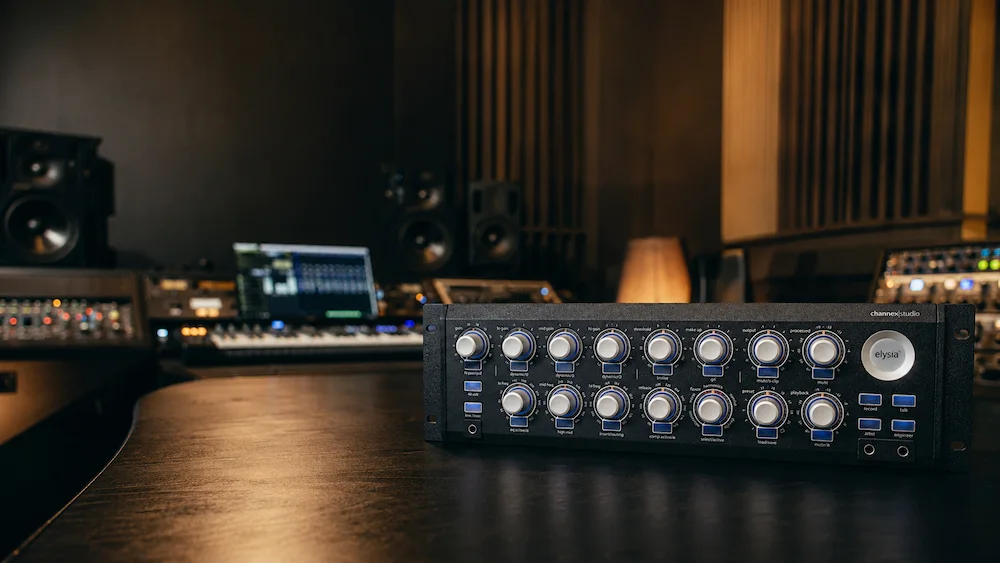
elysia Channex Studio challenges that workflow rather than the established sound of premium analog equipment. Its microphone preamp, dynamic EQ, compressor, saturation stage, and monitoring section remain entirely analog, but every parameter can be stored, recalled, and automated from within a DAW. Instead of asking engineers to choose between analog tone and software convenience, it attempts to combine both.
That makes Channex Studio a different proposition from most flagship channel strips. The real question is not whether its preamp or compressor outperform competing designs from Rupert Neve, Manley, or Avalon. The more important question is whether recallable analog hardware changes studio workflow enough to justify replacing a conventional recording chain. That’s where this unit becomes genuinely interesting—not as another premium signal path, but as a different approach to modern audio production.
Quick Verdict
elysia Channex Studio isn’t simply another premium analog channel strip. Its greatest innovation is combining a fully analog recording path with complete DAW recall, making it one of the most workflow-focused recording front ends currently available for professional hybrid studios.
Why Recall Matters in Modern Recording
 Analog recording hasn’t lost its appeal. What has changed is everything around it.
Today’s commercial studios are built around hybrid workflows. Signals may pass through boutique preamps, analog compressors, and outboard EQs on the way in, but editing, arrangement changes, client approvals, automation, and version management all happen inside a DAW. Analog hardware is no longer the center of the production environment—it has become one component of a software-driven workflow. The same shift toward workflow-first design is also visible in compact production tools such as the Korg NTS-4, where integration and speed increasingly matter as much as audio quality.
That shift has exposed a weakness that has little to do with sound quality.
Premium analog equipment still delivers exceptional results, but every revision carries hidden overhead. A vocalist returns to replace one line. A producer requests a new vocal chain after hearing the rough mix. The label wants additional doubles two weeks after tracking wrapped. Rebuilding the original signal path becomes part of the session, even though it adds no creative value.
This is one reason many engineers continue relying on plugins long after they can afford professional recording hardware. Instant recall, total session consistency, and seamless automation fit the realities of modern production better than manually reconstructing an analog rack. The decision is often about efficiency rather than sonics.
Manufacturers have spent years trying to close that gap. Some introduced digitally controlled compressors. Others focused on recall-enabled mastering processors or modular hybrid systems. Channex Studio takes a broader approach by treating the entire recording front end—not just a single processor—as one recallable system.
That reflects how commercial studios actually operate today. Engineers routinely move between tracking, mixing, editing, client revisions, and remote collaboration within the same project. Every interruption caused by hardware setup becomes more noticeable when the rest of the production pipeline moves at software speed.
As a result, buying decisions have started to change. Ten years ago, engineers compared channel strips almost entirely by tone—transformers, tubes, EQ curves, compressor behavior. Today, workflow carries real weight alongside sound quality. Questions that barely existed a decade ago now influence purchasing decisions just as much as frequency response or headroom.
- Can the hardware reopen exactly as it was during the previous session?
- Can assistants recall sessions without photographing every control?
- Can analog processing be automated alongside the rest of the project?
- Will revisions feel as seamless as working entirely in software?
Those questions explain why Channex Studio stands out. Its biggest contribution is not another premium analog signal path—there are already plenty of those. The more interesting proposition is whether digitally managed analog hardware can finally remove one of the last practical advantages that plugins still hold over outboard gear.
What Makes Channex Studio Different from Traditional Channel Strips?
On paper, Channex Studio looks like another flagship analog channel strip. It combines a Class-A microphone preamp, four-band EQ, dynamics processing, saturation, cue monitoring, insert routing, and talkback in a single chassis. None of those components are unusual on their own. What separates this unit isn’t the feature list—it’s how those sections work together inside a recallable analog workflow.
The front end follows familiar territory. The Class-A preamp accepts microphone, line, and Hi-Z instrument sources, offering up to 64 dB of gain along with phantom power, polarity inversion, and a switchable high-pass filter. At this price point, those specifications are expected rather than exceptional. Engineers investing in premium tracking hardware already assume clean gain, generous headroom, and low noise. The real question is what happens after the preamp.
The first genuinely distinctive feature is the equalizer. Unlike most analog channel strips, all four bands support dynamic operation. Dynamic EQ has become a staple of modern software workflows through tools like FabFilter Pro-Q, Kirchhoff EQ, and iZotope Ozone, but it remains rare in fully analog hardware.
That capability has practical value during tracking. Upper-mid vocal resonances rarely stay constant throughout an entire performance—they appear when the singer pushes harder. A conventional analog EQ forces a compromise: leave the resonance untouched or reduce those frequencies across the entire take. A dynamic EQ reacts only when those peaks occur, preserving the natural balance of quieter passages.
The same approach benefits acoustic guitar, bass, brass, and other instruments whose resonances shift from note to note instead of remaining static. Rather than committing to broad corrective EQ during recording, engineers can control occasional problem frequencies without reshaping the entire source.
Compression follows the EQ using elysia’s dual-stage design with its familiar gain-reduction limiter concept. The emphasis isn’t aggressive loudness or obvious coloration. Instead, the compressor is designed to maintain control while preserving transient information, allowing engineers to record a polished signal without painting themselves into a corner before mixing or mastering.
The saturation stage deserves similar restraint. Five harmonic modes offer different flavors of analog coloration, but the usefulness depends far more on implementation than on the number of available options. Applied conservatively, saturation can increase vocal density, add weight to DI bass, or help guitars occupy space before they ever reach the DAW. Push it too hard, however, and that harmonic signature becomes part of the recording permanently. Unlike a plugin, there is no opportunity to dial it back after the session.
The monitoring section may prove just as valuable as the audio processing itself. Professional tracking sessions rarely involve a single headphone mix. Performers, producers, and engineers often need different balances, requiring additional cue systems, monitor controllers, headphone amplifiers, or interface routing. As discussed in our Sony IER-M500 review, dependable monitoring often has a greater impact on recording performance than small differences in published hardware specifications.
Channex Studio integrates three independent cue mixes, zero-latency analog monitoring, talkback, dedicated engineer and artist outputs, and onboard reverb for performer comfort. None of those features change the recorded waveform. They reduce setup time, simplify routing, and eliminate pieces of external hardware that often complicate recording sessions.
The biggest design decision, however, has nothing to do with the preamp, EQ, or compressor. It is the decision to make every hardware parameter digitally controllable while keeping the audio path entirely analog.
The companion plugin doesn’t process audio. It functions as a control interface, allowing engineers to store settings with the DAW session, recall them automatically, and automate hardware parameters without introducing DSP into the signal path. That fundamentally changes how analog equipment fits into modern production.
Instead of treating outboard gear as an isolated recording chain, engineers can manage hardware with many of the same conveniences they already expect from plugins. Session recalls become faster, assistants spend less time documenting knob positions, and returning clients no longer require rebuilding complex signal paths from photographs and handwritten notes.
None of this removes the inherent limitations of analog hardware. Channex Studio is still a physical device that can process only one signal path at a time, and every recording decision remains a commitment. What it does remove is one of the biggest operational disadvantages that has pushed many studios toward software-only workflows.
That’s why Channex Studio should not be evaluated as simply another premium channel strip. Plenty of excellent analog front ends already exist. The more interesting question is whether digitally managed analog hardware can make outboard gear practical enough to compete with plugins on workflow instead of competing with them on convenience.
Workflow Benefits in Real Studios
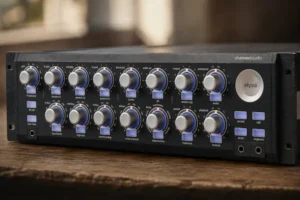 It’s easy to evaluate premium hardware by its sonic character. In practice, commercial studios often gain more from operational efficiency than from another subtle variation in transformer color or harmonic content. Channex Studio’s biggest advantage isn’t that it promises dramatically better recordings—it removes friction from sessions that repeatedly interrupt professional workflows.
A typical vocal production illustrates the point. Lead vocals may be tracked on day one, harmonies recorded weeks later, and pickup lines added after the first mix review. With a conventional analog channel strip, every return session starts with rebuilding the original signal chain. Even meticulous documentation can’t eliminate small variations caused by knob positioning, component tolerances, or simple human error.
Channex Studio changes that routine. Opening the DAW session restores the hardware configuration, allowing the engineer to focus on performance instead of verifying settings. Saving ten or fifteen minutes may seem insignificant in isolation, but across dozens of client sessions each month, those minutes become measurable studio time.
The same advantage extends beyond revisions. Many engineers capture multiple processing approaches during tracking—a cleaner vocal chain for one arrangement, a more saturated version for another, or alternate compression settings before committing to the final direction. Digital recall turns those recording chains into repeatable production templates instead of temporary hardware setups that disappear once the session ends.
The workflow benefits become even more apparent in larger facilities. Modern commercial studios rarely rely on a single engineer from start to finish. Tracking assistants prepare sessions, editors organize material, producers attend overdubs, and mix engineers revisit recordings weeks later. Hardware that recalls itself dramatically reduces the amount of documentation required between those stages and makes project handoffs considerably more reliable.
None of those improvements change the sound coming through the speakers. They change how efficiently a studio operates—and that’s often where expensive hardware delivers its strongest return on investment.
That said, Channex Studio doesn’t eliminate every limitation associated with analog recording.
It remains a single-channel recording front end. Studios tracking drum kits, orchestras, or full bands still need multiple microphone preamps and parallel signal chains. Engineers looking for a replacement for a recording console or modular rack system won’t find one here.
It’s also important to separate Channex Studio from dedicated mastering hardware. Although its dynamics section and EQ are sophisticated enough for high-end tracking, the unit isn’t designed as a transparent stereo mastering processor. Dedicated mastering equalizers, compressors, and converters remain the better choice when the goal is final program processing rather than source capture.
Another practical consideration is commitment. Recording through analog processing has always required engineers to make decisions before the mix begins, and Channex Studio doesn’t change that. Compression, dynamic EQ, and saturation become part of the recorded performance. Digital recall guarantees those settings can be recreated later, but it doesn’t make them editable after tracking.
For experienced recording engineers, that’s simply part of working with analog equipment. Producers accustomed to leaving every decision until mixdown may find the workflow less forgiving, even if recall makes revisions substantially easier.
The integrated monitoring system addresses another issue that rarely appears in product demos but regularly slows real sessions. Separate headphone mixes, talkback routing, and performer reverb often require additional hardware, interface software, or complex cue routing. Channex Studio consolidates those functions into the recording front end, reducing cable clutter, simplifying troubleshooting, and shortening setup before talent steps into the booth.
None of these improvements are particularly glamorous, and they won’t appear in blind listening tests. They matter because they remove routine interruptions that consume studio time without improving the recording itself.
Viewed as a workflow tool rather than simply another premium channel strip, Channex Studio solves a genuine operational problem. Its value isn’t measured by how different it sounds from competing analog hardware, but by how much time it saves over the life of a busy commercial studio.
First Practical Impressions
Approaching Channex Studio from the perspective of professional recording rather than product marketing, one aspect stands out almost immediately: the workflow improvements become more noticeable than the analog circuitry itself. The hardware quickly fades into the background because recalling sessions no longer interrupts the creative process—a rare characteristic for premium outboard gear.
The integrated monitoring section also deserves more attention than it typically receives in product announcements. Separate cue mixes, talkback, and zero-latency monitoring simplify everyday recording sessions in ways that are difficult to appreciate until multiple performers, producers, and revisions become part of the same project.
Perhaps the biggest surprise is how little emphasis ultimately falls on individual specifications. The dynamic EQ, compressor, and saturation stages are all valuable, but they matter most because they exist inside a fully recallable analog environment. Channex Studio feels less like another channel strip and more like an attempt to modernize the entire recording workflow.
The main reservation remains long-term software support. Because the recall system is central to the product’s identity, maintaining compatibility with future DAWs and operating systems will be just as important as the longevity of the analog electronics themselves.
Real Innovation or Marketing Hype?
Premium studio hardware is almost always introduced with familiar promises: better sound, smarter workflow, or a new standard for recording. Most products deliver incremental improvements rather than fundamental changes. Channex Studio is no exception, although a few aspects deserve more credit than the marketing language surrounding them.
The most significant innovation isn’t the microphone preamp, compressor, or saturation stage. It’s the control architecture. Fully analog signal paths with complete DAW recall remain uncommon, particularly in recording front ends rather than mastering processors. The ability to store hardware settings with a session, reopen them later, and automate parameters without converting audio into DSP solves a real operational problem that has existed for decades.
The four-band dynamic EQ is another feature that stands out. Dynamic equalization has become indispensable in software because it responds to changing material instead of applying permanent tonal corrections. Bringing that concept into analog hardware creates legitimate tracking advantages, particularly for vocals and acoustic instruments whose resonances shift throughout a performance. Whether Channex Studio’s implementation ultimately rivals the best software solutions will depend on independent testing rather than product literature, but the engineering concept itself is more than a marketing bullet point.
Other sections deserve a more measured assessment.
The Class-A microphone preamp appears well executed, but premium microphone preamps have reached a remarkably high standard across the industry. At this level, published specifications rarely predict audible differences. Engineers choosing between Channex Studio, Rupert Neve Designs, Grace Design, Millennia, or other respected manufacturers should expect different design philosophies—not dramatic leaps in recording quality.
The same restraint applies to the saturation stage. Five harmonic modes increase flexibility, but saturation itself isn’t a technological breakthrough. The quality of the circuit matters far more than the number of available flavors, and meaningful comparisons require controlled listening rather than marketing descriptions of “analog warmth.”
Elysia’s compression pedigree also deserves context. Products such as the xpressor and alpha compressor have earned strong reputations in professional studios, which naturally raises expectations. That reputation, however, shouldn’t be mistaken for proof that every future design automatically outperforms competing hardware. Channex Studio still needs to establish its own record in commercial environments.
Automation is another area where expectations should remain realistic. DAW integration doesn’t transform Channex Studio into a hardware replacement for plugin processing across an entire mix. The unit still processes a single analog signal path. Automation improves tracking, recalls, and repeat sessions—not large-scale mix automation across dozens of channels.
Long-term software support may ultimately prove just as important as the analog electronics. Premium outboard gear often remains in service for twenty years or more, while operating systems and DAWs evolve continuously. If the companion software isn’t maintained, one of Channex Studio’s defining advantages gradually loses value. Hardware longevity now depends as much on software compatibility as analog circuit reliability.
The final unanswered question is performance. Independent measurements covering distortion, phase response, dynamic behavior, and long-term reliability remain limited because the product is still new. That’s not evidence of poor engineering—it simply means the strongest claims still come from the manufacturer rather than years of field use or laboratory verification.
Viewed objectively, Channex Studio doesn’t reinvent analog recording. What it does is far more practical: it modernizes how premium outboard gear fits into today’s production workflow. That’s a meaningful innovation, even if the underlying audio circuits are evolutionary rather than revolutionary.
How Channex Studio Compares
At this level of the market, outright audio quality is rarely the deciding factor. Rupert Neve Designs, Manley, Avalon, and elysia all build equipment capable of professional results. The real differences come down to workflow, recall, integration, and the role each unit is expected to play inside a modern studio.
| Hardware | Core Strength | Best Application | Where Channex Studio Has the Edge |
|---|---|---|---|
| elysia Channex Studio | Recallable analog workflow with dynamic EQ and integrated monitoring | Hybrid recording studios with frequent revisions | Complete DAW recall, automation, cue monitoring, and session consistency |
| Rupert Neve Designs Shelford Channel | Transformer-based tone and highly musical EQ | Engineers prioritizing analog character during tracking | No hardware recall or integrated workflow management |
| Avalon VT-737sp | Classic tube vocal chain | Pop, R&B, hip-hop, and voice recording | Modern recall, automation, and substantially faster session setup |
| Manley CORE | Premium tube recording path | Dedicated vocal and acoustic tracking | Integrated monitoring and significantly stronger DAW integration |
| WesAudio ng Series | Recallable analog processing modules | Hybrid mixing and mastering environments | Purpose-built recording front end rather than a modular processing platform |
The closest philosophical competitor is arguably WesAudio. Both companies recognize that analog hardware needs to function more like software if it is to remain practical in modern production. The difference is that WesAudio builds recallable processing modules, while Channex Studio applies the same concept to the entire recording chain.
Rupert Neve Designs, Avalon, and Manley represent a more traditional approach. Their appeal is rooted in circuit design, transformer topology, tube coloration, and decades of studio history. Engineers buy them because they trust the sound—not because they expect seamless DAW integration.
That’s what makes Channex Studio unusual. It doesn’t try to outperform those products on analog character alone. Instead, it competes on something most premium channel strips have largely ignored: operational efficiency.
Studios that rarely revisit recording sessions may see little advantage over established alternatives. Facilities handling frequent client revisions, remote collaboration, or high session turnover are far more likely to appreciate what Channex Studio actually offers. Its strongest selling point isn’t a different sound—it’s a different way of working.
Choosing the Right Alternative
If workflow efficiency and instant hardware recall are your highest priorities, Channex Studio currently offers one of the most complete solutions available for hybrid recording environments.
If your priority is classic transformer coloration and traditional analog character, products such as the Rupert Neve Designs Shelford Channel remain compelling choices with decades of proven studio history.
Engineers looking for tube-based vocal coloration may find the Avalon VT-737sp or Manley CORE more aligned with that specific sonic direction.
Studios focused primarily on mixing and mastering rather than recording may benefit more from recallable modular systems such as the WesAudio ng Series, where processing flexibility across multiple stages of production takes priority over an integrated recording front end.
Ultimately, the decision depends less on analog sound quality—which is consistently high across this category—and more on whether workflow, recall, and long-term production efficiency have become central requirements in your studio.
The Future of Hybrid Recording
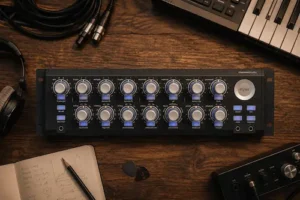 Channex Studio arrives at a time when workflow has become almost as important as audio quality itself. Premium recording hardware has matured to the point where audible differences between leading manufacturers are often subtle compared to the influence of microphones, performers, room acoustics, and engineering decisions. As a result, the conversation is gradually shifting from How does it sound? to How efficiently can it be used every day?
That’s one reason digitally managed analog hardware has gained momentum in both recording and mastering environments. Commercial studios rarely lose productivity because a preamp lacks another decibel of headroom. They lose it rebuilding signal chains, documenting settings, troubleshooting routing, or trying to match recordings made weeks earlier.
Channex Studio is designed to remove much of that overhead. Its recall system fits naturally into modern production, where projects evolve through multiple revisions rather than ending after a single recording session. Vocal productions are a perfect example: pickups, harmonies, and alternate takes are often recorded long after the original performance, making consistent hardware recall far more valuable than it might have been a decade ago.
That consistency also benefits everything that follows. When recordings begin from the same reference point, mix decisions become easier to repeat, automation behaves more predictably, and mastering engineers receive material that requires fewer corrective decisions. A well-controlled recording chain is also one of the foundations of preparing a mix for mastering, where consistency often matters more than aggressive processing.
At the same time, it’s worth keeping expectations realistic. Channex Studio isn’t intended to improve streaming loudness, codec performance, CPU efficiency, or other aspects of production that take place entirely inside the DAW. Those remain responsibilities of the recording interface, the mix, and ultimately the mastering process.
The hardware also follows the same practical limitations as any other analog processor. Zero-latency monitoring is a major advantage during tracking, but once the unit is inserted into a mix session, interface latency and external hardware routing still need to be managed in the usual way.
Perhaps the most interesting change is philosophical rather than technical. Modern software encourages engineers to postpone decisions because every setting can be revisited later. Analog recording has always rewarded the opposite approach: making confident choices while the performance is happening. Channex Studio doesn’t remove that commitment—it simply makes those decisions easier to reproduce when the project returns weeks or months later.
Ultimately, that’s where the product feels most relevant. Rather than trying to replace plugins or reinvent analog recording, Channex Studio modernizes one of the last parts of the production chain that has remained largely unchanged. For studios balancing classic analog workflows with contemporary DAW-based production, that may prove to be its most valuable contribution.
Overall Rating
| Category | Rating |
|---|---|
| Sound Quality | 9.5/10 |
| Workflow | 10/10 |
| Feature Innovation | 9.5/10 |
| Studio Integration | 10/10 |
| Value for Money | 8.5/10 |
| Long-Term Investment | 9/10 |
| Overall | 9.4/10 |
Rather than trying to outperform every premium channel strip on pure analog character, Channex Studio introduces one of the most meaningful workflow innovations the recording industry has seen in years. Its combination of fully analog signal processing, complete DAW recall, integrated monitoring, and hybrid studio integration makes it one of the strongest recording front ends currently available for engineers working in modern production environments.
Why These Scores?
Sound Quality — 9.5/10. Every indication points toward a genuinely high-end analog signal path with the headroom, dynamics, and circuit quality expected from elysia. While long-term independent measurements are still limited, the overall design leaves little reason to expect compromises in professional recording applications.
Workflow — 10/10. This is where Channex Studio clearly separates itself from traditional channel strips. Full hardware recall, DAW automation, and instant session restoration solve one of the biggest practical limitations of analog recording without sacrificing an entirely analog audio path.
Feature Innovation — 9.5/10. Analog dynamic EQ, integrated monitoring, digitally controlled recall, and comprehensive routing create a genuinely modern recording system rather than another variation of a classic channel strip. The innovation lies in the overall architecture more than in any single feature.
Studio Integration — 10/10. Commercial studios increasingly rely on hybrid production, frequent revisions, and collaborative workflows. Channex Studio fits naturally into that environment by reducing setup time, improving repeatability, and allowing hardware to behave much more like software without introducing DSP into the signal path.
Value for Money — 8.5/10. The purchase price places it firmly in the premium category, making it difficult to justify for occasional recording. Studios handling regular client sessions, however, can recover much of that investment through faster recalls and greater operational efficiency.
Long-Term Investment — 9/10. The analog electronics should remain relevant for many years, although the long-term value of the platform will depend on continued software compatibility with future DAWs and operating systems. Assuming sustained support, its workflow advantages are likely to become even more valuable as hybrid production continues to evolve.
Who Should Buy Channex Studio?
Best suited for:
- Commercial recording studios handling frequent client revisions
- Hybrid studios combining analog hardware with DAW-based production
- Professional vocal recording and overdub sessions
- Engineers who regularly recreate recording chains across multiple projects
- Studios looking to reduce setup time while keeping an entirely analog signal path
Probably not the best choice for:
- Bedroom producers working almost entirely in software
- Occasional recording environments with minimal session recalls
- Studios requiring multi-channel tracking for orchestras or live bands
- Engineers primarily searching for analog coloration rather than workflow improvements
Pros & Cons
| Pros | Cons |
|---|---|
| Complete analog hardware recall inside the DAW | Premium purchase price |
| Excellent hybrid recording workflow | Mono recording channel only |
| Dynamic analog EQ with practical tracking advantages | Workflow depends on long-term software support |
| Integrated monitoring, cue mixes and talkback | Not intended for stereo mastering applications |
| Reduces setup time during revisions | Best value mainly in commercial studio environments |
Verdict
elysia Channex Studio stands out not because it promises a new analog sound, but because it rethinks how analog hardware fits into a modern production environment. That’s a far more meaningful goal than adding another preamp topology, another compressor design, or another saturation circuit to an already crowded market.
Its greatest strength is workflow. Reliable session recall, DAW automation, dynamic analog EQ, integrated monitoring, and centralized control address problems that commercial studios encounter every day. None of those features make a mediocre performance sound exceptional, but they can make professional recording sessions faster, more consistent, and considerably easier to manage.
That doesn’t make Channex Studio the right investment for every studio. Engineers who work almost entirely in the box may struggle to justify its cost, while facilities built around established analog signal chains may see fewer immediate benefits unless frequent recalls are part of their daily workload.
As with any newly released piece of professional hardware, some questions remain unanswered. Independent measurements, long-term reliability, and broader real-world adoption will ultimately determine how the unit is remembered once the launch cycle has passed.
Even so, Channex Studio deserves attention for the right reason. Rather than trying to convince engineers that analog processing itself needs reinventing, elysia has focused on one of the industry’s oldest frustrations: making premium outboard equipment practical in a workflow increasingly defined by instant recall. If that approach gains wider adoption, Channex Studio may be remembered less as an exceptional channel strip and more as an early example of where professional recording hardware is headed next.
Frequently Asked Questions
Is elysia Channex Studio designed for recording or mixing?
Recording is its primary role. Although it can function as external analog hardware during mixing, its single-channel design, integrated monitoring, and recall workflow make it considerably more valuable as a tracking front end than as a dedicated mix processor.
Can Channex Studio replace plugin channel strips?
No. It replaces an analog recording chain—not dozens of plugin instances across a DAW session. Plugins remain the more practical solution for large multitrack mixes and portable project workflows.
Does the companion plugin process audio?
No. The plugin acts solely as a control interface. Audio remains entirely analog while the software stores settings, recalls hardware configurations, and enables parameter automation from within the DAW.
What is the advantage of analog dynamic EQ during tracking?
Unlike a conventional EQ, a dynamic EQ reacts only when specific frequencies become excessive. That makes it useful for controlling vocal harshness, inconsistent acoustic instruments, or resonant bass notes without permanently changing the overall tonal balance.
How does Channex Studio compare with the Rupert Neve Designs Shelford Channel?
Both are premium recording front ends, but they prioritize different strengths. The Shelford Channel is known for its transformer-based character and classic analog workflow, while Channex Studio emphasizes digital recall, automation, and tighter integration with modern DAW sessions.
Can mastering engineers benefit from Channex Studio?
Only in specific cases. Because it is a mono recording channel rather than a dedicated stereo mastering processor, most mastering engineers will continue to rely on specialized mastering hardware for final program processing.
Does Channex Studio reduce CPU usage?
Not in any significant way. Since the companion plugin controls hardware rather than processing audio, CPU consumption remains minimal regardless of session size.
Is Channex Studio worth buying for a home studio?
That depends on how the studio is used. Engineers recording occasional personal projects are unlikely to recover the investment through workflow alone. Studios handling regular client work and frequent session recalls are much more likely to benefit.
Will recallable analog hardware become more common?
The industry is moving in that direction. As hybrid production workflows continue to dominate professional recording, engineers increasingly expect analog hardware to offer the same convenience, session recall, and DAW integration they already take for granted with software plugins.
Who is Channex Studio’s biggest competitor?
Rather than competing directly with one manufacturer, Channex Studio competes with an entire category of premium recording front ends. Engineers choosing between Rupert Neve Designs, Avalon, Manley, and WesAudio are often deciding whether workflow innovation or traditional analog architecture better suits their studio.

Yurii Ariefiev is a mastering engineer and audio production editor specializing in professional recording, mixing, and mastering workflows. His hardware reviews examine how analog equipment performs in real studio environments, with particular attention to signal flow, recall, monitoring, workflow efficiency, and long-term integration into modern DAW-based production.
This review evaluates elysia Channex Studio as a professional recording front end, focusing on recallable analog hardware, hybrid studio workflows, and the practical impact of session consistency on mixing and mastering.