Most mastering processors still operate on the same principle: adjust a frequency range, then manage the side effects. Even the most advanced EQs, dynamic EQs, and spectral tools are ultimately making decisions across bands of frequencies rather than individual harmonic structures.
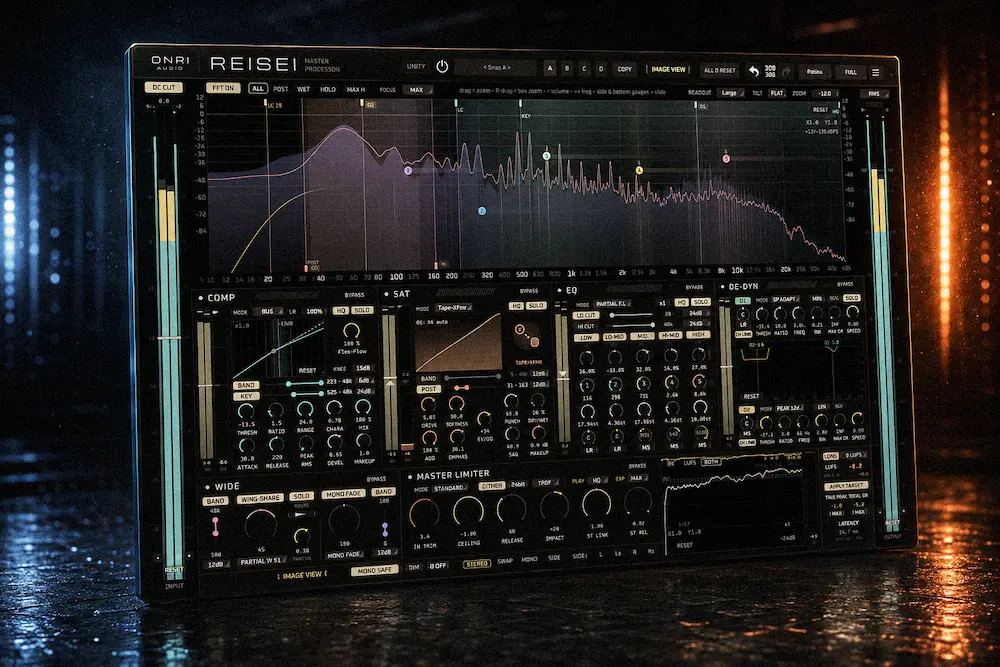
ONRI Audio REISEI is a mastering plugin built around harmonic-aware processing rather than conventional frequency-band equalization. Its headline feature, PARTIAL EQ, is designed to track and manipulate individual harmonics as they move through the spectrum instead of applying static filtering across a defined range. The goal is not simply more precise EQ, but a different method of tonal correction altogether.
That makes REISEI more interesting than another all-in-one mastering plugin. The real question is whether harmonic-aware processing can solve problems that traditional EQ, dynamic EQ, and saturation still leave on the table—or whether it introduces a new layer of complexity without delivering a meaningful advantage in professional mastering workflows.
This REISEI review examines whether ONRI Audio’s harmonic-aware mastering processor delivers practical advantages over traditional EQ, dynamic EQ, and modern mastering suites.
REISEI at a Glance
| Developer | ONRI Audio |
| Type | Mastering Processor |
| Key Technology | PARTIAL EQ Harmonic Processing |
| Price | $399 |
| Platform | Apple Silicon macOS |
| Trial Version | Available |
| Best For | Mastering Engineers |
| Overall Rating | 8.5/10 |
Contents
Why Traditional Mastering EQ Doesn’t Always Solve the Real Problem
 Mastering EQ remains one of the most effective corrective tools in audio production, but it was never designed to distinguish between individual harmonic components inside a complex signal. Whether an engineer reaches for a linear-phase EQ, a minimum-phase design, or a dynamic equalizer, the adjustment is still applied across a defined frequency range.
This contrast becomes particularly interesting when compared with modern passive-EQ designs such as the Softube Reference 1998 & 1956 Equalizers, which focus on broad musical shaping and tonal balance rather than harmonic-level manipulation. Both approaches aim to improve translation, but they operate at different levels of signal control.
That approach works well when the problem itself exists within a frequency range. It becomes less precise when the issue is tied to a specific harmonic relationship inside a vocal, guitar, piano, synth, or full mix. A narrow cut may reduce the offending element, but it often affects surrounding content that was not causing the problem in the first place.
This limitation becomes more apparent in contemporary productions. Modern pop, hip-hop, EDM, and cinematic mixes are typically built from dense layers competing for space across the same spectral regions. Tonal problems rarely exist in isolation. A corrective move aimed at one element can easily influence several others.
As a result, mastering tools have gradually moved beyond conventional filtering. Spectral editing, dynamic spectral processing, source separation, and harmonic analysis have all emerged from the same objective: increasing selectivity without introducing additional artifacts or unnecessary tonal shifts.
REISEI is part of that broader evolution. Its relevance does not come from adding another EQ or dynamics section to an already crowded category. The interesting part is its attempt to work at the harmonic level rather than the frequency-band level. If the underlying tracking is accurate, it offers a distinct way to approach tonal correction during mastering.
Hear What Your Mix Still Hides
Tools like REISEI are designed to reveal and correct tonal issues that are often difficult to isolate with conventional processing. The bigger question is whether those issues are already present in your mix. Upload up to 35 seconds and receive a free mastering demo to hear how targeted mastering decisions affect translation, balance, and overall musical impact before investing in a full release.
Request your free mastering demo →
The Feature That Separates REISEI From Every Major Mastering Suite
REISEI enters a category that already includes mature solutions from iZotope, FabFilter, DMG Audio, Weiss, and several other established developers. On paper, much of its feature set looks familiar. EQ, dynamics, saturation, stereo control, limiting, and loudness metering have become standard components of modern mastering software.
The distinction lies in PARTIAL EQ.
Traditional equalizers operate on frequency ranges. Even the most advanced dynamic EQs and linear-phase designs still apply gain changes across a selected portion of the spectrum. PARTIAL EQ approaches the problem differently by attempting to identify and track individual harmonics within the source material as they move over time.
The distinction becomes more obvious during corrective mastering work. Many tonal issues are not distributed evenly across an entire frequency region. They often originate from specific harmonic structures inside vocals, acoustic instruments, synthesizers, or complex mix elements. Conventional EQ can reduce the symptom, but it frequently affects neighboring content that was never part of the problem.
A practical example would be an aggressive vocal overtone that becomes prominent only in certain notes or phrases. A traditional EQ cut can tame the harshness, but it may also reduce articulation, air, or intelligibility. REISEI attempts to isolate the harmonic structure itself rather than lowering a broader section of the spectrum.
This is particularly relevant when dealing with the kind of upper-midrange harshness discussed in professional approaches to fixing harsh highs in mastering, where broad EQ cuts often solve one problem while creating another.
This places the processor somewhere between conventional equalization and spectral manipulation. It is not performing source separation, nor is it functioning like a traditional EQ. The workflow is closer to harmonic editing than frequency-based correction.
For mastering engineers, that distinction matters. Much of mastering involves managing compromises. Every adjustment solves one problem while introducing another. The appeal of harmonic-aware processing is the possibility of making smaller, more targeted corrections that preserve more of the original balance.
Whether REISEI consistently achieves that goal will ultimately depend on tracking accuracy and reliability across real-world material. Harmonic analysis is considerably more difficult than static frequency filtering, particularly when dealing with dense modern productions. Still, the underlying concept represents a legitimate DSP development rather than another variation of an existing mastering workflow.
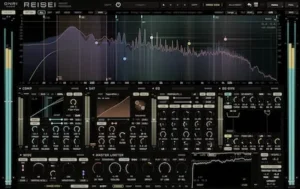
REISEI’s interface follows the same philosophy. Instead of treating the analyzer as a passive visual reference, the spectrum becomes the primary workspace. EQ adjustments, dynamic processing, and other functions are performed directly from the display itself, reducing the constant movement between multiple plugin windows that often slows down mastering sessions.
The stereo processing section also avoids a strict mid/side architecture. Its WEIGHT control allows adjustments to lean toward center or side information without fully committing to either domain. In practice, this provides a more gradual method of shaping width and tonal balance while maintaining the spatial relationships already established during the mix stage.
REISEI in Professional Mastering Workflows
New processing technology attracts attention, but mastering engineers adopt tools for a different reason: efficiency. A processor can be technically impressive and still fail to earn a permanent place in a professional workflow if it slows down decision-making or complicates revisions.
REISEI’s biggest practical advantage may have less to do with harmonic processing and more to do with consolidation. Instead of moving between separate EQs, compressors, saturators, imaging tools, limiters, and loudness meters, the entire mastering chain operates inside a single environment. That does not automatically improve audio quality, but it can reduce friction throughout a session.
In a typical mastering project, much of the time is spent evaluating interactions between processors rather than making adjustments themselves. A small EQ move affects compressor behavior. Saturation changes how the limiter responds. Stereo enhancement influences perceived loudness. Every decision creates a chain reaction that must be reassessed.
The same workflow principle appears earlier in the production process. In our Harrison 32Classic Channel Strip V2 review, we examined how integrated channel-strip design can speed up mixing decisions by reducing plugin switching and keeping multiple processing stages inside a single environment. REISEI applies a similar philosophy to the mastering stage.
Keeping those processes inside one interface makes it easier to evaluate cause and effect without constantly shifting attention between plugin windows. The benefit becomes more noticeable during revision work, where engineers often revisit decisions multiple times before a master is approved.
The UNITY gain compensation system is one of the more practical additions. Level matching remains essential during mastering because even experienced engineers can mistake increased loudness for improved sound quality. Automatic output compensation makes A/B comparisons more reliable and reduces the likelihood of decisions being driven by volume differences rather than actual sonic improvements.
Equally useful is the ability to reorder processing modules without rebuilding an entire chain. Small changes in processor order can produce significant differences in tonal balance, transient response, and perceived loudness. Being able to move a compressor before an EQ, place saturation ahead of dynamics processing, or alter limiter positioning in seconds encourages experimentation that many engineers would otherwise skip during a busy session.
These workflow improvements are not unique individually. What matters is their combination inside a mastering-focused environment. For engineers handling multiple projects, client revisions, streaming deliverables, and loudness compliance requirements, reducing operational overhead often delivers more value than another half-decibel of tonal precision.
What’s Actually New Here—and What’s Not
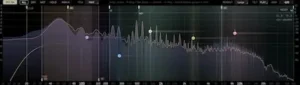 Unlike conventional equalizers, the system is designed to identify and manipulate individual harmonics rather than apply gain changes across a fixed frequency range. That represents a meaningful departure from how most mastering EQs operate. Whether the implementation proves reliable across diverse program material is a separate question, but the underlying concept cannot be dismissed as a cosmetic redesign of existing technology.
The analyzer-centered interface also contributes something beyond visual polish. Many mastering processors include spectrum analysis, but the analyzer typically functions as a reference tool. In REISEI, it becomes the primary control surface, placing analysis and processing within the same workspace. That may not qualify as DSP innovation, but it is a legitimate workflow design decision rather than a marketing feature.
Most of the remaining modules are far less disruptive. Compression, saturation, limiting, dynamic EQ, stereo processing, and loudness metering are established technologies with mature implementations available throughout the industry. Their inclusion makes REISEI a complete mastering environment, but none of them fundamentally change what engineers can already accomplish with existing tools.
This distinction is important because the plugin should be evaluated primarily on the success of its harmonic-processing architecture, not on the size of its feature list. The market already offers excellent compressors, limiters, EQs, and metering solutions. REISEI’s long-term relevance depends on whether PARTIAL EQ delivers practical results that engineers cannot achieve as efficiently with conventional mastering processors.
Where REISEI Fits in a Market Dominated by Established Mastering Tools
REISEI is entering one of the most competitive segments of professional audio software. The challenge is not feature parity. Most modern mastering processors already provide excellent EQ, dynamics, stereo control, limiting, and loudness management. The challenge is giving engineers a reason to change tools they already trust.
That makes direct comparisons somewhat misleading. REISEI is not competing with Ozone, Pro-Q, Kirchhoff EQ, or DMG Equilibrium on identical terms. Each of those products became successful by solving a different problem.
| Product | Core Philosophy | Primary Strength | Potential Reason to Choose REISEI Instead |
|---|---|---|---|
| ONRI Audio REISEI | Harmonic-aware mastering | Partial-based tonal manipulation | Native workflow and technology focus |
| iZotope Ozone | Integrated mastering suite | Complete production ecosystem | More direct and less AI-driven workflow |
| FabFilter Pro-Q | Precision equalization | Fast and predictable corrective work | Harmonic tracking rather than frequency-band processing |
| Kirchhoff EQ | Maximum flexibility | Advanced filtering architecture | Alternative approach to tonal correction |
| DMG Equilibrium | Technical accuracy | Deep control for mastering specialists | Faster integrated workflow |
Ozone remains the strongest choice for engineers who want an established mastering ecosystem with mature metering, processing modules, and broad industry adoption. REISEI does not currently offer the same depth of ecosystem support, but it also avoids relying on AI-assisted decision making as a centerpiece of the workflow.
FabFilter Pro-Q and Kirchhoff EQ occupy a different category altogether. Both are among the most capable equalizers available for professional mixing and mastering. Neither, however, is attempting to solve tonal problems through harmonic tracking. Engineers evaluating REISEI are not looking for a better Pro-Q. They are evaluating whether harmonic-aware processing can produce cleaner corrective moves than traditional filtering.
DMG Equilibrium may be the closest philosophical competitor. Both products appeal to engineers who value precision over presets and automation. The difference is that Equilibrium pushes deeper into filter design and technical control, while REISEI focuses on a fundamentally different method of interacting with harmonic content.
For established mastering engineers, REISEI is unlikely to replace an entire toolkit overnight. Its most realistic path into professional studios is as a specialist processor—one that handles specific tonal problems differently from the tools already occupying permanent positions in a mastering chain.
REISEI vs Ozone Advanced
Ozone Advanced remains the most established integrated mastering suite on the market. It combines equalization, dynamics processing, saturation, imaging, limiting, loudness analysis, and AI-assisted mastering tools inside a mature ecosystem that has been refined across multiple generations.
REISEI approaches mastering from a very different direction.
Where Ozone focuses on breadth, REISEI focuses on selectivity. Ozone’s strength is providing an extensive collection of proven mastering modules supported by sophisticated metering, assistant technology, and widespread industry adoption. REISEI’s defining feature is PARTIAL EQ, a harmonic-aware processing system designed to manipulate individual harmonic structures rather than broader frequency ranges.
For engineers working on a wide variety of projects, Ozone remains the safer investment. Its workflow is familiar, its behavior is predictable, and thousands of commercial releases have already been mastered with it. REISEI does not yet have the same track record.
The advantage of REISEI appears when tonal problems are tied to specific harmonic content rather than entire frequency regions. In situations where a traditional EQ cut removes too much surrounding information, harmonic-level manipulation may allow more targeted corrections with fewer compromises.
Workflow philosophy also differs significantly. Ozone increasingly incorporates AI-assisted decision making, while REISEI places the engineer at the center of the process. Its analyzer-driven interface encourages manual evaluation and direct interaction with harmonic structures rather than automated suggestions.
Ultimately, these products are not direct replacements for one another. Ozone Advanced is a comprehensive mastering ecosystem designed to handle nearly every stage of modern mastering. REISEI is a specialist processor built around a new approach to tonal correction. Engineers choosing between them are often deciding whether they value a mature all-purpose platform or a potentially more selective method of harmonic control.
REISEI vs FabFilter Pro-Q
Comparing REISEI with FabFilter Pro-Q can be misleading because the two products are designed to solve different problems.
Pro-Q is widely regarded as one of the most precise and efficient equalizers available for professional mixing and mastering. Its strengths include transparent filtering, dynamic EQ functionality, excellent workflow design, and highly predictable behavior across virtually any type of material.
REISEI is not attempting to replace that workflow.
The central difference lies in how tonal problems are identified and corrected. Pro-Q operates on frequency ranges. Whether using static bands or dynamic processing, adjustments are ultimately applied across a selected portion of the spectrum. REISEI’s PARTIAL EQ system attempts to track individual harmonics and manipulate those harmonic structures directly.
For broad tonal shaping, corrective EQ work, and everyday mastering tasks, Pro-Q remains one of the fastest and most reliable tools available. Most engineers could complete an entire career using Pro-Q as their primary equalizer without encountering meaningful limitations.
REISEI becomes more interesting when conventional frequency-based processing begins to create compromises. A harsh vocal overtone, an aggressive synth resonance, or a problematic harmonic interaction inside a dense mix may not always respond ideally to traditional filtering. In those situations, harmonic-aware processing offers a fundamentally different method of correction.
The practical question is not whether REISEI is better than Pro-Q. The more useful question is whether harmonic tracking can solve certain tonal problems more efficiently than even the best frequency-based EQ systems. If the answer proves to be yes across real-world mastering projects, REISEI could become a valuable complement to Pro-Q rather than a replacement for it.
REISEI vs Kirchhoff EQ
Kirchhoff EQ has become one of the most respected equalizers in modern mastering and mixing. Its combination of dynamic processing, extensive filter options, linear-phase modes, and highly efficient workflow makes it a common choice among engineers who require maximum precision.
At first glance, comparing REISEI and Kirchhoff EQ may seem unusual because both products address tonal balance. In practice, however, they approach the problem from fundamentally different directions.
Kirchhoff EQ operates within the traditional equalization framework. Even with advanced dynamic functionality and highly flexible filtering, gain changes are still applied across selected frequency regions. The strength of the software lies in accuracy, predictability, and control. Engineers know exactly how a filter will behave and can make highly surgical adjustments with minimal effort.
REISEI takes a different approach. Rather than focusing on frequency bands, its PARTIAL EQ technology attempts to identify and manipulate individual harmonics inside the signal. The objective is not simply more detailed equalization, but a different form of tonal correction altogether.
For everyday mastering tasks, Kirchhoff EQ remains the safer and more established option. It is faster to learn, extensively tested in commercial environments, and capable of solving the vast majority of tonal problems encountered during professional production.
REISEI becomes interesting when frequency-based processing starts creating compromises. If a problematic overtone exists within a specific harmonic structure rather than an entire frequency range, harmonic-aware processing may allow more selective intervention.
The practical decision is not necessarily REISEI or Kirchhoff EQ. Many engineers will view them as complementary tools. Kirchhoff remains one of the most capable frequency-based equalizers available, while REISEI introduces an alternative method for addressing tonal problems that conventional EQ architecture was never designed to target directly.
What Matters More Than the Technology: Translation
 Mastering processors are not judged by how sophisticated their DSP appears on a spectrum display. They are judged by how well their decisions survive outside the studio.
A master that sounds balanced on full-range monitors but becomes unstable on earbuds, collapses under streaming normalization, or exposes new artifacts after codec conversion has failed regardless of how advanced the processing chain may be.
This is the area where REISEI still has the most to prove.
The promise of harmonic-aware processing is greater selectivity. Instead of making broader frequency adjustments, the software attempts to target the harmonic structures responsible for a tonal problem. In principle, that should allow corrective moves with fewer side effects. In practice, the outcome depends entirely on tracking accuracy.
Harmonic analysis is relatively straightforward when working with isolated or clearly defined material. It becomes significantly more demanding when processing dense modern productions containing layered vocals, stacked synthesizers, distorted guitars, parallel processing, and complex stereo information. Under those conditions, even small tracking errors can influence tonal balance in ways that are not immediately obvious during a mastering session.
For that reason, engineers evaluating REISEI should spend less time watching the analyzer and more time stress-testing translation. The critical questions are whether vocal presence remains consistent across playback systems, whether low-frequency balance survives consumer listening environments, and whether stereo relationships remain stable after data compression and streaming normalization. Those concerns extend directly into modern mastering for streaming platforms, where codec behavior and loudness normalization can expose weaknesses that remain hidden inside the studio.
Performance is another consideration. Harmonic tracking and additive resynthesis generally require more computational resources than conventional EQ architectures. Independent benchmark data remains limited, making it difficult to draw firm conclusions about CPU efficiency. That may not matter in a dedicated mastering session running a single instance, but it becomes more relevant for mix engineers considering REISEI as a bus processor or mix-stage corrective tool.
Platform support may also affect adoption. At launch, REISEI is restricted to Apple Silicon systems. For independent mastering engineers this may be a minor limitation. For commercial facilities operating mixed macOS and Windows environments, it introduces an additional layer of workflow consideration that established competitors do not face.
Is REISEI Worth $399?
The REISEI price immediately places it in competition with some of the most established mastering tools available today. At $399, it is not positioned as an entry-level processor or an impulse purchase. Instead, ONRI Audio is targeting engineers who are willing to invest in a premium mastering plugin if the workflow and results justify the cost.
Whether REISEI is worth it depends largely on how valuable its PARTIAL EQ technology becomes in daily work. Engineers who already own Ozone Advanced, FabFilter Pro-Q, Kirchhoff EQ, or Weiss processing tools are not lacking traditional mastering capabilities. The question is whether harmonic-aware correction solves problems that conventional EQ and dynamic processing cannot address as efficiently.
From a workflow perspective, the REISEI mastering plugin price includes far more than a standalone EQ. Loudness metering, dynamics processing, stereo control, saturation, limiting, and flexible routing are integrated into a single environment. For mastering engineers who spend hours moving between multiple processors, that consolidation alone may provide measurable value.
The more difficult comparison is REISEI vs Ozone value. Ozone offers a mature ecosystem, extensive module selection, and years of proven commercial use. REISEI offers a newer concept centered on harmonic manipulation rather than feature count. For engineers specifically interested in harmonic-level tonal correction, the premium price may be justified. For users already satisfied with conventional mastering workflows, the investment will be harder to justify.
Pros and Cons
| Pros | Cons |
|---|---|
| Unique harmonic-aware PARTIAL EQ technology | Premium price point |
| Excellent mastering workflow integration | Limited long-term field testing |
| Analyzer-driven interface | Apple Silicon only |
| Flexible module routing | Learning curve for traditional EQ users |
| Strong loudness and metering tools | CPU demand may exceed conventional EQ solutions |
Final Assessment: Worth Watching, Not Yet a Proven Replacement
Most mastering releases compete by offering more modules, more presets, more automation, or another variation of an already familiar workflow. REISEI takes a more ambitious route. Its value depends almost entirely on whether harmonic-aware processing can deliver cleaner corrective moves than conventional EQ-based approaches.
That makes the plugin easier to evaluate than many competing products. The integrated workflow, analyzer-driven interface, loudness tools, and processing modules are useful, but they are not the reason experienced engineers will pay attention. PARTIAL EQ is the reason REISEI exists, and it is the feature that will ultimately determine whether the software gains long-term relevance in professional mastering environments.
The underlying concept addresses a legitimate limitation of frequency-based processing. There are situations where traditional EQ forces compromises because the problem exists within a harmonic structure rather than an entire frequency region. REISEI’s approach is an attempt to narrow that gap.
The challenge is validation. Established mastering tools earned their place through years of commercial releases, client revisions, translation testing, and real-world production work. REISEI has not yet gone through that process. At this stage, its technology is more proven than its track record.
For mastering engineers, mix engineers, and producers who regularly work at the final stage of production, REISEI is one of the few recent releases that introduces a genuinely different processing concept rather than a repackaged feature set. That alone makes it worth serious evaluation.
Whether it becomes a long-term fixture alongside Ozone, Pro-Q, Kirchhoff EQ, Weiss, or DMG Audio tools is still an open question. What can be said today is that REISEI brings a new idea to a category that has spent years refining existing ones. In a mastering market dominated by incremental improvements, that may be its most important contribution.
Overall Rating
| Category | Rating |
|---|---|
| Sound Quality | 9/10 |
| Workflow | 9.5/10 |
| Translation Confidence | 8.5/10 |
| Innovation | 10/10 |
| CPU Efficiency | 8/10 |
| Value for Money | 8/10 |
| Overall | 8.5/10 |
REISEI is one of the few mastering releases in recent years that introduces a genuinely new processing concept rather than another variation of established EQ, dynamics, or AI-assisted workflows. The harmonic-aware PARTIAL EQ architecture offers a fresh approach to tonal correction, while the integrated mastering environment reduces workflow friction and encourages experimentation. At the same time, the platform remains relatively unproven in large-scale commercial mastering environments, making it more compelling as an advanced specialist tool than a universal replacement for established mastering ecosystems.
Why These Scores?
Sound Quality — 9/10
REISEI’s harmonic-focused processing is designed to enable more transparent corrective moves than conventional frequency-band EQ. The technology shows clear potential for preserving detail while reducing unwanted resonances and overtones. The score stops short of perfection because long-term translation data across diverse commercial projects remains limited.
Workflow — 9.5/10
The analyzer-centered interface, module reordering, UNITY gain compensation, and integrated mastering environment create one of the most efficient workflows currently available for critical mastering work. Less plugin switching means more time spent evaluating actual sonic decisions.
Translation Confidence — 8.5/10
The underlying concept should theoretically improve translation by allowing more selective corrections with fewer side effects. However, harmonic tracking accuracy remains the critical variable. Until the platform develops a longer track record across real-world mastering projects, some caution is justified.
Innovation — 10/10
This is the category where REISEI stands apart. PARTIAL EQ introduces a different processing model than conventional frequency-based EQ architectures. Few mastering products released in recent years can claim to introduce a genuinely new approach to tonal manipulation.
CPU Efficiency — 8/10
Harmonic tracking and additive resynthesis are inherently more computationally demanding than traditional EQ architectures. Performance appears reasonable for mastering use, but REISEI is unlikely to be chosen primarily for processing efficiency.
Value for Money — 8/10
At $399, REISEI competes directly with mature mastering ecosystems that offer years of proven commercial reliability. For engineers who regularly encounter tonal problems that benefit from harmonic-level correction, the price can be justified. For users already satisfied with conventional EQ workflows, the value proposition becomes less obvious.
Who Should Buy REISEI?
- Professional mastering engineers seeking more selective tonal correction.
- Mix engineers mastering their own productions.
- Producers working with dense modern arrangements.
- Engineers interested in harmonic-level processing beyond conventional EQ workflows.
Who May Not Need REISEI?
- Beginners building a first mastering toolkit.
- Users already satisfied with traditional EQ workflows.
- Windows-based mastering facilities.
The Real Test Is Translation, Not Technology
Advanced EQs, spectral processors, AI-assisted tools, and harmonic-aware workflows all promise greater precision. What ultimately matters is whether your master holds together on earbuds, speakers, cars, streaming platforms, and real-world playback systems. Technology can assist the process, but translation remains the final benchmark.
If you’re unsure how well your mix will survive outside the studio, upload up to 35 seconds and receive a free mastering demo. Compare your original mix against a professionally mastered version and hear the difference before committing to a full project.
Get your free mastering demo →
FAQ
Can REISEI replace a traditional mastering chain?
Technically, yes. REISEI includes EQ, dynamics processing, saturation, stereo control, limiting, and loudness metering. Whether it replaces dedicated tools in a professional workflow depends on how effective its harmonic-processing engine proves to be over long-term commercial use.
What makes PARTIAL EQ different from a dynamic EQ?
A dynamic EQ adjusts gain within a frequency range when specific conditions are met. PARTIAL EQ is designed to identify and manipulate individual harmonics within the signal itself. The two approaches solve tonal problems from different directions.
Who is the ideal user for REISEI?
The strongest fit is mastering engineers, mix engineers who master their own work, and producers looking for deeper control over tonal balance at the stereo-bus stage. Beginners are unlikely to benefit enough to justify the price.
How does REISEI compare to FabFilter Pro-Q?
Pro-Q remains one of the industry’s most trusted tools for corrective and tonal equalization. REISEI is not trying to be a better Pro-Q. Its primary objective is to offer an alternative workflow based on harmonic tracking rather than conventional frequency-band processing.
Is REISEI useful for fixing harsh vocals or resonant instruments?
Those are among the most logical applications. Harmonic-aware processing is theoretically well suited to managing problematic overtones without affecting as much surrounding material as traditional EQ cuts.
Does REISEI offer enough value at $399?
That depends on how often its harmonic-processing capabilities solve problems that existing tools cannot solve efficiently. For engineers already invested in mature mastering ecosystems, the value proposition rests almost entirely on PARTIAL EQ.
Is REISEI suitable for streaming-focused mastering?
The integrated loudness metering supports modern delivery requirements, including LUFS-based workflows. The more important question is how well processing decisions translate after platform normalization and lossy codec conversion.
Could REISEI become a serious competitor to Ozone Advanced?
It addresses a different problem. Ozone is built around a broad mastering ecosystem, while REISEI’s differentiation comes from harmonic manipulation and analyzer-centered workflow design. The products are likely to coexist rather than directly replace one another.
Does REISEI work on Windows?
No. At launch REISEI is available only for Apple Silicon macOS systems.
Should professional engineers adopt REISEI immediately?
The unrestricted trial makes evaluation easy, but most professionals should treat it as a specialist tool until more real-world evidence emerges regarding translation, reliability, and long-term workflow benefits.

Yurii Ariefiev evaluates mastering software through the lens of real-world translation, tonal balance, and decision-making efficiency. His reviews focus on whether new processing technologies solve practical mastering problems more effectively than established tools used in commercial production.
At AREFYEV Studio, mastering processors are assessed not by feature counts or marketing claims, but by how reliably they improve spectral balance, preserve musical detail, and translate across streaming platforms, headphones, speakers, and other listening environments.
☕ Buy me a coffee