If digital audio is like pure water — clean but sometimes sterile — then saturation is the syrup that gives it flavor, color, and texture. Saturation plugins introduce controlled harmonic distortion, transforming cold, clinical tracks into warm, vibrant, and organic sounds. They enrich your mix, glue elements together, and can be used creatively to sculpt an unmistakable sonic identity.
In 2025, saturation remains one of the most powerful tools in a producer’s arsenal. With modern plugins, you get hyper-precise control, multiband processing, modulation, and even emulations of vintage tape and tube gear — all inside your DAW.
But what makes a saturation plugin great? Here are the core benefits:
- Harmonic Enrichment: Saturators generate new frequencies (harmonics) that make the sound fuller. Even-order harmonics give a sweet, musical tone; odd-order harmonics can add grit or aggression.
- Dynamic Control: Many saturation plugins gently compress peaks, smoothing out dynamics and helping the elements in your mix “sit” better together.
- Analog Character: Emulations of tape machines, tubes, transformers, or solid-state circuitry remove the harshness of digital, giving a more vintage or “played-in” feel.
- Creative Effects: Beyond simply coloring sound, saturation can be used to design artful distortion, from subtle warmth to full-on dirt — great on drums, synths, guitars, or master buses.
What to Consider When Choosing a Saturator
Here are three main types of saturation — and when to use them:

 Tape Saturation: Great for smoothing out harsh highs, adding glue, and creating a “velvety” bottom end. Ideal for master buses, drums, vocals.
- Tube Saturation: Provides warm, musical even-harmonic saturation — perfect for synths, vocals, and guitars.
- Solid-State (Transistor) Saturation: Delivers more aggressive or biting distortion; useful on drums, bass, or for adding character in creative sound design.
Looking for a professional touch on your tracks? At AREFYEV Studio, we specialize in mixing and mastering using the best tools in the industry — including saturation plugins that give your music warmth, power, and color. Whether you need subtle harmonic richness or bold analog grit, we can bring out the emotional depth in your sound. Contact us to get started.
Top 10 Saturation VST Plugins (2025 Edition)
Here are the 10 best saturation plugins to consider in 2025. These tools cover a wide palette — from subtle coloration to extreme distortion — and are widely used in mixing and mastering.
1. FabFilter Saturn
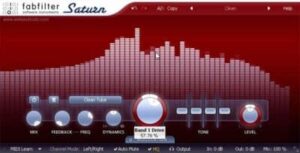 This is a multiband saturation and distortion powerhouse. With up to six bands, you can apply different types of distortion (tape, tube, transformer, fuzz, bit-crush, etc.) independently.
Rich modulation options: XLFOs, envelope followers, MIDI sources, and XY controllers for dynamic and evolving saturation. According to MusicRadar, Saturn 2 is one of the most adaptable saturation plugins available, offering tremendous control.
Why it’s a favorite: its flexibility makes it useful for everything from full mix coloration to creative sound design.
2. Sound Toys Decapitator
 A classic analog-style saturator by Soundtoys, with five models: A, E, N, T, P — each emulating different analog hardware. Includes a legendary “Punish” button that applies up to +20 dB of extra drive for aggressive distortion.
Tone and mix controls let you shape both the character and amount of saturation. Universally praised for its musical response on vocals, drums, guitars, and mix buses.
3. Variety Of Sound / Bootsy FerricTDS
 A lightweight and free saturator plugin, known for its minimal CPU load but high sonic quality. While not always included in more recent “top 10” lists, it remains a favorite for budget-conscious producers who want analog-style saturation without breaking the bank.
— See also: 6 best plug-ins for fixing phase problems (2022 update!) —
4. D16 Group Redoptor
 Emulates vintage saturation hardware, offering warm, analog coloration. Mentioned in your original list. Known for being used by EDM producers for its character and tone. D16 also makes other distortion tools (like Decimort, Devastator) that pair well with Redoptor for more experimental processing.
5. Izotope Alloy 2
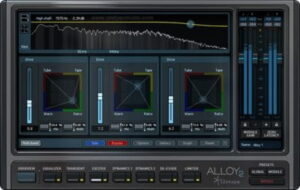 A multi-module plugin: EQ, Transient Shaper, Exciter, 2x Dynamics, De-esser, and Limiter — all integrated. While it’s not purely a saturator, its Exciter module provides excellent harmonic enhancement with precision.
Because of its modular design, you can tailor how saturation interacts with dynamics, tone, and frequency content.
6. 112dB Redline Preamp
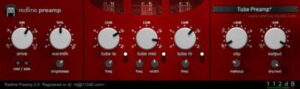 Offers ultra-transparent gain and harmonic saturation. Some engineers say they’ve never heard a more transparent saturator. Adds density and “life” to tracks, making them sound more analog and rich.
Good for adding subtle coloration without drastically changing dynamics.
— See also: The Sound Engineer Profession — What It Means Today and Where It’s Heading by 2026 —
7. ToneBoosters Ferox
A budget-friendly but powerful saturator from ToneBoosters. Comes with many built-in presets for quick coloration, enabling fast workflow.Although its development may have slowed (some users note lack of recent updates), it remains very usable and effective for warmth and saturation.
8. URS Saturation
Despite being older and less frequently updated, URS saturation plugins have a dedicated following among engineers who like a vintage character. Known for its strong harmonic color and distinct tonal flavor, especially favored by engineers who prefer “old school” analog coloring.
— See also: The best plugins for mastering music! —
9. Wave Arts Tube Saturator
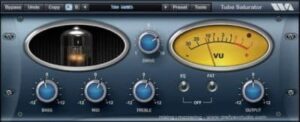 Highly praised as a precise analog emulation. Known for its very “tube-like” saturation character. However, it’s also CPU-hungry — so use it thoughtfully, especially on multiple channels.
Best used when you want detailed, sculpted saturation rather than broad, dirty distortion.

10. SPL TwinTube Processor
Two-band design: one control for saturation (“warmth/loudness”), another for harmonics (“richness”). Excellent for fine-tuning — you can dial in how much density vs. character you want separately. Used by professionals to add controlled warmth and harmonic complexity in a mix or mastering chain.
Bonus — 3 Saturators Leading in 2025
Based on the most recent trends and reviews in 2025, here are three saturation plugins that are especially hot right now:
1. FabFilter Saturn 2
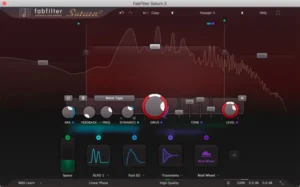
 FabFilter Saturn 2 — Its multiband architecture and modulation make it more than just a saturator — it’s a creative sound-shaping instrument.
- Waves Abbey Road Vinyl — Though not originally on your list, it’s gaining traction. This plugin emulates vinyl characteristics (harmonic saturation + crackle + rumble), giving your tracks a warm retro feel.
- Vertigo VSM-3 — A mastering-grade saturator known for its “three-diode” algorithm. Adds rich, dense harmonics while preserving transparency. Featured in advanced mastering setups.
How to Use Saturation Effectively in Your Mix / Master (U.S.-Focused Advice)
Here are some best practices for using saturation plugins in a professional, US-market–oriented workflow:
- Start Subtle: In mixing, apply only a small amount of saturation (1–2 dB of drive), then blend using the mix knob. This helps preserve the natural dynamics while still adding richness.
- Parallel Saturation: Use a parallel chain (send/aux track) for saturation so you can mix in just the “flavor” without overwhelming the dry signal.
- Multiband Saturation: Tools like Saturn 2 let you enrich specific frequency ranges — e.g., tape saturation on lows, tube on mids, crunchy distortion on highs.
- Master Bus Saturation: For the master, moderate usage of tape or tube saturation can glue your mix, make it feel more “alive,” and prep it for limiting.
- Creative Effects: Use saturation creatively on drums, synths, percussions, guitars — sometimes overdrive or distortion is not just filler, but a design tool.
- Monitor Levels: Saturation drives up gain. Use gain compensation or makeup gain to avoid clipping or muddying your mix.
Why These Plugins Matter for the U.S. Market
- Professional Sound: Producers and engineers in the U.S. often aim for polished, warm, and radio-ready mixes — saturation helps achieve that analog “glue.”
- Versatility: The listed plugins support modern music production trends—from pop and hip-hop to electronic and indie rock.
- Efficiency: Many of these saturators (particularly FabFilter Saturn 2 and Decapitator) provide deep control without requiring outboard gear, making them cost-effective for both bedroom and pro studios.
- Industry Adoption: These tools are widely recognized and used by professionals in the U.S., making them part of the standard toolkit for mixing and mastering.