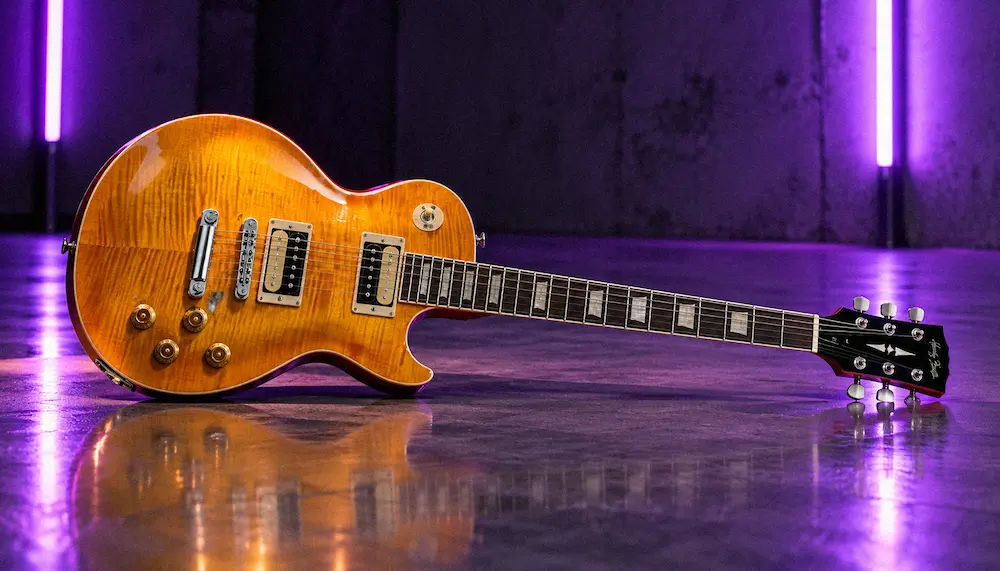
The Harley Benton SC-550 Plus Fluence PAF pairs a traditional single-cut design with Fishman Fluence Open Core Classic active humbuckers, giving players access to three distinct pickup voices. Listed at around $469 by Thomann US, it offers vintage-style humbucker tones, a hotter alternative bridge voice, and single-coil-style sounds in one instrument.
That versatility could be useful for home-studio recording, rock production, and players who need contrasting guitar tones without switching instruments. However, more pickup voices do not automatically make a guitar a better recording tool. The key questions are how useful the voicings are in a mix, how the guitar compares with the EMG-equipped SC-550 Plus, and whether its construction and hardware make it a compelling option at this price.
What Makes the Harley Benton SC-550 Plus Fluence PAF Different?
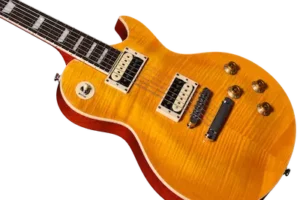 The SC-550 Plus Fluence PAF builds on Harley Benton’s existing single-cut guitar platform. Its main distinguishing feature is the factory-installed Fishman Fluence Open Core Classic pickup system, rather than a fundamentally different body design or construction approach.
The guitar features an okoume body, an AA flamed maple top, a set-in nyatoh neck, and a roasted jatoba fingerboard. Its specifications include 22 medium-jumbo stainless-steel frets, a 12-inch fingerboard radius, a 24.75-inch scale length, a graphite nut, and locking tuners. The hardware also includes a Tune-O-Matic-style bridge and a three-way pickup selector.
These features retain the familiar single-cut layout while adding hardware details that may appeal to buyers in this price range. Stainless-steel frets offer wear resistance, while locking tuners can make string changes easier. Neither feature, however, guarantees an accurate factory setup or superior long-term reliability.
The controls comprise two volume knobs, two push-pull tone controls, and a three-way pickup selector. The push-pull controls allow access to the Fluence system’s alternate pickup voices, making tonal switching a central part of this model’s design rather than relying on a conventional dual-humbucker setup alone.
Understanding the Three Fishman Fluence Pickup Voices
The Fishman Fluence Open Core Classic pickups offer three distinct tonal voices from the same pickup hardware. The documented voicings differ between the neck and bridge positions, allowing players to change the intended tonal character without swapping guitars or installing a different pickup set.
Voice 1: Vintage PAF Character
Voice 1 is designed to evoke the response of a vintage PAF-style humbucker. It provides a natural starting point for classic rock, blues, melodic lead parts, and clean-to-crunch guitar tracks.
In a recording session, this vintage-oriented voice may suit parts that need body and sustain without an overtly aggressive pickup character. The result still depends on the amplifier or amp model, cabinet simulation, playing technique, and arrangement. Guitarists using amp modelers should also account for how their monitoring system reproduces the modeled tone; the Positive Grid Spark CAB 2 review examines the role of a physical FRFR cabinet in that setup. The pickup voicing alone cannot determine how much EQ or compression a finished mix will need.
Voice 2: An Alternative Humbucker Response
Voice 2 provides an alternative humbucker character. Fishman’s documented voicings describe the neck setting as clearer and airier, while the bridge setting is hotter and more aggressive.
This distinction can help when recording rhythm and lead parts that need different tonal emphasis. One voice may suit a restrained part, while the other may provide more attack or density for a prominent guitar layer. Whether switching voices is more effective than adjusting the amplifier or using another instrument depends on the part and the surrounding arrangement.
A hotter voice is not inherently better. Higher output can drive an amplifier or modeler differently, but level differences can also make one setting seem more impressive in an uncontrolled comparison. A fair evaluation should account for perceived loudness as well as tonal balance and playing response; maintaining consistent signal levels helps make those comparisons more reliable.
Voice 3: Single-Coil-Like Character
Voice 3 is designed to deliver a single-coil-style tonal character. Fishman describes the neck voicing as a clear, vintage-style single-coil sound and the bridge voicing as a slightly overwound single-coil sound.
For home-studio recording, this voice adds another option for clean passages, brighter rhythm parts, and arrangements that benefit from a contrasting guitar texture. Its practical advantage is access to a different intended tonal character without switching instruments.
However, a single-coil-style voice should not be treated as electrically or sonically identical to a conventional single-coil pickup. Noise characteristics, transient response, frequency balance, and interaction with the rest of the signal chain can differ. Stronger claims about those differences would require controlled listening and measurement rather than relying on the voicing description alone.
Make Your Guitar Tracks Work as Part of the Mix
A guitar tone that sounds full and detailed on its own still needs to sit naturally alongside the bass, drums, and other instruments. The right mastering approach helps assess the overall balance, preserve the impact of the performance, and maintain clarity without treating every track as an isolated sound. Send us your mix for a free mastering demo — you can upload up to 40 seconds and hear how your production translates through a professional mastering process.
How Useful Are the Pickup Voices for Recording?
For a recording guitarist, the key question is whether the different pickup voices help parts fit a track more effectively. That depends not only on the isolated guitar tone but also on how it fits into the song’s overall balance, a central consideration when mixing a song.
| Recording situation | Potential advantage | Important limitation |
|---|---|---|
| Clean guitar parts | The single-coil-style voice offers an alternative tonal starting point for brighter parts. | Its noise performance and behavior compared with a conventional single-coil pickup have not been established through controlled measurements. |
| Classic rock rhythm guitars | The vintage PAF voice provides a familiar humbucker-style starting point. | The final tone depends on the amplifier, cabinet simulation, playing technique, and arrangement. |
| Higher-gain rhythm parts | The more aggressive bridge voice offers another option for distorted guitar tones. | No controlled comparison establishes whether it delivers tighter or clearer results than competing pickups. |
| Lead guitar recording | Different pickup voices allow contrasting lead tones without switching instruments. | The most suitable voice depends on the desired sustain, articulation, output level, and musical context. |
| Home-studio production | One instrument provides several intended pickup responses. | The added flexibility may offer little practical benefit to players who consistently use only one voice. |
For guitarists recording several parts in one session, this flexibility can be useful. Switching voices provides a way to explore a different pickup character without changing instruments. However, there is no verified evidence quantifying how much time this feature saves during actual recording sessions.
Pickup voicing is only one variable in the recording chain. Amplifier gain, cabinet impulse responses, microphone placement when using a physical cabinet, performance dynamics, and arrangement choices can all substantially influence the final guitar sound. The value of the three-voice system therefore depends on whether its tonal options produce useful differences in the context of a mix. This is also a question of frequency balance in the mix: a guitar tone that sounds impressive on its own may compete with other instruments once the full arrangement is playing.
What Independent Testing Reveals About the Guitar
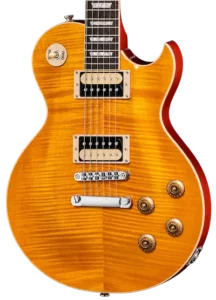 In October 2026, AMAZONA.de published a hands-on review of the Harley Benton SC-550 Plus Fluence. The instrument tested was the Faded Tobacco Flame version, which shares the core platform and pickup system with the Fluence PAF model. The review includes audio examples and practical observations from testing.
The reviewer reported a weight of approximately 3.2 kg for the test instrument and praised its finish, neck feel, and fingerboard edges. The pickup system was also found versatile across clean, funk-oriented, and higher-gain applications.
The review identified two issues with the specific instrument tested: intonation that required attention and an intermittent fault with the pickup selector. These findings are relevant to prospective buyers, but a single test instrument cannot establish that the same issues affect every SC-550 Plus Fluence.
The practical takeaway is to inspect and test the individual guitar rather than relying on the specification sheet alone. Intonation, tuning stability, fretwork, and reliable pickup switching all affect everyday usability, regardless of how many tonal options the electronics provide.
The published audio examples offer a useful reference for the guitar’s tonal range, but they do not demonstrate that the Fluence system outperforms EMG pickups or other alternatives. No controlled, level-matched comparison has been established here, so broader claims about comparative performance would be premature.
Harley Benton SC-550 Plus Fluence PAF vs. EMG PAF
The SC-550 Plus EMG PAF is the most relevant alternative because it belongs to the same general guitar family but uses a different active pickup system. For buyers choosing between the two, the key question is whether the Fluence system’s selectable voices offer practical tonal options that justify choosing this version.
| Consideration | SC-550 Plus Fluence PAF | SC-550 Plus EMG PAF |
|---|---|---|
| Pickup system | Fishman Fluence Open Core Classic | EMG active pickups |
| Voice selection | Three documented pickup voices | Depends on the installed EMG models and their switching options |
| Recording flexibility | Provides several tonal starting points through the installed pickup system | Depends on the specific EMG configuration and the player’s preferred sound |
| Best reason to choose it | The player wants the documented Fluence voices and expects to use them regularly | The player prefers the EMG configuration or already knows it suits their playing and recording workflow |
The available evidence does not establish an overall winner. A meaningful sonic comparison would require recording both guitars through the same signal chain, using identical playing passages and carefully matched playback levels.
The comparison should also distinguish pickup output from perceived loudness. If one voice produces a louder recording, that alone does not demonstrate better articulation, a more useful frequency balance, or superior performance in a mix.
The Faded Tobacco Flame version with Fluence pickups is another option for buyers comparing finishes. However, a finish difference alone does not justify a separate technical assessment unless it is accompanied by relevant differences in construction or hardware.
Construction, Hardware, and Ownership Considerations
The SC-550 Plus Fluence PAF includes several features that may appeal to buyers in its price range, including stainless-steel frets, locking tuners, and a graphite nut. These specifications contribute to the instrument’s overall appeal, but their practical value depends on execution and setup.
Specifications alone do not establish long-term durability or tuning performance. Stainless-steel frets are wear-resistant, but they do not guarantee precise fretwork. Locking tuners simplify string changes and secure the strings at the posts, but they cannot eliminate every source of tuning instability. Nut friction, string installation, bridge setup, temperature changes, and playing technique can all affect tuning behavior.
The intonation issue reported in the independent review highlights why setup quality matters alongside the listed features. Buyers who cannot inspect the guitar before purchase should check the retailer’s return policy and factor in the possibility of a professional setup.
The Fluence pickup system also requires a power source. The Fluence pickup system also requires a power source. Fishman specifies operation from a 9V battery or an optional rechargeable battery pack, with a rated battery life of up to 114 hours for a pickup set. Confirm the battery configuration supplied with this particular guitar before assuming that a rechargeable pack is included.
A case or gig bag is not listed in the retail configuration reviewed. Buyers should account for protective storage and any applicable shipping or import charges when calculating the total cost of ownership.
Price and Value for Money
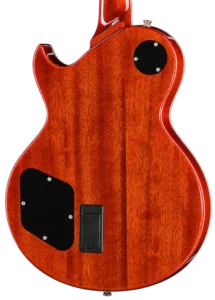 At the time of this check, Thomann US lists the SC-550 Plus Fluence PAF at $466, while the separate SC-550 Plus Fluence FTF variation is listed at $469. Retail prices can change, so check the current listing before purchasing. Shipping costs and any applicable import charges may also affect the final price.
At around $470, the combination of Fishman Fluence Open Core Classic pickups with three selectable voices, stainless-steel frets, locking tuners, and a set-in neck makes the guitar worth considering for players who will put those features to practical use.
The value proposition is less compelling for players who need only one conventional humbucker sound or already own a guitar that covers the same role. Additional pickup voices offer limited practical value if they rarely influence recording or performance decisions.
It is also difficult to determine whether buying this guitar costs less than upgrading an existing instrument. A meaningful comparison would need to account for compatible pickups, installation, any required electronics modifications, and the value of the guitar being upgraded. No verified cost comparison covering all these factors is available.
For buyers seeking a versatile single-cut guitar in the sub-$500 price range, the SC-550 Plus Fluence PAF is worth considering. The decision should ultimately depend on playability, setup quality, the usefulness of the pickup voices, and the total purchase cost—not the pickup brand alone.
Who Should Buy the SC-550 Plus Fluence PAF?
The SC-550 Plus Fluence PAF makes the most sense for players who record regularly and want several pickup voicings from a single instrument. Its three-voice system may appeal to home-studio musicians, rock guitarists, and players who need contrasting clean, vintage-style, and higher-gain tones.
It is also worth considering for buyers who value stainless-steel frets and locking tuners at this price. These features can be practical for regular use, but their benefits should be weighed alongside the individual instrument’s setup and overall build quality.
The guitar is a less obvious choice for players who already own a suitable instrument, prefer passive pickups, or need a specific tonal response that the documented Fluence voices do not provide. For existing SC-550 Plus owners, the Fluence version is not automatically an upgrade; its value depends on whether the additional voicings address a genuine playing or recording need.
Recording studios may find it useful as an additional tonal option, but the available evidence does not establish it as an essential or preferred studio instrument. Its suitability depends on the session’s musical requirements and whether its pickup voices offer useful alternatives to the guitars already available.
Hear What Professional Mastering Can Bring to Your Guitar Mix
Different pickup voices can give a guitar track more tonal options, but they cannot guarantee that the finished mix will have the right balance, depth, punch, or clarity. If your guitars sound convincing in isolation but compete with the bass, drums, or other layers in the full arrangement, adding more processing may not be the answer. The next step is to hear how your actual mix translates through professional mastering. Upload up to 40 seconds and receive a free mastering demo prepared by a real mastering engineer. Compare the original with the mastered version and evaluate the changes in context before deciding how to proceed.
Frequently Asked Questions
Is the Harley Benton SC-550 Plus Fluence PAF worth buying?
It is worth considering if you want a single-cut guitar with three pickup voices and expect to use them regularly. It is a less compelling choice if you need only one conventional humbucker sound or already own a guitar that meets your needs.
What makes the Fluence PAF version different from the EMG PAF version?
The main difference is the pickup system. The Fluence model uses Fishman Fluence Open Core Classic pickups with three documented voices. A controlled comparison would be needed to establish how the two systems differ in recorded sound and practical performance.
Can the three pickup voices replace having several guitars?
They provide several tonal starting points from one instrument, but they do not make different guitars interchangeable in every situation. Construction, pickup placement, scale length, setup, and playing response can all influence the result.
Is the single-coil-style voice identical to a conventional single-coil pickup?
That equivalence has not been established. Fishman describes the voice as single-coil-style, but this does not demonstrate identical noise characteristics, frequency response, or dynamic behavior under all operating conditions.
Does the guitar require a battery?
The active pickup system requires a power source. Fishman documents 9V battery operation and compatibility with an optional rechargeable battery pack. Check the guitar’s supplied configuration to confirm which power options are included.
Is the guitar suitable for home-studio recording?
Its multiple pickup voices make it a plausible option for home-studio musicians who record contrasting guitar parts. Its practical value depends on whether those voices provide useful alternatives in the player’s recording chain and mix.
Were quality-control problems found in independent testing?
The AMAZONA.de reviewer reported intonation and pickup-selector issues with one tested instrument. These findings make it sensible to check the setup and switching operation of an individual guitar, but they do not establish that the same faults affect every unit.
Does the guitar come with a case?
The reviewed Thomann US listing did not show a case or gig bag as included. Check the current product listing to confirm the accessories supplied with the guitar.
Final Verdict: A Flexible Budget Guitar, Not an Automatic Upgrade
The Harley Benton SC-550 Plus Fluence PAF combines a familiar single-cut design with a three-voice active pickup system and a feature set that makes it worth considering in its price range. Its main appeal is tonal flexibility for players who want different pickup characters without switching instruments.
The main limitation is the distinction between documented functionality and independently established performance. The available hands-on review supports the guitar’s tonal versatility while also reporting setup and switching issues on the tested instrument. It does not establish that the Fluence version outperforms the EMG-equipped model or demonstrate long-term reliability across the product line.
For home-studio guitarists and other players who will regularly use the different voices, the SC-550 Plus Fluence PAF is a reasonable candidate for a shortlist. For owners of guitars that already deliver the sounds they need, the additional switching options alone may not justify an upgrade.
The final decision should depend on how useful the pickup voices are in practice, the condition and setup of the individual instrument, and the total purchase cost. These factors matter more than the number of features on the specification sheet.

Evaluating an electric guitar for recording involves more than assessing its pickup specifications or isolated tone. Pickup voicing, output level, transient response, and frequency balance all affect how a guitar part interacts with the amplifier and the rest of the arrangement. Distinguishing documented features from verified performance is especially important when comparing active pickup systems and judging whether additional tonal options provide a meaningful advantage in a recorded mix.
Enjoyed this review?
If you found it useful, you can support independent audio research with a coffee. ☕
Buy me a coffee