Three-Body Technology Launches Transi-Q EQ Plugin for Transient-Focused Mixing
Three-Body Technology has announced the release of Transi-Q, a new equalizer plugin designed around a concept that continues to attract attention among mixing engineers: shaping tone without compromising transient impact. While the modern EQ market is dominated by highly flexible digital tools packed with dynamic processing, spectrum analysis, and surgical editing capabilities, Transi-Q takes a different approach by focusing on the relationship between equalization and perceived punch.
The release arrives during a period when many producers and engineers are reevaluating the role of analog-inspired processing in contemporary workflows. As loudness targets remain aggressive across many genres and production chains become increasingly complex, preserving transient information has become a growing concern throughout mixing and mastering stages.
Rather than competing directly with feature-heavy digital equalizers, Three-Body Technology appears to be targeting users who value workflow speed, musical shaping, and the subjective qualities often associated with classic hardware-inspired designs. Whether Transi-Q ultimately earns a place in professional sessions will depend on independent testing, but its release highlights an ongoing trend within the plugin industry: a renewed interest in processors that prioritize feel and musical response over sheer functionality.
What Was Announced
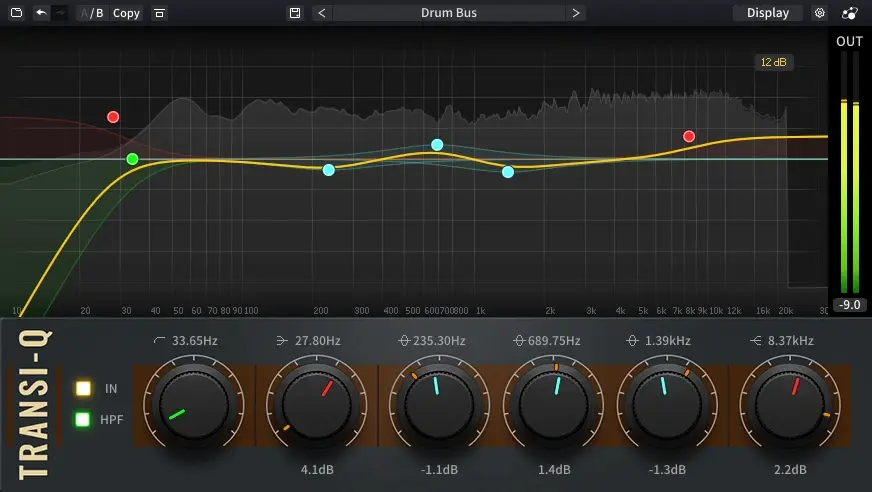
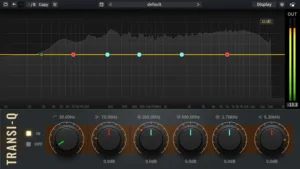
According to the company, Transi-Q is an analog-inspired equalizer plugin built around a streamlined architecture that includes one high-pass filter, one low-shelf filter, one high-shelf filter, and three proportional-Q bell bands. The proportional-Q design causes bandwidth to become narrower as gain is increased, allowing broader tonal adjustments at lower settings and more focused corrections when larger boosts or cuts are applied.
Three-Body Technology positions the plugin as particularly effective on drums, percussion, and other transient-rich material where attack characteristics contribute significantly to the overall perception of energy and clarity.
Unlike many modern equalizers that emphasize extensive visual feedback and unlimited flexibility, Transi-Q follows a more traditional hardware-inspired philosophy. The design appears intended to encourage fast tonal decisions while minimizing the complexity that often accompanies advanced digital EQ environments.
The plugin is available immediately for Windows and macOS systems in VST, VST3, AU, and AAX formats. An introductory promotion reduces the price from $49 to $29 through August 27, 2026.
Why It Matters
At first glance, another equalizer release may not seem particularly significant. The audio software market already contains dozens of highly respected EQ plugins, ranging from transparent digital processors to detailed recreations of classic analog hardware.
However, Transi-Q enters the market at a time when engineers are increasingly focused on how processing affects transient information. In modern production environments, attack characteristics often carry as much importance as tonal balance itself. The perceived punch of a kick drum, the crack of a snare, the articulation of a bass guitar, or the presence of a vocal can all be influenced by the way equalization interacts with transient content.
Many engineers have experienced situations where an EQ move improves frequency balance but simultaneously reduces impact or alters the sense of immediacy within a performance. While these changes may be subtle from a measurement perspective, they can become highly noticeable in dense commercial productions.
As a result, plugin developers have increasingly shifted their marketing toward preserving punch, maintaining clarity, and protecting dynamic character rather than simply advertising transparent frequency manipulation.
Transi-Q represents another example of this broader movement within audio production software development.
Editorial Analysis
The most interesting aspect of the Transi-Q release is not its feature list. In fact, compared to many flagship equalizers released over the last several years, the plugin appears deliberately restrained.
There are no dynamic EQ sections, no integrated spectrum analyzers, no AI-assisted processing tools, and no claims of replacing multiple processors within a single interface. Instead, Three-Body Technology is focusing attention on the subjective relationship between equalization and transient response.
That positioning reflects an important reality of professional audio production. Once engineers reach a certain level of technical proficiency, workflow and sonic behavior often become more important than feature count. Many experienced mixers routinely choose specific equalizers not because they offer the most control, but because they consistently deliver results that fit a particular source or genre.
The concept of a transient-friendly EQ is also not entirely new. Several respected analog equalizers and analog-inspired processors have earned reputations for maintaining punch while applying significant tonal shaping. Similar discussions recently emerged around Softube Bus Processor 670, where workflow advantages were tied less to technical specifications and more to how the processor preserved musical movement and perceived energy under gain reduction. What remains unclear is whether Transi-Q offers a genuinely distinct implementation or simply presents familiar design principles through modern software architecture.
The company’s emphasis on percussion and transient-heavy material will likely attract attention from engineers working in modern pop, hip-hop, EDM, rock, and cinematic production environments. These genres frequently depend on maintaining attack definition even after multiple stages of compression, clipping, saturation, and limiting.
However, some of the marketing claims surrounding transient preservation should be evaluated carefully. Transient perception is influenced by numerous variables, including filter topology, phase response, gain structure, monitoring conditions, source material, and listener expectations. Two equalizers can display nearly identical frequency curves while producing noticeably different subjective impressions.
For that reason, independent comparisons against established options will likely determine whether Transi-Q becomes a long-term workflow tool or simply another short-term release within a crowded category.
Industry Context
The launch of Transi-Q arrives during a period of significant competition within the equalizer market.
Over the past several years, software developers have increasingly moved beyond traditional analog emulations and transparent digital designs. Products such as FabFilter Pro-Q, Kirchhoff EQ, SSL Native X-EQ, Weiss EQ MP, and numerous channel-strip ecosystems have expanded user expectations regarding flexibility and precision.
Transi-Q enters a category currently occupied by products such as FabFilter Pro-Q, Kirchhoff EQ, SSL Native X-EQ, and several hardware-inspired equalizers that prioritize musical tone shaping over surgical correction. The challenge for any newcomer is demonstrating a workflow or sonic advantage that engineers cannot easily replicate using tools they already own.
At the same time, many engineers have begun questioning whether unlimited control always leads to better results. The growing popularity of simplified processors, character-driven equalizers, and workflow-focused plugins suggests that portions of the market are becoming less interested in technical complexity and more interested in achieving results quickly.
Transi-Q appears positioned within this segment of the industry. Rather than attempting to compete directly against comprehensive digital equalizers, it targets engineers looking for a more focused tool with a defined sonic identity.
The release also reflects a broader trend toward analog-inspired decision-making in software environments. While modern production workflows continue to benefit from precision editing and advanced visual feedback, many mixers still gravitate toward processors that encourage listening rather than watching.
As AI-assisted production tools become increasingly common throughout the audio industry, products that emphasize tactile workflow and subjective musical response may continue finding a receptive audience among experienced engineers.
Practical Production Perspective
From a practical workflow standpoint, Transi-Q appears most relevant during mixing rather than mastering applications.
Its architecture suggests a processor designed for tonal shaping decisions on individual tracks, buses, and subgroup processing rather than highly surgical corrections. Engineers working with drum buses, percussion groups, guitars, bass instruments, or aggressive vocal productions may find the workflow particularly appealing if the plugin performs as advertised.
The plugin could also prove useful on atmospheric and cinematic material where transient detail contributes to depth perception and realism. This has become increasingly relevant as modern productions combine synthetic elements with organic textures, a trend recently highlighted in our analysis of Evolve Nest Acoustics, where preserving natural articulation played an important role in maintaining believable spatial environments.
The proportional-Q implementation could allow users to make substantial tonal adjustments without introducing the overly narrow or clinical behavior sometimes associated with certain digital equalizers. This characteristic has historically been one reason why many analog-inspired EQ designs remain popular despite offering fewer controls.
For mastering engineers, the potential value may depend heavily on source material. Projects requiring broad tonal contouring rather than surgical correction could benefit from a processor designed around preserving perceived punch. However, mastering applications will likely require careful evaluation against existing workflow standards before widespread adoption occurs.
CPU efficiency and latency performance may also influence adoption rates. Although the company has not positioned Transi-Q as a low-resource processor, streamlined architectures often appeal to engineers managing large sessions with extensive plugin counts.
Ultimately, real-world usage will determine whether the plugin’s transient-focused philosophy translates into measurable workflow advantages or remains primarily a marketing distinction.
Availability And Pricing
Transi-Q is available immediately from Three-Body Technology and authorized retailers for both Windows and macOS systems.
The plugin supports VST, VST3, AU, and AAX formats, making it compatible with most major DAWs used across professional and project studio environments. This includes Pro Tools, Logic Pro, Cubase, Studio One, Ableton Live, Reaper, FL Studio, and other mainstream production platforms.
At launch, Three-Body Technology is offering Transi-Q at an introductory price of $29 USD. The promotion is scheduled to run through August 27, 2026, after which the plugin will return to its regular retail price of $49 USD.
The pricing places Transi-Q in an increasingly competitive segment of the plugin market. Engineers considering the purchase are not only comparing it against other dedicated equalizers, but also against broader plugin bundles and subscription ecosystems that often include multiple EQ options at similar effective costs.
For that reason, long-term adoption will likely depend less on pricing and more on whether users hear a meaningful difference when applying the plugin to real production scenarios.
Conclusion
The release of Transi-Q is unlikely to redefine the equalizer category overnight, but it does highlight an area of ongoing interest within professional audio production. As engineers continue searching for tools that balance tonal control with musical impact, products focused on transient preservation remain relevant despite the maturity of the EQ market.
What makes this launch noteworthy is not the number of features being introduced, but the specific problem the plugin claims to address. In an industry increasingly filled with multifunction processors and AI-assisted workflows, Transi-Q takes a more focused approach by concentrating on how equalization affects punch, attack, and perceived energy.
For mixing engineers working with drums, percussion, guitars, bass, and other transient-heavy sources, the plugin may be worth monitoring as independent evaluations become available. Whether it ultimately establishes a unique position among established competitors will depend on how its sonic behavior translates into real-world sessions.
At this stage, the release appears more significant as an indicator of current market direction than as a major technological breakthrough. Engineers interested in analog-inspired workflow design and transient-conscious processing will likely want to follow early user feedback before drawing definitive conclusions.
FAQ
When was Transi-Q released?
Transi-Q was announced and released in 2026 as the latest equalizer plugin from Three-Body Technology.
What is Transi-Q designed for?
The plugin is designed for tonal shaping while preserving transient detail, making it particularly relevant for drums, percussion, bass, guitars, and other attack-heavy sources.
Is Transi-Q available for Mac and Windows?
Yes. The plugin supports both Windows and macOS operating systems.
Which plugin formats does Transi-Q support?
Transi-Q is available in VST, VST3, AU, and AAX formats for compatibility with most major DAWs.
How much does Transi-Q cost?
The introductory launch price is $29 USD. After August 27, 2026, the regular price is scheduled to increase to $49 USD.
Can Transi-Q be used for mastering?
Yes, although its design appears primarily targeted toward mixing applications. Mastering engineers may find it useful for broad tonal shaping where preserving perceived punch is important.
What are the main alternatives to Transi-Q?
Potential alternatives include FabFilter Pro-Q, Kirchhoff EQ, SSL Native X-EQ, Weiss EQ MP, and various analog-inspired equalizer plugins designed for musical tonal shaping.
Does Transi-Q use a proportional-Q design?
Yes. Its bell filters become progressively narrower as gain increases, allowing broader adjustments at lower settings and more focused shaping when larger boosts or cuts are applied.
Is Transi-Q intended to replace a surgical digital EQ?
Not necessarily. Based on its design philosophy, it appears aimed at musical shaping and workflow efficiency rather than ultra-precise corrective equalization.
Should engineers wait for independent reviews?
For professionals considering integration into critical workflows, independent listening tests and user feedback will provide a clearer picture of how the plugin performs outside of manufacturer demonstrations.