D16 PunchBox 2 Review: Is It Still One of the Best Kick Drum Designer Plugins for Modern EDM Production?
Building a kick that sounds huge in solo is easy. Building one that holds together inside a dense mix, translates from club PAs to earbuds, and still leaves enough headroom for competitive mastering is where production becomes engineering rather than sound design. That’s exactly why dedicated kick design plugins continue to earn a place in professional electronic music workflows, despite an endless supply of commercial sample packs and modern drum synthesizers.
PunchBox 2 doesn’t attempt to redefine kick synthesis. Instead, D16 Group has refined a workflow that many producers already rely on, introducing a new wavetable engine, deeper envelope editing, an updated processing architecture, and a cleaner interface. Those additions only matter if they solve real production problems: creating kicks that require less corrective processing, sit more naturally alongside bass instruments, and remain predictable throughout mixing and mastering.
That’s the perspective of this review. Rather than comparing feature counts or repeating the product specification, we’ll examine how PunchBox 2 performs in actual production environments—how efficiently it fits into modern workflows, how much control it offers over low-frequency behavior, and whether its design decisions translate into cleaner mixes and more reliable masters.
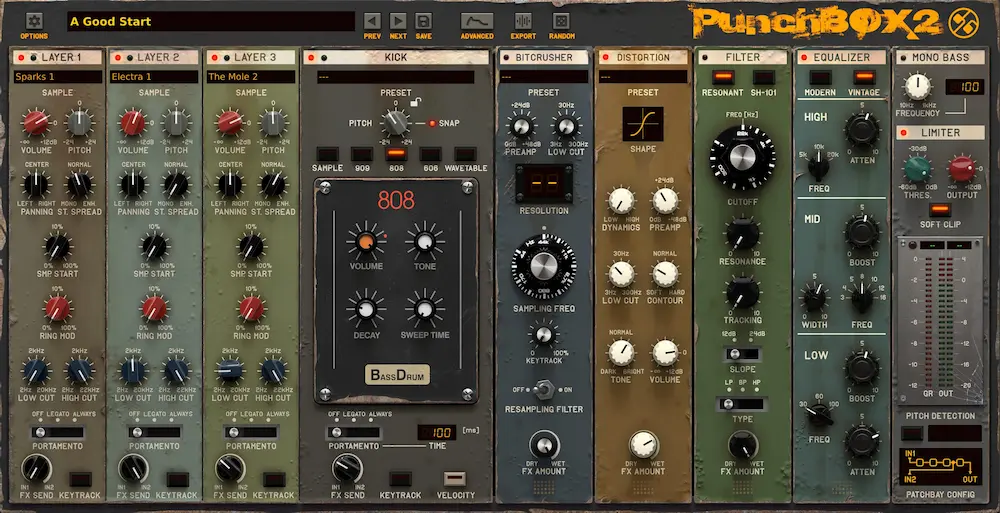
PunchBox 2 is D16 Group’s second-generation dedicated kick drum designer built for electronic music production. Unlike traditional drum samplers, it combines sample layering, dedicated drum synthesis, wavetable oscillators, transient shaping, distortion, EQ, dynamics processing and modulation inside a single production environment.
Version 2 introduces a completely redesigned synthesis engine, expanded envelope editing, improved routing, a modern browser, and a significantly larger factory library. The goal isn’t simply to create louder kicks—but to reduce corrective processing later during mixing and improve low-frequency consistency across modern playback systems.
Quick Verdict
| Pros | ✓ Excellent integrated kick design workflow ✓ Precise low-end and transient control ✓ Strong wavetable implementation for modern EDM production ✓ Efficient layer management with fewer corrective plugins |
| Cons | ✕ Designed almost exclusively for kick synthesis ✕ Less flexible than modular synthesizers for experimental sound design |
| Best For | EDM, Techno, House, Trance, Hardstyle, Drum & Bass, Trap and electronic music producers who regularly build custom kick drums. |
PunchBox 2 refines an already mature workflow rather than reinventing kick synthesis. Its biggest strengths are efficient sound design, consistent low-end control, and producing kick drums that require less corrective processing during mixing and mastering.
Why Dedicated Kick Design Plugins Still Matter in 2026
 Electronic production has become increasingly sample-driven. Subscription libraries offer thousands of polished kick drums, AI-assisted generators can produce usable starting points within seconds, and modern synthesizers are fully capable of creating convincing percussion from scratch. On paper, that should make dedicated kick design plugins obsolete.
In practice, the opposite has happened.
The challenge isn’t finding a kick that sounds good in isolation—it’s finding one that actually works inside a mix. The kick largely dictates how the entire low end behaves, influencing bass arrangement, sidechain settings, bus compression, limiter response, and the amount of headroom available during mastering. A small adjustment to the transient envelope or harmonic content can change how aggressively the mix bus reacts long before mastering becomes part of the equation.
That’s where static samples begin to show their limitations. A kick that sounds impressive on its own often requires extensive corrective processing once the arrangement fills out. Producers end up replacing layers, reshaping transients, adjusting phase relationships, automating EQ, or stacking saturation simply to make the low end behave consistently. Each additional processor solves one problem while increasing overall session complexity.
A dedicated kick designer approaches the workflow from the opposite direction. Instead of repairing an existing sample, it allows the producer to build a kick around the needs of the production itself—controlling the transient, body, harmonic structure, and decay before those decisions ripple through the rest of the mix.
That approach becomes particularly valuable in genres where the kick functions as the rhythmic and spectral anchor of the production. Techno, house, trance, hardstyle, drum & bass, modern trap, and festival-oriented EDM all place enormous demands on low-frequency consistency, making source design just as important as the processing that follows.
Ultimately, dedicated kick synthesis isn’t about replacing mixing. It’s about moving critical low-end decisions earlier in the production process, where they’re faster to refine, easier to audition, and less likely to require corrective work later.
Where PunchBox 2 Fits in Today’s Audio Production Workflow
PunchBox has never tried to compete with full-featured synthesizers or drum workstations. Its purpose is much narrower: build a production-ready kick by combining synthesis, sampling, transient shaping, saturation, EQ, and dynamics inside a single workflow. That focus remains one of its biggest strengths.
Unlike instruments such as Serum, Phase Plant, Falcon, or even drum-centric tools like Battery, PunchBox isn’t designed for unlimited sound design. Those platforms offer tremendous flexibility but often require producers to assemble complex processing chains before a kick is ready for a mix. PunchBox takes the opposite approach, integrating the most common stages of kick production into one environment where changes remain fast, repeatable, and easy to audition.
That workflow makes particular sense in commercial production. When sessions move through multiple revisions, rebuilding layered kicks across several plugin chains quickly becomes inefficient. Keeping synthesis, processing, and level management inside one instrument simplifies revisions, improves gain consistency, and reduces unnecessary project complexity.
The biggest workflow improvements in PunchBox 2 come from two areas: the new wavetable engine and the redesigned multi-stage envelope editor.
Adding wavetable synthesis isn’t simply about expanding the oscillator section. It gives producers finer control over harmonic development before distortion, clipping, or bus processing enter the picture. Instead of relying on aggressive saturation to make a kick audible on smaller playback systems, harmonic content can be shaped much earlier in the signal path, resulting in cleaner low-end behavior and more predictable processing later in the mix.
The updated envelope editor is arguably the more significant improvement. In professional electronic productions, the character of a kick is often defined within the first 50–100 milliseconds. Small adjustments to pitch decay, transient timing, or amplitude curves can determine whether a kick punches through dense synth arrangements or competes with the bass for the same space.
That level of control matters because successful kick design isn’t about creating the most aggressive sound in solo. It’s about creating a source that requires fewer corrective decisions once the full arrangement comes together. PunchBox 2 moves more of those decisions into the sound design stage, where they’re faster to make and easier to evaluate before mixing begins.
What’s New in PunchBox 2?
While PunchBox 2 follows the same production philosophy as the original version, several workflow improvements make day-to-day kick design considerably faster and more flexible for modern electronic music production.
These updates don’t fundamentally change what PunchBox is designed to do, but they remove several workflow bottlenecks found in the original version. Rather than adding complexity, D16 has focused on improving speed, precision, and day-to-day usability—areas that matter far more during real production than simply increasing the number of available features.
| New Feature | Practical Benefit |
|---|---|
| Wavetable Engine | Greater harmonic control before saturation and clipping |
| Advanced Envelope Editor | More precise transient and pitch shaping |
| Updated Browser | Faster preset navigation and workflow |
| Refined Processing Engine | Cleaner low-end behavior and improved responsiveness |
| New Factory Content | Broader collection of production-ready starting points |
The New Wavetable Engine Is More Than Just Another Oscillator
Adding a wavetable oscillator to a kick designer might sound like an expected feature update in 2026, but its value has very little to do with following industry trends. What matters is how it changes the way harmonic content is built before the signal reaches the processing stage.
In kick synthesis, the oscillator isn’t there to create melodic movement. Its primary role is defining the spectral shape of the transient and body before EQ, saturation, compression, or clipping are applied. Those initial harmonic relationships have a direct impact on how the kick translates across different playback systems and how predictably it behaves once mix bus processing begins.
A traditional sine-based approach produces an exceptionally clean sub foundation, but that purity often comes at a cost. Once the mix becomes dense, producers frequently rely on distortion or saturation to introduce upper harmonics that help the kick remain audible on earbuds, laptops, and smaller Bluetooth speakers. While effective, that workflow can also introduce unnecessary phase interactions and low-end instability.
Wavetable synthesis moves part of that process upstream. Instead of generating harmonics almost entirely through distortion, producers can shape the source itself before it reaches the processing chain. That typically results in more controlled harmonic content, making subsequent EQ, saturation, and dynamics processing easier to dial in.
For modern EDM, techno, hard dance, and bass music, that isn’t a trivial improvement. It can reduce the need to stack multiple saturation plugins simply to make the kick cut through a busy arrangement, preserving both headroom and transient definition.
There’s also a mastering advantage. Low-frequency material built around controlled harmonic content generally responds more consistently to clipping and limiting than heavily distorted source material. While PunchBox 2 won’t solve every low-end problem on its own, starting with a cleaner, more predictable signal leaves considerably more room for confident mixing and transparent mastering decisions later in the production process.
Advanced Envelope Editing Matters More Than It First Appears
The redesigned multi-stage envelope editor may be the most practical upgrade in PunchBox 2. While the new wavetable engine attracts more attention, envelope control has a far greater influence on how a kick behaves once it leaves solo mode and enters a full production.
Professional producers rarely judge a kick by its preset alone. Presets are starting points. Once the arrangement takes shape, transient timing, pitch decay, sustain, and amplitude curves almost always need adjustment to fit the groove, bass line, and overall energy of the track.
Those adjustments are often subtle, but they directly affect how the kick occupies space in the mix. A festival EDM drop may call for a sharper attack and shorter decay to maximize punch, while melodic house or progressive productions often benefit from a smoother transient profile that leaves more room for sustained bass content. Changing the envelope is usually a more effective solution than replacing the entire kick.
That level of control also becomes increasingly important when combining synthesized layers with one-shots or acoustic samples. Even slight differences in transient timing can soften the initial attack, introduce phase inconsistencies, or create unnecessary masking in the low end. Fine envelope adjustments make those layers behave as a single instrument instead of several competing sound sources.
From a workflow perspective, precise envelope editing reduces the amount of corrective work later in the session. Instead of relying on transient shapers, automation, or repeated sample replacement, producers can refine the source directly inside the instrument. That approach keeps projects cleaner, speeds up revisions, and makes low-end decisions easier to carry through mixing and mastering without introducing unnecessary processing.
Core Analysis: Building Better Kick Drums Instead of Fixing Them Later
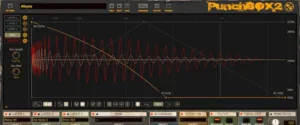 PunchBox 2 is built around a simple production principle: solve low-end problems at the source instead of compensating for them during mixing. That approach becomes increasingly valuable in modern electronic productions, where complex processing chains often exist simply to repair kick samples that never suited the arrangement in the first place.
Corrective tools certainly have their place. EQ can remove unwanted resonance, transient designers can restore attack, and saturation can improve audibility on smaller playback systems. But once those processors become permanent fixtures on every project, they’re often compensating for decisions that could have been made much earlier in the production process.
A well-designed kick naturally reduces that workload. When the transient envelope, harmonic balance, and decay are already working together, the rest of the low end becomes easier to organize. Bass instruments require less aggressive sidechain compression, dynamic EQ reacts more predictably, and mix bus processing can operate with fewer unintended consequences.
That’s where PunchBox 2’s layered architecture proves useful. Instead of treating the kick as a single audio file, each component can be developed with a specific role in mind before being combined into one cohesive source.
The transient layer can provide attack without introducing excessive upper-midrange energy. The synthesized body establishes weight and sustain, while harmonic content can be shaped independently to improve translation on smaller speakers without overwhelming the sub range. Building the kick this way gives producers far more control than stacking unrelated one-shots and trying to resolve phase or masking issues later.
That workflow extends beyond sound design. A kick that is already balanced at the source typically requires fewer corrective plugins, fewer automation passes, and fewer revisions as the arrangement evolves. The result isn’t just a cleaner low end—it’s a cleaner production process from the first draft through the final master.
Why Layer Management Still Separates Professional Kicks From Amateur Ones
Layering remains one of the most overused—and most frequently misunderstood—techniques in electronic music production. Adding more layers rarely produces a better kick. More often, it introduces phase conflicts, blurred transients, frequency masking, and unpredictable low-end behavior that only becomes apparent once the full arrangement is playing.
Professional kick design is usually an exercise in restraint. The goal isn’t to stack as many sounds as possible but to assign a clear purpose to every layer. If two layers compete for the same frequency range or transient window, one of them is probably unnecessary.
A well-balanced kick typically divides responsibilities. The transient delivers initial impact, the synthesized body provides weight and sustain, while controlled harmonic content improves audibility on smaller playback systems without overwhelming the sub range. Additional texture should support those elements—not compete with them.
PunchBox 2 makes that workflow easier by keeping each component independently editable throughout the design process. Instead of replacing an entire kick because the attack lacks definition or the sustain feels too long, producers can adjust individual layers while preserving the overall balance of the sound.
That level of control becomes especially valuable during mix revisions. Small changes to transient timing, harmonic content, or decay can often resolve conflicts with bass instruments without forcing producers to rebuild the kick from scratch. It also reduces the risk of introducing new phase issues that commonly appear when unrelated samples are repeatedly swapped in and out of a project.
Ultimately, effective layer management isn’t about creating bigger kick drums. It’s about creating predictable ones—sounds that retain their punch, maintain phase integrity, and continue translating reliably from the production stage through mixing, mastering, and final distribution.
Mixing Considerations: A Better Kick Doesn’t Guarantee a Better Mix
A well-designed kick is only one part of a successful low end. Once the full arrangement comes together, every decision made during sound design is tested against bass instruments, synth layers, effects returns, bus compression, and the overall spectral balance of the mix. A kick that sounds finished in isolation can become the primary source of low-frequency problems once those elements begin competing for space.
That’s where sound design transitions into mixing. The relationship between the kick and the bass determines far more than groove—it influences sidechain behavior, low-frequency masking, headroom, and ultimately how aggressively the mix bus and mastering limiter respond. Small changes to the kick’s envelope or harmonic content can alter that relationship more effectively than adding another corrective processor later in the chain.
For example, a kick with excessive energy around the upper bass region may sound powerful on its own but begin masking bass notes once the arrangement fills out. Likewise, an overly bright transient can compete with vocals, percussion, or lead synths, creating the impression of punch while actually reducing mix clarity.
PunchBox 2 provides enough control to address many of those issues during sound design, but it doesn’t eliminate the need to evaluate the kick in context. Professional engineers rarely judge low-end decisions in solo. Instead, they assess how the kick behaves inside the arrangement, how consistently it interacts with the bass, and whether those relationships remain stable after bus processing and mastering dynamics are introduced.
That final point is often overlooked. A kick that appears perfectly balanced before mix bus compression may trigger noticeably different limiter behavior once the track is pushed to commercial loudness. Building a cleaner source from the outset doesn’t remove the need for careful mixing, but it substantially reduces the number of compromises required later in the production process. For a closer look at how those decisions carry through the final stage of production, see our guide on how professional mastering works.
Preparing Low-End for Mastering Starts Earlier Than Most Producers Think
Mastering engineers regularly receive mixes where the kick sounds impressive on its own but becomes the biggest obstacle once overall level begins to increase. In most cases, the problem isn’t insufficient volume—it’s how low-frequency energy is distributed over time and across the spectrum.
An overly long sub tail, uncontrolled harmonic buildup below the low-midrange, or inconsistent transient behavior forces compressors and limiters to react more aggressively than intended. Instead of adding density and level transparently, dynamics processors begin reshaping the groove, softening transients, and reducing the sense of impact that the mix originally had.
Those issues rarely have a perfect solution at the mastering stage. Because mastering works with a finished stereo mix, correcting excessive low-end energy almost always involves compromise. Tightening the kick may also affect the bass, reducing harmonic buildup can change tonal balance, and additional dynamics processing may alter the feel of the entire production.
That’s why disciplined kick design pays dividends long before mastering begins. Stable fundamentals, controlled decay, and predictable harmonic content allow compressors, clippers, and limiters to respond more consistently, making it easier to increase perceived loudness without sacrificing transient definition or low-end stability.
The same principle applies during mastering. When low-frequency information is phase-coherent and dynamically consistent, compressors, clippers, and limiters respond more transparently. If you’re interested in how these processors interact throughout a professional mastering workflow, our Mastering Chain Explained article explores that process in greater detail. That philosophy closely mirrors the principles discussed in our guide to preparing a mix for mastering, where solving problems before the final stage consistently produces better results than trying to repair them afterward.
Critical Evaluation: Where PunchBox 2 Doesn’t Change the Game
PunchBox 2 is a better version of an already capable kick designer, but it doesn’t fundamentally redefine the category. Most of its improvements streamline existing workflows rather than introducing entirely new production possibilities, and that’s an important distinction for anyone considering an upgrade.
The plugin remains intentionally specialized. If your workflow is already centered around modular environments such as Phase Plant or Falcon, PunchBox 2 may feel restrictive rather than liberating. Those platforms require more programming, but they also offer virtually unlimited routing, modulation, and synthesis options that extend well beyond kick design.
PunchBox takes the opposite approach by narrowing the creative process. That specialization is precisely what makes it fast. At the same time, it also means the plugin is most valuable when your primary goal is designing electronic kick drums—not experimenting with unconventional percussion or building entirely new synthesis architectures.
The factory library has also expanded, but presets remain exactly what they should be: starting points. A preset can’t account for the density of your arrangement, the tuning of your bass line, your monitoring environment, or the dynamics of your mix bus. Producers expecting polished, release-ready kicks without further adjustment will likely be disappointed, regardless of how extensive the preset collection becomes.
There’s also the question of diminishing returns. The market already includes several mature kick design solutions, and experienced producers often develop highly optimized workflows around them. If your current setup consistently delivers the results you need, PunchBox 2 is more likely to improve speed and convenience than dramatically change the sound of your productions.
That may actually be its strongest selling point. Professional production is rarely transformed by a single plugin. It’s shaped by hundreds of small workflow decisions that save time, reduce unnecessary processing, and make projects easier to revise. PunchBox 2 contributes to that process, but it doesn’t replace good engineering practice.
No kick designer can compensate for weak arrangement decisions, poor monitoring, uncontrolled low-end balance, or excessive bus processing. Those factors continue to have a far greater influence on the finished record than the choice between two well-designed kick synthesis plugins.
PunchBox 2 vs Kick 2, Serum & Phase Plant: Which Kick Plugin Should You Choose?
The market for kick design tools has matured considerably over the past decade. Producers can now choose between dedicated kick synthesizers, modular sound design platforms, drum workstations, and massive sample ecosystems—all capable of producing professional results. The difference is no longer whether they can create a great kick, but how efficiently they fit into a real production workflow.
PunchBox 2 positions itself as a dedicated production tool rather than a general-purpose synthesizer. It doesn’t offer the open-ended flexibility of modular environments, nor does it depend entirely on pre-recorded samples. Instead, it combines synthesis, layering, and processing into a focused workflow designed to build mix-ready kick drums with minimal setup.
| Plugin | Workflow Focus | Best Choice For | Main Trade-Off |
|---|---|---|---|
| D16 PunchBox 2 | Integrated kick synthesis, layering, and processing | EDM producers seeking a complete kick design workflow | Limited to kick-focused production |
| Sonic Academy Kick 2 | Fast kick synthesis with intuitive pitch shaping | Producers prioritizing speed and simplicity | Less comprehensive processing environment |
| XLN Audio XO | Sample discovery and organization | Users with extensive one-shot libraries | Depends entirely on existing samples |
| Kilohearts Phase Plant | Fully modular synthesis environment | Advanced sound designers | Steeper learning curve and longer setup time |
| Xfer Serum | General-purpose wavetable synthesis | Custom percussion and electronic sound design | Requires building a kick workflow from scratch |
Rather than competing directly with every product in this category, PunchBox 2 fills a specific niche. It offers substantially more control than working exclusively with one-shot samples while avoiding the programming overhead that comes with fully modular synthesizers.
For producers working primarily in EDM, techno, house, trance, or bass music, that balance is arguably its biggest advantage. Less time spent assembling processing chains means more time refining the relationship between the kick, bass, and the rest of the mix—where the quality of a production is ultimately decided. The same workflow philosophy appears in our UJAM Retrocraft review, although applied to retro instrument design rather than low-end synthesis, illustrating how focused production tools can often outperform broader all-purpose environments.
Alternatives to PunchBox 2
PunchBox 2 isn’t the only option for building modern electronic kick drums, but its closest competitors solve the problem in very different ways.
Sonic Academy Kick 2 remains one of the strongest alternatives for producers who prioritize speed and straightforward kick synthesis. It offers a streamlined workflow but a lighter integrated processing environment.
Kilohearts Phase Plant provides virtually unlimited synthesis and modulation possibilities, making it a better choice for experimental sound designers willing to invest more programming time.
Xfer Serum can produce excellent electronic kicks through custom wavetable synthesis, although creating a complete kick workflow requires considerably more setup than a dedicated instrument like PunchBox 2.
XLN Audio XO takes a completely different approach by organizing and exploring large sample libraries instead of generating kicks from synthesis.
Native Instruments Battery remains a practical solution for producers whose workflow revolves around high-quality drum samples rather than custom synthesis.
If your goal is maximum flexibility, modular synthesizers still lead the category. If your goal is building mix-ready electronic kick drums as efficiently as possible, PunchBox 2 continues to occupy one of the strongest positions in the market.
Who Should Consider PunchBox 2?
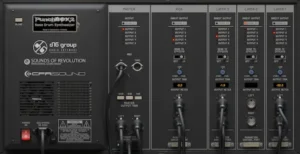 PunchBox 2 delivers the most value to producers who design kick drums as part of their regular workflow rather than relying exclusively on commercial sample packs. If every project involves adjusting transient shape, low-end balance, or harmonic content to fit a specific arrangement, a dedicated kick designer quickly becomes a practical production tool rather than a creative luxury.
Its strongest audience includes producers working in techno, house, trance, drum & bass, hard dance, future bass, trap, and other electronic genres where the kick serves as the foundation of the mix. In these styles, small changes to transient timing or harmonic content can influence bass interaction, perceived loudness, and overall mix translation, making precise control more valuable than simply browsing another sample library. Those same low-end decisions also play a significant role during EDM mastering, where kick and bass balance largely determine how well a track survives commercial release levels.
PunchBox 2 can also fit naturally into the workflow of freelance mixing engineers. Client projects often arrive with kick drums that are either over-processed or poorly matched to the rest of the production. While redesigning the kick isn’t always necessary, having a dedicated environment for rebuilding or reinforcing low-end elements can make mix revisions significantly faster than searching through hundreds of replacement samples.
Its value is less obvious for producers working primarily with acoustic drum recordings, live bands, jazz, folk, or other genres where preserving the character of the original performance takes priority over synthetic sound design. In those situations, tools focused on drum editing, sample reinforcement, or corrective mixing are generally a better investment than a dedicated electronic kick synthesizer.
Pricing
PunchBox 2 is available for an introductory price of €79 until July 26, 2026. After the promotional period, the regular price increases to €99.
Existing PunchBox owners can upgrade at a discounted price through their D16 Group user account, while additional loyalty discounts are available for qualifying D16 customers.
Considering the amount of processing consolidated into a single workflow, PunchBox 2 represents good value for producers who design custom kick drums on a regular basis. For users relying primarily on commercial one-shot libraries, however, the upgrade may be more difficult to justify.
Real-World Production Perspective
A kick drum isn’t judged by how it sounds in solo mode. It earns its place once the finished record leaves the DAW and begins moving through streaming codecs, consumer playback systems, club PAs, broadcast normalization, and the mastering chain. That’s where disciplined sound design consistently outperforms aggressive processing.
Modern releases are expected to translate across radically different listening environments, from studio monitors and club systems to earbuds, smartphones, laptops, Bluetooth speakers, and car stereos. A kick that feels perfectly balanced in the studio can lose definition after AAC or Ogg encoding, while excessive harmonic distortion in the low end often becomes more obvious once lossy codecs begin removing information from the signal.
Low-end translation is only one side of the equation. Spatial effects can introduce their own challenges, particularly when dense reverbs begin masking transients or widening the stereo image around the kick. We explored those production trade-offs in our Arturia Rev OCEAN review, where creative ambience is evaluated from the perspective of mix clarity rather than presets alone.
Designing cleaner source material helps minimize those problems. A controlled transient, stable decay, and well-managed harmonic content generally survive streaming conversion more predictably than heavily layered kicks built around multiple unrelated samples and excessive saturation. Translation starts with the source—not with the mastering limiter.
The same principle applies during mastering. When low-frequency information is phase-coherent and dynamically consistent, compressors, clippers, and limiters respond more transparently. Conversely, unstable sub energy or excessive harmonic buildup often forces mastering engineers to make compromises that would have been unnecessary had the kick been designed more carefully at the production stage.
There’s also a practical workflow advantage. Building a kick with separate EQs, transient designers, saturators, compressors, and clippers across multiple channels increases project complexity, slows revisions, and makes session recall more difficult. PunchBox 2 consolidates much of that process into a single instrument, allowing producers to spend less time maintaining plugin chains and more time refining the musical relationship between the kick, bass, and the rest of the mix.
For professionals working under deadlines, that efficiency is often just as valuable as incremental improvements in sound quality. Faster revisions, cleaner sessions, and more predictable low-end translation frequently have a greater impact on finished productions than adding yet another processor to the signal chain.
Verdict
PunchBox 2 doesn’t redefine kick synthesis, nor does it need to. Its value comes from refining a workflow that already solves a real production problem: creating kick drums that require less corrective work once mixing begins.
The new wavetable engine, improved envelope editing, and streamlined interface aren’t headline features on their own. Together, they make the plugin faster to work with and provide more precise control over the elements that matter most in modern electronic production—transient behavior, harmonic balance, and low-end consistency.
That doesn’t make PunchBox 2 a substitute for experienced engineering. A well-designed kick still depends on thoughtful arrangement, accurate monitoring, disciplined mixing, and careful mastering. No plugin can compensate for weaknesses in those areas.
What PunchBox 2 does offer is a more efficient path to a better starting point. Producers who build electronic kick drums on a regular basis will likely spend less time repairing low-end problems later in the session and more time refining the musical balance of the mix.
If your workflow already revolves around custom kick design rather than browsing sample packs, PunchBox 2 is a worthwhile upgrade. If you rarely move beyond one-shot samples, its advantages may be harder to justify. That makes PunchBox 2 less of a universal recommendation and more of a specialized production tool—one that excels when used for the job it was designed to do.
Overall Rating
| Category | Rating |
|---|---|
| Kick Sound Quality | 9.3/10 |
| Workflow Efficiency | 9.6/10 |
| Low-End Control | 9.5/10 |
| Mix Translation Potential | 9.2/10 |
| CPU Efficiency | 9.4/10 |
| Feature Set | 8.4/10 |
| Value for Money | 9.1/10 |
| Overall | 9.2/10 |
PunchBox 2 succeeds by focusing on workflow rather than chasing unlimited synthesis possibilities. Its greatest strengths are precise low-frequency control, efficient kick design, and the ability to produce source material that requires less corrective processing during mixing. While modular synthesizers still offer broader sound-design freedom, PunchBox 2 remains one of the strongest dedicated kick production environments currently available for modern electronic music. From a mastering perspective, its biggest advantage is not louder kicks—it’s cleaner low-end behavior that translates more predictably through bus processing, limiting, and streaming delivery.

Yurii Ariefiev is a mastering engineer and audio production editor specializing in mix translation, low-frequency control, and release-ready mastering for modern streaming platforms. His editorial work focuses on evaluating production tools through real mixing and mastering workflows rather than manufacturer specifications.
This review examines PunchBox 2 from the perspective of professional production: how kick design affects bass interaction, processing decisions, mix translation, and the amount of corrective work required before a track reaches the mastering stage.
Frequently Asked Questions
Is PunchBox 2 worth upgrading from the original PunchBox?
If you regularly build custom kick drums, the improved wavetable engine, expanded envelope editing, and streamlined workflow make the upgrade worthwhile. Producers who mainly browse presets or rely on one-shot samples may notice a smaller difference.
How does PunchBox 2 compare to Sonic Academy Kick 2?
Kick 2 focuses on fast, straightforward kick synthesis. PunchBox 2 offers a broader workflow by combining synthesis, sample layering, saturation, dynamics processing, and transient shaping inside a single environment. The better choice depends on whether you prioritize speed or deeper sound design.
Can PunchBox 2 replace commercial kick sample packs?
Not completely. Sample libraries remain the fastest option when a suitable sound already exists. PunchBox 2 is designed for producers who prefer building kicks that match a specific arrangement instead of adapting pre-recorded samples.
Is PunchBox 2 suitable for techno, house, and EDM?
Yes. Those genres benefit the most from precise control over transient shape, harmonic content, and sub-frequency behavior. PunchBox 2 was clearly designed with electronic production workflows in mind.
Can PunchBox 2 create 808-style kicks?
It can generate long, bass-heavy kick designs, but producers looking for authentic 808 bass programming may still prefer dedicated instruments built specifically for that purpose. PunchBox 2 is optimized for kick synthesis rather than full bass synthesis.
Does PunchBox 2 reduce the amount of mixing required?
Indirectly. Better source material generally requires less corrective EQ, transient shaping, and saturation later in the session. It doesn’t replace proper mixing, but it can simplify it.
Is PunchBox 2 CPU intensive?
For most modern production systems, CPU usage is modest. Consolidating multiple stages of kick processing into one plugin may actually reduce overall session complexity compared to using several separate processors.
Will PunchBox 2 improve mastering results?
Not directly. Its advantage is producing cleaner low-frequency material before mastering begins, allowing compressors, clippers, and limiters to work more predictably during the final stage of production.
Who should skip PunchBox 2?
Producers working primarily with acoustic drums, live recordings, or commercial one-shot libraries may see limited benefits. The plugin delivers the greatest value when custom kick design is already part of your workflow.