
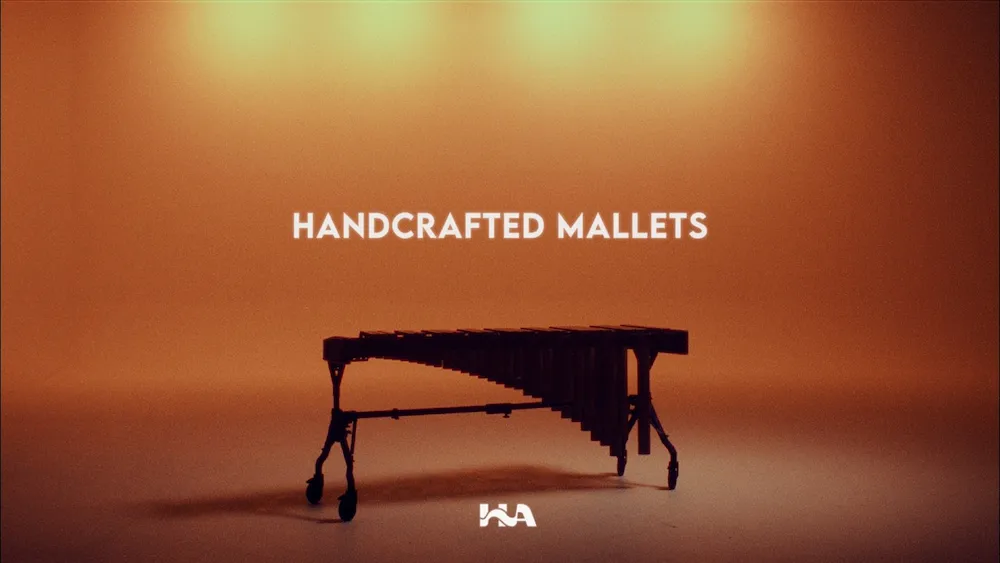
The Kontakt market has no shortage of marimba and vibraphone libraries. Most focus on capturing an acoustic instrument as accurately as possible. Handcrafted Mallets takes a different approach, combining detailed multisampling with a dedicated synthesis engine that turns traditional mallet recordings into a broader composition and sound design tool. The question is whether that hybrid design delivers practical advantages or simply adds another layer of complexity.
That question matters because modern composers rarely use mallet instruments as isolated orchestral elements. Marimbas and vibraphones now appear alongside synthesizers, processed percussion, ambient textures and hybrid orchestral layers, where articulation, transient behavior and tonal flexibility influence how quickly an instrument finds its place in a dense production. Workflow is no longer defined by realism alone.
This review evaluates Handcrafted Mallets from the perspective of real-world audio production rather than feature marketing. We’ll examine its sampling architecture, synthesis workflow, performance behavior, integration into mixing and mastering sessions, and where it stands against today’s leading Kontakt libraries for professional composers and producers.
Contents
What’s Included in Handcrafted Mallets?
Rather than focusing on a single sampled instrument, Handcrafted Mallets combines multiple acoustic and synthesized sound sources within one Kontakt library. The collection is designed to support both traditional keyboard percussion writing and modern hybrid scoring workflows.
| Component | Purpose |
|---|---|
| Handcrafted Marimba | Expressive acoustic marimba with dynamic performance controls |
| Handcrafted Vibraphone | Detailed vibraphone featuring pedal and motor simulation |
| Mallet Synth | Sample-derived synthesis engine for cinematic sound design |
| Additional Articulations | Muted, bowed and stick-based performance variations |
| Preset Library | More than 500 production-ready sounds |
| Sound Sources | Over 200 sample-derived oscillator sources |
Taken together, these elements make Handcrafted Mallets considerably broader than a conventional marimba or vibraphone library. Rather than separating acoustic performance from sound design, the collection keeps both approaches inside a single Kontakt workflow.
Why Handcrafted Mallets Stands Apart from Traditional Kontakt Libraries
The premium Kontakt market has shifted away from pure acoustic emulation. A decade ago, developers competed by adding more velocity layers, microphone positions and articulations. While those improvements increased realism, they did little to expand how an instrument could be used inside a modern production.
Today’s scoring workflows are different. Film, television, game audio and hybrid orchestral music routinely combine sampled instruments with synthesis, extensive automation and layered processing. A marimba part may begin as an exposed acoustic performance before evolving into a heavily processed texture within the same cue. Moving between dedicated sample libraries and multiple synthesizers slows that process and fragments creative decisions.
As a result, many Kontakt developers are no longer selling realism alone. The competitive advantage increasingly comes from integrating expressive sampling with modulation, sequencing and sound design tools that allow composers to move beyond conventional orchestral writing without abandoning the original instrument.
Handcrafted Mallets is built around that production model. Rather than treating the marimba and vibraphone as fixed acoustic sources, the library extends them into a hybrid environment where sampled performances, synthesized layers and evolving textures remain part of the same workflow. The goal is not to replace dedicated synthesizers, but to reduce the number of creative transitions required while writing.
That approach reflects the realities of professional scoring. Tight deadlines rarely allow composers to rebuild arrangements because an instrument has reached its sonic limits. Libraries capable of covering realistic performances, transitional textures and cinematic sound design from a single interface reduce both technical overhead and revision time.
Versatility, however, comes with its own trade-offs. Every modulation system, sequencing engine and synthesis layer increases interface complexity. Feature count has become a poor indicator of usability. In daily scoring work, the better instrument is usually the one that disappears behind the writing process instead of constantly demanding technical decisions. Handcrafted Mallets ultimately succeeds or fails on that balance rather than on its sample count or preset library.
Sampling Architecture: What Makes Handcrafted Mallets Different
The most significant design decision behind Handcrafted Mallets isn’t its sample count. Large libraries have become standard across the Kontakt ecosystem. What separates this instrument is how those recordings are mapped and how they respond during performance.
Most sampled instruments distribute velocity layers evenly across the keyboard, creating predictable transitions from one dynamic level to the next. The approach is efficient, but repeated passages often reveal consistent transient shapes and attack characteristics that make sampled performances easier to identify.
Handcrafted Mallets takes a less standardized approach by mapping each pitch according to its original recorded dynamic range instead of forcing identical velocity behavior across the instrument. The difference is subtle, yet it improves note-to-note variation during live performance, particularly in passages where repeated strikes would otherwise expose mechanical playback.
That behavior benefits marimba writing more than many virtual instruments. Real performances rely on continuous changes in attack, stick position and playing intensity rather than dramatic velocity jumps. Preserving some of those inconsistencies inside the sampling engine reduces the amount of manual MIDI editing required to avoid repetitive phrasing.
The Timbre control builds on the same concept. Instead of switching between separate articulations or preset variations, it continuously shifts the perceived hardness of the mallet. From a production standpoint, that is considerably more efficient because articulation can evolve alongside the arrangement without changing patches or interrupting the writing process.
The Distance control follows a similarly practical philosophy. Rather than acting as another reverb parameter, it adjusts the perceived perspective of the instrument before external spatial processing is applied. Establishing depth during composition often results in cleaner orchestral balances later, reducing the need for extensive corrective automation during mixing.
The vibraphone implementation is equally thoughtful. Its pedal behavior models the interaction between sustain, resonance and note transitions instead of relying on simplified envelope changes. Combined with the motor simulation—which modulates pitch, spectral content, amplitude and spatial perception—the result feels noticeably less static during sustained performances.
That movement becomes particularly valuable in contemporary scoring, where vibraphones frequently support evolving harmonic textures instead of functioning as purely rhythmic instruments. Internal modulation reduces the need for additional movement generated by chorus, tremolo or automation plugins, allowing the source instrument to remain musically active on its own.
The included bowed, muted and stick articulations further expand the library beyond traditional orchestral applications. Rather than serving as isolated presets, they encourage layering with the standard instruments, creating textures that retain recognizable acoustic characteristics while occupying roles typically assigned to synthesizers.
From an engineering perspective, the sampling architecture is built around reducing friction rather than maximizing specifications. The value isn’t measured by the number of recorded samples but by how naturally those recordings adapt to changing musical contexts without forcing composers to leave the instrument or rebuild an arrangement.
The Synthesis Engine: Beyond Traditional Kontakt Sampling
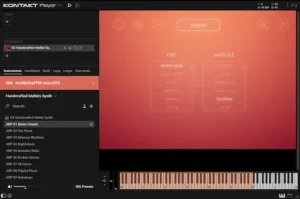 The synthesis engine is where Handcrafted Mallets moves beyond the conventions of a typical sampled instrument. Instead of treating the marimba and vibraphone recordings as fixed playback sources, the library transforms them into more than 200 sample-derived sound sources that behave much like oscillators within Kontakt. The result is a production environment that extends well beyond acoustic emulation.
Many Kontakt libraries advertise sound design features, yet most simply process existing multisamples with filters, modulation and effects. Handcrafted Mallets takes a different approach by generating its synthesis material directly from the recorded instruments. That preserves elements of the original attack, resonance and harmonic structure, even after substantial processing, giving synthesized sounds a more organic character than conventional subtractive patches.
The production advantage is less about creating entirely new timbres than maintaining continuity while writing. Instead of replacing a sampled instrument with a separate synthesizer once a cue becomes more experimental, composers can continue developing the same musical idea inside a single interface while retaining articulation, phrasing and performance dynamics.
That workflow becomes particularly valuable in hybrid orchestral scoring, where acoustic percussion frequently evolves into atmospheric layers, rhythmic pulses or processed transitions. Because the synthesized material originates from the same recordings, it generally integrates more naturally with the acoustic patches than independently programmed synthesizer layers, reducing the amount of corrective EQ and transient processing needed during mixing.
The preset library reflects that design philosophy. Beyond conventional mallet patches, it includes evolving pads, basses, leads, plucks and cinematic textures that retain recognizable traces of their acoustic source instead of sounding disconnected from the rest of the instrument. Producers looking for more atmospheric Kontakt instruments may also find our Fracture Sounds Trails II review useful, as it explores a very different approach to cinematic texture design.
The integrated modulation system also encourages faster sketching. Composers can develop movement, rhythmic variation and evolving textures without immediately building additional processing chains or routing signals through multiple plugins. That keeps early writing sessions focused on musical decisions rather than technical setup.
None of this makes Handcrafted Mallets a replacement for dedicated synthesizers such as Serum, Pigments or Phase Plant. Those instruments offer far greater control over oscillator design, modulation routing and advanced synthesis methods. Handcrafted Mallets occupies a different role: combining expressive acoustic sampling with enough synthesis depth to cover a wider range of scoring tasks without disrupting the creative flow.
Viewed from a production perspective, the synthesis engine succeeds because it expands the musical vocabulary of the source recordings instead of competing directly with standalone software synthesizers. That distinction makes the feature genuinely useful rather than simply another marketing bullet point.
Sequencing, Humanized Timing and Composition Workflow
Arpeggiators and step sequencers have become standard features in premium Kontakt libraries. The differentiator is no longer their presence but how usable the generated material is without extensive editing. Handcrafted Mallets approaches this by favoring controlled musical variation over unrestricted randomness.
Its smart randomization functions are designed to generate phrases that remain rhythmically and harmonically coherent instead of producing completely unpredictable patterns. That distinction matters during early composition, where the objective is often to discover ideas quickly rather than repair unusable MIDI data. For composers working under deadlines, fewer corrections translate directly into a faster writing process.
The flexible tempo system is arguably the more interesting feature. Most virtual instruments assume a rigid relationship with the DAW grid, which works well for electronic production but can make cinematic and orchestral passages feel overly mechanical. Allowing sequenced material to breathe through subtle timing fluctuations introduces movement that resembles a performed phrase rather than a perfectly quantized pattern.
This isn’t a universal advantage. Producers creating tightly programmed EDM, trap or commercial pop arrangements will likely keep rhythmic events locked to the grid. In film scoring, ambient music and narrative-driven composition, however, controlled timing variation often contributes more to musical realism than additional velocity editing or modulation.
Viewed in context, these sequencing tools are less about automation and more about reducing repetitive programming. They support idea generation without replacing compositional decisions, making them considerably more useful than the generic arpeggiators found in many Kontakt instruments.
Strengths, Limitations and Real-World Value
 Handcrafted Audio positions Handcrafted Mallets as an expressive instrument rather than a conventional sample library. That distinction is largely justified, but it shouldn’t be confused with an automatic improvement in musical realism. Expressiveness comes from the interaction between the instrument and the performer. Sophisticated scripting cannot compensate for static MIDI programming, overly quantized timing or unrealistic phrasing.
The library’s dynamic sampling, articulation system and synthesis engine provide a stronger foundation for expressive performances than many traditional mallet libraries. They create more opportunities for natural variation, but those opportunities still depend on performance decisions. In other words, the instrument encourages realism—it doesn’t generate it automatically.
The advertised sample count deserves similar context. Large numbers make for effective marketing, yet they reveal very little about how an instrument performs in practice. Editing quality, scripting efficiency, velocity mapping and interface design typically have a greater impact on the playing experience than the total number of recorded samples. A smaller library with intelligent programming often feels more convincing than one built around specification-driven marketing.
The hybrid synthesis engine introduces its own trade-off. Expanding an acoustic library into a sound design platform inevitably increases interface complexity. Composers working in cinematic production will likely appreciate that flexibility, while users looking for a straightforward marimba or vibraphone may spend time navigating features they rarely use.
Genre also influences the library’s value. Handcrafted Mallets is clearly optimized for film scoring, game audio and hybrid orchestral production. Producers working primarily in pop, rock or hip-hop can certainly incorporate its textures, but much of the instrument’s architecture is designed around workflows those genres rarely require.
Pricing is consistent with the upper tier of today’s Kontakt ecosystem, where professional libraries routinely approach the $200 range. Whether that represents good value depends less on the feature list than on how often those hybrid capabilities become part of a regular production workflow. Composers writing cinematic music every week are far more likely to justify the investment than occasional users searching for a single realistic mallet instrument.
Perhaps the most important expectation to manage is what Handcrafted Mallets is not. It doesn’t replace a dedicated orchestral percussion collection, nor does it compete with advanced software synthesizers on synthesis depth alone. Its strength lies in connecting those two worlds inside a single workflow, reducing context switching while expanding the creative range of a familiar acoustic instrument.
How Handcrafted Mallets Compares with Premium Kontakt Libraries
Comparing Handcrafted Mallets purely on sample quality misses its primary design goal. Most established Kontakt developers already deliver highly detailed recordings with convincing dynamic response. The more meaningful comparison is how each library fits into a professional composition workflow.
Soniccouture remains one of the strongest references for composers prioritizing acoustic realism and detailed mallet performance. Its libraries focus on faithfully reproducing the behavior of physical instruments with extensive articulations and carefully scripted performance controls.
Heavyocity approaches the market from the opposite direction, emphasizing cinematic processing, layered textures and immediately playable hybrid scoring tools. The acoustic source is often only one component of a much larger sound design environment.
Handcrafted Mallets occupies the space between those philosophies. It begins with realistic sampled instruments but extends them into synthesis and sound design without completely abandoning their acoustic identity. That makes it less specialized than dedicated orchestral libraries while remaining considerably more performance-oriented than many cinematic texture collections.
| Library | Primary Focus | Best Fit | Potential Drawback |
|---|---|---|---|
| Handcrafted Mallets | Hybrid sampling and synthesis | Film scoring, hybrid orchestration, modern cinematic production | Broader feature set requires a longer learning curve |
| Soniccouture Mallets | Acoustic realism and expressive performance | Traditional orchestral composition and realistic mockups | Less emphasis on integrated sound design |
| Heavyocity hybrid instruments | Processed cinematic textures and scoring | Trailers, game audio and cinematic sound design | Not intended as dedicated mallet performance libraries |
| Spitfire Audio orchestral collections | Large-scale orchestral realism | Film, television and orchestral scoring | Hybrid synthesis is not the primary design focus |
For composers building hybrid orchestral templates, Handcrafted Mallets fills a niche that relatively few libraries address directly. It allows realistic mallet performances to evolve into synthesized textures without requiring the arrangement to move into a separate instrument, preserving both performance continuity and tonal consistency.
That flexibility becomes less important for producers who simply need occasional marimba or vibraphone parts. If the objective is straightforward orchestral playback with minimal programming, a dedicated acoustic library may provide a faster workflow and a lower learning curve.
Ultimately, choosing between these libraries is less about absolute sound quality than production priorities. Handcrafted Mallets is designed for composers who expect sampled instruments to function as evolving creative tools rather than fixed orchestral presets.
Who Should Buy Handcrafted Mallets?
Handcrafted Mallets is aimed at composers who regularly move between realistic orchestral writing and cinematic sound design. Its workflow offers the greatest advantage when a single instrument needs to evolve throughout a cue rather than serve one fixed musical role.
| Recommended For | Less Suitable For |
|---|---|
| Film composers | Traditional orchestral mockups only |
| Game audio composers | Users needing only marimba playback |
| Trailer music producers | Pop producers seeking a general-purpose keyboard |
| Hybrid scoring professionals | Beatmakers who rarely use cinematic textures |
| Ambient and media composers | Entry-level Kontakt users looking for simple instruments |
For composers who regularly move between orchestral writing and cinematic sound design, consolidating those tasks into a single instrument can remove a surprising amount of session management. Producers working outside those environments, however, may find a more specialized library to be a better long-term investment.
Mixing, Mastering and Production Workflow
A virtual instrument shouldn’t be judged in solo mode. Its real value becomes apparent once it shares a mix with strings, brass, percussion, dialogue or dense synthesizer layers. Libraries that require extensive corrective processing often slow production, regardless of how impressive they sound in isolation.
Handcrafted Mallets appears to be designed with that broader workflow in mind. The emphasis on dynamic performance, articulation control and source-derived synthesis gives composers more opportunities to shape a sound before it reaches the mixing stage, reducing reliance on corrective processing later in the project.
The Timbre control is a good example. Because it changes the character of the mallet itself rather than simply boosting or cutting frequencies, producers can often adjust attack and articulation at the source instead of relying exclusively on transient designers or aggressive equalization. That approach generally leads to more natural results than fixing tonal balance after the arrangement is complete.
The Distance parameter serves a similar purpose. Establishing an instrument’s perceived position while composing can simplify later decisions about depth and spatial relationships, even though dedicated reverbs and orchestral room processing remain essential during the final mix.
For mixing engineers, these controls provide an advantage that extends beyond convenience. Receiving MIDI mockups with more consistent articulation and spatial perspective typically reduces the amount of automation, EQ and transient shaping required to integrate mallet parts into dense orchestral sessions. The same principle applies when evaluating analog-style channel processing, as discussed in our Heritage Audio TUBESTRIP review, where workflow efficiency is just as important as individual processing features.
From a mastering standpoint, the library introduces no unusual workflow considerations. As with any sampled instrument, translation depends far more on orchestration, arrangement and mix decisions than on the library itself. If you’re interested in how those mix decisions affect the final master, see our guide on preparing a mix for mastering. Well-balanced source material simply gives engineers greater flexibility when optimizing loudness and preserving dynamic contrast.
CPU requirements will vary according to voice count, preset complexity and Kontakt configuration. Composers working with large scoring templates should expect the synthesis engine and layered patches to consume more resources than a straightforward sample playback library, making track freezing or stem printing sensible workflow choices once arrangements become more demanding.
Ultimately, the strongest production argument for Handcrafted Mallets isn’t its processing architecture but its ability to keep composition, sound design and orchestration inside a single instrument. That kind of consistency generally makes both mixing and mastering more predictable, especially when every production decision builds toward a finished release. Fewer plugin changes, fewer duplicated MIDI tracks and fewer routing decisions allow composers to spend more time refining musical ideas before moving into detailed mixing and mastering.
System Requirements and Installation
Handcrafted Mallets runs inside Native Instruments Kontakt Player 7.6 or later and is also fully compatible with the full version of Kontakt. Installation is handled through Native Access, allowing the library to integrate into existing Kontakt workflows without additional setup.
| Requirement | Specification |
|---|---|
| Plugin Format | Kontakt Player / Kontakt |
| Minimum Kontakt Version | 7.6 |
| Windows | Windows 10 or newer |
| macOS | macOS 11 or newer |
| Installation | Native Access |
Verdict
Handcrafted Mallets doesn’t compete by offering the largest sample library or the longest feature list. Its strength lies in combining expressive acoustic sampling with a synthesis engine that expands the instrument without disconnecting it from its original performance character. That design makes it feel less like a conventional Kontakt library and more like a flexible composition tool.
For film composers, game audio professionals and producers working in hybrid orchestral music, that approach solves a practical workflow problem. Instead of moving between multiple virtual instruments as an arrangement evolves, they can develop realistic performances, atmospheric textures and processed layers within a single environment. The result is a faster, more consistent writing process rather than a collection of isolated presets.
The library is a less compelling investment for users who simply need an occasional marimba or vibraphone. Dedicated acoustic libraries often provide a faster workflow, lower cost and fewer controls to manage. Likewise, producers focused primarily on electronic, pop or rock production are unlikely to use enough of Handcrafted Mallets’ hybrid architecture to justify its premium positioning.
Within the cinematic Kontakt market, however, Handcrafted Mallets occupies a well-defined niche. It doesn’t replace dedicated orchestral collections or advanced software synthesizers, but it successfully connects those two workflows in a way that relatively few instruments currently do. For composers looking beyond traditional sample playback, that makes it one of the more distinctive premium Kontakt releases available today. Once those productions move beyond the writing stage, understanding how professional mastering works becomes just as important as choosing the right virtual instruments.
Pros and Cons
| Pros | Cons |
|---|---|
| Expressive sampling architecture | Premium pricing |
| Excellent hybrid scoring workflow | Steeper learning curve than traditional libraries |
| Integrated synthesis engine | Not intended for orchestral realism alone |
| Strong articulation control | Hybrid features may be excessive for casual users |
Overall Rating
| Category | Rating |
|---|---|
| Sound Quality | 9.4/10 |
| Workflow | 9.6/10 |
| Expressive Performance | 9.5/10 |
| CPU Efficiency | 8.8/10 |
| Sound Design Flexibility | 9.2/10 |
| Value for Money | 8.9/10 |
| Overall | 9.4/10 |
Sound Quality — 9.4/10
The sampling captures the natural attack and resonance of acoustic mallet instruments while avoiding the overly polished character found in many cinematic libraries. The result is detailed enough for exposed passages yet flexible enough to support heavier processing when required.
Workflow — 9.6/10
This is where Handcrafted Mallets stands out. The ability to move from realistic performances to synthesized textures without leaving a single Kontakt instrument reduces interruptions during composition and keeps creative decisions focused on the music rather than session management.
Expressive Performance — 9.5/10
The dynamic mapping, articulation system and performance controls encourage more natural phrasing than conventional velocity-layer switching. While realism still depends on MIDI programming, the instrument provides an excellent foundation for expressive performances.
CPU Efficiency — 8.8/10
Acoustic patches remain practical for everyday scoring, but larger hybrid presets inevitably consume additional processing power. Composers working with complex orchestral templates should expect to freeze tracks or print stems as projects grow.
Sound Design Flexibility — 9.2/10
The synthesis engine expands the role of traditional mallet instruments well beyond acoustic playback. It is not intended to compete with dedicated synthesizers, but it successfully bridges orchestral writing and cinematic sound design inside a single workflow.
Value for Money — 8.9/10
For composers producing film, television and game music on a regular basis, the feature set justifies the asking price. Users looking only for realistic marimba or vibraphone playback may find stronger value in more specialized libraries.
Overall — 9.4/10
Handcrafted Mallets succeeds by expanding what a premium Kontakt library can do without losing sight of musical performance. Rather than replacing dedicated orchestral collections or software synthesizers, it fills the increasingly important space between expressive sampling and modern cinematic sound design, making it one of the more distinctive hybrid composition tools currently available.
Frequently Asked Questions
Is Handcrafted Mallets worth buying for professional composers?
Yes, if your work regularly involves film scoring, game audio or hybrid orchestral production. The library offers more creative flexibility than a traditional mallet collection, making it easier to move between realistic performances and sound-designed textures without changing instruments.
Can Handcrafted Mallets run in the free Kontakt Player?
Yes. It supports Kontakt Player 7.6 or later, so the full version of Kontakt is not required.
How does Handcrafted Mallets compare with Soniccouture mallet libraries?
Soniccouture focuses primarily on acoustic realism and detailed instrument behavior. Handcrafted Mallets balances realistic sampling with integrated synthesis, making it a stronger choice for composers who frequently combine orchestral writing with cinematic sound design.
Is Handcrafted Mallets suitable for pop or electronic music production?
It can certainly be used in those genres, particularly for pads, textures and layered percussion. However, its workflow and feature set are clearly aimed at cinematic composition rather than mainstream music production.
Does the synthesis engine replace a dedicated software synthesizer?
No. It expands the original recordings into a much broader sonic palette, but it is not intended to replace advanced synthesizers built around wavetable, granular or modular synthesis.
How demanding is Handcrafted Mallets on CPU resources?
CPU usage depends on the selected preset, voice count and Kontakt configuration. More complex synthesized patches naturally require more processing than straightforward acoustic instruments.
Is Handcrafted Mallets a good choice for large orchestral templates?
Yes, particularly for composers building hybrid templates. It reduces the need to switch between separate sampled instruments and synthesizers while developing a cue, helping maintain a more streamlined writing workflow.
Can Handcrafted Mallets replace a dedicated marimba or vibraphone library?
Not completely. If your only requirement is the most authentic recreation of those instruments, specialized libraries remain a better fit. Handcrafted Mallets is designed to extend traditional performance into hybrid scoring rather than replace every orchestral mallet library.
Who will benefit the most from Handcrafted Mallets?
Film composers, television and game audio professionals, trailer composers and sound designers are the audience most likely to benefit from its combination of expressive sampling and integrated synthesis.

Yurii Ariefiev is a mastering engineer and audio production editor who evaluates virtual instruments through real production workflows rather than marketing specifications. His reviews focus on sampling architecture, mix translation, arrangement efficiency and how software performs inside professional composition, mixing and mastering environments.
This review analyzes Handcrafted Mallets from the perspective of practical studio use, examining workflow efficiency, expressive performance, hybrid scoring applications and the production decisions that ultimately influence the quality of a finished master.