Sennheiser HD 480 PRO: Closed-Back Headphones Aiming to Fix Low-End Accuracy
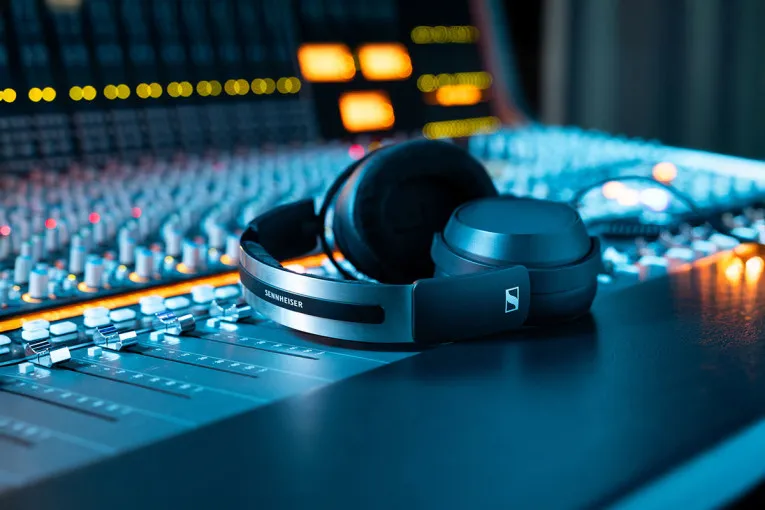
Sennheiser HD 480 PRO has officially launched following its preview at NAMM 2026, entering a crowded market of studio headphones with a very specific claim: accurate low-end in a closed-back design. That’s not a minor update — it targets one of the most persistent problems in audio production.
At $479 MSRP, Sennheiser is positioning the HD 480 PRO above entry-level studio headphones but below flagship reference models. The angle is clear: make closed-back monitoring less misleading without pretending it replaces open-back systems.
Quick Take: What HD 480 PRO Actually Is
HD 480 PRO is a closed-back, over-ear studio headphone built for tracking, monitoring, and hybrid workflows. It’s not a mixing reference in the traditional sense — it’s a controlled monitoring tool designed for environments where speakers or open-back headphones aren’t viable.
- Best for: tracking, mobile production, shared spaces
- Not built for: critical mastering decisions
- Main claim: tighter, more reliable bass response
Specs and Key Details
- Driver: 38mm dynamic
- Impedance: ~130 ohms
- Frequency response: 3 Hz – 28.7 kHz
- Weight: ~272 g (without cable)
- Cable: detachable, left/right routing, vibration-decoupled
- Variants: HD 480 PRO ($479), HD 480 PRO Plus ($519)
The Plus version adds a travel case instead of a soft bag and extended accessories.
What’s Actually New Here
Sennheiser didn’t reinvent the format — it refined it. The HD 480 PRO is built on the same design platform as the HD 490 PRO, but heavily modified to control internal acoustics.
The main engineering focus:
- Vibration Attenuation System to reduce resonance and internal reflections
- Consistent clamping geometry for stable bass response across head shapes
- Multi-stage passive isolation without excessive pressure buildup
- Decoupled cable segment to eliminate handling noise
All of this points to one goal: stop closed-back headphones from lying about the low end.
How HD 480 PRO Performs in Real Workflows
Closed-back headphones are usually unreliable below 100 Hz. They exaggerate sub energy, mask transient detail, and shift perception depending on fit. The HD 480 PRO doesn’t eliminate those issues — but it reduces them enough to be usable.
Tracking:
This is where the headphone makes the most sense. Isolation is solid, and the low end doesn’t overwhelm performers, which improves pitch and timing accuracy.
Mixing (limited):
Low-end decisions are more controlled than on typical closed-back models. You can set rough balances and make corrective moves. However, spatial depth and stereo imaging remain compromised.
Mobile production:
In untreated rooms or on the road, HD 480 PRO provides a more consistent reference than consumer headphones or hyped studio models.
In professional workflows, this kind of tool sits between reference monitors and consumer playback checks. Final decisions still require validation on multiple systems, often including dedicated mastering environments with translation control, where low-end accuracy is verified across playback contexts.
Comfort Isn’t a Side Feature
Sennheiser is clearly targeting long sessions. The design focuses on reducing fatigue without sacrificing seal integrity — which directly affects bass response.
- Even pressure distribution across the headband
- Ear pads shaped to accommodate glasses
- Low overall weight for extended use
This matters. In closed-back designs, a poor seal changes the frequency response dramatically. Comfort here is functional, not cosmetic.
HD 480 PRO vs HD 490 PRO
HD 490 PRO (open-back):
- Wider soundstage
- More accurate spatial imaging
- Better suited for mixing and mastering
HD 480 PRO (closed-back):
- Isolation for tracking and shared environments
- More controlled low-end than typical closed-back designs
These are not interchangeable tools. They solve different problems.
Competition: Where It Lands
Compared to established models:
- Beyerdynamic DT 770 Pro — more exciting but less controlled low end
- Sony MDR-7506 — mid-focused, outdated tuning
- Audio-Technica M50x — popular but not reference-grade
HD 480 PRO trades character for predictability. That’s a deliberate choice.
Limitations You Can’t Ignore
- Narrower soundstage than open-back headphones
- Limited depth perception
- Less reliable stereo imaging
- Not suitable as a primary mastering reference
No amount of engineering removes these constraints. They’re inherent to the format.
Who Should Actually Buy This
HD 480 PRO makes sense if you:
- Track vocals or instruments in the same room
- Work in untreated or shared environments
- Need a reliable closed-back reference for low-end control
It doesn’t make sense if you:
- Mix exclusively on headphones
- Need precise spatial imaging
- Expect open-back accuracy
Verdict
Sennheiser HD 480 PRO doesn’t redefine closed-back headphones — but it corrects one of their biggest flaws: inconsistent bass.
That alone makes it relevant.
For tracking and hybrid workflows, it’s one of the most technically balanced options currently available. For critical mixing and mastering, it remains a secondary tool — useful, but not definitive.