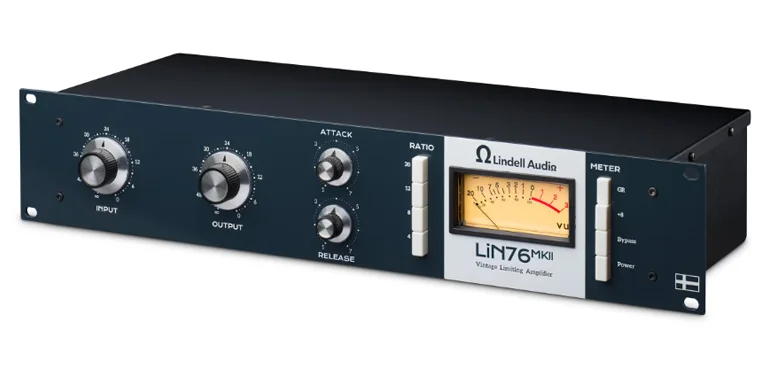
Lindell LiN76 mkII Review: Does This Modern 1176-Style Compressor Still Earn a Place in Professional Mixing Workflows?
Every new 1176-style compressor enters a market that is already saturated with alternatives. The Lindell LiN76 mkII enters a category filled with vintage originals, boutique recreations, affordable hardware clones, and increasingly sophisticated software emulations. Standing out in that environment requires more than simply offering another version of a familiar FET compression circuit.
The real question is not whether it resembles a classic 1176. Most modern engineers already have access to capable 1176-inspired plugins from UAD, Waves, Softube, Arturia, and Plugin Alliance. The more relevant question is whether a hardware unit like the LiN76 mkII delivers enough practical value to justify its place in a production environment where recall, automation, and session portability have become standard expectations.
That shifts the discussion away from vintage mythology and toward workflow. In 2026, hardware compression is no longer competing primarily against other hardware. It is competing against software ecosystems that offer instant recall, unlimited instances, remote collaboration, and increasingly convincing analog behavior. Evaluating the LiN76 mkII through that lens reveals far more about its relevance than simply asking how closely it follows the original 1176 formula.
Why the Lindell LiN76 mkII Matters in Today’s Audio Production Market
The market for affordable outboard compression looks very different than it did a decade ago. The question facing most engineers is no longer whether they can access professional-grade compression. Between software emulations and budget-friendly hardware, access is no longer the problem. The challenge is identifying which tools provide a meaningful advantage inside a modern production workflow.
That distinction is important because the LiN76 mkII is not competing against boutique studio hardware. It is competing against highly refined plugin ecosystems that already deliver fast recall, automation, portability, and convincing analog-inspired behavior. Any hardware compressor entering this segment must offer benefits that extend beyond simply recreating a familiar circuit topology.
For many engineers, those benefits are tied to source capture rather than mix processing. A dedicated FET compressor remains one of the fastest ways to control vocal dynamics before conversion, add urgency to drum recordings, or stabilize bass performances without excessive downstream processing. Those applications continue to matter because modern productions demand density, consistency, and impact while leaving enough headroom for mastering and streaming delivery.
This helps explain why 1176-style compressors remain relevant despite the maturity of today’s software market. Fast FET compression solves practical problems that appear in almost every production environment. Vocals often need to sit forward without sounding over-compressed. Drums need energy without uncontrolled peaks. Bass instruments need stability without losing articulation. The fundamental requirements have not changed, even if the tools available to address them have expanded dramatically.
The LiN76 mkII targets engineers who want those characteristics in hardware form without moving into the price bracket occupied by premium recreations and vintage units. Whether that proposition makes sense depends less on analog-versus-digital debates and more on how compression fits into an engineer’s daily workflow.
The Enduring Appeal of the 1176 Compression Philosophy
 The continued relevance of 1176-style compression has less to do with nostalgia than with the way FET compressors shape perceived energy. Decades after the original design appeared, engineers still reach for this type of compressor when they need a source to feel more immediate, more controlled, and more assertive without relying solely on level increases.
Different compressor topologies influence a signal in different ways. Optical designs often prioritize smoothness and gradual gain reduction. VCA compressors excel at consistency and precision. FET compressors are frequently chosen when the goal is to preserve impact while actively controlling dynamics. Their speed allows them to react aggressively to transient information while maintaining a sense of forward movement that many engineers associate with finished commercial records.
That characteristic becomes particularly valuable in dense productions. A vocal does not necessarily need to be louder to command attention. A snare drum does not always require additional EQ to feel more aggressive. In many cases, carefully applied FET compression changes how the source occupies space within the mix, creating the impression of greater presence without fundamentally altering the arrangement. Subtle changes in transient behavior and vocal positioning become particularly apparent on highly resolving monitoring systems such as the Audeze MM-520, where compression decisions are often easier to evaluate than on consumer playback devices.
This is one of the reasons 1176-style compressors continue to appear on vocal chains, bass recordings, drum rooms, parallel buses, and countless hybrid workflows. Engineers rarely choose them for transparency. They choose them because the compression itself becomes part of the sound. The objective is not simply gain reduction. It is shaping the way a performance translates through the speakers.
The LiN76 mkII follows that same philosophy. Its relevance depends on whether an engineer values the aggressive control, transient behavior, and tonal attitude that have kept FET compression at the center of professional recording and mixing workflows for decades.
What’s New in the LiN76 mkII?
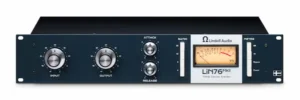
The biggest mistake engineers can make when evaluating the LiN76 mkII is assuming it is simply a cosmetic refresh of the original unit. Lindell’s redesign addresses several practical limitations that affected the first-generation hardware.
The most significant addition is stereo linking. While many engineers use 1176-style compressors primarily on mono sources, stereo operation becomes valuable for drum buses, parallel processing chains, keyboards, room microphones, and certain mix-bus applications. The original LiN76 required workarounds that limited those possibilities.
The mkII also introduces a redesigned compression circuit, lower-noise operation, true bypass functionality, and an internal power supply. None of these changes alter the fundamental FET compression philosophy, but they improve day-to-day usability inside modern studio environments.
Perhaps more importantly, the mkII continues Lindell’s approach of borrowing characteristics from multiple historical 1176 revisions rather than attempting to recreate a single vintage unit. The result is a compressor designed around practical flexibility rather than historical accuracy.
For engineers considering an upgrade from the original LiN76, these workflow improvements may ultimately matter more than any subtle tonal differences. The strongest argument for the mkII is not that it sounds radically different. It is that it integrates more naturally into contemporary production systems.
How Does the LiN76 mkII Actually Sound?
The LiN76 mkII behaves much like engineers expect a modern 1176-inspired design to behave. It is fast, assertive, and capable of making sources feel more immediate without relying heavily on tonal coloration. The compressor tends to draw attention to transient structure and dynamic movement rather than dramatically altering frequency balance.
Vocals often become more stable and forward in a mix, while drums can gain additional urgency and density. Bass instruments typically benefit from improved note-to-note consistency without losing the attack information that helps them remain audible on smaller playback systems.
The overall presentation feels more controlled than overtly colored. Engineers looking for extreme transformer saturation or exaggerated vintage character may find other designs more aggressive. The LiN76 mkII is strongest when used as a practical production tool rather than a special-effect processor.
How the LiN76 mkII Fits Into Real Mixing Workflows
One of the biggest misconceptions surrounding outboard compression is that hardware automatically improves every source it touches. In practice, the most effective hardware processors tend to serve specific roles within a production chain. Their value comes from solving particular problems more efficiently than alternative tools, not from acting as universal upgrades.
The LiN76 mkII is a good example. Its strengths emerge when a source benefits from fast dynamic control, aggressive transient handling, and a degree of tonal attitude that becomes part of the performance itself. Those characteristics make it particularly relevant during recording, where compression decisions influence not only the captured signal but also the way musicians respond while performing.
Vocals remain one of the most practical applications. Modern vocal production rarely relies on a single stage of compression. Dynamic control often begins during tracking and continues throughout editing, mixing, and final mastering preparation. A hardware FET compressor can reduce large level swings before the signal reaches the converter, creating a more stable recording without forcing downstream processors to work excessively hard. The benefit is less about replacing later compression and more about capturing a performance that is already moving in the right direction.
This becomes especially noticeable when working with singers whose projection changes dramatically from phrase to phrase. Instead of correcting those inconsistencies entirely in the mix, engineers can establish a more controlled foundation at the recording stage while preserving the energy and articulation that make the performance compelling.
Drums reveal a different side of the workflow equation. Fast FET compression can reshape envelope behavior in ways that directly affect perceived impact. On close microphones, moderate settings can increase density while preserving enough attack to maintain punch. On room microphones, more aggressive gain reduction often produces the explosive, larger-than-life ambience that has become a staple of modern rock, pop, and alternative productions. This technique remains popular because it changes the emotional perception of a drum performance rather than simply reducing dynamic range.
Bass guitar is another area where the LiN76 mkII makes practical sense. Consistent low-frequency information plays a major role in mix translation, particularly once a project reaches the mastering stage. Bass performances with excessive level variation often create headroom problems that become difficult to address later. This is one of the reasons proper mix preparation before mastering extends far beyond simple peak management. Fast FET compression can improve note-to-note consistency while preserving the attack information that helps bass remain audible across smaller playback systems.
Viewed through a workflow lens, the LiN76 mkII is not a compressor that excels because it can be inserted everywhere. It excels when used on sources where speed, control, and musical aggression contribute directly to how a performance is captured and how that performance survives the transition into a finished mix.
Tracking Versus Mixing: Where Hardware Compression Creates the Most Value
The debate surrounding hardware compression often focuses on sound quality, but workflow usually has a greater impact on the final decision. For most engineers evaluating a unit like the LiN76 mkII, the more important question is not whether hardware sounds better than software. It is where hardware creates advantages that software cannot fully replicate.
In a modern mixing environment, software remains difficult to challenge. High-quality 1176 emulations offer instant recall, automation, session portability, and the ability to run across dozens of tracks simultaneously. For engineers working under tight revision schedules, those advantages are operational rather than sonic. They directly affect how quickly projects can move from one version to the next.
The argument for hardware becomes much stronger during recording. Compression applied while tracking influences more than the recorded waveform. It becomes part of the monitoring experience that musicians hear while performing. Singers often react differently when dynamics are controlled in real time. Notes may be held longer, phrases may be delivered with greater consistency, and performers frequently become more confident when monitoring feels stable and polished.
Those decisions occur before the recording reaches the DAW. Once the performance has been captured, the opportunity to influence that interaction has already passed. A plugin can recreate the compression curve later, but it cannot recreate the performer’s response to hearing compression during the session itself.
This distinction helps explain why many experienced engineers continue investing in hardware despite the quality of modern software alternatives. The most meaningful benefits often appear at the source rather than at the mix stage. When hardware compression improves the recording process, every subsequent production step begins with a stronger foundation.
For that reason, the LiN76 mkII makes the strongest case as a tracking tool. Engineers purchasing it primarily for mixdown duties may find that today’s software ecosystem already covers much of the same territory. Engineers using it to shape performances before conversion are more likely to experience benefits that remain difficult to duplicate entirely inside the box.
What the Marketing Claims Do Not Fully Explain
 Most hardware compression is still marketed through familiar language: vintage heritage, analog character, classic circuitry, and the promise of a more musical signal path. While those attributes may influence purchasing decisions, they rarely determine whether a piece of equipment becomes a permanent part of an engineer’s workflow.
In practice, experienced engineers tend to evaluate hardware through a different lens. The most important question is not whether a compressor captures the spirit of a legendary design. The question is whether it improves the speed, quality, and consistency of real production decisions.
That distinction matters because the market surrounding products like the LiN76 mkII has changed dramatically.
As a result, the standard for evaluating hardware has become significantly higher. Sound alone is rarely enough. A compressor must contribute something meaningful to the recording or mixing process that justifies additional routing, maintenance, recall management, and physical studio space.
This is where many product discussions become disconnected from daily studio reality. Most engineers considering an affordable 1176-style compressor are not deciding between the LiN76 mkII and a pristine vintage unit. They are deciding whether a dedicated hardware processor offers enough practical advantages over the software tools they already use every day.
Viewed from that perspective, the value of the LiN76 mkII becomes less about historical accuracy and more about workflow efficiency. If it improves source capture, accelerates tracking decisions, or consistently delivers results that engineers prefer during recording, its role becomes easy to justify. If those benefits are absent, the convenience of modern software becomes increasingly difficult to ignore.
That reality represents one of the biggest shifts in professional audio production. Hardware is no longer evaluated solely on how it sounds. It is evaluated on how effectively it earns its place inside an already mature production ecosystem.
Critical Evaluation: Where the LiN76 mkII Delivers and Where It Falls Short
The strongest pieces of studio hardware tend to justify their existence through repeatability. Engineers return to them session after session because they consistently solve a particular problem faster, better, or more reliably than the available alternatives. The LiN76 mkII largely succeeds on those terms.
Its strengths are not difficult to identify. Anyone familiar with FET compression will immediately recognize the types of sources that benefit from its behavior. Vocals that need to remain forward without becoming lifeless, bass performances that require tighter dynamic control, and drums that depend on transient energy all fall squarely within its comfort zone. The compressor does exactly what experienced engineers expect a fast FET design to do.
Where expectations require adjustment is in the magnitude of the improvement. Modern production environments are already saturated with dynamic processing. Many recordings arrive at the mix stage having passed through multiple layers of compression, saturation, clipping, sample enhancement, vocal processing chains, and loudness optimization tools. Against that backdrop, hardware rarely produces the dramatic before-and-after transformation that marketing materials often imply.
This is particularly true in dense contemporary productions. Once a mix contains stacked vocals, layered instrumentation, parallel processing, and aggressive loudness management, subtle differences between processing tools become increasingly dependent on monitoring quality and engineering decisions. The ability to identify those differences does not necessarily mean they will remain equally significant once the record reaches streaming platforms and consumer playback systems. That evaluation becomes heavily dependent on monitoring accuracy, converter performance, and playback analysis, which is why devices such as the RME ADI-2 Pro EX continue to attract attention in modern mastering and critical listening environments.
That reality does not weaken the case for the LiN76 mkII. It simply defines its role more accurately. The compressor is most valuable when it becomes part of the recording process rather than a last-minute attempt to elevate an already finished production. Engineers expecting a hardware purchase to compensate for arrangement issues, monitoring limitations, or inconsistent recording techniques are likely to be disappointed.
Viewed realistically, the LiN76 mkII is not a shortcut to a more professional mix. It is a focused production tool designed for engineers who already understand where FET compression provides an advantage. In those situations, it can become a reliable part of the workflow. Outside of them, its contribution may be far less dramatic than its analog pedigree suggests.
The Recall Problem Modern Hardware Cannot Escape
 One of the least discussed aspects of outboard hardware has nothing to do with sound quality. It has to do with project management.
Modern production workflows increasingly revolve around revisions. Clients request alternate versions weeks after approval. Labels ask for instrumentals, clean edits, performance tracks, streaming deliverables, and format-specific exports long after the original mix session has been completed. What was once a finished project can quickly become an active project again.
In that environment, recall becomes more than a convenience feature. It becomes part of the economic reality of running a studio.
Software processors retain every setting inside the session file. Hardware processors require documentation, photographs, recall sheets, or manual reconstruction. None of these approaches are inherently problematic, but they introduce additional variables into a workflow that many engineers no longer encounter when working entirely in the box.
The impact becomes more significant as project volume increases. Managing a single mix through hardware is relatively straightforward. Managing dozens of active projects with overlapping revision schedules requires considerably more discipline. Every piece of outboard gear effectively adds another layer of session management that must remain accurate if revisions are expected to match earlier deliveries.
This reality often surprises engineers purchasing their first hardware compressor. The discussion usually focuses on tone, character, and analog behavior, while the long-term operational implications receive far less attention. Yet for many commercial studios, workflow efficiency ultimately affects profitability as much as sound quality.
The LiN76 mkII is subject to the same limitations as any other hardware processor. Its strongest justification appears in tracking scenarios where compression decisions become part of the recorded source and are intentionally committed early in the production process. As a constantly changing mix processor across multiple active projects, the advantages become more dependent on an engineer’s willingness to absorb the additional recall workload that hardware inevitably introduces.
Competitive Positioning: How the LiN76 mkII Compares to Alternative Options
The LiN76 mkII enters one of the most competitive segments of the outboard market. Engineers looking for a FET compressor are not limited by a lack of options. They can choose between hardware recreations at multiple price points, premium boutique designs, vintage units, and software emulations that have become increasingly difficult to fault in everyday mixing situations.
That makes competitive positioning particularly important. The question is not whether the LiN76 mkII can perform the tasks expected of a 1176-style compressor. The question is whether it offers the most sensible balance of cost, workflow, and functionality compared to the alternatives available today.
| Product | Price Tier | Best For | Tracking Value | Recall Convenience |
|---|---|---|---|---|
| Lindell LiN76 mkII | Accessible hardware FET compression with straightforward operation | Tracking vocals, bass, drums, hybrid studios | Competes in a crowded market segment | |
| Warm Audio WA76 | Established reputation among budget-conscious hardware buyers | General-purpose recording and tracking | Similar target audience and workflow role | |
| Universal Audio 1176 Hardware | Premium build quality and long-standing studio credibility | Professional commercial facilities | Substantially higher investment | |
| UAD 1176 Collection | Instant recall, automation, and scalability | Mix-heavy production environments | No impact on source capture during recording | |
| Softube FET Compressor | Excellent workflow integration and low operational overhead | In-the-box mixing workflows | Cannot influence tracking decisions |
Among affordable hardware FET compressors, the comparison most engineers will make is LiN76 mkII versus Warm Audio WA76. Both target a similar buyer and both deliver familiar 1176-style behavior. The deciding factor is less about compression topology and more about workflow preferences, feature set, and overall studio integration.
What separates the LiN76 mkII from many alternatives is not necessarily its compression topology. Nearly every product in this category is attempting to deliver some variation of the same fundamental FET behavior. The differentiator is workflow.
Engineers who primarily work inside a DAW will find increasingly strong competition from software solutions that eliminate recall concerns and scale effortlessly across large sessions. Engineers who regularly track vocals, bass, and live instruments may arrive at a different conclusion. For them, the ability to shape dynamics before conversion can carry more value than another plugin added to an already crowded processing arsenal.
The LiN76 mkII occupies a practical middle position within the market. It avoids the pricing associated with premium recreations while offering a more direct hardware experience than software alternatives. Whether that balance makes sense depends less on the compressor itself and more on how an engineer prefers to build and manage a production workflow.
Who Should Consider the LiN76 mkII?
The LiN76 mkII makes the most sense for engineers who still view recording as an active part of the production process rather than simply a way of capturing material for later correction. Its strengths become most apparent when compression is used to influence performances before they reach the DAW, not when it is treated as another processing option during mixdown.
Studios that regularly record vocals, bass, guitars, or live drums are likely to extract the greatest value from this type of hardware. In those environments, dynamic control is often applied early to improve monitoring, reduce extreme level swings, and establish a more consistent foundation for later production decisions. The compressor becomes part of the recording chain rather than an optional enhancement added after the fact.
It can also appeal to engineers building hybrid workflows who want a small amount of dedicated outboard processing without committing to large-format analog setups. A single FET compressor remains one of the more practical entry points into hardware because its applications extend across multiple source types and production styles.
The case becomes particularly strong for users who frequently work with vocalists. Real-time compression during tracking can influence performance, confidence, and monitoring in ways that software processing applied later cannot fully reproduce. For many engineers, that interaction remains one of the most compelling reasons to own hardware in the first place.
Viewed through that lens, the LiN76 mkII is best suited for recording-focused environments where source capture remains a priority. Its value increases when compression decisions are made early and intentionally, rather than deferred entirely to the mixing stage.
Who Should Probably Look Elsewhere?
The LiN76 mkII is not the kind of hardware purchase that automatically improves every studio setup. Its value depends heavily on how often an engineer records audio and how much importance is placed on shaping signals before they enter the DAW.
For engineers working almost entirely inside the box, the practical argument becomes harder to make. Modern FET compressor plugins already deliver excellent results while offering advantages that hardware cannot match, including instant recall, automation, portability, and unlimited deployment across a session. When the majority of work takes place during mixing rather than recording, those benefits often outweigh the advantages of dedicated outboard processing.
The same logic applies to producers who rarely track external sources. A compressor derives much of its value from influencing performances, monitoring chains, and source capture. If recording sessions are infrequent, the hardware may spend more time occupying rack space than solving meaningful production problems.
Mastering-focused workflows represent another area where the LiN76 mkII is unlikely to become a central tool. FET compressors are typically chosen for energy, attitude, and aggressive dynamic control rather than the transparency and precision often required during final release preparation.
Expectation management also matters. Engineers hoping for dramatic sonic improvements over today’s premium software emulations may find the differences smaller than anticipated, particularly once a production reaches its final mixed form. In many cases, monitoring quality, room acoustics, recording technique, and arrangement decisions contribute more to the finished result than the choice between a capable hardware FET compressor and a well-designed plugin.
That does not diminish the LiN76 mkII. It simply places it in the category of specialized production tools rather than universal studio upgrades. The engineers who benefit most are those whose workflows naturally create opportunities for hardware compression to influence the recording process itself.
Real-World Production Perspective
A compressor should ultimately be judged by what happens after the mix leaves the studio. The most flattering settings in a controlled monitoring environment mean very little if they create problems once the record enters the distribution chain.
This is particularly relevant with FET compression because its strengths and weaknesses often become more apparent as a project moves toward release. Fast gain reduction can improve perceived control, reduce transient volatility, and help create a more stable balance between elements competing for attention. Used strategically, that behavior can make a mix feel more cohesive and easier to manage during mastering.
The challenge is that the same characteristics can quickly become counterproductive when pushed too far. Engineers pursuing aggressive level targets often discover that compression and loudness are not interchangeable concepts, a misunderstanding that frequently appears in discussions around loudness versus clipping in mastering. Excessive compression often reduces contrast between musical events, limiting the sense of scale that allows a record to remain engaging over repeated listening. A source that sounds impressively dense in solo or within a studio environment may contribute to listener fatigue once loudness normalization, codec conversion, and consumer playback systems enter the equation.
From a mastering perspective, dynamic consistency is valuable, but so is preserving enough transient information to maintain impact after final level optimization. Engineers frequently discover that records with slightly more dynamic freedom survive the mastering process more gracefully than mixes that arrive already heavily controlled at every stage.
This is where the LiN76 mkII should be viewed as a precision tool rather than a shortcut to loudness. Its greatest contribution is often the ability to control dynamic behavior before those inconsistencies become larger downstream problems. That can simplify mixing decisions, improve low-frequency stability, and create a more manageable foundation for mastering.
At the same time, the compressor offers no protection against poor judgment. Like every high-speed dynamics processor, it rewards restraint and exposes excess. Engineers who understand where compression improves translation are likely to benefit from it. Engineers who use it primarily to chase density or loudness may discover that the consequences become far more visible once the record reaches real-world playback conditions.
The Relationship Between Compression and Mastering
From a mastering perspective, compression is rarely evaluated in isolation. During a professional mastering session, dynamic behavior is assessed alongside tonal balance, stereo presentation, translation, and headroom management, which is why understanding how professional mastering actually works is often more important than focusing on any single processing stage. What matters is how those decisions affect the mix once final level optimization begins. Engineers often spend more time dealing with the consequences of earlier dynamic processing choices than correcting frequency balance issues.
FET compression deserves particular attention because of how effectively it can reshape transient behavior. Applied with restraint, it can improve consistency, stabilize vocal presentation, tighten low-frequency performance, and create a mix that responds more predictably during mastering. Applied aggressively, it can remove exactly the information that helps a record retain depth, punch, and dimensionality after final processing.
Vocals are a common example. Compression that feels exciting during mixing can become problematic once additional loudness processing is introduced. Over-controlled vocal tracks often appear locked to the front of the soundstage, leaving little room for mastering adjustments to enhance depth or spatial perception. Similar issues can emerge in drum-heavy productions, where excessive transient reduction limits the sense of impact that listeners often associate with professional releases.
Low-frequency material presents another challenge. Bass instruments that appear stable during mixing may still carry dynamic characteristics that influence limiter behavior later in the chain. Conversely, heavily compressed bass can reduce musical movement while offering surprisingly little improvement in available headroom. The relationship between control and loudness is rarely as straightforward as it appears during the mix stage.
This is where a compressor such as the LiN76 mkII can either help or hinder the mastering process. When used to address genuine dynamic problems, it often reduces the need for corrective intervention later. When used primarily to maximize density or perceived loudness, it can create limitations that become increasingly difficult to undo once the mix is finalized. Many of the issues later diagnosed as mastering failures actually originate from earlier mix decisions, a pattern that appears repeatedly in common mastering problems.
For mastering engineers, the goal is rarely maximum compression. The goal is predictable behavior. The most successful mixes tend to arrive with enough control to support level optimization while retaining enough dynamic flexibility to preserve impact, contrast, and musical movement. A well-used FET compressor can contribute to that balance. An overused one can work directly against it.
Pros and Cons
- Useful tracking compressor for vocals, bass, and drums
- Stereo linking expands workflow flexibility
- More affordable than premium 1176 recreations
- Fits naturally into hybrid studio setups
- Recall limitations compared to software
- Heavy competition from modern plugins
- Less compelling for mixing-only workflows
- Not designed for transparent mastering applications
Verdict
The Lindell LiN76 mkII arrives in a market where proving relevance is arguably more difficult than proving sound quality. Modern engineers already have access to excellent FET compression in software form, and many of those tools are capable of producing professional results under demanding commercial conditions.
That reality makes the LiN76 mkII less of a sonic decision and more of a workflow decision. Its strongest argument is not that it recreates a classic compressor topology. It is that it allows engineers to make compression decisions earlier in the production process, where those decisions can influence source capture, monitoring, and performer interaction rather than simply altering an already recorded signal.
Viewed through that lens, the compressor succeeds. It offers the speed, control, and attitude engineers typically expect from a FET design while remaining accessible to studios that are not operating at the boutique end of the hardware market. Its most convincing applications remain vocals, bass, drums, and other sources where dynamic control directly affects the way a performance is recorded.
At the same time, the LiN76 mkII does not fundamentally change the realities of modern production. It does not eliminate recall challenges, replace disciplined engineering decisions, or render premium software alternatives obsolete. Engineers whose workflows revolve around rapid revisions, large session counts, and complete portability may discover that software continues to offer a more efficient solution.
The strongest case for the LiN76 mkII comes from studios that still place significant value on recording decisions. In those environments, hardware compression remains relevant for the same reason it has remained relevant for decades: not because software failed to improve, but because source capture continues to matter. The tools may evolve, but the importance of getting a signal under control before it reaches the mix has not disappeared.
For engineers seeking a practical entry into hardware FET compression, the LiN76 mkII represents a rational and workflow-focused option. For engineers expecting a dramatic leap beyond what modern software already provides, the differences are likely to be smaller—and more situational—than marketing narratives often suggest.

Yurii Ariefiev is a mastering engineer and audio production editor whose work focuses on mix translation, dynamic control, and release readiness across modern playback systems. His reviews evaluate audio tools through real recording, mixing, and mastering workflows rather than manufacturer specifications or marketing claims.
This analysis examines the Lindell LiN76 mkII from a production and mastering perspective, with particular attention to tracking decisions, dynamic management, workflow efficiency, and the long-term impact of compression choices on finished releases.
FAQ
Does the Lindell LiN76 mkII behave more like a vintage 1176 or a modern compressor?
Its workflow and response are rooted in the traditional FET compression approach. Fast attack times, aggressive transient control, and a forward presentation are much closer to the classic 1176 philosophy than to modern transparent compressors.
Can the LiN76 mkII be used during recording without committing too heavily to compression?
Yes. Many engineers use moderate gain reduction while tracking to control peaks and improve monitoring without permanently locking the performance into an overly compressed sound.
Will a hardware FET compressor improve vocal recordings more than a plugin?
Not necessarily. The biggest advantage comes from influencing the signal before conversion and affecting what the performer hears while recording. The difference is often workflow-related rather than purely sonic.
Is the LiN76 mkII suitable for parallel drum compression?
Yes. FET compressors remain a popular choice for parallel drum processing because they can add density, sustain, and excitement without completely removing transient impact from the original signal.
How much gain reduction is typically used with an 1176-style compressor?
It depends on the source, but many engineers start conservatively. A few decibels of gain reduction often provide better long-term results than aggressively controlling every transient.
Can excessive FET compression create problems during mastering?
Yes. Over-compression can reduce depth, transient definition, and dynamic contrast, limiting the options available during final level optimization.
Is the LiN76 mkII better suited for analog studios or hybrid workflows?
Hybrid environments are arguably the most natural fit. The compressor can provide hardware control during recording while the rest of the production remains inside the DAW.
Does a hardware compressor improve mix translation across streaming platforms?
Only indirectly. Effective dynamic control can create a more stable mix, but translation still depends on arrangement, balance, monitoring accuracy, and mastering decisions.
What is the biggest advantage of owning a hardware FET compressor in 2026?
For many engineers, it is the ability to shape performances at the recording stage rather than correcting problems later during mixing.
Is the LiN76 mkII a better investment than buying another compressor plugin?
That depends on workflow. Engineers who regularly record live sources may benefit from dedicated hardware. Engineers working entirely in the box may gain more practical value from software.
Is the LiN76 mkII worth upgrading from the original LiN76?
For engineers who wanted stereo linking, true bypass, lower-noise operation, and a more modern hardware implementation, the upgrade is easier to justify. Those satisfied with the original unit’s workflow may find the differences more evolutionary than revolutionary.
Can the LiN76 mkII be used on a mix bus?
Yes, particularly when stereo linking is required. However, most engineers still use 1176-style compressors more frequently on individual sources and parallel processing chains than on a primary stereo bus.