Audeze MM-520 Review: A New Reference for Mixing and Mastering or Just Another Premium Studio Headphone?
The Audeze MM-520 enters one of the most competitive segments of professional audio. Engineers looking for a serious mixing or mastering headphone already have established options, from the Neumann NDH 30 and Sennheiser HD 800S to Audeze’s own MM-500 and LCD-X. At this level, the conversation is no longer about frequency response graphs or driver technology. It is about translation.
Modern production workflows place more responsibility on headphones than ever before. Commercial releases are routinely edited, mixed, and revised in home studios, temporary workspaces, and rooms that were never designed for critical monitoring. In those environments, headphones often become the final checkpoint before a mix reaches mastering or distribution.
That raises an important question for engineers considering the MM-520: does it provide information that leads to better decisions, or simply more information?
The distinction matters. Plenty of premium headphones deliver impressive detail. Far fewer help engineers judge vocal balance, low-end relationships, transient control, and stereo width in ways that consistently translate outside the studio. The MM-520 is being positioned as a professional production tool rather than an audiophile product, which puts its focus squarely on decision-making rather than spectacle.
Contents
- Understanding the Audeze MM-520 Positioning
- Mixing Workflow Implications
- Low-End Evaluation and Mastering Relevance
- Audeze MM-520 vs MM-500
- Audeze MM-520 vs Neumann NDH 30
- Audeze MM-520 vs LCD-X
- MM-520 for Dolby Atmos Production
- Why Headphone Translation Still Fails in 2026
- Mastering Perspective: What Headphones Cannot Reveal
- Verdict
Why Headphone Monitoring Has Become a Critical Part of Modern Production
Headphones were once a secondary reference in professional studios. They handled editing, tracking, and occasional quality control while monitors remained the primary source for mix decisions.
That division no longer reflects how many records are made.
A growing percentage of professional work now happens outside purpose-built control rooms. Producers build sessions on laptops, mix engineers review revisions while traveling, and independent artists work in untreated spaces where speaker monitoring is limited. Even engineers with well-designed rooms regularly use headphones as a second opinion before approving a mix.
This shift has changed the criteria used to evaluate studio headphones. Impressive detail is no longer enough. Engineers need monitoring that supports reliable decisions across multiple playback environments.
That is why models such as the HD 650, HD 800S, NDH 30, DT 1990 Pro, and LCD-X remain relevant years after release. Their value comes from predictability. Engineers learn how mixes created on those systems behave in cars, earbuds, Bluetooth speakers, streaming platforms, and consumer playback systems.
The MM-520 enters a market where trust matters more than specifications. Professional engineers are not looking for the most exciting listening experience. They are looking for monitoring that reduces uncertainty before a mix leaves the studio.
Audeze MM-520 Specifications at a Glance
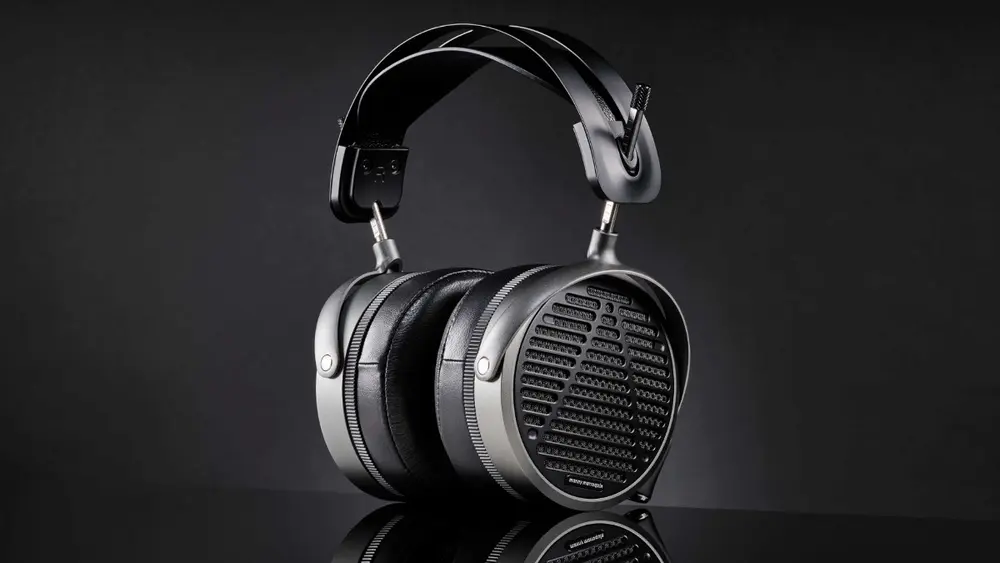
| Driver Type | Planar Magnetic |
| Acoustic Design | Open-Back |
| Magnetic Structure | Fluxor™ Magnet Array |
| Diaphragm | Ultra-Thin Uniforce™ Diaphragm |
| Frequency Response | 10 Hz – 50 kHz |
| Impedance | 18 Ohms |
| Sensitivity | 101 dB / 1mW |
| Weight | Approximately 495 g |
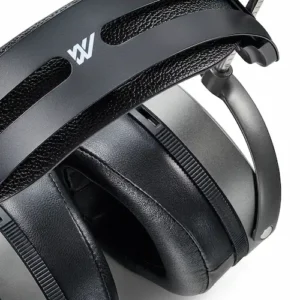
The MM-520 uses Audeze’s planar magnetic driver platform combined with the company’s Fluxor magnet structure and Uniforce diaphragm technology. Unlike many studio headphones designed primarily for casual listening, the MM-520 was developed specifically for professional monitoring applications where translation accuracy and long-session consistency take priority over entertainment-oriented tuning.
Unlike many lightweight dynamic-driver headphones commonly found in project studios, the MM-520 follows Audeze’s traditional planar magnetic design philosophy. That brings advantages in low-frequency control and transient behavior, but also introduces practical considerations involving weight, long-session comfort, and overall studio ergonomics. For engineers working eight or more hours per day, those factors become part of the production workflow rather than secondary purchasing considerations.
Understanding the Audeze MM-520 Positioning
 The MM-520 arrives in a category where technical performance is no longer the primary differentiator. Most headphones at this price point deliver extended frequency response, low distortion, and enough resolution for professional work. The real question is whether they help engineers make decisions that survive outside the studio.
That question has become increasingly relevant as headphone-based production workflows continue to expand. Engineers are spending more hours mixing on headphones than at any point in the industry’s history, yet translation problems remain common. Mixes that sound balanced in isolation can still fall apart on consumer playback systems, not because information was missing, but because it was presented in a misleading way.
This is where the MM-520 appears to separate itself from many competing designs.
Some headphones create an immediate impression through exaggerated detail, aggressive transient presentation, or unusually wide stereo imaging. Those characteristics can be useful for editing and problem detection, but they do not always translate into better mix decisions. In some cases, they encourage engineers to fix problems that do not exist or overlook problems that become obvious once the mix reaches speakers.
Professional engineers eventually learn that monitoring accuracy is not defined by how much information a system reveals. It is defined by how accurately that information reflects real-world playback.
A headphone that makes vocal harshness feel worse than it is can lead to over-processing. A headphone that exaggerates stereo width can encourage narrower mixes. A headphone that presents low-end energy differently from speaker systems can create bass decisions that require correction later in the workflow.
The MM-520 is entering the market as a production-focused tool aimed at reducing those variables. Rather than competing on spectacle, it is positioned around predictability, consistency, and translation confidence—qualities that tend to matter far more during a ten-hour mix session than they do during a five-minute demo.
MM-520 Design Philosophy and Engineering Approach
The MM-520 enters a category already populated by highly capable professional headphones, which makes differentiation difficult. Rather than competing purely on technical specifications, Audeze appears to position the MM-520 around production workflow and long-term decision making.
Professional engineers rarely replace monitoring systems because they need more detail. They replace them when existing references create doubt. A headphone that reduces second-guessing, improves confidence in low-frequency decisions, and remains comfortable through long sessions can have a greater impact on workflow than small improvements in measurable performance. That philosophy appears central to the MM-520, which is positioned less as a showcase product and more as a production reference built around decision-making consistency.
Mixing Workflow Implications
The value of a monitoring system is measured by the decisions it influences. Frequency response charts, distortion figures, and driver technology matter, but none of them determine whether a mix survives release.
During a typical mixing session, engineers are constantly making judgment calls. Is the vocal actually harsh, or simply exposed? Is the 808 overpowering the mix, or carrying the record the way the genre demands? Is the hi-hat creating listener fatigue, or adding necessary energy?
The challenge becomes even greater when spatial processors, harmonizers, and creative effects enter the workflow. Devices such as the Eventide H9 Harmonizer Gen 2 can dramatically alter width, depth, and perceived balance, making monitoring accuracy critical when evaluating how those decisions will translate outside the studio.
Most experienced engineers can identify these issues. The harder task is determining how aggressively they should be addressed.
This is where monitoring becomes critical. Headphones that exaggerate detail often encourage unnecessary corrections. Engineers trim top end that would have translated perfectly, reduce stereo width that already worked, or pull back low-frequency energy that was essential to the production. The result is a technically clean mix that feels smaller than intended.
The opposite problem is equally common. Monitoring systems that soften transients, smooth over harshness, or underrepresent low-end problems can create false confidence. Issues remain hidden until the mix reaches speakers, streaming platforms, or client review sessions.
The MM-520 enters a market where engineers are increasingly looking for balance rather than maximum analysis. For modern genres such as pop, hip-hop, trap, drill, EDM, and contemporary R&B, monitoring decisions are often less about detecting problems and more about preserving impact while maintaining translation.
That distinction matters because today’s releases are consumed on wildly different playback systems. A mix must hold together on AirPods, car stereos, Bluetooth speakers, laptops, smartphones, and streaming platforms applying their own encoding and normalization processes.
In that environment, the most useful monitoring systems are not necessarily the ones that reveal the most detail. They are the ones that produce repeatable decisions from project to project. Engineers value consistency because consistency reduces revisions, speeds up workflow, and improves translation across the systems that ultimately matter to listeners.
Low-End Evaluation and Mastering Relevance
Low-frequency judgment remains one of the most difficult aspects of modern mixing and mastering. Contemporary productions often depend on sub-bass content that occupies a significant portion of the record’s perceived energy, particularly in hip-hop, trap, drill, EDM, and bass-driven pop.
For many engineers, headphones have become the primary tool for evaluating that range. Small rooms, untreated spaces, and inconsistent monitoring environments frequently make low-end decisions more predictable on headphones than on speakers.
That advantage comes with limitations.
Headphones remove room modes, standing waves, and acoustic interference, making bass easier to hear in isolation. They also remove the physical interaction that occurs when low frequencies are reproduced through loudspeakers. As a result, the amount of bass an engineer hears and the amount of bass a listener experiences are not always the same thing.
Because of this, sub-bass extension alone is not particularly meaningful when evaluating a professional monitoring headphone. Most premium planar magnetic designs reproduce deep low frequencies without difficulty. What separates useful production tools from impressive listening devices is the ability to support accurate low-end decisions.
In practical terms, engineers need to evaluate whether a kick drum dominates the groove, whether an 808 masks vocal intelligibility, whether low-frequency buildup reduces available headroom, and whether bass energy remains consistent across different playback systems.
Those decisions become even more important during mastering. Excessive subharmonic energy can reduce loudness efficiency, trigger unwanted limiter behavior, and create translation problems once the master reaches streaming platforms and consumer playback systems. Many of the symptoms engineers attribute to monitoring are actually low-end mastering issues that appear later in the release process, particularly when bass relationships become unstable across playback systems. Fix Bass in Master explores those problems in greater detail.
The MM-520’s long-term value will depend less on how much bass it reproduces and more on how reliably engineers can judge bass relationships while working on it. If low-end decisions made on the MM-520 consistently translate to speakers, cars, earbuds, and Bluetooth systems, it becomes more than a monitoring headphone. It becomes a trusted production reference.
Audeze MM-520 vs MM-500
 For engineers already familiar with the MM-500, the MM-520 raises a practical question: does it change the way decisions are made, or does it simply deliver a different version of the same experience?
The MM-500 earned its reputation by doing something many high-end headphones struggle to achieve. It provided enough detail for critical work without constantly drawing attention to itself. Engineers could spend hours mixing without feeling pressured into endless corrections or second-guessing every move.
Both models target professional production rather than audiophile listening, but they occupy slightly different positions inside Audeze’s monitoring lineup. The MM-500 established itself as a trusted reference among mix engineers, while the MM-520 appears focused on refining long-session usability, monitoring confidence, and day-to-day workflow efficiency.
Beyond sonic considerations, the comparison also extends to daily usability. Engineers spending eight or more hours per day on headphones tend to notice factors that never appear on a specification sheet. Weight distribution, clamp force, pad comfort, and overall fatigue can influence decision-making just as much as frequency response. In professional environments, a headphone that remains comfortable through an entire mixing or mastering session often becomes more valuable than one that offers marginal gains in technical performance.
That balance is one of the reasons the MM-500 became a common sight in professional workflows. It delivered the resolution expected from a premium planar magnetic design while maintaining the predictability required for real-world production work.
The MM-520 enters the market from a similar perspective. Rather than competing on exaggerated detail retrieval or a dramatically different tonal signature, it appears aimed at refining how engineers evaluate balance, dynamics, and low-frequency relationships over long sessions.
For mixing engineers, that distinction is more important than it may initially sound. Most production mistakes are not caused by an inability to hear problems. They happen because monitoring systems distort the perceived importance of those problems.
When upper-midrange detail is pushed too far forward, engineers often remove energy that should remain in the mix. When transients appear more aggressive than they are, compression decisions become overly cautious. When bass feels larger than it will on speakers, low-end balances frequently require correction later in the workflow.
The MM-500 established itself as a reliable reference because it generally avoided those traps. The MM-520 will ultimately be judged by the same standard.
Engineers considering an upgrade should not expect a dramatic transformation in sound quality. Professional monitoring rarely improves through revolutionary leaps. More often, the differences that matter emerge over dozens of sessions as engineers develop confidence in the decisions they make.
For current MM-500 owners, the purchasing decision is likely to come down to workflow rather than specifications. If the MM-520 delivers more consistent translation, better low-end judgment, or greater confidence during long mixing sessions, the upgrade becomes easier to justify. If translation remains effectively identical between the two models, many engineers may find the MM-500 continues to meet their needs perfectly well.
Audeze MM-520 vs Neumann NDH 30
The Neumann NDH 30 has become a benchmark in professional headphone monitoring for one reason: it behaves more like a well-calibrated pair of studio monitors than most headphones on the market.
That reputation makes it one of the most relevant comparisons for the Audeze MM-520.
Although both models target mixing and mastering professionals, they approach the task differently. The NDH 30 focuses on tonal balance, spatial realism, and translation consistency. Many engineers describe it as one of the easiest headphones to trust when moving between headphones and speakers because its presentation rarely exaggerates what is happening in the mix.
The MM-520 takes a different approach. Like many high-end planar magnetic designs, it offers exceptional visibility into low-frequency content, transient behavior, and fine detail within dense arrangements. That additional information can be valuable when working on modern productions where bass relationships often determine the impact of the entire record.
The difference becomes most noticeable in genres built around sub-bass energy. Trap, drill, hip-hop, EDM, and contemporary pop frequently contain low-frequency movement that is difficult to evaluate on conventional monitoring systems. In those situations, the MM-520 may provide a clearer picture of how kick drums, 808s, and subharmonic elements interact.
The NDH 30 remains difficult to beat for engineers whose primary concern is translation. Its reputation was built on predictability. Mixes that work on the NDH 30 generally require fewer surprises when checked on speakers, in cars, or on consumer playback systems.
That does not automatically make it the better headphone.
Engineers working primarily on speakers often prefer the NDH 30 because it feels like a natural extension of an existing monitor-based workflow. Engineers spending long hours mixing on headphones may find the MM-520 more useful if its low-end presentation helps them make faster and more confident decisions.
Ultimately, this comparison is less about technical superiority and more about monitoring philosophy. The NDH 30 prioritizes speaker-like translation. The MM-520 prioritizes visibility into the details that modern productions often hide. Which approach is more valuable depends entirely on how and where the work is being done.
Audeze MM-520 vs LCD-X
The comparison between the MM-520 and LCD-X is particularly interesting because both models originate from the same manufacturer yet target slightly different priorities inside professional workflows.
The LCD-X built its reputation as one of the most detailed planar magnetic headphones available to audio professionals. Its ability to expose low-level information, transient detail, and low-frequency content has made it a popular choice among mixing engineers, mastering engineers, and producers working in critical listening environments.
The MM-520 appears to take a more focused approach. Rather than maximizing detail retrieval, it is positioned around monitoring consistency, long-session usability, and decision-making confidence. For engineers, that distinction can be more important than it initially appears.
Highly analytical monitoring systems sometimes encourage excessive correction. Engineers may spend time solving problems that become insignificant once the mix reaches consumer playback systems. The MM-520 seems designed to reduce that tendency by presenting information in a way that supports practical production decisions rather than purely analytical listening.
The LCD-X may remain the preferred option for engineers who want maximum visibility into every aspect of a mix. The MM-520 may appeal more to professionals seeking a dedicated production reference capable of supporting long mixing sessions, translation-focused workflows, and predictable decision making across multiple projects.
Ultimately, neither approach is inherently better. The choice depends on whether the engineer values maximum detail retrieval or long-term monitoring confidence as the primary goal.
Long Sessions, Fatigue and Daily Studio Use
Professional engineers often spend more time wearing headphones than listening to them. A product may sound exceptional during a thirty-minute demo yet become far less appealing after an eight-hour mixing or mastering session.
For that reason, comfort remains a legitimate production consideration rather than a lifestyle feature. Fatigue affects judgment. As concentration decreases, engineers become more likely to over-process material, overlook subtle problems, or make inconsistent decisions late in a session.
Weight distribution plays an important role here. Heavier headphones can create neck strain and listening fatigue over time, particularly for engineers who routinely work through long editing, mixing, and revision cycles. Clamp force is equally important. Excessive pressure may improve stability but can become distracting during extended use, while insufficient clamp force can make positioning inconsistent.
Pad design also influences workflow. Heat buildup, pressure points, and long-term comfort become increasingly noticeable as sessions extend beyond several hours. These factors rarely appear in frequency response measurements, yet they directly affect how long an engineer can work comfortably before fatigue begins influencing decisions.
For mastering engineers, the issue is even more significant. Mastering sessions often involve prolonged periods of concentrated listening where small tonal differences and subtle dynamic changes must remain easy to evaluate. Any source of physical discomfort can gradually reduce focus and confidence.
Ultimately, the best studio headphones are not simply the ones that sound accurate. They are the ones that remain predictable, comfortable, and trustworthy throughout an entire production day. Long-term usability often determines whether a headphone becomes a permanent studio reference or an occasionally used alternative.
Build Quality and Studio Durability
The MM-520 is designed for the kind of use that quickly exposes weaknesses in studio hardware. Daily transport between workspaces, repeated cable changes, long editing sessions, and constant handling place different demands on a professional headphone than typical consumer listening. Durability is not simply a convenience feature in that environment. It is part of workflow reliability.
For that reason, build quality is more than a cosmetic consideration. Durability directly affects reliability, consistency, and long-term ownership costs. Engineers working on commercial projects need equipment that performs predictably after hundreds of sessions, not just during initial evaluation.
The MM-520 inherits many of the construction priorities that have defined Audeze’s professional lineup for years. Rather than prioritizing minimal weight, the design focuses on structural rigidity, long-term durability, and the stability required for daily studio use. For engineers who spend hundreds of hours working on a single monitoring system, those factors often matter more than cosmetic design choices.
Studio equipment is ultimately judged over years rather than weeks. Monitoring systems that maintain comfort, consistency, and reliability over long periods often become trusted references regardless of how many newer alternatives enter the market.
MM-520 for Dolby Atmos Production
Dolby Atmos has changed the role headphones play in professional production. In traditional stereo workflows, headphones often serve as a secondary reference. In Atmos production, they frequently become part of the delivery validation process itself.
Most listeners never experience an Atmos mix in a calibrated immersive room. They hear a binaural render through headphones, earbuds, laptops, or consumer playback systems. That reality has made headphone translation a critical consideration for engineers working in immersive audio.
For Atmos workflows, the challenge extends beyond frequency balance. Engineers must evaluate object placement, perceived depth, front-to-back positioning, movement between channels, and the stability of binaural rendering across different playback environments.
This is where monitoring resolution becomes particularly important. Small spatial inconsistencies that may go unnoticed in a stereo mix can become distracting once objects begin moving within a three-dimensional environment.
The MM-520’s potential value in Atmos production is not tied to immersive playback itself. No headphone can replace a properly calibrated multi-speaker Atmos room. Instead, its usefulness comes from helping engineers verify how immersive decisions translate to the headphone-based listening environments where much of the audience will ultimately experience the content.
That distinction matters because Atmos delivery is increasingly consumed through services such as Apple Music, Amazon Music, and Tidal, where binaural rendering often becomes the listener’s primary experience. Engineers need confidence that spatial effects remain intentional rather than distracting, and that important mix elements maintain stability as playback systems change.
For that reason, the MM-520 is best viewed as a verification tool within an Atmos workflow rather than a replacement for dedicated immersive monitoring. Its role is not to replicate an Atmos room, but to help engineers evaluate how an Atmos mix survives the transition from a professional production environment to real-world headphone playback.
MM-520 for Trap, Hip-Hop and EDM Mixing
Modern bass-driven genres place unusual demands on monitoring systems. In trap, drill, hip-hop, and EDM, low-frequency content is often responsible for the energy, movement, and emotional impact of the entire record. Small mistakes in the bottom octave can affect everything from vocal clarity to perceived loudness.
This creates a challenge for engineers working on headphones. Reproducing sub-bass is relatively easy for many premium designs. Judging how that sub-bass will behave once the mix reaches speakers, cars, earbuds, and streaming platforms is considerably harder.
That distinction becomes critical when working with sliding 808s, layered kick drums, bass-heavy arrangements, or aggressively limited mixes. Low-frequency elements may sound controlled in isolation while masking vocals, reducing punch, or consuming headroom that becomes problematic later in mastering.
Planar magnetic headphones have traditionally been popular among engineers because they tend to reveal low-frequency detail without the compression, resonance, or smearing that can obscure important relationships within the mix. The MM-520 enters a category where that visibility can be particularly valuable.
For modern productions, low-end evaluation extends beyond simple bass balance. Engineers need to understand how kick transients interact with sustained 808 energy, how subharmonic content influences loudness processing, and how low-frequency movement affects translation across different playback systems.
Streaming distribution adds another layer of complexity. Encoding, normalization, and consumer playback devices often expose low-end problems that remain hidden during production. Bass that feels powerful in the studio can become unfocused, inconsistent, or overwhelming once released.
Because of that, the most useful monitoring systems are not necessarily the ones that reproduce the most bass. They are the ones that allow engineers to make reliable low-frequency decisions before the mix reaches mastering, distribution, and real-world listeners. Engineers preparing bass-heavy productions for mastering often discover that monitoring problems and mix preparation issues overlap significantly, particularly when headroom, low-end balance, and transient control are involved. Prepare Mix for Mastering covers those factors in more detail.
Why Headphone Translation Still Fails in 2026
 Headphone technology has improved dramatically over the past decade, yet translation problems remain one of the most common reasons mixes require revision after release.
The limitation is not a lack of resolution. Modern professional headphones reveal enormous amounts of detail. The challenge is that headphones and loudspeakers present audio in fundamentally different ways.
When listening through speakers, both ears hear both channels. Room reflections contribute to spatial perception, low frequencies interact with the listening environment, and physical bass energy becomes part of the listening experience. Headphones remove most of those variables.
That consistency is useful, but it also changes the way engineers perceive balance, width, depth, and low-frequency impact.
Stereo imaging is one of the most common examples. Elements that feel appropriately wide on headphones can become diffuse or disconnected on speakers. Engineers often compensate by narrowing a mix unnecessarily or by creating stereo effects that lose impact once reproduced in a room.
Low-frequency decisions present a similar challenge. Headphones can reproduce deep bass with impressive accuracy, but they do not replicate the physical interaction that occurs when low frequencies move air through a listening environment. As a result, engineers may hear bass clearly while still misjudging how dominant, controlled, or impactful it will feel on consumer playback systems.
Depth perception is another area where translation problems emerge. Reverb levels, ambience, and front-to-back positioning frequently appear more obvious on headphones than they do on speakers, which can lead to mixes that feel drier or less immersive than intended once released.
This is why experienced engineers rarely evaluate a mix through a single monitoring system. The goal is not to find a perfect headphone. The goal is to identify a reference that consistently reduces uncertainty across different playback environments.
Even the best monitoring systems cannot eliminate translation problems entirely. What they can do is help engineers make decisions that require fewer corrections once the music leaves the studio and reaches real listeners. Many engineers first notice translation failures after mastering or release, when issues that seemed insignificant during production become obvious across consumer playback systems. Mastering Problems Guide examines some of the most common examples.
Mastering Perspective: What Headphones Cannot Reveal
Headphones have become an essential part of modern mastering workflows, but even the most accurate models leave gaps that engineers must account for before approving a release.
Low-frequency evaluation remains one of the most obvious examples. A mastering engineer can hear sub-bass extension, resonances, and tonal imbalances through headphones with remarkable precision. What headphones cannot fully reproduce is the physical impact of low-frequency energy within a listening environment.
That distinction becomes important when judging perceived punch, low-end weight, and the relationship between kick drums and sustained bass content. A master that feels controlled on headphones may behave very differently once reproduced through full-range speaker systems, vehicle audio systems, or club playback environments.
Stereo presentation introduces another limitation. Headphones provide complete channel separation, while loudspeakers create acoustic interaction between channels and the room itself. Because of this, width decisions that appear balanced on headphones can translate differently when reproduced through speakers.
Depth perception presents a similar challenge. Reverb tails, ambience, and front-to-back positioning are often easier to detect on headphones than on loudspeakers. In mastering, that can influence decisions involving tonal balance, spatial enhancement, and overall presentation.
There is also the issue of listener experience. Most consumers do not evaluate music through high-end reference headphones. They listen through cars, Bluetooth speakers, smart devices, televisions, earbuds, and portable systems operating in imperfect environments. Successful mastering requires anticipating those conditions rather than optimizing exclusively for a single monitoring chain.
For that reason, experienced mastering engineers rarely rely on one reference system regardless of its quality. Professional mastering involves far more than evaluating a mix through a single monitoring chain, which is why engineers typically combine multiple references, playback environments, and quality-control stages before approving a release. The monitoring chain itself can be just as important as the headphones being used. Our RME ADI-2 Pro EX review examines how conversion quality, monitoring control, and reference management affect real-world mastering workflows. How Professional Mastering Works explains that process in greater detail. Headphones provide exceptional visibility into detail, distortion, noise, editing artifacts, and low-level information. Loudspeakers provide context, physical scale, and real-world perspective.
Viewed through that lens, the MM-520’s value is not that it replaces speaker monitoring. Its value is that it can serve as one highly reliable reference within a broader translation-focused mastering workflow.
Where Marketing Claims Meet Reality
High-end monitoring products are often marketed around the idea of transformation. New drivers, proprietary technologies, improved materials, and revised tuning are frequently presented as breakthroughs capable of changing the way engineers work.
In practice, professional monitoring evolves more gradually. Most meaningful improvements appear as small gains in consistency, confidence, and decision-making accuracy rather than dramatic changes in sound quality.
That distinction is particularly important when evaluating products such as the MM-520. Engineers rarely struggle because they lack access to detail. Modern professional headphones already provide enough resolution to identify clicks, distortion, masking issues, tonal imbalances, and dynamic inconsistencies.
The more difficult challenge is determining which issues actually require intervention. Monitoring systems influence those decisions every minute of a session. A headphone that overemphasizes certain frequencies can encourage unnecessary corrections. A headphone that smooths over problems can create false confidence.
Because of that, professional value is rarely measured by specifications alone. Engineers tend to judge monitoring systems by how reliably their decisions translate once a project leaves the studio.
No headphone eliminates the need for reference checks. No headphone guarantees successful translation across every playback environment. No headphone removes the need for engineering experience.
The MM-520 should therefore be evaluated as a workflow tool rather than a technological breakthrough. Its long-term value will depend on whether it helps engineers work faster, make fewer corrective revisions, and maintain confidence in their decisions across multiple projects.
Those are the metrics that ultimately determine whether a monitoring system becomes part of a professional workflow or simply another piece of studio equipment.
Competitive Positioning
The MM-520 enters a highly competitive segment where most buyers are not choosing between good and bad products. They are choosing between different monitoring philosophies. Each of the headphones below is capable of professional work, but they emphasize different aspects of the production process.
| Model | Best Known For | Primary Limitation | Best Fit |
|---|---|---|---|
| Audeze MM-520 | Translation-focused production workflow | Premium pricing | Mixing and mastering engineers seeking a dedicated reference headphone |
| Audeze LCD-X | Exceptional detail retrieval and low-end visibility | Can encourage overly analytical decision-making | Engineers who prioritize maximum resolution and critical listening |
| Neumann NDH 30 | Speaker-like tonal balance and predictable translation | Less low-frequency authority than many planar magnetic designs | Mix engineers working primarily on speakers |
| Sennheiser HD 800S | Spatial accuracy and stereo imaging | Not always the easiest headphone for low-end judgment | Editing, Atmos production, and spatial audio work |
| Beyerdynamic DT 1990 Pro | Analytical presentation and transient visibility | Treble balance may require familiarity | Editing, tracking, and detailed problem detection |
For engineers choosing between these models, the decision is less about overall quality and more about workflow priorities. The MM-520 makes the strongest case for users who value translation-focused monitoring, long-session usability, and low-frequency visibility without moving into the highly analytical territory occupied by some competing designs.
Among these options, the NDH 30 remains one of the strongest alternatives for engineers prioritizing translation, while the LCD-X continues to appeal to users who prefer a highly revealing monitoring experience. The MM-520 sits between those approaches, targeting engineers who want detailed monitoring without sacrificing long-term decision-making confidence.
Who Should Consider the MM-520?
The MM-520 is unlikely to be purchased by casual listeners. Its target audience consists primarily of engineers, producers, and creators who make critical decisions while working on audio rather than simply consuming it.
Mixing engineers are perhaps the most obvious candidates. Professionals working in untreated rooms, temporary workspaces, or hybrid studio environments often rely on headphones for a significant portion of their workflow. In those situations, monitoring consistency becomes more important than absolute technical performance.
Mastering engineers may also find the MM-520 useful as a secondary reference. While no headphone replaces a well-calibrated monitoring environment, additional perspectives remain valuable when evaluating low-level detail, editing artifacts, distortion, and translation-related concerns.
Producers working primarily on headphones represent another logical audience. Modern production workflows increasingly involve laptops, portable setups, and remote collaboration, creating situations where engineers need to trust monitoring decisions without access to a dedicated control room.
The MM-520 may be particularly appealing to engineers working in bass-driven genres such as hip-hop, trap, drill, EDM, and contemporary pop, where low-frequency judgment plays a major role in overall translation.
Less experienced users should approach the purchase with realistic expectations. High-end monitoring does not automatically improve mixing ability. It simply provides more reliable information. The quality of the final result still depends on the engineer’s ability to interpret that information and apply it effectively.
For professionals seeking a dedicated production tool rather than an audiophile listening experience, the MM-520 appears positioned toward the practical side of the market: helping engineers make repeatable decisions that hold up outside the studio.
Is the MM-520 Worth the Price?
Price is one of the most difficult aspects of evaluating professional monitoring equipment because value is rarely determined by specifications alone. Engineers do not earn money because a headphone reaches 50 kHz or uses a particular driver technology. They earn money because their decisions translate reliably across real-world playback systems.
Viewed from that perspective, the MM-520 should not be compared against consumer headphones or entertainment-focused listening products. Its real competition comes from established professional references such as the Neumann NDH 30, Audeze LCD-X, and other monitoring tools commonly found in mixing and mastering environments.
The question is not whether the MM-520 sounds better than less expensive alternatives. The more important question is whether it reduces uncertainty during production. If it helps engineers make faster decisions, avoid unnecessary revisions, improve low-frequency judgment, and achieve more predictable translation, its value extends well beyond the purchase price.
For occasional users, the investment may be difficult to justify. For professionals who spend hundreds of hours each year making critical monitoring decisions, the calculation is different. In that context, the cost of unreliable monitoring often exceeds the cost of the monitoring system itself.
Verdict
The Audeze MM-520 enters a market that already contains several excellent options for professional monitoring. That alone makes exaggerated claims difficult to justify. Engineers looking for a mixing or mastering headphone can already choose from established references such as the Neumann NDH 30, Audeze LCD-X, Sennheiser HD 800S, and other proven tools.
What makes the MM-520 interesting is not the promise of revolutionary sound quality. Its appeal lies in a more practical objective: helping engineers make reliable decisions in workflows that increasingly depend on headphone monitoring.
Throughout modern production, the most valuable monitoring systems are rarely the most dramatic. They are the systems engineers learn to trust. Whether balancing vocals against dense arrangements, evaluating low-end relationships, checking translation before mastering, or reviewing a mix destined for streaming platforms, consistency matters more than novelty.
If the MM-520 proves capable of delivering predictable results across multiple projects and playback environments, it will earn a place alongside the most respected production-focused headphones currently available. If translation remains inconsistent, no amount of technical refinement or premium positioning will matter for long.
For mixing engineers, mastering engineers, and serious producers who spend significant time making critical decisions on headphones, the MM-520 appears aimed at the right problem. Not how to hear more information, but how to make better use of the information already available.

Yurii Ariefiev is a mastering engineer and audio production editor specializing in monitoring translation, mastering evaluation, and release-readiness analysis. His work focuses on how mixes behave across real-world playback systems rather than how equipment performs in controlled demonstrations.
This review evaluates the Audeze MM-520 from a production perspective, examining translation reliability, low-frequency judgment, headphone-based mixing workflows, and the practical monitoring decisions that influence professional mastering outcomes.
FAQ
Is the Audeze MM-520 suitable for professional mastering?
Yes, but it is best used as part of a broader monitoring workflow. Professional mastering engineers typically combine headphones with loudspeakers to evaluate translation, low-frequency balance, and spatial presentation from multiple perspectives.
How does the MM-520 compare to the Neumann NDH 30 for mixing?
The NDH 30 is widely known for its speaker-like presentation and translation consistency. The MM-520 may appeal more to engineers who prioritize low-frequency visibility and detailed monitoring during long mixing sessions.
Can the MM-520 be used as a primary monitoring system in a home studio?
For many engineers, yes. Headphones can provide a more controlled monitoring environment than untreated rooms, though translation checks on additional playback systems remain important.
Is the MM-520 a good choice for hip-hop, trap, and EDM production?
Its detailed low-frequency presentation makes it particularly relevant for genres where bass relationships play a major role in overall mix balance and perceived impact.
Do planar magnetic headphones improve mixing accuracy?
Planar magnetic drivers often provide excellent transient response and low-frequency detail, but mixing accuracy ultimately depends on translation, familiarity, and engineering decisions rather than driver technology alone.
Is the MM-520 better than the LCD-X for professional audio work?
They target slightly different workflows. The LCD-X is known for its highly revealing presentation, while the MM-520 is positioned as a production-focused monitoring tool aimed at mixing and mastering applications.
What is the biggest mistake engineers make when mixing on headphones?
Overestimating translation. A mix that sounds balanced on headphones can still require adjustments once evaluated on speakers, vehicles, earbuds, and consumer playback systems.
Who should avoid buying the MM-520?
Engineers who primarily want a casual listening headphone may find better value elsewhere. The MM-520 is designed around production decisions, translation accuracy, and long-session studio use rather than entertainment-focused listening. Its strengths become most apparent when used as a professional monitoring tool.
Is the Audeze MM-520 open-back or closed-back?
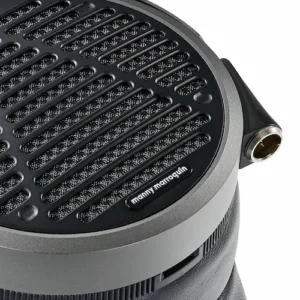
The MM-520 is an open-back planar magnetic headphone designed for critical listening, mixing, mastering, and professional audio production. Its open-back construction contributes to a more natural presentation than most closed-back monitoring headphones.
Does the MM-520 require a dedicated headphone amplifier?
Not necessarily. Many professional audio interfaces can drive the MM-520 adequately, but overall performance will depend on output power, monitoring chain quality, and listening levels. Engineers working in mastering environments often pair reference headphones with high-quality headphone amplifiers for maximum consistency.
How heavy is the Audeze MM-520 compared to other studio headphones?
Like many planar magnetic studio headphones, the MM-520 is heavier than popular dynamic-driver models such as the HD 650 or NDH 30. Engineers considering the MM-520 should evaluate long-session comfort, weight distribution, and clamp force rather than focusing on weight alone.
Is the Audeze MM-520 worth it for professional mixing and mastering?
For engineers who rely heavily on headphones, the answer depends largely on translation and workflow. If the MM-520 consistently helps produce reliable decisions across multiple playback systems, its value extends beyond specifications and becomes part of the production process itself.