Universal Audio elysia karacter Review: Is This Saturation Plugin Worth It for Mixing and Mastering?
Saturation is one of the most frequently misused tools in modern audio production. The difference between adding useful harmonic density and simply adding distortion depends on gain staging, source material, monitoring conditions, and where the processor sits inside the signal chain.
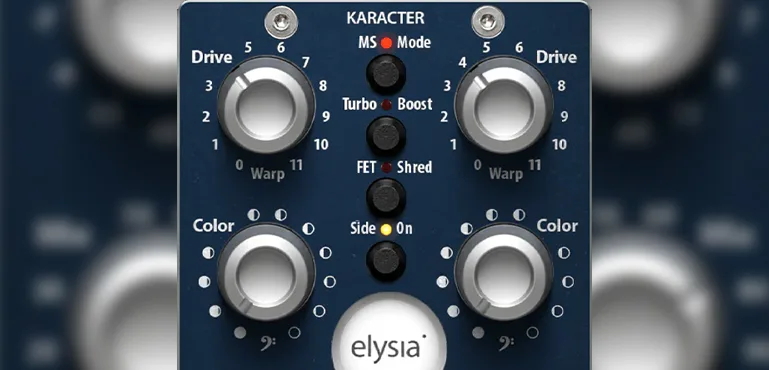
The Universal Audio elysia karacter plugin brings the design approach of elysia’s hardware saturation processor into a modern DAW workflow. Instead of focusing on a single vintage coloration, karacter is built as a flexible harmonic shaping tool that can move from subtle enhancement to more aggressive distortion while maintaining control over the character of the processing.
Universal Audio offers several saturation-focused processors with different design philosophies. For example, the UAD Black Box HG-2 review explores a tube-based approach to harmonic enhancement, while elysia karacter focuses more on flexible saturation shaping and controlled distortion behavior inside modern mixing workflows.
For mixing and mastering engineers, the question is not whether another saturation plugin can create harmonics. The market is already full of capable saturation tools. The real consideration is whether a processor offers enough control, consistency, and tonal precision to become a reliable part of a professional workflow.
In practical use, elysia karacter is best evaluated by how it handles real production challenges: adding density without masking, increasing perceived impact without reducing dynamics, and creating analog-style depth while preserving translation across modern playback systems.
Contents
Universal Audio elysia karacter Review Overview: What You Need to Know
| Type | Saturation and harmonic processing plugin |
| Best For | Mixing, mastering, vocals, drums, bass, buses |
| Main Strength | Controlled harmonic shaping without excessive coloration |
| Main Limitation | Not a dedicated tape or tube emulation plugin |
| Rating | 9.0/10 |
Using Universal Audio elysia karacter in Mixing and Mastering Workflows
 Saturation has moved from being an accidental byproduct of analog recording chains to a deliberate processing decision inside the DAW. Tape machines, consoles, transformers, and tube circuits once introduced harmonic coloration naturally during recording and mixing. Today, engineers choose when, where, and how much nonlinear processing should enter the signal path.
Modern producers are not simply looking for a generic “analog warmth” effect. They need saturation tools that can add harmonic information without damaging transient definition, frequency balance, or dynamic range. In a dense production, the wrong type of distortion can create masking and reduce clarity faster than it creates character.
This is why saturation is now evaluated by specific production outcomes. A vocal may need more density to remain present after compression. A bass track may need additional midrange harmonics to translate on smaller playback systems. A drum bus may require more impact and cohesion without sacrificing transient attack. In mastering, subtle nonlinear processing can sometimes add depth while preserving the overall balance of the mix.
The current saturation market reflects this shift. Engineers increasingly prefer processors that provide control over harmonic behavior rather than simple emulations built around a single recognizable sound. The goal is not to make every source sound “vintage,” but to shape how energy, texture, and perceived loudness are delivered.
The Universal Audio elysia karacter plugin fits into this approach by offering a more flexible saturation workflow. It is not a replacement for tape emulation or a one-button analog enhancer. Its strength is the ability to move between subtle mastering coloration, mix bus enhancement, and more aggressive creative processing depending on the role it plays in the production chain.
Inside elysia karacter: A Flexible Saturation Workflow for Modern Production
The original elysia karacter hardware unit was developed as a dedicated harmonic processor rather than a conventional distortion effect. The plugin version follows the same philosophy, giving engineers control over different saturation behaviors and how those harmonics interact with the source material.
Unlike many saturation plugins built around a single recognizable character — such as tape softness, tube coloration, or console-style drive — karacter is designed to cover a wider range of applications. It can add subtle density to a clean recording, introduce controlled aggression to individual tracks, or provide additional harmonic complexity inside a mix bus chain.
That flexibility becomes important because saturation decisions are source-dependent. A vocal may benefit from additional presence and density without pushing the upper mids too far. A kick drum may need harmonic content that helps it translate on smaller speakers. A synth or bass part may require saturation to create audible midrange information instead of simply increasing level.
During practical mix testing, the difference becomes clear: karacter works best when the goal is controlled density rather than obvious distortion. Small drive changes can noticeably affect presence, transient perception, and the way a source sits inside the arrangement.
For professional workflows, the goal is rarely to hear the saturation itself. The goal is to create a more balanced and convincing signal that survives compression, limiting, streaming playback, and real-world listening environments.
Using elysia karacter in Mixing Workflows
For mixing engineers, the strongest use case for elysia karacter is controlled harmonic enhancement. Saturation works best when it improves the role of a sound inside the arrangement without drawing attention to the processing itself.
On vocals, subtle saturation can increase perceived density and help a performance maintain presence after compression. The risk is that excessive harmonic generation can emphasize harsh upper frequencies, exaggerate sibilance, and reduce the sense of openness that gives a vocal its depth.
Bass processing is another practical application. Low-frequency information often disappears on earbuds, laptops, and smaller consumer playback systems because those devices cannot reproduce deep sub-bass accurately. Adding controlled harmonics can create audible midrange content that allows the bass character to remain recognizable without simply increasing low-end level.
On drums, saturation can provide additional energy and cohesion before or alongside compression. However, the order of processing matters. Too much harmonic density before compression can reduce transient contrast, soften attack, and make the drum bus feel louder but less dynamic.
This is where a flexible saturation processor becomes useful in professional mixing. Engineers are not trying to maximize distortion. They are managing the relationship between harmonic complexity, frequency balance, transient impact, and overall mix translation.
Using elysia karacter in Mastering Chains
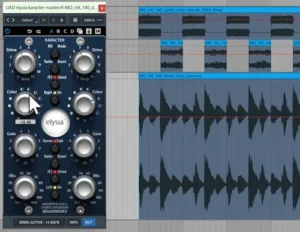 Mastering places very different demands on saturation compared with mixing. On a stereo master, every element is affected at the same time, which means even small amounts of harmonic processing can change the relationship between vocals, drums, low-end energy, and stereo depth.
Understanding where saturation fits inside a mastering chain is essential because even small processing decisions can affect dynamics, tonal balance, and final translation. Our guide on the mastering chain explained covers how professional engineers approach processing order and why each stage has a specific role.
In a mastering workflow, elysia karacter is best considered as a subtle nonlinear processing stage before final dynamics control. A carefully adjusted amount of saturation can increase perceived density, improve low-level detail, and add a sense of cohesion to mixes that feel overly clean or two-dimensional.
The limitation is that saturation does not solve fundamental mix problems. An unstable low end, aggressive upper frequencies, poor vocal placement, or excessive compression will usually become more noticeable after additional harmonic generation is introduced.
The most effective mastering applications rely on restraint and accurate comparison. Small parameter changes, level-matched listening, and evaluation across different monitoring systems are essential because saturation can create the impression of improvement simply by making a master louder or more forward.
Used correctly, a saturation plugin can become a valuable finishing tool. Used as a corrective shortcut, it usually adds complexity without improving translation.
Key Controls and Processing Approach
The strength of elysia karacter comes from its focused approach to saturation control. Instead of relying on a single fixed coloration curve, the plugin gives engineers control over how harmonic content is introduced and how aggressively the signal is pushed.
The workflow is built around decision-making rather than preset-based enhancement. Engineers can use subtle saturation for density and presence, or move into more aggressive distortion territory when the production requires additional character.
In professional mixing environments, this type of control matters because saturation is highly dependent on source material. The same setting that improves a vocal may create masking on a bass track or reduce transient clarity on drums.
Where Universal Audio elysia karacter Fits Among Professional Saturation Plugins
The saturation plugin category is crowded with tools designed around different forms of nonlinear processing: tape coloration, console drive, tube character, clipping, and creative distortion. The difference between these processors is not whether they can add harmonics, but how precisely they allow engineers to control the result.
For professional users, the deciding factor is workflow. A saturation plugin becomes valuable when its behavior is predictable, its controls translate into repeatable decisions, and it can solve specific mix problems without creating new ones.
The position of Universal Audio elysia karacter is based on flexibility and control. Rather than functioning as a simple “analog warmth” effect, it works more like a harmonic shaping tool that allows engineers to decide how much density, aggression, and coloration a source actually needs.
This distinction matters because experienced engineers rarely choose processors based only on the character they add. They choose tools that improve decision-making: faster recall, consistent results, and reliable translation from the studio environment to real-world playback systems.
A saturation plugin earns a permanent place in a professional workflow when it remains useful across multiple stages of production — from individual tracks and buses to stem preparation and final mix enhancement. The value is not only the sound it creates, but the control it gives the engineer over the final result.
Universal Audio elysia karacter Compared With Other Saturation Plugins
Comparing saturation plugins is less about finding the one that sounds the most impressive during a quick demo and more about understanding how each processor behaves inside a real production workflow. Most respected saturation tools can add harmonic content. The important differences are control, predictability, and how well the processor fits specific mixing and mastering decisions.
The Universal Audio elysia karacter plugin sits between creative distortion tools and precision-oriented harmonic processors. It is not intended to replace every saturation option in a studio. Its role is to provide a controlled way of shaping harmonic density when engineers need more character without losing balance or clarity.
Compared with many popular saturation plugins, karacter is defined less by a single signature sound and more by its ability to adapt to different sources. Some processors are strongly associated with tape compression, tube coloration, console drive, or aggressive distortion. Karacter is better viewed as a flexible harmonic shaping tool that allows the engineer to decide how much coloration the source actually requires.
| Plugin | Processing Approach | Common Applications | Workflow Role |
|---|---|---|---|
| Universal Audio elysia karacter | Flexible harmonic saturation and distortion | Vocals, drums, bass, mix bus, subtle mastering coloration | Controlled harmonic shaping for professional workflows |
| FabFilter Saturn 2 | Multiband saturation with extensive modulation and control | Frequency-specific processing, sound design, complex mixing tasks | Technical saturation and detailed tone shaping |
| Soundtoys Decapitator | Character-driven analog-style distortion | Vocals, drums, bass, creative effects | Fast tonal coloration and aggressive processing |
| Universal Audio Studer A800 | Tape machine emulation with saturation and compression behavior | Mix bus, stems, individual tracks | Analog tape workflow simulation |
| Universal Audio Black Box HG-2 | Tape-style saturation and harmonic smoothing | Mix enhancement, subtle glue, tonal finishing | Simple analog coloration workflow |
The practical conclusion is that saturation plugins are tools for different engineering decisions rather than direct replacements for each other. A mastering engineer may choose karacter when the goal is controlled harmonic density and subtle enhancement, while a producer creating aggressive electronic textures may prefer a more extreme distortion-focused processor.
The right choice depends on the role of saturation in the signal chain: adding depth, improving translation, creating character, or intentionally pushing a sound beyond its original form.
Strengths and Limitations
| Strengths | Controlled saturation behavior, flexible harmonic shaping, professional mixing workflow, useful across vocals, drums, bass and mastering applications. |
| Limitations | Not a dedicated tape emulator, not the deepest multiband saturation tool, and not designed as an automatic analog enhancement solution. |
Universal Audio elysia karacter Overall Rating
| Category | Rating |
|---|---|
| Sound Quality | 9.2/10 |
| Workflow | 9.3/10 |
| Mix Translation | 9.4/10 |
| CPU Efficiency | 9/10 |
| Sound Design Flexibility | 8.5/10 |
| Value for Money | 8.7/10 |
| Overall | 9.0/10 |
Sound Quality — 9.2/10: elysia karacter delivers a refined saturation character that works across subtle harmonic enhancement and more aggressive distortion. Its strongest point is the ability to add density and character while keeping the processed signal controlled.
Workflow — 9.3/10: The plugin fits professional mixing workflows because its controls encourage intentional decisions rather than random coloration. It is fast to dial in on individual tracks, buses, and creative processing chains without unnecessary complexity.
Mix Translation — 9.4/10: Controlled harmonic generation is where karacter performs particularly well. When used correctly, it can improve perceived presence and density without relying on additional level, helping sources maintain clarity across different playback systems.
CPU Efficiency — 9/10: For modern DAW systems, karacter provides practical performance suitable for everyday mixing and mastering sessions. CPU usage is unlikely to become a limiting factor in normal professional workflows.
Sound Design Flexibility — 8.5/10: Karacter offers a wide range of saturation behavior, but it is not primarily designed as an experimental distortion or sound-design processor. Its strength is controlled musical processing rather than extreme manipulation.
Value for Money — 8.7/10: The plugin provides strong value for engineers who need a professional saturation tool inside a serious workflow. Users who already own several high-quality saturation processors may find its advantages more specific rather than essential.
Overall — 9.0/10: Universal Audio elysia karacter is a professional saturation processor designed for engineers who value control, consistency, and musical results. It is not a replacement for every coloration tool, but it earns its place as a reliable option for mixing and mastering applications where harmonic balance matters.
Who Should Use Universal Audio elysia karacter?
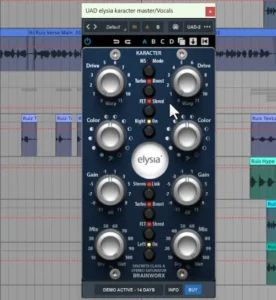 Universal Audio elysia karacter is best suited for engineers who already understand gain structure, frequency balance, and dynamic control. Saturation delivers the most value when it is used as a deliberate tonal decision rather than as a general-purpose solution for improving a mix.
For mixing engineers, karacter can be a useful tool for shaping vocals, drums, bass, and buses where additional harmonic density is needed without relying only on EQ or compression. For mastering engineers, its role is more specialized: subtle nonlinear processing that adds character and depth while preserving the existing balance of the master.
The plugin also makes sense for producers working entirely in the box who want more control over analog-style coloration. Instead of depending on a fixed “vintage” sound, they can use saturation as part of the arrangement and mixing process — helping sounds occupy space, translate better, and maintain presence across different playback systems.
However, karacter is not designed for users looking for a shortcut to professional results. Saturation cannot correct weak arrangements, poor monitoring decisions, uncontrolled dynamics, or fundamental balance issues. In many cases, adding more harmonic content simply makes existing problems more noticeable.
For engineers who already have a reliable saturation workflow, the decision comes down to whether karacter offers a useful advantage over existing tools. Another saturation plugin does not automatically improve results. Its value depends on whether its behavior leads to faster, more predictable, and more repeatable production decisions.
Evaluating elysia karacter in Real Mixing and Mastering Conditions
A saturation plugin proves its value after it becomes part of a complete production chain. Engineers do not evaluate harmonic processing in isolation. The important question is how the signal behaves after EQ, compression, limiting, streaming conversion, and playback outside the studio environment.
Reliable results also depend on the entire monitoring and studio infrastructure behind the processing chain. Modern engineers increasingly evaluate tools within complete production environments, from accurate monitoring systems to networked audio workflows such as those discussed in our article about MOTU Milan certification and professional audio networking.
These decisions are part of a broader mastering workflow where every processing stage is evaluated by its impact on translation and musical balance. The article How Professional Mastering Works explains how engineers approach these decisions from the first evaluation to the final delivery.
Mix Translation Across Different Playback Systems
One of the main reasons engineers use saturation is to improve translation. A bass line that feels powerful on full-range studio monitors may lose impact on smaller speakers because much of its energy exists below the range those systems reproduce effectively.
Controlled harmonic generation can solve this problem by creating additional midrange information that allows the character of the instrument to remain audible without simply increasing low-frequency level. This approach is especially relevant for modern releases that are consumed through earbuds, laptops, Bluetooth speakers, and mobile devices.
The same process can also create problems when applied without control. Excessive upper-frequency harmonics may introduce harshness after compression and limiting, while too much low-frequency saturation can reduce clarity and make the mix feel congested.
Saturation Decisions in Mastering Chains
In mastering, saturation is not primarily a loudness tool. Its purpose is to influence density, texture, and perceived depth while keeping the original balance of the mix intact.
A carefully adjusted saturation stage before final limiting can sometimes help a master feel more cohesive. Additional harmonic content may increase perceived fullness and allow the limiter to respond to a more controlled signal. However, this only works when the underlying mix already has solid frequency balance and dynamic structure.
The main risk is confusing louder with better. Saturation can increase average energy and make a signal appear more impressive during quick comparisons, but the real test is whether the processing improves separation, impact, and long-term listening comfort.
Streaming Delivery and Harmonic Processing
Modern releases are evaluated after multiple stages of distribution processing. Streaming codecs, playback systems, and consumer listening environments can expose problems that are less obvious inside the studio.
Balanced saturation can help important elements maintain presence by adding useful harmonic information. Excessive distortion, however, can introduce unnecessary high-frequency complexity that becomes more noticeable after encoding and playback on consumer devices.
For mastering applications, this makes level-matched comparison essential. A saturation setting that sounds impressive in a loud monitoring session may not provide the same benefit once the music reaches the listener’s actual playback environment.
Workflow Efficiency Inside a Modern DAW Setup
CPU usage is rarely the main limitation for modern professional systems, but workflow efficiency still matters. Saturation processors are often used across multiple tracks, buses, and final chains, so predictable behavior, reliable recall, and fast decision-making are important.
The real advantage of a professional saturation plugin is not simply having more options. It is reducing uncertainty. Engineers need to quickly determine whether harmonic processing improves the source or creates problems that must be corrected later in the chain.
Final Verdict: Is Universal Audio elysia karacter Worth Buying?
Universal Audio elysia karacter earns its place as a professional saturation tool because it focuses on control rather than a single exaggerated analog signature. Its main advantage is not replacing every other harmonic processor, but providing engineers with a flexible way to shape density, texture, and harmonic balance when those decisions matter.
For mixing engineers, karacter is most useful when a source needs additional presence, weight, or character without relying only on EQ or compression. It can work across individual tracks, buses, and mix elements where controlled harmonic enhancement improves how sounds sit inside the production.
Before adding any additional processing at the mastering stage, the quality of the mix preparation remains critical. A properly balanced mix gives tools like saturation more room to work, while over-processed mixes often limit what mastering can achieve. See our guide on how to prepare a mix for mastering before sending a final track for professional processing.
For mastering engineers, its role is more specialized. The plugin is best approached as a subtle finishing processor that can add depth and cohesion when the mix already has strong balance and translation. It is not a corrective tool and should not be used to hide problems that exist earlier in the production chain.
Karacter makes the most sense for engineers who already understand saturation and want another precise option for making repeatable tonal decisions. It is less suitable for users searching for a single plugin that will automatically make digital productions sound analog or professionally finished.
For producers deciding between saturation plugins, karacter makes the strongest case when the priority is controlled harmonic shaping rather than a specific vintage emulation. Users looking for tape compression, console coloration, or extreme distortion may find more specialized tools better suited to those tasks.
The value of saturation comes from knowing what changes, why those changes improve the mix, and when the clean signal actually works better. In professional audio workflows, the best processors are not the ones that create the biggest effect — they are the ones that help engineers make better decisions faster and more consistently.

Universal Audio elysia karacter FAQ
Is Universal Audio elysia karacter a good saturation plugin for mastering?
Yes, when used with restraint. In mastering, karacter works best as a subtle harmonic enhancement stage that can add density and depth. It is not designed to repair mix balance problems or replace proper dynamics and tonal control.
How does elysia karacter compare with FabFilter Saturn 2?
FabFilter Saturn 2 provides more extensive multiband processing, modulation, and sound-design options. Karacter is more focused on controlled harmonic shaping with a workflow closer to a dedicated analog saturation processor.
Can elysia karacter replace tape saturation plugins?
No. Tape plugins recreate specific tape behaviors such as compression, frequency response changes, and headroom characteristics. Karacter is better understood as a flexible harmonic processor rather than a tape machine emulation.
Where should elysia karacter be placed in a mixing chain?
The best position depends on the source and goal. It can work before compression to shape dynamics, after EQ for tonal enhancement, or on buses when additional density and cohesion are needed. Level matching is important because saturation can make signals appear better simply by making them louder.
Is elysia karacter useful on vocals, drums, and bass?
Yes. Vocals can benefit from additional density and presence, drums can gain energy and character, and bass instruments can become easier to hear on smaller playback systems through controlled harmonic generation.
Does saturation help music translate better on streaming platforms?
It can. Adding useful harmonics may help important elements remain audible on consumer playback systems, but excessive saturation can introduce harshness and reduce clarity after encoding and playback processing.
Who should not buy elysia karacter?
Users looking for an automatic “analog sound” solution may not benefit from it. The plugin is most effective for engineers who already understand gain staging, frequency balance, and why saturation is being added.
Is elysia karacter worth the price compared with other saturation plugins?
Its value depends on workflow needs. Engineers who already have several saturation tools may not need another option, but users looking for a controlled harmonic processor with professional mixing and mastering applications may find it useful.
Is elysia karacter better for mixing or mastering?
It is naturally suited to mixing because it can be applied across individual sources and buses. Experienced mastering engineers can also use it effectively, but typically with more conservative settings and a stronger focus on transparency.
Is elysia karacter better than Black Box HG-2?
They target different saturation workflows. Black Box HG-2 focuses more on tube-style harmonic enhancement and density, while karacter provides a broader approach to controlled saturation and distortion shaping. The better choice depends on whether the engineer wants tube coloration or more flexible harmonic control.

Yurii Ariefiev is a mastering engineer focused on real-world mixing and mastering workflows, including harmonic processing, saturation decisions, dynamic control, and playback translation. His editorial analysis covers how professional engineers evaluate audio tools beyond specifications and marketing claims.
This review was written from a studio workflow perspective, focusing on how saturation plugins behave in practical production situations: mix balance, mastering chains, transient preservation, and reliable results across modern playback systems.