The software synth market has reached a point where new releases rarely introduce genuinely new production capabilities. Most instruments already offer wavetable synthesis, virtual analog oscillators, extensive modulation systems, oversampling, and increasingly sophisticated preset ecosystems. The challenge for developers is no longer adding features. It is providing a compelling reason to choose one synth over dozens of established alternatives.
That is the context surrounding discoDSP Corona 7. Rather than replacing its existing architecture, discoDSP has focused on strengthening areas where previous versions showed their age. The update introduces MPE integration, a new sequencer workflow, JP-inspired Super 7+ unison processing, expanded 8x oversampling, and a series of workflow and performance refinements aimed at modern production environments.
The key question is not whether Corona 7 adds enough items to justify a version-number increase. Producers already have access to highly capable instruments such as Serum, Pigments, Vital, Hive, and Phase Plant. What matters is whether Corona 7 offers practical advantages that improve sound design, accelerate decision-making, or solve workflow bottlenecks that existing tools leave unresolved. That distinction ultimately determines whether this update deserves attention beyond Corona’s existing user base.
This Corona 7 review focuses on the practical production value of the update rather than marketing claims or feature lists.
Technical Specifications
| Developer | discoDSP |
| Synthesis Type | Hybrid Wavetable + Virtual Analog |
| Oversampling | Up to 8x |
| MPE Support | Yes |
| MIDI Export | Yes |
| Plugin Formats | VST, VST3, AU, AAX |
| Platforms | Windows & macOS |
Quick Navigation
Is Corona 7 Worth Buying in 2026?
 Hybrid synthesis is no longer a selling point by itself. Virtual analog oscillators, wavetable engines, flexible modulation routing, and oversampling have become standard expectations rather than premium features. As a result, newer instruments are competing less on specifications and more on execution.
That creates a difficult environment for products like Corona. Producers evaluating a new synthesizer are no longer comparing it against a handful of competitors. They are comparing it against mature ecosystems built around Serum, Pigments, Vital, Phase Plant, Falcon, Hive, and numerous specialized instruments that already occupy established positions inside professional workflows. Even newer products face the same challenge, as seen in our Dream Kit Zenith v2 review, where workflow differentiation proved just as important as raw feature count.
A decade ago, combining wavetable and virtual analog synthesis was enough to stand out. Today the differentiators are less obvious. Sound quality under heavy modulation, CPU efficiency, oversampling implementation, preset compatibility, MPE integration, and workflow speed often matter more than the number of synthesis options available on paper.
This changes how Corona 7 should be judged. The update does not attempt to reinvent synthesis or introduce a completely new engine. Instead, it targets several areas where modern producers have become less tolerant of compromise: expressive performance control, sequencing workflow, supersaw implementation, aliasing behavior, and day-to-day usability inside large production sessions.
Whether that strategy is enough depends on how much value these improvements create once the synth moves beyond a feature list and into real-world audio production.
Make Your Synths Translate Beyond the Studio
Powerful synths, oversampling, and advanced sound design tools can create impressive results inside a DAW, but the real test begins after export. If you want to hear how your track responds to professional processing, upload up to 35 seconds of your mix and receive a free mastering demo. Discover how improved clarity, punch, stereo balance, and translation can help your music perform better across streaming platforms and playback systems.
Request your free mastering demo →
Best New Features in Corona 7
Not every feature introduced in Corona 7 will change how producers work. Several additions improve usability, but only a handful have the potential to affect real-world production speed, sound design flexibility, or session efficiency.
The most significant upgrade is MPE integration.
MPE support has become increasingly relevant as expressive controllers move beyond niche adoption. Instruments such as the ROLI Seaboard, Osmose, and LinnStrument expose performance data that traditional MIDI workflows simply cannot capture. Many modern synthesizers already support MPE. The real question is how effectively that performance data can be integrated into modulation and sound design workflows.
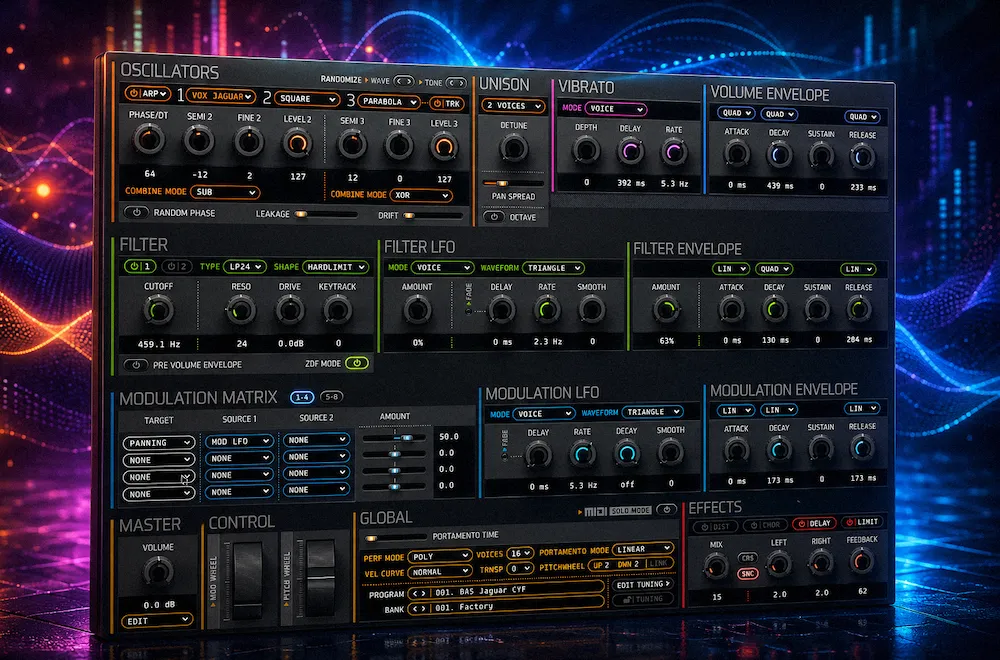
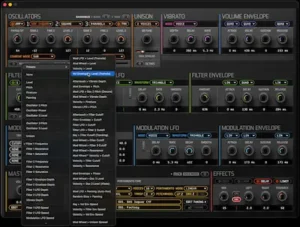
Corona 7 handles this intelligently by exposing MPE sources directly within the modulation matrix. Per-note pitch movement, pressure, timbre, polyphonic aftertouch, and controller information can be routed throughout the synthesis engine rather than remaining limited to predefined destinations. For sound designers and performance-oriented electronic musicians, this creates substantially more expressive patches without increasing programming complexity. The same demand for realistic performance control can be seen in modern virtual instruments designed for wind controllers and expressive MIDI input, such as the instrument discussed in our VG Oboe review.
The new Sequencer mode addresses a different problem: creative interruption.
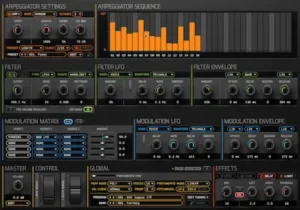
Many electronic production workflows involve constant movement between the synthesizer interface and the DAW piano roll. Corona’s sequencer transforms the traditional velocity lane into a pitch-based note grid capable of generating playable melodic and rhythmic patterns directly inside the instrument. The feature is particularly effective for basslines, trance sequences, arpeggiated hooks, and repetitive synth motifs where rapid experimentation matters more than detailed MIDI editing.
The inclusion of MIDI export is arguably more important than the sequencer itself. Patterns generated inside Corona can be transferred into the DAW for further editing, allowing the synth to function as both a sound source and an idea-generation tool without trapping compositions inside a proprietary workflow.
Super 7+ is the other addition likely to attract attention from electronic producers.
The JP-8000 supersaw remains one of the defining sounds of trance, progressive house, and countless modern EDM productions. Corona’s implementation introduces dedicated voice distribution and stereo spread controls designed to create a denser and more controllable unison image. While the concept itself is hardly new, execution matters. The value here is not innovation but practicality. Producers working with layered leads and wide synth stacks gain more control over stereo placement without relying on additional processing later in the mix.
Taken individually, none of these additions redefine synthesis. Together, however, they address three areas that directly affect modern production workflows: expressive performance control, faster pattern creation, and more refined unison programming. Those improvements have a far greater impact on daily use than many of the cosmetic enhancements surrounding them.
How Corona 7 Improves Sound Quality With 8x Oversampling
The most meaningful improvement in Corona 7 is not MPE support, the sequencer, or the revised supersaw implementation. It is the move from 4x to 8x oversampling.
Unlike workflow enhancements, oversampling directly influences what reaches the output stage. In virtual analog and wavetable synthesis, aliasing becomes increasingly noticeable when oscillators, filters, distortion stages, and unison processing generate dense harmonic content near the upper end of the spectrum. Those artifacts may not be obvious during sound design, but they often become easier to hear after compression, saturation, limiting, and final mastering.
Moving to 8x oversampling gives Corona more headroom for aggressive synthesis techniques that tend to expose weaknesses in DSP design. The improvement is most relevant when building large supersaw stacks, heavily driven bass patches, bright transient-rich plucks, and resonant filter sweeps where harmonic density can become difficult to control.
Users expecting a dramatic tonal transformation may be disappointed. Oversampling rarely changes the character of a synthesizer. What it does is reduce unwanted byproducts that accumulate as sounds become more complex. In practical terms, patches remain cleaner when pushed hard, particularly in arrangements where multiple layers compete for space in the upper midrange and high frequencies.
The implementation is equally important. Corona 7 introduces a Draft Playback mode that lowers processing demands during composition while preserving maximum oversampling quality during offline rendering. This approach makes considerably more sense than forcing producers to choose between sound quality and system performance throughout an entire project.
Performance improvements extend beyond oversampling. The addition of AVX2-optimized processing paths targets modern Intel processors while maintaining identical output. These optimizations will not generate headlines, but they are often more valuable than another oscillator mode. Faster DSP execution, improved responsiveness, and better scalability become increasingly important as projects grow in complexity.
For producers running multiple synthesizer instances alongside modern mixing chains, sampler instruments, and mastering processors, efficient DSP architecture remains one of the most underrated features a software instrument can offer. Corona 7 appears to invest more engineering effort into that area than many competing releases.
Which Corona 7 Features Actually Improve Production Workflow?
 One of the recurring problems in software synthesizer marketing is that workflow improvements are often presented with the same weight as core audio-engineering advances. Corona 7 is no exception.
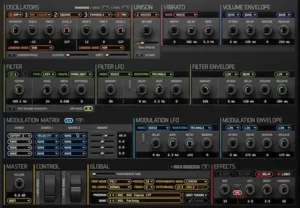
Several additions in this release improve the user experience without fundamentally changing the instrument’s sonic capabilities. The expanded modulation visualization system is a good example. Being able to see modulation activity directly on controls makes patch analysis faster and reduces guesswork when working with complex routings. For sound designers building layered modulation structures, this can shorten programming time considerably.
However, these improvements have little direct impact on audio quality.
The same distinction applies to status indicators, lock management refinements, and various interface enhancements throughout the instrument. These updates make Corona easier to operate, particularly during long programming sessions, but they should not be mistaken for new synthesis technology or meaningful DSP development.
The Effects Lock feature is more interesting because it addresses a workflow problem that many producers encounter daily. Preset browsing often becomes unreliable when each patch loads its own delay, chorus, distortion, and limiter settings. Comparing sounds under constantly changing effects conditions can make objective decisions difficult, especially inside a developing mix.
By preserving the effects section while changing presets, Corona allows users to evaluate oscillators, filters, modulation behavior, and overall patch structure within a consistent sonic context. The feature does not improve audio fidelity, but it can improve decision-making speed—a distinction that matters in professional production environments where workflow efficiency directly affects output.
Viewed through that lens, Corona 7 is less about introducing breakthrough technology and more about removing friction from existing workflows. The strongest parts of the update come from practical engineering decisions rather than headline-generating features, and that is arguably the reason many of the improvements are likely to remain useful long after the release cycle ends.
Corona 7 vs Serum, Pigments, Vital and Phase Plant
| Instrument | Primary Strength | Where It Holds an Edge Over Corona 7 |
|---|---|---|
| Serum | Mature wavetable workflow and industry adoption | Larger preset ecosystem and broader third-party support |
| Pigments | Multi-engine architecture and advanced modulation | Greater sound design depth and visual feedback |
| Vital | Strong feature set at a low cost | More accessible entry point for new users |
| Phase Plant | Open-ended modular routing | Far greater structural flexibility |
| Hive 2 | Fast workflow and efficient operation | Simpler programming for many production tasks |
| Diva | Analog modeling | More convincing analog behavior and filter character |
Corona 7 enters one of the most competitive segments of the software instrument market. Unlike niche synthesizers that solve a highly specific problem, hybrid synths compete directly against some of the most established products in modern music production.
That creates an uncomfortable reality. Corona is no longer competing against older versions of itself. It is competing against ecosystems that have spent years accumulating preset libraries, tutorial content, third-party sound banks, and strong brand recognition.
This is why Corona 7 should not be evaluated as a direct Serum killer, Pigments replacement, or Phase Plant alternative. It is unlikely to displace any of those instruments inside an established professional workflow.
Where Corona remains competitive is in the balance it strikes between flexibility, efficiency, and accessibility. The synthesis engine is capable enough for modern electronic production, the MPE implementation is surprisingly mature, the JP-inspired unison architecture targets a proven market, and the instrument remains lighter than some of the larger synthesis environments competing in the same space.
The improved support for legacy Synth1 and JP-8000 content also gives Corona a practical advantage that many newer instruments cannot easily replicate. Producers working with older sound libraries may find considerably more value here than in yet another synth focused entirely on generating new content.
For most professionals, Corona 7 makes the strongest case as a complementary instrument rather than a primary platform. Producers who already rely on Serum, Pigments, or Phase Plant are unlikely to abandon those ecosystems. However, Corona offers a different workflow, a different sonic perspective, and enough technical maturity to justify a place alongside them.
That may ultimately be the most realistic measure of success. In today’s market, very few synthesizers become studio standards. The more attainable goal is becoming a tool that remains useful long after the initial release cycle, and Corona 7 appears much closer to that category than to the short-lived wave of feature-driven synth releases that disappear a year later.
What Corona 7 Means for Mixing, Translation, and Final Masters
 Synthesizers are usually evaluated at the sound-design stage, but many of their strengths and weaknesses do not become obvious until a project reaches mixing and mastering. Corona 7 is a good example. Several of its improvements are likely to have a greater impact on downstream production than on the initial programming process.
The move to 8x oversampling is particularly relevant here. Aliasing artifacts generated during synthesis often remain hidden while a sound is auditioned in isolation. Once that same sound passes through compression, saturation, clipping, limiting, and loudness optimization, unwanted upper-frequency content becomes far easier to identify. This is especially true in modern electronic productions where synths occupy large portions of the audible spectrum.
Cleaner oscillator output does not automatically create a better mix, but it can reduce the amount of corrective work required later. Harsh upper harmonics, brittle filter behavior, and synthetic high-frequency buildup are common reasons why otherwise impressive synth patches become difficult to place inside a finished production. Many of the same issues eventually surface during mastering when engineers are forced to address harsh highs in a master that originated much earlier in the production chain.
The revised Super 7+ implementation also has implications beyond sound design. Large unison stacks naturally introduce phase interaction, stereo complexity, and low-frequency instability. These characteristics can create impressive width during production while causing translation problems on mono playback systems, club sound systems, smartphones, and streaming platforms.
Corona 7 does not solve those issues automatically, but the additional control over voice distribution and stereo spread gives producers more opportunities to manage them before the mix stage. That is generally preferable to relying on corrective processing later. It also improves the odds of maintaining consistent playback across mono devices, club systems, and modern streaming services where stereo information can behave unpredictably during encoding and normalization. Engineers dealing with these translation issues should understand how mastering for streaming platforms affects stereo-heavy productions.
From a mastering perspective, the benefit is less about loudness and more about predictability. Synth patches that maintain cleaner harmonic behavior under heavy processing tend to survive limiting and codec conversion with fewer surprises. This becomes particularly relevant when preparing releases for AAC-based delivery formats and workflows associated with Apple Digital Masters mastering, where high-frequency artifacts can become more apparent after encoding. Engineers still need to manage arrangement density, stereo balance, and spectral masking, but starting with a cleaner source is rarely a disadvantage.
CPU efficiency also deserves consideration. Modern productions frequently contain dozens of virtual instruments alongside extensive mixing chains, oversampled processors, and mastering tools. Corona’s Draft Playback mode offers a practical compromise between production efficiency and final render quality, allowing complex projects to remain responsive without sacrificing maximum-quality exports.
Viewed from an engineering perspective, Corona 7’s most valuable improvements are not necessarily the ones that attract attention during a product announcement. The reduction of technical friction—whether through cleaner DSP behavior, more controlled unison implementation, or better resource management—often delivers greater long-term value than another page of synthesis features.
Pros and Cons
Pros
- Excellent MPE implementation
- Improved 8x oversampling
- Efficient CPU usage
- Useful MIDI-export sequencer
- Strong supersaw workflow
Cons
- Smaller ecosystem than Serum
- Less flexible than Phase Plant
- No major synthesis breakthrough
- Smaller preset marketplace
- Limited brand recognition
Final Verdict: Incremental Evolution Done Right
discoDSP Corona 7 succeeds because it avoids a mistake that many software instruments make: adding complexity for the sake of appearing innovative. This release focuses on refining an existing platform rather than rebuilding it around a new marketing narrative.
The headline additions are not equally important. MPE support, improved oversampling, and the redesigned sequencing workflow provide tangible benefits that can affect everyday production. Other additions, including visual feedback enhancements and interface refinements, improve usability but contribute little to the underlying sound engine.
From a technical perspective, the move to 8x oversampling may ultimately be the most valuable upgrade in the entire release. While less visible than new synthesis features, it directly addresses audio quality under demanding production conditions. Combined with performance optimizations and more mature unison processing, Corona feels better equipped for modern electronic music production than previous versions.
At the same time, Corona 7 does not fundamentally change its position in the market. It is unlikely to replace Serum, Pigments, Phase Plant, or other established flagship instruments inside studios that have already built extensive workflows around those ecosystems. The advantages are not large enough to justify a wholesale migration.
Where Corona remains compelling is as a well-balanced hybrid synthesizer with a mature feature set, efficient performance, strong compatibility, and a development cycle that continues to move forward instead of merely maintaining legacy functionality. That combination has become increasingly rare in a market where many instruments either chase trends or disappear after a few update cycles.
For existing Corona users, version 7 represents one of the most worthwhile upgrades the product has received in recent years. For producers evaluating it as a new purchase, the decision depends less on feature count and more on workflow preference. Corona is not the most advanced synth available in 2026, but it is a more refined and technically capable instrument than its market visibility would suggest.
Overall Rating
| Category | Rating |
|---|---|
| Sound Quality | 8.5/10 |
| Workflow | 9/10 |
| Mix Translation | 8.5/10 |
| CPU Efficiency | 9/10 |
| Sound Design Flexibility | 8/10 |
| Value for Money | 8.5/10 |
| Overall | 8.6/10 |
Corona 7 does not attempt to out-feature flagship instruments such as Serum, Pigments, or Phase Plant. Instead, it focuses on practical improvements that affect real-world production: cleaner DSP behavior, mature MPE implementation, efficient workflow design, and better handling of complex synthesis tasks. While its ecosystem remains smaller than that of its largest competitors, Corona 7 delivers a balanced combination of sound quality, performance efficiency, and production usability that makes it a strong hybrid synthesizer for modern electronic music workflows.
Why These Scores?
Sound Quality — 8.5/10
Corona 7 benefits significantly from its upgraded 8x oversampling engine. Aliasing is better controlled during aggressive synthesis, supersaw stacks remain cleaner under processing, and high-frequency content behaves more predictably during mixing and mastering. The synth sounds professional, although it does not reach the distinctive sonic identity of category leaders such as Diva or certain premium analog-modeling instruments.
Workflow — 9/10
The combination of MPE integration, improved modulation visualization, Effects Lock, MIDI-exportable sequencing, and overall interface refinements makes Corona 7 noticeably faster to work with than previous versions. Most improvements target practical production efficiency rather than marketing-driven feature expansion.
Mix Translation — 8.5/10
From a mastering perspective, Corona performs better than many hybrid synths when patches become dense and heavily processed. The improved oversampling and more controlled unison architecture reduce the likelihood of harsh upper harmonics, excessive phase interaction, and unpredictable stereo behavior. Good source material still matters, but Corona creates fewer downstream problems than many competing instruments.
CPU Efficiency — 9/10
Despite the move to 8x oversampling, Corona remains relatively lightweight compared to many modern flagship synthesizers. Draft Playback mode and AVX2 optimization help maintain responsiveness in larger sessions without sacrificing final render quality.
Sound Design Flexibility — 8/10
Corona offers extensive modulation, wavetable synthesis, virtual analog capabilities, MPE routing, and strong unison options. However, it cannot match the open-ended architecture of Phase Plant or the deeper multi-engine environment found in Pigments. Flexibility is strong, but not category-leading.
Value for Money — 8.5/10
For producers seeking a mature hybrid synthesizer with modern workflow features and efficient DSP implementation, Corona 7 provides solid value. The main limitation is not functionality but ecosystem size, as competing products benefit from larger preset libraries, communities, and third-party content.
Who Should Buy Corona 7?
| User Type | Recommendation |
|---|---|
| EDM & Trance Producers | Highly Recommended |
| MPE Controller Users | Highly Recommended |
| Sound Designers | Recommended |
| Beginners | Consider Vital First |
| Serum Owners | Useful Secondary Synth |
| Phase Plant Users | Not Essential |
Great Sound Design Deserves a Master That Holds Up Everywhere
A synth patch can sound massive inside the studio and still lose impact after upload. Wide supersaws, dense harmonics, aggressive processing, and complex stereo content often reveal problems only after encoding, normalization, and real-world playback. The final master determines whether your production keeps its depth, punch, and clarity outside the DAW.
If you want to know how your track performs under professional mastering conditions, upload up to 35 seconds of your mix and receive a free mastering demo. Hear the difference before committing to a full release and discover what your production is truly capable of.
Get your free demo →
FAQ
Is Corona 7 worth buying if I already own Serum?
Probably not as a replacement. Serum remains one of the strongest wavetable synthesizers available and benefits from a massive preset ecosystem. Corona 7 makes a stronger case as a complementary instrument, particularly for users interested in hybrid synthesis, MPE workflows, or legacy JP-8000 and Synth1 compatibility.
How much of an improvement is Corona 7 over Corona 6?
The upgrade is more substantial than a typical maintenance release. MPE support, the new sequencer mode, Super 7+ unison processing, 8x oversampling, and workflow refinements affect both sound design and daily production workflows.
Can Corona 7 be used for professional EDM and trance production?
Yes. The synthesizer is particularly well suited to supersaw leads, plucks, bass sequences, pads, and layered electronic arrangements. The Super 7+ mode targets production styles that still rely heavily on JP-inspired unison sounds.
How does Corona 7 compare to Vital?
Vital offers exceptional value and remains one of the strongest free synthesizers available. Corona 7 provides a different workflow, broader legacy compatibility, and a more established hybrid architecture, but Vital remains difficult to beat from a price-to-performance perspective.
Does 8x oversampling significantly improve sound quality?
The difference is most noticeable in patches that generate dense harmonic content. Distortion, aggressive resonance, unison processing, and bright lead sounds typically benefit the most from reduced aliasing and cleaner high-frequency behavior.
Is Corona 7 suitable for cinematic and game audio work?
Yes. Its modulation system, wavetable capabilities, and MPE integration make it useful for evolving textures, ambient layers, motion-based sound design, and interactive music applications.
How well does Corona 7 perform in large projects?
The synthesizer remains relatively efficient compared to many modern competitors. The Draft Playback mode is particularly useful when multiple instances are running alongside large sample libraries and CPU-intensive mixing chains.
Does Corona 7 support modern MPE controllers?
Yes. The instrument supports per-note pitch, pressure, and timbre data, allowing expressive control from devices such as the ROLI Seaboard, Osmose, and LinnStrument.
Is Corona 7 useful for mixing or mastering engineers?
Not directly. However, engineers who create production elements, synth layers, transitions, or custom sound-design content may benefit from its efficient workflow and improved audio quality.
What is the biggest weakness of Corona 7 compared to its competitors?
Its biggest challenge is ecosystem size. Competing products such as Serum and Pigments benefit from larger user communities, more third-party content, and broader industry adoption, making them easier to integrate into existing production workflows.

Yurii Ariefiev reviews software synthesizers from an audio-engineering perspective, examining oversampling quality, aliasing control, modulation architecture, stereo behavior, and the practical impact of DSP design on modern music production workflows.
At AREFYEV STUDIO, instruments such as Corona 7 are evaluated beyond presets and feature lists. Particular attention is given to how synthesizers perform inside dense mixes, respond to mastering processes, and maintain clarity, balance, and translation across streaming platforms and playback systems.
☕ Buy me a coffee