
Hip-Hop Mastering: Control Your 808, Preserve Punch, Translate Everywhere
Most hip-hop tracks don’t fail because they’re quiet. They fail when they leave the studio. Inside your DAW, everything feels right. The 808 hits. The vocal sits. Play the same track in a car — the low-end turns unstable. On a phone — the 808 drops out completely. That’s the difference between something that sounds good — and something that survives real playback. In hip-hop, loudness is easy. Control is not. If the track doesn’t translate, it gets skipped.
Built for real-world playback in the U.S. — streaming platforms, car systems, and mobile listening.
Start with a free 30-second demo. Send your track and hear how it holds up outside your studio before you release it.
In the U.S. market, your track isn’t judged in one environment. It’s judged everywhere at once: Spotify normalization, car systems, club sound, phone speakers. The 808 stays defined, not overwhelming. The kick keeps its impact. The vocal cuts through without sounding detached. If your track only works in one environment, it won’t survive release. See how professional mastering actually shapes that consistency on our quality track mastering page.
Why Hip-Hop Masters Fail Across Playback Systems
 A track can feel finished in the studio and still fall apart everywhere else. That’s where most hip-hop masters fail — not in how they sound in isolation, but in how they behave once they leave your speakers.
The first thing to break is the 808. On full-range monitors, it feels heavy and controlled. Switch to a phone or small speaker, and the low-end disappears. What’s left is a weak kick with no foundation. The energy drops instantly. This usually means the low-end is built on sub frequencies that don’t translate — too much weight below the audible range, not enough harmonic content (a common issue we address in fixing bass in mastering).
Over-limiting is the next failure point. Push loudness too far, and the transients collapse. The kick stops hitting. The snare loses definition. Everything becomes dense, but nothing moves. On streaming platforms, that extra loudness gets normalized anyway — but the loss of punch stays. The track ends up sounding smaller, not bigger (covered in detail in our mastering problems guide).
Vocals break in a different way. They either sink into the beat or sit unnaturally on top of it. In the studio, it can pass. Outside — especially in cars or earbuds — the imbalance becomes obvious. The vocal loses connection with the instrumental or disappears completely. This usually comes down to how the beat is controlled at the mastering stage (see beat mastering).
Clipping is often mistaken for aggression. Controlled saturation can work. Uncontrolled clipping doesn’t. It builds distortion that behaves differently on every system. What feels gritty on one setup turns into harsh noise on another — especially once streaming compression is applied.
These problems don’t show up in theory. They show up in real playback. And if the master doesn’t hold together across systems, it’s not finished — no matter how it sounded in the studio.
What Actually Defines Professional Hip-Hop Mastering
Professional hip-hop mastering is not about tools or chains. It shows up in one place — outside your studio. If the track falls apart on real playback, it wasn’t mastered properly.
Low-end is where that becomes obvious first. Not just “big bass,” but controlled, readable low frequencies. The 808 carries weight without masking the kick. It stays centered, holds its shape, and doesn’t overload smaller systems. You can feel it on large speakers and still hear it on small ones. That level of control is not accidental — it’s engineered.
Then comes impact. When mastering is done right, the track keeps its punch. The kick hits with intent. The snare cuts through without being forced. Transients stay alive. Push loudness too far, and that structure collapses — everything becomes loud, but nothing moves.
Vocal placement is just as critical. In hip-hop, the vocal is not decoration — it’s the focal point. It has to stay present across all systems without feeling disconnected from the beat. If it disappears in the car or turns harsh on headphones, the balance is wrong.
What ties all of this together is consistency. A finished master doesn’t shift depending on playback. Studio monitors, earbuds, car systems, streaming platforms — the balance holds. The energy stays intact. That’s the difference between something that sounds good in one place and something that works everywhere.
That’s why the process itself doesn’t define quality — the result does. You can see how these outcomes are achieved in our professional mastering process, or hear how consistent masters translate across systems on our quality track mastering page.
If a master only works in one environment, it’s not finished — it’s a mix pushed louder.
Hip-Hop Is Not One Sound: Subgenres Require Different Mastering
Hip-hop doesn’t have a single sound — and treating it that way is exactly how masters fall apart. What works for one record can break another within seconds.
Trap leans heavily on sub energy and perceived loudness. The 808 has to dominate, but stay controlled. Push it too far, and it collapses on smaller systems. Hold it back too much, and the track loses impact. The balance here is aggressive, but precise (see trap mastering).
Drill behaves differently. It’s darker, tighter, often intentionally distorted. But there’s a limit. If the master adds uncontrolled clipping, the texture turns into noise — and the vocal gets buried. The goal isn’t to clean it up, but to keep the distortion controlled and readable (explained in drill mastering).
Boom bap depends on movement. It lives in the transients — the way the kick and snare interact. Over-compress it, and the groove disappears. Under-process it, and it feels flat. There’s no room for heavy-handed mastering here — it either preserves the rhythm, or destroys it.
RnB flips the priority completely. The vocal carries everything. If the master pushes too hard, the track becomes dense and fatiguing. If it’s too soft, it loses presence. The balance is subtle — but mistakes are immediately obvious (see rnb mastering).
There is no universal chain that works across all of this. Every track forces different decisions. Ignore that — and the master stops translating the moment it leaves your studio.
| Style | Core Focus | What Breaks First | Mastering Priority |
|---|---|---|---|
| Trap | Sub energy + perceived loudness | 808 disappears on small speakers or overloads systems | Stabilize low-end with harmonic support and controlled headroom |
| Drill | Dark tone + controlled distortion | Distortion masks vocal and collapses clarity | Keep distortion intentional while preserving vocal presence |
| Boom Bap | Transient punch + groove | Over-compression kills rhythm and movement | Preserve transients and dynamic swing |
| RnB | Vocal clarity + depth | Vocal gets buried or becomes harsh on playback | Maintain separation and smooth tonal balance |
Real Hip-Hop Mastering Examples Across Different Styles
This is where most tracks get exposed — not in the studio, but in real playback.
Across recent projects, the same pattern keeps showing up: a mix feels finished in the session, but the moment it leaves that environment, problems become obvious.
One trap record came in with an 808 that felt massive on studio monitors. On phone speakers, it was gone. Completely. Not a level issue — the low-end relied too heavily on sub frequencies with no harmonic support above 90–120 Hz. After controlled saturation and low-end rebalancing, the 808 stayed present on small speakers without overwhelming full-range systems.
A drill track had the opposite problem. Heavy clipping in the mix created a texture that seemed intentional at first. But once it hit streaming platforms, that same distortion turned into harsh noise and started masking the vocal. Reducing peak clipping and restoring transient definition in the kick and snare brought the distortion back under control — without losing the raw character of the track.
With an RnB record, the vocal felt perfectly placed in the studio but collapsed in car playback. The issue came from low-mid buildup around 200–400 Hz combined with poor separation between the vocal and instrumental layers. After precise tonal correction, the vocal stayed forward and clear across different systems without sounding forced.
Below are real mastering examples across different hip-hop styles. Each one required a different approach — because no two mixes fail in the same way.
Check them on different systems — headphones, speakers, your car, your phone. If the master is right, it holds together everywhere. If not, the differences show up immediately.
If you want to hear how your track holds up across these systems — start with a free demo master.
Low-End Strategy: Why 808 Is the Hardest Element to Master
Low-end is where most hip-hop masters fail. And almost every time, the problem starts with the 808.
On its own, the 808 can feel massive. Inside a full mix, it becomes unstable. It overlaps with the kick, competes for the same space, and reacts differently depending on playback. What feels tight in the studio can turn into uncontrolled rumble in the car — or disappear completely on smaller speakers.
The issue isn’t volume — it’s interaction. The 808 and kick are constantly fighting for dominance. If they’re not controlled, they either cancel each other out or stack into a muddy low-end. At the mastering stage, that conflict becomes harder to fix because you’re dealing with the entire low-frequency range, not isolated elements.
Phase makes this even worse. Even small misalignment between kick and 808 can reduce low-end energy by several dB when summed to mono — which is exactly how many playback systems handle bass.
In real-world mastering, this often means controlling the 808 so its fundamental sits around 40–60 Hz, while adding harmonic content above 100 Hz to keep it audible on smaller speakers.
That’s why a powerful 808 in the studio can turn into something barely audible on phones or portable speakers. Mono compatibility isn’t optional in hip-hop — it’s a requirement.
Streaming adds another layer. Platforms don’t just normalize loudness — they expose imbalance. An 808 that’s too dominant can trigger artifacts after encoding. One that’s too clean can lose presence. The same track starts behaving differently across Spotify, YouTube, and Apple Music.
Mastering here becomes precise work. Not boosting, not cutting blindly — stabilizing how the low-end behaves under different conditions, including loudness normalization and codec compression (covered in more detail in loudness and clipping in mastering and LUFS mastering guide).
A controlled 808 doesn’t just sound big. It stays consistent. If it collapses outside your studio, the master isn’t finished.
Streaming vs Club vs Phone: The Reality of Translation
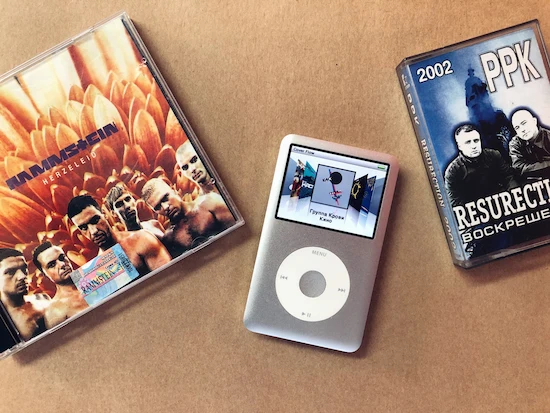 A hip-hop track doesn’t live in one environment. It gets tested everywhere — and that’s where most masters break.
Streaming is the first filter. Platforms normalize playback around -14 LUFS, while hip-hop masters often sit closer to -9 to -7 LUFS before normalization. Push too hard, and the platform turns the track down — but keeps the distortion and flattened transients. The result: loud on paper, weak in reality. This is why mastering for streaming platforms requires a different approach than chasing peak level (see mastering for streaming platforms and Spotify mastering).
Car playback exposes a different problem. Low-end becomes exaggerated, and any imbalance shows up immediately. An uncontrolled 808 turns overwhelming. A restrained one loses energy. Vocals that felt balanced in the studio suddenly shift — either buried or disconnected.
Phone speakers remove the low-end entirely. No sub, no depth — just midrange. If your master depends on sub energy, the track collapses. What’s left feels thin, and the listener moves on within seconds.
Club systems push everything to the limit. High volume, heavy low-end, physical pressure. If the master isn’t controlled, distortion builds up fast. The kick loses definition, and the low-end turns into noise instead of impact.
One master has to survive all of this. Not perfectly tuned for one system — but stable across all of them. That’s what translation means in practice. Not sounding impressive in your room, but holding together everywhere — including platforms like YouTube, where compression adds another layer of change.
A track that only works in one environment isn’t finished. It just hasn’t been tested yet.
Why AI Mastering Breaks Hip-Hop Tracks
AI mastering struggles with hip-hop for one reason — the material isn’t predictable.
In this genre, balance is constantly shifting. The relationship between the 808 and the vocal changes from verse to hook, from drop to breakdown. It’s not static. AI doesn’t interpret that — it averages it. The entire track gets treated as one curve. The result is unstable: either the 808 takes over and masks the vocal, or the vocal gets pushed forward in a way that feels disconnected from the beat.
Loudness makes it worse. Most AI systems are tuned for immediate impact, so they push level aggressively. At first listen, it can feel “finished.” But once you move between playback systems, problems show up. Low-end becomes inconsistent, midrange builds up, and the balance shifts depending on where you listen. It’s loud, but not controlled.
Then there’s punch. Hip-hop depends on transients — the snap of the snare, the weight of the kick. AI tends to smooth those out. Dynamics get reduced, movement disappears, and the track loses energy even if the meters look correct.
The limitation isn’t that AI is “bad.” It’s that it doesn’t understand context. It doesn’t hear how the groove works, how the 808 supports it, or how the vocal should sit inside that space. It standardizes instead of adapting.
That’s exactly where hip-hop exposes the gap between automated processing and real engineering decisions. If you want a deeper comparison, see our breakdown of AI mastering vs engineer.
Your Track Already Sounds Good — But Does It Translate?
Most tracks fall apart outside the studio. That’s where mastering decides everything. Send your track and get a free 30-second demo mastered by a real engineer — no presets, no automation. You’ll hear exactly how your 808 behaves, how the vocal sits, and whether the track holds up across real playback.
No commitment. Just send your track and hear how it performs outside your studio.
Common Hip-Hop Mastering Mistakes That Ruin Tracks
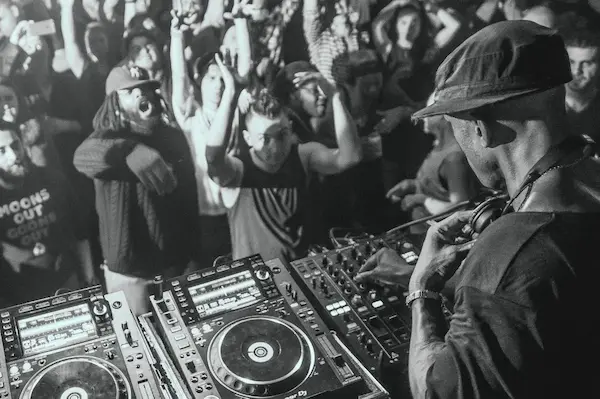 Most mastering mistakes don’t sound wrong at first. They sound louder, brighter, more aggressive — until the track leaves the studio.
Over-limiting is where things usually break. Push the limiter too far, and the track loses movement. The kick stops hitting. The snare loses snap. Everything becomes dense, but nothing cuts through. On streaming platforms, that loudness gets reduced anyway — but the damage stays. What’s left is a track that feels smaller, not bigger (see fix my master).
Low-end mistakes are just as destructive. A muddy 808 doesn’t stay in the bass — it spreads across the mix. The kick loses definition, the groove becomes unclear, and the track feels heavy in the wrong way. On smaller systems, that same low-end disappears completely. What sounded powerful turns into something weak and undefined (covered in fix muddy master).
Vocals fail differently. When the instrumental is pushed too far, the vocal gets buried. Push it forward artificially, and it loses connection with the beat. In both cases, the listener feels it immediately. If the lyrics aren’t clear without effort, the track doesn’t hold attention.
High frequencies can break a track just as fast. Trying to add clarity often leads to harshness. Hi-hats become piercing, sibilance gets exaggerated, and the track becomes fatiguing — especially on headphones and streaming playback. The issue isn’t “too much high-end,” it’s lack of control (see fix harsh highs).
All of these problems come from the same mistake — chasing impact without control. And once the track hits real playback, that imbalance becomes impossible to ignore.
How to Prepare a Hip-Hop Mix for Mastering (Quick Reality Check)
If the mix isn’t ready, mastering won’t save it. It will expose it.
Headroom is the first thing that gets ignored. If your mix is already hitting 0 dBFS or clipping on export, there’s no room left to work. That doesn’t make the track louder — it removes control. A clean mix with controlled peaks gives mastering space to shape the sound instead of fighting it.
Balance is even more critical. If the 808 is overpowering, mastering can’t fix it without affecting the entire track. If the vocal is buried, pushing it later will reveal problems in the midrange. Whatever is off in the mix becomes more obvious after mastering — not less.
Clipping is where things get locked in. It might feel aggressive in the moment, but once it’s baked into the mix, it limits every decision that comes after. Controlled saturation is one thing. Uncontrolled clipping across channels builds distortion that can’t be removed later.
Mastering doesn’t rebuild a track — it reveals how it behaves outside your studio. If the mix is unstable, that instability shows up immediately on real playback.
If you’re not sure your mix is ready, go through our full guide on how to prepare a mix for mastering before sending it in.
Online Hip-Hop Mastering vs Studio Sessions
Being physically in a studio doesn’t guarantee a better master. It never did — and today, it matters even less.
What actually defines the result is the quality of decisions. Online mastering gives access to engineers working in controlled environments with calibrated monitoring and consistent workflows. You’re not limited to whoever is nearby — you’re choosing based on results.
In many cases, control is higher online. You’re reviewing the master in your own environment — the same headphones, speakers, or car your audience uses. That’s where the track has to work. Not in an unfamiliar room with unfamiliar acoustics.
Speed matters too. No booking sessions, no travel, no waiting for availability. You send the track, get a revision, and move forward. For independent artists working on release schedules, that flexibility is critical.
The idea that in-person mastering is “better” comes from outdated workflows. The real difference today is not location — it’s whether the work is done with intent or just processed quickly. A controlled online master will outperform an inconsistent studio session every time.
If you want a deeper breakdown, see online mastering vs local studios, or go straight to ordering mastering online and hear the difference yourself.
Built for Real Playback — Not Just Studio Sound
Hip-hop mastering isn’t about applying a chain. It’s about how the track behaves once it leaves your session.
Every track is approached individually — based on how it reacts across real playback systems, not how it looks on meters.
What we focus on every time:
- Low-end that stays stable from club systems to phone speakers
- Punch that holds even after loudness normalization
- Vocal placement that remains clear inside dense instrumentals
No presets. No automated processing. Every decision is manual. Each master is checked across multiple playback environments — studio monitors, car reference, headphones, and consumer speakers — before delivery.
This is why artists come back. Not for louder masters — for consistency that holds up everywhere.
Our masters are built for real release conditions — where encoding, normalization, and playback limitations expose every weakness. We account for how tracks behave after upload, not just before it — so what you hear in mastering is what your audience hears after release.
If your track falls apart outside your studio, it’s not ready. Mastering is what decides that.
Your Track Already Has Potential — Don’t Let Mastering Kill It
A track can sound right in your session and still fall apart everywhere else. Mastering is what decides whether your 808 holds, your punch stays intact, and your mix translates across streaming, cars, and phones.
If it doesn’t translate, it doesn’t compete. Fix that before you release it.
Real mastering. Real translation. No shortcuts.
FAQ
What LUFS should hip-hop tracks hit?
Most hip-hop tracks land between -9 and -6 LUFS, but the number itself isn’t the goal. Push beyond what the track can handle, and you lose punch, low-end control, and clarity. Loudness only works when it stays controlled.
Why does my 808 disappear after mastering?
Because it’s built almost entirely on sub frequencies. Small speakers can’t reproduce that range. Without enough harmonic content, the 808 simply vanishes. A proper master keeps it audible across systems, not just powerful in the studio.
Is clipping normal in hip-hop mastering?
Controlled clipping can add density and aggression. Uncontrolled clipping destroys clarity — especially in the low-end. The difference isn’t the tool, it’s how precisely it’s used.
Do I need mastering if I use presets?
Presets apply the same processing to every track. Hip-hop doesn’t work that way. Every mix behaves differently, and mastering decisions have to follow that — not force it into a fixed chain.
How much does hip-hop mastering cost?
Costs vary, but price isn’t what defines the result. What matters is how well the track translates across real playback — streaming platforms, cars, and phones. That’s what determines whether it actually works after release.
Can online mastering compete with studios?
Yes — and in many cases, it’s more consistent. The result depends on the engineer and monitoring, not the location. Online mastering removes geographical limits without sacrificing quality.
Why does my track sound different on Spotify?
Because Spotify applies loudness normalization and playback compression. If the master isn’t built for that, the balance shifts — low-end changes, punch drops, and clarity suffers.