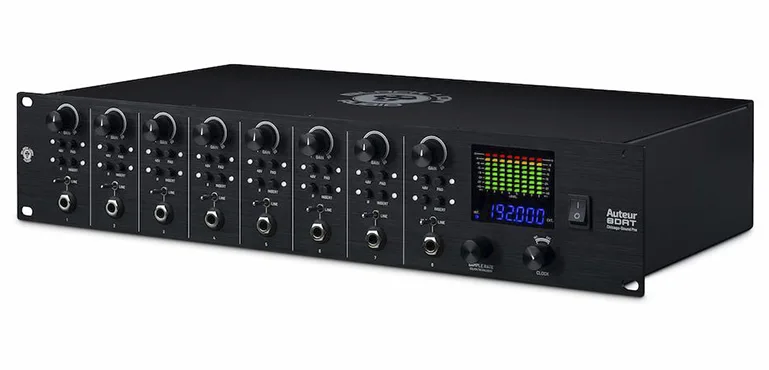
Black Lion Audio Auteur 8DAT Review: Beyond Basic ADAT Expansion
The ADAT expansion market has drifted into pure utility territory. Most eight-channel units are designed to do one thing: add more inputs to an interface with minimal cost, minimal coloration, and minimal thought given to the actual recording chain. They solve channel-count problems, but rarely improve the front-end itself. The Black Lion Audio Auteur 8DAT targets a different category of user — engineers who have already outgrown basic interface preamps and need a more capable analog front-end without rebuilding their entire studio around standalone converters and console routing.
That distinction matters because modern production workflows have changed faster than most studio hardware. Compact interfaces now sit at the center of increasingly complex setups involving live drum tracking, hardware synth rigs, analog outboard processing, reamping chains, and hybrid mixing environments. The weak point is no longer DAW power or plugin quality. It is the front-end architecture feeding the session.
The Auteur 8DAT is designed around that reality. Rather than functioning as a simple ADAT utility box, it combines eight Cinemag-equipped Auteur preamps, analog insert routing, dedicated line and Hi-Z stages, and integrated Macro-MMC clocking into a single expandable recording platform. The more important question is not whether it adds eight channels — dozens of products already do that — but whether its routing design, clock implementation, and analog signal path justify its position in a market full of cheaper expansion options.
- Why ADAT Expansion Still Matters
- Signal Path Design and Front-End Architecture
- Why Insert Routing Changes the Workflow
- Clocking, Conversion and System Stability
- Real-World Recording and Hybrid Mixing Applications
- How the Auteur 8DAT Compares to Other ADAT Expanders
- Who the Auteur 8DAT Actually Makes Sense For
- Why Hybrid Studios Are Moving Back Toward Front-End Quality
- Verdict
- FAQ
Why ADAT Expansion Still Matters in Modern Audio Production
For a while, the recording industry convinced itself that hardware infrastructure no longer mattered. DAWs became more powerful, plugins became more convincing, and compact interfaces pushed multi-track recording into bedrooms and small project studios. But while software evolved rapidly, most front-end recording chains stayed stuck in stripped-down two-channel workflows.
That limitation becomes obvious the moment a studio starts tracking anything more demanding than vocals and overdubs.
- Budget interface preamps run out of usable headroom during aggressive drum sessions.
- Converter stages lose depth once multiple transient-heavy sources hit simultaneously.
- Hybrid routing quickly becomes unstable without dedicated insert paths.
- External hardware chains introduce gain staging inconsistencies and monitoring complications.
- Expanded digital rigs expose clocking weaknesses that smaller setups often hide.
That becomes particularly obvious once sessions move beyond simple overdub production into 16- or 24-channel recording environments where multiple converters, headphone systems, cue mixes, and external processors are all operating simultaneously.
This is why ADAT expansion never disappeared from professional production environments. The protocol itself is old, but the underlying requirement remains unchanged: scalable I/O without rebuilding an entire recording system from scratch.
What has changed is the expectation surrounding expansion hardware. Engineers are no longer looking for channel count alone. They want better analog stages, cleaner integration with outboard gear, tighter clock synchronization, and front-end behavior that holds together under demanding sessions.
Most ADAT expanders still approach the category as utility hardware. Their role is simple: add inputs and stay invisible. The Black Lion Audio Auteur 8DAT takes a more ambitious approach. It is designed less like a passive expansion box and more like a centralized recording front-end built for hybrid production workflows.
The Auteur 8DAT Is Built Around Signal Path Control, Not Just Channel Count
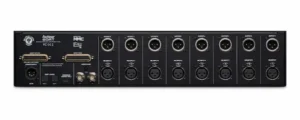 At first glance, the Auteur 8DAT looks like a familiar category product:
- Eight microphone preamps
- Dual ADAT outputs
- Word Clock I/O
- DB25 insert connectivity
- Cinemag transformer-coupled outputs
- Front-panel Hi-Z and line inputs
But the hardware itself is only part of the story. The more important detail is how the unit approaches front-end architecture.
Most ADAT expanders are designed around transparency and cost efficiency. Their job is to provide additional inputs while contributing as little character as possible to the recording chain. Black Lion Audio takes a noticeably different approach. The Auteur 8DAT is clearly designed as an active part of the signal path rather than a passive expansion stage sitting behind the interface.
That philosophy shows up immediately in the preamp behavior.
At conservative gain settings, the Auteur preamps stay relatively fast and controlled, preserving transient detail without sounding brittle or overly clinical. Multi-mic sources retain separation more effectively than they typically do through entry-level interface preamps, particularly during dense drum tracking or layered instrument sessions where cheaper analog stages tend to smear upper-midrange detail once multiple channels start stacking together.
Push the input stage harder, though, and the Cinemag transformer coupling starts becoming part of the sound. Not in an exaggerated vintage-console way, but through increased midrange density, slightly thicker low-frequency behavior, and a more forward harmonic structure once the preamps approach heavier gain levels.
That distinction matters because the Auteur 8DAT is not chasing obvious coloration. It sits much closer to modern hybrid front-end design — enough transformer behavior to prevent sterile capture, but not so much saturation that the source becomes difficult to manage later during mixing or mastering.
In practical production terms, that balance is useful. Modern streaming workflows punish overly congested tracking chains. Excessive transformer saturation, aggressive upper-mid buildup, and softened transients often become more obvious after loudness normalization, codec conversion, and platform-specific playback processing. The Auteur 8DAT appears designed to avoid that problem by maintaining articulation while still giving engineers a less synthetic front-end than typical interface expansion hardware.
This becomes particularly relevant in sessions built around live drums, hardware synthesizers, distorted guitars, or transient-heavy electronic production where front-end collapse tends to happen long before the mix stage. The Auteur 8DAT does not behave like a vintage character preamp, nor does it behave like a sterile converter extension. It occupies a middle ground that feels intentionally optimized for modern hybrid production rather than nostalgia-driven coloration.
That restraint is probably intentional. Modern productions already accumulate enormous amounts of saturation during mixing and mastering through clipping stages, analog emulations, bus processing, and loudness optimization. Front-end hardware that adds excessive harmonic density too early in the recording chain can leave engineers fighting congestion later, particularly once sessions pass through streaming normalization and codec reduction.
The Insert Architecture Matters More Than the Preamps
The most important feature on the Auteur 8DAT is not the transformer stage, the clocking system, or even the preamps themselves.
It is the insert routing.
Most ADAT expanders are built around a fixed assumption: audio enters the preamp, passes through conversion, and lands in the DAW with minimal interaction from external hardware. That approach works for basic tracking, but it quickly becomes limiting in hybrid environments where analog processing is part of the recording chain rather than an afterthought during mixing.
The Auteur 8DAT approaches the signal path differently. By providing balanced insert sends and returns over DB25, Black Lion Audio effectively turns the unit into a compact analog front-end router instead of a simple eight-channel converter extension.
The practical effect on studio workflow is significant.
Hardware compression can be inserted directly into the tracking chain without relying on external patchbays or interface rerouting. Analog EQ becomes easier to integrate before conversion. Saturation processors, transient shapers, and corrective hardware can all sit inside the recording path with far less routing friction than most compact studio setups typically allow.
More importantly, the insert implementation supports a production philosophy that many modern studios have started returning to: making decisions earlier.
For years, digital production encouraged engineers to postpone every commitment until the mix stage. Unlimited undo functionality made permanent processing feel unnecessary. The downside is that sessions became overloaded with corrective plugins, unstable gain staging, and increasingly artificial signal chains built entirely after conversion.
The Auteur 8DAT pushes against that workflow.
Tracking through hardware compression before conversion changes transient behavior at the source rather than repairing peaks later with plugins. Printing tonal decisions during recording often produces mixes that feel more stable and less congested under heavy limiting. Even subtle analog control before the converter stage can improve how dense sessions translate once they hit streaming normalization and lossy codec encoding.
That becomes increasingly relevant once sessions move into mastering, where engineers are often forced to compensate for unstable tracking decisions using heavier corrective processing. Understanding how those downstream processing stages accumulate is critical, particularly in modern loudness-driven workflows built around dense limiter chains and multi-stage dynamics control. Engineers interested in that side of the production pipeline may also want to explore how a real mastering chain works in finished commercial releases.
The practical benefits are less about analog romanticism and more about workflow efficiency:
- Commit-stage compression becomes easier during tracking sessions.
- Corrective EQ can reduce converter overload before digitization.
- Parallel hardware chains become more manageable without complex routing.
- Hybrid studios rely less heavily on external patchbay infrastructure.
- Latency-free analog processing integrates more naturally into recording sessions.
This is where the Auteur 8DAT separates itself from most competing ADAT expanders. Many products in this category focus almost entirely on increasing I/O count. Black Lion Audio is clearly targeting engineers who view front-end routing as part of the creative process rather than simple technical infrastructure.
That distinction makes the Auteur 8DAT significantly more interesting in real-world production than another marketing discussion about “warmth,” “musicality,” or analog “depth.” The stronger argument is workflow control — and that is far more valuable in modern hybrid studios.
Clocking: Real Engineering Benefit or Familiar Studio Marketing?
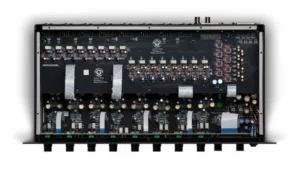 Black Lion Audio has built a large part of its reputation around clock modification and converter upgrades, so it is not surprising that the Auteur 8DAT places heavy emphasis on its internal Macro-MMC clocking architecture. The problem is that clocking discussions in professional audio are often buried under exaggerated marketing language that dramatically overstates what external synchronization actually changes inside a recording system.
In reality, clocking improvements are rarely dramatic in isolation.
Low-jitter synchronization does not suddenly create “analog warmth,” wider mixes, or larger low end. What it can influence — assuming the rest of the recording chain is already solid — is timing precision between digital devices. That affects stereo imaging consistency, transient focus, phase coherence, and the overall stability of complex multi-device systems.
In smaller production setups, those differences are often overstated. A two-channel interface running entirely inside a DAW environment is unlikely to experience transformational improvement from external clocking alone. Monitoring quality, room acoustics, microphone placement, and converter design all have a far greater impact on the final result.
But larger hybrid systems are a different conversation.
Once a studio starts combining multiple converters, ADAT expansion chains, external digital processors, standalone clocks, and hybrid routing hardware, synchronization stability becomes significantly more important. Poor clock implementation across larger digital systems can create subtle imaging instability, softened transient localization, and timing inconsistencies that become increasingly noticeable during dense multi-track sessions.
Converter performance also matters here because clock stability alone cannot compensate for weak analog-to-digital stages. Engineers expanding interface-based studios often discover that front-end depth, transient separation, and stereo image stability are influenced just as much by converter implementation as by the preamps feeding them. In that sense, the Auteur 8DAT is competing not only as an ADAT expander, but as a complete front-end capture system.
This is where the Auteur 8DAT becomes more interesting.
Its Word Clock I/O allows the unit to function as a centralized synchronization source for an expanded recording setup rather than simply acting as another ADAT peripheral sitting downstream from the interface. For studios already operating hybrid rigs with multiple digital stages, that architecture makes practical sense.
At the same time, engineers should stay realistic about what clocking can and cannot fix.
The Auteur 8DAT will not compensate for poor monitoring translation, unstable gain staging, weak room acoustics, or low-quality converters elsewhere in the chain. Clock stability only matters once the surrounding infrastructure is already performing at a reasonably high level. Otherwise, the improvements are easily masked by far larger problems happening earlier in the production process.
That nuance often disappears in pro-audio marketing.
To Black Lion Audio’s credit, however, the company at least has legitimate engineering history in this category. Unlike manufacturers that add Word Clock connectivity simply to match competitor feature lists, Black Lion Audio has spent years building products specifically around converter modification and synchronization performance. Whether the audible improvement justifies the emphasis will depend heavily on the studio environment, but the implementation itself appears more serious than the typical “clocking upgrade” language commonly attached to midrange recording hardware.
Real-World Production Applications
Live Drum Tracking
This is the environment where the Auteur 8DAT makes the most immediate sense.
Most producers eventually discover that expanding beyond four interface inputs creates problems that are not strictly about channel count. Drum recording exposes weaknesses in transient consistency, gain staging behavior, stereo image stability, and analog headroom far faster than overdub-based production does.
Stacking unrelated standalone preamps into a budget interface converter often produces uneven results across the kit. Kick transients respond differently from overheads, room microphones collapse earlier than close mics, and the overall image becomes less coherent once multiple gain stages start interacting simultaneously.
The Auteur 8DAT addresses that issue by keeping the entire front-end structure internally consistent. Matching preamp topology and converter behavior across all eight channels creates a more controlled multi-mic recording environment, particularly during dense sessions with aggressive cymbal energy, fast snare transients, and heavy room interaction.
That becomes especially relevant when working with modern drum overhead setups where transient consistency and cymbal control determine how well the entire kit survives bus compression and mastering. Engineers building affordable multi-mic drum rigs may also want to look at the Lewitt LCT 440 PURE Stereo Pair, particularly for overhead applications where phase stability and upper-midrange control matter more than exaggerated top-end hype.
The insert architecture also becomes genuinely useful here. Engineers can patch hardware compression directly into kick, snare, or room channels during tracking without relying on an external console or complicated patchbay routing. That makes commit-stage drum processing significantly easier in smaller hybrid studios where outboard integration is usually limited by interface design rather than hardware availability.
Hardware Synth and Electronic Production Setups
Synth-heavy production environments create a different set of problems.
Modern electronic studios often accumulate multiple stereo hardware sources, desktop processors, drum machines, samplers, and external effects units faster than their routing infrastructure can realistically support. Small interfaces may technically provide enough line inputs, but gain staging and signal management become increasingly unstable once several pieces of hardware stay permanently connected.
The Auteur 8DAT works well as a centralized line-level front-end because the unit is clearly designed for more than occasional instrument overdubs. Front-panel Hi-Z and line switching simplify integration for synths, guitars, basses, and reamping chains without forcing engineers into constant repatching.
The transformer-coupled output stages also help stabilize harsher digital synth material that can sound brittle through cleaner budget interface paths. That does not mean the Auteur 8DAT suddenly “warms up” weak sound design, but it does appear capable of producing denser, slightly more grounded tracking behavior during upper-midrange-heavy electronic sessions where transient sharpness can become fatiguing very quickly.
Hybrid Mixing and Analog Stem Printing
Although the Auteur 8DAT is primarily positioned as a recording front-end, its routing structure also makes sense in hybrid mixing environments.
Studios printing stems through hardware compressors, EQs, tape processors, or analog summing chains often spend more time managing routing infrastructure than actually processing audio. Patchbay-heavy systems solve that problem, but they also increase complexity, cost, maintenance requirements, and troubleshooting overhead.
That workflow philosophy overlaps closely with the renewed interest in large-format hybrid systems designed around faster routing decisions and analog integration. Studios moving further into console-based hybrid production may also be interested in the API Vision+ console, particularly as more engineers move away from fully recall-based mixing environments toward infrastructure built around commit-stage processing and tactile workflow control.
The Auteur 8DAT simplifies part of that workflow by integrating insert routing directly into the front-end architecture itself. Engineers can move signals through external hardware chains more efficiently without constantly rebuilding the signal path around the interface.
That becomes particularly useful in mastering-adjacent production workflows where stems are processed externally before final limiting and codec delivery. While the Auteur 8DAT is not designed as a dedicated mastering converter, it occupies an interesting middle ground between traditional tracking hardware and modern hybrid summing infrastructure.
That positioning arguably makes more sense in today’s production landscape than another purely transparent ADAT expansion box competing only on channel count and converter specifications.
Where the Auteur 8DAT Becomes More Difficult to Defend
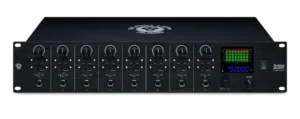 The Auteur 8DAT enters one of the most uncomfortable price ranges in the current pro-audio market.
At roughly €2599, it no longer competes strictly against budget ADAT expanders. It moves into territory where buyers start evaluating entirely different studio-building strategies.
That creates a more complicated purchasing decision than Black Lion Audio’s marketing initially suggests.
On one side, there are significantly cheaper expansion units from companies like Audient and Focusrite that handle the core requirement — adding eight additional inputs over ADAT — at a fraction of the price. Studios that simply need more channels for occasional tracking sessions may struggle to justify spending substantially more for improvements that become fully noticeable only in more developed hybrid environments.
On the other side, the Auteur 8DAT also overlaps with entry-level boutique front-end territory.
At this price point, many engineers begin considering alternative approaches:
- dedicated API-style or Neve-inspired preamps,
- higher-end stereo tracking chains,
- modular converter ecosystems,
- standalone clocking systems,
- patchbay-centered hybrid routing setups.
That comparison becomes especially relevant for studios that prioritize character over scalability. Some engineers would rather own two exceptional channels than eight very good ones, particularly in vocal-focused production environments where front-end identity matters more than multi-channel consistency.
The Auteur 8DAT deliberately avoids becoming extreme in either direction.
It is more ambitious than a utility expander, but less specialized than a true boutique front-end system. The transformer behavior is controlled rather than aggressively colored. The clocking architecture is serious, but not aimed at mastering-grade conversion systems. The routing flexibility is strong, but it does not fully replace dedicated patch infrastructure in larger analog studios.
That middle-ground positioning will either be the product’s biggest strength or its biggest weakness depending on the studio.
For hybrid production environments trying to balance scalability, analog integration, and workflow efficiency inside a compact footprint, the Auteur 8DAT makes a compelling argument. For smaller in-the-box setups or engineers chasing heavily colored boutique signal paths, the value proposition becomes much harder to justify against more specialized alternatives.
How the Auteur 8DAT Compares to Utility ADAT Expanders
The Auteur 8DAT becomes easier to understand once it is compared directly against the products most engineers are likely considering in the same category.
At the lower end of the market, units like the Audient ASP800 and Focusrite Clarett+ OctoPre focus primarily on efficient channel expansion. They solve a practical problem: adding more microphone inputs to an existing interface without dramatically increasing system cost. For many project studios, that alone is enough.
The Auteur 8DAT targets a different workflow.
| Unit | Primary Focus | Analog Character | Routing Flexibility | Best For |
|---|---|---|---|---|
| Black Lion Audio Auteur 8DAT | Hybrid front-end workflow | Moderate transformer coloration | High — inserts, clocking, analog integration | Hybrid studios and multi-channel tracking |
| Audient ASP800 | Affordable ADAT expansion | Mostly clean with optional coloration | Moderate | Project studios and drum recording |
| Focusrite Clarett+ OctoPre | Transparent channel expansion | Minimal coloration | Moderate | Clean tracking and interface expansion |
| Ferrofish Pulse | Large-scale I/O management | Transparent | Very high digital routing flexibility | Complex hybrid and converter-heavy studios |
Compared to the ASP800, Black Lion Audio places far greater emphasis on analog routing flexibility, insert integration, transformer behavior, and clocking architecture rather than simple recording expansion. The Audient remains an excellent value-oriented solution for studios that mainly need additional preamps for occasional drum tracking or live session work, but it operates more like a traditional utility expander.
The Focusrite Clarett+ OctoPre sits even further toward transparent functionality. Its strength is predictable integration inside modern interface ecosystems, particularly for producers who want clean gain staging and minimal coloration without adding complexity to the recording chain. The Auteur 8DAT, by comparison, behaves more like a dedicated hybrid front-end intended to become part of the studio’s routing infrastructure rather than simply adding extra channels.
Ferrofish systems occupy another category entirely. Products like the Pulse series prioritize conversion density, flexible digital routing, and large-scale I/O management rather than analog character or front-end workflow design. In studios centered around converter scalability and complex digital integration, Ferrofish often makes more operational sense. The Auteur 8DAT is considerably more focused on recording-chain behavior and analog interaction.
That separation in workflow philosophy is ultimately what defines the Auteur 8DAT’s position in the market.
The Auteur 8DAT is not the cheapest way to expand a studio. It is not the most aggressively colored front-end available at the price either. Its value comes from combining multiple infrastructure roles — preamps, inserts, clock distribution, analog routing, and ADAT expansion — into a single device designed specifically for hybrid production environments.
For engineers who only need more inputs, there are cheaper options. For studios chasing heavily stylized analog coloration, there are more specialized options. The Auteur 8DAT sits in the middle, targeting studios that care less about marketing mythology and more about building stable, scalable recording workflows.
Who the Auteur 8DAT Actually Makes Sense For
The Auteur 8DAT is not aimed at entry-level recording setups, and Black Lion Audio would be making a mistake if it tried to market the unit that way.
This is a product for studios that have already outgrown basic interface workflows but are not ready to move into large-format console infrastructure or high-end modular converter systems.
The ideal user is typically running a setup that already includes:
- a capable primary interface,
- multiple microphones or hardware instruments,
- at least some external analog processing,
- regular multi-channel recording sessions,
- hybrid mixing or stem-printing workflows.
That usually means intermediate to advanced producers, mixing engineers, project studios, and hybrid production environments where the bottleneck is no longer software capability but front-end scalability.
In that context, the Auteur 8DAT starts making more strategic sense.
It potentially consolidates several separate infrastructure problems into one device:
- ADAT input expansion,
- additional microphone preamps,
- centralized line-level routing,
- insert integration for external hardware,
- Word Clock distribution for expanded digital systems.
That consolidation matters because hybrid studios often evolve in fragmented stages. Producers buy interfaces first, then standalone preamps, then patch solutions, then external converters, and eventually discover that the overall signal path has become inconsistent and inefficient.
The Auteur 8DAT attempts to stabilize that middle-growth phase before the studio reaches full-scale analog infrastructure complexity.
Where the value proposition weakens considerably is in smaller in-the-box production environments.
A producer recording occasional vocals, guitars, or stereo synths inside a mostly plugin-based workflow is unlikely to extract the full benefit from eight channels of integrated analog expansion. In those cases, monitoring accuracy, room treatment, stereo conversion quality, or even microphone upgrades will usually have a larger impact on the final production than adding a multi-channel hybrid front-end.
The same applies to engineers chasing heavily colored boutique recording chains. The Auteur 8DAT is designed around balance and workflow efficiency, not extreme analog personality. Studios looking specifically for aggressive transformer saturation, vintage console behavior, or highly stylized preamp coloration may ultimately prefer fewer channels with more specialized analog character.
The Auteur 8DAT makes the strongest argument in studios that need infrastructure more than hype — particularly environments where routing efficiency, front-end consistency, and scalable hybrid integration matter more than chasing exaggerated analog coloration trends.
The Industry Shift Products Like the Auteur 8DAT Are Responding To
The Auteur 8DAT exists because the priorities inside modern audio production have started changing again.
For more than a decade, most of the industry’s attention was focused on software. DAWs became effectively unlimited, plugin processing became extremely sophisticated, and virtual production workflows replaced large portions of traditional studio infrastructure. The assumption was that better mixes would come primarily from better processing after recording.
That assumption is starting to break down.
Today, high-quality plugins are no longer rare. Nearly every serious producer has access to capable EQs, compressors, saturation tools, amp simulations, mastering processors, and virtual instruments. The technical floor has risen dramatically across the entire production market.
As a result, the differentiator has shifted back toward front-end quality.
The gap between amateur and professional productions increasingly comes from what happens before audio reaches the DAW:
- microphone selection and placement,
- stable gain staging under real recording conditions,
- converter performance during dense sessions,
- analog signal integrity across hybrid chains,
- clock synchronization between digital devices,
- monitoring systems capable of exposing translation problems early.
This is especially obvious in modern streaming environments where playback normalization, lossy codec conversion, and small-speaker listening expose front-end weaknesses very quickly. Harsh upper mids, unstable low-end imaging, transient collapse, and phase inconsistencies often originate long before the mix stage, even if engineers try to repair them later with plugins.
Many of those issues are later misdiagnosed as “mastering problems” even though the root cause often starts much earlier in the recording chain through poor front-end decisions, unstable monitoring, or inconsistent gain staging. That disconnect between tracking quality and final mastering translation remains one of the most common problems in modern project studios, especially in heavily layered hybrid productions.
Studios struggling with those translation issues may also want to review this breakdown of common mastering problems that actually originate earlier in production.
Products like the Auteur 8DAT are built around that reality.
Black Lion Audio is not simply selling additional ADAT inputs. The company is targeting studios that have already realized software alone no longer solves front-end limitations. The emphasis on analog routing, transformer-coupled stages, clock stability, and multi-channel consistency reflects a broader industry move back toward recording-chain quality rather than endless post-processing correction.
Whether the Auteur 8DAT justifies its cost will depend heavily on the surrounding studio infrastructure. In the right hybrid environment, its design philosophy makes a strong amount of sense. In smaller setups that remain mostly inside the box, much of that engineering advantage may never become fully audible.
Verdict
The Black Lion Audio Auteur 8DAT is one of the few ADAT expansion products currently aimed at solving workflow problems instead of simply increasing input count.
That positioning separates it from the majority of ADAT expansion hardware currently targeting project studios.
Most devices in this category are designed as transparent utility hardware — functional I/O expansion with little attention paid to the broader recording chain. The Auteur 8DAT takes a more infrastructure-focused approach. Its combination of transformer-coupled preamps, integrated insert routing, centralized clocking, and hybrid-friendly signal management positions it closer to a compact studio front-end than a conventional ADAT accessory.
The strongest part of the design is not the marketing language around analog character. It is the routing philosophy.
The DB25 insert implementation fundamentally changes how the unit integrates into real production environments. Engineers tracking through hardware compressors, analog EQs, saturation processors, or hybrid stem chains will extract far more value from the Auteur 8DAT than producers simply looking for eight additional channels of conversion.
That matters because cleaner front-end routing and more controlled tracking decisions often reduce the amount of corrective work required later during mastering preparation. Engineers building hybrid workflows around external hardware integration may also benefit from understanding how mix preparation affects final translation, codec behavior, and limiter stability before a project ever reaches mastering delivery. For a deeper breakdown of that process, see this guide on how to prepare a mix properly before mastering.
That also explains why the product may divide opinion.
Studios searching purely for affordable ADAT expansion can spend dramatically less and still achieve competent results. Likewise, engineers prioritizing highly colored boutique signal paths may prefer investing in fewer premium channels with more aggressive analog personality.
The Auteur 8DAT deliberately avoids extreme positioning. It is neither a budget utility expander nor a heavily stylized boutique front-end. Black Lion Audio is clearly targeting studios that need scalable hybrid infrastructure more than exaggerated analog personality.
Inside a well-developed hybrid studio, the Auteur 8DAT makes a convincing case for itself as infrastructure rather than accessory hardware. In smaller plugin-centric environments, however, much of its engineering advantage may remain largely theoretical.

Yurii Ariefiev is a mastering engineer and audio production editor specializing in hybrid studio workflows, analog integration, monitoring translation, and modern streaming delivery standards. His editorial work focuses on the technical realities behind recording infrastructure, converter behavior, front-end signal paths, loudness management, and real-world playback consistency across modern listening platforms.
This article was written from the perspective of practical studio engineering rather than product marketing, with emphasis on signal routing, hybrid workflow design, tracking architecture, and the operational challenges facing modern mixing and mastering environments.
FAQ
Does the Black Lion Audio Auteur 8DAT work with Universal Audio Apollo interfaces?
Yes. Any Apollo interface with available ADAT input can integrate the Auteur 8DAT as an eight-channel expansion device at standard sample rates. At higher sample rates, available channel count drops because of SMUX bandwidth limitations.
Is the Auteur 8DAT designed more for tracking or hybrid mixing?
Primarily tracking. However, the insert routing and line-level flexibility also make it useful for stem printing, analog processing loops, and hybrid mix workflows involving external compressors or EQ chains.
How does the Auteur 8DAT compare to the Audient ASP800 or Focusrite Clarett+ OctoPre?
The ASP800 and Clarett+ OctoPre are more utility-focused expansion units aimed primarily at adding affordable I/O. The Auteur 8DAT puts greater emphasis on analog routing, transformer behavior, clock integration, and front-end workflow control.
Does the Auteur 8DAT function as a standalone master clock?
Yes. Its Macro-MMC clocking architecture and Word Clock I/O allow it to operate as the primary synchronization source inside larger hybrid recording systems.
Will better clocking noticeably improve audio quality?
In smaller systems, probably not dramatically. In larger multi-device environments, improved synchronization can help stabilize stereo imaging, transient focus, and overall digital timing consistency across converters and external processors.
Are the Auteur preamps heavily colored?
No. The preamps are relatively controlled compared to aggressive vintage-style transformer designs. The Cinemag stages add density and harmonic weight under heavier gain conditions without pushing the signal into obvious saturation territory.
Can the Auteur 8DAT replace a dedicated mastering converter?
Not realistically. While the unit is capable of high-quality conversion and analog integration, it is fundamentally designed as a multi-channel recording front-end rather than a mastering-grade stereo converter platform.
Does ADAT expansion still make sense in modern hybrid studios?
Absolutely. ADAT remains one of the most practical ways to expand I/O without replacing an entire interface ecosystem, particularly for studios tracking drums, hardware synths, or larger analog setups.
Who will benefit most from the Auteur 8DAT?
Studios running hybrid workflows, multi-mic recording sessions, external hardware processing, or expanding digital rigs will benefit the most. The unit makes far less sense in minimalist in-the-box production environments.
Who probably should not buy the Auteur 8DAT?
Producers recording one source at a time through mostly plugin-based workflows will likely see greater improvement from upgrading monitoring, acoustics, microphones, or stereo conversion before investing in eight-channel analog expansion hardware.