Arturia Memory V Review: The Reality of Mixing a Software Memorymoog
Published May 2026 • Updated for current Arturia Memory V release workflow
Arturia Memory V arrives at a time when software synth design is moving in two opposite directions at once. Producers want larger analog-style textures, more harmonic movement and less sterile digital behavior, yet modern mixes are becoming increasingly intolerant of uncontrolled density. Streaming normalization, codec conversion and aggressive loudness processing expose low-mid buildup faster than ever. That creates a problem for any instrument modeled after the original Memorymoog — a polysynth famous for sounding enormous long before “mix-ready” became part of production vocabulary.
The hardware Memorymoog earned its reputation because of its weight, instability and raw oscillator behavior, not because it fit neatly into polished arrangements. Three VCOs per voice, nonlinear saturation and unpredictable tuning movement gave the instrument unusual depth, but also made it notoriously difficult to control. In modern sessions, those same characteristics can either create emotional scale or completely destabilize a mix depending on arrangement discipline and spectral management.
That is what makes Memory V more interesting than the average vintage emulation release. The plugin is not competing against hardware nostalgia alone. It enters a market already saturated with analog-modeled synths, cinematic soft instruments and hybrid sound-design platforms all chasing the same “warmth” narrative. The real question is whether Arturia’s circuit-modeled approach produces something that still translates under modern production conditions — not just in solo demos, but inside compressed streaming masters, dense arrangements and real-world playback systems.
- Why the Memorymoog Still Matters in Modern Production
- Memory V’s Sound Architecture and Why It Dominates a Mix So Easily
- The Modern Features Matter More Than the Hardware Accuracy
- Where Memory V Starts Fighting the Mix
- Mix Translation, Streaming Codecs and Playback Stability
- CPU Load and Session Workflow Reality
- Where the Marketing Starts Separating From Production Reality
- Where Memory V Fits in the Current Analog Software Market
- Real-World Production Perspective
- Verdict
- FAQ
Why the Memorymoog Still Matters in Modern Production
 The Memorymoog remains relevant for one reason: very few synthesizers generate harmonic weight the same way. Its reputation was never built around versatility or reliability. The instrument became legendary because it sounded physically larger than most polyphonic synths released during the early analog era.
Released between 1982 and 1985, the Memorymoog was effectively Moog’s final large-format analog polysynth before the company collapsed financially. By modern standards, the hardware was deeply impractical. It drifted constantly, required aggressive maintenance and developed a reputation for unstable behavior under real studio conditions. Yet those same flaws contributed to the instrument’s character. The oscillator interaction, nonlinear mixer stages and ladder filter saturation created unusually dense harmonic movement that many software instruments still struggle to reproduce convincingly.
The instrument’s legacy also extends well beyond vintage collector culture. Variations of the Memorymoog sound profile influenced decades of electronic production, particularly in progressive electronic music, cinematic scoring and large-format analog arrangements associated with artists like Jan Hammer and early synth-driven film composers.
Compared to surviving hardware Memorymoog units — many of which now require constant servicing, calibration and restoration work — Memory V offers a far more realistic entry point into that style of analog synthesis without the operational instability that made the original instrument notoriously difficult to maintain.
Its three-VCO-per-voice architecture is a major reason the instrument continues to attract producers decades later. Unlike many modern soft synths that simulate “warmth” through post-processing or exaggerated stereo enhancement, the Memorymoog generated density structurally. Chords carried internal movement even before additional effects processing entered the signal chain.
That distinction matters more now than it did ten years ago. Modern production has become increasingly saturated with clinically clean synthesis engines optimized for precision, speed and CPU efficiency. As a result, many contemporary mixes feel technically polished but harmonically static. Producers working in cinematic scoring, melodic techno, synthwave, industrial electronica and dark ambient increasingly gravitate toward instruments that introduce instability, drift and nonlinear behavior directly into the source tone rather than relying on saturation plugins later in the chain.
Arturia clearly understands that shift. Memory V is not positioned as a perfectly restored museum piece. The plugin leans into the instability and harmonic aggression that made the original hardware difficult to control in the first place. Instead of smoothing out the instrument’s behavior for modern convenience, Arturia preserves much of the uneven analog movement that gave the Memorymoog its identity.
That approach gives Memory V a stronger position in today’s software market than another generic “vintage-inspired” synth release. The plugin targets producers searching for scale, pressure and analog unpredictability — qualities that increasingly disappear in modern digital production workflows.
Memory V’s Sound Architecture and Why It Dominates a Mix So Easily
The defining characteristic of Memory V is not the filter or the vintage branding. It is the triple-VCO architecture and the way those oscillators interact under load. Three oscillators per voice fundamentally change how the instrument occupies spectral space. Even restrained patches generate a level of harmonic density that most modern virtual analog synths only approximate through additional saturation stages or layered processing.
That distinction becomes obvious immediately in complex arrangements. Memory V does not create “warmth” through cosmetic analog coloration. The weight comes directly from oscillator interaction, nonlinear mixer behavior and the unstable movement between voices. Chords develop internal motion naturally, especially in the low-midrange where the synth builds pressure extremely quickly.
Arturia’s modeling captures several behaviors that matter in actual production work rather than marketing demos. Oscillator drift never feels mathematically static, sustained chords develop subtle phase movement over time and the ladder filter introduces saturation that reacts dynamically instead of behaving like a fixed distortion layer. Under resonance, the synth produces the kind of harmonic bloom that can either make a track feel massive or completely overwhelm the center of a mix depending on arrangement discipline.
The added Drive control pushes the plugin beyond strict vintage emulation territory. This is an important addition because many authentic analog recreations still require external saturation processing to compete inside modern masters. Memory V’s Drive stage gives the synth more forward harmonic presence without immediately collapsing transient definition or forcing excessive post-processing downstream.
The oscillator sync implementation is where the plugin becomes more aggressive than nostalgic. Syncing VCO 1 to VCO 3 creates tearing upper harmonics and unstable textures that move well beyond traditional retro synthesis. Instead of behaving like a polite analog recreation, Memory V starts entering industrial, cinematic and hybrid sound-design territory where controlled instability becomes part of the composition itself.
This is also where many producers will either love or hate the instrument. Memory V imposes character aggressively. It does not sit passively inside arrangements the way cleaner modern synth engines often do. The plugin pushes harmonic information into critical vocal and snare regions constantly, which means it rewards sparse arrangements and punishes overcrowded productions almost immediately.
In practical terms, Memory V behaves less like a conventional software polysynth and more like a large analog hardware instrument forced into a modern DAW environment. That is exactly what gives it value — and exactly what makes it difficult to manage in contemporary mixing workflows.
The Modern Features Matter More Than the Hardware Accuracy
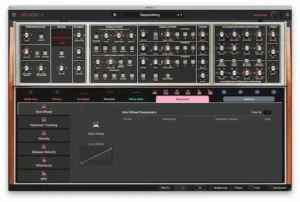 Most vintage synth emulations fail for the same reason: developers spend years recreating the front panel while ignoring how modern producers actually work. Exact hardware behavior means very little if the instrument collapses the moment it enters a contemporary DAW workflow. Arturia avoids part of that problem by treating Memory V less like a museum restoration project and more like a production-oriented analog platform.
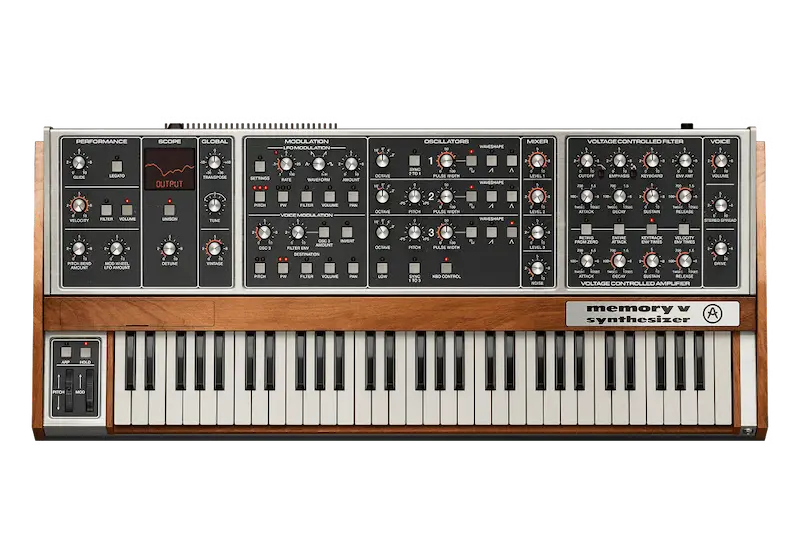
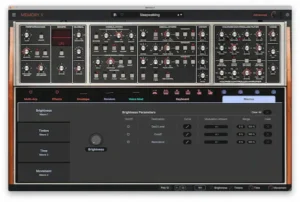
The modulation architecture is a major reason the plugin feels usable beyond nostalgia circles. The original Memorymoog was powerful but rigid by current standards. Memory V’s drag-and-drop routing system introduces a level of movement and automation flexibility that modern electronic production practically requires. Complex modulation chains, evolving filter behavior and dynamically shifting stereo motion can be built directly inside the instrument instead of relying on external automation lanes and post-processing chains.
That matters because static analog patches age quickly in modern arrangements. Large vintage textures sound impressive during the first eight bars, then become repetitive once the ear adjusts to the harmonic footprint. Memory V’s expanded modulation system helps prevent that stagnation by keeping oscillator movement, filtering and spatial behavior continuously evolving under the surface.
The multi-arpeggiator is another feature that feels substantially more useful than typical “retro bonus” additions found in many vintage recreations. Instead of functioning like a basic pattern generator, it pushes the synth toward cinematic sequencing, rhythmic pulse design and layered harmonic motion. In hybrid scoring environments or melodic techno production, that functionality becomes far more relevant than strict hardware authenticity.
MPE support also changes how the instrument behaves creatively. Many analog emulations still assume a traditional keyboard workflow centered around static MIDI input. Memory V responds far better to expressive controllers capable of continuous movement and per-note articulation. Paired with hardware like the ROLI Seaboard or Expressive E Osmose, the synth becomes significantly more alive because the oscillator instability and filter response react dynamically rather than repeating identical envelopes every pass.
The jump from six to twelve voices may sound minor on paper, but it changes the practical usability of the instrument considerably. The original hardware’s voice limitations forced constant compromises once dense chord structures entered the arrangement. Memory V removes much of that restriction, making extended harmonies, stacked intervals and large cinematic voicings more realistic inside modern productions.
Ironically, these workflow-oriented additions are what make Memory V feel more relevant than the vintage recreation itself. Plenty of plugins already imitate analog hardware visually. Far fewer manage to adapt that architecture to the demands of current production environments without losing the instability and harmonic aggression that made the original instrument desirable in the first place.
Where Memory V Starts Fighting the Mix
This is the point where demo impressions and real production work separate completely.
Memory V sounds enormous on its own. Factory presets immediately deliver width, harmonic movement and the kind of analog weight that makes many modern software synths feel flat by comparison. Inside an actual arrangement, however, that same density becomes much harder to control.
The plugin continuously pushes information into the exact frequency areas already occupied by vocals, snare presence, guitars and melodic percussion. Between roughly 200Hz and 1.5kHz, Memory V builds harmonic pressure extremely quickly, especially once multiple voices, filter drive and modulation movement are layered together.
Unlike cleaner modern synth engines designed to leave intentional spectral gaps, Memory V behaves more like a large-format analog instrument recorded directly into the session. It fills space aggressively. That creates emotional scale, but it also introduces masking problems faster than many producers expect.
In practical mix situations, the same issues appear repeatedly. Kick transients begin softening once sustained polyphonic patches enter the arrangement. Vocal intelligibility drops even when the synth does not appear excessively loud in level meters. Choruses accumulate low-mid energy that feels exciting during playback but collapses headroom during mastering. Wide analog modulation also becomes unpredictable after AAC or Ogg codec conversion, where stereo movement can partially smear or destabilize.
None of these behaviors are flaws in the plugin itself. They are direct consequences of the original Memorymoog architecture. The instrument was never designed around modern streaming workflows, hyper-dense arrangements or loudness-normalized playback systems.
That is precisely why Memory V exposes weak production decisions so quickly. Many producers still confuse “large” with “mix-ready.” Memory V punishes that assumption almost immediately. The synth often requires significantly more subtractive EQ, dynamic control and stereo discipline than contemporary virtual analog instruments optimized for cleaner integration. That difference becomes especially obvious during mixing and mastering, where oversized analog density can either create emotional impact or completely destabilize playback translation depending on how the arrangement is controlled.
The challenge becomes even more obvious during mastering. Sustained analog harmonics interact with broadband limiting differently than cleaner digital synthesis. Dense Memory V arrangements tend to trigger uneven gain reduction, particularly once commercial loudness targets are involved. Limiter behavior becomes less stable, transient clarity starts disappearing and the mix can lose forward movement even when peak levels appear technically controlled.
Ironically, the qualities that make Memory V emotionally impressive are the same qualities most likely to destabilize a modern master. The plugin creates genuine analog pressure and harmonic movement, but contemporary playback ecosystems are far less forgiving of uncontrolled density than the studio environments the original hardware was built for.
Mix Translation, Streaming Codecs and Playback Stability
One of the biggest problems with modern analog-style synth plugins has very little to do with how they sound inside the studio. The real test is what happens after the mix leaves the DAW and enters streaming platforms, codec conversion pipelines and consumer playback systems.
This problem has become more relevant as modern production increasingly shifts toward headphone-first playback environments. Large analog textures that feel controlled on full-range monitoring systems often behave very differently once collapsed into smaller consumer playback formats.
Memory V performs exceptionally well on full-range monitoring. Large monitors and treated rooms reveal the dimensional movement, oscillator interaction and harmonic depth that make the instrument appealing in the first place. The problem is that many of those same characteristics become unstable once the mix reaches earbuds, Bluetooth speakers, laptops and streaming encoders.
Dense analog low-mid information does not always survive lossy compression gracefully. AAC and Ogg encoding tend to flatten subtle oscillator movement and exaggerate phase interaction in wide stereo patches. Sounds that feel immersive and expensive in the studio can become cloudy, smeared or spatially inconsistent on smaller playback systems.
Memory V is especially vulnerable when patches rely heavily on wide unison behavior, stereo modulation or slowly evolving harmonic textures. Sustained analog movement often occupies a large portion of the stereo field continuously, leaving codecs far less room to preserve transient detail elsewhere in the mix. The result is a playback image that can lose focus surprisingly fast after conversion.
This becomes even more noticeable in ambient productions, cinematic layering and melodic electronic genres where long synth sustains dominate the arrangement. Once multiple Memory V layers start interacting, low-mid buildup compounds quickly and streaming normalization systems begin exposing the imbalance by reducing perceived punch and transient clarity across the entire master.
That is why monitoring discipline matters much more with Memory V than with cleaner digital synth architectures. Translation checking across headphones, mono playback, consumer speakers and codec-preview workflows becomes essential rather than optional. A patch that sounds enormous on studio monitors may occupy far more usable bandwidth than the arrangement can realistically support once the track reaches Spotify, Apple Music or YouTube.
The plugin also encourages arrangement excess almost by accident. Memory V sounds emotionally satisfying before the production is even finished, which makes it easy to keep adding layers without realizing how aggressively the synth is consuming spectral space. Producers chasing “bigger” arrangements can quickly end up with mixes where every element competes for the same harmonic weight.
From a mastering perspective, that usually means more corrective work downstream. Low-mid management, stereo containment and dynamic balance become critical if the goal is stable playback across streaming platforms instead of impressive solo playback inside the studio. Producers chasing aggressive loudness without controlling harmonic buildup often run directly into the same problems covered in this loudness vs clipping mastering guide, especially once dense analog layers start interacting with broadband limiting.
CPU Load and Session Workflow Reality
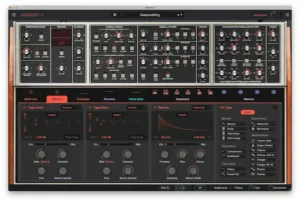 Memory V is not an efficient synth, and trying to use it like one misses the entire point of the instrument.
Arturia’s circuit-level modeling, multi-oscillator architecture and nonlinear behavior carry a real computational cost, especially once producers move beyond simple preset browsing and start building full arrangements. Single instances remain manageable on modern systems, but the plugin becomes substantially heavier once higher voice counts, modulation movement, internal effects and layered polyphonic patches enter the session simultaneously.
The twelve-voice expansion changes the workflow equation immediately. Large chord voicings, evolving pads and stacked harmonic layers generate significant CPU load very quickly because the synth is constantly processing oscillator interaction rather than relying on lightweight static playback behavior. Unlike many modern digital synths optimized for efficiency first, Memory V behaves more like a software recreation of actual analog circuitry under stress.
This becomes especially relevant in cinematic production, orchestral hybrid scoring and dense electronic arrangements where the temptation to stack multiple analog textures arrives almost immediately. Memory V encourages layering because the instrument sounds emotionally complete even before additional processing is applied. The downside is that sessions can escalate from stable to resource-heavy much faster than expected.
In practical workflows, freezing and bouncing tracks become part of the production process relatively early, particularly in larger projects running high oversampling settings or complex automation. Producers working on laptops or older systems will likely need stricter session management than they would with lighter virtual analog alternatives.
That said, the CPU cost generally feels proportional to the result. Memory V does not sound lightweight, sterile or algorithmically simplified. The plugin generates enough harmonic movement and nonlinear interaction that the additional processing demand feels technically justified rather than inefficient for its own sake.
Ironically, the heavier workflow may even improve production decisions. Because Memory V discourages endless instance stacking, it naturally pushes arrangements toward more deliberate synth placement instead of the layer-heavy excess that often destroys clarity in modern electronic mixes.
Where the Marketing Starts Separating From Production Reality
Arturia describes Memory V as delivering the Memorymoog experience “without the limitations.” That framing only holds true if the discussion is limited to hardware maintenance, tuning instability and physical reliability.
The actual sonic limitations of the instrument still exist because they are embedded in the architecture itself.
Memory V remains a dense, harmonically aggressive analog polysynth built around three oscillators per voice and constantly shifting nonlinear behavior. No amount of modern workflow enhancement changes the fact that this type of instrument naturally consumes a large amount of spectral space.
That becomes important once producers move beyond solo playback and start using the synth inside commercial arrangements. Memory V is not a transparent workhorse instrument capable of adapting to every production style equally well. The plugin imposes character continuously, even in relatively restrained patches. In smaller doses that behavior feels expensive and cinematic. Across entire productions, it can become exhausting surprisingly quickly.
This is where many analog-focused marketing campaigns become disconnected from modern production reality. “Warmth” is usually presented as an automatic advantage, while the actual consequences of harmonic density receive far less attention. Dense analog movement sounds impressive during isolated demonstrations because there is nothing competing against it. In full arrangements, the same qualities often create masking problems, unstable low-mid buildup and inconsistent playback translation once the track reaches streaming platforms.
Memory V exposes that issue aggressively because it does not behave like a modern hybrid synth optimized for flexibility. Producers expecting surgical control, ultra-clean layering or highly adaptive sound design may find the instrument surprisingly narrow outside its preferred territory. The plugin excels at pressure, movement and analog scale. It is far less convincing as an invisible utility synth designed to disappear inside crowded productions.
There is also a larger industry trend underneath releases like this. Modern plugin marketing increasingly romanticizes vintage instability while ignoring how modern distribution systems actually process audio. Streaming normalization, codec conversion and loudness-driven mastering environments are significantly less forgiving than the analog playback chains many of these original instruments were designed around.
As a result, producers often end up chasing oversized analog emotion while unintentionally creating mixes that lose clarity, transient focus and translation stability once the music leaves the studio environment.
Memory V is capable of producing exceptional sounds, but it does not automatically solve modern production problems. In many cases, it amplifies them. The plugin rewards restraint, arrangement discipline and careful spectral management far more than the marketing language surrounding “vintage warmth” would suggest.
Where Memory V Fits in the Current Analog Software Market
Memory V enters a software synth market that is already saturated with analog emulations, hybrid instruments and cinematic sound-design platforms competing for the same audience. That makes positioning more complicated than simply asking whether the plugin “sounds analog.” Most premium synths at this level already do.
What separates Memory V is not realism alone, but the type of density it generates and how aggressively that density shapes a production. The plugin behaves less like a flexible all-purpose synth and more like a specialized analog instrument with a very strong tonal identity.
That distinction becomes particularly important when producers start comparing Memory V to broader analog platforms like u-he Diva or more mix-friendly instruments such as Softube Model 84. Unlike those synths, Memory V prioritizes harmonic pressure and analog instability over transparency and workflow neutrality.
Compared to something like u-he Diva, Memory V feels narrower but heavier. Diva remains one of the most flexible analog-modeling environments available because it allows producers to combine multiple synthesis architectures while maintaining relatively controlled mix behavior. Memory V is less adaptable, but far more physically dense in the low-midrange. Diva can disappear into arrangements when necessary. Memory V rarely does.
Cherry Audio’s Memorymode approaches similar territory from a different angle. It delivers a more affordable and CPU-friendly interpretation of the Memorymoog concept, but the harmonic complexity and nonlinear movement feel less dimensional under sustained playback. Memory V reacts more like a large analog circuit under stress, particularly once filter saturation and oscillator interaction begin stacking across polyphonic passages.
Softube Model 84 occupies almost the opposite side of the workflow spectrum. Where Memory V pushes pressure and harmonic aggression forward constantly, Model 84 prioritizes smooth integration and stable translation. In modern pop, indie electronic and vocal-driven production, that softer spectral footprint can actually make mixes easier to finish.
Even within Arturia’s own ecosystem, Memory V fills a different role than instruments like Prophet V. Prophet-style synthesis generally leaves more space between harmonic elements and tends to integrate more naturally into layered arrangements. Memory V is considerably more forceful. It demands attention from the arrangement whether the producer intends it or not.
| Plugin | Core Character | Production Behavior | Best Fit |
|---|---|---|---|
| Arturia Memory V | Dense, unstable, harmonically aggressive | Dominates low-mid space quickly | Cinematic, synthwave, industrial, melodic techno |
| u-he Diva | Flexible analog modeling | More adaptable across mixes | General analog production |
| Cherry Audio Memorymode | Lightweight Memorymoog-inspired workflow | Cleaner and less dimensional | Budget retro synthesis |
| Softube Model 84 | Smooth vintage character | More stable mix translation | Pop, indie electronic, layered arrangements |
| Arturia Prophet V | Wide cinematic polyphony | Less spectrally aggressive | Film scoring, ambient, pads |
That positioning makes Memory V highly effective for producers specifically searching for analog instability, harmonic pressure and emotionally oversized textures. It excels when the synth itself is supposed to become a defining structural element of the production.
At the same time, the plugin is a less natural fit for ultra-clean pop production, minimalist electronic arrangements or highly surgical sound-design workflows where transparency and spectral efficiency matter more than analog character.
In other words, Memory V competes less with modern “do everything” synths and more with heavyweight character instruments designed to shape the emotional center of a track immediately — even if that comes at the cost of flexibility and mix convenience.
Real-World Production Perspective
The most revealing aspect of Memory V is not the vintage emulation itself. It is how quickly the plugin exposes weak production decisions.
Modern software instruments are often engineered to behave politely inside crowded sessions. They leave spectral gaps intentionally, maintain stable stereo information and avoid generating excessive harmonic buildup unless the producer forces it. Memory V does the opposite. The synth behaves like a large analog source occupying real physical space, which means arrangement mistakes become obvious almost immediately.
Poor gain staging, excessive layering and uncontrolled low-mid accumulation are difficult to hide once multiple Memory V parts enter a production. The plugin rewards restraint far more than maximalism. Producers approaching it with modern “stack everything” workflows may discover that the synth collapses clarity faster than expected, particularly once vocals, live drums or distorted guitars compete for the same frequency range. In many cases, the resulting buildup resembles the same low-mid congestion discussed in this fix muddy master guide, even before the track reaches final mastering stages.
At the same time, Memory V delivers a kind of emotional scale that many cleaner digital instruments still struggle to reproduce convincingly. The oscillator interaction creates harmonic movement that feels physically connected rather than algorithmically generated. Sustained chords breathe naturally, filter saturation develops unevenly across voicings and small tuning variations prevent the sound from becoming mechanically static during long passages.
That behavior makes the plugin particularly effective in genres built around atmosphere, tension and harmonic pressure rather than transient precision. Retro-futuristic scoring, dark ambient, melodic techno, industrial electronica and sci-fi trailer production all benefit from the instrument’s ability to create emotional mass without relying heavily on external processing chains.
Memory V also performs best when the arrangement intentionally leaves room for the synth to dominate. Sparse drum programming, controlled bass movement and selective harmonic layering allow the plugin’s analog behavior to remain dimensional instead of collapsing into congestion. Producers who treat it like a centerpiece instrument rather than background texture generally achieve far stronger results.
This becomes especially important during mastering. Memory V’s harmonic movement can create impressive depth at moderate loudness levels, but overly dense arrangements quickly lose separation once broadband limiting enters the chain. The synth rewards dynamic space and punishes over-compression more aggressively than many modern digital instruments.
Used carefully, Memory V creates analog pressure and dimensionality that are difficult to fake with saturation plugins or post-processing tricks alone. Used carelessly, it turns entire productions into low-mid fog with unstable playback translation across streaming platforms.
Verdict
Arturia Memory V succeeds because it refuses to sanitize the original instrument’s behavior for modern convenience.
The plugin preserves much of what made the Memorymoog historically compelling in the first place: unstable oscillator interaction, aggressive low-mid density, nonlinear saturation and the feeling that the synth is physically pushing against the mix rather than sitting neatly inside it. At the same time, Arturia adds enough modern workflow functionality to keep the instrument relevant inside contemporary DAW environments instead of turning it into a purely nostalgic exercise.
That balance is what makes Memory V more convincing than many recent vintage emulations. The plugin does not simply imitate analog aesthetics visually or rely on exaggerated “warmth” marketing. It behaves like a demanding analog polysynth with real production consequences attached to its sound.
Those consequences matter.
Memory V creates genuine harmonic pressure and emotional scale, but it also requires significantly more arrangement discipline than cleaner modern synth architectures. Producers expecting a transparent all-purpose workhorse may find it too forceful, too spectrally dense and too opinionated for everyday use. The plugin rarely disappears into a mix gracefully.
For cinematic production, synthwave, industrial electronica, melodic techno and darker atmospheric genres, however, that behavior becomes the entire reason to use it. Memory V excels when the synth itself is supposed to become a defining emotional element rather than background support.
It is also one of the few modern analog emulations that genuinely exposes the difference between “large” and “mix-ready.” The plugin rewards producers who understand arrangement spacing, dynamic balance and playback translation while punishing layer-heavy workflows built around constant spectral accumulation. Producers struggling with unstable low-mid energy or collapsing playback depth during mastering will recognize many of the same issues outlined in this mastering problems guide.
Memory V is not the most flexible synth in Arturia’s catalog, and it is certainly not the easiest to manage under modern loudness conditions. But that friction is part of what gives the instrument its identity.
Instead of behaving like a polished digital approximation of analog hardware, Memory V feels closer to a real analog source forced into a modern production ecosystem — unstable, oversized and occasionally difficult, but capable of producing depth and pressure that cleaner software instruments rarely achieve.

Yurii Ariefiev is a mastering engineer and audio production editor focused on playback translation, analog-density control and modern streaming optimization. His editorial work explores how synth architecture, harmonic buildup and loudness processing affect real-world mix stability across contemporary playback systems.
This article was written from the perspective of practical studio workflow rather than product marketing, with emphasis on spectral behavior, codec translation, low-mid management and the production realities surrounding modern analog-style software instruments.

FAQ
Is Arturia Memory V actually useful in professional mixes, or does it only sound impressive solo?
It can work extremely well in professional productions, but only if the arrangement leaves room for it. Memory V generates dense harmonic information across the low-midrange, so poorly managed sessions can lose vocal clarity, punch and stereo stability quickly.
How accurate is Memory V compared to a real Memorymoog?
The plugin captures much of the oscillator instability, nonlinear saturation and harmonic movement associated with the original hardware. The biggest difference is operational stability. Real Memorymoogs were notoriously unpredictable, while Memory V behaves consistently enough for modern production workflows.
Does Memory V translate well to Spotify, Apple Music and YouTube?
It depends heavily on the mix. Wide analog textures and sustained low-mid density can become unstable after AAC or Ogg conversion if stereo information and resonance buildup are not controlled carefully before mastering.
Is Memory V too CPU-heavy for large projects?
In dense sessions, it can become demanding fairly quickly. Multiple polyphonic instances with modulation, effects and high voice counts will usually require freezing or bouncing tracks, especially in cinematic or orchestral hybrid projects.
How does Memory V compare to u-he Diva?
Diva is broader and more flexible as a general analog production tool. Memory V is more specialized. It delivers heavier harmonic density, more aggressive low-mid behavior and a stronger vintage polysynth identity, but with less adaptability across different mix styles.
What genres benefit most from Memory V?
The plugin performs best in genres where harmonic scale and analog movement are central to the production aesthetic. Synthwave, dark ambient, cinematic scoring, industrial electronica and melodic techno are particularly strong fits.
Does Memory V support MPE and modern controller workflows?
Yes. The synth supports MPE, NKS and MTS-ESP integration, making it substantially more expressive than many older-style analog emulations that still rely on traditional keyboard workflows alone.
Is Memory V a good choice for modern pop production?
Not always. The synth can overpower tightly arranged pop mixes unless patches are simplified aggressively and low-mid buildup is managed carefully. Cleaner synth architectures often integrate more easily into vocal-driven productions.
Why does Memory V feel larger than many modern soft synths?
The size comes primarily from the triple-VCO architecture and nonlinear oscillator interaction rather than artificial stereo enhancement. The synth generates harmonic movement structurally, which creates more physical density inside the mix.
Is Memory V worth buying at $149?
For producers specifically searching for heavyweight analog polyphonic character, yes. For users wanting maximum flexibility or lightweight workflow efficiency, broader hybrid synths may offer more practical value.