SSL 1 Review: Does SSL’s Smallest Audio Interface Make Sense for Serious Music Production?
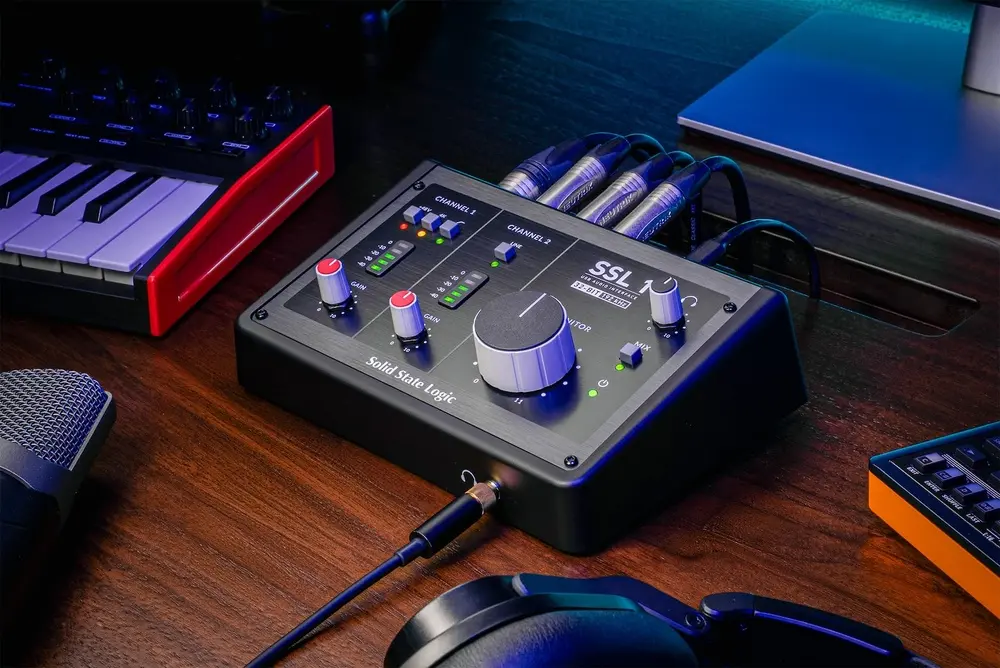
SSL built its reputation on large-format consoles found in commercial studios, not entry-level recording hardware. That changed when the company entered the desktop interface market, bringing the SSL name into project studios that would never invest in a full console workflow. The SSL 1 takes that strategy further, targeting musicians, producers, and content creators shopping in one of the most competitive segments of the audio industry.
On paper, the formula is simple: a compact 2-in/2-out USB interface with a single SSL-designed mic preamp, an instrument input, loopback functionality, Legacy 4K processing, and a software bundle designed to attract first-time buyers. None of those features are unusual in 2026. The challenge for SSL is that nearly every major manufacturer now offers clean preamps, respectable conversion, low-latency monitoring, and solid driver performance at similar price points.
That reality has fundamentally changed how audio interfaces are evaluated. A decade ago, measurable hardware limitations often separated budget products from professional tools. Today, the performance gap is far smaller. Most purchasing decisions are driven by workflow, monitoring experience, software ecosystems, portability, and long-term studio needs rather than converter specifications alone.
Which raises the question that actually matters: not whether the SSL 1 can produce professional recordings, but whether it offers practical advantages once recording begins. In a market crowded with capable alternatives from Focusrite, Audient, Universal Audio, and Presonus, brand recognition is no longer enough. The SSL 1 has to justify its place through real production value, not just the logo on the front panel.
From a mastering and production perspective, interfaces in this category rarely determine release quality by themselves. The more useful question is whether the device remains transparent, stable and predictable throughout years of recording, editing, mixing and mastering work.
Quick Verdict
The SSL 1 is one of the most practical single-input audio interfaces currently available for solo musicians, vocal recording and mobile production workflows. Its strongest advantages are simplicity, reliable monitoring, loopback functionality and SSL’s mature ecosystem rather than dramatic sonic superiority over competing interfaces.
Quick Navigation
Why the SSL 1 Matters in Today’s Audio Production Market
The entry-level audio interface market looks very different than it did a decade ago. In the mid-2010s, moving from a built-in sound card to a dedicated interface often delivered obvious improvements in noise performance, monitoring stability, and recording quality. Today, those gains are far less dramatic. Even relatively affordable interfaces offer clean preamps, competent conversion, low-latency monitoring, and reliable USB connectivity.
As a result, manufacturers can no longer rely on specifications alone to stand out. Converter resolution, sample rates, and dynamic range figures have become increasingly difficult to use as meaningful differentiators. Buyers are comparing workflows, software ecosystems, portability, routing options, and long-term usability far more than they are comparing technical charts.
This shift explains the reasoning behind products like the SSL 1. Rather than chasing headline specifications, SSL is targeting users who want a straightforward recording system with minimal complexity. The design prioritizes essential functionality over expansion, betting that a large percentage of modern creators need a reliable recording front end rather than a feature-heavy studio hub.
That approach reflects broader changes across music production. Many artists now write, record, edit, and release music entirely from laptops. Remote collaboration has become routine. Vocal sessions increasingly happen in bedrooms, apartments, and temporary workspaces rather than dedicated studios. For these users, portability and speed often matter more than extensive I/O configurations or advanced routing capabilities.
The recording chain itself has become smaller. A microphone, a laptop, headphones, and a single interface are often enough to complete an entire project from demo to release-ready mix.
At the same time, compact interfaces are no longer purchased exclusively by beginners. Many engineers maintain secondary mobile rigs for editing sessions, vocal overdubs, songwriting trips, and remote production work. Reliability and convenience frequently outweigh the need for additional inputs when the goal is simply capturing ideas or completing sessions away from the main studio.
The SSL 1 sits directly between those two markets. It targets first-time buyers who want something more production-focused than a generic entry-level interface, while also appealing to experienced users looking for a compact travel solution. Whether that positioning is enough to separate it from dozens of competing products is ultimately the question that determines its value.
SSL 1 Specifications at a Glance
Before discussing workflow implications, it helps to understand exactly what SSL is offering. The SSL 1 is intentionally simple, focusing on single-source recording, portable production, and streamlined monitoring rather than extensive studio expansion.
| Feature | SSL 1 |
|---|---|
| Inputs | 2 |
| Outputs | 2 |
| Microphone Preamps | 1 |
| Maximum Resolution | 32-bit / 192 kHz |
| Loopback | Yes |
| USB-C Connectivity | Yes |
| Bus Powered | Yes |
| Legacy 4K Enhancement | Yes |
| Balanced Monitor Outputs | Yes |
| Headphone Output | High-current amplifier |
Key Takeaways
- The SSL 1 is designed primarily for solo recording workflows.
- Its biggest strengths are portability, monitoring simplicity, and workflow efficiency.
- Legacy 4K is useful but should not be viewed as a console emulation.
- The interface is fully capable of professional recording, mixing, and self-mastering workflows.
- Users expecting studio expansion may be better served by the SSL 2.
Core Analysis: What the SSL 1 Actually Changes in a Production Workflow
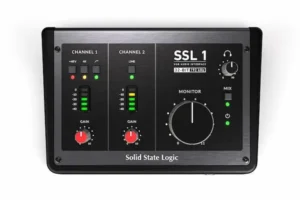 Most audio interfaces are sold through specifications. Producers compare sample rates, converter architectures, dynamic range figures, and latency measurements as if those numbers alone determine recording quality. In practice, workflow matters far more. Once an interface reaches a competent technical baseline, the differences that affect daily production are usually found in monitoring, recording efficiency, routing, and reliability rather than converter specifications.
That is the lens through which the SSL 1 should be evaluated. Few buyers in this category are searching for a breakthrough in conversion technology. They are looking for an interface that captures clean audio, behaves predictably during sessions, and stays out of the way while work gets done.
The SSL Microphone Preamp: Accuracy Over Personality
One of the easiest mistakes buyers can make is assuming that the SSL 1 preamp somehow delivers the sound of a classic SSL console. The SSL name naturally encourages that expectation, but the reality is considerably less romantic.
The microphone preamp is designed for clean capture, low noise, and predictable gain structure rather than obvious coloration. From a production standpoint, that is usually the right decision. Most modern projects benefit more from preserving options during mixing than from committing to permanent tonal coloration at the recording stage. Engineers who prefer shaping dynamics during tracking often reach for dedicated compression tools rather than relying on interface coloration alone. A good example is the classic FET-compressor workflow discussed in our Lindell LiN76 mkII review.
That becomes especially relevant when tracks are moving between producers, mix engineers, and mastering engineers. Clean recordings tend to survive processing chains more gracefully, while heavily colored source material can limit flexibility and create problems that cannot be undone later.
Many developing producers continue searching for “analog warmth” in preamps when the factors holding back their recordings are far more fundamental. Room acoustics, microphone placement, monitoring accuracy, and performance quality almost always have a greater impact on the final result than subtle differences between modern interface preamps.
Viewed in that context, the SSL 1’s preamp is not trying to be exciting. It is trying to be dependable. For vocal recording, overdubs, acoustic instruments, spoken-word production, and remote collaboration, that approach often proves more valuable than a preamp that imposes a strong sonic fingerprint on every source.
SSL 1 for Vocal Recording
For many buyers, vocal recording will be the primary reason to consider the SSL 1. The interface is clearly designed around single-source workflows, making vocals a more relevant test than converter specifications or marketing claims.
With condenser microphones, the SSL 1 provides the clean gain structure and phantom power expected from a modern recording interface. The preamp remains relatively neutral, allowing engineers to shape tone later during mixing rather than committing to heavy coloration during tracking.
Dynamic microphones place greater demands on gain performance, particularly in podcast and spoken-word environments. While the SSL 1 is capable of handling common dynamic models, users working with lower-output microphones may still prefer an inline gain booster depending on recording levels and source distance.
For rap vocals, the interface’s transparent approach is arguably an advantage. Modern hip-hop production often involves extensive compression, saturation, vocal layering, and processing later in the workflow. Capturing a clean source provides greater flexibility than recording through aggressive coloration that cannot be removed afterward.
Singer-songwriters and acoustic performers may also appreciate the straightforward signal path. The SSL 1 focuses on preserving the source rather than imposing a strong sonic character, making it suitable for vocals that need to remain natural throughout production.
Ultimately, vocal quality will still depend more on microphone choice, room acoustics, monitoring accuracy, and performance than on the interface itself. The SSL 1 simply provides a competent platform for capturing those elements without becoming the limiting factor.
SSL 1 for Guitar and Bass Recording
The dedicated instrument input makes the SSL 1 suitable for direct guitar and bass recording without requiring external DI hardware. For many modern production workflows, particularly those built around amp simulators and reamping chains, clean DI capture is often more important than recording through a heavily colored front end.
The interface’s neutral presentation works well in this context. Guitarists using software amp modeling platforms generally benefit from preserving flexibility during mixing rather than committing to tonal decisions during tracking.
Bass recording follows a similar pattern. A clean DI signal provides greater control over low-frequency balance, saturation, compression, and amplifier processing later in the production process.
For producers building entirely in-the-box workflows, the SSL 1 provides a straightforward platform for capturing instrument performances without becoming the limiting factor in the signal chain.
How Does the SSL 1 Actually Sound?
The SSL 1 follows the modern interface philosophy of transparency rather than coloration. Recordings sound clean, detailed, and controlled without imposing a strong sonic signature on the source.
Rather than trying to emulate vintage hardware through its core signal path, the interface focuses on preserving flexibility for later mixing decisions. Users looking for dramatic analog coloration may find the presentation relatively neutral, while engineers who prioritize clean capture will likely consider that a strength.
The optional Legacy 4K mode provides an alternative tonal flavor, but the fundamental character of the SSL 1 remains centered on accuracy, low noise, and predictable recording performance.
32-Bit Converters: More Relevant on a Spec Sheet Than in a Session
The SSL 1 delivers conversion quality that comfortably exceeds the requirements of modern commercial music production. Recordings are clean, detailed, and sufficiently transparent for professional tracking, editing, mixing, and mastering workflows.
The more important question is whether that advantage remains audible compared to competing interfaces in the same price category.
Modern entry-level interfaces have reached a level where conversion performance is generally sufficient for commercial music production. Once noise, distortion, and monitoring accuracy fall within professional territory, other variables begin to dominate the outcome. Microphone selection, room acoustics, monitoring conditions, editing decisions, and mix execution have a far greater influence on what listeners ultimately hear.
This is especially true given how music is consumed. Most releases spend their lives on streaming platforms, wireless headphones, Bluetooth speakers, smartphones, and laptop playback systems. Within those listening environments, the audible difference between competent converter designs becomes increasingly difficult to isolate from the countless other variables affecting translation.
That should not be interpreted as an argument against quality conversion. Reliable converters contribute to stable monitoring, accurate playback, and confidence during decision-making. Engineers work faster when they trust what they are hearing. The value lies less in dramatic sonic improvements and more in removing uncertainty from the production process.
For most buyers, the converter section should be viewed as confirmation that the SSL 1 meets modern professional expectations—not as the primary reason to choose it over competing interfaces.
Legacy 4K: Useful in Moderation, Overrated in Marketing
Legacy 4K remains one of the most recognizable features across SSL’s interface lineup, largely because it offers something tangible in a category where many products appear increasingly similar. It is also one of the easiest features to misunderstand.
The branding inevitably invites comparisons to classic SSL consoles, but Legacy 4K is not a console emulation. It does not recreate the cumulative behavior of an SSL channel strip, signal path, EQ section, dynamics processing, or analog mix bus. Expecting it to deliver a “console sound” inevitably leads to disappointment.
In practical recording sessions, the effect tends to be most useful on sources that need a little more presence without immediately reaching for EQ. Its impact is audible, but considerably more subtle than many first-time users expect.
What it actually does is far simpler. The circuit introduces a modest presence lift combined with additional harmonic content designed to make certain sources feel more immediate. On vocals, the effect can help bring articulation forward. On DI guitars or spoken-word recordings, it can add a bit of edge without requiring additional processing.
The problem is not the feature itself. The problem is the assumption that more is always better.
Many modern productions are already aggressively bright by historical standards. Vocals are routinely pushed forward with compression, saturation, dynamic EQ, and mastering processing. Adding extra top-end energy during recording can become a liability later, particularly when tracks are destined for loud contemporary masters and data-compressed streaming formats.
This is why experienced engineers tend to treat Legacy 4K as a source-dependent option rather than a permanent recording mode. Some performances benefit from the additional presence. Others sound more balanced without it.
Viewed through that lens, Legacy 4K becomes a useful workflow tool rather than a marketing feature. Its value comes from selective application, not constant use.
Monitoring and Recording Efficiency
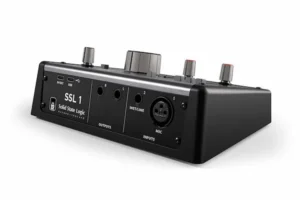 Monitoring is rarely the feature that sells an interface, but it has a direct impact on recording quality. Performers react to what they hear in real time. Excessive latency, unstable monitoring, or distracting routing setups can affect timing, confidence, pitch accuracy, and overall session momentum long before they become technical problems.
During extended vocal tracking sessions, monitoring stability often becomes more important than converter specifications. Performers react immediately to latency, headphone balance, and monitoring consistency, while small differences in conversion quality are rarely noticed in real time.
This is where simpler interfaces often hold an advantage. The SSL 1 avoids the increasingly common trend of burying basic monitoring tasks inside complex software mixers and routing environments. While advanced users may prefer deeper control, many recording scenarios benefit from immediate access to monitoring without navigating multiple configuration layers.
For vocal tracking, overdubs, songwriting sessions, and quick production work, speed matters. A performer waiting while routing settings are adjusted is usually not improving the take. They are losing focus.
The SSL 1 appears designed around that reality. Its monitoring approach prioritizes direct operation over flexibility, which may be a limitation for complex studio setups but often becomes an advantage in smaller recording environments where efficiency is more valuable than extensive routing options.
Driver Stability, Latency and Daily Reliability
Driver performance rarely appears in marketing headlines, yet it often determines whether an interface remains useful years after purchase.
From a long-term ownership perspective, reliability tends to matter more than small specification advantages. Interfaces are often replaced because of workflow frustrations rather than audio limitations.
Most recording sessions are not interrupted by converter limitations. They are interrupted by driver crashes, unstable USB communication, synchronization issues, software conflicts, and monitoring problems that appear at the worst possible moment.
For that reason, long-term interface ownership is frequently a reliability decision rather than a sound-quality decision. An interface that performs consistently across DAW updates, operating-system revisions, and changing studio environments can provide more value than one offering marginally better specifications on paper.
Latency follows a similar pattern. Extremely low latency numbers look attractive in marketing material, but the practical question is whether monitoring remains comfortable during real recording sessions. Vocalists, musicians, and content creators generally notice unstable monitoring long before they notice small differences in converter performance.
The SSL 1 appears positioned as a straightforward recording interface rather than a complex routing platform, which can reduce the number of potential workflow complications. SSL’s established interface ecosystem suggests that long-term driver support is likely to remain one of the platform’s strengths, making daily reliability one of the interface’s most important long-term advantages.
For many producers, the best interface is not the one with the most impressive specification sheet. It is the one that continues working without attracting attention.
SSL 1 Compatibility With Modern DAWs
The SSL 1 is designed to integrate with all major modern DAWs, including Pro Tools, Logic Pro, Ableton Live, Cubase, Studio One, FL Studio, and Reaper.
For most users, setup is straightforward. The interface appears as a standard audio device, while SSL’s dedicated drivers provide access to low-latency operation and monitoring functionality.
Compatibility issues are rarely tied to the DAW itself and are more often related to operating-system updates, driver installation, or USB connectivity.
SSL 1 Setup and First-Time User Experience
For first-time interface owners, the SSL 1 is one of the easier professional interfaces to integrate into a modern recording setup. Installation is straightforward, controls are clearly labeled, and the overall signal path remains easy to understand even for users building their first home studio.
Because the interface avoids complex routing layers and advanced software environments, most users can begin recording within minutes of installation.
How Powerful Is the SSL 1 Headphone Output?
Headphone amplification rarely receives the same attention as microphone preamps or converter specifications, yet it directly affects recording and editing workflows. Weak headphone outputs can limit monitoring levels, reduce confidence during tracking, and create unnecessary complications when working with higher-impedance studio headphones.
SSL equips the SSL 1 with a high-current headphone amplifier rather than treating headphone monitoring as an afterthought. While it is not intended to replace dedicated studio headphone amplifiers, it should provide sufficient output for the majority of modern production headphones used in recording, editing, and mixing environments.
The practical question is not whether the amplifier can reach extreme volume levels. It is whether monitoring remains comfortable, stable, and predictable during long sessions. For most solo artists, producers, and content creators, the headphone section is likely to be more than adequate for daily production work.
Users relying on particularly demanding high-impedance models may still benefit from a dedicated headphone amplifier, but that requirement is not unique to the SSL 1. It applies to most interfaces in this category.
Build Quality and Desktop Experience
Audio interfaces in this category spend most of their lives on crowded desks, moving between recording sessions, editing workstations, and portable production setups. Long-term usability depends as much on physical design as it does on specifications.
The SSL 1 appears built around durability rather than visual excess. The chassis feels solid, controls are appropriately weighted, and the compact footprint makes it easy to integrate into smaller workspaces without sacrificing accessibility.
From a day-to-day workflow perspective, the layout is straightforward. Input controls, monitoring functions, headphone level, and Legacy 4K processing remain immediately accessible without requiring menu navigation or companion software.
During extended production sessions, usability often matters more than additional features. Interfaces that require constant attention become frustrating over time. The SSL 1’s strongest hardware characteristic is that it remains unobtrusive once recording begins.
Users looking for advanced routing controls or extensive front-panel functionality may find the design intentionally minimal. For its intended audience, however, simplicity is part of the appeal.
What About Gain Range and Recording Headroom?
For most condenser microphones and common dynamic microphones, the SSL 1 provides sufficient gain for everyday recording applications. The available headroom is suitable for vocals, acoustic instruments, podcasts, voiceovers, and DI recording without forcing users into extreme gain settings.
Only particularly low-output microphones may require additional inline gain depending on recording distance and source level.
Loopback Has Become a Production Feature, Not a Creator Feature
Loopback functionality is often marketed toward streamers and content creators, but its relevance extends well beyond social media workflows. Modern music production increasingly involves remote collaboration, virtual sessions, online consultations, and real-time client communication.
Producers regularly share reference tracks, review mixes with artists, demonstrate processing chains, and stream DAW playback during remote sessions. Without integrated loopback, these tasks frequently require additional routing software, virtual drivers, or workaround solutions that complicate otherwise straightforward workflows.
Built-in loopback eliminates much of that friction. It allows audio from the DAW, communication platforms, and system playback to be managed more efficiently without introducing additional software dependencies.
As remote production becomes increasingly normalized, loopback is starting to look less like a convenience feature and more like a practical studio tool. For many users, particularly those working with clients outside their immediate location, it may provide more day-to-day value than differences in converter specifications that are unlikely to influence the final release.
SSL 1 for Podcasting, Streaming and Content Creation
Although marketed primarily toward musicians and producers, the SSL 1 is equally relevant for podcasters, educators, streamers, and content creators. The combination of straightforward monitoring, loopback functionality, and simple setup makes it well suited to spoken-word production and live online workflows.
For creators who record a single microphone source and prioritize reliability over complex routing systems, the SSL 1 offers a practical balance between audio quality and operational simplicity.
Portable Recording Workflows
Portable production is no longer limited to sketching ideas on a laptop. Modern creators increasingly build complete mobile workflows around compact controllers, laptops, and lightweight recording hardware. That trend was also evident in our Arturia MiniLab 37 review, where portability and workflow efficiency proved more important than raw specifications. Many producers now edit sessions while traveling, record overdubs outside the studio, prepare client revisions remotely, and move projects between multiple work environments before a record is finished.
That shift has increased demand for interfaces that can operate reliably away from a permanent studio setup. In this context, portability is not about size alone. It is about reducing setup time, maintaining stable performance, and integrating into changing production environments without creating technical obstacles.
The SSL 1’s ability to operate from USB bus power or an external power source makes it suitable for these scenarios. Whether recording vocals in a temporary space, preparing sessions during travel, or building a lightweight mobile rig, the interface appears designed to prioritize practicality over complexity.
Ultimately, the best portable interface is the one that disappears into the workflow. Engineers rarely remember the hardware that worked flawlessly. They remember the hardware that interrupted sessions, introduced driver issues, or complicated routing when deadlines were approaching.
SSL’s established interface ecosystem and ongoing software support make stability one of the platform’s strongest long-term selling points.
Can the SSL 1 Be Used for Mixing?
Yes. The more important question is whether it changes the quality of mixing decisions in a meaningful way.
For most engineers, the answer is no.
Once an interface reaches a professional baseline, monitoring accuracy becomes far more important than converter specifications or branding. Room acoustics, speaker placement, headphone translation, and engineering experience exert a much greater influence on mix quality than the difference between modern interfaces in this category.
The SSL 1 is fully capable of supporting serious mixing work. Its conversion quality, monitoring capabilities, and balanced outputs are sufficient for professional production environments. What it cannot do is correct monitoring problems that exist elsewhere in the signal chain.
This distinction is important because many producers continue upgrading hardware while working in rooms with severe acoustic issues. A typical untreated room can introduce frequency-response errors that dwarf any measurable difference between competent audio interfaces.
As a result, moving from another modern interface to the SSL 1 is unlikely to produce dramatic improvements in mix translation. Better room treatment, more accurate monitoring, or improved critical-listening skills will almost always have a greater impact.
Where the SSL 1 can help is workflow consistency. Reliable monitoring, stable operation, and predictable performance reduce distractions during long sessions. While those factors may not appear on a specification sheet, they often contribute more to productive mixing than incremental hardware upgrades.
Can the SSL 1 Be Used for Mastering?
Yes, but not for the reasons many buyers assume.
The SSL 1 meets the technical requirements of a mastering workflow. Its balanced outputs, modern converter design, and monitoring capabilities are more than adequate for project studios, editing suites, and independent production environments. There is nothing about the hardware itself that prevents mastering work from being performed through it.
The misconception is that mastering quality is primarily determined by the interface. In reality, mastering is a monitoring discipline. Many producers also blur the distinction between mixing and mastering, even though the two stages solve very different problems. If that boundary remains unclear, see Mixing vs Mastering — What Actually Sets Them Apart in Real Projects. The ability to identify small tonal imbalances, dynamic inconsistencies, stereo-image issues, and translation problems depends far more on the listening environment than on the interface sitting on the desk.
Professional mastering engineers invest heavily in acoustic control because the smallest monitoring errors can lead to incorrect decisions. A room that exaggerates low frequencies may encourage unnecessary bass reduction. A monitoring chain with uneven high-frequency response can lead to overly bright masters. These variables have a far greater impact on the final release than the difference between modern interfaces operating at a professional standard.
This is why experienced mastering engineers rarely discuss interfaces when evaluating release quality. The conversation is usually centered on monitoring accuracy, translation performance, reference evaluation, and decision-making consistency across multiple playback systems.
For producers handling their own masters, the SSL 1 should be viewed as a transparent front end rather than a shortcut to better mastering results. It is capable of supporting serious work, but it cannot compensate for inaccurate monitoring, poor acoustic conditions, or flawed mix decisions upstream.
In other words, the SSL 1 can participate in a mastering workflow. It should not be mistaken for the reason a master succeeds.
For producers handling their own releases, understanding what mastering is actually evaluating is often more valuable than upgrading hardware. A deeper explanation can be found in What Is Audio Mastering — How It Works and Why It Matters.
Critical Evaluation: Separating Real Advantages From Brand Perception
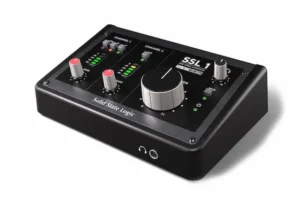 The most difficult part of evaluating the SSL 1 is separating the hardware from the reputation attached to it.
SSL is one of the few names in professional audio that still carries genuine weight. Decades of association with commercial studios, major-label productions, and large-format consoles create expectations that most interface manufacturers simply do not have to manage.
That reputation is both an advantage and a challenge. It attracts attention, but it also encourages buyers to expect a larger leap in performance than the product category can realistically deliver.
The SSL 1 is a capable modern audio interface. The question is whether its advantages are substantial enough to justify choosing it over dozens of similarly competent alternatives.
The SSL Name Matters More Than Many Buyers Realize
One of the uncomfortable realities of today’s interface market is that the audible gap between competing products has narrowed considerably.
Modern interfaces from SSL, Focusrite, Audient, Universal Audio, MOTU, and Presonus all operate at a level that would have been considered highly professional only a few generations ago. Clean recordings, low noise floors, and reliable conversion are no longer premium features. They are expected.
As a result, many purchasing decisions are driven less by measurable performance differences and more by trust. Buyers gravitate toward brands they associate with professional work because they reduce uncertainty. SSL benefits significantly from that dynamic.
In practical use, a well-recorded vocal tracked through an SSL 1 is unlikely to outperform a well-recorded vocal tracked through another competent interface in the same category. Microphone selection, room acoustics, gain staging, performance quality, editing, mixing, and mastering decisions will have a far greater impact on the final release.
That does not mean all interfaces are identical. Differences in drivers, monitoring implementation, routing flexibility, software ecosystems, and long-term reliability can meaningfully affect workflow. Those factors often justify one purchase over another.
What has become increasingly rare is the kind of dramatic sonic advantage implied by some marketing narratives.
Legacy 4K Is Not a Console in a Button
Legacy 4K has become one of the defining features of SSL’s interface lineup because it offers something many competing products do not: a recognizable sonic option attached to a highly recognizable brand.
That visibility has also created unrealistic expectations.
Some buyers inevitably associate the feature with the sound of classic SSL consoles, but the comparison quickly breaks down under scrutiny. Legacy 4K does not recreate an SSL channel strip, analog signal path, mix bus behavior, or the cumulative effect of working through a large-format console. Expecting that level of transformation from a single circuit is simply unrealistic.
What the feature actually provides is a modest increase in presence and harmonic emphasis. On certain sources, that can be useful. Vocals may feel slightly more forward. DI guitars can gain additional edge. Spoken-word recordings may benefit from improved articulation without requiring immediate processing inside the DAW.
The problem is that many modern productions are already built around aggressive vocal presence and extended high-frequency content. Additional brightness captured at the recording stage is not always an advantage. Once compression, saturation, limiting, and mastering processing are applied, subtle enhancements can become exaggerated in ways that were not obvious during tracking.
This is where experience tends to change how the feature is used. Less experienced producers often view Legacy 4K as something that should remain enabled by default. Engineers are more likely to treat it as a source-dependent decision. Some performances benefit from the extra energy. Others sound more balanced without it.
That distinction matters because professional recordings are rarely the result of a single feature, plugin, or piece of hardware. They are the product of hundreds of small decisions made throughout the recording, editing, mixing, and mastering process.
Used selectively, Legacy 4K can be a genuinely useful recording tool. Used as a substitute for those decisions, it becomes little more than marketing.
A Single Mic Preamp Limits Growth More Than Recording Quality
The SSL 1’s biggest compromise is not audio quality. It is scalability.
For solo artists, vocal production, podcasting, voiceover work, and overdub-based recording, a single microphone preamp is often enough. Many users may never encounter a situation where additional inputs are required.
The limitation appears when projects become more ambitious. Stereo acoustic recordings, dual-microphone guitar setups, drum recording, collaborative writing sessions, and live instrument tracking all benefit from multiple microphone inputs. What initially feels streamlined can quickly become restrictive once recording needs expand beyond a single source.
This does not mean SSL made the wrong design choice. The interface was clearly built around portability, affordability, and simplicity rather than future expansion. The issue is that many buyers evaluate interfaces based on their current workflow rather than the workflow they are likely to have a year from now.
That distinction matters because audio interfaces are often kept far longer than microphones, plugins, or software subscriptions. An interface that feels perfectly adequate today can become the bottleneck in a growing studio surprisingly quickly.
Viewed realistically, the SSL 1 makes the strongest case as a personal recording interface. Producers looking for a long-term centerpiece of an expanding studio may find themselves reaching the limits of its design sooner than expected.
The Software Bundle Looks More Valuable Than It Usually Becomes
The SSL 1 includes SSL Production Pack software, which bundles recording tools, instruments, effects, and third-party content intended to help users begin producing immediately after installation.
From a marketing perspective, that strategy works. From a production perspective, the value is often less straightforward.
Most producers eventually settle into a relatively small collection of tools they trust. The majority of bundled software is either never installed or abandoned after the initial experimentation phase. Trial subscriptions add another layer of complexity because part of the package effectively expires after a limited period of use.
That does not mean the SSL Production Pack lacks value. For newcomers building a production environment from scratch, it can provide access to useful instruments, processing tools, and workflows without additional investment. The mistake is treating the bundle as a permanent asset with the same long-term value as the hardware itself.
When evaluating the SSL 1, the interface should justify the purchase on its own merits. Any software that remains useful after the first few months should be viewed as a bonus rather than part of the core investment.
The Biggest Upgrade Most Producers Need Is Not Another Interface
One of the recurring patterns in home-studio production is the tendency to blame hardware for problems that originate elsewhere in the workflow.
When recordings sound boxy, the room is often responsible. When mixes lack clarity, arrangement density or frequency masking may be the real issue. When masters fail to translate, the problem is frequently tied to monitoring decisions rather than recording hardware. Even harsh vocal recordings are often the result of microphone placement, room reflections, or performance technique long before the interface enters the discussion.
This is where products like the SSL 1 can be misunderstood. It is entirely reasonable to expect improvements in workflow, stability, monitoring consistency, and day-to-day usability. Those are legitimate benefits. What buyers should not expect is a dramatic improvement in recording quality simply because the logo on the front panel has changed.
For many producers already using a competent modern interface, the next meaningful upgrade may have nothing to do with hardware. Better monitoring, room treatment, microphone selection, or professional feedback often produce larger improvements than replacing one modern interface with another. Producers unsure where their tracks are actually breaking down may benefit more from pre-mastering feedback than another hardware purchase.
Once the technical baseline is sufficiently high, production results become increasingly dependent on decisions rather than equipment.
The SSL 1 can make recording easier. It cannot make production fundamentals optional.
Competitive Positioning: Where the SSL 1 Fits in the Entry-Level Interface Market
The SSL 1 is entering a market where outright technical superiority is increasingly difficult to claim. Most serious competitors offer clean preamps, professional-grade conversion, low-latency monitoring, and enough performance to produce commercial releases. The decision is less about sound quality and more about workflow priorities, expansion potential, and the type of user each product is designed to serve.
Viewed through that lens, the SSL 1 occupies a specific position. It favors simplicity over flexibility, portability over expandability, and streamlined operation over feature density. That makes it easy to compare on paper, but the more useful question is which recording workflow each interface supports most effectively.
| Interface | Where It Stands Out | Best Fit | Potential Drawback |
|---|---|---|---|
| SSL 1 | Portable design, straightforward workflow, Legacy 4K option | Solo artists, vocal producers, mobile recording setups | Limited expansion due to single mic preamp |
| Focusrite Scarlett Solo | Mature ecosystem, widespread adoption, extensive support resources | First-time studio builders seeking a proven platform | Fewer differentiating workflow features |
| Audient EVO 4 | Smart gain tools and beginner-friendly operation | Creators prioritizing convenience and fast setup | Less appeal for users preferring traditional studio workflows |
| UA Volt 1 | Vintage-inspired recording features and strong brand recognition | Singer-songwriters and musicians focused on tracking | Less emphasis on routing flexibility and ecosystem depth |
| SSL 2 | Additional connectivity and greater long-term flexibility | Studios expecting growth beyond solo recording | Higher initial investment |
None of these interfaces fundamentally changes what is possible inside a DAW. All are capable of producing commercially viable recordings when paired with strong engineering decisions. The meaningful differences emerge when recording requirements expand, workflows become more demanding, or long-term studio growth enters the equation.
That is where the SSL 1 faces its strongest competition. Not because competing interfaces sound dramatically better, but because several alternatives offer more room to grow without requiring an upgrade later.
SSL 1 vs Scarlett Solo
For most buyers, this is the comparison that matters.
The Scarlett Solo has become the default recommendation in the entry-level interface category through years of market presence, mature driver support, extensive educational content, and near-universal familiarity among musicians and producers. Few products in this price range have been tested by as many users across as many recording scenarios.
That creates a challenge for SSL. The company is not competing against an unknown alternative—it is competing against a product that has effectively become a reference point for first-time studio purchases.
From a recording-quality perspective, the differences are smaller than many buyers expect. Neither interface is likely to be the deciding factor between an average production and a professional release. Both are fully capable of delivering clean recordings suitable for commercial work.
The distinction is largely philosophical. The Scarlett Solo prioritizes familiarity and ecosystem maturity. The SSL 1 leans more heavily on streamlined workflow, the Legacy 4K feature, and the appeal of SSL’s studio heritage.
For many users, the decision ultimately comes down to confidence rather than specifications. Buyers already invested in the Focusrite ecosystem may see little reason to switch. Those attracted to SSL’s workflow and recording approach may find the SSL 1 more appealing despite the similarities in core performance.
Neither choice is likely to transform recording quality. The more important question is which platform better aligns with the way the studio is expected to evolve over time.
SSL 1 vs Audient EVO 4
The comparison with the EVO 4 is less about sound and more about workflow design.
Audient built the EVO series around reducing technical friction for newer users. Features such as Smartgain are designed to automate routine setup tasks and help users reach usable recording levels quickly. The overall experience favors convenience, accessibility, and speed.
SSL takes a more traditional approach. The SSL 1 feels closer to a conventional studio workflow, where gain structure, monitoring decisions, and signal flow remain primarily in the hands of the user.
Neither philosophy is inherently better. The choice depends on how the interface will be used.
Users who want a simplified recording experience with as little setup as possible may gravitate toward the EVO 4. Producers and engineers who prefer direct control over recording decisions may feel more comfortable with SSL’s approach.
What makes this comparison interesting is that both products solve the same problem from opposite directions. Audient reduces complexity through automation. SSL reduces complexity through restraint. Which approach feels more effective will depend largely on the user’s workflow rather than any measurable difference in audio quality.
For beginners seeking maximum automation and convenience, the EVO 4 may be the easier starting point. For users who prefer a more traditional studio workflow and direct control over recording decisions, the SSL 1 is generally the stronger choice.
SSL 1 vs UA Volt 1
The SSL 1 and UA Volt 1 target similar buyers, but they arrive there from very different directions.
Universal Audio built the Volt series around the appeal of vintage recording workflows. Features such as Vintage Mic Preamp mode are designed to evoke the character of classic studio hardware and appeal to musicians who want some degree of analog-inspired coloration during tracking.
SSL takes a more restrained approach. The SSL 1 focuses on clean capture, straightforward operation, and the option to introduce additional presence through Legacy 4K when appropriate. The emphasis is less on recreating vintage hardware and more on providing a predictable recording platform.
In practice, the difference is often less dramatic than the marketing suggests. Neither interface fundamentally changes the quality of the source material being recorded. Strong performances, good microphone choices, and controlled recording environments remain far more important than the specific flavor of analog-inspired processing available at the interface stage.
The real distinction comes down to workflow preference. Producers who enjoy committing to a sound while tracking may find the Volt 1 more appealing. Those who prefer capturing a cleaner signal and making tonal decisions later during mixing will likely feel more at home with the SSL 1.
Both approaches are valid. The better choice depends less on specifications and more on how much processing a user prefers to commit to before a session reaches the mixing stage.
Users who prefer committing to a more colored sound during tracking may lean toward the Volt 1. Producers who prioritize cleaner recordings and greater flexibility during mixing will generally find the SSL 1 more appealing.
SSL 1 vs SSL 2
While comparisons with competing brands are useful, the strongest argument against buying the SSL 1 may come from within SSL’s own lineup.
The SSL 2 addresses one of the biggest limitations of the SSL 1: long-term flexibility. Additional connectivity creates room for more recording scenarios, more collaborative sessions, and fewer compromises as studio requirements evolve.
This is particularly relevant because interface purchases tend to remain in a studio for years. Many users begin with simple recording needs and later find themselves tracking multiple sources, working with other musicians, recording stereo instruments, or expanding their production workflow beyond solo projects.
In those situations, the SSL 2 often becomes the more practical investment despite its higher price. The additional cost is relatively small compared to the inconvenience of replacing an interface after outgrowing it.
That does not make the SSL 1 redundant. Its appeal is strongest when portability, simplicity, and budget efficiency are the primary priorities. Producers who record one source at a time and value a compact setup may never encounter the limitations that make the SSL 2 attractive.
For buyers uncertain about future needs, however, the SSL 2 is arguably the safer purchase. Expansion capacity rarely feels important until the day it becomes necessary.
In other words, the SSL 1 is easier to justify based on today’s workflow. The SSL 2 is easier to justify based on tomorrow’s.
Real-World Production Perspective: What Actually Determines Release Quality?
Like most modern interfaces, the SSL 1 is fully capable of supporting commercial recording projects. Once an interface reaches a professional baseline, factors such as monitoring accuracy, room acoustics, and engineering decisions typically influence release quality far more than converter specifications alone.
Recording Quality vs Release Quality
A clean recording and a release-ready production are not the same thing. The SSL 1 can capture professional-quality audio, but the success of a release still depends on how reliably decisions translate beyond the studio.
Music is consumed through earbuds, smartphones, Bluetooth speakers, cars, laptops, and countless other playback systems. Once an interface reaches a professional baseline, room acoustics, monitoring accuracy, and engineering decisions have a far greater influence on translation than small differences between competing converter designs.
This is one reason experienced engineers rarely evaluate releases based on interface choice alone. The SSL 1 is fully capable of supporting professional production work, but successful translation still depends on the decisions made after recording.
Where the SSL 1 Fits in a Professional Workflow
The SSL 1’s strongest selling point is not a unique feature, a breakthrough specification, or a dramatic sonic advantage over competing interfaces.
Its value comes from meeting the practical requirements of modern production without introducing significant compromises. The interface provides the recording quality, monitoring functionality, connectivity, and workflow stability necessary for commercial music production while remaining compact and straightforward to operate.
For solo artists, vocal producers, content creators, remote collaborators, and mobile production setups, that combination is often more important than incremental improvements in converter performance or additional features that may never be used.
In many ways, the SSL 1 reflects the broader direction of the audio industry. The conversation has shifted away from whether affordable hardware can achieve professional results and toward how efficiently that hardware integrates into everyday workflows.
Viewed from that perspective, the SSL 1 does not need to outperform every competing interface. It simply needs to avoid becoming a bottleneck.
That may sound like a modest goal, but experienced engineers understand its value. Sessions are rarely slowed by the absence of another feature. They are slowed by unstable drivers, unreliable monitoring, unnecessary complexity, or hardware that forces workarounds during critical moments.
The best studio equipment often receives the least attention because it allows the focus to remain on recording, editing, mixing, and mastering rather than on the equipment itself.
The SSL 1 appears designed around that philosophy. It is not trying to redefine entry-level recording. It is trying to provide a dependable foundation for it.
For many producers, that is ultimately a more meaningful advantage than any marketing claim attached to the product.
Who Should Buy the SSL 1?
The SSL 1 is best suited to solo artists, vocal producers, singer-songwriters, podcasters, content creators, and mobile-production users who primarily record one source at a time. Its strengths are workflow simplicity, portability, straightforward monitoring, and a recording path that remains easy to manage even in compact studio environments.
It is particularly attractive for users who value efficiency over expansion and want a recording interface that can move easily between home studios, temporary workspaces, and travel setups without introducing unnecessary complexity.
Who Should Skip the SSL 1?
Producers expecting to record multiple microphones, stereo instruments, bands, or collaborative sessions should look carefully at interfaces offering additional inputs and greater expansion potential. The SSL 2, for example, may represent a more practical long-term investment for growing studios.
The SSL 1 is designed around focused single-source recording workflows. Users whose production requirements are likely to expand rapidly may outgrow its limitations sooner than expected.
What We Like About the SSL 1
- Clean and dependable microphone preamp
- Excellent portability for mobile production
- Useful loopback implementation
- Straightforward monitoring workflow
- Compact footprint without sacrificing usability
What We Don’t Like About the SSL 1
- Limited to single-source recording workflows
- No MIDI support
- No software-based routing environment
- Only one headphone output
- Many competitors offer similar audio quality
Verdict
The SSL 1 arrives at a point where entry-level audio interfaces are no longer separated by dramatic differences in recording quality. Most serious manufacturers have already solved the core technical challenges. Clean preamps, capable converters, low-latency monitoring, and professional-level recording performance have become standard rather than exceptional.
That reality makes the SSL 1 easier to evaluate. Its value is not found in revolutionary technology or measurable sonic advantages over every competing interface in its price range. It is found in execution.
SSL has built an interface that focuses on practical recording needs rather than feature accumulation. The design favors portability, straightforward operation, stable workflow, and enough functionality to support modern recording, content creation, and remote production environments without unnecessary complexity.
For solo artists, vocal producers, songwriters, and mobile recording setups, that approach makes sense. The SSL 1 provides the level of performance required for commercial work while remaining compact enough to move easily between locations and simple enough to integrate into everyday sessions.
Its strengths are primarily operational rather than sonic. Reliable monitoring, efficient session setup, useful loopback implementation, and predictable recording performance will affect day-to-day productivity more than discussions about converter specifications or analog-inspired marketing features.
At the same time, buyers should be realistic about its limitations. The SSL 1 does not solve acoustic problems. It does not improve translation by itself. It does not eliminate the need for strong recording technique, accurate monitoring, effective mixing, or professional mastering decisions. Those factors continue to determine the quality of the final release.
Ultimately, the SSL 1 is best viewed as a focused recording tool rather than a studio centerpiece. For users whose workflow revolves around recording one source at a time, portability, simplicity, and reliability may be more valuable than additional inputs they rarely use.
For producers expecting their studios to expand, the SSL 2 and similar alternatives offer a more forgiving long-term path. For producers who prioritize efficiency over expansion, the SSL 1 makes a far stronger case.
Its greatest achievement is not that it changes the entry-level interface market. It is that it avoids getting in the way of the work.

Yurii Ariefiev is a mastering engineer and audio production editor focused on monitoring accuracy, playback translation, and release-ready audio workflows. His work regularly involves evaluating how recording decisions, interfaces, monitoring systems, and production environments influence final mix and mastering outcomes.
This article examines the SSL 1 from a practical production perspective, emphasizing recording workflow, monitoring reliability, translation, and long-term studio usability rather than manufacturer specifications or marketing claims.
FAQ
Is the SSL 1 good for beginners?
Yes. The SSL 1 combines straightforward controls, simple installation, and a traditional recording workflow that remains easy to understand even for first-time interface owners. Its simplicity is one of its strongest advantages.
Is the SSL 1 better than the Focusrite Scarlett Solo for recording vocals?
Not by a margin that will determine the quality of a release. Both interfaces are capable of producing professional vocal recordings. Microphone choice, room acoustics, gain staging, and performance quality will have a far greater impact on the final result than the interface itself.
Can the SSL 1 be used for professional mixing?
Yes. The SSL 1 provides sufficient conversion and monitoring performance for serious mixing work. The larger variables remain room acoustics, monitor calibration, headphone translation, and the engineer’s ability to make reliable decisions.
Is Legacy 4K useful or just a marketing feature?
Legacy 4K can be genuinely useful when applied selectively. It can add presence and articulation to certain vocals, guitars, and spoken-word recordings. The mistake is treating it as a permanent enhancement rather than a source-dependent creative option.
Does the SSL 1 make sense for mastering?
The interface is technically capable of supporting mastering work, but mastering quality is determined by monitoring accuracy and decision-making rather than the interface alone. A well-treated room and reliable monitoring chain remain far more important.
Is the SSL 1 worth upgrading to from an older audio interface?
That depends on what is being upgraded from. Moving from an outdated interface with unstable drivers, poor monitoring performance, or limited functionality can be worthwhile. Moving from another modern interface may produce a much smaller improvement than expected.
How does the SSL 1 compare to the SSL 2?
The SSL 1 prioritizes simplicity and portability, while the SSL 2 offers greater flexibility and expansion potential. Producers expecting to record multiple sources or grow their studio setup will generally benefit more from the SSL 2.
Can the SSL 1 drive high-impedance studio headphones?
For many professional headphones, yes. However, particularly demanding models may still benefit from a dedicated headphone amplifier, especially when higher monitoring levels are required during long sessions.
Is the SSL 1 a good choice for livestreaming and remote collaboration?
Yes. Integrated loopback functionality makes it practical for livestreams, online production sessions, client reviews, virtual lessons, and remote recording workflows without requiring additional routing software.
Does recording at 192 kHz improve audio quality?
For most music-production workflows, the benefits are limited. Monitoring accuracy, microphone placement, and mix decisions typically influence the final result far more than operating at extremely high sample rates.
Who is the SSL 1 not designed for?
Users who frequently record multiple microphones, track bands, capture stereo sources, or expect rapid studio expansion may reach the limits of the interface quickly. In those situations, a more flexible interface is often the better long-term investment.