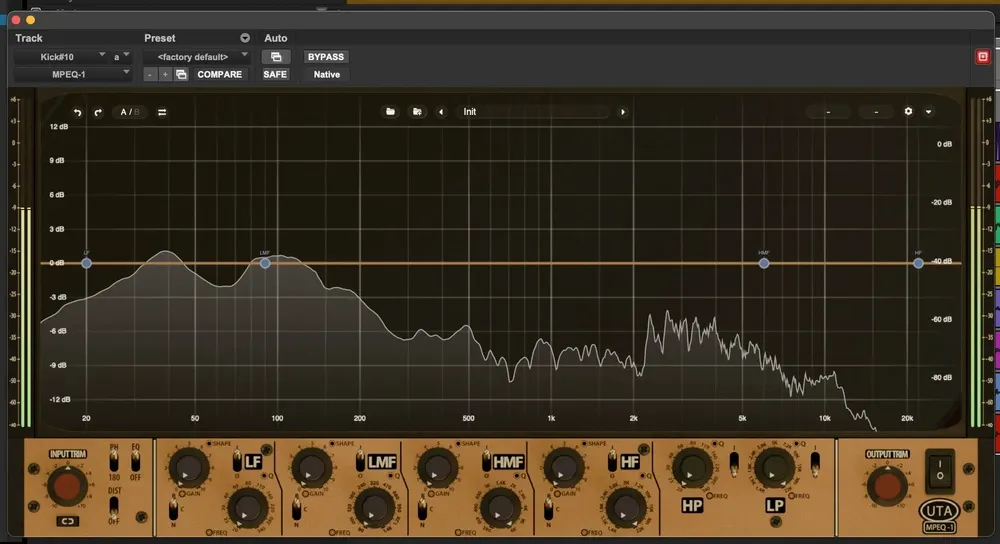
Undertone Audio MPEQ-1 Review: A Boutique Analog EQ for Modern Mixing and Mastering
Most analog-modeled EQ plugins promise the same things—musical curves, analog warmth, and hardware character. The real difference isn’t how they’re marketed. It’s whether they influence engineering decisions in ways that conventional digital EQs don’t.
The Undertone Audio MPEQ-1 plugin stands apart because it’s based on a boutique equalizer that earned its reputation in professional studios rather than through vintage nostalgia. Instead of chasing maximum flexibility, its design favors broad tonal shaping, controlled harmonic behavior, and fast musical decisions over surgical precision.
That immediately defines its role. The MPEQ-1 isn’t trying to replace transparent parametric EQs, dynamic equalizers, or corrective tools like FabFilter Pro-Q or Kirchhoff-EQ. It’s aimed at a later stage of the workflow, where the technical problems have already been solved and the remaining decisions are about tone, depth, balance, and overall presentation.
That raises a more useful question than whether the plugin accurately models the original hardware. Does it offer a practical advantage in modern production? Can it help experienced engineers reach better mix or mastering decisions faster, or is it simply another analog emulation competing in an already crowded category?
This review examines where the MPEQ-1 fits into professional mixing and mastering workflows, where its design philosophy makes sense, where it falls short, and how it compares with today’s leading software equalizers.
Contents
Why Boutique Analog EQ Design Still Matters in Modern Audio Production
 Modern DAWs have largely eliminated the technical limitations that once separated digital processing from hardware. High-resolution internal processing, oversampling, transparent filter designs, and instant recall are now standard. As those tools have become more capable, the competitive advantage has shifted elsewhere—not toward greater precision, but toward faster and more confident engineering decisions.
That’s one reason boutique hardware manufacturers continue investing in native plugins. The goal isn’t to outperform modern digital EQs on specifications. It’s to bring a familiar workflow into software without sacrificing the tonal behavior that made the original hardware useful in professional studios.
Undertone Audio follows that approach. The original MPEQ-1 earned its reputation by encouraging broad tonal shaping instead of highly surgical correction. Engineers valued it because significant EQ moves remained natural and proportional, avoiding the sharp resonance and overly clinical sound that can result from aggressive parametric processing.
That history gives the software version more credibility than a typical analog emulation. It’s recreating a processor that already had an established role in commercial mixing and mastering rooms rather than borrowing the visual identity of a classic unit.
The timing is also relevant. Modern productions routinely combine software instruments, recorded sources, analog processing, AI-assisted editing, and complex hybrid workflows. Those sessions often require processors that improve the overall balance of a mix instead of solving isolated frequency problems one band at a time.
This is where analog-style equalizers continue to justify their place. They aren’t competing with transparent digital EQs; they’re solving a different problem. Rather than maximizing control, they prioritize musical balance, faster tonal decisions, and a workflow that keeps attention on the mix instead of the analyzer.
The MPEQ-1 plugin fits squarely into that category. Its appeal isn’t based on having more features than today’s flagship digital equalizers. It’s based on offering a different way to shape tone—one that’s built around listening first and editing second.
Where the Undertone Audio MPEQ-1 Plugin Fits in a Professional Workflow
The easiest way to misjudge the MPEQ-1 is to compare it directly with a corrective parametric EQ. That’s not the role it was designed to fill.
Most professional mixing workflows separate equalization into two distinct stages. Early in the process, EQ solves technical problems—resonances, masking, microphone coloration, excessive low-end buildup, or harsh upper mids. That work demands precision, which is why tools like FabFilter Pro-Q or Kirchhoff-EQ remain industry standards. Their flexibility allows engineers to isolate individual problems without affecting the rest of the spectrum.
The second stage is different. Once the mix is technically stable, equalization becomes less about fixing frequencies and more about shaping perspective. Instead of asking whether 3.2 kHz should be reduced by half a decibel, the question becomes whether the vocal feels forward enough, whether the rhythm section has sufficient weight, or whether the entire mix translates with the balance originally intended.
This stage often follows console-style tonal shaping rather than replacing it. If you’re building a workflow around analog-style processing, our Sonimus S-Console review explains how console emulation and musical EQ can complement each other instead of competing for the same role.
That’s where the MPEQ-1 makes the strongest case for itself.
Its filter behavior encourages broader tonal moves that influence the relationship between frequency ranges instead of isolating narrow problem areas. The result isn’t necessarily a different frequency response on paper, but a different way of arriving at the same destination. Engineers often make fewer adjustments because each move affects the overall presentation rather than a single resonance.
Those broader curves also produce smoother phase response, more natural bell interaction between adjacent bands, and less cumulative phase rotation than multiple overlapping narrow filters performing the same overall adjustment.
Vocals provide a good example. It’s common to see mixes accumulate multiple narrow EQ bands across the presence range in an attempt to improve clarity. Technically, each adjustment may be justified. Collectively, they can leave the vocal sounding disconnected from the rest of the production. A broader tonal approach often restores presence while preserving the natural relationship between the voice and the surrounding instruments.
The same principle applies to acoustic sources. Piano, strings, acoustic guitars, and room microphones rarely benefit from excessive corrective processing once obvious resonances have been removed. Their realism depends on harmonic relationships spanning large portions of the spectrum. Broad EQ curves tend to preserve those relationships more effectively than a chain of narrow corrective filters.
On drum buses, tonal shaping influences far more than frequency balance. A subtle adjustment before bus compression changes how the compressor reacts to kick energy, snare transients, cymbal density, and room ambience. Those changes continue through every downstream processor, affecting saturation, stereo imaging, limiting, and ultimately perceived loudness.
Example Mix Bus Workflow
Console Emulation
→ Undertone Audio MPEQ-1
→ Glue Compressor
→ Tape or Harmonic Saturation
→ Stereo Imaging (if needed)
→ Limiter
Placing the MPEQ-1 before bus compression allows tonal decisions to influence compressor behavior rather than correcting the signal afterward. Broad EQ moves affect gain staging across the entire chain, often producing smoother compression and reducing the need for additional corrective processing later.
This interaction is easy to underestimate. Equalizers don’t simply change frequency content—they alter how every processor later in the signal chain responds. A small low-frequency adjustment may reduce unnecessary limiter activity. A smoother upper-mid balance can make saturation behave more naturally. The cumulative effect is often greater than the EQ move itself.
The same logic applies during audio mastering, where tonal decisions are often measured in fractions of a decibel. At that stage, filter shape often matters more than numerical gain values because every adjustment influences how the entire mix translates across different playback systems. Engineers aren’t chasing isolated frequencies; they’re refining the balance of the complete production.
That also explains why many mastering engineers continue using hardware-inspired EQs alongside highly transparent digital processors. Precision isn’t always the limiting factor. Decision fatigue can be. A simpler interface with broader musical curves often leads to faster, more confident choices than an unlimited set of surgical controls.
The software version of the MPEQ-1 preserves that workflow while removing the operational compromises of analog hardware. Recall is instant, settings remain perfectly repeatable, automation is fully integrated into modern DAWs, and revisions no longer require rebuilding an analog signal chain.
Ultimately, the value of the MPEQ-1 isn’t determined by how accurately it models hardware. Its success depends on whether engineers reach for it instinctively when a technically finished mix still lacks cohesion, depth, or tonal balance. That’s where musical EQs justify their place—not by replacing corrective tools, but by solving a different class of production decisions.
What Makes the MPEQ-1 Different From Traditional Analog EQ Plugins
Many analog-modeled EQ plugins ultimately recreate the same design philosophy. They emulate a classic circuit, reproduce its frequency curves, add a carefully tuned amount of harmonic coloration, and package the result inside a familiar interface. The MPEQ-1 approaches the problem differently. Instead of simply recreating the sound of boutique hardware, it preserves several engineering concepts that directly influence how equalization behaves inside a modern production chain.
The most significant difference is its Super-Parametric architecture. Unlike traditional parametric EQs that prioritize narrow corrective moves, the MPEQ-1 was designed around broad musical interaction between filter bands. Adjustments rarely feel isolated. A change in one part of the spectrum subtly influences the perceived relationship between neighboring frequencies, encouraging engineers to shape the overall balance instead of chasing individual resonances.
That distinction becomes increasingly valuable on stereo buses and during mastering. Rather than stacking multiple narrow filters to solve one problem after another, engineers can often achieve a more coherent tonal balance with fewer, broader moves. This reduces unnecessary phase interaction while preserving the sense of depth and openness that can gradually disappear in heavily processed mixes.
Another defining feature is independent saturation for every EQ band. Most analog-inspired equalizers apply harmonic coloration globally across the entire signal path. The MPEQ-1 allows harmonic enhancement to follow individual EQ decisions instead. In practice, that means a low-frequency boost doesn’t simply increase bass level—it can also introduce additional harmonic density specifically within that region without affecting the rest of the spectrum to the same degree.
Because saturation is tied to individual bands rather than the entire signal path, engineers gain more control over non-linear behavior without introducing unnecessary harmonic buildup across unrelated frequency ranges.
That behavior changes how the plugin responds on buses. Low-end enhancement can become more solid without making cymbals noticeably brighter. A presence boost on vocals may gain additional harmonic definition while leaving the lower midrange comparatively untouched. Engineers working on dense productions often find this approach easier to control than global saturation stages, where every tonal decision affects the entire signal equally.
The plugin’s Vari-Phase implementation further separates it from conventional digital EQs. Every equalizer changes phase response to some extent, but the character of that phase rotation influences transient behavior, stereo imaging, and perceived depth just as much as the frequency response itself. Rather than treating phase shift as an unavoidable side effect, the MPEQ-1 incorporates it into the tonal design of the processor.
This becomes particularly relevant on mix buses and mastering chains. Broad minimum-phase equalization often produces a more cohesive presentation than aggressively corrective filtering because the resulting phase relationships remain smoother across adjacent frequency bands. The audible difference is rarely dramatic in isolation, yet it frequently contributes to a stronger sense of front-to-back depth and more natural transient behavior throughout the mix.
Equally important is how these design choices influence downstream processors. Every EQ decision changes gain staging into compressors, saturation stages, clippers, and limiters. A broad low-frequency lift with localized harmonic enhancement may produce less intermodulation inside a bus compressor than several overlapping narrow boosts. Likewise, smoother bell interaction can reduce unnecessary limiter activity because energy is distributed more evenly across the spectrum rather than concentrated around isolated peaks.
These characteristics don’t make the MPEQ-1 objectively superior to transparent digital equalizers. They simply support a different engineering philosophy. Modern corrective EQs excel at solving specific problems with analytical precision. The MPEQ-1 is designed for the stage where those problems have already been resolved and the remaining task is shaping the overall musical presentation. For experienced engineers, that distinction often matters far more than another list of features.
The Strengths—and the Trade-Offs Most Marketing Pages Won’t Discuss
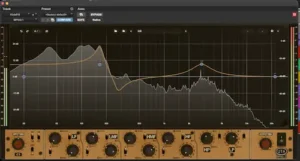 Most plugin comparisons focus on feature counts. More bands, more processing modes, more visualization, and more automation options are often presented as evidence that one EQ is objectively better than another. In practice, experienced engineers rarely choose an equalizer that way.
The MPEQ-1 deliberately avoids competing on versatility. It isn’t trying to replace a modern corrective EQ, and that decision defines both its strengths and its limitations.
The limitation comes first. This isn’t the processor to reach for when removing resonances, solving masking problems, or making dynamic frequency corrections. Those jobs are better handled by transparent digital EQs designed for precision. Expecting the MPEQ-1 to cover every equalization task misses the point of its design.
The same applies to one of the most common assumptions surrounding analog-modeled processors: that harmonic coloration alone creates a bigger or more expensive-sounding mix. It doesn’t. Harmonic content can reinforce an already balanced mix, but it won’t repair poor arrangement choices, inconsistent monitoring decisions, or unresolved frequency conflicts.
That’s an important distinction because analog-style EQs are often judged by short A/B demonstrations. Those comparisons rarely tell the full story. The real advantage isn’t that individual EQ moves sound dramatically different—it’s that engineers often arrive at a more balanced mix with fewer processing decisions.
Workflow follows the same pattern.
Hardware-inspired interfaces are frequently described as faster, but only after the engineer has adapted to them. Someone accustomed to relying on spectrum analyzers may initially work more slowly because the visual reference has been reduced. Once critical listening replaces visual confirmation, the opposite often happens: fewer adjustments, fewer revisions, and less second-guessing.
That workflow isn’t universally better. Engineers working in untreated rooms, traveling with headphones, or producing in less predictable monitoring environments may depend on visual analysis as part of their quality control. In those situations, a highly analytical EQ may remain the more practical option.
The same trade-off exists in mastering. Projects requiring forensic restoration, broadcast compliance, or extremely transparent processing benefit from tools designed to make precise, repeatable adjustments with minimal coloration. The MPEQ-1 is aimed at a different stage of the process—refining tonal balance once the technical work has already been completed.
Its strongest selling point is also the hardest to demonstrate. The plugin doesn’t fundamentally change what’s possible; it changes how decisions are made. Engineers who already prefer broad musical adjustments over continuous micro-editing are likely to adapt quickly. Those who expect unlimited flexibility from every processor may see its focused design as a limitation rather than an advantage.
How the MPEQ-1 Compares to Today’s Leading Professional Equalizers
Comparing the MPEQ-1 to every premium EQ on the market misses an important point. These processors aren’t designed to solve the same problems, even if they all perform equalization.
Modern production typically relies on multiple EQs throughout a session. A transparent parametric EQ handles corrective work. Another processor may be dedicated to dynamic frequency control. A different EQ shapes tone on buses or during mastering. In professional workflows, those roles often overlap rather than compete.
That’s where the MPEQ-1 fits. Its purpose isn’t to replace a highly configurable digital EQ but to simplify tonal shaping once corrective work is complete. The comparison, therefore, is less about sound quality than about which workflow each processor encourages.
| Plugin | Primary Role | Where It Excels | Less Suitable For | Typical User |
|---|---|---|---|---|
| Undertone Audio MPEQ-1 | Musical tonal shaping | Mix bus, stereo bus, mastering enhancement | Corrective or dynamic EQ tasks | Mixing and mastering engineers |
| FabFilter Pro-Q | Precision parametric EQ | Corrective editing, dynamic processing, problem solving | Hardware-style tonal workflow | Mix engineers, post-production |
| Kirchhoff-EQ | Highly configurable digital EQ | Advanced filtering, complex routing, mastering precision | Fast broad tonal shaping | Power users and mastering engineers |
| Weiss EQ MP | Transparent mastering EQ | Critical stereo processing | Intentional analog coloration | Dedicated mastering facilities |
| SSL Native X-EQ 2 | General-purpose production EQ | Daily mixing across multiple sources | Boutique analog-style coloration | Mix engineers working entirely in the box |
MPEQ-1 vs Massive Passive-Style EQs
Although both processors encourage broad musical equalization, they arrive there differently. Massive Passive-style designs tend to produce large tonal shifts with relatively few controls, making them particularly attractive for mastering engineers who want bold yet cohesive frequency shaping. The MPEQ-1 takes a more flexible approach. Its Super-Parametric architecture allows engineers to retain much of that musical behavior while offering finer control over filter interaction, localized harmonic density, and overall tonal balance. Rather than replacing passive EQ workflows, it occupies the space between transparent digital precision and classic passive equalization.
MPEQ-1 vs Pultec-Style Equalizers
Pultec-style EQs remain popular because their broad shelves can reshape low-end and high-frequency balance without sounding overly processed. The MPEQ-1 pursues a different goal. Instead of relying on fixed passive curves, it gives engineers considerably more control over filter placement while maintaining a similarly musical response. Producers looking for the unmistakable Pultec low-end character will still reach for dedicated emulations, whereas engineers wanting broader flexibility across multiple sources may find the MPEQ-1 easier to integrate into everyday mixing and mastering work.
MPEQ-1 vs SSL Fusion Violet EQ
SSL Fusion’s Violet EQ was designed as a stereo finishing processor, making it a natural comparison for mix bus applications. The MPEQ-1 shares that broad tonal philosophy but extends it with a more configurable equalization architecture and independent saturation options. Engineers working primarily inside the DAW may find it easier to build a comparable finishing workflow without relying on dedicated hardware.
MPEQ-1 vs Undertone Audio UTEQ
Within Undertone Audio’s own lineup, the UTEQ remains the company’s flagship mastering equalizer, while the MPEQ-1 targets a broader range of production tasks. The UTEQ emphasizes mastering-grade precision and stereo processing, whereas the MPEQ-1 is equally comfortable on individual sources, buses, and final stereo mixes. Studios focused exclusively on mastering may gravitate toward the UTEQ, while mix engineers are likely to appreciate the broader day-to-day versatility of the MPEQ-1.
Notice that none of these processors directly replaces another. Engineers rarely choose between them in isolation—they choose the one that best matches the task at hand.
If a session requires removing resonances, controlling harshness, or automating narrow frequency bands, transparent digital EQs remain the logical choice. Once those issues have been resolved, the priorities change. The focus shifts from technical correction to tonal balance, depth, and how the mix feels as a complete production rather than a collection of individual tracks.
Viewed from that perspective, the MPEQ-1 complements modern digital equalizers instead of competing with them. It occupies the stage where experienced engineers stop fixing problems and start making musical decisions.
How the MPEQ-1 Performs Across Modern Mixing and Mastering Chains
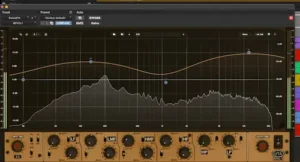 Judging an analog-style EQ in solo is rarely useful. What matters is how its tonal decisions hold together after compression, saturation, limiting, format conversion, and playback across real-world listening systems. That’s where the strengths—and weaknesses—of any musical equalizer become much easier to hear.
Translation remains the standard by which every mix is ultimately judged. An EQ move that sounds impressive on full-range studio monitors but creates harshness on earbuds or weakens low-end definition in a car isn’t improving the mix—it simply shifts the problem to another playback system.
Broad tonal adjustments generally translate more consistently because they reshape the overall spectral balance instead of emphasizing isolated frequency ranges. That characteristic becomes increasingly valuable as a release moves toward mastering, where every processing decision affects the entire signal chain rather than an individual track.
Streaming distribution adds another layer of complexity. Modern codecs don’t merely reduce file size; they can change the perceived relationship between transient detail, masking, and high-frequency energy. Mixes built around aggressive, narrow EQ boosts are often less forgiving after lossy encoding than those shaped with broader tonal moves.
This doesn’t mean analog-style equalization automatically produces better streaming masters. Good translation still depends on monitoring accuracy, arrangement, and overall mix balance. However, broader EQ decisions often leave more headroom for downstream processing, reducing the need for corrective moves later in the chain.
That becomes particularly noticeable during limiting. Equalization directly influences how a limiter responds because changes in spectral balance determine which frequencies reach the threshold first. A cleaner low-end relationship or smoother upper-mid balance frequently allows the limiter to work more transparently, even when loudness targets remain unchanged.
Managing headroom at this stage also reduces unnecessary intermodulation artifacts inside downstream dynamics processors while maintaining a more consistent harmonic density across the mix.
This becomes especially important in modern electronic productions, where kick design has a direct impact on bus processing and final loudness. If low-end construction is part of your workflow, our D16 PunchBox 2 review explores how kick synthesis decisions influence the entire mixing and mastering chain.
The same principle extends throughout the mastering chain. Every EQ decision influences the processors that follow, whether that’s compression, saturation, stereo enhancement, clipping, or final limiting. Engineers often focus on what an equalizer adds to the signal while overlooking how it changes the behavior of every subsequent processor.
Example Mastering Chain
Broad Corrective EQ
→ Undertone Audio MPEQ-1
→ Mastering Compressor
→ Clipper
→ True Peak Limiter
→ Metering & Quality Control
In this type of chain, the MPEQ-1 is used after broad corrective equalization but before dynamics processing. Small tonal adjustments at this stage influence compressor thresholds, limiter behavior, and perceived loudness without relying on aggressive processing further down the chain.
Monitoring quality also affects how much value engineers will extract from the MPEQ-1. Its workflow encourages listening rather than relying on visual analysis, making it particularly effective in calibrated rooms with dependable monitoring. Producers working primarily on headphones or in untreated spaces may still prefer the additional confidence provided by analyzers and highly visual digital EQs.
CPU performance is unlikely to influence purchasing decisions. The plugin is intended primarily for buses, stereo processing, and mastering applications rather than large-scale corrective work across dozens of tracks, keeping its processing demands well within the capabilities of modern production systems.
Compatibility is equally unlikely to be a deciding factor for most professionals. The plugin integrates into modern DAW workflows through standard VST3, AU, and AAX formats, making it equally at home in Pro Tools, Logic Pro, Cubase, Studio One, and Reaper. Native Apple Silicon support and low-latency operation are particularly valuable in large hybrid sessions, where multiple mastering and bus processors may remain active throughout an entire project without disrupting workflow or recall.
Ultimately, the MPEQ-1 demonstrates its value over the course of an entire session rather than through dramatic A/B comparisons. Engineers who separate corrective equalization from musical tonal shaping are likely to integrate it naturally into their workflow. Those looking for a single processor to handle every equalization task will probably continue relying on more versatile digital EQs.
Verdict: A Specialist EQ That Rewards Confident Decisions
The MPEQ-1 isn’t competing to become the most versatile equalizer in your plugin folder. It succeeds by doing something more specific: making broad tonal decisions feel faster, simpler, and more deliberate.
That immediately narrows its audience. Engineers looking for dynamic EQ, detailed corrective processing, or an all-in-one solution will still rely on transparent digital processors. The MPEQ-1 isn’t designed to replace them, and evaluating it by those standards misses its purpose.
Its real value appears later in the workflow, once the technical work is finished. At that point, the challenge is no longer removing resonances or correcting masking—it’s refining the overall balance of the mix without introducing unnecessary complexity. That’s the environment where hardware-inspired equalizers continue to justify their place in modern production.
The plugin also reflects a practical reality found in many professional studios: experienced engineers rarely depend on a single equalizer. Different tools exist for different decisions, and tonal shaping often benefits from a processor designed around broad musical moves rather than unlimited flexibility.
For engineers who already separate corrective equalization from tonal enhancement, the MPEQ-1 fits naturally into an established workflow. Those expecting one plugin to cover every stage of mixing and mastering will probably find its focused design too limiting.
Ultimately, the MPEQ-1 isn’t defined by the number of features it offers or by how closely it recreates its hardware counterpart. Its value lies in helping engineers reach confident tonal decisions with fewer adjustments—and in professional mixing and mastering, that’s often the difference between processing a mix and actually finishing one.
The MPEQ-1 is unlikely to replace the flagship EQ already sitting in your plugin folder. Its value comes from filling a role that many digital equalizers intentionally avoid—fast, musical tonal shaping after the corrective work has already been finished.
Overall Rating
| Category | Rating |
|---|---|
| Tonal Character | 9.5/10 |
| Workflow Efficiency | 9.5/10 |
| Mix & Mastering Translation | 9/10 |
| Software Design | 9/10 |
| Feature Set | 7.5/10 |
| Value for Professional Engineers | 9/10 |
| Overall | 8.9/10 |
The Undertone Audio MPEQ-1 isn’t designed to replace a modern parametric EQ, and it shouldn’t be judged by that standard. Its value comes from a focused workflow that prioritizes broad tonal shaping over surgical correction, making it particularly effective on mix buses, stereo buses, and mastering chains. While its specialized design limits its role as an all-purpose equalizer, engineers who already separate corrective processing from musical enhancement will find it to be a refined and highly capable finishing tool.
A Great EQ Can’t Fix the Wrong Mix
Even the best analog-style equalizer has limits.
If a mix suffers from masking, inconsistent low-end balance, phase issues, or poor translation, changing EQs rarely solves the underlying problem. Those issues usually originate much earlier in the production process and become much harder to fix once mastering begins. Preparing the mix correctly before mastering has a far greater impact than changing EQ plugins later in the process. Learn more in our guide on how to prepare a mix for mastering.
Before investing more time tweaking your processing chain, it can be more valuable to identify what’s actually preventing the mix from translating. Professional pre-mastering feedback often reveals balance problems, frequency conflicts, and monitoring decisions that no plugin—regardless of its design philosophy—can resolve on its own.

Yurii Ariefiev is a mastering engineer and technical editor specializing in professional mixing and mastering workflows. His reviews focus on how audio tools perform in real production environments, with particular attention to tonal balance, translation, monitoring accuracy, and long-term usability rather than manufacturer specifications.
Every plugin featured on this site is evaluated from the perspective of practical studio work—how it affects decision-making, integrates into modern mastering chains, and whether it delivers measurable value beyond marketing claims.
Frequently Asked Questions
Is the Undertone Audio MPEQ-1 better suited for mixing or mastering?
It works well in both roles, but its strengths become most apparent after corrective EQ has already been completed. Many engineers will find it most effective on mix buses, stereo buses, and mastering chains where broad tonal adjustments are more important than surgical precision.
Can the MPEQ-1 replace FabFilter Pro-Q or Kirchhoff-EQ?
No. Those EQs are built for precision editing, dynamic processing, and corrective work. The MPEQ-1 complements them rather than replacing them, serving a different stage of the workflow.
Does the plugin make sense in a fully in-the-box studio?
Yes. Although it’s inspired by boutique hardware, its workflow integrates naturally into modern DAWs with instant recall, automation, and multiple instances across a session.
Is it a good choice for transparent mastering?
If absolute transparency is the priority, dedicated mastering EQs remain the safer choice. The MPEQ-1 is better suited to subtle tonal enhancement where a small change in overall balance is more valuable than surgical accuracy.
How demanding is the MPEQ-1 on CPU resources?
CPU usage is unlikely to be an issue for most modern systems. Since the plugin is typically used on buses or mastering chains rather than every individual track, resource consumption remains modest in real-world sessions.
Does the plugin translate well to streaming platforms?
Translation depends primarily on the quality of the mix, not on a specific EQ. That said, broad tonal adjustments generally survive lossy encoding more gracefully than aggressive, narrow corrective boosts.
Who is most likely to benefit from the MPEQ-1?
Mixing engineers, mastering engineers, and experienced producers who already separate corrective equalization from tonal shaping will get the most from its workflow. It’s less compelling as a first or only EQ plugin.
Is it worth buying if you already own several premium EQs?
That depends on how you work. If your current collection already covers corrective tasks, the decision comes down to whether you prefer a hardware-inspired approach to tonal shaping rather than another highly configurable digital EQ.
Will an analog-style EQ automatically improve mix translation?
No. Translation is determined by monitoring accuracy, balance, arrangement, and production decisions. An analog-inspired EQ can support those decisions, but it can’t compensate for problems elsewhere in the mix.
Should mastering engineers rely on analog-modeled EQs for every project?
Not necessarily. Different productions require different tools. The strongest mastering workflows combine transparent digital processing with musical analog-style equalization whenever each approach serves the material.