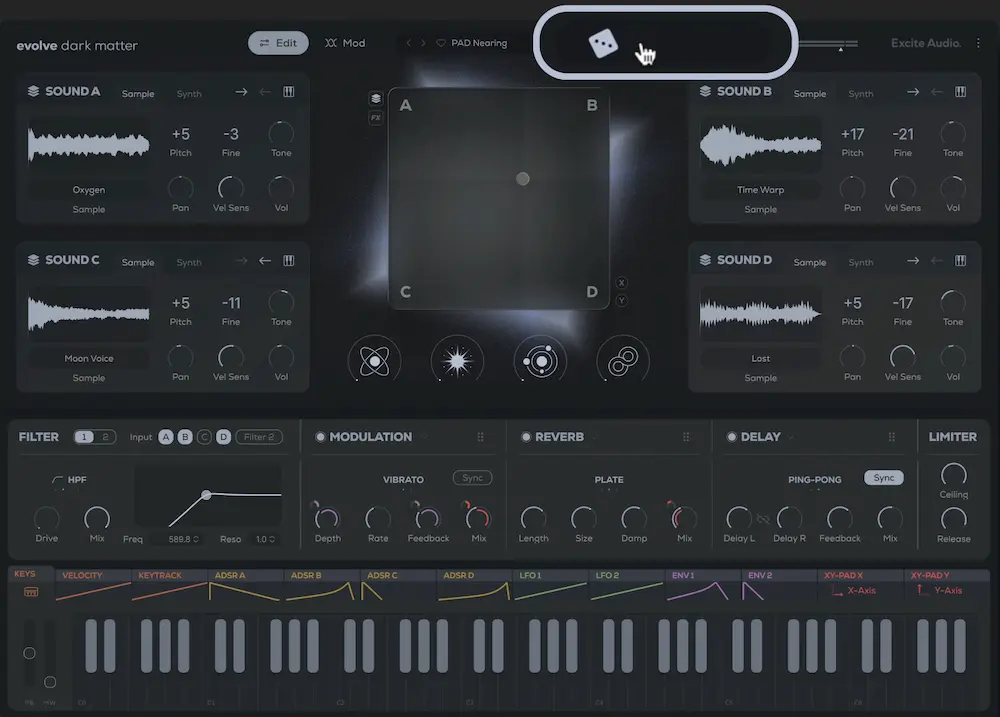
Excite Audio Evolve Dark Matter Review: A Production-Focused Look at One of the Most Interesting Hybrid Synth Plugins of 2026
Hybrid instruments have evolved into a distinct category within modern audio production. Some are built for deep synthesis, others for cinematic scoring, while many rely on polished preset libraries wrapped in streamlined interfaces. Excite Audio Evolve Dark Matter takes a different approach. Rather than competing with full-scale synthesizers such as Serum, Pigments, or Omnisphere, it focuses on generating dark evolving textures, hybrid atmospheres, aggressive impacts, and layered electronic timbres that can shape the character of an entire production.
That makes evaluating the plugin less straightforward than comparing oscillator counts or feature lists. The real question is whether its workflow holds up once the writing phase is over. Do these sounds remain usable after vocals, drums, bass, and multiple instrument layers enter the session? Can they survive the compromises required for a balanced mix and a competitive master, or are they primarily designed to impress during preset browsing?
Those questions matter far more than the marketing copy. A hybrid instrument isn’t judged by how cinematic it sounds in isolation—it earns its place by how efficiently it integrates into a professional production workflow. This review examines Evolve Dark Matter from that perspective, focusing on practical usability, mix translation, and where it fits among today’s hybrid production tools.
Last updated: June 30, 2026
Key Takeaways
Best for: Cinematic electronic music, trailer production, game audio, industrial sound design, atmospheric scoring, and producers who prioritize creative workflow over deep synthesis programming.
Not ideal for: Sound designers who prefer building patches from initialized oscillators or producers looking for a single synthesizer to cover every production task.
Biggest strength: Fast access to complex hybrid textures that remain musically inspiring without requiring extensive programming.
Biggest limitation: Many presets occupy significant spectral and stereo space, making thoughtful arrangement and mixing essential in dense productions.
Recommended for: Producers who need a dedicated hybrid synth plugin for cinematic textures, electronic scoring, evolving atmospheres, and modern production workflows.
Contents
Why Hybrid Instruments Like Evolve Dark Matter Are Reshaping Modern Production Workflows
 Hybrid instruments have become a practical response to how modern records are produced. Electronic, cinematic, industrial, and trailer-oriented genres increasingly depend on sounds that already contain movement, texture, and harmonic complexity before any processing is applied. Building those layers entirely from scratch remains possible, but it rarely makes sense when production schedules continue to shrink.
That shift has changed what many producers expect from a software instrument. Instead of starting with a basic oscillator and constructing a sound over dozens of decisions, they often prefer a playable source that already carries enough depth to inspire an arrangement. The objective isn’t to eliminate sound design—it’s to spend more time making musical decisions than technical ones.
Hybrid engines address that workflow by combining sampled material with synthesis, modulation, and real-time processing. The result is less about recreating vintage hardware and more about delivering complex textures that would otherwise require several plugins, multiple automation lanes, or layered instruments.
Evolve Dark Matter follows that philosophy closely. Rather than positioning itself as another flagship synthesizer, it focuses on a narrower role: producing evolving atmospheres, cinematic transitions, dark pads, and hybrid electronic textures that can establish the emotional foundation of a track within minutes.
That approach offers obvious creative advantages, but it also changes how the instrument should be evaluated. The question isn’t whether a preset sounds impressive on its own. Most modern hybrid instruments can do that. The more meaningful test is how those sounds behave once the arrangement becomes crowded.
Large atmospheric patches often occupy far more spectral space than producers realize during composition. Extended low-frequency content, wide stereo fields, evolving harmonics, and built-in ambience create an immediate sense of scale, yet those same qualities frequently become liabilities during mixing. Vocals lose definition, transient detail becomes less focused, and headroom disappears long before the limiter is engaged.
This is where workflow becomes more important than feature count. An instrument earns its place in a professional studio by reducing the amount of corrective work required later. If every preset demands extensive EQ, stereo management, dynamic control, and automation before it fits into a production, the initial creative speed quickly disappears.
Evolve Dark Matter enters a competitive landscape that extends well beyond synthesizers. Producers evaluating it are equally likely to compare it with cinematic sample libraries, texture-generation tools, modular environments, and increasingly, AI-assisted composition platforms. The common denominator isn’t synthesis architecture—it’s creative efficiency. For a very different perspective on experimental sound generation, see our sonicLAB SSNN review, which examines neural synthesis instead of curated hybrid workflows.
Ultimately, that’s the benchmark that matters. Modern producers have no shortage of inspiring sounds. What they need are instruments that continue to work after composition is finished, translating cleanly through mixing, mastering, streaming codecs, and real-world playback systems without forcing the engineer to dismantle the qualities that made the sound appealing in the first place.
What Actually Sets Evolve Dark Matter Apart?
Most new virtual instruments promise better sounds, deeper synthesis, or faster workflows. Evolve Dark Matter takes a different approach. Rather than expanding the number of creative possibilities, it deliberately reduces the number of technical decisions required before meaningful musical ideas begin to emerge.
That distinction defines the instrument far more than its feature list. Instead of asking producers to construct complex patches from oscillators and modulation matrices, Evolve Dark Matter begins with carefully curated source material that already contains movement, harmonic complexity, and spatial depth. The creative process shifts away from building sounds toward shaping arrangements.
This curated engine is arguably the plugin’s defining characteristic. Every preset feels designed around a specific production role rather than demonstrating a particular synthesis technique. Some sounds establish atmosphere, others create tension, while many function as transitional layers that help arrangements evolve naturally without relying on repetitive automation or multiple supporting plugins.
The result is a workflow that feels fundamentally different from traditional synthesizers. Rather than spending twenty minutes refining oscillators, envelopes, and modulation routing, producers can begin making decisions about harmony, rhythm, dynamics, and structure almost immediately. The instrument accelerates composition by reducing technical friction instead of reducing creative control.
Movement also plays a central role in that philosophy. Many hybrid instruments rely on static samples enhanced with effects. Evolve Dark Matter places considerably more emphasis on continuous evolution. Harmonic shifts, modulation, stereo motion, and subtle changes in texture help sustained sounds remain engaging over longer passages, making the instrument particularly effective for game audio production, electronic scoring, and atmospheric arrangements.
Perhaps the most important distinction is that Evolve Dark Matter shouldn’t be viewed as another software synthesizer competing for the same role as Serum or Pigments. It functions more like a dedicated soundscape plugin that combines curated hybrid sound design with enough flexibility to adapt those textures to different productions without requiring extensive programming.
That production philosophy also explains why the plugin appeals to experienced engineers as much as composers. A focused instrument often produces more consistent results than an endlessly configurable one because every design decision supports a coherent sonic identity. Instead of encouraging unlimited experimentation, Evolve Dark Matter encourages finishing records.
Inside Evolve Dark Matter: Where the Plugin Fits in a Professional Production Workflow
The biggest mistake is treating Evolve Dark Matter as another flagship synthesizer. It isn’t designed to compete with Serum, Pigments, or Phase Plant on synthesis depth. Its purpose is different. Evolve Dark Matter is a hybrid instrument that starts with complex source material, allowing producers to reach a finished musical idea long before they would with a conventional synth.
That difference changes the entire workflow. Traditional synthesis builds complexity gradually through oscillators, filters, modulation, layering, and effects. Evolve Dark Matter reverses that process. Most presets already contain evolving harmonics, stereo movement, transient detail, and carefully layered textures before any external processing is applied.
For composers working on film, trailer music production, game audio, or deadline-driven electronic scoring projects, that shortcut has real value. Instead of designing an evolving atmosphere from scratch, the creative process begins with arrangement. The instrument encourages decisions about harmony, dynamics, and structure rather than endless sound design.
The trade-off is immediately apparent once a session becomes more populated.
Dense source material naturally occupies more spectral space. Pads extend well into the upper harmonics, drones often generate continuous low-frequency energy, while built-in ambience and stereo processing increase the perceived size of nearly every patch. Those characteristics sound impressive in isolation but become increasingly difficult to manage as additional instruments enter the mix.
This is why Evolve Dark Matter works best as a feature element rather than a background filler. A single evolving texture can establish depth and movement across an arrangement. Several similar layers, however, tend to compete for the same frequency ranges, reducing vocal clarity, softening transient definition, and consuming valuable headroom before mastering even begins.
Its role is equally specific from a production perspective. The instrument excels at cinematic transitions, atmospheric intros, breakdowns, evolving pads, industrial textures, and emotional underscoring. It is considerably less suited for precise bass design, aggressive leads, rhythmic synthesis, or highly technical modulation workflows where dedicated synthesizers remain more flexible.
Another characteristic worth mentioning is how easily the plugin encourages overproduction. Many presets already include saturation, modulation, delay, ambience, and stereo enhancement. Adding more processing simply because the mix feels too empty often has the opposite effect, making the arrangement larger while reducing definition.
From a mixing engineer’s perspective, sessions built around Evolve Dark Matter usually benefit from subtraction instead of enhancement. Careful high-pass filtering, dynamic EQ, mid-side balancing, automation, and selective stereo narrowing often contribute more than additional saturation or spatial effects. The objective isn’t making the sound bigger—it’s creating enough space for everything else.
The modulation engine also deserves credit. Rather than introducing obvious movement, it produces subtle variations in tone, dynamics, and stereo image that prevent sustained textures from feeling mechanically looped. That behavior becomes particularly valuable in cinematic production, where long evolving layers must remain engaging without constantly drawing attention to themselves.
Ultimately, Evolve Dark Matter succeeds because it remains focused. It isn’t trying to replace a modern synthesis workstation. It solves a narrower problem: delivering complex, mix-conscious hybrid textures fast enough to keep creative momentum intact. Producers expecting unlimited sound design will eventually reach its boundaries. Producers looking for immediate atmosphere with minimal setup are far more likely to appreciate its design philosophy.
Factory Presets and Sound Library Quality
The quality of a hybrid instrument is determined less by the number of presets than by how consistently those presets remain useful once real production begins. Large libraries often create the impression of endless variety, yet many rely on small variations of the same underlying sound. After several sessions, that repetition becomes difficult to ignore.
Evolve Dark Matter largely avoids that problem through careful curation rather than sheer quantity. Instead of overwhelming users with hundreds of interchangeable patches, the library is built around clearly defined production roles. Some presets establish atmosphere, others introduce movement, tension, impacts, or evolving backgrounds. That structure makes browsing feel purposeful instead of random.
The overall sound quality remains consistently high throughout the library. Harmonic detail, stereo imaging, and modulation are generally balanced well enough to inspire ideas immediately without sounding artificially over-processed. More importantly, most presets already feel like production elements instead of isolated demonstrations created only to impress during the first few seconds of listening.
Consistency, however, shouldn’t be confused with unlimited variety. Like many curated hybrid instruments, Evolve Dark Matter develops a recognizable sonic fingerprint after extended use. Producers working across multiple releases may occasionally notice familiar textures reappearing if presets are used without modification. Fortunately, the modulation controls, filtering, dynamics, and onboard processing provide enough flexibility to move sounds beyond their default character with relatively little effort.
From a mixing perspective, the library demonstrates more discipline than many cinematic instruments currently on the market. While several presets naturally occupy a wide stereo field and significant spectral space, they generally avoid the excessive layering that often forces engineers into extensive corrective processing before a mix can begin. The sounds still benefit from thoughtful EQ and arrangement decisions, but they rarely feel impossible to integrate into commercial productions.
The library is particularly convincing when used as a source of motion rather than constant density. A single evolving texture often contributes more depth than stacking several similarly complex patches together. Producers who treat the presets as supporting elements instead of complete arrangements are likely to achieve more open, balanced mixes with less corrective work later.
Ultimately, the factory content reflects a clear production philosophy. Rather than providing the largest possible collection of sounds, Evolve Dark Matter focuses on delivering a smaller set of consistently usable hybrid textures that integrate naturally into modern electronic production, trailer music production, game audio, and cinematic scoring workflows. That emphasis on usability ultimately adds more long-term value than an inflated preset count.
Where Evolve Dark Matter Excels—and Where the Marketing Gets Ahead of Reality
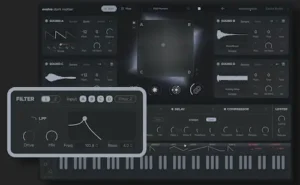 Evolve Dark Matter is engineered to sound impressive from the first preset, and that’s both its biggest advantage and its biggest compromise. Rich harmonic content, animated modulation, built-in ambience, and expansive stereo imaging create an immediate sense of scale. Those qualities accelerate the writing process, but they don’t automatically translate into a balanced production.
This isn’t a criticism of the instrument itself. It’s a characteristic shared by many modern hybrid libraries. They’re designed to inspire during composition, not to occupy the smallest possible footprint inside a finished mix.
That distinction matters because “production-ready” and “mix-ready” describe two very different things. A preset can sound polished while still consuming excessive spectral space, masking lead elements, or introducing unnecessary low-frequency energy. Those issues rarely become obvious until drums, vocals, bass, and additional instruments begin competing for the same mix.
Evolve Dark Matter is at its strongest when each instance serves a clearly defined purpose. One evolving texture can establish depth across an arrangement. Three or four similar layers often achieve the opposite, reducing separation, softening transient detail, and making the mix feel larger without becoming clearer.
Engineers often solve those problems through arrangement before reaching for processing. Removing unnecessary layers typically produces a bigger improvement than stacking corrective EQs, multiband compressors, and stereo processors. The plugin rewards restraint far more than excessive post-production.
Internal processing deserves similar attention. Many presets already include saturation, delay, modulation, ambience, and spatial enhancement. Adding more of the same processing can quickly blur the original sound instead of improving it. In many cases, subtle dynamic control and careful automation deliver better results than another effects chain.
The instrument also benefits from realistic expectations. Marketing inevitably highlights versatility, but Evolve Dark Matter has a clear creative identity. Its strengths lie in cinematic atmospheres, industrial textures, evolving pads, dark electronic production, and transitional sound design. Producers working primarily in acoustic recordings, traditional rock, jazz, or transparent orchestral arrangements may find fewer situations where those characteristics naturally fit.
That specialization shouldn’t be viewed as a limitation. Focused instruments often outperform broader platforms because they solve a specific production problem exceptionally well instead of attempting to cover every possible workflow.
Ultimately, Evolve Dark Matter works best as a specialist rather than a centerpiece. It complements a modern production environment exceptionally well, but it isn’t intended to replace the flexibility of a full-featured synthesizer or a comprehensive sound design platform.
How Evolve Dark Matter Compares with Today’s Leading Hybrid Instruments
Comparing Evolve Dark Matter with every modern synthesizer misses the point. Its closest competitors aren’t necessarily the most feature-rich instruments—they’re the tools producers reach for when they need cinematic depth, evolving textures, and immediate inspiration without building every sound from scratch.
That places it somewhere between a traditional synthesizer and a dedicated cinematic library. It sacrifices unlimited programming in exchange for faster creative decisions, making workflow a more meaningful comparison than raw specifications.
| Instrument | Mix-Ready | Learning Curve | Best Use | Best For |
|---|---|---|---|---|
| Omnisphere | ★★★★☆ | High | Deep synthesis, scoring, complex sound design | Experienced composers and advanced sound designers |
| Pigments | ★★★★☆ | Medium–High | Electronic music, modern synthesis, modulation | Producers creating original patches |
| Phase Plant | ★★★☆☆ | Very High | Modular synthesis and experimental sound design | Technical sound designers and synthesis specialists |
| Kontakt Cinematic Libraries | ★★★★★ | Low–Medium | Film scoring, trailer music, orchestral production | Media composers working with sample-based workflows |
| Arturia Augmented Series | ★★★★★ | Low | Hybrid acoustic-electronic production | Producers needing fast cinematic layering |
| Excite Audio Evolve Dark Matter | ★★★★★ | Low | Dark hybrid textures, evolving atmospheres, cinematic electronic production | Producers prioritizing workflow, trailer music, game audio, and atmospheric electronic music |
The comparison reveals a consistent pattern. Evolve Dark Matter isn’t trying to win on synthesis depth, modulation complexity, or library size. Its advantage is reducing the distance between an idea and a usable production layer.
That distinction becomes increasingly valuable under real production deadlines. Building an evolving cinematic texture manually inside a flagship synthesizer can produce exceptional results, but it also requires significantly more programming, automation, and experimentation. Evolve Dark Matter reaches a comparable creative starting point almost immediately. Producers interested in other workflow-first instruments may also want to read our UJAM Retrocraft review, which explores a different approach to accelerating modern music production.
That speed comes with obvious trade-offs. Producers who enjoy designing every oscillator, modulation path, and effect chain themselves will eventually encounter the instrument’s creative limits. Those looking for an efficient source of evolving atmospheres, transitions, drones, and hybrid electronic layers are less likely to see those limitations as a problem.
Viewed in that context, Evolve Dark Matter isn’t competing with every synthesizer on the market. It’s competing for a place in the production workflow, particularly for producers who need a reliable hybrid synth plugin for cinematic textures, evolving soundscapes, and modern electronic production rather than unlimited synthesis programming.
Is Evolve Dark Matter the Right Choice for Your Workflow?
Whether Evolve Dark Matter is worth adding to your studio depends far more on your workflow than on its feature list. This isn’t a universal synthesizer designed to replace every instrument in a production environment. It’s a specialized creative tool aimed at producers who value speed, atmosphere, and hybrid sound design over unrestricted programming.
For media composers, the instrument makes immediate sense. Modern film, television, and game projects frequently require evolving textures that communicate tension, scale, or emotion without distracting from dialogue or orchestration. Instead of constructing those layers manually through multiple synthesizers and effects, Evolve Dark Matter provides a fast starting point that can be refined inside the mix.
Trailer composers are likely to appreciate the same workflow. Contemporary trailer music relies heavily on transitions, drones, impacts, risers, and constantly evolving backgrounds. Those elements rarely function as lead instruments—they create momentum and emotional contrast. Evolve Dark Matter is particularly effective in those supporting roles because many presets already contain the movement required for cinematic arrangements.
Electronic producers working in darker genres should also find plenty of practical applications. Modern techno, industrial, dark ambient, experimental bass, and cinematic electronica often benefit from textures that evolve continuously without dominating the arrangement. Used selectively, the instrument can add depth and motion while leaving room for rhythmic elements, vocals, and bass to remain the primary focus.
Sound designers occupy a more nuanced position. Producers who enjoy building every patch from oscillators, filters, and modulation matrices may eventually find the instrument creatively restrictive. Evolve Dark Matter offers meaningful control over its sounds, but it doesn’t attempt to compete with modular environments or advanced synthesis workstations. Its strength lies in shaping carefully prepared source material rather than constructing entirely new sonic architectures.
Bedroom producers represent another interesting audience. Those working with limited studio time often need ideas to develop quickly before inspiration disappears. In that context, Evolve Dark Matter can significantly accelerate composition. At the same time, beginners should recognize that large cinematic presets still require thoughtful arrangement. Rich hybrid textures don’t eliminate the need for good mixing practices—they simply move the creative process forward more quickly.
The producers least likely to benefit are those searching for a single instrument capable of handling every synthesis task. Tight electronic basses, highly technical leads, complex modular experimentation, and traditional analog programming remain stronger territory for dedicated synthesizers. Expecting Evolve Dark Matter to replace those tools inevitably leads to the wrong conclusion about the product.
Viewed within its intended role, however, the instrument fills an increasingly valuable niche. It serves producers who need an atmospheric synth, a cinematic textures plugin, or a hybrid synth plugin capable of generating production-ready ideas without slowing creative momentum. That’s a much narrower objective than becoming another flagship synthesizer, but it’s also what gives Evolve Dark Matter its strongest identity.
What Happens After the Creative Stage: Mixing, Translation, and Mastering Considerations
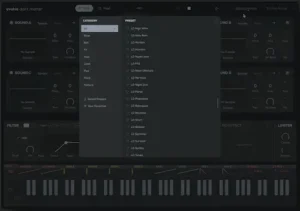 The real test of any virtual instrument begins after the writing session. Inspiration is easy to judge in isolation. A finished production is not.
Evolve Dark Matter is designed to generate large, evolving textures that immediately create atmosphere. The challenge comes later, when those same sounds must coexist with vocals, drums, bass, guitars, and other production elements while remaining clear across a wide range of playback systems.
Low-frequency management is usually the first issue worth addressing. Some atmospheric patches carry continuous energy well below the frequencies that define their musical character. Left unchecked, that information occupies valuable headroom, reduces mix clarity, and gives limiters more work than necessary during mastering. Cleaning unnecessary low-end early in the mix generally produces more transparent results than trying to recover headroom later. Many of these issues are easier to prevent during mix preparation than to correct afterward, as discussed in our Prepare Mix for Mastering guide.
Stereo imaging deserves equal attention. Evolve Dark Matter makes generous use of width, modulation, and spatial processing, all of which contribute to its cinematic presentation. Those same qualities can become less predictable after lossy encoding or partial mono playback, particularly when wide ambience relies on phase interaction. Verifying mono compatibility and auditioning streaming codecs remain worthwhile steps before release. If the release is intended primarily for streaming platforms, our Spotify Mastering guide explains why spatial balance and translation often change after normalization.
Translation is equally important. A texture that feels immersive on full-range studio monitors may dominate the mix on headphones while becoming almost imperceptible through smaller consumer speakers. Monitoring at different playback levels and checking multiple listening systems often reveal balance issues that aren’t immediately obvious during composition.
The instrument’s evolving nature also affects mix decisions. Harmonic content shifts over time, meaning static EQ settings don’t always produce consistent results throughout a performance. Dynamic EQ, automation, or carefully controlled multiband processing usually preserve more detail than aggressive corrective equalization applied across the entire track. Those decisions also influence how processors interact later in the mastering stage, a topic explored in our Mastering Chain Explained guide.
CPU performance is unlikely to become a limiting factor in most professional sessions, although multiple instances with complex modulation naturally demand more resources than conventional subtractive synthesizers. Freezing tracks after composition remains the simplest way to preserve system performance without affecting workflow.
Perhaps the most valuable lesson Evolve Dark Matter teaches has little to do with the plugin itself. Dense hybrid textures rarely benefit from additional layers simply because the arrangement feels unfinished. More often, clarity comes from removing competing elements, refining automation, and giving existing sounds enough space to develop naturally.
That approach carries through to mastering. Sessions with controlled low-frequency content, disciplined stereo imaging, and restrained layering consistently translate better across streaming platforms and consumer playback systems. In that respect, Evolve Dark Matter rewards producers who begin thinking like mixing engineers long before exporting the final stereo mix.
Verdict: A Focused Hybrid Instrument That Prioritizes Workflow Over Unlimited Flexibility
Evolve Dark Matter succeeds because it never pretends to be something it isn’t. It isn’t a replacement for flagship synthesizers such as Omnisphere, Pigments, or Phase Plant, nor is it intended to become the centerpiece of every production. Its purpose is much more specific: delivering complex hybrid textures quickly enough to keep creative momentum intact.
That focused design inevitably comes with trade-offs. Producers who enjoy building sounds from the ground up or require unrestricted synthesis will reach the instrument’s limits sooner than they would with a fully programmable platform. Those limitations are easy to accept, however, if the goal is writing music rather than designing every patch from scratch.
The strongest aspect of Evolve Dark Matter isn’t the size of its feature list or factory library. It’s the consistency with which those sounds remain useful after the writing session, when real production decisions begin to shape the final record.
Like most hybrid instruments, its presets still demand engineering judgment. Wide stereo fields, dense harmonic content, and expansive atmospheres rarely translate into a finished release without careful arrangement, disciplined mixing, and thoughtful mastering. Producers expecting polished presets to replace those stages will be disappointed. If you’re unsure where sound design ends and the finishing process begins, our guide on Mixing vs Mastering explains the distinction using real production workflows.
For electronic producers, media composers, trailer writers, and sound designers who regularly work with dark cinematic textures, Evolve Dark Matter is a compelling addition to an existing toolkit. For producers searching for a single instrument capable of covering every synthesis task, it shouldn’t be viewed as an all-in-one solution.
Ultimately, Evolve Dark Matter is best understood as a specialist. Used in the right productions and with realistic expectations, it can shorten the distance between an initial idea and a release-ready arrangement without sacrificing the sonic depth that makes hybrid instruments so appealing in the first place.
Editorial Rating
| Category | Rating |
|---|---|
| Sound Quality | 9.3/10 |
| Workflow Efficiency | 9.6/10 |
| Mix Translation | 8.9/10 |
| Commercial Production Readiness | 9.2/10 |
| CPU Efficiency | 8.8/10 |
| Sound Design Flexibility | 7.8/10 |
| Value for Money | 9.1/10 |
| Overall | 9.1/10 |
Evolve Dark Matter isn’t built to compete with fully programmable synthesis platforms, and judging it by that standard misses its purpose. Its strongest asset is workflow: the ability to generate sophisticated hybrid textures that reach a production-ready starting point within minutes. From a mixing engineer’s perspective, the presets demand thoughtful arrangement, stereo management, and low-end control, but they respond predictably to corrective processing and translate well when integrated into a disciplined production. For producers working with cinematic electronics, game audio, trailers, or modern atmospheric music, it delivers considerably more value than its feature count alone would suggest.
Evaluation Methodology
This review is based on practical production workflow rather than isolated preset demonstrations. Evolve Dark Matter was evaluated from the perspective of arrangement efficiency, mix translation, stereo behavior, spectral balance, workflow speed, and its ability to integrate into commercial productions. Ratings reflect engineering considerations that become relevant after composition, including processing requirements, translation across playback systems, and overall suitability for professional mixing and mastering. The assessment reflects practical studio use rather than vendor-provided demonstrations or promotional launch material.

Yurii Ariefiev is a mastering engineer and audio production editor specializing in mix translation, mastering workflows, and critical evaluation of professional audio tools. His reviews focus on how instruments and plugins behave inside finished productions rather than how they perform in isolated demonstrations.
This review evaluates Excite Audio Evolve Dark Matter from a real mixing and mastering perspective, examining spectral balance, stereo translation, workflow efficiency, and production decisions that influence how a track ultimately performs across streaming platforms and consumer playback systems.

Frequently Asked Questions
Is Evolve Dark Matter suitable for professional music production?
Yes. Its sound quality is more than capable of professional releases. Like any hybrid instrument, however, the presets achieve the best results when they’re treated as part of a complete production rather than finished mix elements.
How demanding is Evolve Dark Matter on CPU?
CPU usage is reasonable for a modern hybrid instrument. Most current production systems handle multiple instances comfortably, although projects built around numerous evolving patches will benefit from freezing tracks once composition is complete.
Can Evolve Dark Matter replace Omnisphere or Pigments?
Not realistically. Those instruments are designed as comprehensive synthesis platforms. Evolve Dark Matter focuses on generating cinematic hybrid textures with minimal setup, making it a complementary tool rather than a replacement.
Does Evolve Dark Matter work well for cinematic scoring?
Yes. Atmospheric pads, evolving drones, transitions, and textured soundscapes make it particularly effective for film, trailer, and game audio production, as well as electronic genres that rely on cinematic depth.
Do the factory presets require additional mixing?
In most cases, yes. Many presets intentionally occupy a wide stereo image and a broad frequency range. Basic cleanup—particularly low-end management, stereo balancing, and occasional dynamic EQ—helps them integrate more naturally into a full arrangement.
How well do Evolve Dark Matter sounds translate to streaming platforms?
Translation is generally solid, provided stereo width and low-frequency content are managed carefully. Checking mono compatibility and auditioning compressed streaming formats remain worthwhile before release.
Is Evolve Dark Matter designed more for composition or detailed sound design?
Its strongest advantage is composition speed. While the instrument offers meaningful sound-shaping controls, it prioritizes fast creative decisions over unrestricted synthesis programming.
Who will get the most value from Evolve Dark Matter?
Electronic producers, media composers, trailer writers, game audio designers, and anyone creating cinematic or atmospheric productions are likely to benefit the most. Producers focused on traditional subtractive synthesis may prefer more programmable alternatives.
Is Evolve Dark Matter worth buying if you already own other hybrid instruments?
That depends on your workflow. If your existing tools already cover dark cinematic textures efficiently, the overlap may be significant. Producers looking for a faster route to evolving hybrid atmospheres may still find enough distinction to justify adding it to their toolkit.
Can Evolve Dark Matter replace professional mixing or mastering?
No. Rich presets can accelerate composition, but they don’t eliminate the need for careful balance, translation, dynamics control, or mastering. Those stages remain essential for achieving consistent results across real-world playback systems.
Can Evolve Dark Matter work as a primary songwriting instrument?
For producers working in cinematic electronic music, trailer composition, ambient, or game audio, it certainly can. Most commercial producers, however, are more likely to use it alongside dedicated synthesizers rather than as the only instrument in a project.