Heavyocity Oblivion Drums Review: Cinematic Percussion Built for Modern Hybrid Production
Published: May 2026 • Updated: May 2026
Heavyocity Oblivion Drums arrives at a point where cinematic percussion libraries are no longer competing on size alone. Most modern trailer-oriented Kontakt instruments already deliver oversized hits, layered impacts, and heavily processed low-end. The real differentiator now is mix survivability — how percussion behaves after limiting, codec compression, stem saturation, and dense hybrid arrangements.
That is where Oblivion Drums positions itself. Developed with composer David Levy, the library is engineered for aggressive modern scoring rather than orchestral realism. The emphasis is not natural percussion tone or dynamic nuance. It is controlled density, transient aggression, and immediate playback impact inside contemporary cinematic productions shaped by game trailers, industrial sound design, and streaming-first delivery standards.
Heavyocity’s processing philosophy is obvious from the first preset. The source material is heavily sculpted before it ever reaches the mix stage: compressed low-end, saturated upper mids, widened ensemble imaging, and transient shaping designed to hold definition under loud mastering conditions. In practice, Oblivion Drums behaves less like a traditional drum library and more like a heavily processed cinematic percussion plugin optimized for modern hybrid scoring workflows inside Kontakt Player.
That approach has clear advantages. The library delivers instant scale with minimal setup time, particularly in trailer, sci-fi, and modern action scoring environments. But it also creates tradeoffs. The more aggressively a library is pre-processed, the less flexibility remains during mixing and mastering. Oblivion Drums sounds enormous out of the box because much of the engineering has already been committed directly into the samples themselves.
- Why Modern Hybrid Scoring Demands Pre-Processed Cinematic Percussion
- Inside Oblivion Drums: Architecture, Workflow, and Hybrid Scoring Design
- Kit Designer: Percussion Layering Built for Controlled Hybrid Mixing
- Ensemble Designer: Engineered for Maximum Cinematic Impact
- Loop Designer and the Rise of Fast-Turnaround Hybrid Scoring
- Mix Translation, Loudness, and Mastering Behavior
- Where Oblivion Drums Delivers — and Where the Marketing Overreaches
- Oblivion Drums vs Damage 2, Keepforest, and Other Hybrid Percussion Libraries
- Who Should Actually Use Oblivion Drums
- How Oblivion Drums Reflects the Future of Hybrid Cinematic Production
- Verdict
- FAQ
Why Modern Hybrid Scoring Demands Pre-Processed Cinematic Percussion
 Cinematic percussion has changed dramatically over the last decade. Earlier orchestral libraries prioritized room realism, ensemble dynamics, and natural transient behavior. Modern hybrid scoring operates under completely different conditions. Today’s trailer and game mixes are built around distorted synth stacks, sub-heavy drones, clipped impacts, layered risers, and extremely loud mastering chains competing for spectral space at all times.
Under those conditions, traditional percussion recordings often collapse. Natural drum dynamics disappear after bus compression, low-end detail becomes unstable under streaming normalization, and softer transient structures lose definition once the mix hits AAC or Ogg encoding. Massive raw recordings are no longer enough. Translation matters more than scale alone.
That shift changed how cinematic drum libraries are designed. Modern products like Damage 2, Keepforest Evolution, BOOM Library hybrid collections, and Oblivion Drums function less as neutral recording libraries and more as pre-engineered production assets. Saturation, transient shaping, stereo enhancement, and low-end control are already embedded into the samples before they ever enter the session.
The goal is straightforward: maintain perceived impact after limiting, preserve transient intelligibility on consumer playback systems, and survive dense hybrid arrangements without disappearing behind synth layers and FX buses.
This is especially important in streaming-era production workflows. Platforms like Spotify, YouTube, and Apple Music aggressively expose weak transient design. Excessive sub energy turns unstable after codec compression, while poorly controlled low mids quickly become indistinct on earbuds, phones, and soundbars. As a result, modern cinematic percussion increasingly relies on harmonic density in the upper mids rather than pure low-frequency extension alone.
Oblivion Drums is built entirely around that production philosophy. It is not attempting to recreate realistic percussion ensembles. It is engineered to deliver immediate impact inside heavily processed modern cinematic mixes.
Inside Oblivion Drums: Architecture, Workflow, and Hybrid Scoring Design
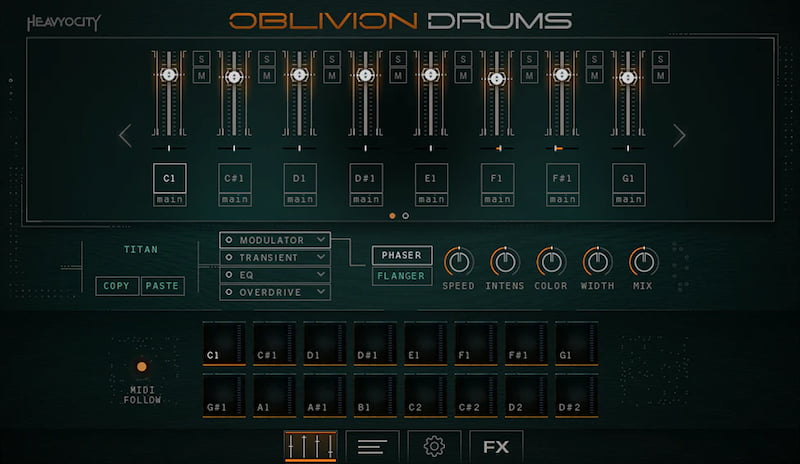
Oblivion Drums is a cinematic percussion plugin for Kontakt Player that includes more than 30,000 samples, 99 presets, and 504 loops designed for modern trailer and hybrid scoring production. On paper, those numbers are consistent with the current cinematic percussion market. Large sample counts stopped being a meaningful differentiator years ago. What matters now is workflow architecture — how quickly a library moves from preset browsing into usable production results without collapsing under mix density.
Heavyocity structures Oblivion Drums around three independent engines:
- Kit Designer
- Ensemble Designer
- Loop Designer
Each section targets a different stage of modern hybrid scoring workflow rather than simply dividing content by sound category.
The Kit Designer focuses on direct hit construction and source-level percussion layering. The Ensemble Designer shifts toward oversized cinematic impacts and stacked hybrid textures designed for trailer-scale playback. The Loop Designer handles rhythmic construction through tempo-synced loop manipulation aimed at fast arrangement workflows.
That separation is more important than it initially appears. Many cinematic percussion libraries fail because every preset tries to accomplish everything simultaneously — massive low-end, wide stereo imaging, transient aggression, room scale, and rhythmic complexity all layered into a single patch. The result is often impressive in isolation but unstable inside real productions.
Oblivion Drums takes a more modular approach. Instead of forcing all processing decisions into one playback layer, Heavyocity distributes different production functions across dedicated engines. That makes the library more usable in professional scoring environments where percussion needs to adapt to arrangement density rather than dominate it constantly.
The architecture also reflects how modern composers actually work. Contemporary hybrid production rarely follows a traditional orchestral programming workflow. Producers move rapidly between custom impacts, loop manipulation, layered transitions, and transient reinforcement depending on cue intensity and deadline pressure. Oblivion Drums is clearly designed around that reality rather than classical percussion programming conventions.
Kit Designer: Percussion Layering Built for Controlled Hybrid Mixing
The Kit Designer is the most production-oriented section of Oblivion Drums and easily the most useful for composers already working inside established hybrid scoring workflows. Instead of relying on oversized pre-layered ensemble patches, Heavyocity allows direct source selection with per-voice control, making it possible to build percussion stacks with significantly tighter spectral management.
That design choice solves a common problem in modern cinematic libraries. Many trailer-oriented percussion instruments sound impressive during preset browsing but become unusable once multiple patches compete inside a full arrangement. Excessive room tails, uncontrolled low mids, and stacked saturation quickly destroy transient separation across the mix bus.
The Kit Designer avoids some of that collapse by separating individual drum layers rather than forcing producers into permanently fused ensemble processing. Hits retain enough isolation to shape transient behavior, rebalance low-end energy, and manage masking before the session reaches the mastering stage.
Heavyocity’s processing approach is still aggressive, but it is calculated rather than chaotic. The transient shaping emphasizes attack definition without pushing the percussion into artificial click-heavy territory, while the low-end appears deliberately compressed to stabilize playback translation across smaller monitoring systems and streaming platforms.
That matters in modern hybrid production. Extremely dynamic cinematic drums often lose perceived impact once limiter gain reduction and codec compression enter the chain. Oblivion Drums compensates by embedding controlled harmonic density directly into the source material instead of relying purely on raw transient spikes or exaggerated sub extension.
The tradeoff is flexibility. Producers searching for neutral percussion recordings to process independently may find the library overly committed from the start. Much of the tonal identity — saturation profile, transient contour, stereo image, and low-end weight — is already hardwired into the samples themselves. In practice, Oblivion Drums behaves less like raw percussion capture and more like partially finished production material prepared for fast integration into modern cinematic mixes.
Ensemble Designer: Engineered for Maximum Cinematic Impact
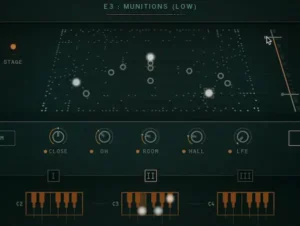 The Ensemble Designer is where Oblivion Drums fully commits to modern trailer production aesthetics. Heavyocity includes 360 layered sources designed to generate oversized cinematic impacts with minimal programming time. This section is not focused on realism, ensemble accuracy, or acoustic depth. It is built around density, scale, and immediate playback aggression.
In isolation, the results are undeniably effective. The ensembles sound huge from the first trigger. Heavy saturation in the low mids, exaggerated stereo width, compressed room energy, and tightly controlled transient enhancement create the kind of oversized cinematic footprint modern hybrid scoring relies on.
On full-range monitoring systems, the physical weight is substantial. Many presets already behave like partially mastered percussion stems rather than raw instrument recordings. That allows composers to reach trailer-ready impact quickly without building extensive processing chains from scratch.
At the same time, this is where Oblivion Drums becomes most difficult to manage inside real-world productions. And that distinction becomes obvious very quickly once the arrangement gets loud.
The Ensemble Designer generates enormous spectral density, particularly between roughly 120Hz and 350Hz — an area that is already overcrowded in modern cinematic arrangements filled with synth basses, braams, distorted drones, low orchestral layers, and wide FX returns. Once multiple ensemble hits stack against hybrid instrumentation, cumulative buildup happens very quickly.
This creates a common problem in modern trailer production: percussion that sounds massive in solo playback but loses clarity once the full arrangement reaches limiter stage. Heavyocity partially compensates through aggressive transient shaping and upper-mid harmonic emphasis, but many presets still require substantial subtractive EQ to remain mixable at competitive loudness levels.
The library also prioritizes perceived size over dynamic realism. Room tails are heavily controlled, sustain behavior is tightly compressed, and transient energy is intentionally stabilized to survive loud mastering chains. From a production standpoint, this makes sense. Highly dynamic percussion often collapses under modern streaming normalization and codec compression. Oblivion Drums is engineered to maintain impact after aggressive downstream processing rather than preserve natural ensemble behavior.
Whether that approach feels powerful or excessive depends entirely on the workflow. For trailer composers, game audio producers, and hybrid scoring environments, the Ensemble Designer delivers immediate large-scale percussion without requiring extensive engineering overhead. For producers looking for open, flexible percussion recordings, the processing can feel overly committed and difficult to reshape once embedded into a dense session.
That tradeoff is central to the entire identity of Oblivion Drums. The library consistently prioritizes instant cinematic authority over long-term arrangement flexibility — a philosophy shared by many modern hybrid percussion tools targeting streaming-era production standards.
Loop Designer and the Rise of Fast-Turnaround Hybrid Scoring
The Loop Designer reflects a larger shift happening across cinematic production workflows: modern scoring increasingly operates like electronic music production rather than traditional orchestral programming.
Instead of building every rhythmic passage manually through MIDI sequencing, contemporary hybrid composers rely heavily on loop manipulation, layered groove construction, rhythmic resampling, and fast arrangement iteration. Tight deadlines in trailer, advertising, streaming, and game audio environments have pushed production speed to the forefront.
Oblivion Drums is clearly designed around that reality. Heavyocity includes 504 tempo-synced loops that can be stacked across three independent layers, allowing producers to build dense rhythmic structures in minutes rather than programming entire percussion arrangements from scratch.
From a workflow perspective, the system is highly efficient. The loops lock quickly into modern hybrid sessions and already contain the transient shaping, saturation, and spectral contour necessary to cut through aggressive cinematic arrangements. Instead of functioning like neutral percussion recordings, the loops behave more like pre-produced rhythmic stems prepared for immediate integration into loud mixes.
That speed comes with creative tradeoffs.
Many modern cinematic productions already suffer from rhythmic homogenization. Trailer music, in particular, has developed a recognizable loop-driven aesthetic built around processed taikos, distorted pulse layers, and repetitive hybrid percussion patterns recycled across countless libraries. The more producers rely on stock rhythmic ecosystems, the more interchangeable the resulting cues become.
Oblivion Drums occasionally drifts into that territory. Some loop content feels designed for instant cinematic gratification rather than long-term compositional flexibility. Used carelessly, the library can quickly push productions toward generic trailer pacing and predictable rhythmic structures.
The strongest results come from treating the loops as infrastructure rather than finished arrangements. Producers who slice, re-sequence, layer, automate, and selectively process the material will extract far more value than those relying on static playback. In that context, the Loop Designer becomes less about drag-and-drop composition and more about accelerating the early construction phase of hybrid scoring sessions.
That distinction matters because modern cinematic production is increasingly shaped by workflow velocity. Oblivion Drums is not attempting to emulate traditional percussion writing techniques. It is engineered to help composers build high-density rhythmic frameworks quickly enough to survive real-world media production timelines.
Mix Translation, Loudness, and Mastering Behavior
One of the most technically interesting aspects of Oblivion Drums is how clearly the library is optimized for loudness-controlled playback environments rather than traditional cinematic dynamics.
The transient structure is intentionally engineered to survive aggressive limiter reduction without collapsing into unfocused broadband distortion. That becomes critical in modern hybrid scoring, where mixes routinely operate at loudness levels far beyond conventional orchestral film standards. Much of that perceived impact is tied directly to loudness management, limiter behavior, and transient preservation under modern streaming normalization systems — factors that heavily influence how cinematic percussion survives final delivery.
For a deeper breakdown of how loudness actually behaves during mastering, see:
Loudness vs Clipping in Mastering — What Actually Makes a Track Sound Loud.
Heavyocity also appears to prioritize upper-mid transient intelligibility over pure low-frequency weight. Many hits contain carefully shaped attack information between roughly 2kHz and 5kHz — an area that remains perceptible even after AAC encoding, streaming normalization, and playback through consumer-grade systems.
That detail is easy to underestimate until a mix reaches distribution platforms. This is where many cinematic drum libraries start falling apart.
Modern codecs routinely weaken cinematic low-end by smearing transient definition and reducing perceived sub articulation. Libraries built entirely around deep subs and oversized room energy often lose authority after upload, especially on earbuds, laptops, and smaller soundbars. Oblivion Drums compensates by embedding harmonic aggression higher in the spectrum, allowing impacts to retain presence even when the deepest frequencies become partially compromised.
This approach improves translation, but it also introduces fatigue risks during mastering.
Many presets arrive heavily compressed and saturated before they ever reach the mix bus. Additional clipping, bus compression, parallel saturation, or aggressive limiting can quickly push the material into harsh territory, particularly once multiple percussion layers begin competing inside dense hybrid arrangements.
That creates a common paradox in modern cinematic production: sounds that appear enormous in solo playback often feel smaller after full mix limiting because excessive saturation reduces transient contrast and collapses perceived depth.
Oblivion Drums occasionally runs into that problem. The library achieves scale through density and harmonic pressure rather than wide dynamic movement, which means engineers need to manage restraint carefully during downstream processing. Over-limiting the material rarely increases impact. More often, it flattens the percussion into static energy with reduced physical punch.
This is one of the larger tradeoffs behind heavily pre-processed cinematic percussion libraries in general. The more mix-ready the source material becomes, the less mastering flexibility remains later in the chain. Oblivion Drums delivers impressive out-of-the-box authority, but it demands disciplined gain staging, EQ management, and transient control if producers want that scale to survive final delivery.
How Oblivion Drums Behaves in Real Mixing Sessions
Inside dense trailer arrangements, Oblivion Drums behaves more like a partially mastered percussion stem than a raw Kontakt instrument. Layering the Ensemble Designer against distorted synth basses and wide braam stacks quickly exposes how aggressively the library occupies the low-mid spectrum.
In real-world sessions, the most effective workflow usually involves separating percussion into dedicated stem buses early in production rather than treating the plugin like standard orchestral percussion. Without careful bus management, the built-in saturation and compressed room energy can overwhelm limiter headroom surprisingly fast.
The library also reacts differently depending on mastering approach. Bus clipping tends to exaggerate upper-mid transient aggression very quickly, particularly around the 2kHz–5kHz region already emphasized throughout many presets. In Atmos-oriented trailer mixes, this can create excessive forward percussion energy unless sidechain relationships between impacts, synth basses, and low orchestral layers are tightly controlled.
Paradoxically, Oblivion Drums often sounds larger when fewer layers are active. Once too many ensemble hits compete simultaneously, transient separation begins collapsing and the perceived scale starts shrinking instead of expanding.
Where Oblivion Drums Delivers — and Where the Marketing Overreaches
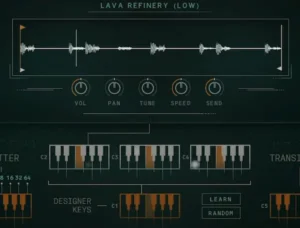 Heavyocity positions Oblivion Drums around cinematic scale, aggression, and modern hybrid impact. In many respects, the library delivers exactly that. The percussion is loud, dense, heavily processed, and immediately effective inside trailer-oriented production environments.
The problem is not whether the marketing works. The problem is what the marketing leaves out.
Despite the large sample count, Oblivion Drums is far less versatile than the promotional framing suggests. The library operates inside a very specific sonic identity built around compressed low-end, saturated upper mids, exaggerated ensemble width, and high-density transient shaping. Producers expecting flexible percussion recordings for orchestral scoring, acoustic realism, or subtle cinematic layering will likely find the material too stylistically locked from the start.
Much of the perceived scale comes from aggressive harmonic saturation rather than actual dynamic depth. That distinction matters during full production workflows. In isolation, many presets sound enormous because the spectral density is already heavily packed before the sounds even hit the mix bus. Inside longer arrangements, however, that same density can reduce separation and make percussion feel smaller once limiter gain reduction begins accumulating across the session.
This is one of the recurring problems with modern hybrid percussion design. Libraries are increasingly optimized for immediate emotional impact during preview playback rather than long-term arrangement behavior. Oblivion Drums occasionally falls into that trap. The first impression is extremely strong, but maintaining clarity across an entire cue often requires more corrective engineering than the interface initially implies.
Mix ergonomics can also become challenging in dense productions. The library frequently occupies large portions of the low-mid spectrum while simultaneously carrying aggressive upper-mid transient information. Without careful EQ management, layered percussion stacks can begin competing directly against synth leads, braams, distorted basses, and orchestral stem energy.
None of this makes Oblivion Drums ineffective. It simply defines the type of tool it actually is.
This is not a general-purpose cinematic percussion library designed for maximum flexibility. It is a highly curated hybrid production system aimed at composers who want immediate trailer-scale intensity with minimal setup time. Producers working in aggressive modern scoring environments will likely see that as a strength. Engineers searching for open-ended percussion material may see it as a limitation.
Oblivion Drums vs Damage 2, Keepforest, and Other Hybrid Percussion Libraries
Oblivion Drums sits in a very specific corner of the cinematic percussion market. It is not trying to compete with orchestral realism libraries, deeply modular sound-design collections, or traditional cinematic drum instruments focused on dynamic authenticity. Heavyocity is targeting producers who need immediate hybrid impact with minimal engineering overhead.
That positioning becomes clearer when compared against other major cinematic percussion platforms currently dominating trailer, game, and hybrid scoring workflows.
| Library | Core Production Philosophy | Primary Limitation | Mix Behavior | Best Production Environment |
|---|---|---|---|---|
| Heavyocity Oblivion Drums | Highly processed hybrid percussion optimized for instant cinematic impact | Limited tonal flexibility and aggressive spectral density | Requires disciplined low-mid control in dense trailer mixes | Modern trailers, game scoring, industrial hybrid production |
| Damage 2 | Balanced cinematic percussion with broader workflow versatility | Less aggressive out of the box | More forgiving during full mix integration | General hybrid scoring and cinematic composition |
| Keepforest Evolution Series | Dark hybrid sound design integrated with rhythmic percussion systems | Can become spectrally overcrowded in dense mixes | Can become heavily congested under limiter pressure | Sci-fi trailers, dark cinematic production, dystopian scoring |
| Hans Zimmer Percussion | Large-scale acoustic realism with orchestral depth | Requires substantially more downstream mix processing | Requires significant downstream shaping | Film-oriented orchestral and cinematic scoring |
| BOOM Library Cinematic Collections | Flexible raw assets intended for custom sound design workflows | Steeper engineering and editing requirements | Depends heavily on external processing chains | Advanced sound design, custom trailer production, cinematic post |
The closest comparison is probably Damage 2, but the two libraries prioritize different production outcomes. Damage 2 maintains more dynamic openness and broader applicability across cinematic genres, while Oblivion Drums pushes much harder toward aggressive pre-processed hybrid aesthetics.
That distinction matters during mixing and mastering.
Damage 2 generally leaves more room for downstream shaping, which can make it easier to integrate across a wider range of arrangements. Oblivion Drums delivers larger immediate impact, but the built-in saturation and spectral density reduce flexibility once sessions become heavily layered.
Compared to Keepforest products, Oblivion Drums feels more percussion-centric and less dependent on integrated sound-design atmospheres. Keepforest libraries often blur the line between percussion, drones, pulses, and cinematic FX, whereas Oblivion Drums remains more directly focused on rhythmic aggression and transient weight.
Hans Zimmer Percussion exists almost on the opposite side of the workflow spectrum. That library prioritizes acoustic realism, room depth, and orchestral scale, requiring producers to build impact through arrangement and engineering decisions rather than relying on pre-embedded saturation and transient sculpting.
BOOM Library collections appeal to an entirely different user base. Those products function more like raw cinematic source material for advanced sound designers willing to build custom processing chains manually. Oblivion Drums targets speed instead — fast cue construction, immediate playback authority, and minimal engineering setup before achieving trailer-scale results.
Ultimately, Oblivion Drums competes less on realism or flexibility and more on workflow acceleration. It is designed for producers who need cinematic percussion to arrive already shaped for loud, dense, modern hybrid mixes rather than engineered from raw recordings during production.
Who Should Actually Use Oblivion Drums
Oblivion Drums is clearly designed for producers working inside modern hybrid scoring environments where impact, speed, and playback translation matter more than orchestral realism or dynamic subtlety.
The library makes the most sense for:
- Trailer composers building high-density cinematic arrangements
- Game audio producers working with aggressive hybrid scoring aesthetics
- Industrial and sci-fi cinematic composers
- Hybrid scoring engineers managing loud modern mixes
- Media composers operating under tight turnaround deadlines
- Producers creating streaming-oriented cinematic content
In those workflows, Oblivion Drums solves a practical production problem. The percussion already arrives shaped for contemporary playback environments, allowing composers to move quickly from sketch ideas to mix-ready cue construction without building complex processing chains from scratch.
The library is substantially less effective for producers prioritizing realism, orchestral detail, or open-ended percussion design.
That includes:
- Traditional orchestral composers
- Acoustic percussion programmers
- Film scorers focused on dynamic nuance and room realism
- Minimalist cinematic production styles
- Subtle television underscore work
- Engineers looking for neutral percussion recordings
The reason is not sample quality. The issue is tonal commitment.
Oblivion Drums embeds a strong production identity directly into the source material itself. The saturation profile, transient contour, stereo width, and low-end compression are already heavily defined before the sounds ever enter a session. That gives the library immediate cinematic authority, but it also limits how far producers can reshape the material later during mixing and mastering.
In practical terms, Oblivion Drums behaves more like a specialized hybrid production instrument than a universal percussion platform. Producers working in aggressive modern scoring environments will likely find it extremely efficient. Outside that niche, the processing can feel overpowering and unnecessarily restrictive.
CPU Usage, Kontakt Performance, and Real-World Workflow Efficiency
Oblivion Drums runs inside Kontakt Player 7.10.9 or later and benefits from Native Instruments’ mature disk-streaming architecture. From a pure CPU perspective, the library performs reasonably well considering the amount of embedded processing, layered source material, and stereo information involved.
The larger Ensemble Designer presets can still become memory-intensive during complex scoring sessions, particularly when multiple mic-heavy cinematic instruments are already active inside the template. But raw CPU load is not the main workflow challenge here.
The bigger issue is cumulative arrangement density.
Many Oblivion Drums presets already contain substantial saturation, transient enhancement, stereo widening, compressed room tails, and low-mid harmonic buildup before any external processing is added. Stacking multiple instances quickly increases spectral congestion long before the mix stage officially begins.
This is where inexperienced hybrid production workflows often collapse. Producers mistake loud layered percussion for scale, then continue adding impacts, loops, braams, and low-frequency FX until the arrangement loses separation entirely. Oblivion Drums can accelerate that problem because the library is engineered to sound “finished” immediately.
As a result, the instrument rewards disciplined arrangement decisions far more than brute-force layering.
In practice, Oblivion Drums often performs best when used selectively rather than continuously across an entire cue. A few carefully placed ensemble hits usually create more perceived scale than constant full-spectrum percussion saturation throughout the arrangement.
That becomes especially important during mastering. Excessive layered density reduces transient contrast, limits available headroom, and forces limiters into heavier gain reduction earlier than expected. What initially sounds massive can quickly flatten into static midrange pressure once the final mix reaches competitive loudness levels.
This is also one of the most common reasons heavily layered hybrid productions begin falling apart during mastering. Once low-mid buildup and transient masking accumulate across the arrangement, engineers often end up fighting problems that were created much earlier in the production stage rather than during the mastering chain itself.
A more detailed breakdown of these issues is covered here:
Mastering Problems: Why Your Track Sounds Worse After Mastering.
From a workflow standpoint, Oblivion Drums is efficient because it reduces sound-design setup time. But the library also demands stronger arrangement discipline than many producers realize. The challenge is not getting the percussion to sound big. The challenge is preserving clarity after everything else in the production becomes loud too.
How Oblivion Drums Reflects the Future of Hybrid Cinematic Production
Oblivion Drums reflects a major change happening across modern cinematic audio production: sample libraries are increasingly replacing raw instrumentation with pre-engineered production identity.
Earlier cinematic percussion libraries were designed more like traditional recording sessions. Developers captured large ensembles, natural room behavior, and dynamic performances, then left most tonal decisions to the composer, mix engineer, or post-production chain.
Modern hybrid libraries operate differently.
Today’s cinematic products are often built as partially finished production systems rather than neutral instruments. Saturation curves, transient behavior, stereo width, low-end compression, harmonic distortion, and perceived loudness are frequently embedded into the source material before the producer even opens the patch.
Oblivion Drums fully embraces that model.
The library is not attempting to provide transparent percussion recordings for extensive downstream sculpting. It is designed to deliver a specific cinematic aesthetic immediately — aggressive, dense, wide, and optimized for modern playback environments dominated by streaming normalization, codec compression, and loud hybrid arrangements.
That fundamentally changes the engineering workflow surrounding cinematic production.
The challenge is no longer creating impact from raw material. Modern producers already receive pre-saturated, transient-enhanced, mix-forward percussion directly from the library itself. The real engineering work shifts toward controlling cumulative density, managing low-mid buildup, preserving transient separation, and preventing aggressive hybrid sessions from collapsing under limiter pressure.
That becomes especially important when preparing hybrid cinematic mixes for final mastering. Libraries built around heavy saturation and dense low-end layering leave far less margin for downstream correction than many producers expect.
For engineers preparing dense productions before mastering, this guide covers the most important workflow considerations:
Prepare Mix for Mastering: What Actually Matters Before You Send It.
In practical mastering workflows, this often means engineers spend less time enhancing tracks and more time correcting density-related issues introduced earlier in production. Excessive saturation, unstable low-end layering, and aggressive transient stacking can dramatically reduce mastering flexibility before the final chain even begins.
For producers working in hybrid cinematic environments, understanding how mastering chains react to dense material becomes increasingly important:
Mastering Chain Explained — How It Really Works in Real Tracks.
This trend has obvious advantages. Production moves faster, cinematic results arrive earlier in the workflow, and composers under deadline pressure can achieve trailer-scale impact without extensive sound-design infrastructure.
But there is also a creative cost.
As more libraries arrive pre-shaped around similar cinematic aesthetics, modern hybrid scoring risks becoming increasingly homogenized. Distorted low-end pulses, compressed ensemble impacts, exaggerated stereo width, and identical transient profiles begin appearing across countless productions regardless of composer identity.
Oblivion Drums exists directly inside that tension. It is both a highly effective modern production tool and a reflection of how cinematic audio design is becoming progressively standardized around loudness-era playback expectations.
Whether that represents workflow evolution or creative compression depends less on the library itself and more on how producers choose to use it inside larger arrangements.
Verdict
It is a specialized cinematic drum library and hybrid percussion plugin engineered around modern trailer aesthetics, streaming-era loudness behavior, and aggressive hybrid scoring workflows.
Its strengths are immediate and highly practical in the right environment. The library delivers aggressive transient definition, tightly controlled low-end energy, fast workflow execution, and mix-forward percussion that already feels prepared for modern cinematic production standards. For composers working in trailers, game audio, industrial scoring, or streaming-oriented hybrid music, Oblivion Drums dramatically reduces the time required to reach large-scale cinematic impact.
At the same time, the library’s limitations are inseparable from its design philosophy.
The processing is highly committed. Spectral density is often extreme. Many presets arrive partially saturated and dynamically stabilized before entering the session, leaving less room for downstream shaping during mixing and mastering. Producers expecting orchestral realism, open-ended percussion design, or nuanced acoustic behavior will likely find the instrument too aggressive and too stylistically narrow.
Oblivion Drums also demands more arrangement discipline than its “instant cinematic” workflow initially suggests. The percussion sounds enormous in isolation because much of the engineering work has already been embedded into the source material itself. Inside full productions, however, maintaining separation, preserving transient contrast, and controlling low-mid accumulation still require experienced mix decisions.
That is ultimately what defines the library.
Oblivion Drums understands modern cinematic production extremely well. It is built for streaming-era translation, compressed playback environments, aggressive mastering chains, and hybrid arrangements competing for attention inside overloaded spectral spaces. Heavyocity is not chasing realism here. They are optimizing for perceived impact after the production has already become loud, dense, and heavily processed.
For trailer composers and hybrid scoring engineers, that makes Oblivion Drums highly effective. For producers searching for flexible cinematic percussion with broader tonal range, it may feel less like a foundational instrument and more like a specialized production weapon designed for a very specific era of cinematic sound design.

Yurii Ariefiev is a mastering engineer and audio production editor specializing in loudness management, hybrid mixing workflows, streaming translation, and real-world playback behavior across modern music delivery platforms. His editorial work focuses on the technical interaction between production density, transient control, codec behavior, and mastering-stage decision making.
This article was written from a professional engineering perspective with emphasis on hybrid cinematic production, mix translation, limiter behavior, and the practical realities of integrating heavily processed percussion libraries into modern mastering workflows.
FAQ
Does Oblivion Drums require additional mixing to sound production-ready?
Less than many cinematic percussion libraries. Most presets already contain substantial saturation, transient enhancement, stereo shaping, and low-end control. The bigger challenge is preventing cumulative density once multiple layers enter a full hybrid mix.
Is Oblivion Drums suitable for realistic orchestral scoring?
Not really. The library is heavily stylized around modern hybrid trailer aesthetics rather than natural percussion dynamics, orchestral depth, or acoustic realism.
How well does Oblivion Drums translate on streaming platforms?
Surprisingly well. The transient structure appears intentionally optimized for loudness-normalized playback and codec-heavy environments where uncontrolled sub energy often collapses after upload.
Does Oblivion Drums work better for trailers or traditional film scoring?
The library is far more effective in trailers, game audio, industrial scoring, and modern hybrid production than in traditional cinematic orchestration.
Can Oblivion Drums replace Damage 2?
No. Damage 2 remains broader and more flexible overall. Oblivion Drums is narrower, more aggressively processed, and much more focused on immediate hybrid impact.
How demanding is Oblivion Drums on CPU and RAM?
CPU performance is relatively manageable inside Kontakt Player, but larger ensemble presets can become memory-intensive. In practice, arrangement density becomes a bigger issue than raw system load.
Are the loops usable in professional scoring workflows?
Yes, particularly for fast-turnaround media production. However, producers relying too heavily on stock loop playback risk creating generic trailer-style rhythmic structures without much individuality.
Does the built-in processing reduce mastering flexibility?
Absolutely. Much of the saturation, transient contour, and stereo behavior is already embedded into the samples. That creates immediate impact but leaves less room for major downstream reshaping.
Can Oblivion Drums work outside cinematic production?
In some cases. The library can integrate effectively into industrial, dark electronic, cyberpunk, and cinematic metal production. Outside aggressive genres, the processing often feels excessive.
Is Oblivion Drums worth buying for professional composers?
For producers working specifically in modern hybrid scoring, trailer music, or game audio, the workflow efficiency and immediate playback impact make the library highly competitive. For broader percussion needs, more flexible cinematic libraries may provide better long-term value.
Is Oblivion Drums worth it for trailer composers in 2026?
For composers working in modern hybrid trailer production, yes. The library is specifically optimized for loud cinematic arrangements, fast workflow execution, and streaming-era playback translation rather than traditional orchestral realism.
Does Oblivion Drums sound too processed for professional mixing?
In some workflows, yes. The built-in saturation and transient shaping are intentionally aggressive, which can reduce flexibility during mixing and mastering if too many layered presets are used simultaneously.