RME ADI-2 Pro EX: What the Latest Evolution of RME’s Reference Converter Means for Modern Mixing, Mastering and Audio Production
Few categories in professional audio generate more debate than converters. Some engineers argue that modern interfaces have become so good that dedicated conversion hardware offers little practical advantage. Others continue to build mastering rooms around standalone converters because they view monitoring accuracy—not processing power—as the foundation of reliable decision-making.
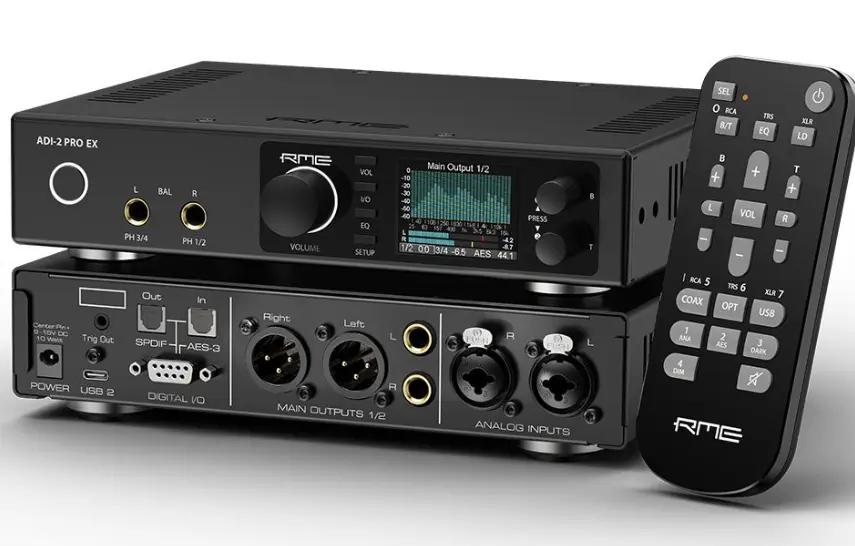
The RME ADI-2 Pro EX arrives directly in the middle of that debate. Rather than introducing a new workflow category, it refines a platform that has long occupied an unusual position in the market. The original ADI-2 Pro was never just a converter. It combined reference-grade A/D and D/A conversion, headphone monitoring, digital format conversion, measurement capabilities and portable deployment into a single desktop unit.
That combination helped the ADI-2 Pro gain traction far beyond traditional mastering rooms. Mix engineers adopted it as a monitoring reference. Technical reviewers used it for measurement work. Headphone-focused professionals embraced its monitoring flexibility. Even engineers who already owned premium interfaces often kept an ADI-2 Pro in the signal chain for critical listening and evaluation.
With the ADI-2 Pro EX, RME is not chasing bigger specifications for the sake of marketing. The more relevant question is whether the hardware changes improve real-world workflows where monitoring consistency, reliability and repeatable results matter more than another line on a specification sheet.
For engineers evaluating the ADI-2 Pro EX today, the discussion is less about converter transparency and more about workflow value. In an era where software tools are increasingly capable and production is largely performed in the box, hardware earns its place by helping engineers make better decisions. That is ultimately the standard by which the ADI-2 Pro EX should be judged.
Why Reference Conversion Still Matters in Modern Audio Production
A decade ago, converter quality was often a defining factor when comparing professional audio hardware. Today, the gap has narrowed considerably. Even mid-range studio interfaces routinely deliver distortion, dynamic range and noise performance that would have been considered exceptional in earlier generations of digital audio.
That reality has led some producers to conclude that dedicated converters have become irrelevant. For many production workflows, that conclusion is reasonable. A producer working entirely in the box is far more likely to benefit from improved monitoring, room treatment or better speakers than from replacing a competent modern interface with a standalone converter.
The equation changes in critical listening environments.
Mixing and mastering engineers are often making decisions at thresholds where obvious problems have already been solved. The remaining work involves identifying subtler issues: low-end balance that shifts between playback systems, limiter artifacts that only emerge at competitive loudness levels, stereo image instability, excessive upper-midrange energy or listener fatigue that develops over extended listening sessions.
At that stage, accuracy becomes more valuable than features.
The purpose of a reference converter is not to make audio sound more impressive. It is to reduce uncertainty in the monitoring chain. When an engineer compares processing decisions, evaluates hardware inserts or validates a final master before release, consistency matters more than coloration.
This is why dedicated conversion remains common in mastering rooms despite the steady improvement of integrated interfaces. For engineers newer to the field, understanding what audio mastering actually involves helps explain why monitoring accuracy remains such a critical part of the process. Devices such as the Lynx Hilo, Prism Lyra, Merging Anubis and previous generations of the ADI-2 Pro continue to serve as reference points because they are built around monitoring confidence rather than production convenience.
The ADI-2 Pro EX enters a market where converter performance alone is no longer enough to justify a premium price. Engineers increasingly expect a converter to function as part of a larger monitoring ecosystem. Headphone evaluation, digital format conversion, measurement workflows, routing flexibility and long-term operational reliability now influence purchasing decisions as much as raw specifications.
Viewed through that lens, the ADI-2 Pro EX is not competing solely on conversion quality. Its relevance comes from how effectively it supports the decision-making process that sits at the center of modern mixing and mastering workflows.
The Evolution of the ADI-2 Platform
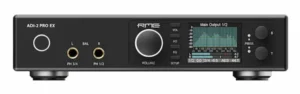 The original ADI-2 Pro earned its reputation for a reason that had little to do with converter specifications alone. It solved a practical problem that many engineers face: the growing number of devices required to manage monitoring, conversion, headphone evaluation and digital routing inside a modern production environment.
Rather than functioning as a dedicated converter with a narrow purpose, the ADI-2 Pro became a central utility device. In many studios it handled multiple roles simultaneously, serving as a reference converter, headphone monitoring system, digital format bridge and measurement front end without requiring additional hardware.
That versatility helped the unit gain adoption across very different segments of the audio industry. Mastering engineers used it for critical monitoring. Mix engineers relied on it for headphone evaluation and reference listening. Technical reviewers incorporated it into measurement workflows. Mobile and hybrid studios benefited from having multiple functions consolidated into a single piece of hardware.
The ADI-2 Pro EX does not attempt to redefine that formula. Instead, RME appears to have focused on refining the areas that directly affect daily use. The headline changes are not centered around dramatic advances in converter performance. They are aimed at improving deployment, reliability, connectivity and operational flexibility.
That distinction is important because the professional converter market has matured. Meaningful improvements are increasingly found in workflow design rather than in chasing ever-larger specification numbers. For many engineers, a device that integrates more cleanly into real production environments delivers greater value than incremental performance gains that rarely influence actual mixing or mastering decisions.
What Actually Changed in the RME ADI-2 Pro EX?
On paper, the ADI-2 Pro EX looks like a modest update. The core concept remains unchanged, and engineers familiar with the previous generation will immediately recognize the overall workflow. The differences emerge in the details.
Rather than chasing dramatically higher converter specifications, RME focused on areas that affect day-to-day operation: thermal management, connectivity, headphone performance and hardware-level protection. None of these changes are likely to alter purchasing decisions on their own. Taken together, however, they reveal where RME believes the next stage of the ADI-2 platform should evolve.
Key Hardware Changes at a Glance
| Update | Practical Benefit |
|---|---|
| Lockable USB-C | More secure operation in mobile and hybrid setups |
| Larger chassis | Improved thermal management and long-term reliability |
| Higher-powered headphone outputs | Better compatibility with demanding reference headphones |
| Channel-independent DC protection | Additional protection against hardware faults |
| Enhanced PSU protection | Improved survivability in professional environments |
| Trigger output | Easier integration with external monitoring hardware |
ADI-2 Pro EX vs Previous ADI-2 Pro: Is the Upgrade Worth It?
For many engineers, the most important comparison is not against competing converters but against the previous ADI-2 Pro itself.
From a workflow perspective, the two devices remain remarkably similar. The core philosophy has not changed. Both units combine reference conversion, monitoring control, headphone amplification and measurement functionality within a compact desktop format.
The differences are concentrated around refinement rather than reinvention. Improved cooling, lockable USB-C connectivity, expanded hardware protection and increased headphone output power all target practical ownership concerns rather than dramatic changes in audio performance.
For engineers already satisfied with the existing ADI-2 Pro, the upgrade decision will largely depend on operational priorities. Users seeking additional reliability, stronger headphone performance or updated connectivity may find meaningful value in the new model. Those focused purely on converter performance should not expect a radically different listening experience.
In that sense, the ADI-2 Pro EX follows a pattern familiar to long-time RME users. The company’s most significant improvements often emerge through refinement, reliability and workflow optimization rather than dramatic redesigns.
| Feature | ADI-2 Pro | ADI-2 Pro EX |
|---|---|---|
| USB Connection | USB | Lockable USB-C |
| Headphone Output | High-power | Higher output capability |
| Protection Systems | Standard protection | Expanded DC and PSU protection |
| Cooling Design | Original chassis | Larger ventilated chassis |
| Best For | Existing workflow | Refined long-term deployment |
Larger Chassis and Improved Cooling
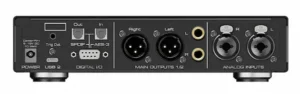 The redesigned enclosure may appear cosmetic at first glance, but the practical implications are more significant than they seem. Professional converters often remain powered for long periods, especially in mastering environments where engineers prefer consistent operating conditions throughout the day.
Improved ventilation is unlikely to change measurable audio performance in a meaningful way, but it can contribute to long-term component stability and reliability. For users planning to keep the unit in service for years rather than product cycles, those considerations matter more than many headline specifications.
Lockable USB-C Connectivity
The move to USB-C was inevitable. The more important change is the locking connection.
Studios increasingly rely on flexible workspaces, mobile production setups and hybrid environments where equipment is connected and disconnected regularly. In those situations, accidental cable movement becomes a practical reliability issue rather than a theoretical one.
RME’s decision to retain an externally powered design is equally noteworthy. Many manufacturers continue moving toward bus-powered hardware, but dedicated power delivery remains advantageous in professional applications where stability and predictable operation take priority over convenience.
Trigger Output and System Integration
One addition that may receive less attention than the converter or headphone updates is the new trigger output. While not directly related to audio quality, it can simplify power management in monitoring systems that include external amplifiers, active monitoring chains or dedicated playback hardware.
For engineers building streamlined mastering or evaluation setups, small workflow improvements such as synchronized power control often provide more daily value than headline specifications.
Higher-Powered Headphone Outputs
One of the strongest aspects of previous ADI-2 models was the headphone section, and RME has expanded that capability further.
This change reflects a broader industry trend. Headphones are no longer secondary monitoring tools used only for occasional reference checks. Many engineers now perform substantial portions of editing, mix evaluation and translation testing on headphones before approving a release.
Additional output power is less about maximum volume and more about maintaining control when driving demanding reference headphones. Engineers working with high-impedance or lower-sensitivity designs benefit from greater headroom, improved transient behavior and reduced strain at realistic monitoring levels.
For mastering engineers in particular, headphone evaluation has become increasingly important as consumer listening continues shifting toward earbuds and personal listening devices. A stronger headphone stage directly supports that workflow.
Expanded Hardware Protection
The least visible upgrades may ultimately prove the most valuable over time.
The addition of channel-independent DC protection and advanced power-supply safeguards does not improve sound quality. It improves survivability.
These features address real-world failure scenarios that rarely appear in marketing materials but can create costly downtime when they occur. Incorrect power connections, voltage irregularities and hardware faults are uncommon events, yet professional facilities are often evaluated by how reliably they handle uncommon events rather than routine operation.
For that reason, the protection upgrades may say more about the intended audience than any converter specification. The ADI-2 Pro EX appears designed not only for performance, but for long-term deployment in environments where reliability carries tangible business value.
Why the ADI-2 Pro EX Remains Relevant for Mixing and Mastering Engineers
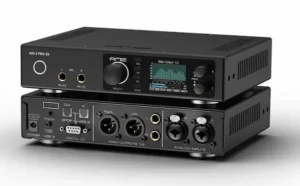 The strongest argument for a device like the ADI-2 Pro EX is not converter performance alone. Most professional interfaces already deliver conversion quality that is sufficient for commercial music production. The question is whether a dedicated reference device improves the accuracy and consistency of the decisions being made around that conversion.
For many project studios, the answer may be no. Monitoring limitations, room acoustics and speaker placement often have a far greater influence on results than the converter itself. Upgrading conversion before addressing those variables rarely produces a meaningful improvement in mix translation.
Professional mixing and mastering environments operate under different conditions. At that level, engineers are often evaluating subtle changes rather than obvious problems. The discussion shifts from whether a mix works to how well it translates across playback systems, how aggressively it can be pushed before artifacts appear, or whether a processing decision genuinely improves the material rather than simply making it different.
At this level, engineers are often evaluating subtle trade-offs rather than solving obvious problems.
A mastering engineer may compare multiple limiting approaches separated by less than a decibel of loudness. This type of evaluation is a routine part of professional mastering workflows, where small processing decisions can have a measurable impact on translation. A mix engineer may spend an hour investigating a low-frequency imbalance that only becomes apparent on certain playback systems. Small inconsistencies in monitoring can make those judgments more difficult, particularly when projects move between speakers, headphones and external hardware chains.
That is where devices such as the ADI-2 Pro EX remain relevant. Their value comes from providing a stable and repeatable monitoring reference rather than introducing a recognizable sonic signature. The goal is not to make audio sound different. The goal is to make engineering decisions easier to trust.
That distinction helps explain why dedicated converters continue to occupy a place in high-end mixing and mastering workflows despite the steady improvement of modern audio interfaces. As production tools become more powerful and processing options become nearly unlimited, the ability to evaluate decisions accurately becomes increasingly valuable.
How the ADI-2 Pro EX Fits Into a Modern Mastering Chain
One of the reasons the ADI-2 Pro platform remains popular among mastering engineers is that it can occupy several positions within the same workflow.
In a straightforward digital mastering setup, the ADI-2 Pro EX can serve as the primary monitoring converter between the DAW and monitoring system. In hybrid environments, it may also function as the conversion stage feeding analog processors before returning audio back into the mastering chain.
A typical workflow might begin with a source signal inside the DAW, pass through the ADI-2 Pro EX for monitoring or analog integration, continue through outboard processing and then return for final evaluation. Throughout that process, monitoring consistency becomes critical because mastering decisions are often measured in fractions of a decibel rather than dramatic tonal shifts.
The ADI-2 Pro EX headphone section adds another layer of utility. Many mastering engineers now perform dedicated headphone verification before approving a release, checking low-frequency balance, stereo presentation and listener fatigue on personal listening systems. The ADI-2 Pro EX allows those evaluations to occur within the same monitoring ecosystem rather than relying on separate hardware.
Final quality-control checks represent another area where the platform fits naturally into modern mastering workflows. Engineers increasingly evaluate translation across speakers, headphones, streaming-oriented playback conditions and technical measurement tools before release. A device capable of supporting monitoring, conversion and evaluation tasks simultaneously reduces complexity without sacrificing accuracy.
Viewed this way, the ADI-2 Pro EX is not simply a converter sitting at the edge of the signal path. It becomes part of the decision-making infrastructure that supports the entire mastering process.
Beyond Conversion: The Growing Role of Measurement and Evaluation Workflows
One of the more interesting aspects of the ADI-2 Pro EX has little to do with music production itself. It is the device’s continued relevance in measurement and evaluation workflows that have become increasingly common across professional audio.
Modern engineers are expected to verify more than tonal balance and loudness. Streaming normalization, codec behavior and modern loudness targets have made objective evaluation increasingly important, particularly for engineers working within current LUFS-based mastering workflows. Streaming platforms apply normalization. Lossy codecs alter transients and stereo information. Headphone listening now accounts for a significant portion of music consumption. As a result, critical listening is often supplemented by technical validation rather than replaced by it.
This shift has expanded the role of measurement hardware inside production environments. Engineers routinely analyze frequency response, noise performance, distortion behavior, codec translation and playback consistency across multiple listening conditions. Reviewers, educators and product developers rely even more heavily on these processes.
The ADI-2 Pro platform has long appealed to this audience because it sits between traditional studio hardware and dedicated test equipment. It can function as a reference converter during production work and then serve as a measurement front end when deeper analysis is required.
That flexibility is increasingly valuable in smaller facilities where a single device may need to perform multiple roles. A freelance mastering engineer, for example, may use the same hardware for critical listening, headphone evaluation, routing tasks and measurement-based troubleshooting throughout the course of a project.
None of this suggests that objective measurements replace listening. Experienced engineers still make final decisions with their ears. What has changed is the amount of supporting data available during the evaluation process. Modern workflows often combine subjective listening with technical verification, particularly when projects must translate reliably across streaming services, headphones and consumer playback systems.
In practical terms, the ADI-2 Pro EX functions as more than a converter upgrade. It is a tool designed for a production environment where engineering decisions are increasingly informed by both listening and analysis.
Critical Evaluation: Where the RME ADI-2 Pro EX Delivers — and Where Expectations Need Adjustment
One of the challenges facing any high-end converter launch is that converter technology no longer advances at the pace it once did. The performance gap between competent professional hardware and reference-grade hardware has narrowed significantly over the past decade.
That reality creates a difficult environment for products like the ADI-2 Pro EX. Buyers naturally want to know whether a new converter sounds noticeably better than what they already own. In many cases, the answer is less dramatic than marketing language might suggest.
The ADI-2 Pro EX is unlikely to transform a mix, uncover hidden detail or suddenly reveal problems that were completely inaudible on other modern professional converters. Engineers expecting a dramatic sonic upgrade may find the differences smaller than anticipated.
What the unit offers instead is refinement. Monitoring flexibility, hardware reliability, routing options, headphone performance and measurement capability contribute more to its value than the promise of radically different sound quality.
This has been a consistent characteristic of RME products for years. The company tends to prioritize engineering stability over dramatic product narratives. As a result, its hardware often remains relevant long after more aggressively marketed alternatives have disappeared from professional workflows.
Whether that approach feels compelling depends largely on the user. Engineers looking for operational improvements may find substantial value here. Engineers chasing a transformative sonic experience may not.
The Limits of Converter Upgrades in Modern Studios
Converter upgrades are often discussed as though they occupy the top of the studio improvement hierarchy. In reality, they rarely do.
Many production environments still struggle with issues that have a far greater impact on results than converter performance. Monitoring rooms introduce frequency-response errors measured in multiple decibels. Speaker positioning affects stereo imaging. Headphone references vary widely. Translation problems often originate from monitoring decisions rather than conversion quality.
Under those conditions, replacing a competent converter rarely changes outcomes in a meaningful way.
This does not diminish the importance of dedicated conversion. It simply places it in the correct position within the decision-making process. Reference-grade hardware becomes most valuable after larger variables have already been controlled.
The ADI-2 Pro EX is therefore best viewed as an optimization tool rather than a problem-solving tool. It rewards studios that already have a reliable monitoring foundation in place.
How Much Does 768kHz Actually Matter?
The ability to operate at sample rates up to 768kHz will inevitably attract attention because it is an easily marketable specification. The practical significance is less obvious.
Most commercial music production occurs at dramatically lower sample rates. Streaming services, download platforms and consumer playback systems derive little direct benefit from working at the upper extremes supported by the ADI-2 Pro EX.
That does not make the feature irrelevant. Ultra-high sample rates can be useful in measurement applications, technical testing environments and specialized research workflows where engineers are evaluating hardware behavior rather than producing commercial releases.
For mixing and mastering, however, the feature should be viewed as a capability rather than a reason to purchase the unit. Few professionals are likely to realize greater day-to-day benefits from 768kHz support than from the converter’s monitoring architecture, routing flexibility or headphone performance.
Not Every Studio Needs a Dedicated Converter
Perhaps the strongest criticism that can be made of the ADI-2 Pro EX is that many producers simply do not need it.
Modern interfaces from companies such as Universal Audio, MOTU, Apogee, Audient and Focusrite already provide conversion quality that is sufficient for a large percentage of commercial productions.
For producers working entirely in the box, room treatment, monitor upgrades and acoustic optimization will often deliver larger improvements than moving to a standalone reference converter.
The ADI-2 Pro EX becomes more relevant as monitoring itself becomes a critical part of the workflow. Mastering engineers, hybrid studios, measurement-focused users and professionals who routinely evaluate subtle processing changes are far more likely to benefit from what the platform offers.
That distinction is important because it helps define the product’s real audience. The ADI-2 Pro EX is not designed to solve fundamental production problems. It is designed to support environments where those problems have already been addressed.
Competitive Positioning: Where the ADI-2 Pro EX Fits in Today’s Converter Market
The ADI-2 Pro EX does not exist in isolation. Engineers considering a converter in this price range are typically comparing it against a small group of established reference products that have become common in mastering rooms, hybrid studios and critical listening environments.
That comparison is important because the ADI-2 Pro EX is not necessarily the strongest option in every category. Its advantage comes from the way it combines multiple functions into a single platform rather than dominating a single performance metric.
| Product | Primary Strength | Best For | Potential Limitation |
|---|---|---|---|
| RME ADI-2 Pro EX | Versatility and monitoring flexibility | Mastering, hybrid studios, measurement workflows | Premium price for users who need only conversion |
| Lynx Hilo | Mastering-focused monitoring ecosystem | Dedicated mastering environments | Less portable and less multifunctional |
| Merging Anubis | Networked audio integration | RAVENNA and immersive workflows | Higher learning curve |
| Dangerous Convert-2 | Straightforward reference conversion | Traditional mastering rooms | Far fewer integrated features |
| Prism Lyra | Reference monitoring transparency | Critical listening applications | Less workflow flexibility |
The closest comparison is arguably the Lynx Hilo. Both products appeal to engineers who view monitoring and conversion as part of the same decision-making system rather than separate hardware categories. The difference is that the Hilo remains heavily focused on mastering-room workflows, while the ADI-2 Pro EX extends further into headphone monitoring, measurement applications and portable deployment.
Merging’s Anubis approaches the problem from a different direction. Its strengths lie in networked audio infrastructure, immersive production environments and advanced routing possibilities. Studios already invested in RAVENNA or large-scale audio networking may find the Anubis ecosystem more compelling than RME’s standalone approach.
The Prism Lyra occupies another niche entirely. Prism products have long been associated with critical listening and transparency. Engineers seeking a dedicated monitoring reference may prefer the simplicity of that approach, whereas the ADI-2 Pro EX prioritizes operational flexibility.
Dangerous Music’s Convert series represents perhaps the most traditional interpretation of a mastering converter. Its purpose is straightforward: deliver reliable, transparent conversion with minimal distractions. The RME platform takes a broader view by integrating monitoring, routing and evaluation capabilities into the same device.
This ultimately explains the ADI-2 Pro EX’s position in the market. It is not the obvious choice for engineers seeking the simplest converter, the most network-centric system or the most specialized mastering controller. It appeals to users who value flexibility and who prefer a single piece of hardware capable of supporting multiple professional workflows.
Expected Pricing and Market Position
At the time of writing, RME has not announced official pricing for the ADI-2 Pro EX. If the company follows the positioning of previous ADI-2 Pro models, the unit is likely to remain firmly within the premium converter category.
That places it in direct competition with products such as the Lynx Hilo, Merging Anubis and selected Prism Sound offerings rather than mainstream studio interfaces.
The purchasing decision therefore becomes less about obtaining basic conversion quality and more about workflow priorities. Engineers evaluating products in this segment are typically comparing monitoring flexibility, routing capabilities, reliability, headphone performance and long-term usability rather than searching for dramatic differences in sound quality.
Assuming pricing remains close to the previous generation, the ADI-2 Pro EX is likely to appeal most strongly to professionals seeking a multifunction monitoring and conversion platform rather than a dedicated converter alone.
RME has also confirmed compatibility with the RM19-III rackmount system, which may be relevant for engineers integrating the ADI-2 Pro EX into permanent mastering, broadcast or technical evaluation installations rather than desktop-based workflows.
Real-World Users Most Likely to Benefit from the ADI-2 Pro EX
Mastering facilities remain one of the clearest target audiences. These environments place a premium on monitoring consistency, repeatability and critical evaluation rather than feature count alone.
Hybrid mixing studios are another natural fit. Engineers integrating analog processors into digital workflows often benefit from having conversion, monitoring and headphone evaluation consolidated within a single platform.
The ADI-2 Pro EX also makes sense for technical reviewers, educational facilities and measurement-focused environments where accurate monitoring and hardware analysis frequently overlap.
Finally, engineers who rely heavily on headphones for translation checks may find particular value in the platform’s monitoring flexibility and upgraded headphone stage.
Who May Be Better Served Elsewhere?
Producers working primarily in the box, project studios operating on limited budgets and users searching for audible coloration rather than transparency may find stronger value elsewhere. Modern interfaces already provide excellent conversion performance, and many studios will realize larger gains through monitoring improvements than through a move to dedicated conversion hardware.
That distinction helps clarify what the ADI-2 Pro EX actually is. It is not a character piece, a creative processor or a shortcut to better mixes. It is a monitoring and conversion platform designed for environments where accuracy, repeatability and workflow flexibility take priority over sonic personality.
Why Monitoring Accuracy Matters More Than Converter Specifications
As a result, the limiting factor in many production environments is no longer processing capability. It is evaluation.
The challenge facing today’s mixing and mastering engineers is rarely a lack of tools. The challenge is determining whether a decision that sounds correct in the studio will continue to sound correct after passing through streaming codecs, Bluetooth speakers, earbuds, automotive systems and consumer playback environments. That reality applies equally to software-based workflows and hardware processors, as demonstrated in our TONEX ONE+ review, where accurate monitoring proved just as important as the processing itself.
This shift has elevated the importance of monitoring infrastructure. Accurate monitoring does not guarantee good decisions, but inaccurate monitoring routinely creates bad ones. Engineers who consistently achieve strong translation are typically working from reliable reference points rather than relying on guesswork.
Viewed in that context, products such as the ADI-2 Pro EX are not competing with plugins or creative processing tools. They occupy a different role entirely. Their purpose is to support the evaluation stage of production—the point where engineers verify whether processing decisions are actually improving the material.
That role has arguably become more important as production tools have become more accessible. When nearly everyone has access to excellent processing, competitive advantages increasingly emerge from the ability to hear subtle problems, identify unintended consequences and make consistent decisions across a wide range of listening conditions.
The continued demand for dedicated monitoring and conversion hardware reflects that reality. Engineers may use different tools to shape a mix, but they still need a reliable reference from which to judge the results.
Real-World Production Perspective: Translation Matters More Than Specifications
The ultimate test of any monitoring or conversion system is not how it performs in isolation. It is whether the decisions made through that system continue to hold up once a project leaves the studio.
That challenge sits at the center of modern mixing and mastering. Engineers are no longer preparing music for a small number of predictable playback environments. A finished release may be consumed through wireless earbuds, smartphones, car audio systems, Bluetooth speakers, gaming headsets, smart TVs and streaming platforms that apply their own processing and codec behavior.
No converter can control what happens after distribution. What it can do is help engineers make more reliable decisions before that point.
That principle extends beyond converters. Whether evaluating a mastering chain, a monitoring system or a creative hardware processor such as the Eventide H9 Harmonizer Gen 2, the final challenge remains the same: determining how processing choices will translate outside the studio.
This is where products such as the ADI-2 Pro EX derive much of their professional value. The goal is not to create a more impressive listening experience inside the studio. The goal is to provide a stable monitoring reference from which translation decisions can be evaluated with greater confidence.
Consider a typical mastering session. Every adjustment occurs within a broader signal path, and understanding how a mastering chain functions in practice helps explain why monitoring consistency becomes so important when evaluating subtle processing changes. Small EQ adjustments, subtle dynamics processing and limiter settings may appear insignificant in isolation, yet those decisions often determine whether a master remains balanced across a wide range of playback systems. When engineers evaluate changes measured in fractions of a decibel, consistency within the monitoring chain becomes increasingly important.
The same principle applies to headphone validation. Many releases that perform well on studio monitors reveal entirely different issues when auditioned through headphones or consumer listening devices. Low-frequency balance, stereo width and upper-midrange energy often become easier to misjudge when monitoring references are inconsistent.
This helps explain why professional engineers frequently discuss translation rather than specifications. Listeners never experience a converter specification sheet. They experience the consequences of the decisions made during production.
Viewed from that perspective, the ADI-2 Pro EX is best understood as part of a quality-control process rather than a source of sonic enhancement. Its contribution lies in supporting accurate evaluation, repeatable monitoring conditions and informed decision-making throughout the final stages of production.
Verdict: A Smarter Evolution Rather Than a Reinvention
The ADI-2 Pro EX is not a product built around dramatic claims, and that is arguably its biggest strength.
RME has taken a platform that was already widely respected among mastering engineers, hybrid studios and technical users and focused on refining the areas that affect long-term ownership. Improved protection systems, stronger headphone performance, updated connectivity and a more robust hardware design may not generate headlines, but they address the realities of professional use far more directly than another incremental specification increase.
That approach also explains why the ADI-2 Pro EX is unlikely to appeal to everyone. Producers looking for audible coloration, transformative sonic differences or a shortcut to better mixes will find little evidence that a converter upgrade alone can deliver those outcomes. The limitations that most strongly affect modern productions are still monitoring environments, room acoustics and engineering decisions.
For the audience RME appears to be targeting, however, those objections largely miss the point.
The ADI-2 Pro EX is best viewed as a monitoring and evaluation platform rather than a converter alone. Its appeal lies in the combination of reference conversion, headphone monitoring, routing flexibility, measurement capability and operational reliability. Few competing products bring those functions together in such a compact format.
That makes the ADI-2 Pro EX particularly relevant for mastering engineers, hybrid workflows, technical reviewers and professionals who regularly move between critical listening, measurement and production tasks. These users are less concerned with chasing specifications and more concerned with maintaining a stable, repeatable environment for making decisions.
In that context, the ADI-2 Pro EX succeeds not because it redefines what a converter can be, but because it continues refining a workflow that many professionals already trust. For engineers who value flexibility, monitoring accuracy and long-term reliability, that may be a more meaningful achievement than any headline specification could provide.
FAQ
Is the RME ADI-2 Pro EX an audio interface or a dedicated converter?
It functions as both, but it is best understood as a reference converter platform rather than a conventional studio interface. Most audio interfaces prioritize recording, monitoring and connectivity. The ADI-2 Pro EX places greater emphasis on conversion quality, monitoring control, headphone performance and evaluation workflows.
Is the RME ADI-2 Pro EX suitable for mastering engineers?
Yes. Its combination of transparent conversion, detailed monitoring options, flexible digital connectivity and measurement capabilities makes it particularly attractive for mastering environments where critical listening and repeatable results are priorities.
How does the ADI-2 Pro EX compare to the Lynx Hilo?
Both products target professional monitoring and mastering workflows. The Lynx Hilo is often favored in dedicated mastering rooms, while the ADI-2 Pro EX places greater emphasis on versatility, headphone monitoring, measurement functionality and portable deployment.
Can the ADI-2 Pro EX replace a dedicated headphone amplifier?
For many users, yes. The upgraded headphone section is capable of driving a wide range of professional reference headphones and may eliminate the need for a separate amplifier in mixing, mastering and evaluation setups.
Does the ADI-2 Pro EX improve mix translation?
Not directly. Translation is primarily determined by monitoring accuracy, room acoustics and engineering decisions. What the ADI-2 Pro EX can provide is a more stable reference point from which translation decisions can be evaluated.
Is support for 768kHz sample rates useful in real-world music production?
For most commercial releases, no. The feature is more relevant for measurement, testing and specialized technical workflows than for everyday mixing and mastering projects.
How does the ADI-2 Pro EX fit into a hybrid mixing or mastering setup?
Its conversion quality, routing flexibility and monitoring features make it well suited to workflows that combine analog hardware with digital processing. Many engineers use devices in this category as the central monitoring and conversion point for hybrid systems.
Can the ADI-2 Pro EX be used for audio measurements and equipment testing?
Yes. One of the platform’s distinguishing features is its ability to serve as both a production converter and a measurement front end. This makes it attractive for technical reviewers, educators, product developers and engineers who perform diagnostic work.
Is upgrading from the previous ADI-2 Pro worth it?
That depends on workflow requirements. Users seeking improved hardware protection, stronger headphone performance, updated connectivity and enhanced long-term reliability may find the upgrade worthwhile. Others may find the original unit remains fully capable for their needs.
Who is the ADI-2 Pro EX not designed for?
Producers searching for analog coloration, transformer saturation or dramatic sonic enhancement are unlikely to find those qualities here. The ADI-2 Pro EX is designed around transparency, monitoring accuracy and operational flexibility rather than character.
Is the ADI-2 Pro EX better than a high-end audio interface?
Not necessarily. Many premium interfaces already provide excellent conversion quality. The ADI-2 Pro EX becomes attractive when monitoring control, headphone evaluation, measurement functionality and workflow flexibility are priorities.
Can the ADI-2 Pro EX replace a monitor controller?
In many setups, yes. Depending on routing requirements, the device can function as both a reference converter and a monitoring hub, reducing the need for additional desktop hardware.
Is the ADI-2 Pro EX useful for headphone-based mastering?
Yes. Its upgraded headphone amplification and monitoring architecture make it particularly relevant for engineers who perform extensive translation checks on professional reference headphones.
Final Thoughts on the RME ADI-2 Pro EX in Modern Audio Production
The ADI-2 Pro EX arrives in a market where converter performance is no longer the primary differentiator. Most serious audio hardware already exceeds the technical requirements of commercial music production. The more relevant question is how effectively a device integrates into real-world workflows.
That is where the ADI-2 Pro EX makes its case. Rather than focusing exclusively on conversion, the ADI-2 Pro EX combines monitoring control, headphone evaluation, digital routing and measurement functionality into a single unit. For engineers managing complex workflows, reducing hardware complexity can be just as valuable as improving technical performance.
Ultimately, the ADI-2 Pro EX feels less like a response to specification-driven competition and more like a response to the realities of modern production. Engineers have no shortage of processing tools. What many continue to need is a reliable reference point from which those tools can be evaluated.

Yurii Ariefiev is a mastering engineer specializing in monitoring translation, critical listening workflows and release-ready audio evaluation. His editorial work focuses on the practical relationship between studio hardware, monitoring accuracy and the decisions that shape final masters.
This analysis examines the RME ADI-2 Pro EX from a mastering and monitoring perspective, emphasizing translation, workflow integration and real-world production value rather than specification-driven marketing claims.