Audio Damage Traverse Combines Cassette Degradation and Delay in a Single Plugin
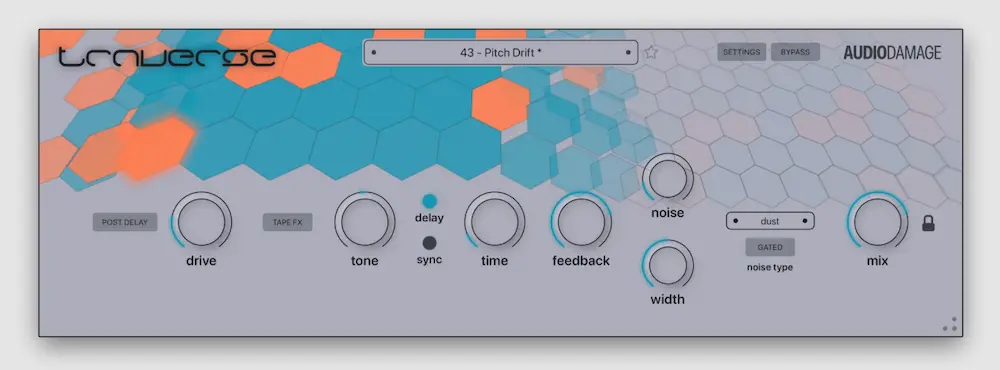
Audio Damage has released Traverse, a new cassette-inspired delay plugin that combines tape saturation, modulation, noise generation, and stereo echo processing into a single effect designed for modern audio production workflows.
Available for macOS, Windows, Linux, and iOS, Traverse enters one of the most competitive segments of the plugin market. Tape coloration, lo-fi processing, and vintage delay effects have become staple tools across electronic music, hip-hop, indie production, sound design, and modern mixing. Rather than competing solely as another saturation plugin, Audio Damage is positioning Traverse around a different concept: allowing every delay repeat to continuously pass through an evolving cassette simulation engine.
That distinction may seem subtle on paper, but it addresses a common limitation of many tape-inspired effects. In most traditional delay plugins, repeats remain relatively predictable once the feedback loop is established. Traverse attempts to create a more organic degradation process where echoes gradually become darker, more saturated, less stable, and increasingly colored over time.
For producers searching for fresh delay textures rather than clean tempo-synced repeats, that approach could make Traverse one of the more interesting tape-focused releases of 2026.
How Audio Damage Is Approaching Tape Effects Differently
Traverse is the third entry in Audio Damage’s Motion Effects product family and combines multiple processing stages that would traditionally require several plugins.
The centerpiece of the release is a cassette simulation engine built around magnetic hysteresis modeling. According to Audio Damage, the saturation stage uses state-dependent nonlinear behavior intended to recreate how real magnetic tape responds differently depending on previous signal history rather than simply applying static distortion.
The cassette section includes drive control, wow, flutter, tonal shaping, procedural splice artifacts, and a noise generation system. These elements are then integrated with a stereo delay architecture where the feedback path repeatedly passes through the cassette engine instead of remaining isolated from it.
From a workflow perspective, the design eliminates the need to chain multiple processors to achieve progressive tape degradation. A producer can generate saturation, modulation instability, tape noise, and evolving delay coloration inside a single plugin instance.
Another notable addition is the procedural splice system. Rather than relying on static samples or random glitch effects, Traverse simulates tape splice events using adjustable pitch and amplitude interruptions. The result is intended to mimic the behavior of worn cassette mechanisms, damaged tape loops, or imperfect physical edits.
What Makes Audio Damage Traverse Different From Other Tape Plugins?
At first glance, Traverse appears to be entering an already saturated market. Producers today can choose from dozens of tape-inspired plugins offering saturation, wow and flutter controls, cassette noise, and analog-style coloration. Simply adding another tape emulation would not be particularly noteworthy in 2026.
What separates Traverse from many competing products is its signal architecture rather than its individual features. Instead of treating tape coloration and delay as separate processes, Audio Damage has integrated them into a single feedback ecosystem where every repeat is continuously reprocessed by the cassette engine.
That distinction may sound technical, but it fundamentally changes how delay tails evolve over time. In many conventional tape delays, repeats gradually lose energy while retaining a relatively consistent character. Traverse introduces additional saturation, modulation, filtering, and noise accumulation during each pass through the feedback path, creating echoes that progressively transform as they decay.
The concept moves the plugin closer to a creative sound-design tool than a traditional tape emulator. Rather than focusing exclusively on recreating the behavior of a specific vintage machine, Traverse appears designed to generate movement, instability, and texture that continue developing after the initial signal enters the processor.
Why Tape Degradation Inside the Delay Loop Matters
For many producers, the most interesting aspect of Traverse will likely be its feedback structure. Audio Damage’s approach allows drive saturation, wow, flutter, tonal shaping, splice artifacts, and procedural noise to affect not only the source material but every subsequent repeat generated by the delay.
In practical production scenarios, this can create behaviors that are difficult to achieve using traditional plugin chains. A relatively clean vocal phrase can evolve into a degraded ambient wash. A simple synthesizer chord can gradually transform into a drifting texture filled with pitch instability and harmonic buildup. Drum transients can become increasingly compressed and distorted as feedback accumulates.
The workflow advantage is equally important. Many producers currently achieve similar results by combining multiple plugins across complex routing chains. The processor attempts to simplify that process into a single insert effect where degradation becomes part of the delay’s natural behavior rather than an additional processing stage.
Whether this approach proves genuinely superior will depend on real-world testing, but the underlying concept is one of the more distinctive ideas seen in the tape-plugin category recently.
Traverse Enters a Market Dominated by RC-20, TAIP, and SketchCassette
The new release enters a category that has become increasingly crowded over the past several years. Products such as RC-20 Retro Color, Baby Audio TAIP, SketchCassette, Wavesfactory Cassette, Chow Tape Model, and numerous vintage delay emulations already compete for producers seeking analog character.
Many of those plugins focus on tape coloration itself. Others emphasize nostalgia, vintage hardware recreation, or straightforward saturation workflows. The plugin appears to be targeting a different niche by emphasizing progressive degradation and feedback evolution rather than static analog enhancement.
This positioning reflects a larger trend within music production software. Developers are increasingly building tools that generate movement and unpredictability rather than simply recreating historical hardware. As producers search for ways to escape overly clean digital workflows, plugins capable of producing evolving textures continue gaining attention.
Cassette-inspired processing continues to gain momentum despite the growing availability of pristine digital tools. Producers increasingly use degradation effects not to recreate historical formats, but to introduce movement, instability, and perceived depth that can be difficult to achieve with conventional digital processing. In many modern productions, imperfections have become a creative choice rather than a technical limitation.
Recent releases have shown a similar shift toward workflow-focused design rather than simple analog emulation. For example, Three-Body Technology’s Transi-Q approaches equalization from a transient-management perspective, while new tools increasingly combine multiple processing concepts inside a single workflow instead of recreating legacy hardware one-to-one.
That does not guarantee commercial success. The tape-plugin market is mature, and users already have access to many respected solutions. Traverse will ultimately need to demonstrate that its integrated workflow offers advantages beyond what existing combinations of delay, saturation, modulation, and noise plugins can already achieve.
Potential Uses for Mixing, Production, and Sound Design
Although Traverse is being marketed as a cassette effect and delay plugin, its practical applications extend beyond simple vintage coloration. The processor appears most relevant for producers looking to introduce movement and controlled instability into otherwise static digital sources.
On drum buses, the combination of saturation, wow, flutter, and progressive feedback degradation could be used to create increasingly worn and compressed rhythmic textures. Rather than relying on conventional distortion plugins, producers can introduce character that develops over time as repeats accumulate within the feedback network.
Vocals may represent another obvious use case. Tape-style delays remain popular because they tend to sit behind a lead performance more naturally than bright digital echoes. By allowing repeats to become progressively darker and more saturated, Traverse could help create depth without competing directly with the dry vocal signal.
For electronic music producers, synthesizers and pads are likely to be among the most interesting sources. The combination of modulation drift, splice events, and procedural noise can transform clean software instruments into evolving textures that feel less predictable and less obviously digital.
Sound designers may find even greater value in the plugin. Feedback systems that continuously modify their own output often generate unexpected behaviors that are difficult to recreate manually. The ability to combine degradation, instability, and delay processing inside a single environment could make Traverse useful for ambient production, cinematic scoring, experimental music, and game audio workflows.
The timing is notable because spatial and atmospheric processing remains a major focus across the plugin market. Earlier this week, Samplicity introduced ScoreStage, a spatial positioning reverb designed for orchestral mixing. While the two products target different workflows, both releases reflect growing demand for tools that help producers create depth, movement, and dimensionality without relying on complex routing setups.
Mastering engineers, however, are unlikely to view Traverse as a traditional mastering processor. While certain subtle tape effects may find occasional creative applications, the plugin’s primary strengths appear focused on texture generation rather than transparent enhancement.
Can Traverse Deliver More Than Vintage Coloration?
The biggest question surrounding the release is whether Traverse offers something meaningfully different from existing tape-inspired plugins or simply packages familiar concepts into a more convenient workflow.
Audio Damage’s magnetic hysteresis model sounds technically ambitious, but real-world results matter more than underlying terminology. Many developers now promote increasingly sophisticated analog modeling approaches, yet users ultimately judge plugins based on how they sound in a mix rather than the complexity of the mathematics behind them.
The same applies to the splice simulation system. On paper, procedural tape artifacts provide more flexibility than static noise samples or pre-recorded glitches. In practice, the success of the feature will depend on whether it introduces believable imperfections that remain musically useful rather than becoming distracting.
The strongest argument in Traverse’s favor is its integrated signal flow. The plugin appears less concerned with recreating a specific piece of vintage hardware and more focused on generating evolving tape-inspired behavior. That distinction could help it stand out in a market where many products compete primarily on authenticity claims.
Independent testing will ultimately determine how convincing the degradation process feels during extended sessions. Producers will likely pay close attention to how naturally the feedback loop evolves, how CPU-efficient the processing remains under heavy use, and whether the tape model maintains musicality as saturation increases.
Will Producers Actually Use The Splice System?
One feature that deserves closer attention is Traverse’s procedural splice engine. Tape splice simulation is not a common feature among delay plugins, but its practical value remains an open question.
The history of lo-fi processing tools suggests that some of the most heavily marketed features often become the least frequently used in real production sessions. Producers may enjoy exaggerated tape dropouts, mechanical glitches, and aggressive degradation during demonstrations, yet many commercial mixes ultimately require a more restrained approach.
That does not necessarily diminish the value of the splice system. For sound designers, ambient producers, experimental artists, and composers working in cinematic environments, controlled tape interruptions can introduce movement that would otherwise require complex automation or dedicated glitch-processing tools.
The question is whether the feature becomes an essential part of everyday workflows or remains an occasional creative effect. Independent testing and long-term user feedback will likely reveal whether the splice engine becomes a defining reason to use the plugin or simply an interesting addition to an already capable delay processor.
Price, Formats, and Availability
Audio Damage Traverse is available now for $29 USD.
The plugin supports VST3, AU, AAX, LV2, and CLAP formats on macOS, Windows, and Linux. Mobile users can also access Traverse through AUv3 support on iPhone and iPad.
Unlike an increasing number of modern audio software releases, Traverse is sold under a perpetual license model. Audio Damage is not using subscription-based access or third-party DRM protection, which may appeal to users who prefer straightforward software ownership.
The release joins Ascent and Descent within the company’s Motion Effects lineup and represents Audio Damage’s latest effort to expand beyond traditional synthesizer and effects development.
Conclusion
This release does not appear to be chasing the same goals as many recent tape emulations. Instead of focusing exclusively on analog authenticity, Audio Damage is positioning the plugin around evolving degradation, feedback-driven transformation, and creative instability.
That approach aligns with broader production trends favoring movement, texture, and controlled imperfection over pristine digital processing. While the market certainly does not lack tape-inspired plugins, Traverse introduces a signal-flow concept that could prove genuinely useful for producers searching for more dynamic delay behaviors.
The tape-plugin market is crowded, and new releases rarely introduce genuinely new workflows. Traverse may not redefine cassette processing, but its feedback-driven degradation concept is distinctive enough to justify attention from producers looking for something beyond another saturation plugin.
FAQ
When was Audio Damage Traverse released?
Audio Damage released Traverse in May 2026 as the latest addition to its Motion Effects product family. The plugin is available immediately for desktop and iOS platforms.
What is Audio Damage Traverse?
Traverse is a cassette-inspired delay plugin that combines tape saturation, wow and flutter modulation, noise generation, splice simulation, and stereo delay processing within a single signal path. Its defining feature is a feedback loop that continuously reprocesses delay repeats through the cassette engine.
Which operating systems does Traverse support?
Traverse is available for macOS, Windows, Linux, iPhone, and iPad. Desktop users can run the plugin in VST3, AU, AAX, LV2, and CLAP formats, while iOS users receive AUv3 support.
How much does Audio Damage Traverse cost?
Traverse is priced at $29 USD. Audio Damage sells the plugin under a perpetual license model rather than a recurring subscription.
Does Traverse use copy protection or DRM?
No. Audio Damage states that Traverse does not require DRM systems or subscription-based authorization. Users receive a perpetual license after purchase.
What are the main alternatives to Audio Damage Traverse?
Producers looking for similar tape-inspired processing may compare Traverse with RC-20 Retro Color, Baby Audio TAIP, SketchCassette, Wavesfactory Cassette, Chow Tape Model, Softube Tape, and various tape-delay emulations. However, Traverse differentiates itself through its cassette-processing feedback architecture.
Is Traverse designed for mixing or sound design?
It can be used for both, but its feature set appears particularly suited to creative production and sound-design workflows. The evolving feedback path, splice simulation, and procedural noise system make it attractive for generating textures and atmospheric effects rather than purely corrective mixing tasks.
Can Traverse be used during mastering?
While mastering engineers may find occasional creative uses for subtle tape coloration or delay effects, Traverse is primarily aimed at production, mixing, and texture creation. Most mastering applications would likely involve very conservative settings.
Does Traverse require multiple plugins to create tape-delay degradation effects?
No. One of the plugin’s primary goals is to combine tape saturation, modulation, noise generation, splice artifacts, and stereo delay processing into a single workflow, reducing the need for complex plugin chains.
Should producers wait for independent reviews before buying?
Users interested in the plugin’s cassette modeling quality, CPU efficiency, and long-term usability may benefit from waiting for independent reviews and demonstrations. The concept is promising, but real-world testing will provide a clearer picture of how Traverse performs in professional production environments.