Audiomodern Voxmotive 2 Review: Workflow, Sound Quality & Mixing Perspective
The market for cinematic vocal libraries has become increasingly saturated. New releases appear regularly, yet many rely on familiar vocal phrases, heavily processed presets, or polished demos that don’t hold up once they enter a real production session. For composers and producers, the challenge isn’t finding cinematic vocals—it’s finding material that remains flexible after the arrangement, survives the mixing stage, and doesn’t immediately sound like another stock library.
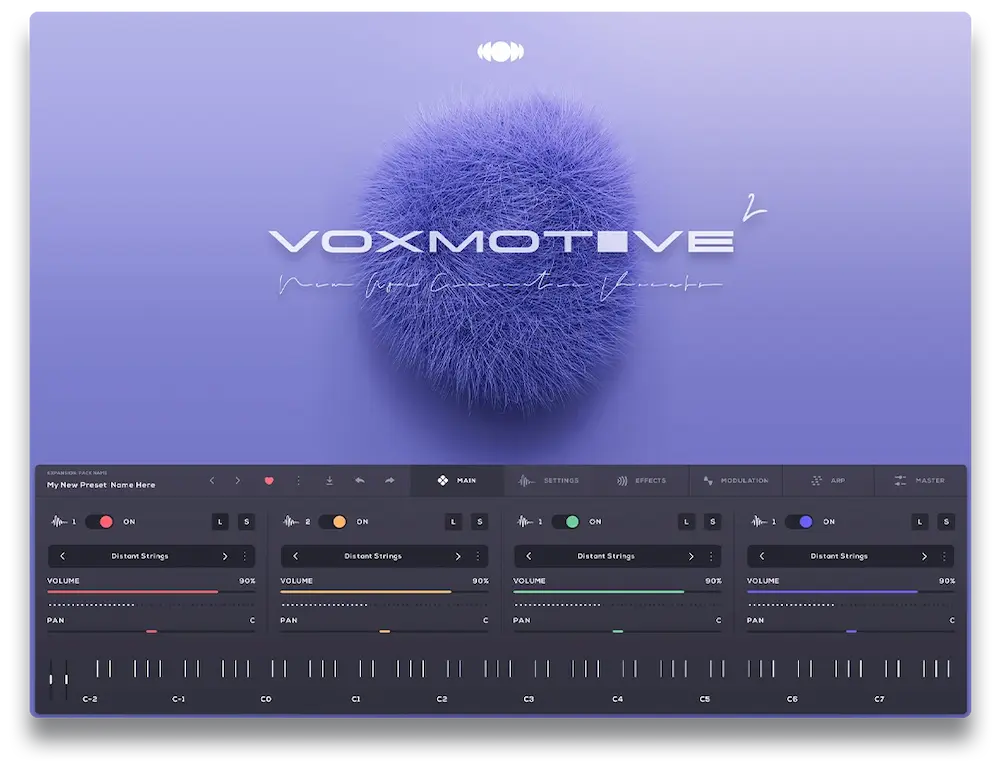
Voxmotive 2 was designed around that production model. Built for Audiomodern’s Soundbox platform, it focuses on atmospheric vocal textures and phrase-based performances intended for film scoring, ambient music, hybrid orchestral productions, and modern electronic genres. The more relevant question, however, isn’t how many sounds it includes. It’s whether those recordings provide enough headroom for creative processing, layer naturally with dense arrangements, and continue to work once a track moves toward a finished mix.
This review evaluates Voxmotive 2 from a production perspective rather than a feature checklist. Instead of repeating the product specifications, we’ll examine how the library integrates into professional workflows, where it delivers genuine value, where its limitations become apparent, and which producers are most likely to benefit from adding it to their toolkit.
Contents
Why Cinematic Vocal Libraries Matter More Than Ever in Modern Production
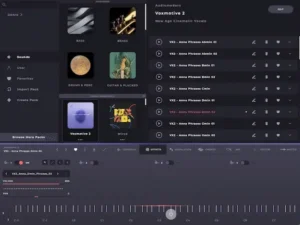 Cinematic vocal libraries are no longer limited to film scoring. They’re now common in melodic techno, ambient, hybrid orchestral music, game soundtracks, trailer production, modern pop, and advertising. In many productions, vocals aren’t written to deliver lyrics—they’re used as texture, harmonic movement, or emotional contrast that would otherwise require multiple instrument layers.
That evolution has changed the role of sample libraries. Earlier generations prioritized realistic choir emulations and multisampled solo performances. Today’s producers often need something different: playable phrases, evolving vocal textures, and expressive material that can be reshaped into an original arrangement rather than reproduced as-is.
The shift is driven by workflow as much as aesthetics. Production schedules continue to shrink, while audiences expect polished, emotionally engaging music across streaming platforms, games, film, and online content. Recording original vocalists isn’t always practical, particularly for independent composers or producers working under tight deadlines. High-quality vocal libraries have become an efficient alternative—not because they’re a replacement for live performances, but because they accelerate the creative process.
At the same time, playback engines have become far more sophisticated. Modern platforms encourage modulation, granular processing, resampling, time manipulation, and layered sound design instead of simple sample playback. The value of a vocal library is increasingly measured by how well it responds to processing rather than how impressive the factory presets sound. We reached a similar conclusion when evaluating Excite Audio Evolve Dark Matter, where long-term production flexibility ultimately mattered more than the factory content itself.
That’s where Voxmotive 2 positions itself. Instead of pursuing realistic choir reproduction, it focuses on atmospheric phrases and evolving vocal textures designed to become part of a broader production. The concept aligns more closely with contemporary hybrid scoring and electronic music than with traditional orchestral composition.
For mixing engineers, that distinction matters. Libraries built around texture generally integrate more easily into dense arrangements because they’re intended to support the mix rather than dominate it. Their success depends less on isolated playback and more on how well they layer with synthesizers, orchestral elements, guitars, percussion, and spatial effects without creating excessive masking or frequency buildup.
Viewed from that perspective, Voxmotive 2 isn’t competing directly with large cinematic choir collections. Its closest competitors are creative vocal instruments designed to generate ideas quickly while leaving enough flexibility for producers to shape the final sound during mixing.
Technical Specifications
| Specification | Details |
|---|---|
| Developer | Audiomodern |
| Product | Voxmotive 2 |
| Category | Cinematic vocal library |
| Platform | Windows / macOS |
| Engine | Soundbox |
| Plugin Formats | Supported through the Audiomodern Soundbox engine |
| Content | Phrase-based vocal performances, cinematic textures, evolving atmospheres |
| License | Perpetual license |
| CPU Load | Generally lightweight in typical production sessions (project-dependent) |
| Best Suited For | Film scoring, hybrid orchestral music, trailer production, ambient and cinematic electronic music |
Evaluating Voxmotive 2 in a Real Production Workflow
Product pages naturally emphasize the number of presets, vocal performances, and Soundbox integration. Those specifications say very little about how a library behaves once it becomes part of a real session. For experienced producers, the more relevant questions concern flexibility, mix compatibility, and how much work is required after the initial inspiration.
One of Voxmotive 2’s strengths is that the recordings don’t appear excessively processed at the source. Rather than relying on oversized reverbs or aggressive saturation to create instant impact, many patches leave room for producers to define their own spatial environment. That philosophy also complements analog-style console processing, similar to the workflow discussed in our Acustica Audio Cream 3 review, where subtle tonal shaping proves more valuable than heavily processed source material. That’s a practical advantage for anyone building mixes around custom reverbs, delays, granular processors, or parallel effects instead of relying on baked-in ambience.
That approach also improves layering. Cinematic vocal libraries often occupy a broad spectral range, forcing engineers to spend unnecessary time carving space around pads, orchestral sections, or stacked synthesizers. Voxmotive 2 generally feels more cooperative. The material tends to layer without immediately dominating the midrange, making it easier to integrate into dense arrangements while preserving clarity.
That doesn’t eliminate the need for mix decisions. Atmospheric vocals still compete with strings, wide synthesizers, guitars, and other sustained instruments, particularly in the upper midrange where perceived detail and intelligibility overlap. Dynamic EQ, automation, and selective stereo management remain part of the workflow, but the recordings provide enough flexibility to make those decisions deliberately rather than reactively. Many of these decisions also determine how well a production reaches the mastering stage, as discussed in our guide to preparing a mix for mastering.
Soundbox contributes as much to the experience as the library itself. Instead of functioning as a conventional sample player, the platform encourages modulation, timing variation, layering, and performance-based manipulation. Producers who routinely reshape source material will extract considerably more value than those expecting polished, production-ready presets straight out of the box.
Multiple instances reveal another advantage. Small timing offsets, contrasting modulation settings, and independent effects chains can transform similar vocal phrases into evolving layers that feel substantially less repetitive. That matters in cinematic music, where repeated phrases quickly become recognizable across productions if left unprocessed.
The library is particularly effective in productions where vocals serve as texture rather than narrative. Hybrid scoring, ambient electronica, melodic techno, documentary music, and trailer work all benefit from subtle vocal movement that reinforces emotion without competing for attention.
Its role becomes less convincing when treated as a primary vocal instrument. Phrase-based content inevitably limits melodic freedom, and producers looking for detailed articulation control or realistic choir programming will find more capable solutions elsewhere. Voxmotive 2 works best as a creative layer within a larger arrangement, not as the foundation of an entire score.
Perhaps its biggest advantage is that it encourages interpretation rather than repetition. The strongest results come from treating the library as source material—reshaping it through resampling, automation, pitch processing, saturation, or granular manipulation until the original preset is no longer obvious. That’s increasingly important as more composers work from the same pool of commercial sample libraries.
Viewed from an engineering perspective, Voxmotive 2 succeeds because it integrates cleanly into modern production workflows. It provides polished source material without locking producers into a finished sound, leaving enough room for mixing and sound design to shape the final identity of the track.
How Much Does the Soundbox Engine Matter?
It’s easy to treat Soundbox as little more than the platform required to run Voxmotive 2, but that overlooks one of the library’s biggest strengths. Much of its long-term value comes not from the recordings alone, but from how easily those recordings can be reshaped inside Audiomodern’s playback environment.
Unlike traditional sample players that primarily trigger static content, Soundbox encourages continuous manipulation. Timing, modulation, layering, playback behavior, and performance controls all become part of the creative process rather than simple playback parameters. For producers who regularly transform source material, that flexibility extends the usable life of the library well beyond its factory presets.
This becomes particularly valuable in hybrid scoring and cinematic electronic production, where recognizable sample content can quickly become a creative limitation. Small modulation changes, layered instances, automation, and external processing can produce dramatically different results from the same source recordings.
Soundbox is also lightweight enough to fit comfortably into modern production workflows. Most projects are more likely to be limited by downstream processing—convolution reverbs, granular effects, spectral tools, or immersive spatial plugins—than by the playback engine itself.
Viewed independently, Soundbox is more than a delivery platform for Voxmotive 2. It’s a creative environment that encourages reinterpretation rather than simple preset browsing, and that philosophy aligns well with producers who see sample libraries as raw material instead of finished sounds.
Understanding the Trade-Offs Behind Voxmotive 2’s Design
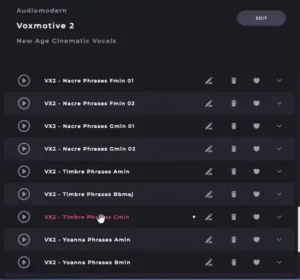 Voxmotive 2 is designed to accelerate the creative stage of production, not to replace a comprehensive vocal scoring environment. That distinction becomes more apparent as a project moves from sketching ideas into arrangement, mixing, and final delivery.
Like most phrase-based vocal libraries, Voxmotive 2 trades compositional freedom for speed. The performances already contain their own phrasing, timing, and emotional character, allowing producers to build convincing ideas quickly. The downside is that those musical decisions cannot be rewritten as freely as they could with multisampled vocal instruments or live recordings.
That limitation becomes more relevant as commercial sample libraries become widely adopted. Producers who rely primarily on factory presets without substantial editing risk creating arrangements that feel familiar, particularly within trailer music, hybrid scoring, and cinematic electronic genres where many composers draw from similar libraries.
The most effective workflow is to treat Voxmotive 2 as source material rather than a finished production element. Resampling, pitch manipulation, granular processing, automation, saturation, and custom effects chains do far more to establish originality than preset selection alone.
The library also prioritizes atmosphere over detailed vocal performance. That’s an appropriate design choice for ambient scoring, documentary music, hybrid orchestral productions, and electronic genres where vocals function as texture. It becomes less suitable for composers who need expressive solo passages, realistic choir writing, or detailed articulation control.
Another consideration is spectral placement. Several presets intentionally emphasize breath, air, and spaciousness because those qualities create an immediate cinematic impression. Inside dense arrangements, however, those same characteristics can compete with reverbs, wide synthesizers, orchestral layers, and other sustained elements occupying similar frequency ranges.
Integrating those textures into a finished mix often requires more refinement than product demonstrations suggest. Mid-side EQ, dynamic equalization, automation, and careful stereo management help preserve depth without allowing atmospheric vocals to overwhelm the arrangement. None of this reflects shortcomings in the recordings themselves; it’s simply the reality of working with wide, sustained vocal textures in modern productions.
Perhaps the biggest misconception surrounding libraries like Voxmotive 2 is that they generate originality by themselves. They don’t. They provide high-quality raw material. Originality comes from the production decisions made afterward—layering, editing, processing, and arranging the recordings into something that no longer resembles the factory preset.
Viewed through that lens, Voxmotive 2’s limitations are largely intentional. It favors creative speed over exhaustive programming depth, making it most valuable for producers who already have an established sound-design workflow instead of those looking for an all-in-one cinematic vocal solution.
Voxmotive 2 vs. Other Cinematic Vocal Libraries
Comparing Voxmotive 2 with other vocal libraries isn’t simply a matter of features or library size. Each product targets a different stage of the production process. Some prioritize realistic vocal performance, others focus on playable instruments, while Voxmotive 2 is built around fast idea generation and atmospheric layering.
| Library | Production Focus | Best Fit | Workflow Strength | Primary Limitation |
|---|---|---|---|---|
| Audiomodern Voxmotive 2 | Phrase-based cinematic textures | Hybrid scoring, ambient, electronic music | Fast layering and sound design | Limited melodic flexibility |
| Output Exhale | Playable vocal engine | Electronic production | Performance-oriented workflow | More dated engine and content |
| Heavyocity Vocalise | Cinematic sound design | Film and trailer scoring | Deep modulation and layering | Requires more programming |
| Spitfire Originals Epic Choir | Choir ensemble | Traditional orchestral writing | Quick orchestral integration | Less suitable for experimental production |
| EastWest Hollywood Choirs | Detailed choir realism | Professional scoring | Extensive articulation control | Large footprint and slower workflow |
The closest alternative is Output Exhale, although the two libraries solve different creative problems. Exhale behaves more like a playable instrument, encouraging rhythmic performances and melodic interaction. Voxmotive 2 is less performance-driven. Its strengths lie in evolving textures that blend into the arrangement instead of becoming the focal point.
Heavyocity’s Vocalise series sits closer to high-end cinematic sound design. It offers deeper programming options and more complex modulation, but that flexibility comes with a slower workflow. Voxmotive 2 reaches usable results faster, making it better suited to composers working under production deadlines or building ideas during the early stages of a cue.
Spitfire Originals Epic Choir and EastWest Hollywood Choirs occupy a different category altogether. Both are designed to recreate believable ensemble performances for orchestral writing. Voxmotive 2 isn’t trying to replace those libraries. It fills the space between traditional choir instruments and modern sound-design tools, where atmosphere often matters more than realism.
For producers working in melodic techno, ambient electronica, hybrid orchestral music, documentary scoring, or trailer production, that distinction is significant. The goal isn’t to reproduce a choir—it’s to introduce movement, emotion, and human texture without overwhelming the arrangement.
Choosing between these libraries depends primarily on the way you build productions rather than on which product offers the longest feature list. Producers who need expressive performances with detailed articulation will benefit more from traditional vocal instruments. Those looking for fast inspiration, flexible vocal textures, and material that responds well to creative processing are more likely to find Voxmotive 2 the stronger fit.
How Voxmotive 2 Fits Different Production Genres
Ambient Music. Voxmotive 2 is particularly effective when vocals function as evolving texture rather than melodic content. Slow-moving arrangements leave enough space for the library’s natural movement and atmospheric detail to remain audible without excessive processing.
Melodic Techno. The library works well as a supporting layer behind synthesizers and rhythmic elements. Short vocal phrases and airy textures can add emotional depth without competing with the lead hooks that define the genre.
Trailer Music. Producers creating modern trailer cues will appreciate how quickly Voxmotive 2 establishes scale and tension. The material blends naturally with cinematic percussion, braams, and hybrid orchestral arrangements while remaining flexible enough for additional sound design.
Documentary Scoring. Subtle vocal textures often communicate emotion more effectively than traditional orchestral writing. Voxmotive 2 provides understated human character without overwhelming narration or visual storytelling.
Game Audio. Adaptive music frequently relies on layered textures that remain engaging across long listening sessions. Voxmotive 2’s atmospheric phrases integrate well into evolving game soundtracks where repetition needs to be minimized.
Hybrid Orchestral Production. Combined with strings, piano, analog synthesizers, and modern percussion, the library adds human depth without shifting the focus away from the orchestral arrangement. It performs best as an enhancement rather than the dominant musical element.
How Voxmotive 2 Translates Beyond the Studio
 A cinematic vocal library shouldn’t be judged solely by how it sounds in isolation. The more meaningful test is how those textures survive a finished production—after arrangement, mixing, mastering, streaming normalization, and playback across consumer systems.
Atmospheric vocals depend heavily on spatial information. Stereo ambience, modulation, layered reverbs, and subtle movement all contribute to the perceived size of the sound. Once a mix is encoded for streaming services, some of that spatial detail becomes less pronounced, particularly in dense arrangements where multiple wide elements compete for the same acoustic space. This behavior is especially noticeable after platform normalization, a topic covered in our Spotify mastering guide.
That makes restraint more valuable than width. During mixing, preserving a stable center image while controlling the side information generally produces more consistent translation than pushing every atmospheric layer to the extremes of the stereo field. Voxmotive 2 responds well to that approach because its vocal textures remain effective without relying exclusively on exaggerated stereo processing.
Dynamics deserve equal attention. Many cinematic productions intentionally preserve transient detail and dynamic contrast, while electronic genres often demand significantly higher playback levels. Heavy limiting can reduce the perceived movement of evolving vocal layers, making modulation and ambience feel less dimensional than they did during mixing.
Rather than treating vocal textures as material to maximize for loudness, they’re usually more effective as supporting elements with enough dynamic space to retain depth after mastering. That balance often translates better across streaming services than aggressively pushing every atmospheric layer toward the limiter. If you’re interested in how limiting, tonal shaping, and dynamics interact at the final stage, our mastering chain explained article explores the process in greater detail.
Spectral balance is another consideration. Vocal textures naturally share space with pads, strings, wide synthesizers, and long reverbs. In dense productions, small dynamic EQ adjustments and automation are often more transparent than broad static cuts, allowing the vocals to remain present without masking other sustained elements.
Monitoring also influences production decisions. A vocal layer that feels appropriately wide on studio monitors may become noticeably more prominent on headphones or earbuds, where stereo effects are reproduced differently. Periodically checking mono compatibility and headphone translation remains good practice, especially when stacking multiple atmospheric layers throughout a mix.
From a workflow perspective, Soundbox itself places relatively little demand on modern systems. Larger CPU loads are far more likely to come from the processing chain built around the library—convolution reverbs, spectral effects, granular processors, or immersive spatial tools—than from Voxmotive 2 itself.
In practice, Voxmotive 2 integrates cleanly into professional mixing and mastering workflows because it leaves room for engineering decisions instead of forcing them. The recordings provide a solid starting point, but the final result still depends on arrangement, spectral balance, dynamics, and thoughtful spatial design rather than the library alone.
Verdict: Where Voxmotive 2 Fits in Today’s Production Landscape
Voxmotive 2 isn’t attempting to replace cinematic choir libraries or detailed vocal instruments, and judging it by those standards misses its purpose. It was designed as a creative production tool—one that helps composers and producers introduce convincing vocal textures into a project quickly while leaving enough flexibility for further sound design and mix development.
That approach makes the library particularly relevant for hybrid scoring, ambient music, melodic electronic genres, documentary soundtracks, trailer production, and other workflows where atmosphere carries more weight than lyrical performance. In those contexts, speed and adaptability are often more valuable than exhaustive articulation libraries.
Equally important, the recordings integrate well into professional production environments. They don’t demand excessive corrective processing before entering a mix, and they respond naturally to automation, spatial processing, dynamic control, and creative effects. Even so, translation issues can still appear later in the production chain, which is why we recommend understanding the most common mastering problems before releasing a finished track. Producers who routinely customize source material rather than rely on factory presets will extract considerably more value than users expecting finished results immediately after loading a patch.
That also defines the library’s limitations. Phrase-based content inevitably provides less compositional freedom than playable vocal instruments or original recordings. Composers whose work depends on detailed vocal programming or realistic choir performances will likely be better served by libraries built specifically for those applications.
Within its intended role, however, Voxmotive 2 succeeds. It offers clean, flexible source material, an efficient workflow, and enough room for mixing and sound design to shape the final result. For producers building cinematic textures rather than traditional vocal arrangements, that’s ultimately a more valuable characteristic than simply adding another collection of polished presets to an already crowded market.
Who Is Voxmotive 2 Actually For?
Voxmotive 2 delivers the greatest value to producers who already view sample libraries as starting points rather than finished productions. Its strengths become more apparent as projects move through arrangement, sound design, mixing, and mastering, where flexible source material is often more valuable than heavily processed presets.
Film composers working in hybrid scores will appreciate how quickly the library establishes atmosphere without locking an arrangement into traditional choir writing. Trailer composers can build emotional impact rapidly while retaining enough control to reshape the material for individual projects.
Electronic producers working in ambient, melodic techno, cinematic electronica, and downtempo genres are equally strong candidates. The vocal phrases layer naturally with synthesizers and evolving textures, making them useful for adding movement without introducing a conventional lead vocal.
For documentary scoring and game audio, Voxmotive 2 functions as a subtle emotional layer rather than a dominant musical voice. That flexibility allows the vocals to support visual storytelling without drawing unnecessary attention away from dialogue or gameplay.
Producers seeking realistic choir programming, detailed articulation control, or expressive solo vocal performances should look elsewhere. Voxmotive 2 was built for creative texture, not traditional vocal realism, and it performs best when treated as a sound-design tool rather than a replacement for live singers or dedicated orchestral choir libraries.
Overall Rating
| Category | Rating |
|---|---|
| Recording Quality | 9.5/10 |
| Workflow Efficiency | 9.5/10 |
| Mix Integration | 9/10 |
| Sound Design Flexibility | 9/10 |
| Production Value | 9/10 |
| Value for Money | 8.5/10 |
| Overall | 9.1/10 |
Voxmotive 2 isn’t designed to replace comprehensive choir libraries or detailed vocal instruments. Its strength lies in providing exceptionally usable source material that responds well to modern production techniques. The recordings integrate naturally into dense mixes, the Soundbox workflow encourages creative experimentation, and the library leaves enough room for individual sound design instead of forcing a predefined aesthetic. For producers working in cinematic, hybrid, ambient, and electronic genres, it delivers a workflow that remains valuable well beyond the initial creative sketch.
Its strongest advantage isn’t the number of included phrases but how well those recordings respond to further production. Producers who build custom processing chains will extract substantially more value than users expecting finished cinematic arrangements directly from the presets.

Yurii Ariefiev is a mastering engineer and audio production editor whose editorial work focuses on how virtual instruments, sample libraries, and production tools perform in real mixing and mastering workflows. His reviews emphasize mix translation, spectral balance, workflow efficiency, and release-ready audio rather than marketing specifications.
Every product is evaluated from the perspective of a working mastering studio, with attention to arrangement decisions, processing flexibility, streaming translation, and how well source material holds up through professional mixing and mastering.
Frequently Asked Questions
Does Voxmotive 2 require the Soundbox engine?
Yes. Voxmotive 2 is designed specifically for Audiomodern’s Soundbox platform and cannot be loaded directly into Kontakt or other sample players.
Is Voxmotive 2 suitable for trailer music?
It fits trailer production well when vocals are used to build tension, atmosphere, or emotional impact. It isn’t intended to replace large cinematic choir libraries used for traditional orchestral scoring.
Can Voxmotive 2 replace Output Exhale?
Not entirely. Exhale functions more like a playable vocal instrument, while Voxmotive 2 focuses on phrase-based textures and cinematic layering. The two libraries complement different production styles.
Does Voxmotive 2 work well in electronic music?
Yes. It’s particularly well suited to melodic techno, ambient, downtempo, cinematic electronica, and hybrid productions where vocals serve as texture rather than lyrical content.
How much post-processing do the presets typically need?
Most patches benefit from project-specific EQ, spatial processing, and automation, but they don’t require extensive corrective work before being integrated into a professional mix.
Is Voxmotive 2 CPU intensive?
The library itself is relatively lightweight. CPU usage is more likely to increase because of reverbs, granular processors, and other effects added during production.
Can the included vocal phrases be customized?
Yes. Soundbox supports modulation and playback manipulation, while additional processing such as resampling, pitch shifting, automation, and creative effects can significantly reshape the original material.
Can Voxmotive 2 be used in commercial productions?
Yes. Commercial use is permitted under Audiomodern’s standard licensing terms, although users should always review the current license agreement for specific restrictions.
Will Voxmotive 2 help a mix sound more cinematic?
It can, provided the vocal layers are arranged and processed carefully. The library supplies expressive source material, but the final cinematic character still depends on orchestration, mixing decisions, and spatial design.
Who should consider an alternative library instead?
Composers who need realistic choir programming, detailed vocal articulations, or expressive solo performances will generally be better served by dedicated orchestral vocal libraries.