Wavelet Audio Louisa Arc Review: Cinematic Vocal Library for Film, Trailer and Hybrid Scoring
A cinematic vocal library can sound stunning in a product demo and still become difficult to use once it enters a real production. Dense orchestration, aggressive dynamics processing, layered reverbs, and modern streaming delivery often expose weaknesses that marketing videos never reveal. The challenge is not creating an impressive vocal moment. The challenge is creating a vocal performance that remains believable after the arrangement, mix, and mastering decisions are finished.
Wavelet Audio Louisa Arc enters a crowded cinematic vocal market where composers already have access to countless phrase libraries, playable vocal instruments, and atmospheric vocal tools. That makes differentiation increasingly difficult. Most products promise emotional realism, expressive performances, and faster workflows. Far fewer justify those claims once they are placed inside an actual production schedule.
What makes Louisa Arc worth examining is its focus on performance behavior rather than sheer spectacle. Instead of relying primarily on oversized effects chains or heavily processed trailer-style vocals, the instrument is built around dry recordings, melodic phrases, legato transitions, and melismatic movement. For composers, mixing engineers, and producers, those choices may ultimately matter more than the size of the preset library or the number of included snapshots.
- Why Cinematic Vocal Libraries Matter Today
- Louisa Arc Workflow and Production Design
- Why Dry Recordings Matter
- Melismas, Legato and Realism
- Real-World Production Applications
- Workflow Speed and Efficiency
- Streaming Translation
- Strengths and Limitations
- Comparison With Competing Libraries
- Mixing, Mastering and Streaming Translation
- Final Verdict
Why Cinematic Vocal Libraries Have Become Essential Production Tools
Cinematic vocals are no longer limited to film scores and trailer music. Over the last decade, vocal textures have become a standard production element across hybrid orchestral projects, game soundtracks, ambient releases, modern electronic music, and even mainstream pop. Producers increasingly use vocals not as lyrical centerpieces, but as emotional layers that add scale, movement, and human character to an arrangement.
That shift has changed how vocal libraries are evaluated. A decade ago, an impressive solo performance was often enough. Today, producers need vocals that remain convincing once they are layered with orchestral sections, synthesizers, percussion, sound design, and modern effects processing. A library that sounds dramatic on its own can quickly become difficult to manage when it has to compete for space inside a dense mix.
Production workflows have become less forgiving as well. Deadlines are shorter, arrangements are larger, and projects are expected to translate across streaming platforms, headphones, smart speakers, gaming systems, and immersive playback formats. Under those conditions, timing inconsistencies, unnatural transitions, and heavily processed source recordings become far more noticeable than they are in isolated demonstrations.
As a result, many composers have shifted their attention away from headline features and toward practical usability. Libraries that require less editing, fewer timing corrections, and less mix repair often deliver more value than products with larger sample counts or longer feature lists. This is the environment Louisa Arc enters, and it helps explain why performance realism has become a more important selling point than sheer sonic spectacle.
What Wavelet Audio Louisa Arc Brings to Modern Production Workflows
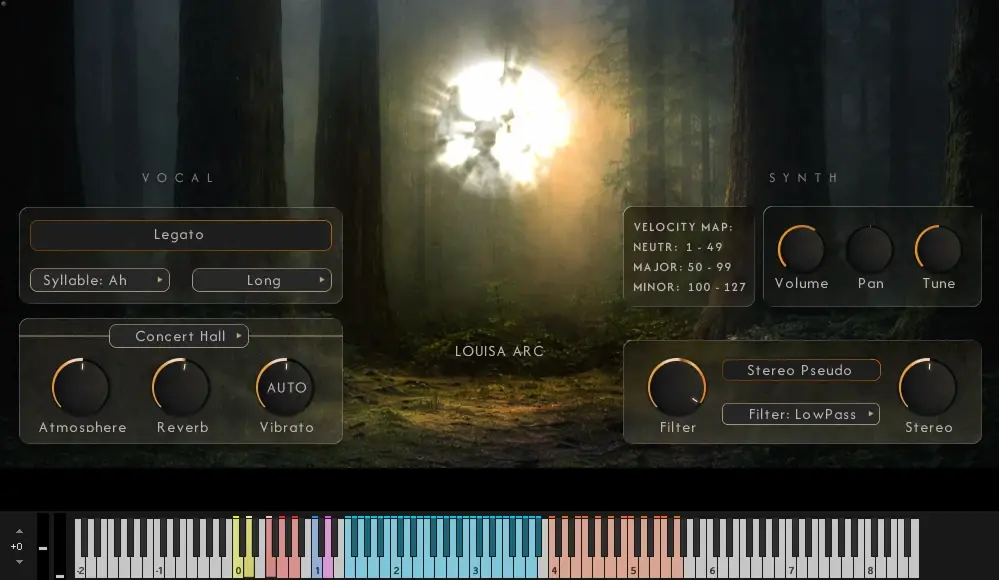
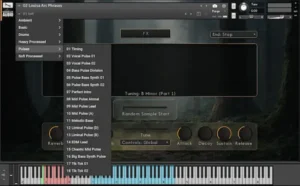 At its core, Louisa Arc combines playable vocals, phrase-based performances, drones, melismatic articulations, snapshots, and sound-design elements within a single Kontakt Player instrument. While that description may sound familiar to anyone who follows the cinematic sample market, the more relevant question is how those components affect real-world production rather than how they look on a feature list.
Louisa Arc combines a large phrase collection, playable articulations, drones, snapshots, and additional production content. The individual numbers matter less than the fact that the library provides multiple ways to approach the same musical idea, reducing dependence on a single workflow.
The value of Louisa Arc depends less on the quantity of content and more on the way that content behaves inside a session. Phrase-based instruments frequently become difficult to use when timing drifts against percussion, rhythmic strings, or electronic sequences. What sounds expressive in a solo demonstration can quickly feel disconnected once multiple layers compete for rhythmic precision.
The same challenge applies to legato performance. Many vocal libraries sound convincing at slower tempos or in sparse arrangements, but transition artifacts become increasingly noticeable when the vocal is pushed into more active compositions. A legato engine only becomes meaningful when it remains believable under production pressure.
This is where Louisa Arc differentiates itself from many competing cinematic vocal libraries. Wavelet Audio places unusual emphasis on timing consistency, phrase integration, and natural melodic movement. If those claims hold up in practical use, the benefit is not simply improved realism. It is reduced editing time. Composers spend less time repairing performances and more time developing arrangements, which ultimately has a greater impact on workflow than any individual feature listed in the specifications.
Why Dry Vocal Recordings Matter More Than Another Preset Bank
One of the most important aspects of Louisa Arc is also one of the least likely to appear in a marketing headline: the recordings were captured relatively dry.
For working composers and mixing engineers, that decision can have a greater impact on long-term usability than the number of phrases, snapshots, or presets included with the library.
Many cinematic vocal instruments are designed to create an immediate emotional reaction. Large reverbs, wide stereo processing, and heavily produced signal chains can make a demo sound impressive within seconds. The problem appears later, when those same vocals must coexist with orchestral ambience, trailer-style sound design, delays, atmospheric layers, and spatial processing already built into the arrangement.
Once a vocal arrives with a baked-in acoustic environment, the mixer loses options. Excess ambience cannot truly be removed, and every additional spatial effect risks pushing the vocal further away from the rest of the production. What initially sounds cinematic can become difficult to place inside a coherent mix.
Dry recordings offer a different advantage: flexibility. Instead of adapting the mix around the vocal, producers can shape the vocal around the mix. Reverb depth, stereo placement, early reflections, and spatial movement can all be tailored to the specific production rather than inherited from the original recording session.
This becomes especially valuable in hybrid scoring projects where orchestral instruments, synthesizers, percussion, and sound-design elements must share a believable acoustic space. A cleaner source recording typically provides more freedom during arrangement, mixing, and final delivery.
There is also a mastering consideration that often goes overlooked. Vocals with excessive embedded ambience tend to create low-level buildup in the midrange and upper-midrange regions. Those artifacts may not be obvious during composition, but they can become increasingly noticeable after bus processing, limiting, and streaming normalization are applied. Similar issues frequently contribute to the type of harshness discussed in fix harsh highs in mastering, where spatial buildup and upper-midrange congestion become more apparent during final delivery.
For that reason, the dry recording approach behind Louisa Arc may ultimately prove more valuable than many of its headline features. It gives producers more control over depth, space, and translation—qualities that continue to matter long after the excitement of a new library wears off.
For composers working across multiple projects, dry recordings also tend to age better. Production trends change, reverb styles change, and mixing approaches evolve. A cleaner source recording remains adaptable long after heavily stylized vocal processing begins to sound dated.
Melismas, Legato, and the Problem of Repetition in Cinematic Vocals
One of the biggest challenges facing any cinematic vocal library is not sound quality. It is longevity.
Many libraries make a strong first impression, then gradually become less convincing as the same phrases, transitions, and performance patterns reappear across multiple projects. The listener may not consciously identify the source, but repeated articulations eventually reduce the sense of realism that made the library attractive in the first place.
This is where melismatic performances become more than a creative feature. They serve an important functional role. Real singers rarely move between notes in perfectly identical ways. Small variations in timing, pitch movement, phrasing, and articulation create the subtle imperfections that listeners interpret as human expression.
Louisa Arc places significant emphasis on melismas and legato transitions, which suggests a deliberate attempt to avoid the mechanical quality that often affects phrase-based vocal instruments. Rather than relying exclusively on static note-to-note movement, the library is designed to preserve some of the natural motion found in an actual vocal performance.
That distinction becomes increasingly important as arrangements grow more complex. In sparse compositions, almost any vocal library can sound convincing. Dense orchestration exposes weaknesses much faster. Abrupt transitions, repetitive phrasing, and artificial note movement tend to stand out once strings, percussion, synthesizers, and sound-design layers compete for attention.
There is also a downstream production benefit. Expressive vocal movement generally survives processing more effectively than rigid sample playback. Compression, bus processing, limiting, and streaming normalization often reduce perceived dynamics, but they do not eliminate phrasing. When a performance contains natural motion from the start, it is more likely to retain emotional character throughout mixing and mastering.
For composers working on emotional cues, atmospheric scores, or cinematic productions that depend on human connection rather than sheer impact, that may ultimately be one of Louisa Arc’s most valuable qualities.
Where Louisa Arc Makes Sense in Real-World Productions
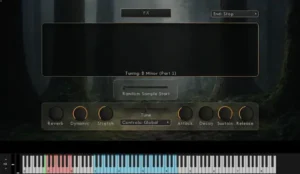 Louisa Arc is unlikely to be the centerpiece of a traditional vocal production. Its strengths are better suited to projects where the voice functions as an emotional instrument rather than a lyrical focal point.
That distinction matters because cinematic vocals are often evaluated using the wrong criteria. In many scoring environments, the goal is not intelligibility. The goal is emotional communication. The vocal exists to create tension, intimacy, scale, movement, or atmosphere without drawing attention away from the composition itself.
Viewed through that lens, Louisa Arc is best suited to film scoring, game music, trailer production, ambient composition, hybrid orchestral work, and modern cinematic electronic music. These are genres where a vocal line may occupy only a small portion of the arrangement while still influencing how the entire piece is perceived.
Its dry recordings and emphasis on expressive performance also make practical sense for productions that require extensive layering. Orchestral strings, low-end percussion, synthesizers, sound design, and vocal textures often compete for the same emotional space. This becomes especially relevant when combining vocal textures with modern scoring libraries such as LUX Orchestral Strings Essentials, where arrangement density can quickly expose weaknesses in timing, depth, and spatial integration. In those situations, a vocal library that integrates naturally into the arrangement can be more valuable than one designed to dominate it.
For producers working under deadlines, another consideration is how quickly the instrument reaches a usable result. Libraries that require significant editing, phrase correction, or spatial repair can slow down the composition process. Louisa Arc is built around the opposite philosophy: provide enough realism at the source that the vocal can become part of the arrangement without demanding constant intervention.
Ultimately, the most useful question is not whether the singer sounds impressive in isolation. Most modern cinematic libraries can achieve that. The more important question is whether the vocal continues to contribute emotion once the arrangement is finished, the mix becomes crowded, and every element is competing for attention. That is the environment where products like Louisa Arc either prove their value or reveal their limitations.
Workflow Speed and Composition Efficiency
The value of a cinematic vocal library is often measured in hours rather than features. Composers working under deadlines rarely struggle to find vocal sounds. They struggle to find vocal parts that fit the arrangement without extensive editing.
Louisa Arc is designed to reduce that friction. Timing consistency, playable articulations, and relatively clean recordings allow producers to spend more time writing and less time correcting phrase placement, ambience conflicts, and transition problems.
For media composers working on episodic content, trailers, advertising, or game music, those workflow gains can ultimately provide more value than a larger sample count.
Critical Evaluation: Strengths, Trade-Offs, and Practical Limitations
Louisa Arc’s biggest selling points are also the factors that will determine whether it remains useful after the initial excitement of a new purchase disappears.
The library emphasizes realism, natural vocal movement, and production flexibility. Those qualities are valuable, but they do not eliminate the limitations inherent to the category.
The most obvious constraint is the phrase-based workflow itself. Regardless of how many phrases are included, the user is still working with recorded performances rather than generating entirely original vocal lines. That distinction becomes increasingly important on larger projects where composers need highly specific melodic movement or unique emotional phrasing. A well-designed phrase library can accelerate production, but it cannot fully replace the flexibility of a live vocalist.
There is also a difference between sounding convincing in isolation and remaining convincing inside a finished mix. Product demonstrations are carefully arranged to highlight strengths and avoid conflicts. Real productions are rarely that accommodating. Once vocals begin competing with percussion, orchestral layering, synthesizers, and sound-design elements, transition quality and phrase realism become far easier to judge.
Another consideration is long-term familiarity. This affects virtually every vocal library on the market. The more often a composer uses the same collection of phrases and articulations, the greater the risk of recognizable patterns emerging across projects. Louisa Arc addresses this problem more effectively than many competing libraries.
Its tonal direction may also divide opinions. Many recent cinematic releases, particularly in the trailer world, lean heavily toward processed vocals, aggressive effects chains, layered distortion, and overt sound-design treatment. Louisa Arc takes a more restrained approach. Producers looking for instant blockbuster impact may find themselves adding substantial processing to reach that aesthetic.
That restraint, however, can also be interpreted as a strength. Highly processed libraries often lock producers into a specific sonic identity. Louisa Arc functions more as a source recording than a finished effect. For engineers who prefer shaping the final sound themselves, that approach typically offers greater long-term flexibility.
Ultimately, the success of Louisa Arc will depend less on its specifications and more on how consistently its performances hold up across different genres, tempos, and production styles. The library does not appear to be chasing the most dramatic cinematic sound available. Instead, it aims to provide a cleaner and more adaptable foundation. Whether that is a limitation or an advantage will depend largely on the needs of the composer.
How Louisa Arc Compares to Other Cinematic Vocal Libraries
The cinematic vocal market has gradually split into several distinct categories. Some libraries focus on massive trailer-style impact, others prioritize realistic playable performances, and a smaller group attempts to balance both approaches. Understanding where Louisa Arc fits within that landscape is more useful than comparing raw feature counts.
| Library | Core Character | Best Fit | Potential Drawback |
|---|---|---|---|
| Wavelet Audio Louisa Arc | Expressive, natural, flexible | Film scoring, hybrid composition, ambient and emotional cues | Less immediately dramatic than trailer-focused alternatives |
| Wavelet Audio GROTH | Dark, atmospheric, cinematic | Epic scoring, fantasy, dramatic trailer work | Stronger sonic identity can limit versatility |
| Audio Imperia Jaeger Voices | Bold, modern, trailer-oriented | High-impact cinematic productions | Can feel oversized in intimate arrangements |
| Strezov Sampling Freyja | Large ensemble vocal sound | Traditional orchestral and choral scoring | Serves a different role than solo vocal instruments |
| Performance Samples Oceania | Playable lyrical expression | Melodic writing and thematic composition | Less focused on phrase-driven workflow |
Louisa Arc occupies a position that is becoming increasingly uncommon in the current market. Many modern cinematic libraries are designed to make an immediate impression through scale, processing, and dramatic presentation. Louisa Arc prioritizes adaptability. Rather than imposing a strong sonic identity on every project, it provides material that can be shaped in different directions depending on the production.
That distinction becomes important during mixing. Highly stylized vocal libraries often sound impressive because many creative decisions have already been made by the developer. The trade-off is reduced flexibility. Louisa Arc appears to leave more of those decisions in the hands of the composer and mix engineer.
For trailer composers seeking maximum impact straight out of the box, alternatives such as GROTH or Jaeger may initially feel more aggressive. For composers working across multiple genres, however, versatility often becomes more valuable than intensity. A vocal library that adapts to different arrangements generally remains useful longer than one built around a single aesthetic.
Viewed against its direct competitors, Louisa Arc does not appear to be chasing the largest sound in the room. Its competitive advantage lies in realism, mix integration, and the ability to function across a wider range of cinematic production styles.
Louisa Arc vs GROTH
Although both products target cinematic composers, they solve different production problems. GROTH leans toward darker textures, larger atmospheres, and a stronger built-in identity. Louisa Arc appears more flexible, offering a cleaner foundation that can move between intimate scoring, ambient composition, hybrid orchestral work, and modern cinematic production.
Composers who frequently work across multiple genres may find Louisa Arc easier to integrate into different projects, while GROTH may appeal more strongly to producers seeking a specific cinematic character from the outset.
Mixing and Mastering Considerations
 Many cinematic vocal libraries are evaluated during composition and judged long before they reach the stages that ultimately determine how a production translates. By the time a project reaches professional mastering, issues that were hidden during composition often become far easier to identify. The more useful question is not how a library sounds in solo mode, but how it behaves once the mix becomes crowded and the project moves toward final delivery.
Louisa Arc was clearly developed around that reality. Its relatively dry recordings provide a cleaner starting point than heavily processed cinematic vocals, allowing engineers to make spatial decisions that support the arrangement rather than work around baked-in ambience. This becomes increasingly valuable as projects grow more complex and multiple layers begin competing for depth and separation.
In practical mixing situations, cinematic vocals often share the same frequency territory as strings, synth pads, brass harmonics, piano overtones, and atmospheric effects. When a library arrives with extensive processing already attached, those elements can become difficult to separate without introducing aggressive EQ moves or additional corrective processing.
A cleaner source generally creates fewer conflicts. Instead of spending time removing unwanted room information or controlling excessive effects tails, engineers can focus on placement, automation, and tonal balance. That often leads to more natural results and faster workflows.
Another benefit appears during bus processing. Vocals containing large amounts of embedded ambience frequently trigger compressors, saturators, and limiters in unpredictable ways. This becomes even more important in immersive and cinematic workflows where engineers increasingly rely on advanced dynamics tools such as PSP auralComp v2.0 to maintain control over complex multi-layered arrangements. As dynamic processing increases, the ambience itself can become more prominent, reducing clarity and creating a sense of congestion around the vocal.
Louisa Arc’s more restrained recording approach should provide greater predictability during compression and limiting. That does not guarantee a better mix, but it gives the engineer more control over how the vocal evolves throughout the production chain.
Mastering introduces a different set of considerations. Cinematic music often relies on emotional contrast rather than continuous loudness. Performances that preserve natural movement tend to retain their impact more effectively after final processing than performances that have already been heavily flattened at the source. Once streaming normalization enters the equation, excessive loudness becomes less important than maintaining the emotional shape of the arrangement.
Many of the problems that emerge at this stage are not caused by mastering itself but by decisions made earlier in the production process, which is why understanding common mastering problems remains important even for composers working primarily with virtual instruments.
This is particularly relevant for cinematic, ambient, and hybrid orchestral productions where listener engagement is often driven by tension, release, and dynamic evolution. A vocal library that preserves those characteristics can contribute more to the finished record than one that simply sounds larger during an initial audition.
From a production standpoint, Louisa Arc’s strongest mixing and mastering advantage may be flexibility. It provides a source that can be pushed toward intimate, atmospheric, or cinematic outcomes without forcing the engineer to fight decisions that were already made during the sampling process.
Streaming Translation and Real-World Playback Performance
Cinematic music is no longer consumed primarily in theaters, screening rooms, or professional studios. Most listeners experience these productions through streaming platforms, YouTube videos, gaming environments, headphones, earbuds, laptops, televisions, and mobile devices. That reality changes how vocal libraries should be evaluated.
Many cinematic vocals are designed to create maximum impact during a first listen. Wide stereo enhancement, oversized reverbs, and aggressive processing can sound impressive in a controlled demonstration, but those same characteristics do not always translate well to everyday playback systems. What feels expansive on studio monitors can become blurred, distant, or fatiguing on consumer hardware.
For this reason, source material often matters more than effects. Vocals built around natural dynamics and balanced recordings tend to remain intelligible across a wider range of listening environments. They also provide greater flexibility when adapting a production for different distribution formats.
Louisa Arc follows this philosophy throughout its design. Its emphasis on relatively dry recordings and expressive performances suggests a library designed to be shaped by the production rather than defined by heavy processing. That approach generally leads to fewer surprises when projects move from the studio to streaming services.
Codec compression introduces another consideration. Platforms such as Spotify, YouTube, and Apple Music inevitably alter audio during delivery. Highly processed vocals with dense ambience and complex stereo information can reveal artifacts more readily after encoding. Cleaner recordings often retain their character more consistently because there is less processing for the codec to reinterpret. Similar misconceptions frequently appear in discussions about perceived loudness and platform playback, particularly when producers misunderstand how LUFS and streaming normalization actually affect finished releases.
None of this guarantees better translation. Arrangement decisions, mixing quality, and mastering choices will always have a larger impact on the final result. However, a library built around natural performances typically gives engineers a more reliable foundation. In the case of Louisa Arc, that may prove more valuable than any individual feature listed in its specifications.
Who Louisa Arc Is Actually For
Louisa Arc is not a universal vocal solution, and that is arguably one of its strengths. The library is aimed at composers who need expressive vocal material that integrates into an arrangement rather than immediately becoming the focal point of the production.
Its design philosophy makes the most sense for film composers, game composers, media composers, ambient producers, and hybrid orchestral writers who regularly build emotional cues around atmosphere, tension, and gradual development. In these environments, vocals often function as a compositional layer rather than a featured performance. The objective is to enhance emotional impact without constantly drawing attention to the source itself.
Producers working under commercial deadlines may also find value in the library’s workflow-oriented approach. Timing consistency, playable articulations, and relatively clean recordings can reduce the amount of corrective editing required before a cue reaches a usable state.
At the same time, Louisa Arc may not be the ideal choice for every project. Producers looking for heavily processed trailer vocals, extreme cinematic sound design, or modern hybrid trailer aesthetics may find themselves adding substantial processing to achieve the desired result. Likewise, writers searching for a lead vocal instrument capable of carrying an entire arrangement may discover that the library is better suited to support roles than center-stage performances.
Ultimately, Louisa Arc appears to be designed for composers who value flexibility over instant impact. It offers a vocal palette that can adapt to different production styles rather than forcing every project toward a single cinematic aesthetic. For many professionals, that versatility may prove more valuable than a larger sound out of the box.
Is Louisa Arc Worth Buying?
The answer depends less on the library itself and more on the type of composer using it.
For producers building emotional cinematic cues, hybrid orchestral arrangements, game soundtracks, and atmospheric productions, Louisa Arc offers a workflow that prioritizes realism and mix flexibility over instant spectacle. Those characteristics tend to become more valuable over time because they remain useful across multiple projects.
For composers searching primarily for aggressive trailer vocals, heavily processed signature sounds, or immediate blockbuster impact, other libraries may provide a faster path to that aesthetic.
The strongest argument for Louisa Arc is not its phrase count or preset collection. It is the fact that the library appears designed to remain adaptable after the composition stage, when mixing, arrangement density, and final delivery begin influencing creative decisions.
Verdict
Wavelet Audio Louisa Arc enters a crowded cinematic vocal market by focusing on a problem many competing libraries still struggle to solve: maintaining realism and mix flexibility once a composition becomes a finished production. Rather than relying on oversized processing chains, exaggerated trailer aesthetics, or heavily produced demonstrations, the library appears focused on performance realism, workflow efficiency, and mix integration.
That approach will not appeal to everyone. Producers searching for instant blockbuster vocals or aggressively designed cinematic effects may find more immediate gratification elsewhere. Louisa Arc is less concerned with creating the largest possible sound and more concerned with providing source material that remains useful once a project reaches the arrangement, mixing, and mastering stages.
Its strongest qualities are not the easiest to advertise. Dry recordings, natural phrasing, expressive melismas, and an emphasis on timing consistency do not generate the same first impression as dramatic sound design. Yet these are often the characteristics that determine whether a library continues to earn a place in professional workflows months or years after purchase.
The long-term value of Louisa Arc comes from its flexibility. Rather than locking composers into a heavily processed cinematic aesthetic, it provides source material that can adapt to different arrangements, mixes, and production goals. Based on its design philosophy, it appears better suited to long-term usability than short-term spectacle. For composers working in film, game, ambient, hybrid orchestral, and cinematic electronic music, that may be a more important distinction than any headline feature.
Viewed as a production tool rather than a demo showcase, Louisa Arc makes a compelling case for itself. It does not attempt to replace a vocalist, nor does it try to overwhelm a mix. Instead, it provides a flexible vocal palette that can adapt to the needs of the composition—a quality that remains surprisingly rare in the cinematic vocal category.

Yurii Ariefiev is a mastering engineer and audio production editor who regularly evaluates how virtual instruments, sample libraries, and production tools behave once they leave the composition stage and enter real mixing, mastering, and streaming delivery workflows. His work focuses on translation, tonal balance, dynamics, and playback consistency across modern listening environments.
This review examines Wavelet Audio Louisa Arc from a production perspective rather than a feature-list perspective, focusing on mix integration, vocal realism, long-term usability, and the practical challenges cinematic vocal libraries face in finished releases.
FAQ
Can Wavelet Audio Louisa Arc run without the full version of Kontakt?
Yes. Louisa Arc works with the free Kontakt Player 8.1 or later, eliminating the need to purchase the full Kontakt sampler.
Is Louisa Arc suitable for beginner composers?
Louisa Arc is accessible enough for newer users, but its greatest strengths become apparent in more advanced scoring workflows where timing, realism, layering, and mix integration play a larger role.
Is Louisa Arc better suited to film scoring or trailer music?
It appears more naturally aligned with film scoring, game music, ambient composition, and emotional cinematic writing. Trailer composers can certainly use it, but producers seeking heavily processed blockbuster vocals may need additional sound design.
How does Louisa Arc differ from traditional vocal phrase libraries?
The library places significant emphasis on playable expression, legato transitions, melismatic movement, and timing consistency. The goal appears to be reducing the mechanical feel that often emerges in phrase-based vocal instruments.
Can Louisa Arc be layered with orchestral libraries?
Yes. In fact, that is likely one of its primary use cases. The relatively dry recordings should make it easier to integrate vocals alongside strings, brass, percussion, synth layers, and cinematic effects without excessive spatial conflicts.
Will the vocal recordings require extensive post-processing?
That depends on the production style. Because the source recordings are not heavily processed, engineers have greater freedom to shape the vocals through EQ, compression, reverb, delay, and creative effects as needed.
How well should Louisa Arc translate to streaming platforms?
No library can guarantee translation, but cleaner recordings generally respond more predictably to codec compression, normalization systems, and mastering processes than heavily processed source material.
Does Louisa Arc make sense for hybrid orchestral and cinematic electronic music?
Yes. The combination of phrases, drones, playable elements, and atmospheric content makes it suitable for productions that blend acoustic orchestration with electronic textures and modern sound design.
How does Louisa Arc compare to hiring a professional vocalist?
A session vocalist offers unlimited customization, unique performances, and complete creative control. Louisa Arc provides speed, consistency, and immediate access to professionally recorded performances without the logistical and financial requirements of a recording session.
Is Louisa Arc worth the asking price?
For composers who regularly work in cinematic genres and frequently use vocal textures, the value proposition appears reasonable. The answer ultimately depends on how often those vocals become part of your workflow rather than on the size of the feature list alone.
Is Louisa Arc worth upgrading to if you already own GROTH?
If GROTH already covers most of your cinematic vocal needs, the decision depends on whether you need additional flexibility. Louisa Arc is less focused on a specific cinematic aesthetic and more focused on adaptable vocal performances that can fit a wider variety of productions.
Can Louisa Arc replace a session vocalist?
Not entirely. A professional vocalist provides unlimited creative control, custom phrasing, and unique performances. Louisa Arc is best viewed as a production tool that offers speed, consistency, and immediate access to cinematic vocal material when hiring a vocalist is impractical.