MPEG-H vs Dolby Atmos: Why Pro Tools Integration Changes the Future of Immersive Audio
The arrival of MPEG-H Audio inside Pro Tools is more significant than another immersive format update buried in a broadcast workflow announcement. It reflects a larger transition already reshaping professional audio production: immersive delivery is moving away from fixed speaker layouts and toward adaptive, metadata-driven playback systems.
For the last several years, Dolby Atmos has dominated the immersive audio conversation across music streaming, film, and consumer hardware. That dominance created the impression that Atmos would become the default endpoint for spatial production. MPEG-H introduces a different direction. Instead of focusing primarily on cinematic playback, the format was designed around scalable rendering, interactive audio control, multilingual delivery, accessibility layers, and device-dependent playback adaptation.
That distinction matters because modern playback environments are no longer predictable. A single mix may be rendered through headphones, televisions, soundbars, mobile devices, automotive systems, or broadcast platforms using entirely different spatial processing pipelines. Traditional channel-based delivery models were not built for that level of fragmentation.
Pro Tools integration changes the discussion because it removes one of the biggest obstacles limiting MPEG-H adoption inside professional production environments: disconnected workflow architecture. Once object-based authoring becomes directly accessible inside the industry’s most established DAW ecosystem, MPEG-H stops looking like a niche broadcast technology and starts becoming part of mainstream immersive production infrastructure.
- Why MPEG-H Audio Is Becoming Relevant Again
- What the Pro Tools MPEG-H Integration Actually Changes
- MPEG-H Is Not Trying to Replace Dolby Atmos Everywhere
- Why This Matters for Mixing and Mastering Engineers
- The Real Technical Advantage of MPEG-H
- Where MPEG-H Still Struggles
- MPEG-H vs Dolby Atmos Comparison
- Who Should Actually Care About MPEG-H Right Now
- Real-World Workflow Implications
- Why Many Immersive Mixes Fail Outside the Studio
- Verdict
- FAQ
Why MPEG-H Audio Is Becoming Relevant Again
 Immersive audio stopped being a niche cinema format the moment streaming platforms pushed spatial playback into consumer devices. Apple normalized binaural Atmos on headphones. Netflix accelerated immersive streaming delivery. Broadcasters began investing in object-based workflows for live sports, multilingual feeds, and accessibility-driven programming. That shift exposed a limitation traditional surround formats were never designed to solve: playback environments are now completely inconsistent.
A modern immersive mix may end up rendered through headphones, televisions, soundbars, gaming systems, mobile devices, or automotive playback chains — all using different spatial processing methods. A calibrated 7.1.4 monitoring room no longer represents how most listeners actually experience immersive content.
This is where MPEG-H separates itself from conventional channel-based workflows. The format was designed around adaptive rendering rather than fixed speaker playback. Instead of treating a mix as a locked spatial layout, MPEG-H treats audio elements as renderable objects combined with metadata-driven behavior.
That architecture allows playback systems to make context-dependent decisions after delivery. Dialogue can be independently adjusted without altering the full mix. Broadcasters can switch languages dynamically. Sports feeds can offer alternate commentary layers or crowd-focused presentations. Accessibility enhancements can be introduced without rebuilding separate deliverables for every use case.
Most coverage reduces MPEG-H to another immersive format competing with Dolby Atmos. That framing misses the larger point. MPEG-H is fundamentally tied to adaptive broadcast infrastructure and interactive streaming workflows, not just spatial playback.
The format is already active in commercial deployment across South Korea, Brazil, and parts of Europe. At this stage, MPEG-H is no longer experimental R&D technology. It is part of a real broadcast delivery ecosystem that is gradually moving toward metadata-aware audio distribution.
What the Pro Tools MPEG-H Integration Actually Changes
Until now, MPEG-H workflows have largely existed inside isolated broadcast environments. That separation kept the format outside the day-to-day reality of most music producers, mixing engineers, and post-production facilities. Even when engineers were interested in object-based delivery, the workflow overhead was difficult to justify.
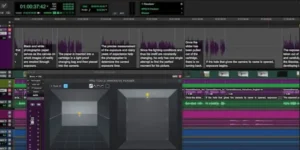
The Pro Tools integration changes that dynamic because Avid still anchors a significant portion of the professional audio industry. Large-format post-production facilities, broadcast mixers, dubbing stages, television networks, and film mix rooms already operate inside Pro Tools-centric infrastructures. Once MPEG-H authoring moves directly into that ecosystem, the format becomes operationally viable at scale.
The important shift is not the codec itself. It is the reduction of workflow friction.
Most immersive production pipelines are still fragmented. Engineers typically move between DAW sessions, external renderers, metadata management utilities, monitoring translation tools, and delivery-stage encoding environments. Every additional layer increases the chance of monitoring inconsistencies, metadata errors, version mismatches, and delivery failures.
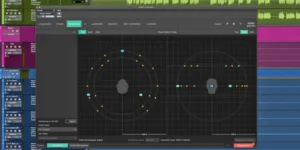
Integrated MPEG-H support simplifies part of that chain by allowing object management, adaptive rendering behavior, and interactive metadata workflows to exist closer to the actual production session. That may sound incremental, but in large broadcast or post-production environments, workflow consolidation directly affects turnaround speed, revision handling, and delivery reliability.
The integration also changes how immersive sessions can be structured during production. Engineers are no longer treating metadata authoring as a disconnected final-stage technical process. Dialogue personalization, alternate language layers, accessibility behavior, and renderer-dependent playback decisions become part of the session architecture itself rather than external delivery tasks added after the mix is finished.
Modern immersive workflows are increasingly driven by metadata behavior rather than fixed playback assumptions. The audio itself is only part of the final playback experience. Rendering behavior, adaptive object management, and downstream playback interpretation now influence how mixes translate across real-world consumer systems.
For broadcast and post-production facilities already operating inside Pro Tools, the MPEG-H integration effectively lowers the barrier between traditional mixing workflows and next-generation adaptive audio delivery.
MPEG-H Is Not Trying to Replace Dolby Atmos Everywhere
 A large portion of online coverage frames MPEG-H as a direct competitor trying to overtake Dolby Atmos across the entire immersive audio market. That interpretation oversimplifies what is actually happening.
Dolby Atmos already controls much of the consumer immersive audio ecosystem through Apple Music, theatrical distribution pipelines, and Dolby-certified playback hardware. The format is deeply integrated into streaming platforms, hardware ecosystems, film distribution, and headphone virtualization pipelines. For music production specifically, Atmos currently benefits from an established commercial infrastructure that MPEG-H simply does not have.
But MPEG-H is targeting a different part of the industry.
Dolby Atmos evolved around premium entertainment playback and commercial streaming ecosystems. MPEG-H was engineered more aggressively for adaptive broadcast delivery, interactive rendering behavior, and metadata-driven playback control.
That distinction becomes obvious in broadcast environments, where playback conditions are unstable and content requirements constantly shift. Television networks, live sports productions, and multilingual streaming systems care less about cinematic branding and more about rendering flexibility, metadata scalability, bandwidth efficiency, and playback adaptation across inconsistent consumer hardware.
In those environments, fixed-channel immersive workflows become increasingly inefficient. Broadcasters need systems capable of handling alternate language feeds, accessibility requirements, dynamic dialogue management, and viewer-controlled playback layers without rebuilding multiple versions of the same mix.
This is where MPEG-H becomes strategically important. The format was engineered for interactive audio behavior rather than purely theatrical immersion.
Atmos currently dominates music-oriented immersive workflows largely because the consumer ecosystem already exists. Apple Music, TIDAL, Amazon Music, Dolby-certified playback devices, and binaural headphone rendering pipelines have already normalized Atmos delivery for commercial streaming.
MPEG-H is developing in a different direction. Its strongest positioning currently exists around next-generation broadcast systems, live event delivery, adaptive television infrastructure, multilingual programming, and metadata-driven playback environments.
For engineers evaluating immersive workflows, this distinction matters. Atmos and MPEG-H are not interchangeable formats targeting identical production goals. They prioritize different delivery models, different playback assumptions, and different operational requirements.
Why This Matters for Mixing and Mastering Engineers
A large part of the mastering industry still treats immersive audio as a secondary niche attached to film post-production and high-end streaming catalogs. That position is becoming harder to defend as object-based delivery systems move deeper into consumer playback infrastructure.
The biggest change is not spatialization itself. It is the loss of predictable playback conditions.
Traditional stereo mastering operates around relatively stable assumptions. That separation between mix decisions and mastering translation has historically been much clearer in stereo workflows than in immersive production environments. Modern object-based delivery increasingly blurs that line, particularly once rendering behavior becomes partially device-dependent. Engineers unfamiliar with how those responsibilities differ in real-world projects often underestimate how quickly immersive translation problems can move upstream into the mix itself.
That distinction becomes easier to understand when comparing how mixing and mastering responsibilities behave in conventional stereo production versus adaptive immersive workflows.
Engineers optimize tonal balance, transient control, stereo imaging, peak management, and codec translation while expecting the playback relationship between left and right channels to remain fundamentally intact after delivery.
Object-based systems change that model because rendering decisions increasingly happen downstream from the original master. The playback engine may reinterpret spatial placement, dialogue balance, object positioning, or binaural processing depending on the listener’s device and environment.
That creates a different category of translation problem. Many issues that appear during immersive playback are not caused by a single codec or renderer failure. They are cumulative translation problems triggered by unstable low-end positioning, excessive spatial widening, phase interaction, or monitoring assumptions that collapse once the mix leaves the controlled studio environment.
An immersive mix that feels stable inside a calibrated room may behave very differently once rendered through consumer headphones, soundbars, televisions, automotive playback systems, or mobile spatial processors. In many cases, the engineer is no longer monitoring the exact version the listener ultimately hears.
As a result, immersive workflows place far greater importance on renderer-aware monitoring and translation testing. Engineers working in Atmos or MPEG-H environments increasingly need to evaluate binaural fold-down behavior, dialogue stability, metadata interaction, low-frequency object translation, and tonal shifts introduced by adaptive rendering systems.
This directly affects mastering decisions.
Extreme spatial widening can become unstable during binaural virtualization. Aggressive low-end object placement may collapse unpredictably on smaller playback systems. Excessive peak limiting can exaggerate rendering artifacts once the mix passes through additional spatial processing stages.
In stereo mastering, loudness optimization often dominates the workflow. In immersive delivery, stability becomes the higher priority. A technically louder master means very little if the spatial image breaks apart across real-world playback systems.
This is one reason experienced immersive engineers often work more conservatively than modern streaming-era stereo workflows would suggest. Translation reliability matters more than maximum perceived loudness when the playback engine itself becomes part of the listening chain.
The Real Technical Advantage of MPEG-H
The most important aspect of MPEG-H is not immersive playback itself. Dolby Atmos already handles cinematic spatial reproduction extremely well. The real technical advantage of MPEG-H is its metadata architecture and the level of playback personalization that architecture enables.
That distinction becomes increasingly important as streaming platforms move toward adaptive delivery systems instead of static media playback.
Traditional surround and stereo formats treat the mix as a finalized endpoint. Once exported, the playback relationship between channels is effectively locked. MPEG-H approaches audio differently. The format allows playback systems to reinterpret parts of the mix dynamically using embedded metadata and object-aware rendering behavior.
In practical terms, that means the listener can interact with the playback experience without requiring multiple separately delivered versions of the same content.
A sports viewer may increase commentary levels while reducing crowd ambience. A multilingual broadcast can switch dialogue languages in real time without rebuilding the entire program mix. Accessibility systems can emphasize speech intelligibility independently from music and environmental elements. Different playback devices can prioritize different rendering decisions depending on hardware limitations and listening conditions.
Conventional channel-based workflows struggle with this level of adaptability because they were designed around fixed playback assumptions. MPEG-H was designed around dynamic rendering from the beginning.
That architecture aligns closely with the broader direction of modern streaming infrastructure. Video platforms already rely heavily on adaptive bitrate delivery, device-aware playback optimization, and personalized content presentation. Audio delivery is gradually moving toward the same model.
This is why MPEG-H matters beyond traditional television broadcast.
Interactive streaming environments, live sports platforms, gaming systems, VR ecosystems, and future mixed-reality media all benefit from audio systems capable of adaptive object management rather than static channel reproduction. In those environments, metadata becomes just as important as the audio itself.
That shift has long-term implications for production workflows. Engineers are no longer creating a single fixed playback result. They are increasingly designing systems that remain stable while being interpreted differently across multiple playback environments.
Where MPEG-H Still Struggles
 MPEG-H is technically sophisticated, but technical strengths alone do not guarantee industry adoption. Professional audio markets are heavily shaped by infrastructure momentum, existing delivery pipelines, and commercial standardization. This is where Dolby Atmos currently holds a major advantage.
Atmos already sits inside a mature ecosystem spanning music streaming services, consumer hardware, theatrical distribution, certified studio programs, educational platforms, and headphone virtualization systems. For many producers and labels, Atmos is no longer viewed as experimental immersive technology. It is already part of the commercial release pipeline.
MPEG-H does not yet have that level of integration within the music production world.
Most music-focused engineers have never worked inside an MPEG-H session. Many smaller studios still struggle to implement Atmos workflows correctly, particularly when it comes to monitoring translation, renderer validation, and binaural consistency. MPEG-H introduces another layer of complexity tied to adaptive metadata behavior and interactive playback management.
That complexity matters operationally.
Immersive production already increases monitoring overhead compared to stereo workflows. Accurate speaker alignment, room calibration, renderer verification, binaural translation testing, and metadata validation all become part of the production chain. Once adaptive playback behavior enters the equation, engineers also need to account for how different rendering systems reinterpret the mix after delivery.
This creates a practical barrier for smaller studios operating on limited budgets or simplified monitoring environments. The technical workflow may be scalable for large broadcast facilities, but it is significantly harder to implement consistently in independent music production spaces.
There is also a commercial reality that the immersive audio market still avoids discussing openly: monetization remains inconsistent.
Even with Atmos adoption growing, many independent producers and mastering engineers still see limited financial return from immersive deliverables relative to the additional production time and monitoring requirements involved. MPEG-H currently sits even further from mainstream music monetization infrastructure.
For broadcast networks and large-scale post-production facilities, that tradeoff may already make sense. For independent music production, Atmos remains commercially safer simply because the consumer ecosystem is larger, the distribution chain is established, and the audience awareness already exists.
That does not mean MPEG-H lacks long-term potential. It means the format is entering a market where workflow inertia and commercial infrastructure often matter more than technical elegance.
MPEG-H vs Dolby Atmos Comparison
Although MPEG-H and Dolby Atmos are often grouped together under the same “immersive audio” label, the two systems prioritize different delivery models. Atmos is heavily optimized around premium entertainment playback and commercial streaming ecosystems, while MPEG-H is engineered more aggressively for adaptive broadcast infrastructure and metadata-driven rendering.
| Category | MPEG-H Audio | Dolby Atmos |
|---|---|---|
| Core Design Philosophy | Adaptive object-based rendering with interactive metadata control | Cinematic spatial playback with standardized immersive reproduction |
| Primary Industry Focus | Broadcast, live television, multilingual streaming, sports delivery | Music streaming, film post-production, premium consumer entertainment |
| Playback Model | Device-aware adaptive rendering | Fixed immersive scene translated through Dolby renderers |
| Interactive User Control | Built directly into the format architecture | Limited consumer-side interaction |
| Dialogue Personalization | Strong support for dynamic dialogue management | More static implementation |
| Accessibility Integration | Designed with accessibility workflows in mind | Supported, but less central to the ecosystem |
| Music Streaming Penetration | Currently limited | Deep integration across major platforms |
| Consumer Brand Recognition | Low outside broadcast engineering circles | Extremely high |
| Broadcast Infrastructure Adoption | Strong and growing | Present, but less dominant in broadcast-first environments |
| Monitoring Demands | High, especially in adaptive rendering validation | High, but supported by a more mature production ecosystem |
| Commercial Momentum | Driven primarily by broadcast and infrastructure evolution | Driven by streaming platforms, labels, and consumer hardware |
| Long-Term Strategic Advantage | Interactive and metadata-aware playback ecosystems | Mainstream immersive entertainment standardization |
Who Should Actually Care About MPEG-H Right Now
MPEG-H is most immediately relevant to engineers working in environments where playback adaptation and large-scale delivery infrastructure already matter operationally. That includes broadcast mixers, live sports production teams, post-production facilities, multilingual streaming services, and immersive audio specialists dealing with complex distribution chains.
In those workflows, metadata-aware rendering is not a futuristic concept. It solves practical delivery problems tied to localization, accessibility compliance, alternate commentary feeds, and playback consistency across fragmented consumer hardware.
For traditional music production, the urgency is lower.
Most stereo mastering engineers can continue operating effectively without touching MPEG-H workflows today. The same applies to independent producers focused entirely on stereo streaming releases, beatmakers working inside conventional Spotify delivery pipelines, and smaller studios without calibrated immersive monitoring environments.
At the moment, MPEG-H remains far more relevant to broadcast infrastructure than mainstream music monetization.
But ignoring the larger shift would be shortsighted.
The important trend is not whether MPEG-H itself becomes the dominant music format. The important trend is that audio delivery systems are becoming increasingly adaptive, metadata-driven, and renderer-dependent. Playback assumptions that defined traditional stereo production for decades are slowly weakening as streaming ecosystems move toward personalized and device-aware rendering models.
That transition will eventually affect production decisions even for engineers who never directly author MPEG-H content.
Translation testing, binaural behavior, metadata interaction, and playback adaptation are becoming part of the broader audio production conversation regardless of which immersive format ultimately dominates the market.
Real-World Workflow Implications
One of the least discussed problems in immersive production is translation instability. Most marketing demonstrations are performed inside calibrated monitoring environments where object positioning, spatial depth, and renderer behavior remain tightly controlled. Real-world playback is far less predictable.
A mix that feels immersive and precise in a professionally tuned Atmos room can collapse surprisingly fast once it reaches consumer headphone virtualization, television speakers, automotive playback systems, or low-cost soundbars. The issue is not always the mix itself. In many cases, the instability comes from how downstream rendering systems reinterpret spatial information after delivery.
Object-based workflows increase that risk because part of the playback experience is no longer fully determined at export.
That changes how engineers need to think about translation. Traditional stereo mastering largely revolves around tonal balance, dynamic control, and codec survival. Immersive workflows introduce additional variables tied to renderer interpretation, binaural virtualization, object interaction, and metadata behavior.
Transient management becomes more sensitive because aggressive peak shaping can exaggerate spatial inconsistencies during binaural rendering. Center image stability matters more because dialogue anchoring can shift unpredictably across different playback systems. Low-frequency object placement requires additional caution since smaller consumer environments often collapse immersive low-end information unevenly.
Codec behavior also becomes more critical.
Streaming platforms already alter playback through loudness normalization, lossy compression, sample-rate conversion, and device-specific processing chains. Adaptive immersive rendering introduces another translation layer on top of those existing variables. The result is a significantly less deterministic playback environment compared to traditional stereo delivery.
This is one reason experienced immersive mastering engineers often work more conservatively than modern streaming-era stereo workflows would suggest. Many loudness strategies that appear effective in stereo playback become unstable once immersive renderers, binaural virtualization, and downstream adaptive processing start interacting with the master. The relationship between perceived loudness, clipping behavior, and spatial stability becomes significantly more complex in object-based delivery systems. Excessive loudness optimization, aggressive stereo expansion, and over-processed spatial enhancement techniques can destabilize renderer performance downstream.
In immersive production, the objective shifts away from maximizing loudness at all costs. Stable translation across multiple rendering systems becomes the higher priority.
Why Many Immersive Mixes Fail Outside the Studio
A large percentage of immersive mixes that sound impressive inside calibrated studios begin falling apart the moment they reach uncontrolled consumer playback environments. The problem is rarely caused by a single technical mistake. More often, it is the result of production decisions built around monitoring conditions that do not represent real-world listening behavior.
Many immersive sessions are still evaluated primarily inside optimized Atmos rooms with stable speaker alignment, controlled reflections, and predictable rendering behavior. Consumer playback environments operate very differently. Headphone virtualization systems, television speakers, automotive playback chains, soundbars, mobile spatial processors, and streaming platform renderers all reinterpret spatial information differently after delivery.
This creates a translation problem that traditional stereo workflows were never forced to solve at the same scale.
One of the most common failures involves excessive spatial expansion. A mix that feels large and cinematic in a treated immersive room may lose center stability or vocal focus once rendered binaurally on headphones. Low-frequency objects can also become unstable across smaller playback systems, particularly when spatial positioning competes with aggressive loudness processing.
Renderer dependency introduces another complication. Engineers are no longer controlling a single finalized playback result. Different devices may prioritize object rendering, dialogue placement, dynamic adaptation, or spatial virtualization differently depending on hardware limitations and playback architecture.
Monitoring shortcuts make the problem worse. Some producers build immersive mixes almost entirely on headphones or rely too heavily on a single renderer during production. That approach often hides translation instability until the mix reaches consumer distribution platforms.
This is why experienced immersive engineers spend significant time validating mixes across multiple playback systems rather than relying exclusively on the primary studio environment. In object-based production, translation consistency matters more than exaggerated spatial effects that only survive inside controlled demonstrations.
Verdict
The significance of MPEG-H inside Pro Tools has less to do with another immersive format entering the market and more to do with where professional audio infrastructure is heading overall.
Object-based delivery is gradually moving out of specialized broadcast engineering environments and into mainstream production workflows. Once adaptive rendering systems become integrated directly into established DAW ecosystems, immersive audio stops being an isolated technical niche and starts becoming part of everyday production architecture.
Dolby Atmos still controls the commercial side of immersive music production. The consumer ecosystem, streaming integration, hardware support, and brand recognition are already deeply established. That advantage is unlikely to disappear anytime soon.
But MPEG-H is solving a different category of problem.
The format is designed around scalable playback adaptation, metadata-aware rendering, accessibility integration, multilingual delivery, and interactive audio behavior across fragmented consumer environments. Those requirements are becoming increasingly important as streaming platforms, broadcast systems, and device ecosystems move further away from fixed playback assumptions.
For broadcast mixers, post-production facilities, and immersive infrastructure specialists, MPEG-H already deserves serious attention. The operational use cases are real, and the underlying delivery model aligns closely with where adaptive media systems are heading.
For music producers and mastering engineers, the immediate commercial pressure is lower. Atmos remains the more practical immersive format inside the current music distribution ecosystem.
Still, the larger transition is difficult to ignore. Audio delivery is becoming increasingly renderer-dependent, metadata-aware, and playback-adaptive. That shift will eventually influence production decisions far beyond broadcast television or immersive post-production.
MPEG-H matters because it represents one of the clearest examples of audio moving away from static mix delivery and toward adaptive playback systems that continue evolving after export.

Yurii Ariefiev is a mastering engineer and audio production editor specializing in playback translation, streaming-era mastering workflows, immersive audio behavior, and real-world monitoring consistency across modern delivery platforms.
This article was written from a production and mastering infrastructure perspective, focusing on adaptive rendering, object-based delivery systems, immersive translation stability, and the practical limitations engineers face when working beyond traditional stereo workflows.
FAQ
Is MPEG-H trying to replace Dolby Atmos in music production?
Not directly. Atmos currently dominates commercial immersive music delivery because the streaming and hardware ecosystem already exists. MPEG-H is positioned more aggressively around adaptive broadcast infrastructure, interactive playback, and metadata-driven delivery.
Can MPEG-H be used for commercial music releases?
Technically, yes. In practice, the format currently has far stronger traction in broadcast and post-production than in mainstream music streaming platforms.
Why are broadcasters more interested in MPEG-H than music producers?
Because the format solves operational broadcast problems. MPEG-H supports multilingual feeds, accessibility workflows, alternate commentary layers, and adaptive playback control without requiring multiple separate program versions.
Does MPEG-H require a certified immersive studio?
Professional immersive monitoring is strongly recommended for accurate authoring, but modern workflows also depend heavily on binaural validation and renderer-based translation testing across consumer playback systems.
How does MPEG-H affect mastering decisions?
Immersive object-based delivery typically rewards more conservative mastering approaches. Excessive loudness processing, aggressive spatial enhancement, and unstable low-end positioning can create translation problems during adaptive rendering. Immersive workflows also complicate loudness evaluation because playback normalization may interact differently with binaural rendering, object management, and adaptive spatial processing than in conventional stereo streaming environments. Traditional LUFS targets alone do not fully predict how immersive playback systems will behave after distribution.
Is immersive audio harder to translate than stereo?
Usually, yes. Stereo playback relationships are relatively stable after export. Object-based immersive systems may be reinterpreted differently depending on the renderer, playback device, and spatial virtualization pipeline.
Does MPEG-H increase CPU load during production?
Large immersive sessions generally require more processing overhead due to object rendering, metadata handling, spatial monitoring, binaural verification, and additional playback validation stages.
Why is metadata becoming more important in modern audio production?
Streaming and broadcast ecosystems are moving toward adaptive playback environments where rendering behavior changes depending on the listener’s device, accessibility settings, language selection, or playback configuration.
Can MPEG-H work on headphones?
Yes. Like Atmos, MPEG-H supports binaural rendering for headphone playback, although translation quality depends heavily on the renderer and the original mix architecture.
Will stereo mastering eventually disappear?
No. Stereo remains the fastest, most compatible, and most commercially universal delivery format. Immersive audio will likely expand alongside stereo rather than fully replacing it.