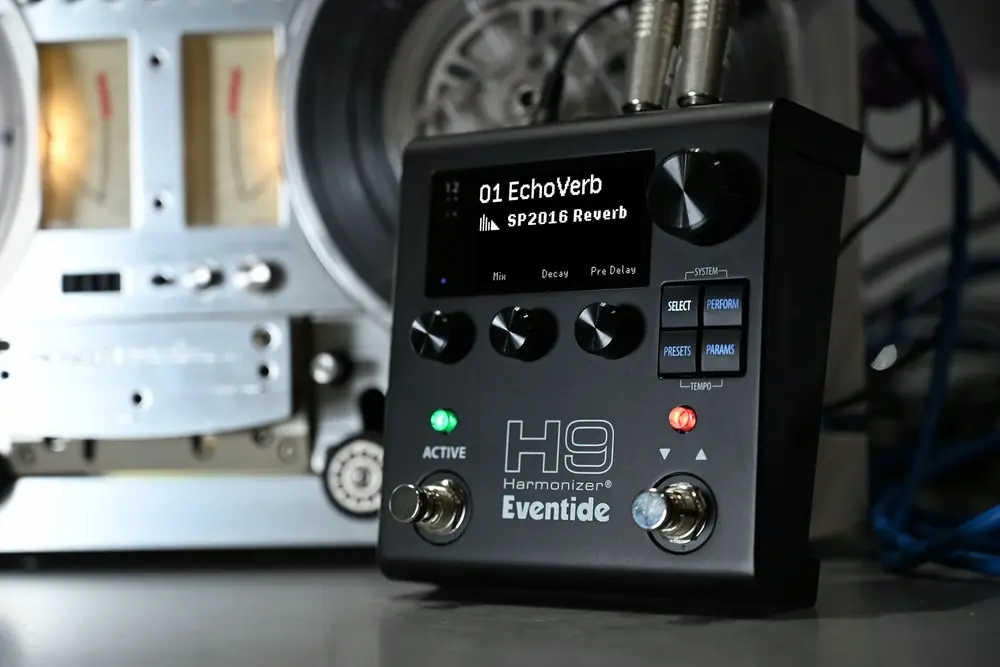
H9 Harmonizer Gen 2: What Eventide’s New Multi-Effects Platform Means for Modern Audio Production
The original H9 became one of the few hardware effects units that regularly appeared outside traditional pedalboard setups. While guitarists embraced it for delays, modulation, and pitch effects, producers and mix engineers found value in something else: access to Eventide’s algorithm library in a compact format that could move between studio sessions, reamping chains, synthesizer rigs, and live environments.
The H9 Harmonizer Gen 2 arrives at a time when hardware processors face a different challenge than they did a decade ago. Competing products are no longer other pedals or rack units. They are increasingly sophisticated plugin ecosystems that offer unlimited instances, instant recall, automation, and deep DAW integration. Any new hardware release must justify its place in a workflow that is already crowded with software alternatives.
That is what makes the H9 Harmonizer Gen 2 more interesting than a routine product refresh. Eventide has effectively transplanted the full 74-algorithm library from the H90 platform into a smaller and more affordable format. The result is not simply an updated version of the original H9. It is Eventide’s attempt to bring its flagship effects ecosystem to producers, engineers, and musicians who want access to the company’s most advanced processing without stepping up to the H90.
The question is whether that strategy meaningfully changes the value of the platform in real-world production. Access to more algorithms is easy to market. The more important issue is how those algorithms fit into modern mixing, sound design, vocal production, and hybrid studio workflows. That is where the H9 Harmonizer Gen 2 will ultimately succeed or fail.
H9 Harmonizer Gen 2 Specifications at a Glance
| Feature | H9 Harmonizer Gen 2 |
|---|---|
| Algorithms | 74 |
| Preset Library | 1000+ |
| Processing | SIFT Polyphonic Pitch Technology |
| Connectivity | Stereo I/O, USB-C |
| Signal Support | Instrument and Line Level |
| Preset Compatibility | H9 Classic Presets |
| Price | $599 |
Why the H9 Harmonizer Gen 2 Matters in Today’s Production Environment
Hardware effects processors no longer compete primarily with other hardware. They compete with plugin collections that can deliver hundreds of delays, reverbs, pitch processors, modulation effects, and sound design tools inside a single DAW session.
That reality changes how products like the H9 Harmonizer Gen 2 should be evaluated. Processing quality alone is no longer enough. Modern producers expect flexible routing, fast recall, efficient workflows, and access to specialized effects without adding unnecessary complexity to a session.
Eventide occupies a unique position in this market because its reputation was built less on hardware and more on algorithms. Many production techniques that are now commonplace—including micro-pitch widening, harmonized vocal layers, pitch-based ambience, and creative pitch manipulation—can be traced back to workflows popularized by Eventide processors.
The significance of the H9 Harmonizer Gen 2 is not the redesigned display, updated processor, or expanded preset count. The more meaningful change is access to the full 74-algorithm collection currently available across the H90 and H9 Max platforms. That dramatically expands the range of applications beyond traditional pedalboard use.
For modern producers, the device can function as a dedicated vocal effects processor, a synthesizer sound-design tool, a reamping unit, a creative mixing processor, or a hardware alternative to running multiple plugin-based effects chains. That flexibility is ultimately what separates the H9 Harmonizer Gen 2 from a routine hardware refresh.
More importantly, it positions the unit in a space that has become increasingly relevant: compact hardware that provides access to flagship processing without requiring users to commit to a larger and more expensive production ecosystem. For many engineers, that may be the strongest argument for the H9 Harmonizer Gen 2—not the number of effects it contains, but the breadth of workflows it can realistically support.
The Real Significance of the Expanded Algorithm Library
 The headline feature of the H9 Harmonizer Gen 2 is not the updated hardware. It is access to the full 74-algorithm collection previously associated with Eventide’s higher-tier ecosystem.
That distinction matters because the value of an effects processor is rarely determined by the number of presets it contains. What ultimately determines long-term usefulness is the range of production problems it can solve across different sessions.
The H9 Harmonizer Gen 2 now covers a much broader spectrum of processing than its predecessor, including pitch shifting, harmonization, micro-pitch widening, delays, reverbs, modulation, granular effects, vocal processing, and experimental sound-design tools.
For producers and engineers, this significantly changes the role of the device. Rather than serving as a dedicated guitar effects pedal, it can move between multiple production tasks. One session may use it as a vocal processor for harmonized layers and stereo enhancement. Another may rely on it for granular textures, synth manipulation, or ambient sound design. In a mixing environment, it can function as a dedicated external processor for spatial effects, modulation, or creative parallel treatments.
The practical advantage is not versatility for its own sake. It is the ability to keep a single hardware processor relevant across a wide range of projects without constantly forcing users into the same sonic territory.
Many effects units become associated with a particular sound or production trend. Their value declines once that trend passes. Eventide’s strongest algorithms have historically avoided this problem because they are often used as supporting tools inside a mix rather than obvious signature effects.
Micro-pitch processing is a good example. While listeners rarely identify it directly, engineers have relied on it for decades to create width, separation, and perceived depth without introducing the artifacts often associated with more aggressive stereo enhancement techniques. The effect remains relevant because it addresses a recurring mixing challenge rather than a temporary aesthetic trend.
This is ultimately what gives the expanded algorithm library its significance. The upgrade is not simply about having more effects available. It is about expanding the number of real-world production scenarios in which the H9 Harmonizer Gen 2 can remain useful long after the novelty of a new product release has faded.
SIFT Pitch Processing and the Evolution of Hardware Harmonization
Among the technical upgrades in the H9 Harmonizer Gen 2, the addition of Eventide’s SIFT-based polyphonic pitch processing may prove more important than any interface or hardware improvement.
Pitch shifting remains one of the most demanding tasks in digital signal processing. Delays, reverbs, and modulation effects can often tolerate minor imperfections. Pitch-based processing is far less forgiving. As interval size increases, preserving transients, maintaining note definition, and avoiding audible artifacts becomes significantly more difficult, especially when processing chords, layered sources, or full musical passages in real time.
That challenge has become more relevant as pitch processing has expanded beyond traditional harmonizer applications. Modern productions routinely use pitch-based effects on vocals, synthesizers, guitars, transitions, ambient textures, and sound-design elements. What was once a specialized effect is now embedded throughout contemporary production workflows.
In practical terms, the quality of a pitch engine is no longer determined solely by how accurately it changes pitch. The more important metric is how well the processed signal survives once it is placed inside a finished mix.
This is where higher-quality polyphonic processing can make a measurable difference. Artifacts that seem insignificant during sound design often become obvious after layering, bus processing, saturation, compression, and limiting are applied. Dense arrangements tend to expose transient smearing, spectral buildup, phase instability, and unnatural note decay that may go unnoticed when auditioning effects in isolation.
For producers working with stacked vocals, synthetic harmonies, parallel effects chains, or cinematic sound-design elements, cleaner pitch processing creates more room for aggressive creative decisions before the mix begins to break down.
That may ultimately be the most meaningful implication of SIFT technology inside the H9 Harmonizer Gen 2. The benefit is not simply cleaner harmonized parts. It is the ability to push pitch-based processing further while maintaining the clarity, separation, and mix stability expected in modern commercial productions.
A More Important Upgrade Than the Marketing Suggests: Direct Hardware Control
The expanded algorithm library will generate most of the headlines surrounding the H9 Harmonizer Gen 2, but the redesigned control system may have a greater impact on day-to-day use.
One of the most common criticisms of the original H9 was its dependence on external software for deeper editing. While the companion app worked well, it also introduced friction. Adjusting parameters often meant shifting attention away from the instrument, mix, or creative task at hand and into another screen.
That workflow made more sense when mobile integration was a differentiating feature. Today, producers expect immediate access to parameters regardless of whether they are working with hardware or software.
Eventide’s decision to add a larger display, dedicated Quick Knobs, button-pad navigation, and full onboard editing addresses a practical issue rather than a marketing one. The improvement is not about convenience alone. It changes how the processor can be used during creative sessions.
Many of the most effective effects decisions happen during experimentation rather than careful preset programming. A producer adjusting delay feedback while tracking vocals, shaping modulation depth during a synth pass, or refining harmonizer settings while building an arrangement is less likely to stay in a creative flow if every adjustment requires launching external software.
This is one of the reasons hardware remains relevant despite the maturity of modern plugins. The advantage is rarely superior sound quality. Most professional software effects already operate at an extremely high level. Hardware earns its place by reducing distractions and encouraging faster decision-making.
If the revised interface delivers the level of direct control suggested by Eventide’s design changes, the H9 Harmonizer Gen 2 becomes more than a portable effects unit. It becomes a processor that can participate naturally in modern production workflows rather than functioning as a device that requires a separate workflow of its own.
Studio Integration Beyond Guitar Applications
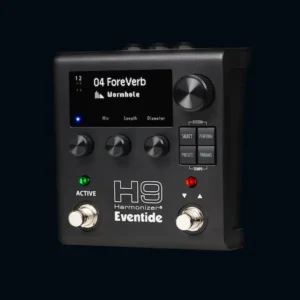 Although the H9 series is often associated with guitar rigs, many of Eventide’s most influential algorithms have spent just as much time inside studio sessions as they have on pedalboards.
Pitch-based widening, harmonized vocal effects, ambient processing, modulation, and experimental sound-design treatments have long been used across pop, electronic, cinematic, and alternative productions. The H9 Harmonizer Gen 2 expands that potential by making studio integration considerably easier than previous generations.
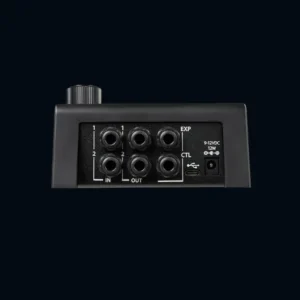
The addition of dedicated instrument- and line-level operation is more significant than it may appear on a specification sheet. One of the recurring frustrations when integrating pedal-oriented hardware into professional environments is gain staging. Hardware that works perfectly with guitars often becomes less predictable when inserted into interface loops, patchbays, summing chains, or hybrid mixing systems.
Supporting both signal levels allows the H9 Harmonizer Gen 2 to move more naturally between studio and live applications. A producer can process a synthesizer, route vocals through external effects chains, build parallel ambience returns, or reamp tracks without relying on awkward workarounds designed to compensate for mismatched signal levels.
This flexibility expands the role of the unit beyond traditional instrument processing. In many hybrid studios, the H9 Harmonizer Gen 2 is likely to function less like a pedal and more like a compact outboard effects processor.
That distinction matters because the strongest use cases are not necessarily guitar-focused. Many producers will be more interested in vocal manipulation, spatial processing, texture generation, creative parallel effects, and sound-design applications than conventional pedalboard workflows.
Viewed from that perspective, the H9 Harmonizer Gen 2 enters a different competitive category altogether. The more relevant comparison is no longer other multi-effects pedals. It is the growing collection of software and hardware tools competing for a place in modern production workflows. Similar questions about hardware integration, workflow efficiency, and studio practicality have emerged around modern amp-modeling platforms, including our analysis of the TONEX ONE+ review. That shift ultimately determines whether the unit becomes a niche instrument processor or a regularly used studio tool.
Critical Evaluation: Where the H9 Harmonizer Gen 2 Delivers — and Where It Doesn’t
The most important caveat surrounding the H9 Harmonizer Gen 2 is also the easiest specification to misinterpret.
Access to the full H90 algorithm library does not make the unit an H90 in a smaller enclosure.
Many buyers will naturally focus on the shared effects collection, but processing architecture has a greater impact on workflow than algorithm count alone. The H90 was designed as a multi-algorithm platform capable of combining effects, creating complex routing structures, and building processing chains inside a single device. The H9 Harmonizer Gen 2 follows a different philosophy.
Despite gaining access to the same expanded library, it remains a single-algorithm processor. That distinction affects how the unit fits into modern production environments.
For many users, it will not matter. If the goal is to run a delay, harmonizer, reverb, granular processor, or modulation effect on a source, the H9 Harmonizer Gen 2 provides access to the same core processing technology. In these situations, the sonic gap between the two platforms is far smaller than the difference in price might suggest.
The limitation becomes more relevant when building layered processing environments. Modern vocal production, advanced sound design, and hybrid effects workflows frequently rely on multiple stages of pitch processing, ambience generation, modulation, and dynamics control operating simultaneously. The H90 can handle portions of those chains internally. The H9 Harmonizer Gen 2 cannot.
This does not diminish the value of the platform, but it does define its role. The H9 Harmonizer Gen 2 is best viewed as a highly capable effects processor rather than a self-contained effects environment.
That distinction ultimately determines whether the unit feels like an affordable entry point into Eventide’s flagship ecosystem or a compromise compared to the H90. The answer depends less on sound quality and more on how much processing flexibility a particular workflow demands.
H9 Harmonizer Gen 2 vs the Original H9
For many producers, the most important comparison is not between the H9 Harmonizer Gen 2 and the H90. It is between the new model and the original H9 platform that remained a fixture in studios and live rigs for more than a decade.
At a glance, the two units appear to share the same philosophy. Both are compact multi-effects processors built around Eventide’s signature algorithms and designed to provide high-end processing in a portable format. The differences become much more significant once workflow and capability are considered.
The most obvious upgrade is access to the full 74-algorithm collection now shared with the H90 ecosystem. The original H9 offered a considerably smaller library, forcing users to make more deliberate choices about which effects were available on the device. The Gen 2 version dramatically expands those possibilities and broadens the processor’s usefulness across modern production workflows.
The interface has also evolved. While the original H9 often relied on software integration for deeper editing, the new model places far greater emphasis on direct hardware interaction. The larger display, Quick Knobs, and onboard parameter control reduce dependence on external devices and make real-time sound design significantly more practical.
Processing hardware has received meaningful updates as well. Eventide’s move to a modern ARM-based architecture, upgraded converters, expanded routing options, and support for advanced polyphonic pitch processing reflects the demands of current production environments rather than the expectations of the market that existed when the original H9 launched.
Compatibility remains an important advantage. Existing H9 users can migrate presets without abandoning previous work, reducing the friction that often accompanies major hardware revisions.
The decision ultimately comes down to expectations. Producers who are satisfied with the original H9’s workflow and algorithm collection may not view the upgrade as essential. Those seeking access to the full Eventide ecosystem, improved editing, modern connectivity, and a platform designed around contemporary production techniques are likely to find the differences substantial enough to justify the transition.
| Feature | H9 Gen 2 | Original H9 |
|---|---|---|
| Algorithms | 74 | Limited H9 Library |
| Display | Larger Modern Interface | Smaller Legacy Interface |
| Onboard Editing | Full Control | More App Dependent |
| Pitch Processing | SIFT Polyphonic Technology | Previous Generation Processing |
| USB Connectivity | USB-C | Legacy Connectivity |
| Preset Compatibility | Supports H9 Presets | Native |
H9 Harmonizer Gen 2 vs H90
Although the H9 Harmonizer Gen 2 inherits the same algorithm ecosystem as the H90, the two products target different workflows.
The H90 remains Eventide’s flagship hardware platform. Its defining advantage is not access to more effects, but the ability to run multiple algorithms simultaneously while supporting significantly more sophisticated routing structures. For producers building complex vocal chains, layered ambience environments, experimental sound-design setups, or hybrid studio configurations, that flexibility can be difficult to replace.
The H9 Harmonizer Gen 2 takes a different approach. Rather than competing directly with the H90, it focuses on providing access to the same core processing library in a smaller, simpler, and more affordable format. The trade-off is straightforward: one algorithm at a time instead of a complete multi-effects architecture.
| Feature | H9 Harmonizer Gen 2 | H90 |
|---|---|---|
| Algorithms | 74 | 74 |
| Simultaneous Effects | One | Multiple |
| Routing Flexibility | Moderate | Advanced |
| Workflow Complexity | Lower | Higher |
| Portability | Higher | Lower |
| Price | $599 | Premium Tier |
For many producers, the decision ultimately comes down to workflow rather than sound quality. Users who need maximum routing flexibility and multi-stage processing will continue to gravitate toward the H90. Those primarily interested in Eventide’s delays, harmonizers, modulation effects, reverbs, and pitch-processing tools may find that the H9 Harmonizer Gen 2 delivers most of the practical value at a significantly lower entry point.
The Plugin Question Eventide Cannot Avoid
Any evaluation of the H9 Harmonizer Gen 2 has to address the most obvious alternative: software.
Unlike many hardware manufacturers, Eventide is competing not only against other companies but also against its own plugin ecosystem. Many of the effects that made the brand influential are already available inside modern DAWs, often with deeper automation, faster recall, and tighter integration than any external processor can provide.
That changes the buying equation. Most prospective users are not deciding whether they need Eventide effects. They are deciding how they want to access them.
For producers working entirely in the box, software remains difficult to challenge. Plugin-based workflows offer instant session recall, unlimited instances, offline rendering, and direct automation control. In complex productions, those advantages can outweigh almost any benefit provided by dedicated hardware.
The H9 Harmonizer Gen 2 therefore has to justify itself on factors other than algorithm availability alone. Simply offering access to Eventide processing is no longer enough because many users already have access to similar tools inside their DAW.
The strongest argument for the hardware is workflow. Dedicated processors encourage a different relationship with effects. Adjustments happen in real time, experimentation becomes more immediate, and creative decisions are often made faster than they would be inside a software environment filled with menus, presets, and visual distractions.
Whether that advantage is meaningful depends entirely on how a producer works. Engineers who already rely heavily on Eventide plugins may view the H9 Harmonizer Gen 2 as a convenience rather than a necessity. Producers who prefer hands-on interaction, external processing chains, or hybrid studio workflows may arrive at a very different conclusion.
This is ultimately where the product succeeds or fails. The decision is less about sound quality than workflow preference. The algorithms are already proven. The real question is whether dedicated hardware still offers enough creative value to justify its place alongside increasingly sophisticated software alternatives.
The Reality of the 1000+ Preset Library
 The inclusion of more than 1,000 presets will inevitably become one of the most visible marketing points surrounding the H9 Harmonizer Gen 2. For many users, it will also be one of the least important specifications.
Large preset libraries create the impression of endless creative possibilities, but experienced producers rarely evaluate an effects processor based on preset count alone. What ultimately matters is whether those presets help users understand the strengths of the underlying algorithms or simply provide hundreds of minor variations on the same ideas.
In practice, factory presets serve two purposes. They demonstrate what a processor is capable of, and they accelerate the discovery process during the early stages of ownership. Beyond that, their influence tends to diminish quickly.
The most effective effects workflows are rarely built around untouched factory presets. They emerge when producers adapt processing to a specific vocal, synthesizer, guitar, drum bus, or sound-design source. The more flexible the underlying algorithm, the less important the factory starting point becomes.
This is particularly relevant for a platform like the H9 Harmonizer Gen 2. Its value is not tied to a collection of preset names. It is tied to access to a broad range of processing engines that can be shaped for different musical contexts. A harmonizer that works on a lead vocal may require entirely different settings when applied to a synth texture or cinematic transition. The preset may provide direction, but the result ultimately depends on the engineer’s decisions.
Viewed through that lens, the 1,000-plus preset library is best understood as an onboarding advantage rather than a long-term reason to buy the unit. The feature makes the platform easier to explore, but it is the depth of the algorithms—not the size of the preset browser—that will determine whether the H9 Harmonizer Gen 2 remains useful after months or years of regular use.
Marketing Claims Versus Practical Studio Reality
The H9 Harmonizer Gen 2 introduces a long list of improvements, including upgraded converters, ARM-based processing, expanded routing options, seamless preset spillover, direct hardware editing, and access to the full H90 algorithm library. The challenge is determining which of these upgrades will actually influence day-to-day production work.
Not all specifications carry equal weight. Some directly affect workflow, while others primarily improve the user experience around the edges.
For example, direct onboard editing is likely to have a greater impact on real-world use than upgraded converter specifications. Most producers will interact with the interface during every session. Far fewer will encounter situations where converter performance becomes the limiting factor in a production.
The same principle applies to preset spillover and routing flexibility. These features can improve workflow efficiency and reduce interruptions during sound design, tracking, and performance. They make the processor easier to use, but they do not fundamentally change what the underlying algorithms are capable of achieving.
The expanded algorithm library remains the most consequential upgrade because it broadens the number of production scenarios in which the unit can be used. However, even this improvement should be viewed within realistic boundaries. Access to additional effects does not automatically produce better mixes, stronger arrangements, or more compelling sound design.
In professional production environments, the quality of the result is still determined by decisions rather than specifications. The processor can provide better tools, faster workflows, and greater creative flexibility, but it cannot compensate for weak source material, poor monitoring, ineffective arrangements, or inconsistent engineering choices.
This distinction is particularly important when evaluating the H9 Harmonizer Gen 2 against the expectations created by marketing material. The most valuable upgrades are not necessarily the most visible ones. In many cases, the workflow improvements may have a greater long-term impact than the headline features themselves.
Competitive Positioning: Where the H9 Harmonizer Gen 2 Fits in the Market
The H9 Harmonizer Gen 2 enters a market that is far more crowded than the one that existed when the original H9 was introduced. Producers now have access to mature plugin ecosystems, increasingly sophisticated hardware processors, and hybrid workflows that blur the distinction between software and outboard gear.
As a result, the key question is not whether the H9 Harmonizer Gen 2 sounds good. Eventide’s reputation largely settles that debate. The more important question is where the unit fits among the alternatives competing for the same budget.
| Product | Primary Advantage | Best Suited For | Main Trade-Off |
|---|---|---|---|
| Eventide H9 Harmonizer Gen 2 | Access to Eventide’s full algorithm library in a compact format | Hybrid studios, creative processing, external effects workflows | Single-algorithm architecture |
| Eventide H90 | Multi-algorithm processing and advanced routing | Complex sound design, advanced production setups | Higher price and steeper learning curve |
| Eventide Plugins | Full DAW integration and unlimited instances | In-the-box production environments | No dedicated hardware workflow |
| Soundtoys Bundle | Broad creative effects toolkit | Mixing, production, and sound design | Software-only workflow |
| Universal Audio Effects | Deep integration with the UAD ecosystem | Professional studio environments | Platform-dependent investment |
| Strymon BigSky MX | Specialized ambient and spatial processing | Atmospheric production and performance setups | Much narrower processing scope |
The most significant comparison is ultimately not with competing pedals but with the H90 itself.
Both units provide access to the same underlying algorithm ecosystem, yet they target different users. The H90 is designed for engineers and producers who want to build sophisticated multi-stage processing chains within a single processor. The H9 Harmonizer Gen 2 prioritizes accessibility, portability, and a lower entry cost.
For users primarily interested in accessing Eventide’s delays, harmonizers, modulation effects, reverbs, and sound-design tools one algorithm at a time, the H9 Harmonizer Gen 2 may represent the more practical purchase. Those building complex routing structures or relying heavily on layered effects processing will likely reach the limits of the platform much sooner.
Perhaps the strongest competitive advantage of the H9 Harmonizer Gen 2 is that it occupies a space between dedicated pedals and full-scale production systems. It offers substantially more depth than most compact hardware processors while avoiding the cost, size, and complexity associated with higher-end platforms.
Whether that middle ground is compelling depends largely on workflow. For some users, it will feel like the most efficient entry point into Eventide’s ecosystem. For others, it may simply highlight how much of modern effects processing can already be achieved inside a DAW.
Who Should Consider the H9 Harmonizer Gen 2?
The H9 Harmonizer Gen 2 makes the most sense for users who value dedicated hardware processing but do not require the complexity of a larger multi-effects platform.
Its strongest audience is likely to be producers working in hybrid environments where external hardware remains part of the creative process. In these workflows, the ability to quickly route vocals, synthesizers, guitars, drum buses, or sound-design elements through dedicated effects can be more valuable than adding another plugin window to an already crowded session.
Mix engineers looking for a compact source of Eventide’s delays, harmonizers, modulation effects, and ambient processing may also find the platform appealing. The same is true for electronic producers who regularly use pitch manipulation, granular processing, texture generation, and experimental spatial effects as part of their sound-design workflow.
The upgrade is particularly compelling for existing H9 users. Access to the expanded algorithm library, modernized hardware, improved interface, and direct onboard control addresses several of the limitations that accumulated as the original platform aged.
For these users, the H9 Harmonizer Gen 2 occupies a practical middle ground between software-only production and the significantly larger H90 ecosystem.
Who Might Be Better Served Elsewhere?
The H9 Harmonizer Gen 2 becomes more difficult to justify when workflow priorities shift toward maximum flexibility, instant recall, and large-scale session management.
Producers working entirely inside a DAW may find that software alternatives provide a more efficient solution. Modern plugin environments offer unlimited instances, deep automation, offline rendering, and immediate recall across complex projects without introducing additional routing requirements.
The same limitation applies to users seeking advanced multi-stage processing within a single device. Although the H9 Harmonizer Gen 2 now shares its algorithm library with the H90, it remains fundamentally different in architecture. Engineers building sophisticated signal chains may eventually find themselves wanting capabilities that the larger platform was specifically designed to provide.
There is also a value consideration. Producers who already own substantial Eventide, Soundtoys, Universal Audio, or other premium effects collections may discover that the sonic benefits are less significant than the workflow differences. In those cases, the decision becomes less about sound quality and more about whether dedicated hardware genuinely improves the creative process.
Real-World Production Perspective: How the H9 Harmonizer Gen 2 Behaves Beyond the Demo Stage
The most important test for any effects processor is not how it sounds in isolation. It is how the processed signal behaves once it becomes part of a finished production.
This distinction is easy to overlook because product demonstrations rarely reflect real-world mixing conditions. Effects are typically showcased on sparse arrangements where harmonization, modulation, ambience, and stereo processing can occupy as much space as they need. Commercial productions operate under very different constraints.
Modern mixes are already crowded with pitch correction, saturation, dynamic processing, spatial enhancement, transient shaping, and layered instrumentation. Every additional effect must justify the space it occupies without compromising clarity, separation, or translation.
This is where Eventide’s algorithm design has historically earned its reputation. Many of the company’s most widely used effects are not valuable because they sound dramatic in solo mode. They are valuable because they remain usable after vocals, drums, synthesizers, guitars, buses, and mastering processing are introduced around them.
Micro-pitch widening provides a useful example. The effect has appeared on countless commercial productions not because listeners notice it, but because it creates width and depth without drawing attention to itself. The same principle often applies to Eventide’s delays, harmonizers, and modulation processors. Their strongest applications tend to enhance a production rather than dominate it.
That characteristic becomes increasingly important in modern workflows where effects are expected to survive compression, limiting, streaming codecs, and a wide range of playback systems. The most successful processors are often the ones that continue to sound natural after the rest of the mix has become significantly more complex.
For that reason, the long-term value of the H9 Harmonizer Gen 2 is unlikely to be determined by how extreme its effects can become. It will be determined by how effectively those effects integrate into finished productions once the excitement of auditioning presets has been replaced by the realities of mixing and release preparation.
Mix Translation Matters More Than Preset Design
One of the most overlooked aspects of effects processing is translation. An effect that sounds impressive during sound design is not necessarily an effect that survives a finished mix.
This becomes particularly important with pitch-based processing. Harmonizers, micro-pitch effects, stereo widening, modulation, and layered ambience can create impressive results in controlled monitoring environments while introducing unintended consequences once the production reaches real-world playback systems.
Common issues include stereo images collapsing on smaller speakers, phase interactions becoming more apparent on headphones, vocal definition softening under bus compression, and pitch-shifted layers masking important musical information once a mix becomes dense. Streaming codecs can further exaggerate these problems, especially when aggressive modulation or spatial processing is involved. Many of these symptoms later appear as mastering problems, even though their root cause often originates in earlier production and effects decisions.
For this reason, the quality of an effects processor is not determined solely by the character of its presets. It is determined by how effectively the processed signal coexists with the rest of the arrangement.
This is an area where Eventide’s algorithms have historically performed well. Many of the company’s most widely used effects were developed for professional production environments where processing must remain stable across different monitoring systems, playback formats, and distribution platforms. Their goal is typically enhancement rather than spectacle.
That distinction becomes increasingly valuable as productions grow denser and louder. Modern mixes leave little room for effects that generate unnecessary phase complexity, spectral buildup, or stereo instability. The most useful processing is often the processing listeners barely notice but would immediately miss if it disappeared.
Engineers evaluating the H9 Harmonizer Gen 2 should therefore pay less attention to how dramatic an effect sounds in isolation and more attention to how well it maintains clarity, width, and separation once the arrangement, bus processing, and mastering chain are fully in place. Ultimately, that is the standard by which any professional effects processor is judged.
Vocal Processing and Modern Production Workflows
One of the more interesting aspects of the H9 Harmonizer Gen 2 is its growing relevance to modern vocal production.
Contemporary vocal workflows extend far beyond pitch correction. Once editing and tuning have been completed, producers often build additional layers of width, depth, movement, and harmonic complexity using a combination of harmonization, micro-pitch processing, modulation, ambience, and creative effects.
This is where the H9 Harmonizer Gen 2 is most likely to find a role. It is not competing with Auto-Tune, Melodyne, or other correction tools. Instead, it sits further downstream in the production process, where vocal tracks transition from technical correction to creative enhancement.
For many producers, that stage is increasingly important. Modern pop, hip-hop, electronic, and alternative productions frequently rely on stacked vocals, parallel effects chains, artificial harmonies, widened doubles, and heavily processed ad-libs. These treatments are often responsible for the perceived size and character of a vocal long after pitch correction has been completed.
Eventide’s processing heritage aligns naturally with this part of the workflow. Harmonization, micro-pitch widening, delay-based enhancement, and spatial manipulation remain among the company’s strongest categories, making the H9 Harmonizer Gen 2 a potentially useful dedicated processor for producers who prefer external effects during tracking, sound design, or mixing.
At the same time, expectations should remain realistic. The H9 Harmonizer Gen 2 is not a complete vocal production environment. It does not replace vocal editing, tuning, dynamics processing, de-essing, saturation, automation, or the numerous other stages that shape contemporary commercial vocals. Tools focused on pitch correction and harmonic analysis continue to occupy a different part of the workflow, as explored in our Celemony Tonalic review.
Its role is more specialized. Rather than building an entire vocal chain, it provides access to a collection of creative processing tools that can add width, movement, texture, and harmonic complexity once the foundation of the vocal production has already been established.
Mastering Perspective: What Happens After the Effects Are Printed?
Effects processing is typically evaluated during production and mixing, but many of its consequences do not become fully apparent until mastering.
By the time a project reaches the mastering stage, spatial effects, harmonization layers, modulation, and pitch-based processing have already become part of the stereo mix. At that point, the focus shifts from creative design to translation, consistency, and release readiness. Many of the issues that appear during mastering actually originate earlier in the production process, which is why preparing a mix before mastering often has a greater impact than any processing applied later.
This is where certain effects begin to reveal weaknesses that were not obvious earlier in the process. Excessive stereo widening can collapse unpredictably on smaller playback systems. Dense modulation may become distracting once overall loudness increases. Artificial harmonies can lose definition after bus compression and limiting. Large ambience treatments often accumulate energy that competes with vocal clarity and mix depth.
For mastering engineers, the issue is rarely whether an effect sounds impressive. The issue is whether it remains stable once the mix is pushed toward commercial release levels and distributed across a wide range of playback environments.
In practice, translation failures are often easier to identify during mastering than during production because limiting, codec preparation, and comparative listening tend to expose weaknesses that were previously masked.
Historically, many Eventide algorithms have performed well in this area because they tend to prioritize musical integration over exaggerated processing. Micro-pitch widening, for example, often creates perceived width without relying on the extreme stereo manipulation that can generate translation problems later in the release process. Likewise, many of Eventide’s delays and ambience processors maintain spatial depth without introducing excessive low-frequency buildup or obvious phase instability.
That does not mean the H9 Harmonizer Gen 2 is immune to poor engineering decisions. Any processor can be pushed beyond the point where it serves the production. However, the underlying design philosophy of many Eventide effects tends to align well with the realities of commercial release workflows.
From a mastering perspective, that may be one of the more important qualities of the platform. The most valuable effects are rarely the ones that sound largest in solo mode. They are the ones that continue to support the record after compression, limiting, codec conversion, and distribution processing have exposed every weakness in the mix.
Streaming Platforms and Codec Behavior
Streaming platforms introduce challenges that rarely appear during the sound-design stage. Effects that feel spacious and detailed inside a studio can behave very differently after data compression, loudness normalization, and playback through consumer listening systems.
Pitch-based processing is particularly sensitive to these conditions. Harmonized layers, modulation effects, granular textures, and complex ambience treatments often rely on subtle spectral information that may not survive codec conversion intact. As bitrate decreases, details can become blurred, stereo depth may appear reduced, and heavily processed elements can lose separation from the rest of the mix.
Reverb-heavy productions face similar challenges. Large spatial effects that sound impressive in a controlled monitoring environment can become less defined when reproduced through earbuds, smart speakers, Bluetooth devices, or heavily compressed streaming formats. The result is often a loss of clarity rather than a loss of effect.
This is one reason experienced mix engineers rarely evaluate effects exclusively in solo mode. The goal is not simply to create a dramatic processing chain but to ensure that the effect remains intelligible after the realities of distribution and playback have been introduced. Effects that appear controlled during production may react very differently once compression, limiting, stereo processing, and other stages of the mastering chain are introduced.
For the H9 Harmonizer Gen 2, the most relevant consideration is not whether its algorithms can produce extreme results—they clearly can. The more important question is how effectively those results survive the transition from the studio environment to real-world listening conditions.
Ultimately, streaming platforms reward effects that remain controlled under compression, maintain separation within dense arrangements, and continue to support the mix even when playback quality is less than ideal. Those characteristics often matter far more than the initial impact of a preset during auditioning.
Workflow Efficiency Versus Processing Power
One of the more interesting aspects of the H9 Harmonizer Gen 2 has little to do with processing quality. It concerns how quickly a user can move from an idea to a usable result.
Modern production environments rarely suffer from a lack of options. Most producers already have access to dozens of delays, reverbs, modulation effects, pitch processors, and sound-design tools inside their DAW. The challenge is often not capability but decision fatigue.
As software ecosystems grow larger, the process of choosing, comparing, automating, and refining effects can become increasingly time-consuming. Theoretical flexibility increases, but workflow efficiency does not always improve at the same pace.
Dedicated hardware addresses this problem differently. Rather than maximizing available options, it reduces the number of decisions required to reach a result. Parameters are immediately accessible, routing is predetermined, and experimentation happens through direct interaction rather than navigation.
The H9 Harmonizer Gen 2 appears to lean heavily into that philosophy. Its redesigned interface, onboard editing, Quick Knobs, and simplified navigation system suggest that Eventide is prioritizing speed and usability as much as processing power.
For some producers, this may ultimately prove more valuable than access to additional algorithms. The difference between finishing an idea in ten minutes and refining it for an hour is often not a question of sound quality. It is a question of workflow.
This is one of the reasons hardware continues to occupy a place in modern studios despite the dominance of software. The advantage is not necessarily superior processing. It is the ability to reach creative decisions faster and maintain momentum throughout a session.
Whether that advantage justifies dedicated hardware will vary from one producer to another. However, it remains one of the strongest arguments for the H9 Harmonizer Gen 2 in a market where processing power is no longer a scarce resource.
Is the H9 Harmonizer Gen 2 Worth $599?
The answer depends less on sound quality than on workflow.
At $599, the H9 Harmonizer Gen 2 enters a competitive market where producers can choose between premium plugin bundles, dedicated hardware processors, and increasingly sophisticated hybrid production tools. From a purely cost-per-effect perspective, software often provides more processing for less money.
The H9 Harmonizer Gen 2 is not attempting to win that comparison. Its value comes from providing direct access to Eventide’s flagship effects ecosystem in a compact hardware format that can move between studio production, sound design, live performance, and hybrid workflows.
The more relevant comparison is not dollars per effect but dollars per workflow. Producers who prefer dedicated hardware often evaluate equipment based on how frequently it becomes part of a session rather than how many individual effects it contains. The same principle often applies when evaluating the value of professional audio mastering, where workflow, decision-making, and translation frequently matter more than raw processing power alone.
For producers who already prefer external processing, the combination of 74 algorithms, modern pitch processing, improved hardware control, line-level operation, and compatibility with existing H9 presets creates a strong value proposition. Purchasing an H90 simply to access the algorithm library may no longer be necessary for users who do not require multi-algorithm routing.
For software-centric producers, the calculation becomes more difficult. Eventide’s own plugin ecosystem already delivers many of the company’s signature effects with deeper DAW integration, instant recall, and unlimited instances. In these workflows, the H9 Harmonizer Gen 2 becomes a question of creative preference rather than necessity.
Viewed strictly as a hardware processor, however, the pricing appears competitive. Few devices at this price point offer access to a processing library of comparable depth while maintaining a footprint small enough to fit comfortably into both studio and live-production environments.
Verdict
The H9 Harmonizer Gen 2 succeeds because it solves a problem that many modern hardware processors struggle to address. It delivers access to Eventide’s flagship effects ecosystem without requiring users to invest in a larger, more expensive, or more complex platform.
Its greatest strength is not the expanded preset library, the redesigned interface, or even the addition of 74 algorithms. The real value lies in how much of the H90 ecosystem Eventide has managed to bring into a compact format while preserving the immediacy that made the original H9 popular in the first place.
At the same time, the limitations should be clear. The H9 Harmonizer Gen 2 is not a replacement for the H90, nor is it likely to replace sophisticated plugin-based workflows. Engineers who depend on advanced routing, multi-algorithm processing, or deep DAW integration will still find software and higher-end hardware platforms more capable.
Where the unit makes the strongest case is in hybrid production environments. Producers, mix engineers, sound designers, and existing H9 users gain access to a remarkably broad collection of delays, harmonizers, modulation effects, ambience processors, pitch tools, and creative sound-design algorithms through a device that remains small enough to move easily between studio and performance applications. Understanding the role of these creative decisions is important because many of them belong to mixing rather than mastering, even though their consequences often remain audible throughout the release process.
The most useful way to view the H9 Harmonizer Gen 2 is not as a scaled-down H90 and not as a competitor to modern plugin collections. It is a dedicated creative processor designed for users who value direct interaction with effects and want access to Eventide’s most important algorithms without committing to the company’s flagship platform.
In that role, the H9 Harmonizer Gen 2 appears well positioned. It may not be the most powerful effects processor available in 2026, but it is likely to be one of the most practical entry points into the Eventide ecosystem.

Yurii Ariefiev is a mastering engineer and audio production editor who evaluates audio tools from the perspective of mix translation, release readiness, and real-world playback performance. His work focuses on how processing decisions survive compression, limiting, streaming delivery, and consumer playback systems.
This analysis of the Eventide H9 Harmonizer Gen 2 was written from a production and mastering workflow perspective, emphasizing algorithm behavior inside finished mixes, hybrid studio integration, vocal processing applications, and long-term usefulness beyond product-launch marketing claims.
FAQ
Can the H9 Harmonizer Gen 2 replace an H90 for studio production?
Not entirely. While both units share the same algorithm ecosystem, the H90 remains a more advanced production platform due to its multi-algorithm architecture and deeper routing capabilities. The H9 Harmonizer Gen 2 focuses on delivering access to those effects in a simpler and more compact format.
Is the H9 Harmonizer Gen 2 primarily a guitar pedal or a studio processor?
Although it originates from the pedal world, the combination of stereo I/O, line-level support, and Eventide’s expanded algorithm library makes it equally relevant for studio production, sound design, vocal processing, and hybrid mixing workflows.
How useful is the H9 Harmonizer Gen 2 for vocal production?
Its strongest applications are typically found after pitch correction has already been completed. Harmonization, micro-pitch widening, modulation, delays, and spatial processing can all contribute to modern vocal production workflows.
Does the H9 Harmonizer Gen 2 make sense if I already own Eventide plugins?
That depends largely on workflow preferences. The algorithms may be familiar, but the experience of interacting with dedicated hardware is fundamentally different from working entirely inside a DAW.
Can the H9 Harmonizer Gen 2 be integrated into a hybrid mixing setup?
Yes. Its support for both instrument- and line-level signals makes it easier to integrate into interface loops, patchbay systems, reamping workflows, and external effects chains than many traditional pedal-oriented processors.
Will pitch-shifted effects created with the H9 Harmonizer Gen 2 translate well to streaming platforms?
Translation depends more on implementation than on the processor itself. Conservative use of harmonization, widening, and modulation generally survives streaming compression more effectively than extreme settings designed primarily for demonstration purposes.
Is the H9 Harmonizer Gen 2 useful for mastering engineers?
Most mastering engineers are unlikely to use it directly in a mastering chain. Its greater value lies in generating effects during production and mixing that remain stable throughout mastering and distribution.
How does the H9 Harmonizer Gen 2 compare with software bundles such as Soundtoys?
Software typically offers greater flexibility, automation, and recall. The H9 Harmonizer Gen 2 offers a dedicated hardware workflow built around direct interaction and external processing.
Is upgrading from the original H9 worth considering?
For users who regularly rely on the H9 platform, access to the expanded algorithm library, improved interface, onboard editing, modern connectivity, and updated hardware architecture makes the upgrade substantially more significant than a routine revision.
Who is most likely to benefit from the H9 Harmonizer Gen 2?
Producers, mix engineers, sound designers, and hybrid studio users looking for access to Eventide’s flagship effects ecosystem without investing in the larger H90 platform are likely to find the strongest value.
Can the H9 Harmonizer Gen 2 run multiple effects at the same time?
No. Despite sharing its algorithm library with the H90 ecosystem, the H9 Harmonizer Gen 2 remains a single-algorithm processor. Users can access a much larger collection of effects than before, but only one algorithm can be active at a time.
Is the H9 Harmonizer Gen 2 worth buying if you already own the H90?
For most H90 owners, probably not. The H90 remains the more capable processor due to its multi-algorithm architecture, routing flexibility, and advanced workflow options. The H9 Harmonizer Gen 2 is primarily attractive to users who want access to Eventide’s modern effects ecosystem in a smaller, simpler, and less expensive format.